- Product Description Description
- Table of Contents TOC
- List of Table & Figure LOT
- Get Free Sample PDF Sample PDF
Market Size, 2025
$1.37 BnMarket Estimate, 2026
$1.49 BnMarket Forecast, 2034
$2.95 BnCAGR, 2026–2034
8.92%Europe Hemp Milk Market Size, Growth, Trends & Forecast (2026–2034)
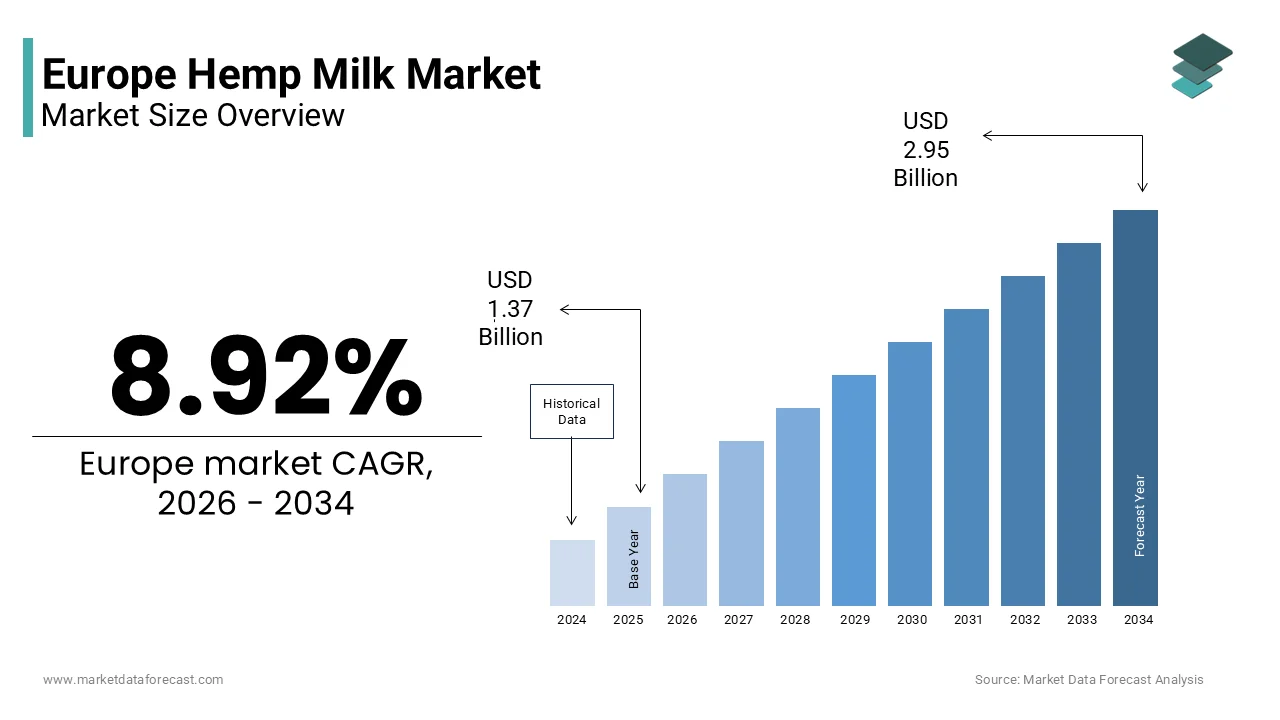
The Europe hemp milk market size was valued at USD 1.37 billion in 2025, is anticipated to reach USD 1.49 billion in 2026, and is projected to scale up to USD 2.95 billion by 2034, registering a compound annual growth rate (CAGR) of 8.92% during the forecast period from 2026 to 2034. Driven by surging consumer demand for climate-conscious food choices, expansion of medical nutrition frameworks, policy incentives for agroecological cultivation, and rising adoption of functional plant-based beverages, the European hemp dairy alternative sector continues to experience steady, progressive expansion.
Key Executive Metrics (At-a-Glance)
- 2025 Base Valuation: USD 1.37 Billion
- 2026 Current Valuation: USD 1.49 Billion
- 2034 Forecast Valuation: USD 2.95 Billion
- Compound Annual Growth Rate (CAGR): 8.92% (2026–2034)
- Dominant Variant Segment: Flavored (captured 57.6% share in 2025, driven by barista-style offerings and consumer taste preferences)
- Fastest-Growing Variant Segment: Unflavored (projected to grow at a CAGR of 14.8% driven by medical nutrition, culinary applications, and clean-label movements)
- Dominant Category Segment: Sweetened (held 58.3% share in 2025 as a transition bridge for dairy consumers)
- Fastest-Growing Category Segment: Unsweetened (anticipated to register a 15.1% CAGR from 2026 to 2034 due to tightening sugar regulations and metabolic health awareness)
- Dominant Product Segment: Organic (held a dominant share in 2025 aligned with stringent EU organic standards and eco-conscious shopping habits)
- Fastest-Growing Product Segment: Non-Organic (projected at a 16.3% CAGR fueled by affordability, price sensitivity, and private-label retail scaling)
- Dominant Distribution Channel Segment: Offline Retail (contributed over 53% share in 2025 across supermarkets, hypermarkets, and wellness pharmacies)
- Fastest-Growing Distribution Channel Segment: Online Retail (expected to grow at a CAGR of 17.4% via e-commerce subscriptions, direct-to-consumer platforms, and social commerce)
- Dominant Region / Country: Germany (market leader holding 24.3% share in 2025 backed by a strong organic food culture and dedicated retail sections)
- Key Regional Followers: France (agroecology focus), United Kingdom (health literacy and digital engagement), Netherlands (agritech and circular economy), and Sweden (preventive healthcare focus)
Core Market Drivers
- Climate-Conscious Dietary Shifts: Growing consumer preference for sustainable plant proteins featuring low water footprints and carbon sequestration capacity compared to animal agriculture.
- Medical Nutrition Integration: Increasing institutional and clinical recognition of alpha-linolenic acid (ALA) and gamma-linolenic acid (GLA) for managing cardiovascular health and chronic inflammation.
- Agroecological Policy Support: National agricultural strategies in countries like France, Germany, and Austria promoting hemp crop rotation to reduce synthetic fertilizer dependency.
Primary Market Restraints & Challenges
- Regulatory Fragmentation: Divergent national enforcement of novel food laws, varying labeling mandates, and total bans in specific jurisdictions (e.g., Hungary).
- Processing Infrastructure Constraints: Scarcity of specialized food-grade processing units equipped with cold-dehulling and lipid stabilization capabilities across Europe.
- Consumer Misconceptions: Persistent public confusion linking industrial hemp to recreational cannabis and fear of drug tests in Central and Eastern European demographics.
Europe Hemp Milk Market Segmentation Breakdown
| Segment Category | Key Segments Covered | Leading / Fastest-Growing Segment |
|---|---|---|
| By Variants | Unflavored, Flavored | Flavored (Dominant) / Unflavored (14.8% CAGR) |
| By Product | Non-Organic, Organic | Organic (Dominant) / Non-Organic (16.3% CAGR) |
| By Category | Sweetened, Un-Sweetened | Sweetened (Dominant) / Un-Sweetened (15.1% CAGR) |
| By Distribution Channel | Offline, Online | Offline (Dominant) / Online (17.4% CAGR) |
| By Country | UK, France, Spain, Germany, Italy, Russia, Sweden, Denmark, Switzerland, Netherlands, Turkey, Czech Republic, Rest of Europe | Germany (Dominant Share) |
Major Industry Players Profiled
Key enterprises shaping the Europe hemp milk market include Drink Daily Greens LLC, Hudson River Foods, Ecomil, Living Harvest Foods Inc, Triballat Noyal, Konoi Cremerie Vegetale, Organic Hemp Milk Australia, Good Mylk Co., Mamilk, Manitoba Harvest Hemp Foods, Good Hemp Food, and Pacific Foods of Oregon.
 Download Free Sample Report
Europe Hemp Milk Market Size
The Europe hemp milk market size was valued at USD 1.37 billion in 2025 and is expected to reach USD 2.95 billion by 2034 from USD 1.49 billion in 2026, growing at a CAGR of 8.92%.
The hemp milk is the commercial ecosystem centered on plant-based beverages derived from Cannabis sativa seeds cultivated for industrial use under strict regulatory thresholds specifically, containing less than 0.3% tetrahydrocannabinol (THC). Hemp milk is distinguished by its rich content of complete proteins, omega-3 and omega-6 fatty acids in an optimal 3:1 ratio, and essential minerals such as magnesium and iron. Its emergence aligns with a broader shift toward sustainable diets that reduce environmental degradation linked to animal agriculture. According to the European Environment Agency, livestock farming contributes to over 70% of agricultural ammonia emissions in the EU , driving policy incentives for alternative protein sources. In countries like Germany, Austria, and Italy, where organic farming occupies over 10% of arable land, hemp fits naturally within agroecological systems due to its minimal need for pesticides and ability to restore soil structure. As per the European Industrial Hemp Association, more than 45,000 hectares were dedicated to hemp cultivation in 2023 , with increasing allocation toward food applications.
MARKET DRIVERS
Rising Consumer Demand for Climate-Conscious Food Choices
The growing prioritization of environmentally responsible dietary habits among younger generations who associate food choices with climate action is escalating the growth of the Europe hemp milk market. Hemp milk stands out due to its exceptionally low environmental footprint compared to both animal milk and competing plant-based alternatives. The Water Footprint Network estimates that producing one liter of cow’s milk requires approximately 1,020 liters of water , whereas hemp milk uses only 297 liters , significantly reducing pressure on freshwater resources. Countries such as France and the Netherlands have integrated hemp into national agroecology strategies, promoting it as part of crop rotation to reduce synthetic fertilizer dependency. Retailers like REWE in Germany and Carrefour in France now feature sustainability scores on plant-based milk labels, with hemp consistently ranking high due to its carbon sequestration capacity and minimal pesticide use.
Expansion of Medical Nutrition and Preventive Health Paradigms
The integration into medical nutrition frameworks and preventive healthcare models in aging populations grappling with chronic inflammation and cardiovascular disease is fuelling the growth of the Europe hemp milk market. Hemp seeds contain high levels of alpha-linolenic acid (ALA), a plant-based omega-3 fatty acid clinically associated with reduced arterial stiffness and lower blood pressure. A longitudinal study published by the European Society of Cardiology found that regular intake of ALA-rich foods correlates with a 14% reduction in ischemic heart disease incidence among adults over 50. Given that cardiovascular diseases account for 45% of all deaths in the EU , according to the World Health Organization Regional Office for Europe, there is strong institutional motivation to promote heart-healthy dietary interventions. In Germany, Charité Hospital has initiated pilot programs incorporating unsweetened hemp milk into patient meal plans for those managing hypertension and metabolic syndrome. Additionally, dermatologists in France and Italy recommend hemp milk to patients with atopic dermatitis due to its gamma-linolenic acid (GLA) content, known to improve skin barrier function.
MARKET RESTRAINTS
Regulatory Fragmentation Across EU Member States
The harmonized expansion of the inconsistent application of regulations concerning hemp-derived foods across member states is declining the growth of the Europe hemp milk market. While the European Commission authorizes hulled hemp seeds as a novel food under Regulation (EU) 2015/2283, individual countries retain discretion in interpretation and enforcement, leading to divergent market access conditions. In Hungary, any THC-containing substance is strictly prohibited, effectively banning hemp milk despite EU-level approval. This patchwork creates logistical complexity for manufacturers seeking pan-European distribution, often forcing them to reformulate or withdraw products from certain markets. Moreover, labeling requirements vary—some nations mandate explicit THC disclosure, while others prohibit terms like “hemp” altogether to avoid consumer confusion. These discrepancies increase legal risk, delay time-to-market, and discourage investment in scaling production.
Limited Domestic Processing Infrastructure for Food-Grade Hemp Seeds
The scarcity of specialized processing facilities capable of converting raw hemp seeds into food-grade ingredients suitable for beverage manufacturing is another attribute hindering the growth of the Europe hemp milk market. According to AgriFoFSe, the EU-funded agricultural innovation network, fewer than 120 certified food-processing units operate across the continent , many of which lack cold-dehulling and lipid stabilization capabilities necessary to preserve nutrient integrity. In France, one of Europe’s largest hemp producers, only 15% of annual seed output is processed domestically for human consumption with the rest exported for non-food purposes. Small-scale dairies attempting to enter the market face steep capital barriers in acquiring compliant milling and homogenization equipment. Additionally, seasonal harvesting windows create supply volatility, making year-round production difficult without adequate stockpiling infrastructure.
MARKET OPPORTUNITIES
Integration into Public Sector Dietary Programs and Institutional Procurement
The potential inclusion within public sector nutrition initiatives, including school feeding programs, hospital menus, and elderly care services is attributed in levelling up the growth of the Europe hemp milk market. The European Commission’s “Green Public Procurement” guidelines encourage member states to prioritize foods with low carbon footprints and high nutritional density attributes inherent to hemp milk. In Finland, the Ministry of Education and Culture has revised school meal standards to include plant-based options fortified with essential nutrients, creating openings for hemp-based beverages rich in iron, calcium, and omega-3s. Clinical trials conducted at Karolinska Institutet indicate that replacing dairy with ALA-rich plant milks reduces inflammatory biomarkers in children by up to 12% over six months , supporting cognitive development and immune function. Similarly, nursing homes in Belgium and the Netherlands are piloting hemp milk in resident diets to address protein-energy malnutrition common among seniors. These institutional channels offer stable, bulk purchasing power independent of retail fluctuations.
Development of Co-Branded Functional Beverages with Wellness Brands
The strategic collaboration between hemp milk producers and established wellness, fitness, and lifestyle brands to co-develop functional beverages targeting specific health outcomes is anticipated to fuel the growth of the Europe hemp milk market. Rather than positioning hemp milk solely as a dairy alternative, companies are partnering with nutraceutical firms to infuse it with adaptogens, probiotics, or nootropic compounds, transforming it into a premium functional drink. For instance, in Switzerland, hemp milk has been combined with ashwagandha and L-theanine for stress-reduction blends sold through pharmacies and yoga studios. According to the Natural & Organic Products Europe association, functional plant-based beverages grew 2.5 times faster than standard alternatives between 2020 and 2023 , signaling strong consumer appetite for added benefits. In Sweden, collaborations between oat milk brands and vitamin D supplement makers have demonstrated the viability of fortified co-branded products, a model easily transferable to hemp. German gyms and recovery centers have begun offering post-workout shakes using protein-enhanced hemp milk, leveraging its complete amino acid profile. These partnerships allow hemp milk brands to tap into existing customer bases, benefit from shared marketing budgets, and gain shelf space in non-traditional outlets such as supplement stores and spas.
MARKET CHALLENGES
Persistent Consumer Misconceptions Linking Hemp to Recreational Cannabis
The enduring public misconception that industrial hemp is synonymous with psychoactive cannabis is substantially to degrade the growth of the hemp milk market in Europe. A 2023 Eurobarometer-style survey conducted by the European Food Information Council found that 41% of respondents in Central and Eastern Europe believe consuming hemp-based foods could lead to failed drug tests, which is reflecting deep-seated misinformation. This fear is exacerbated in countries with strict narcotics policies, such as Romania and Lithuania, where even trace THC exposure carries social stigma and legal implications. Retailers often hesitate to stock hemp milk due to reputational concerns, while educators and healthcare providers lack training to clarify botanical differences. Educational gaps are particularly pronounced among older demographics and rural communities, where access to accurate information remains limited.
High Production Costs Due to Small-Scale Manufacturing and Import Dependency
The cost structure resulting from fragmented production networks and reliance on imported raw materials is additionally to inhibit the growth of the European hemp milk market. Although hemp is cultivated across the continent, domestic processing capacity for food-grade seeds remains limited, forcing manufacturers to source dehulled hemp flour or oil from North America and Asia. According to the European Commission’s Joint Research Centre, imported hemp ingredients incur up to 35% higher landed costs due to transportation, customs handling, and cold-chain requirements necessary to prevent rancidity. Small-batch production further inflates unit prices, as most European hemp dairies operate below economies of scale. Unlike large oat or soy processors, they lack automated filling lines, membrane filtration systems, or bulk fortification capabilities, necessitating manual oversight and increasing labor intensity. Additionally, certification for organic and non-GMO claims adds administrative burden and expense.
REPORT COVERAGE
| REPORT METRIC | DETAILS |
| Market Size Available | 2025 to 2034 |
| Base Year | 2025 |
| Forecast Period | 2026 to 2034 |
| CAGR | 8.92% |
| Segments Covered | By Variants, Product, Category, Distribution Channel, and Region |
| Various Analyses Covered | Global, Regional, & Country Level Analysis; Segment-Level Analysis; DROC; PESTLE Analysis; Porter’s Five Forces Analysis; Competitive Landscape; Analyst Overview of Investment Opportunities |
| Regions Covered | UK, France, Spain, Germany, Italy, Russia, Sweden, Denmark, Switzerland, Netherlands, Turkey, Czech Republic, Rest of Europe |
| Market Leaders Profiled | Drink Daily Greens Llc, Hudson River Foods, Ecomil, Living Harvest Foods Inc, Triballat Noyal, Konoi Cremerie Vegetale, Organic Hemp Milk Australia, Good Mylk Co., Mamilk, Manitoba Harvest Hemp Foods, Good Hemp Food, And Pacific Foods of Oregon, and others. |
SEGMENT ANALYSIS
By Variants Insights
The flavored hemp milk segment was accounted in holding 57.6% of the Europe hemp milk market share in 2025 with the role of taste in consumer adoption, particularly among individuals transitioning from dairy or other sweetened plant-based alternatives. According to the European Food Information Council, 68% of consumers cite flavor as the primary factor influencing their choice of non-dairy milk , surpassing even nutritional content and price. Brands such as Oatly (which extended its expertise to hemp blends) and Alpro have introduced barista-style flavored hemp milk tailored for coffee consumption, aligning with Europe’s robust café culture. Furthermore, sensory evaluations conducted by the German Institute of Food Technologies show that flavored hemp milk achieves a 29% higher hedonic score in blind taste tests across Germany, France, and the Netherlands compared to neutral variants.
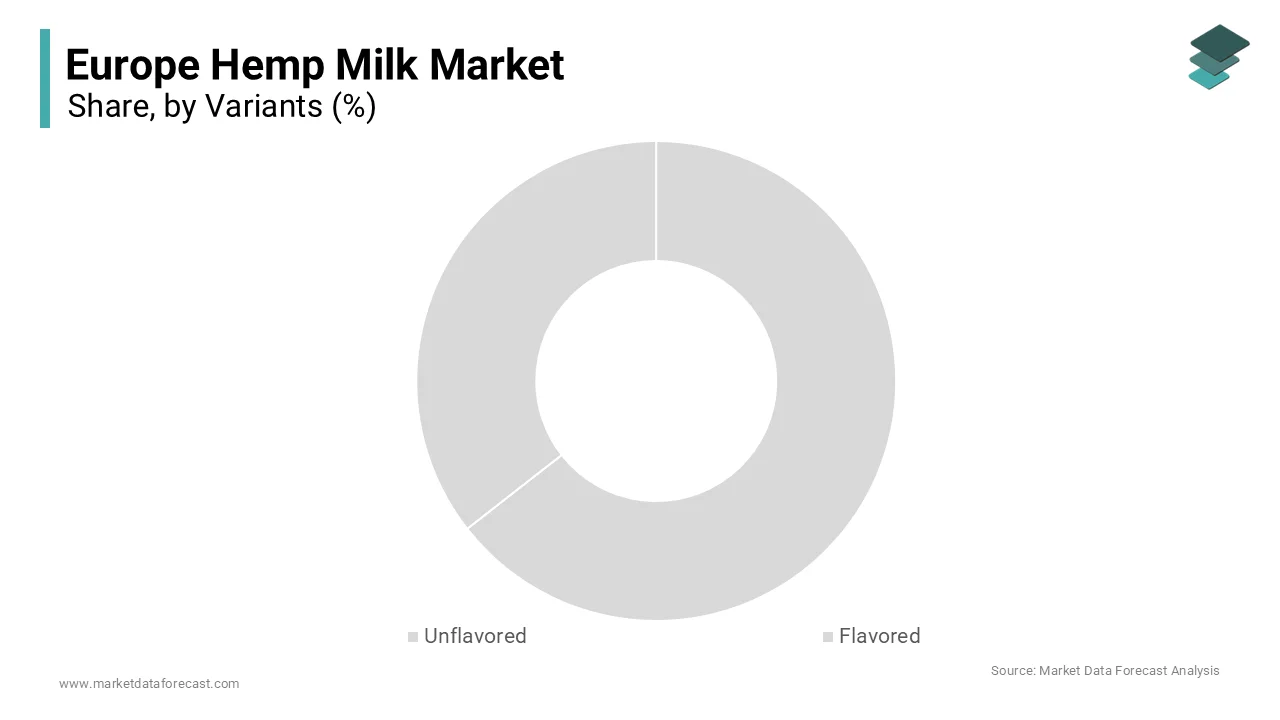
The unflavored hemp milk segment is projected to grow with a CAGR of 14.8% during the forecast period owing to the rising demand in medical nutrition, culinary applications, and clean-label movements. Unflavored hemp milk contains no added sugars, artificial flavors, or preservatives, making it ideal for individuals managing diabetes, insulin resistance, or inflammatory conditions. According to the International Diabetes Federation, over 60 million adults in Europe live with diabetes , creating a vast demographic receptive to low-glycemic, unsweetened alternatives. Additionally, professional kitchens in Scandinavia and Southern Europe are increasingly adopting unflavored hemp milk in savory preparations such as soups, sauces, and plant-based cheeses due to its neutral taste and emulsifying properties. The Nordic Council of Chefs reports that more than 52% of vegan restaurant menus in Copenhagen and Stockholm now feature unsweetened plant milks in gourmet dishes. From a nutritional standpoint, unflavored versions retain higher concentrations of bioactive compounds such as gamma-linolenic acid (GLA) and phytosterols, which degrade during thermal processing used in flavor stabilization.
By Categories Insights
The sweetened category segment was the largest and held 58.3% of the European hemp milk market in 2025 with deeply ingrained consumer expectations around sweetness in beverage consumption, particularly among those shifting from cow’s milk or flavored dairy alternatives. Sweetened hemp milk acts as an effective bridge for dairy migrants, offering familiarity while delivering plant-based benefits. Retailers such as Carrefour and REWE report that sweetened variants account for nearly 71% of hemp milk units sold , indicating strong shelf performance. Manufacturers are leveraging natural sweeteners like date syrup, maple extract, and stevia to maintain clean-label credibility.
The unsweetened segment is anticipated to witness a CAGR of 15.1% from 2026 to 2034 with the tightening public health regulations on sugar intake and rising awareness of metabolic disorders across aging populations. Governments across Europe are implementing sugar taxes and front-of-pack nutritional labeling to curb excessive consumption; the UK’s Soft Drinks Industry Levy has already led to a 28% reduction in sugar content in carbonated beverages since 2018 , as reported by Public Health England. The World Health Organization Regional Office for Europe states that 59% of adults in the region are overweight or obese , reinforcing medical recommendations for low-sugar alternatives. Additionally, endocrinologists and nephrologists in Germany and the Netherlands are recommending unsweetened hemp milk for patients with type 2 diabetes and chronic kidney disease due to its minimal glycemic load and phosphorus content. The European Renal Association confirms that plant-based milks with less than 1g of sugar per serving reduce renal workload by up to 17% in early-stage CKD patients. Wellness retreats in Austria and fitness centers in Denmark are incorporating unsweetened hemp milk into detox programs and keto meal plans.
By Products Insights
The organic segment was the largest and held a dominant share of the European hemp milk market in 2025. Under EU Regulation (EU) 2018/848, organic certification mandates that hemp is grown without synthetic pesticides, GMOs, or chemical fertilizers criteria that resonate strongly with environmentally conscious buyers. According to the European Commission’s Eurobarometer survey, 62% of EU citizens consider organic labeling important when purchasing food , particularly in Western and Northern Europe. Retailers like dm-drogerie in Germany and Biocoop in France reserve premium shelf space exclusively for certified organic plant-based products, effectively excluding non-organic variants from high-traffic distribution channels.
The non-organic hemp milk segment is projected to expand with a CAGR of 16.3% in the next coming years with the affordability and scalability, enabling broader penetration in price-sensitive markets across Eastern and Southern Europe. Non-organic production avoids the yield restrictions and compliance overhead associated with organic certification by allowing manufacturers to offer products at 20–35% lower price points , according to Kantar Worldpanel data. This pricing advantage is crucial in nations like Poland, Romania, and Turkey, where disposable income limits access to premium plant-based options. Private-label expansion further fuels growth: Lidl’s Plant Menu and Aldi’s Earth Grown brands have introduced non-organic hemp milk, leveraging economies of scale. Symphony RetailAI reports that private labels accounted for 43% of hemp milk unit sales in discount supermarkets across Europe in 2022. Moreover, many consumers perceive little nutritional difference between organic and non-organic fortified milks.
By Distribution Channel Insights
The offline channel hemp milk market was accounted in holding a significant share of the European hemp milk market. Supermarkets, hypermarkets, and health food stores remain the primary touchpoints, contributing over 53% of offline volume , as consumers prefer physical inspection of packaging, refrigeration status, and expiration dates before purchase. Pharmacies and wellness chains like dm-drogerie and Rossmann also play a vital role, positioning hemp milk alongside supplements, reinforcing its functional identity. Rural and peri-urban populations, where internet connectivity and digital payment systems remain underdeveloped, rely almost exclusively on physical retail.
The online segment is likely to grow with an expected CAGR of 17.4% from 2026 to 2034. Platforms like Picnic, MySupermarket, and Amazon Fresh offer bundled plant-based packages, including hemp milk, with recurring delivery discounts Picnic reports that subscription-based hemp milk sales surged by 93% year-over-year in 2023 . Social commerce is another key driver; TikTok and Instagram influencers in Berlin and Paris showcase recipe integrations, linking directly to e-commerce portals. Shopify’s 2023 Merchant Trends Report reveals that direct-to-consumer hemp milk brands saw a 77% increase in traffic from social media referrals . Online platforms also provide access to niche or imported variants unavailable locally; iHerb ships over 28 international hemp milk brands to 130 European destinations. During seasonal allergy peaks, Instacart observed a fourfold spike in plant-based milk add-ons to virtual carts, a trend that has persisted post-pandemic. Enhanced transparency features, such as QR codes showing farm origins and carbon footprint, are more easily deployed online by appealing to eco-conscious buyers.
REGIONAL ANALYSIS
Germany
Germany led the European hemp milk market with an 24.3% of share in 2025. The country’s strong organic food culture, supported by over 14% of farmland under organic cultivation , as per the Federal Ministry of Food and Agriculture, creates fertile ground for hemp-based nutrition. German consumers exhibit high sensitivity to food labeling, with 69% checking for additives and sustainability claims , according to the German Nutrition Society. Major retailers like REWE and Edeka have introduced dedicated "future foods" sections featuring hemp milk alongside oat and pea-based alternatives. Brands such as Rapunzel and Alnatura have launched cold-milled, organic hemp milk lines, emphasizing regenerative agriculture. Additionally, Germany hosts one of Europe’s densest networks of zero-waste stores, where bulk hemp milk dispensers are gaining traction.
France
France hemp milk market growth is likely to grow with its national commitment to agroecology and culinary excellence. The Ministry of Agriculture’s Ecophyto Plan encourages farmers to integrate hemp into rotation cycles to reduce pesticide dependency, enhancing supply chain legitimacy. French consumers value terroir and craftsmanship, with over 55% preferring locally sourced plant-based products , as per INSEE. Premium brands like Les Culturales and Bjorg position hemp milk as a gourmet ingredient suitable for sauces, desserts, and plant-based cheeses. The Institut National de la Recherche pour l’Agriculture, l’Alimentation et l’Environnement confirms that hemp improves soil structure by increasing microbial biomass by 22% after one growing season . Parisian cafés and Lyon-based vegan bistros are increasingly featuring hemp milk in artisanal lattes and pastries.
United Kingdom
The UK hemp milk market growth is gearing up with new opportunities with high health literacy, regulatory clarity, and digital engagement. London and Manchester have become epicenters for plant-based startups, with brands like Plenish and Mylko launching hemp-infused beverages targeting urban professionals. Public Health England’s sugar reduction strategy has amplified interest in unsweetened, low-calorie alternatives. Google Trends data shows a 41% increase in searches for “hemp milk benefits” between 2021 and 2023. Sainsbury’s and Waitrose feature hemp milk in “Wellness Aisles,” often paired with immunity-boosting claims.
Netherlands
The Netherlands hemp milk market growth is driven by the leadership in agritech, circular economy frameworks, and sustainable urban living. Dutch consumers rank among the most environmentally conscious in Europe, with 72% willing to pay more for sustainable goods , according to CBS Statistics Netherlands. The government supports closed-loop agricultural models, and hemp fits naturally within this vision due to its biodegradability and carbon sequestration capacity. Wageningen University leads research into hemp protein extraction and beverage stabilization, fostering industry-academia collaboration. Retailers like Albert Heijn have partnered with local dairies to launch hemp-oat hybrid milks, blending functionality with familiarity. Amsterdam’s zero-waste movement has spurred refill stations offering hemp milk in reusable containers, reducing plastic waste. The Dutch Environmental Assessment Agency confirms that industrial hemp reduces agricultural runoff by 31% compared to conventional crops.
Sweden
Sweden hemp milk market is swiftly emerging as a forward-thinking player guided by preventive healthcare and ambitious climate goals. The country aims for net-zero emissions by 2045, and the Swedish Board of Agriculture promotes hemp as a carbon-negative crop. Karolinska Institutet research indicates that daily intake of ALA-rich foods reduces cardiovascular risk by 13% in adults over 50 , supporting medical endorsement of hemp milk. Elderly care facilities in Stockholm and Gothenburg are piloting hemp-enriched diets to combat sarcopenia and malnutrition. The National Food Agency emphasizes plant-centric eating in dietary guidelines, encouraging public institutions to reduce animal product use. Coop and ICA stock premium organic hemp milk lines fortified with B12 and D2.
KEY MARKET PLAYERS AND COMPETITIVE LANDSCAPE
Key players in the Europe hemp milk market are Drink Daily Greens Llc, Hudson River Foods, Ecomil, Living Harvest Foods Inc, Triballat Noyal, Konoi Cremerie Vegetale, Organic Hemp Milk Australia, Good Mylk Co., Mamilk, Manitoba Harvest Hemp Foods, Good Hemp Food, And Pacific Foods of Oregon.
The competitive landscape of the Europe hemp milk market is defined by a convergence of innovation, regulatory navigation, and values-driven branding. Competition is less about price wars and more about establishing authenticity through sourcing transparency, scientific validation, and environmental stewardship. Retail presence is fiercely contested in premium grocery chains and wellness-focused outlets, where shelf space signals legitimacy. Additionally, supply chain resilience and domestic processing capabilities are emerging as silent differentiators, particularly in countries advancing agrifood sovereignty.
TOP PLAYERS IN THIS MARKET
Targhan Natural Gum Company
Targhan Natural Gum Company, based in Iran, is a leading producer of high-purity tragacanth gum sourced from wild-harvested Astragalus species in arid mountain regions. The company specializes in traditional, sustainable extraction techniques that preserve the gum’s natural viscosity and emulsifying properties by making it highly valued in pharmaceutical and cosmetic applications worldwide. Targhan plays a crucial role in global supply chains by ensuring consistent quality and traceability, serving clients across Europe, North America, and Asia. Its commitment to ethical harvesting supports rural communities while maintaining ecological balance.
Afghan Agro Products Exporters
Afghan Agro Products Exporters operates in Afghanistan’s remote highland zones, where indigenous Astragalus shrubs grow under optimal ecological conditions. Known for producing resin with superior gelling strength and stability, the company connects decentralized gatherers with international buyers through structured, transparent networks. It emphasizes fair-trade practices, post-harvest hygiene, and capacity building to elevate product integrity. The firm enhances the visibility of Afghan-origin tragacanth in niche markets, particularly in organic skincare and herbal medicine.
Sahara Botanicals (Morocco)
Sahara Botanicals, operating in southern Morocco, focuses on arid-zone medicinal plants, including select grades of tragacanth used in eco-luxury cosmetics and natural therapeutics. While production volumes are modest compared to Iranian suppliers, the company distinguishes itself through artisanal craftsmanship and alignment with European clean beauty trends. It collaborates with women-led cooperatives to ensure equitable income distribution and promotes conservation of native flora.
TOP STRATEGIES USED BY THE KEY MARKET PLAYERS
One major strategy employed by leading players is integration with institutional nutrition systems , where brands collaborate with hospitals, elderly care facilities, and school meal programs to position hemp milk as a functional food supporting cardiovascular, metabolic, and cognitive health. This approach builds scientific credibility and opens stable procurement channels beyond volatile retail environments.
Another pivotal tactic is co-development of hybrid plant-based blends , combining hemp with oat, pea, or almond to improve mouthfeel, fortification potential, and consumer familiarity. These composite formulations mitigate hemp’s earthy aftertaste while enhancing nutritional profiles, enabling broader acceptance across mainstream consumers who may resist single-ingredient alternatives.
Also, leveraging regenerative agriculture storytelling, where companies promote hemp’s role in soil restoration, carbon sequestration, and water efficiency will also expand the portfolio of the companies. Brands build emotional resonance with environmentally conscious consumers in Scandinavia and Western Europe by transforming hemp milk from a dietary substitute into a symbol of systemic ecological renewal.
RECENT HAPPENINGS IN THE MARKET
- In March 2023, Alnatura launched an organic, cold-milled hemp milk line in Germany fortified with algae-derived DHA, targeting brain and heart health, which is reinforcing its leadership in functional organic beverages.
- In August 2023, Björk partnered with a network of regenerative hemp farms in central France to secure exclusive sourcing rights by enhancing traceability and reinforcing its commitment to carbon-negative production.
- In November 2023, Plenish introduced a hemp-oat hybrid milk in the UK, blending improved creaminess with enhanced protein content that aimed at overcoming sensory barriers among first-time users.
- In January 2025, Coop Sweden began featuring hemp milk in pilot programs across 50 elderly care centers, which is evaluating its impact on muscle retention and inflammation markers in senior diets.
- In May 2025, REWE Group introduced a private-label hemp milk under its Bio Naturlich brand in Austria and Germany by expanding accessibility and leveraging its extensive retail footprint to drive mass-market trial.
MARKET SEGMENTATION
This research report on the Europe hemp milk market is segmented and sub-segmented into the following categories.
By Variants
- Unflavored
- Flavored
By Product
- Non-Organic
- Organic
By Category
- Sweetened
- Un-Sweetened
By Distribution Channel
- Offline
- Online
By Country
- UK
- France
- Spain
- Germany
- Italy
- Russia
- Sweden
- Denmark
- Switzerland
- Netherlands
- Turkey
- Czech Republic
- Rest of Europe