- Product Description Description
- Table of Contents TOC
- List of Table & Figure LOT
- Get Free Sample PDF Sample PDF
Market Size, 2025
$2.82 BnMarket Estimate, 2026
$2.99 BnMarket Forecast, 2034
$4.99 BnCAGR, 2026–2034
6.45%Europe Heparin Market Report Summary
The Europe heparin market was valued at USD 2.82 billion in 2025, is anticipated to reach USD 2.99 billion in 2026, and is projected to reach USD 4.99 billion by 2034, growing at a CAGR of 6.45% during the forecast period from 2026 to 2034. The growth of the Europe heparin market is driven by the rising prevalence of cardiovascular and thromboembolic disorders, growing geriatric population, and increasing demand for low molecular weight heparin (LMWH) for venous thromboembolism prevention and treatment. In addition, continuous healthcare infrastructure development and the adoption of advanced anticoagulant therapies are further fueling market expansion across the region.
Key Market Trends
- Rising incidences of deep vein thrombosis (DVT), pulmonary embolism, and atrial fibrillation are driving heparin consumption.
- Increasing preference for LMWH over unfractionated heparin due to improved safety, predictable pharmacokinetics, and reduced monitoring requirements.
- Strong research and development focus on synthetic and biosimilar heparin products to ensure supply stability and cost efficiency.
- Growth in hospital-based anticoagulant therapies and rising adoption of prophylactic anticoagulant use in surgical patients.
- Strategic collaborations between pharmaceutical manufacturers and healthcare providers to enhance drug accessibility across European nations.
Segmental Insights
- Based on product, the Low Molecular Weight Heparin (LMWH) segment dominated the European heparin market in 2024 by capturing 60.5% of the regional market share, driven by its growing use in both inpatient and outpatient care settings due to its superior efficacy, fewer side effects, and convenience of subcutaneous administration.
- Based on application, the Deep Vein Thrombosis (DVT) segment was the largest in 2024, accounting for 40.4% share of the European heparin market, owing to the rising incidence of DVT cases among immobile, post-surgical, and elderly patients.
Regional Insights
The Europe heparin market demonstrates strong growth across major countries driven by healthcare advancements, aging demographics, and clinical awareness regarding anticoagulant therapies.
- Germany led the European heparin market in 2024 by capturing 25.2% of the regional share, supported by advanced healthcare infrastructure, strong hospital networks, and high procedural volumes in cardiovascular care.
- France followed as a key market due to its growing investments in biopharmaceutical manufacturing and early adoption of LMWH therapies.
- The United Kingdom showed steady growth driven by rising awareness about thrombosis prevention and expanding healthcare access.
- Italy and Spain are emerging markets, with increasing use of anticoagulants in orthopedic and cardiovascular surgeries contributing to demand growth.
Competitive Landscape
The Europe heparin market is moderately consolidated, with global and regional players focusing on product innovation, biosimilar development, and supply chain diversification to ensure uninterrupted heparin availability. Strategic partnerships with hospitals and healthcare institutions remain crucial for market expansion. Major companies operating in the European heparin market include Pfizer Inc., Sanofi SA, B. Braun Melsungen AG, Fresenius SE & Co. KGaA, LEO Pharma A/S, Dr. Reddy’s Laboratories Ltd., Aspen Pharmacare Holdings Ltd., Viatris Inc., GlaxoSmithKline plc (GSK), and Baxter International Inc.
Europe Heparin Market Size
The europe heparin market size was valued at USD 2.81 billion in 2025 and is anticipated to reach USD 2.99 billion in 2026 from USD 4.93 billion by 2033, growing at a CAGR of 6.45% during the forecast period from 2026 to 2034.
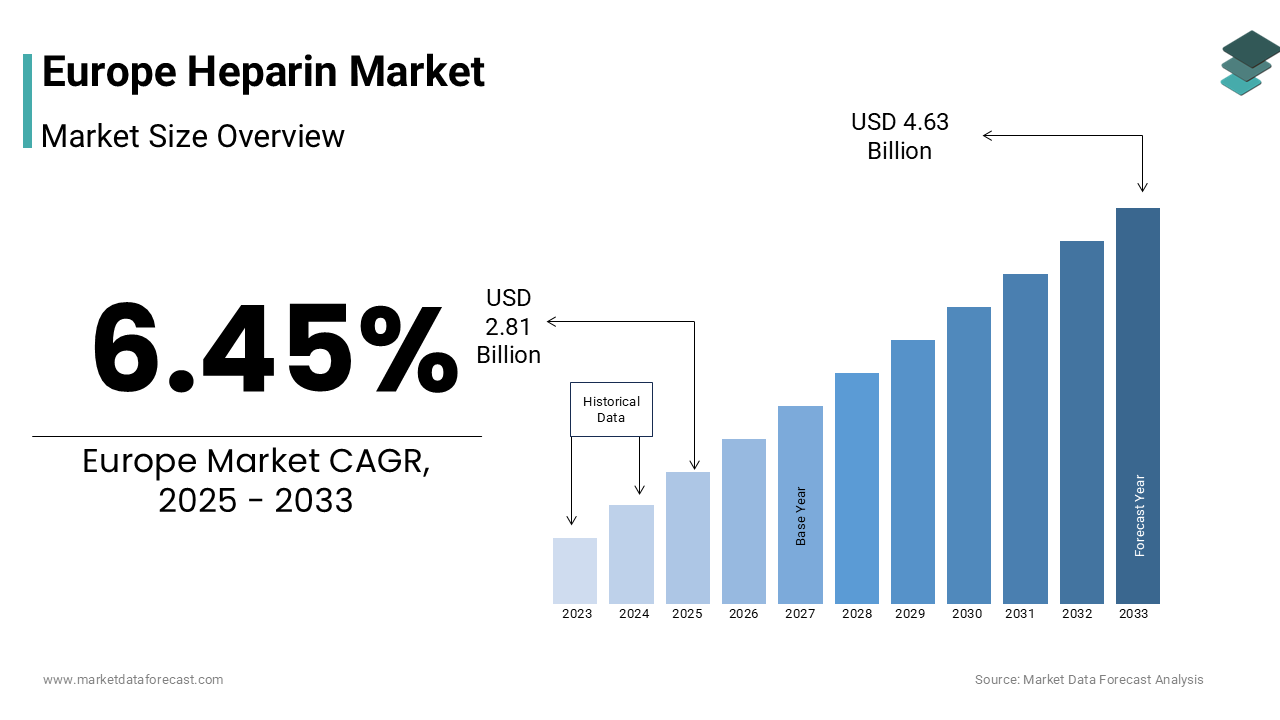
Heparin, a naturally derived anticoagulant primarily sourced from animal tissues such as porcine intestines, plays an indispensable role in modern medicine across Europe. It is widely utilized for its ability to prevent and treat thromboembolic disorders, including deep vein thrombosis (DVT), pulmonary embolism, and complications arising from surgeries and cardiovascular diseases. According to sources, heparin remains one of the most prescribed anticoagulants in Europe, with millions of patients relying on it annually. Its versatility, cost-effectiveness, and proven safety profile have cemented its position as a cornerstone of anticoagulation therapy. The European heparin market is further bolstered by the region’s aging population and rising prevalence of chronic conditions such as cardiovascular diseases and atrial fibrillation. As per Eurostat, diseases of the circulatory system accounted for 32.7% of all deaths in the European Union in 2022. Apart from these, the European Commission’s focus on enhancing healthcare accessibility and affordability has driven the adoption of heparin-based treatments.
MARKET DRIVERS
Increasing Prevalence of Cardiovascular Diseases
The escalating incidence of cardiovascular diseases across Europe serves as a key accelerator for the growth of the Europe heparin market. According to the European Society of Cardiology, cardiovascular diseases affect approximately 60 million people in Europe, accounting for a portion of all deaths annually. This alarming statistic emphasizes the important need for effective anticoagulation therapies like heparin, which are integral to managing conditions such as atrial fibrillation, pulmonary embolism, and myocardial infarction. Furthermore, as per Eurostat, in 2021, cardiovascular disease accounted for ten million hospital admissions in the EU, equivalent to 22 admissions per 1,000 people. According to a 2023 study presented at the ESC Congress, cardiovascular diseases cost the EU economy €282 billion in 2021. Health and long-term care made up €155 billion of that total. Heparin’s proven safety profile, cost-effectiveness, and widespread availability make it the preferred choice for both acute and long-term management of thromboembolic disorders.
Rising Geriatric Population and Chronic Disease Burden
Region’s rapidly aging population is also a major factor propelling the expansion of the Europe heparin market. Europe’s population continues to age, with older adults making up a growing share of the region’s demographics, according to sources. This demographic shift is accompanied by a higher prevalence of age-related chronic conditions, including venous thromboembolism (VTE) and coronary artery disease. The risk of venous thromboembolism and other related conditions tends to be significantly higher among elderly individuals than in younger groups, as per research. Besides, managing chronic illnesses remains one of the main priorities for national healthcare systems across Europe, accounting for a major portion of overall medical spending, according to sources. These factors collectively emphasize the growing reliance on heparin as a life-saving therapeutic agent in Europe.
MARKET RESTRAINTS
Supply Chain Vulnerabilities and Raw Material Dependency
Its heavy reliance on imported raw materials, particularly porcine mucosa, is among the primary impediments to the Europe heparin market. It is predominantly sourced from China and other Asian countries. The majority of raw materials used for heparin manufacturing in Europe are sourced internationally, leaving the supply chain vulnerable to external risks such as trade limitations and quality concerns, according to sources. In recent years, global transportation challenges have led to rising input costs across the pharmaceutical sector, as per research. This reliance on imported materials increases overall production expenses and raises ongoing concerns about supply stability and product safety, according to sources. Many smaller pharmaceutical companies continue to struggle with the high cost and limited availability of reliable raw materials, which affects their ability to remain competitive in the market, as per research.
Stringent Regulatory Standards and Compliance Costs
The stringent regulatory standards governing the production and distribution of heparin impose substantial compliance costs on manufacturers. This hampers the expansion of the Europe heparin market. These regulations, while essential for safeguarding patient health, create barriers for smaller players who lack the financial resources to meet these requirements. Furthermore, delays in obtaining regulatory approvals often disrupt supply chains, which exacerbates shortages and reduces market competitiveness.
MARKET OPPORTUNITIES
Expansion of Biopharmaceutical Innovations
The growing emphasis on biopharmaceutical innovations offers a significant opportunity for the growth of the Europe heparin market. Biopharmaceutical companies across Europe have continued to channel substantial investments into the development of biologic drugs and biosimilar therapies, according to sources. Researchers are investigating low-molecular-weight heparins (LMWHs) and synthetic analogs for their potential in oncology, inflammation, and regenerative medicine. Low molecular weight heparins remain the dominant segment within the regional anticoagulant market, reflecting ongoing clinical and manufacturing preferences, as per research. This trend aligns with Europe’s focus on precision medicine and personalized healthcare, creating a fertile environment for innovation and market expansion. The development of next-generation heparin-based therapies could unlock new revenue streams and enhance patient outcomes.
Growing Adoption in Home Healthcare and Outpatient Settings
The increasing adoption of home healthcare and outpatient treatments opens fresh prospects for the expansion of the Europe heparin market. According to research, the home healthcare business in Europe grew, driven by advancements in portable medical devices and self-administration technologies. Heparin, particularly in the form of prefilled syringes and subcutaneous formulations, is increasingly being used in outpatient settings for managing chronic conditions such as deep vein thrombosis and atrial fibrillation. As per sources, outpatient care accounted for a portion of total healthcare expenditures, which reflects a shift toward decentralized healthcare delivery. This trend not only reduces hospitalization costs but also improves patient convenience and adherence to treatment regimens, which positions heparin as a key enabler of sustainable healthcare solutions.
MARKET CHALLENGES
Risk of Contamination and Adulteration
The risk of contamination and adulteration is a significant challenge to the Europe heparin market. This affects trust in the safety and efficacy of the product. According to the European Medicines Agency, several incidents of heparin adulteration with oversulfated chondroitin sulfate were reported between 2007 and 2008, leading to severe adverse reactions and fatalities. Although stringent quality control measures have since been implemented, the threat of contamination persists, particularly due to the reliance on imported raw materials. In 2022, the European Directorate for the Quality of Medicines & HealthCare (EDQM) launched a public consultation to revise the heparin sodium and heparin calcium monographs, which included a proposal to tighten the limit for residual protein. These incidents not only jeopardize patient safety but also result in costly recalls and reputational damage for manufacturers.
Limited Availability of Synthetic Alternatives
The limited availability of synthetic alternatives to heparin, which constrains the expansion of the Europe heparin market. According to sources, synthetic anticoagulants represent a relatively small share of the market as their high production costs and complex manufacturing processes limit wider adoption. These alternatives provide benefits such as consistent product quality and lower risk of contamination, yet their use continues to be restricted by price-related challenges. As per research, the cost gap between synthetic and naturally derived heparin remains considerable, making synthetic options less accessible for widespread clinical use. This cost barrier limits their accessibility, particularly in resource-constrained healthcare systems, and thereby constrains market growth and innovation.
REPORT COVERAGE
| REPORT METRIC | DETAILS |
| Market Size Available | 2025 to 2034 |
| Base Year | 2025 |
| Forecast Period | 2026 to 2034 |
| Segments Covered | By Product, Application, End-User and Region. |
| Various Analyses Covered | Global, Regional, & Country Level Analysis; Segment-Level Analysis, Drivers, Restraints, Opportunities, Challenges, PESTLE Analysis, Porter’s Five Forces Analysis, Competitive Landscape, Analyst Overview of Investment Opportunities |
| Regions Covered | UK, France, Spain, Germany, Italy, Russia, Sweden, Denmark, Switzerland, the Netherlands, Turkey, the Czech Republic, and the Rest of Europe. |
| Key Market Players | Pfizer Inc., Sanofi SA, B. Braun Melsungen AG, Fresenius SE & Co. KGaA, LEO Pharma A/S, Dr. Reddy’s Laboratories Ltd., Aspen Pharmacare Holdings Ltd., Viatris Inc., GlaxoSmithKline plc (GSK), Baxter International Inc. |
SEGMENTAL ANALYSIS
By Product Insights
The Low molecular weight heparin (LMWH) segment dominated the European heparin market by capturing 60.5% of the regional market share in 2024. The dominance of the Low molecular weight heparin (LMWH) segment is attributed to LMWH’s superior pharmacokinetic properties, predictable dosing, and reduced risk of bleeding compared to unfractionated heparin. As per research, low-Molecular-Weight Heparins (LMWHs) are widely used in treating deep vein thrombosis, pulmonary embolism, and certain cardiovascular conditions. Their compatibility with outpatient and home healthcare settings further enhances their appeal, strengthening their importance in the market.
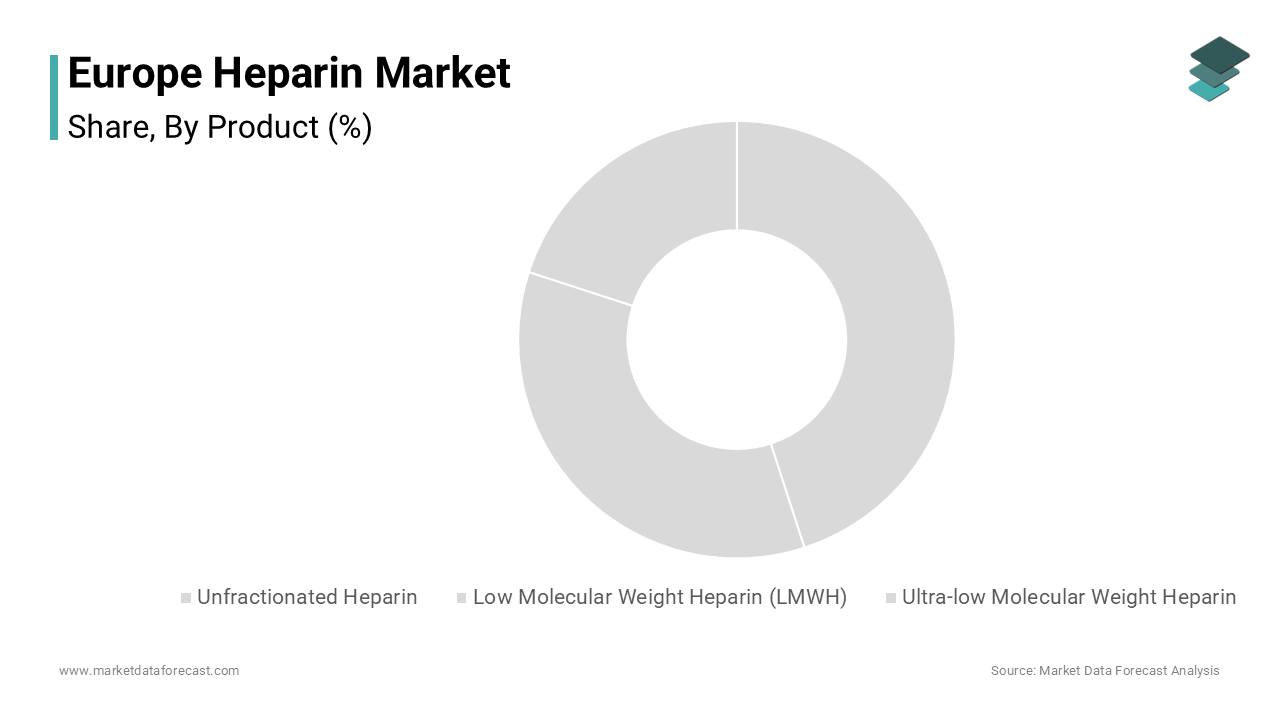
The Ultra-low molecular weight heparin (ULMWH) segment is expected to exhibit a noteworthy CAGR of 18.1% from 2025 to 2033 due to ongoing research into ULMWH’s potential applications in oncology, inflammation, and regenerative medicine. According to the National Cancer Institute, targeted therapies use drugs or other substances to identify and attack specific cancer cells with enhanced specificity and reduced side effects compared to traditional chemotherapy. Their development aligns with Europe’s focus on precision medicine, which positions them as a transformative force in the heparin market.
By Application Insights
The Deep vein thrombosis (DVT) segment was the largest segment in the Europe heparin market by accounting for 40.4% share in 2024. The prominence of the Deep vein thrombosis (DVT) segment is fueled by the high prevalence of DVT, particularly among elderly patients and those undergoing surgeries. As per sources, a large number of cases of DVT are diagnosed annually in Europe by necessitating robust anticoagulation strategies. Heparin’s efficacy in preventing and treating DVT ensures its widespread adoption in clinical settings.
The atrial fibrillation and heart attack segment is predicted to witness the highest CAGR of 15.5% during the forecast period owing to the rising incidence of cardiovascular diseases and the aging population. According to studies, atrial fibrillation affects a portion of Europe’s population, which drives demand for heparin-based therapies. Its role in preventing stroke and managing heart attacks positions it as a vital therapeutic agent in this segment.
REGIONAL ANALYSIS
Germany Heparin Market Insights
Germany was the largest contributor to the European heparin market by capturing 25.3% of the share in 2024. The country’s advanced healthcare infrastructure and high prevalence of cardiovascular diseases drive demand for heparin-based therapies. According to Eurostat, Germany accounts for 20% of Europe’s cardiovascular disease burden by necessitating robust anticoagulation strategies.
France Heparin Market Insights
France heparin market growth is likely to grow with its strong pharmaceutical sector and aging population. According to the European Society of Cardiology, France recorded over 1.5 million cases of venous thromboembolism in 2022 with the need for heparin. The government’s focus on enhancing healthcare accessibility and affordability has also bolstered the adoption of cost-effective anticoagulants like heparin.
Italy Heparin Market Insights
Italy heparin market growth is likely to grow with its high geriatric population and robust healthcare system. According to the European Observatory on Health Systems and Policies, Italy’s elderly population exceeds 14 million, driving demand for chronic disease management. Heparin’s widespread use in hospitals and outpatient settings positions Italy as a key contributor to the regional market
Spain Heparin Market Insights
Spain heparin market growth is driven by the growing emphasis on preventive healthcare and chronic disease management. According to a study, Spain’s healthcare expenditures on cardiovascular treatments reached €15 billion in 2022 with the rising importance of heparin in addressing public health challenges.
UK Heparin Market Insights
The UK heparin market growth is likely to grow with its advanced pharmaceutical industry and rising adoption of home healthcare solutions.
KEY MARKET PLAYERS
A few of the major companies in the europe heparin market include
- Pfizer Inc.
- Sanofi SA
- B. Braun Melsungen AG
- Fresenius SE & Co. KGaA
- LEO Pharma A/S
- Dr. Reddy’s Laboratories Ltd.
- Aspen Pharmacare Holdings Ltd.
- Viatris Inc.
- GlaxoSmithKline plc (GSK)
- Baxter International Inc.
MARKET SEGMENTATION
This research report on the europe heparin market has been segmented based on the following categories.
By Product
- Unfractionated Heparin
- Low Molecular Weight Heparin (LMWH)
- Ultra-low Molecular Weight Heparin
By Application
- Venous Thromboembolism
- Coronary Artery Disease
- Atrial Fibrillation
By End-User
- Out-patient
- In-patient
By Country
- UK
- France
- Spain
- Germany
- Italy
- Russia
- Sweden
- Denmark
- Switzerland
- Netherlands
- Turkey
- Czech Republic
- Rest of Europe