Europe Hickory Market Size, Share, Trends & Growth Forecast Report By Product Type, By Application, By Distribution Channel, and By Country (United Kingdom, Germany, France, Sweden, Netherlands & Rest of Europe) – Industry Analysis and Forecast, 2026 to 2034
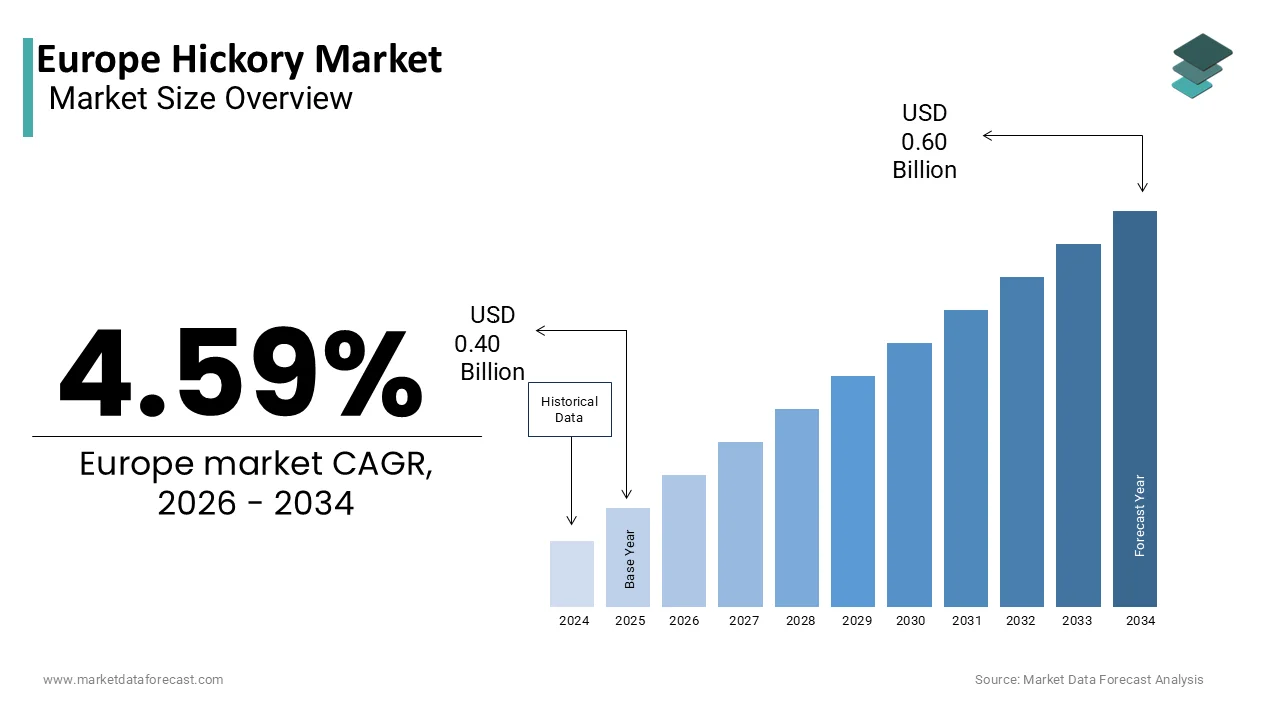
Market Size, 2025
$0.40 BnMarket Estimate, 2026
$0.42 BnMarket Forecast, 2034
$0.60 BnCAGR, 2026–2034
4.59%Europe Hickory Market Size
The europe hickory market was valued at USD 0.40 billion in 2025, is estimated to reach USD 0.42 billion in 2026, and is projected to reach USD 0.60 billion by 2034, growing at a CAGR of 4.59% from 2026 to 2034.
Hickory represents a specialized segment within the broader timber and culinary industries and is defined exclusively by the importation of Carya species from North America since the genus is not indigenous to the European continent. Historically extinct in Europe following the last ice age, hickory has re-emerged as a critical resource for high-performance applications ranging from premium flooring and tool manufacturing to artisanal food smoking. The market dynamics are entirely dependent on transatlantic trade flows, with the United States serving as the sole significant supplier of genuine hickory lumber and wood chips to the region. In 2024, according to trade data, the United States exported hardwood lumber to Europe, where hickory commands a premium due to its unmatched density and shock resistance compared to local alternatives like beech or oak. This dependency creates a unique market structure where supply chain resilience and regulatory compliance dictate availability more than local harvesting cycles. Beyond construction, the culinary sector drives a substantial portion of hickory demand, which is fueled by the expanding European barbecue culture that prizes the specific flavor profile of hickory smoke. For instance, the Europe smoked meats market continues to generate consistent downstream demand for hickory chips and chunks that cannot be easily substituted by fruitwoods. Despite the logistical complexities of importing wood across the Atlantic, the market remains robust due to the irreplaceable physical properties of the material. According to recent trade data, the United Kingdom has absorbed a significant portion of US hardwood lumber exports, which is acting as the primary entry point for hickory distribution across the continent. The market operates under the stringent oversight of the European Union Deforestation Regulation, which necessitates complete traceability from the US forest floor to the European end user. This regulatory environment, combined with the niche yet essential nature of the product, defines the current operational landscape of the Europe hickory market.
MARKET DRIVERS
Surging Demand for Authentic Barbecue and Smoking Experiences Drives Consumption
The rapid proliferation of American‑style barbecue traditions across Europe is primarily driving the growth of the European hickory market. European consumers have increasingly embraced slow‑cooking techniques that rely on the distinct, robust flavor profile of hickory, which offers a bacon‑like intensity that native European woods like apple or cherry cannot replicate. As per industry analysis, the Europe BBQ grill and smoker market is projected to expand at a CAGR of 7.2%, which reflects a deepening cultural shift towards outdoor cooking and gourmet grilling experiences. This trend extends beyond residential use into the professional hospitality sector, where artisanal smokehouses and high‑end restaurants utilize hickory to differentiate their menus with authentic smoky notes. For instance, the Europe smoked meats market continues to generate substantial demand for hickory chips and chunks. Retail networks have responded by expanding the availability of sustainably sourced hickory chips and chunks, which is making the product accessible to a wider demographic of home cooks. The psychological association of hickory with premium quality and traditional craftsmanship drives repeat purchasing behavior, which is creating a recurring revenue stream that is less susceptible to economic downturns than discretionary construction spending. Furthermore, the rise of specialized smoking accessories has democratized the use of hickory, moving it from a professional niche to a mainstream household staple. This culinary driver ensures a steady baseline demand that supports the overall market volume regardless of fluctuations in the construction sector.
Preference for High‑Density Hardwood in Premium Flooring and Furniture Applications
The growth of the European hickory market is further attributed to the sustained preference for hickory in the luxury flooring and bespoke furniture sectors, where its superior hardness and distinctive aesthetic grain patterns are highly valued. Hickory ranks among the hardest commercially available woods globally, offering durability that significantly exceeds many European native species, which is making it the material of choice for high‑traffic residential and commercial flooring. The Europe wooden furniture market was valued at 43.64 billion USD in 2024 and continues to seek unique materials that convey rustic elegance and structural integrity, and this position is that hickory fulfils effectively. Interior design trends in key markets such as Germany and France have shown a marked shift towards natural, textured finishes, where the bold color variations of hickory provide a competitive aesthetic advantage over the more uniform appearance of oak or maple. For instance, hardwood flooring holds a significant share of the European flooring sector, with consumers demonstrating a willingness to pay a premium for non‑native species that offer proven longevity and impact resistance. According to sources, US hardwood shipments to Europe, including hickory, have been increasing, indicating that manufacturers are actively sourcing these materials to meet production schedules. Additionally, the persistent use of hickory in tool handles and sports equipment relies on its shock absorption properties, which are physical characteristic that outperforms almost all other timbers. This dual demand from both the decorative and functional industries creates a diversified consumption base that stabilizes market volumes against sector‑specific downturns.
MARKET RESTRAINTS
Stringent Regulatory Compliance under the EU Deforestation Regulation Impedes Flow
The implementation of the European Union Deforestation Regulation stands as a formidable restraint to the European hickory market growth, which is imposing rigorous traceability and due diligence requirements on all timber imports, including hickory. Effective enforcement of these rules mandates that importers provide precise geolocation data for the harvest sites of every shipment, which is a logistical challenge for supply chains involving multiple small‑scale US harvesters who may lack digital record‑keeping infrastructure. For instance, the regulation aims to ensure that products sold in the EU do not contribute to deforestation and requires extensive documentation that can delay customs clearance and increase administrative costs significantly. Many smaller distributors of specialty woods like hickory struggle to meet these increased transparency standards compared to large conglomerates dealing in bulk commodities, which is leading to potential market exit or consolidation. The regulation covers a broad range of timber products, meaning even processed hickory items such as flooring planks or smoking chips must comply with full supply chain verification protocols. Failure to demonstrate compliance can result in severe penalties and market exclusion, which is causing some European buyers to hesitate in sourcing non‑native hardwoods until supply chains are fully certified and stabilized. Industry federations have expressed concern that the complexity of these new environmental standards could disrupt the flow of temperate hardwoods from North America, inadvertently shrinking the available inventory for European manufacturers. The cost of implementing digital tracking systems and third‑party audits adds a financial layer that erodes profit margins, potentially making Hickory less price‑competitive against locally sourced alternatives that are already compliant. Consequently, the regulatory burden acts as a friction point, which is slowing down the velocity of trade and discouraging new entrants into the hickory import sector.
Limited Domestic Cultivation and Climatic Unsuitability Restrict Supply Independence
The complete absence of native hickory forests in Europe and the climatic unsuitability for large‑scale commercial cultivation of the species are further hindering the expansion of the European hickory market. Hickory trees became extinct in Europe during the last ice age and have not naturally re‑established themselves, forcing the market to rely entirely on transatlantic imports, which are susceptible to shipping disruptions and currency fluctuations. Attempts to cultivate hickory in European climates have largely been restricted to ornamental gardening, as the specific temperature and soil conditions required for commercial timber production are rarely met outside of controlled environments. For instance, while some hickory species can survive in parts of Western Europe, they do not thrive sufficiently to support a domestic timber industry, which is leaving the region perpetually dependent on foreign supply. This lack of local production capability means that any geopolitical tension, trade tariff adjustment, or logistics bottleneck in North America immediately impacts European availability and pricing. Unlike oak or beech, which can be harvested sustainably within the EU, hickory offers no buffer against international supply shocks, creating inherent volatility in the market. Climate change projections further complicate potential future cultivation efforts, as shifting weather patterns may render current suitable microclimates unstable for sensitive hardwood species. The inability to source hickory locally also contradicts the growing "buy local" sentiment among environmentally conscious European consumers and builders who prefer to minimize carbon footprints associated with long‑distance transport. This geographical constraint caps the market's potential for rapid expansion, as growth is strictly tethered to the export capacity of the United States rather than internal European production scaling.
MARKET OPPORTUNITIES
Expansion of Premium Outdoor Living and Lifestyle Segments Creates New Avenues
The evolving European lifestyle trend towards premium outdoor living presents a significant opportunity for the European hickory market. As disposable incomes recover and the value of private outdoor space increases, there is a growing market for durable, weather‑resistant decking and patio furniture where hickory's density offers distinct advantages over softer woods. For instance, the European BBQ grill and smoker market is anticipated to advance at a strong CAGR in the coming years, which signals a robust ecosystem for complementary hickory products that enhance the outdoor experience. Manufacturers can capitalize on this by developing integrated outdoor solutions that pair hickory smoking accessories with hickory‑wood constructed grills or storage units, which creates a cohesive brand experience that appeals to affluent consumers. The psychological appeal of "authentic American barbecue" provides a marketing narrative that resonates with consumers seeking experiential luxury in their backyards. Furthermore, the rise of glamping and eco‑tourism in Europe offers a niche for hickory cabins and structures that emphasize rustic durability and natural aesthetics. As per market observations, the outdoor cooking sector is moving towards smarter, more feature‑rich equipment, yet the fundamental demand for traditional wood fuels like hickory remains the core of the experience. By positioning hickory not just as a commodity but as an essential element of a premium lifestyle, suppliers can command higher price points and foster brand loyalty. This opportunity extends to retail partnerships with high‑end garden centers and lifestyle brands that cater to the demographic willing to invest in quality outdoor infrastructure.
Innovation in Engineered Wood and Composite Applications Enhances Utilization
There is a substantial opportunity to integrate hickory into engineered wood products and composites, allowing for more efficient utilization of the resource while meeting diverse architectural needs. By using hickory veneers or laminates, manufacturers can offer the aesthetic and hardness benefits of solid hickory at a lower cost and with greater dimensional stability, appealing to a broader segment of the European construction market. As per industry forecasts, the European flooring market is projected to reach significant valuations by 2033, indicating vast potential for innovative hickory‑based flooring solutions that combine style with performance. Technological advancements in adhesive bonding and layering techniques enable the creation of multi‑layered panels that maximize the structural properties of hickory without requiring solid planks, thus stretching the limited import volumes further. This approach aligns with sustainability goals by reducing waste and optimizing the yield from each imported log, a critical factor given the supply constraints. Architects and designers are increasingly specifying engineered hardwoods for commercial projects where consistency and load‑bearing capacity are paramount, areas where hickory excels. Additionally, the development of hickory‑infused composite materials for automotive interiors or high‑wear consumer goods opens new industrial avenues beyond traditional construction. For instance, the demand for sustainable yet high‑performance materials is driving innovation in the wood sector, which is providing a fertile ground for hickory‑based hybrids. Leveraging these technological pathways allows the market to decouple growth from the linear consumption of raw logs and creates a more scalable and resilient business model.
MARKET CHALLENGES
Volatility in Transatlantic Logistics and Pricing Structures Threatens Stability
The EEuropeanhickory market faces persistent challenges related to the volatility of transatlantic logistics and the resulting fluctuations in landed costs. Since all supplies originate from North America, the market is acutely sensitive to changes in ocean freight rates, fuel surcharges, and port congestion, which can erase profit margins overnight. As per trade reports, while export volumes of US hardwoods to Europe have seen periodic increases, the value of these shipments has sometimes declined due to pricing pressures and logistical inefficiencies. Currency exchange rate fluctuations between the Euro and the US Dollar further complicate pricing strategies, making it difficult for European importers to maintain stable retail prices for hickory products. The reliance on a single continent for supply means that any disruption in US rail or trucking networks, such as labor strikes or extreme weather events, directly translates to shortages in European warehouses. For instance, global hardwood lumber prices have experienced significant swings, which are creating uncertainty for long‑term project planning. This instability discourages large‑scale infrastructure projects from specifying hickory, as contractors fear budget overruns caused by sudden material cost spikes. Additionally, the limited number of specialized vessels and containers equipped for high‑value timber transport can create bottlenecks during peak demand seasons. The challenge is compounded by the fact that hickory is often a secondary cargo compared to bulk commodities, which leads to potential delays in scheduling and delivery. Managing this supply chain fragility requires sophisticated risk mitigation strategies that many smaller market participants find difficult to implement effectively.
Competition from Established Native and Alternative Hardwoods Limits Market Share
Intense competition from well‑established native European hardwoods and other imported alternatives poses a significant challenge to the expansion of the European hickory market. Species such as European oak, ash, and beech are deeply entrenched in the regional supply chain, offering comparable aesthetic and functional qualities without the logistical baggage of intercontinental shipping. In the tool handle and flooring sectors, European ash is frequently cited as a preferred local alternative to hickory due to its similar shock resistance and easier availability. Consumers and specifiers often default to these familiar materials due to lower costs and immediate availability, relegating hickory to a niche premium status rather than a mainstream choice. The perception that local woods are more sustainable due to shorter transport distances further strengthens the competitive position of native species in an environmentally conscious market. Moreover, other imported woods like walnut or cherry often compete for the same luxury dollar, diluting the unique value proposition of hickory in the high‑end furniture segment. For instance, while hickory has distinct properties, the average consumer may not perceive enough difference to justify the price premium over high‑grade European oak. This substitution threat is exacerbated during economic downturns when cost sensitivity drives buyers toward cheaper, locally sourced options. Educating the market on the specific, irreplaceable benefits of hickory requires continuous marketing investment, which can be a drain on resources for distributors operating on thin margins. The challenge lies in differentiating hickory sufficiently to prevent it from being commoditized or replaced by more accessible alternatives.
REPORT COVERAGE
| REPORT METRIC | DETAILS |
| Market Size Available | 2025 to 2034 |
| Base Year | 2025 |
| Forecast Period | 2026 to 2034 |
| Segments Covered | By Product Type, Application Distribution Channel, and Region. |
| Various Analyses Covered | Global, Regional, and Country-Level Analysis, Segment-Level Analysis, Drivers, Restraints, Opportunities, Challenges; PESTLE Analysis; Porter’s Five Forces Analysis, Competitive Landscape, Analyst Overview of Investment Opportunities |
| Countries Covered | UK, France, Spain, Germany, Italy, Russia, Sweden, Denmark, Switzerland, Netherlands, Turkey, Czech Republic, Rest of Europe |
| Market Leaders Profiled | HS Timber Group, Global Timber, Exotic Hardwoods UK Ltd, Mijatovic Ltd, Kebony, American Hardwood Export Council, Forest Products Distributors, Grosso Legnami SRL, Holzindustrie Schweighofer |
SEGMENTAL ANALYSIS
By Product Type Insights
The flooring segment dominated the market by commanding the highest share of 36.6% of the regional market in 2025. The dominance of the flooring segment in the European market is driven by the unparalleled hardness and durability of hickory, which makes it the preferred choice for high‑traffic residential and commercial spaces where longevity is paramount. The exceptional physical resilience of hickory is further boosting the expansion of the flooring segment in the European market. As per the National Wood Flooring Association, hickory is consistently ranked as the hardest domestic hardwood available in the North American export market, which is a key selling point for European importers seeking premium materials. The demand for low‑maintenance yet durable flooring solutions has surged, with consumers willing to invest in materials that reduce long‑term replacement costs. In Germany and France, where renovation cycles are frequent, hickory flooring is recognized for its long lifespan with proper care, which provides a compelling economic argument for its selection. Furthermore, the aesthetic appeal of hickory’s bold grain patterns and color variations aligns with current interior design trends favoring rustic and natural looks. This combination of functional superiority and visual distinctiveness secures its dominance in the flooring category over other product types.
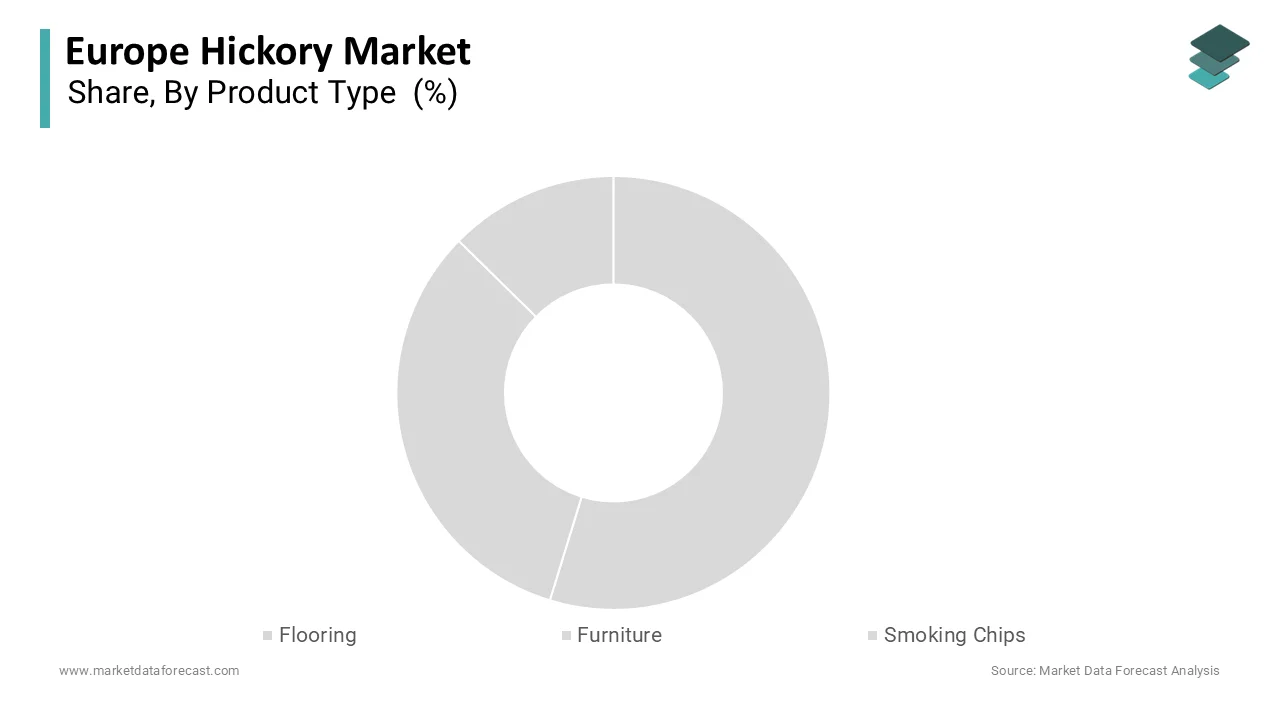
On the other hand, the smoking chips segment is a promising segment and is projected to register a CAGR of 9.2% over the forecast period, owing to the explosive popularity of barbecue culture and the artisanal food movement across Europe. The surge in home barbecue adoption is the foremost accelerator for the smoking chips segment, as European consumers increasingly invest in sophisticated smoking equipment that requires specific wood fuels. For instance, the number of households owning a barbecue grill in Europe has been rising, with a growing subset utilizing these units for slow‑smoking techniques that specifically demand hickory chips for authentic flavor. Unlike lump charcoal or generic wood, hickory provides a distinct, strong, and bacon‑like taste that is essential for traditional American‑style barbecue, creating a recurring purchase cycle for consumable chips. Furthermore, the rise of social media food culture has popularized smoking meats at home, which is driving experimentation and consistent usage of hickory products. Retailers have responded by expanding shelf space for various hickory chip blends and making them more accessible to the mass market. This shift from occasional grilling to dedicated smoking rituals underpins the high growth trajectory of this segment.
By Application Insights
The construction segment led the market by holding 43.9% of the European market share in 2025. This dominance is primarily attributed to the extensive use of hickory in structural and finish carpentry, particularly for flooring and decking in high‑end residential and commercial projects. The prevalence of hickory in high‑end residential construction is a key driver, as builders and architects specify it for its durability and aesthetic versatility in luxury homes. As per construction industry data, hardwood flooring installation in new luxury builds in countries like Switzerland and Sweden frequently utilizes hickory due to its ability to complement modern minimalist designs with its warm, varied tones. The material's resistance to wear makes it a practical choice for entryways, living areas, and staircases where durability is non‑negotiable. Furthermore, the trend towards sustainable building practices favors hickory because of its long lifecycle, reducing the need for frequent replacements and associated waste. According to the European Construction Sector Observatory, material longevity is a critical criterion for green building certifications, a standard that rd hickory easily meets. The integration of hickory into custom cabinetry and millwork within these homes further boosts its consumption volume. As wealth distribution in Europe supports continued investment in premium real estate, the construction sector remains the primary outlet for hickory lumber.
However, the food smoking segment is the fastest‑growing segment and is anticipated to expand at a CAGR of 9.55% over the forecast period. This acceleration mirrors the product type trends, driven by the deepening integration of smoking techniques into both professional culinary arts and home cooking traditions. The escalating consumer preference for smoked flavors in everyday diets is further supporting the expansion of the food smoking segment in the European market. For instance, the flavor profile imparted by hickory is increasingly recognized as a premium attribute, prompting manufacturers to adopt hickory smoking processes to differentiate their products. This trend is not limited to traditional meats but extends to plant‑based alternatives, where smoking adds depth and complexity to vegan products. The versatility of hickory allows it to pair well with a wide range of ingredients, making it a staple in industrial food processing facilities. Furthermore, the rise of ready‑to‑eat meals featuring smoked ingredients has expanded the addressable market for hickory smoking applications. According to consumer surveys, a majority of European shoppers associate "smoked" labels with higher quality and artisanal production, which is driving demand across the supply chain. This broadening application base ensures that the food smoking segment outpaces traditional construction and furniture uses in terms of growth rate.
By Distribution Channel Insights
The specialty stores segment was the leading distribution channel for the European hickory market and accounted for 46.4% of the regional market share in 2025. The dominance of the specialty stores segment in the European market is attributed to the need for expert guidance, tactile product evaluation, and the availability of niche hickory products that general retailers often do not stock. The requirement for expert consultation and physical verification of wood quality drives consumers and professionals toward specialty stores, which are further contributing to the expansion of the specialty stores segment in the regional market. Hickory is a premium material with significant variations in grain and color, making in‑person selection crucial for flooring and furniture projects. As per retail industry insights, a majority of high‑value timber purchases in Europe are made through specialized dealers who provide technical advice on installation, finishing, and maintenance. These stores employ knowledgeable staff who can educate customers on the specific grades and cuts of hickory available, ensuring the right product is chosen for the intended application. The trust factor is paramount, especially given the strict regulatory environment regarding wood sourcing; specialty stores often provide immediate documentation of compliance with the EU Deforestation Regulation, assuring buyers of ethical sourcing. Industry data confirms that return rates for hardwood purchased online are higher than those bought in‑store due to mismatched expectations, reinforcing the preference for physical retail. Furthermore, specialty stores often offer value‑added services such as custom milling and finishing, which are essential for bespoke projects. This comprehensive service model cements their position as the primary channel for Hickory distribution.
On the other hand, the online retail segment is the fastest‑growing distribution channel and is estimated to witness a CAGR of 10.9% over the forecast period due to the digital transformation of the home improvement sector and the increasing comfort of consumers with purchasing high‑value building materials online. The rapid digitalization of the home improvement sector is favouring the growth of the online retail segment in the European market, as consumers increasingly turn to digital platforms for research and purchasing. For instance, the availability of high‑resolution imagery, virtual room visualization tools, and detailed product specifications has mitigated the traditional hesitation to buy wood online. Customers can now visualize how hickory flooring will look in their specific space before making a purchase, which reduces the perceived risk. Major online retailers have invested heavily in logistics networks that ensure safe and timely delivery of heavy timber products, addressing previous concerns about shipping damage. For instance, online sales of hardwood flooring in markets like the UK and Germany have been rising, outpacing brick‑and‑mortar growth. The convenience of comparing prices and reading verified reviews from other users further accelerates the shift to digital channels. As digital natives enter the prime home‑buying age, the preference for online shopping is expected to intensify, which is driving sustained growth for this segment.
COUNTRY LEVEL ANALYSIS
United Kingdom Hickory Market Analysis
The United Kingdom held the major share of 28.8% of the European market in 2025. The growth of the UK in the European market is driven by its role as the primary entry point for US hardwood exports and a deeply entrenched culture of both premium home renovation and barbecue enthusiasm. The UK construction sector remains resilient, with housing renovations driving demand for durable hickory flooring. As per trade data, the UK absorbed a significant portion of US hardwood lumber exports to Europe in early 2025, highlighting its logistical centrality. The British love for gardening and outdoor cooking is another pivotal factor, with the UK having the highest per capita ownership of barbecue grills in Europe, directly fueling the consumption of hickory smoking chips. The presence of numerous specialty timber merchants and a mature distribution network ensures widespread availability of hickory products across the country. Furthermore, the trend towards "American style" interiors in British homes has elevated hickory from a niche product to a mainstream choice for kitchens and living areas. Government incentives for energy‑efficient home improvements have also indirectly supported the market, as homeowners replace old flooring with long‑lasting hickory options. The combination of trade infrastructure, cultural affinity, and robust construction activity solidifies the UK's dominance in the regional hickory landscape.
Germany Hickory Market Analysis
Germany had a promising share of the European hickory market in 2025 due to its powerful manufacturing base and a strong cultural emphasis on quality and durability in both construction and furniture. German consumers are known for their willingness to invest in long‑lasting materials, making hickory's superior hardness a key selling point for flooring and cabinetry. As per industry reports, the German furniture manufacturing sector, the largest in Europe, increasingly incorporates hickory for high‑end bespoke pieces that require shock resistance and unique aesthetics. The "Do It Yourself" culture in Germany is also highly developed, with millions of homeowners engaging in renovation projects that favor premium hardwoods. According to the German Federal Statistical Office, spending on home improvement materials grew in 2024, with hardwood flooring being a top category. Additionally, the German barbecue scene is vibrant, with smoking techniques gaining traction among culinary enthusiasts who seek authentic hickory flavors. Strict environmental regulations in Germany also favor hickory due to its longevity and sustainability profile when sourced correctly. The country's central location and efficient logistics network facilitate the distribution of hickory to neighbouring regions, enhancing its market influence.
France Hickory Market Analysis
France is expected to exhibit a healthy CAGR in the European hickory market during the forecast period, owing to its luxury interior design sector and evolving culinary landscape. The French market is characterized by a high demand for aesthetically distinct materials that align with the country's reputation for style and elegance. Hickory's bold grain and warm tones resonate with French interior designers who use it to create statement pieces in luxury apartments and historic renovations. As per market analysis, the French luxury home market continues to expand, with renovation projects specifying exotic or premium hardwoods like hickory. The culinary sector in France is also adapting, with a growing number of chefs incorporating American barbecue techniques into their offerings, thereby increasing the demand for hickory smoking chips in professional kitchens. The presence of specialized importers who focus on high‑quality American woods ensures a steady supply to meet these niche demands. Furthermore, the French government's push for sustainable building materials supports the use of durable woods that reduce long‑term waste. The convergence of design excellence, culinary innovation, and sustainability goals positions France as a critical growth market for hickory products in Southern Europe.
Sweden Hickory Market Analysis
Sweden is predicted to capture a notable share of the European hickory market during the forecast period. The Swedish market is distinguishing itself through a strong commitment to sustainable living and high‑quality wooden architecture. The Swedish market is unique due to its deep‑rooted tradition of wood construction, which naturally extends to the adoption of premium imported species like hickory for specific high‑performance applications. Swedish consumers prioritize environmental certification and durability, criteria that hickory meets effectively when sourced from certified US forests. As per sustainability reports, Sweden leads Europe in green building certifications, and the inclusion of long‑lasting hickory flooring contributes to the lifecycle assessment scores of these buildings. The Scandinavian design aesthetic, which values natural textures and warmth, aligns perfectly with the visual characteristics of hickory, making it a popular choice for modern interiors. Industry data indicates that the Swedish home improvement market has been growing, with a notable shift towards hardwearing materials capable of withstanding harsh winters. Additionally, the outdoor lifestyle in Sweden, including summer cottages and grilling traditions, supports the demand for hickory smoking products. The country's advanced logistics and high disposable income levels further facilitate the import and consumption of premium hickory goods, securing its place among the top five markets.
Netherlands Hickory Market Analysis
The Netherlands is estimated to witness a steady CAGR in the European hickory market during the forecast period due to its strategic position as a major logistics hub and its dense urban housing market. The Dutch market is characterized by high population density and a thriving real estate sector where space optimization and material quality are paramount. Hickory flooring is increasingly favored in Dutch urban apartments for its ability to withstand heavy use in compact living spaces while adding a touch of luxury. As per port authority data, the Port of Rotterdam serves as a critical entry point for US hardwoods, facilitating efficient distribution not only domestically but also to neighboring Belgium and Germany. This logistical advantage ensures competitive pricing and availability for Dutch consumers. The Netherlands also boasts a vibrant food culture with a growing interest in international cuisines, including American barbecue, which drives retail sales of hickory smoking chips. Market observations confirm that online retail penetration for home improvement products in the Netherlands is among the highest in Europe, accelerating the adoption of hickory through digital channels. The Dutch emphasis on circular economy principles also supports the use of durable materials like hickory that can be refurbished and reused, extending their lifecycle. These factors combine to make the Netherlands a dynamic and strategically important market for hickory in Northern Europe.
COMPETITIVE LANDSCAPE
The competition in the European hickory market is characterized by a dynamic interplay between specialized importers, collective industry bodies, and local distributors who vie for dominance in a niche yet high-value sector. Since hickory is not native to Europe, the competitive landscape relies heavily on the efficiency of transatlantic supply chains and the ability to meet rigorous environmental standards. Major competitors differentiate themselves through superior logistical capabilities, ensuring consistent availability despite potential shipping disruptions. The market sees intense rivalry in the flooring segment, where providers compete on the quality of finish and the breadth of available grades. In the culinary sector, competition focuses on brand recognition and the authenticity of flavor profiles offered to barbecue enthusiasts. New entrants often struggle due to the high capital requirements for maintaining compliant inventory and establishing trust with European buyers. Established players leverage long-standing relationships with American mills to secure priority access during periods of high global demand. The overall environment favors companies that can seamlessly integrate regulatory compliance with customer service excellence while educating the market on the irreplaceable qualities of hickory wood.
KEY MARKET PLAYERS
Some of the companies that are playing a dominating role in the global Europe Hickory Market include:
- HS Timber Group
- Global Timber
- Exotic Hardwoods UK Ltd
- Mijatovic Ltd
- Kebony
- American Hardwood Export Council
- Forest Products Distributors
- Grosso Legnami SRL
- Holzindustrie Schweighofer
TOP LEADING PLAYERS IN THE MARKET
- The American Hardwood Export Council serves as the primary collective voice for the United States hardwood industry and plays a pivotal role in the European hickory market by facilitating trade and promoting sustainable practices. Although not a single commercial entity, this organization coordinates the export efforts of numerous mills and suppliers that dominate the European supply chain for hickory. Their recent actions focus heavily on navigating the complexities of the European Union Deforestation Regulation to ensure uninterrupted market access for member companies. They have launched extensive educational campaigns targeting European architects and specifiers to highlight the durability and environmental credentials of American hickory. By organizing trade missions and participating in major European construction expos, they strengthen the market position of US exporters against local alternatives. Their technical resources provide critical data on grading and performance, ensuring that European buyers maintain confidence in imported hickory products for high-end applications.
- The National Wood Flooring Association is a leading global authority that significantly influences the European hickory market through its rigorous certification programs and technical standards for hardwood flooring. While based in North America, its guidelines are widely adopted by European installers and distributors who seek to guarantee the quality of hickory flooring installations. The organization contributes to the global market by providing essential training on the unique properties of hickory, such as its high density and tendency to expand, ensuring proper handling across international borders. Recent initiatives include the development of digital tools that help European consumers visualize hickory floors in their own spaces, thereby driving demand at the retail level. They actively collaborate with European trade bodies to align installation standards, reducing the risk of product failure and enhancing the reputation of hickory as a premium flooring choice. Their advocacy for sustainable forestry practices also resonates strongly with environmentally conscious European buyers.
- Lumber Specialties International operates as a key specialized distributor that connects American hickory producers directly with high-end European manufacturers and retailers. This company has established a robust logistics network that ensures the timely delivery of kiln-dried hickory lumber and smoking chips to major ports across the continent. Their contribution to the global market involves maintaining strict quality control measures that meet the exacting standards of European furniture makers and flooring companies. Recent actions to strengthen their market position include investing in advanced inventory management systems that provide real-time tracking for compliance with new EU regulations. They have also expanded their product range to include pre-finished hickory planks tailored specifically for European design trends. By offering customized milling services and technical support, they have become a preferred partner for European businesses seeking reliable sources of authentic American hickory for luxury projects.
TOP STRATEGIES USED BY KEY MARKET PARTICIPANTS
Key players in the European hickory market primarily employ strategies focused on regulatory compliance and supply chain transparency to navigate the stringent European Union Deforestation Regulation. Companies are investing heavily in digital traceability systems that track wood from the forest floor to the final destination to ensure full legal adherence. Another major strategy involves product differentiation through premium branding that highlights the unique hardness and aesthetic appeal of hickory compared to native European woods. Market participants are also expanding their distribution networks by forming strategic partnerships with local specialty stores and online retailers to increase market penetration. Educational initiatives targeting architects and designers are widely used to promote the technical benefits and sustainability credentials of American hickory. Additionally, firms are diversifying their product portfolios to include engineered hickory solutions that offer greater stability and lower costs for broader application ranges.
MARKET SEGMENTATION
This research report on the europe hickory market is segmented and sub-segmented into the following categories.
By Product Type
- Flooring
- Furniture
- Smoking Chips
- Others
By Application
- Construction
- Furniture Manufacturing
- Food Smoking
- Others
By Distribution Channel
- Specialty Stores
- Supermarkets/Hypermarkets
- Online Retail
By Country
- United Kingdom
- Germany
- France
- Sweden
- Netherlands
- Rest of Europe
Access the study in MULTIPLE FORMATS
Purchase options starting from
$ 2000
Didn’t find what you’re looking for?
TALK TO OUR ANALYST TEAM
Need something within your budget?
NO WORRIES! WE GOT YOU COVERED!
Call us on: +1 888 702 9696 (U.S Toll Free)
Write to us: sales@marketdataforecast.com