- Product Description Description
- Table of Contents TOC
- List of Table & Figure LOT
- Get Free Sample PDF Sample PDF
Europe High Potency APIs (HPAPI) Market Summary
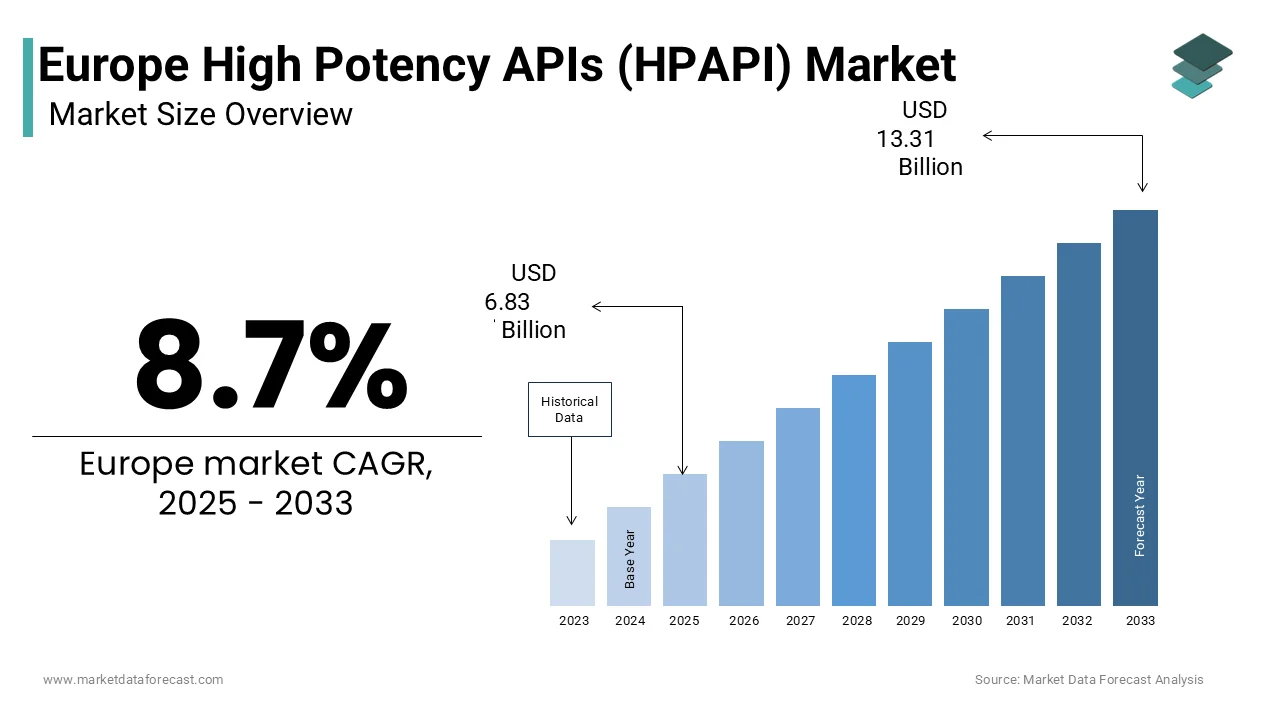
The Europe HPAPI market was valued at USD 6.28 billion in 2024 and is projected to reach USD 13.31 billion by 2033 (8.7% CAGR), driven by oncology pipelines, ADC expansion, and advanced containment investments.
Market Snapshot
- 2024: USD 6.28 bn — 2025: USD 6.83 bn — 2033 forecast: USD 13.31 bn
- CAGR (2025–2033): 8.7%
Quick Macro Drivers
- Rapid growth of oncology R&D and ADC payload demand.
- Europe’s strong biotech hubs and public funding for advanced therapies.
- Stricter GMP Annex 1 / REACH safety & containment requirements (capital-intensive upgrades).
Core Restraints
- High capex for containment and cleaning-validation; long tech-transfer timelines.
- Skilled workforce shortage for high-containment operations and analytical controls.
- Cross-contamination risk forces dedicated suites, reducing asset utilisation.
High-Value Opportunities
- Outsourcing to specialist CDMOs (end-to-end ADC payload + bioconjugation services).
- Continuous manufacturing & closed systems (flow chemistry, skid units) to lower exposure and costs.
- Generic HPAPI expansion as patents expire — potential 11.3% CAGR (cost-containment drivers).
Major Challenges
- Regulatory fragmentation across EU member states on OELs, HVAC and monitoring practices.
- Intensive cleaning validation burdens and scheduling constraints in multi-product facilities.
Fastest-Growing Segments (callouts)
- Biotech HPAPIs: ~15.5% CAGR (enzymatic/fermentation routes + bioconjugation)
- Generic HPAPIs: ~11.3% CAGR (patent expiries enable capacity play)
Country Leaders (brief)
- Germany: largest hub (26.6% share) — industrial scale + regulatory rigor.
- Switzerland & UK: premium innovation nodes (Roche/Novartis/AZ R&D and CDMOs).
- Ireland & France: strategic manufacturing gateways and capacity growth.
Europe High Potency APIs (HPAPI) Market Size
The europe HPAPI market was valued at USD 6.28 billion in 2024, is expected to have an 8.7 % CAGR from 2025 to 2033 and be worth USD 13.31 billion by 2033 from USD 6.83 billion in 2025.
Highly Potent Active Pharmaceutical Ingredients (HPAPI) include advanced chemical and biologic compounds exhibiting biological activity at extremely low doses—typically ≤150 micrograms per kilogram of body weight or with occupational exposure limits at or below 10 micrograms per cubic meter of air. These substances are primarily used in oncology, hormonal therapies, and targeted treatments for rare diseases, including antibody drug conjugates (ADCs), cytotoxic agents, and peptide-based therapeutics. Unlike conventional APIs, HPAPIs demand specialized containment infrastructure, rigorous operator safety protocols, and validated analytical methods due to their high toxicity and teratogenic potential. Europe’s leadership in biopharmaceutical innovation and complex drug development is primarily driving this market expansion. According to the European Medicines Agency, 114 new medicines received positive opinions in 2024, including multiple oncology therapies that utilize HPAPIs and ADCs. Many clinical-stage oncology compounds in Europe are classified as highly potent. Regulatory frameworks under the EU Good Manufacturing Practice Annex 1 and REACH further define handling, containment, and waste disposal standards. This intersection of scientific complexity, therapeutic necessity, and stringent safety governance shapes the unique operational and strategic landscape of the European HPAPI market.
MARKET DRIVERS
Rising Prevalence of Oncology and Targeted Therapy Development
The surge in oncology drug pipelines across Europe serves as the key driver for the European HPAPI market, as the majority of modern anti‑cancer agents fall under the highly potent classification. According to the International Agency for Research on Cancer (IARC), nearly 3 million new cancer cases were diagnosed in the EU‑27 in 2022, with incidence continuing to rise into 2024. This creates urgent therapeutic needs that drive innovation in cytotoxic and targeted therapies. According to the European Medicines Agency (EMA), a significant share of oncology medicines under accelerated assessment in 2024 involved HPAPIs, particularly antibody‑drug conjugates (ADCs). These molecules combine monoclonal antibodies with ultra‑potent cytotoxins requiring HPAPI‑grade synthesis and handling. Academic and biotech hubs in Germany, the UK, and Switzerland are advancing peptide receptor radionuclide therapies and small‑molecule inhibitors that further expand the HPAPI pipeline. This therapeutic imperative transforms HPAPI manufacturing from a niche capability into a strategic necessity for pharmaceutical and contract development organizations across Europe.
Expansion of Antibody Drug Conjugate (ADC) Platforms and Biologic Modalities
The rapid clinical and commercial adoption of ADCs is fundamentally reshaping HPAPI demand dynamics in Europe. ADCs consist of a monoclonal antibody linked to a highly potent cytotoxic payload requiring HPAPI‑level containment during linker‑payload synthesis. According to the European Society for Medical Oncology (ESMO), more than a dozen ADCs are currently approved in the EU, with over 80 in active clinical trials as of 2025. The European Commission’s Innovative Health Initiative allocated €220 million in 2024 to support next‑generation bioconjugation platforms, accelerating ADC development. This modality’s success stems from its ability to deliver ultra‑potent agents directly to tumour cells, minimizing systemic toxicity while maximizing efficacy. However, the payload component alone often accounts for less than 2% of the final drug mass yet demands the majority of containment infrastructure investment. As European biotechs such as ADC Therapeutics and Seagen’s partners scale production, demand for HPAPI contract manufacturing with integrated bioconjugation and analytical validation capabilities intensifies and is establishing ADCs as a core engine of HPAPI market growth in Europe.
MARKET RESTRAINTS
Stringent Occupational Safety and Containment Regulations
The European HPAPI market faces significant operational constraints from the EU’s rigorous occupational health and safety mandates governing highly potent compound handling. Directive 2004/37/EC on carcinogens and mutagens at work requires employers to maintain operator exposure below strict occupational exposure limits—often ≤10 µg/m³. According to EU‑OSHA, many pharmaceutical facilities handling HPAPIs required infrastructure retrofits between 2021 and 2024 to comply with updated GMP Annex 1 guidelines. These upgrades can cost tens of millions of euros per facility, as noted in industry reports. Additionally, validation of cleaning procedures for cross‑contamination control requires extensive analytical testing, extending batch release timelines. The cumulative effect is elevated capital intensity, prolonged tech transfer cycles, and high barriers to entry that limit the number of qualified manufacturers and constrain capacity expansion.
Limited Skilled Workforce for HPAPI Handling and Manufacturing
A critical yet often overlooked restraint in the European HPAPI market is the shortage of personnel trained in high‑containment pharmaceutical operations. According to the European Industrial Pharmacists Group (EIPG), the number of professionals with certified HPAPI expertise remains limited across the EU. This scarcity is exacerbated by the specialized nature of the work as operators must master gowning, operate glove boxes under negative pressure, and interpret real‑time monitoring data. Only a handful of EU member states, such as Germany, Ireland, and Switzerland, have dedicated HPAPI training centres accredited by the EMA. According to a 2024 survey by PSCI Europe, a majority of CDMOs reported project delays due to staffing gaps in HPAPI suites. Without scalable education pathways and cross‑industry competency frameworks, the workforce bottleneck will continue to limit manufacturing throughput and increase reliance on a handful of established contract partners.
MARKET OPPORTUNITIES
Growth in Outsourcing to Specialized HPAPI CDMOs
The increasing complexity of HPAPI synthesis and stringent regulatory requirements are driving pharmaceutical companies to outsource development and manufacturing to specialized CDMOs, which is a significant opportunity for the European HPAPI market. According to Medicines for Europe, many small and mid‑sized biotechs lack in‑house HPAPI capabilities and rely on CDMOs for supply. This trend is amplified by the capital intensity of containment infrastructure; building a new HPAPI suite costs more than twice as much as a standard API facility. Leading European CDMOs such as Evonik, Siegfried, and Lonza have responded by expanding multi‑product HPAPI suites. In 2024, Lonza expanded its Visp, Switzerland HPAPI facility to support ADC payloads. These investments enable faster tech transfer, regulatory readiness, and scale‑up, which is transforming CDMOs from service providers into strategic innovation partners in Europe’s advanced therapy ecosystem.
Adoption of Continuous Manufacturing and Closed Processing Technologies
The integration of continuous manufacturing and fully closed processing systems presents a notable opportunity for the European HPAPI market. Unlike traditional batch methods, continuous flow reactors minimize operator exposure by containing reactions within sealed tubing and enabling real‑time purification. According to the Innovative Medicines Initiative (IMI), pilot projects in Germany and the Netherlands demonstrated major reductions in open handling steps and solvent consumption using continuous HPAPI platforms. The EMA’s 2024 reflection paper on advanced manufacturing encourages adoption of these technologies through expedited regulatory pathways. Companies such as Bayer and Novartis are partnering with equipment vendors to deploy modular skid‑based HPAPI units that can be rapidly reconfigured for new molecules. Additionally, closed transfer systems with split butterfly valves and RFID‑enabled material tracking reduce cross‑contamination risks. As these technologies mature, they promise to lower containment costs, accelerate development timelines, and expand access to HPAPI manufacturing across Europe.
MARKET CHALLENGES
High Cross Contamination Risk and Facility Validation Burden
The extreme potency of HPAPIs imposes extraordinary challenges in preventing cross‑contamination within multi‑product facilities, which is one of the major challenges to the European HPAPI market. Even trace residues can compromise subsequent batches of non‑potent products, necessitating exhaustive cleaning validation protocols. According to the European Directorate for the Quality of Medicines (EDQM), cleaning limits for HPAPIs are often set at 0.1% of the therapeutic dose or 10 ppm, whichever is lower. A single HPAPI campaign can generate hundreds of validation samples, extending facility turnaround by several weeks, as reported by the Parenteral Drug Association (PDA) Europe. Many manufacturers resort to dedicated HPAPI suites, but this reduces asset utilization and increases fixed costs. In shared facilities, scheduling becomes highly constrained as non‑HPAPI batches cannot follow HPAPI runs without full decontamination. This rigidity limits manufacturing agility and discourages smaller CDMOs from entering the segment, which is concentrating capacity among a few players and increasing supply chain vulnerability.
Complex Regulatory Divergence Across EU Member States
Despite EU‑wide GMP guidelines, the European HPAPI market contends with inconsistent national interpretations of containment and occupational safety requirements, which is creating compliance uncertainty and project delays and is challenging the expansion of the European HPAPI market. According to the EMA’s 2024 inspections and compliance report, discrepancies exist in how national authorities assess occupational exposure limits, engineering controls, and waste handling for HPAPIs. For example, Germany’s BfArM mandates real‑time air monitoring with alarm thresholds at 1 µg/m³ for certain cytotoxics, while Italy’s AIFA accepts periodic sampling at 10 µg/m³. Similarly, France’s ANSM requires separate HVAC systems for each HPAPI suite, whereas Spain’s AEMPS permits shared systems with stringent filtration. These divergences force manufacturers to maintain multiple compliance dossiers and adapt facility designs per country, inflating costs and slowing pan‑European tech transfers. Until the EU harmonizes HPAPI‑specific annexes under GMP and REACH, regulatory fragmentation will continue to impede market efficiency and innovation scalability.
REPORT COVERAGE
| REPORT METRIC | DETAILS |
| Market Size Available | 2024 to 2033 |
| Base Year | 2024 |
| Forecast Period | 2025 to 2033 |
| Segments Covered | By Type, Synthesis, Therapeutic Application and Region. |
| Various Analyses Covered | Global, Regional and Country-Level Analysis, Segment-Level Analysis, Drivers, Restraints, Opportunities, Challenges; PESTLE Analysis; Porter’s Five Forces Analysis, Competitive Landscape, Analyst Overview of Investment Opportunities |
| Countries Covered | UK, France, Spain, Germany, Italy, Russia, Sweden, Denmark, Switzerland, Netherlands, Turkey, Czech Republic, and the Rest of Europe |
| Market Leaders Profiled | Pfizer, Inc. (U.S.), Novartis International AG (Switzerland), Sanofi (France), F. Hoffmann-La Roche Ltd. (Switzerland), Eli Lilly and Company (U.S.), Bristol-Myers Squibb (U.S.), Boehringer Ingelheim (Germany), Teva Pharmaceutical Industries Ltd. (Israel), Merck & Co., Inc. (U.S.), AbbVie Inc. (U.S.), and Mylan Inc. (U.S.). |
SEGMENTAL ANALYSIS
By Type Insights
The innovative HPAPI segment dominated the European HPAPI market by accounting for 78.5% of the market share in 2024. The dominance of this segment in the European market is attributed to Europe’s leadership in oncology and advanced therapy development. These include novel cytotoxic payloads for antibody‑drug conjugates (ADCs), next‑generation kinase inhibitors, and peptide‑based therapeutics under patent protection. According to EMA (2024), over 40% of new medicines approved contained new active substances, many of which were highly potent oncology agents. Companies such as AstraZeneca, Roche, and Bayer maintain robust proprietary pipelines targeting resistant tumour phenotypes. Horizon Europe allocated €310 million in 2024 to oncology compound development, which is accelerating preclinical to clinical translation. The Innovative Health Initiative fosters public‑private partnerships that de‑risk early‑stage HPAPI synthesis. This innovation ecosystem ensures innovative HPAPIs remain the dominant and highest‑value segment across Europe. In the next few years, the innovative HPAPIs segment is expected to retain leadership due to the growing oncology R&D and EU funding frameworks.
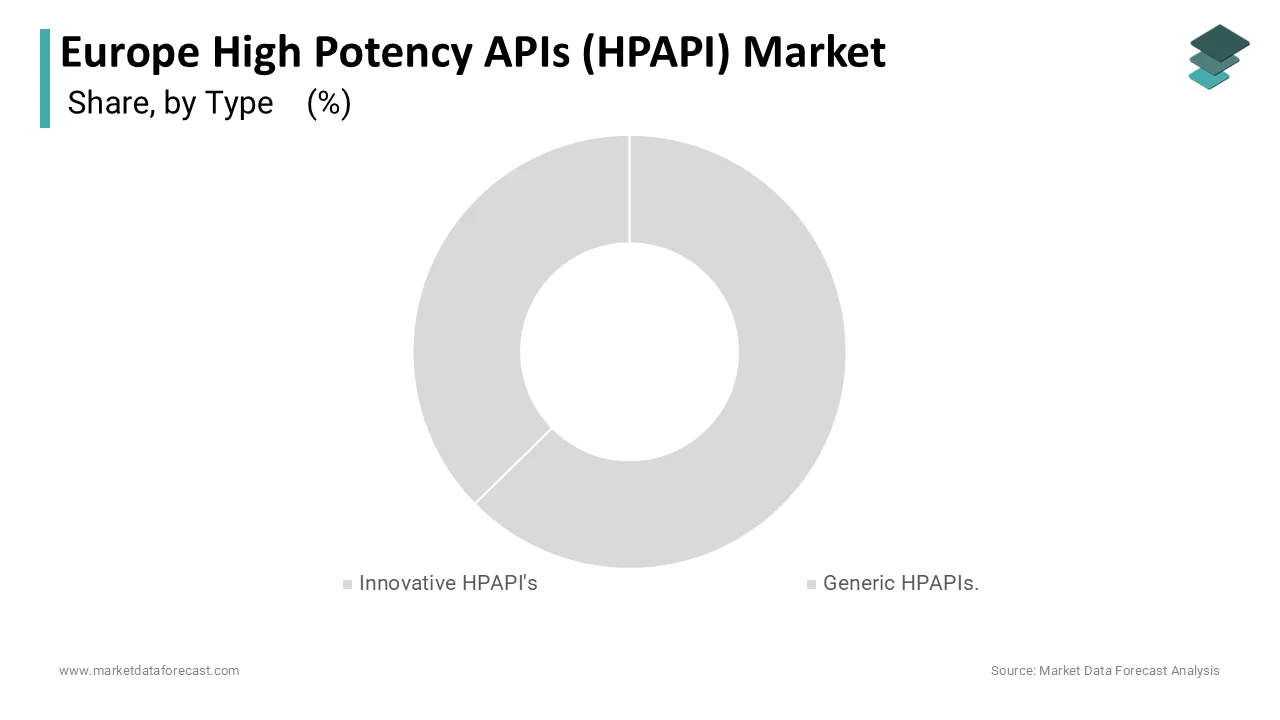
The generic HPAPIs segment is expected to register the fastest CAGR of 11.3% during the forecast period in the European market. The balance of patent expiries and cost‑containment policies is propelling growth. According to EFPIA (2024), widespread patent expirations in oncology have opened opportunities for generics. National HTA bodies in Italy and Spain mandate substitution where bioequivalence is proven, which is creating immediate market access. Manufacturers such as Dr Reddy’s and STADA have invested in EU‑compliant HPAPI suites under strict containment. According to IQVIA and EFPIA analyses, generics reduce oncology treatment costs by 40–70% while maintaining therapeutic outcomes. As more ADC payloads and hormonal agents enter off‑patent phases, generic HPAPIs will expand as critical enablers of affordable cancer care. Over the next few years, the generic HPAPIs segment is expected to grow rapidly due to the patent expiries and healthcare cost pressures.
By Synthesis Insights
The synthetic HPAPI segment held the largest share of the European HPAPI market by accounting for 65.4% of the market in 2024. The dominance of this segment in the European market is attributed to the chemical complexity and potency of small‑molecule cytotoxins used in oncology. These include auristatins, maytansinoids, and duocarmycin derivatives, forming the payload core of most ADCs. According to the EFPIA data (2024), the majority of ADC payloads approved in the EU are synthetic organic molecules. Facilities in Germany, Switzerland, and Ireland specialize in synthesizing these compounds using cryogenic reactions and high‑containment flow chemistry. EMA requires full impurity profiling for synthetic HPAPIs due to genotoxic risks, which requires advanced analytical control. Synthetic routes also enable precise molecular optimization, which is a key advantage in next‑generation payload development. This technical mastery, combined with established regulatory pathways, ensures synthetic HPAPIs remain the backbone of Europe’s potent compound manufacturing landscape. The synthetic HPAPIs segment is expected to remain dominant due to established infrastructure and regulatory familiarity.
The biotech HPAPIs segment is the fastest-expanding synthesis segment in the European HPAPI market and is expected to register a CAGR of 15.5% over the forecast period. Factors such as the rise of complex biologic modalities, including antibody drug conjugates, bispecific T cell engagers, and radiolabelled peptides that incorporate highly potent biological semi-synthetic components, are fuelling the biotech HPAPIs segment in the European market. According to the European Society for Medical Oncology, over 35biotech-derivedd HPAPIs entered Phase II or III trials in 2024 with payloads produced via enzymatic conjugation or microbial fermentation. Companies like Seagen and ImmunoGen have partnered with European CDMOs to scale biologic linker payload production under aseptic and containment conditions. The European Commission’s 2024 Advanced Therapy Medicinal Products roadmap allocated €185 million to support integrated bioconjugation platforms. Unlike traditional synthesis, biotech HPAPIs require a hybrid infrastructure combining biologics suites with HPAPI containment, which is a capability only emerging CDMOs possess. This technological convergence positions biotech HPAPIs as the highest growth frontier in advanced oncology manufacturing.
By Therapeutic Application Insights
The oncology segment dominated the European HPAPI market by accounting for the most dominating share of the European HPAPI market, owing to the central role of highly potent compounds in cancer treatment. According to IARC (2024), over 3.3 million new cancer cases were diagnosed in the EU. EMA approved 19 new oncology medicines in 2024, many containing HPAPIs such as datopotamab deruxtecan and sacituzumab govitecan. National cancer plans in Germany, France, and the Netherlands prioritize access to these therapies with dedicated reimbursement pathways. According to the EORTC data, a majority of EU oncology trials involve HPAPI‑based regimens. This therapeutic dominance is structural; the oncology segment remains the primary domain where extreme potency is both acceptable and essential. Over the forecast period, the oncology HPAPIs segment is expected to sustain dominance due to the rising cancer incidence and EMA approvals.
The hormonal balance segment is anticipated to grow at a promising CAGR of 10.2% over the forecast period in the European market. The balance of prostate and breast cancer prevalence and outpatient therapy adoption is propelling the growth of the hormonal balance segment in the European market. According to the European Association of Urology (EAU, 2024), prostate cancer remains the most common male malignancy in Europe. HPAPIs such as abiraterone and enzalutamide suppress androgen synthesis or receptor signalling at nanomolar concentrations, which qualifies them as highly potent under EMA guidelines. National health systems prioritize these oral therapies due to outpatient administration and reduced hospitalization costs. According to IQVIA (2024), hormonal HPAPI prescriptions grew significantly across Southern Europe. As cancer care shifts toward long‑term hormonal modulation, which is driving the demand for steroidal HPAPIs will continue to rise outside traditional cytotoxic paradigms. The Hormonal HPAPIs segment is expected to expand steadily owing to the growing prostate cancer prevalence and outpatient therapy adoption.
COUNTRY LEVEL ANALYSIS
Germany HPAPI Market Analysis
Germany led the market in Europe in 2024 by holding 26.6% of the regional market share. The dominating position of Germany in the European market is driven by its dense pharmaceutical network, regulatory expertise, and advanced manufacturing infrastructure. Germany hosts global R&D centres for Bayer, Merck KGaA, and Boehringer Ingelheim, and these are driving demand for novel HPAPI synthesis. Over 40 GMP‑compliant HPAPI suites operate across Bavaria and Hesse. The Federal Institute for Drugs and Medical Devices enforces rigorous containment standards, which ensure high‑quality manufacturing. Germany’s Hospital Pharmacy Act permits in‑house preparation of HPAPI‑based oncology infusions under strict safety protocols. In 2024, the government’s “PharmaMadeInGermany” initiative allocated €210 million to modernize API infrastructure, including HPAPI containment. Germany is expected to remain Europe’s most advanced and highest‑volume HPAPI hub in the coming years.
Switzerland HPAPI Market Analysis
Switzerland represents a premium innovation node in Europe’s HPAPI market. Roche and Novartis, headquartered in Basel, maintain extensive HPAPI pipelines with over 30 ADCs and cytotoxic agents in clinical development. According to Swissmedic, oncology submissions in 2024 increasingly involved HPAPIs. Lonza and Siegfried operate high‑containment multi‑product facilities serving global clients. Switzerland’s bilateral agreements with the EU ensure seamless regulatory alignment, while its vocational training system produces skilled HPAPI operators through the Swiss Pharma Training Network. In 2024, the State Secretariat for Economic Affairs launched the “Advanced Therapies Switzerland” fund, allocating CHF 150 million to expand HPAPI and ADC manufacturing capacity. Switzerland is expected to sustain its role as a premium HPAPI innovation hub.
United Kingdom HPAPI Market Analysis
The United Kingdom plays a vital role in Europe’s HPAPI market. AstraZeneca’s R&D hub in Cambridge develops next‑generation HPAPI payloads, including novel topoisomerase inhibitors now in Phase III trials. According to the MHRA, over 50 HPAPI‑based medicines were under UK clinical investigation in 2024. Leading CDMOs such as Sterling Pharma Solutions and Quotient Sciences operate dedicated HPAPI suites compliant with MHRA and EMA standards. Post‑Brexit regulatory autonomy has enabled faster innovation pathways, including the Innovative Licensing and Access Pathway for oncology drugs. The National Institute for Health and Care Research funds academic‑industry consortia focused on safer HPAPI synthesis. The UK is expected to remain a critical source of scientific talent and manufacturing capability.
Ireland HPAPI Market Analysis
Ireland represents a critical manufacturing gateway for HPAPIs entering and exiting Europe. Over 16 of the top 20 global pharma companies operate API facilities in Ireland, including HPAPI‑capable sites for Pfizer, Johnson & Johnson, and AbbVie. According to IDA Ireland’s Annual Report 2024, the sector invested €5.2 billion, with 38% directed toward high‑potency and biologics infrastructure. The Health Products Regulatory Authority enforces EU GMP standards with additional guidance on occupational exposure monitoring. Ireland’s English‑speaking workforce, strong engineering education, and 12.5% corporate tax rate attract HPAPI investment. Companies such as Cambrex and Alkermes expanded HPAPI suites in Athlone and Dublin to serve European clinical supply needs. Ireland is expected to sustain its role as a strategic HPAPI manufacturing hub.
France HPAPI Market Analysis
France is emerging as a growing HPAPI market in Europe. The French National Cancer Institute allocated €1.8 billion in 2024 to support the development of novel HPAPI‑based therapies. According to ANSM, 28 HPAPI clinical trials were initiated in French centres in 2024, focusing on resistant solid tumours. CDMOs such as Novasep and Fareva operate high‑containment facilities serving domestic biotechs and international clients. France’s “France 2030” investment plan includes €450 million for advanced therapy manufacturing, including HPAPI infrastructure in Lyon and Strasbourg. The Ministry of Higher Education funds specialized master’s programmes in potent compound handling at universities in Paris and Montpellier. France is expected to strengthen its relevance in Europe’s HPAPI ecosystem.
COMPETITIVE LANDSCAPE
The European HPAPI market features intense competition among a select group of multinational CDMOs and in-house pharmaceutical manufacturers possessing specialized containment capabilities. Lonza Siegfried Evonik and Novasep dominate through integrated portfolios, regulatoexcellencecee and deep technical expertise in cytotoxic and hormonal HPAPIs. Competition is primarily driven by containment robustness, analytical validation capacity, flexibility, and regulatory track record rather than price due to the high-risk nature of these compounds. New entrants face formidable barriers, including capital intensity, workforce scarcity, and complex validation requirements. Differentiation arises through innovations in continuous manufacturing,g gbioconjugation and digital compliance. The market rewards companies that combine engineering precision, scientific agility, and sustainability while penalizing those lacking scale or regulatory credibility. With oncology pipelines expanding, the competitive landscape remains dynamic yet highly concentrated.
KEY MARKET PLAYERS
Key companies in the europe high potency API (HPAPI) market profiled in the report are
- Pfizer, Inc. (U.S.)
- Novartis International AG (Switzerland)
- Sanofi (France)
- F. Hoffmann-La Roche Ltd. (Switzerland)
- Eli Lilly and Company (U.S.)
- Bristol-Myers Squibb (U.S.)
- Boehringer Ingelheim (Germany)
- Teva Pharmaceutical Industries Ltd. (Israel)
- Merck & Co., Inc. (U.S.)
- AbbVie Inc. (U.S.)
- Mylan Inc. (U.S.)
TOP LEADING PLAYERS IN THE MARKET
- Lonza Group AG is a global leader in contract development and manufacturing with a dominant presence in the European HPAPI market through its high containment facilities in Visp, Switzerland, and Portsmouth, UK. The company specializes in the synthesis of cytotoxic payloads for antibody drug conjugates and complex oncology molecules under stringent GMP Annex 1 compliance. In 2024, Lonza commissioned a new multi-product HPAPI suite in Visp featuring closed transfer systems and real-time environmental monitoring to support next-generation ADC pipelines. It also expanded its integrated bioconjugation capabilities to offer end-to-end ADC development from payload to drug product. These strategic enhancements reinforce Lonza’s role as a trusted partner for global biopharma in advancing highly potent therapies from clinical to commercial scale.
- Siegfried AG is a Switzerland-based CDMO with deep expertise in highly potent small molecule synthesis serving leading oncology and hormonal therapy developers across Europe and North America. The company operates dedicated HPAPI suites in Zofingen, Switzerland, and Hame, Germany, equipped with isolator technology and segregated HVAC systems. In early 2025, Siegfried launched its “HPAPI 4.0” initiative, actively integrating digital batch record and line analytics to enhance data integrity and regulatory readiness. It also entered a long-term supply agreement with a top ten European biotech for a novel kinase inhibitor under accelerated approval. These actions strengthen Siegfried’s position as a science-driven agile manufacturer capable of handling complex potent molecules with high quality and reliability.
- Evonik Industries AG plays a pivotal role in the European HPAPI market through its Health Care segment, offering custom synthesis of highly potent oncology and peptide-based APIs. The company leverages its site in Hanau, Germany, which features state-of-the-art containment infrastructure compliant with EU GMP and REACH standards. In 2024, Evonik expanded its continuous flow chemistry platform for HPAPIs, reducing solvent use by 40% and operator exposure by over 90%. It also partnered with a German university to develop predictive toxicology models for early-stage HPAPI candidates. These innovations align with Europe’s sustainability and safety mandates while enhancing Evonik’s appeal to innovators seeking greener and safer manufacturing pathways for advanced therapies.
TOP STRATEGIES USED BY THE KEY MARKET PARTICIPANTS
Key players in the European HPAPI market are investing heavily in high containment infrastructure with closed system processing to ensure operator safety and regulatory compliance. They adopt continuous manufacturing and flow chemistry to minimize exposure and improve efficiency. Companies integrate digital batch records and real-time environmental monitoring to enhance data integrity under GMP Annex 1. Strategic partnerships with biotech firms secure long-term supply agreements for novel oncology pipelines. Expansion of bioconjugation and peptide synthesis capabilities addresses the rise of ADCs and targeted therapies. Additionally, firms pursue sustainability through solvent reduction and waste minimization to align with the EU Green Deal objectives. These strategies collectively reinforce technical leadership and commercial resilience.
MARKET SEGMENTATION
This research europe HPAPI market report has been segmented and sub-segmented into the following categories.
By Type
- Innovative HPAPI's
- Generic HPAPIs.
By Synthesis
- Biotech HPAPI's
- Synthetic HHPAPIs
By Therapeutic Application
- Oncology
- Glaucoma
- Hormonal Balance.
By Country
- UK
- France
- Spain
- Germany
- Italy
- Russia
- Sweden
- Denmark
- Switzerland
- Netherlands
- Turkey
- Czech Republic
- Rest of Europe