- Product Description Description
- Table of Contents TOC
- List of Table & Figure LOT
- Get Free Sample PDF Sample PDF
Market Size, 2025
$6.43 BnMarket Estimate, 2026
$6.52 BnMarket Forecast, 2034
$7.23 BnCAGR, 2026–2034
1.3%Europe HIV Therapeutics Market Summary
Market Size & Growth
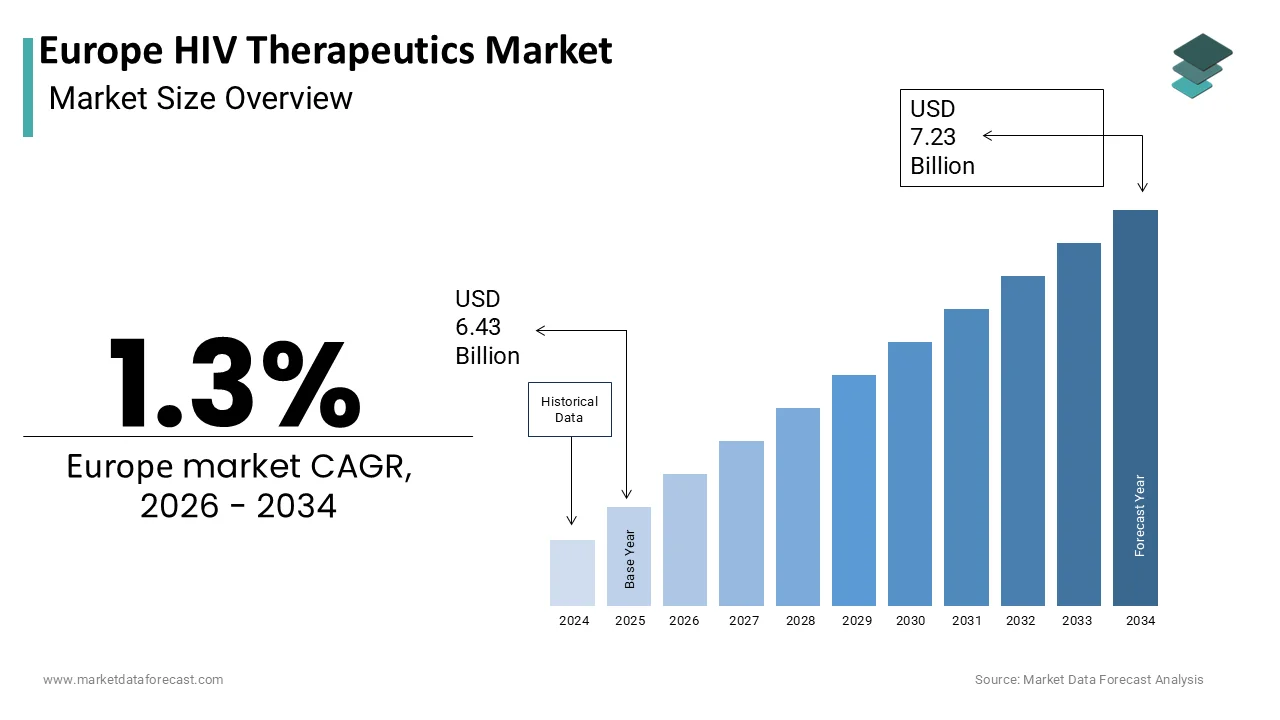
- The Europe HIV Therapeutics Market was valued at USD 6.43 billion in 2025.
- Expected to reach USD 6.52 billion in 2026 and USD 7.23 billion by 2034.
- The market is projected to grow at a CAGR of 1.3% during the forecast period, 2026 to 2034.
Key Market Segments
- By Product: Consumables segment dominated in 2025; Services segment is fastest-growing at a CAGR of 9.7% from 2025 to 2033.
- By Type: Viral Load Testing led with a 34.7% share in 2025; Early Infant Diagnostics is fastest-growing at a CAGR of 11.3% during the forecast period.
- By End User: Hospitals held the largest share at 52.5% in 2025; Home Care Settings is fastest-growing at a CAGR of 10.8% from 2025 to 2033.
- By Country: Germany led with 23.8% share in 2025; United Kingdom held 19.7% share in 2025.
Key Drivers
- Near-universal public healthcare reimbursement across EU/EEA nations covers integrase inhibitors and long-acting injectables under chronic disease management programs, sustaining consistent therapeutic demand.
- Adoption of long-acting injectable regimens, including cabotegravir and rilpivirine administered monthly or bimonthly, is improving adherence and patient quality of life, as recommended in national guidelines across Germany, France, and the UK.
- Expansion of publicly funded PrEP programs across the majority of EU/EEA countries, utilising the same antiretroviral molecules as treatment regimens, is broadening clinical infrastructure and supporting new HIV diagnosis reduction.
Key Players
ViiV Healthcare, Gilead Sciences, Janssen Pharmaceuticals NV, GlaxoSmithKline, Bristol-Myers Squibb, Pfizer, Boehringer Ingelheim, Merck, Hoffmann-La Roche.
Europe HIV Therapeutics Market Size
The Europe HIV Therapeutics Market is projected to grow from USD 6.43 billion in 2025 to USD 6.52 billion in 2026 and reach USD 7.23 billion by 2034, registering a CAGR of 1.3% during the forecast period from 2026 to 2034.
HIV therapeutics are antiretroviral agents and combination regimens designed to suppress viral replication, maintain immune function, and prevent disease progression in individuals living with human immunodeficiency virus. These include nucleoside reverse transcriptase inhibitors, non-nucleoside reverse transcriptase inhibitors, integrase strand transfer inhibitors, protease inhibitors, and novel long-acting formulations administered orally or via injection. The European treatment paradigm is defined by early diagnosis, immediate initiation of antiretroviral therapy, and lifelong adherence to achieve and sustain viral suppression, a strategy endorsed by the European AIDS Clinical Society and implemented across national health systems. According to the European Centre for Disease Prevention and Control (ECDC), while most people living with HIV in the EU/EEA are aware of their status and receiving treatment, progress is needed in some areas to reach global targets for testing and viral suppression. As per research, funding for the global HIV response, including international assistance, has faced significant challenges and is projected to decline, impacting prevention and treatment programs across many regions. This robust scientific and public health infrastructure positions HIV therapeutics not merely as medical interventions but as cornerstone tools in Europe’s strategy to end AIDS as a public health threat by 2030.
MARKET DRIVERS
Universal Healthcare Coverage and Centralised Reimbursement Ensure Broad Treatment Access
The region’s publicly funded healthcare systems play a pivotal role in ensuring near universal access to these antiretroviral agents and combination regimens, which drives the growth of the European HIV therapeutics market. This sustains consistent demand and high treatment coverage. According to research, the proportion of diagnosed individuals receiving antiretroviral therapy across the EU/EEA consistently trends toward high coverage, with most countries demonstrating strong performance in linking diagnosed people to treatment. National health services in these countries fully reimburse combination regimens, including high-cost integrase inhibitors and long-acting injectables under chronic disease management programs. As per research, EU nations largely aim for comprehensive HIV treatment, but the diverse access policies for undocumented migrants and asylum seekers mean care is inconsistent across the region. The United Kingdom's National Health Service maintains a universal, no co-payment policy for recommended antiretrovirals, reflecting robust access, while France employs a solidarity-based health system that aims to facilitate prompt access to treatment following diagnosis. This structural guarantee of care not only improves individual outcomes but also advances population-level viral suppression, contributing to the UNAIDS 95 95 95 targets. The removal of financial obstacles across Europe has successfully turned HIV from a deadly disease into a condition that can be managed long-term for most patients.
Adoption of Long-Acting and Simplified Regimens Enhances Adherence and Quality of Life.
The shift toward once daily oral regimens and long-acting injectables is significantly improving treatment adherence and patient satisfaction across the region, which propels the expansion of the European HIV therapeutics market. According to research, European guidelines strongly favour integrase strand transfer inhibitor-based regimens as primary treatment options for newly diagnosed individuals. The introduction of cabotegravir and rilpivirine as monthly or bimonthly injections has further transformed care for adherent patients with stable viral suppression. Studies show high patient satisfaction and maintenance of viral suppression with long-acting injectable antiretroviral therapies, offering a significant alternative to daily oral medication. National guidelines in Germany, France,ce and the UK recommend injectables as standard options for eligible patients. The European Medicines Agency facilitates timely access to new HIV treatments through various review procedures, reflecting ongoing innovation in the field. This clinical and regulatory alignment around patient-centred innovation is driving sustained uptake of advanced therapeutics that reduce pill burden and stigma while maintaining virologic control.
MARKET RESTRAINTS
High Cost of Novel Therapeutics Constrains Budget Allocation in Public Health Systems
The escalating price of next-generation HIV drugs poses significant budgetary pressure on national health services, particularly in Southern and Eastern Europe, which restricts the growth of the European HIV therapeutics market. According to research, the annual cost of long-acting injectable HIV treatments is considerably higher than that of standard oral regimens. In countries where health expenditure remains a low share of GDP, public payers often delay or restrict access to premium therapeutics. As per a study, access to new treatment modalities like long-acting injectables is limited and unequal across different regions, particularly in Eastern Europe, due to factors including cost and reimbursement policies. Even in wealthier nations, health technology assessment bodies demand extensive cost-utility data before approval. NICE in the UK evaluated the cost-effectiveness of the injectable regimen and ultimately recommended its use on the NHS, finding it to be a cost-effective option when provided through a specific commercial arrangement. These financial gatekeeping mechanisms create disparities in access and slow the adoption of clinically superior options despite their potential to improve adherence and reduce transmission.
Fragmented Diagnostic and Care Pathways Delay Treatment Initiation in Key Populations
Persistent gaps in HIV testing and linkage to care hinder timely therapeutic intervention, which in turn obstructs the expansion of the European HIV therapeutics market. These gaps are particularly impactful among marginalised groups such as men who have sex with men, migrants, and people who inject drugs. According to sources, A substantial proportion of people living with HIV across the European Region, particularly in Eastern Europe, remain undiagnosed, which is a major barrier to ending the AIDS epidemic as a public health threat. In Poland and Hungary, restrictive laws and stigma limit access to community testing, while in Italy and Spain, undocumented migrants face bureaucratic hurdles in enrolling in care. As per research, the time between HIV diagnosis and the start of antiretroviral treatment varies significantly across different countries within Europe, with some regions facing delays that hinder early access to life-saving care. These delays increase the risk of opportunistic infections and onward transmission. The EU’s Action Plan on HIV advocates for same-day treatment starts, but a majority of member states have yet to implement these protocols nationally. The complete public health potential of HIV therapeutics cannot be reached until testing and care pathways are both standardised across all regions and destigmatised.
MARKET OPPORTUNITIES
Expansion of Pre-Exposure Prophylaxis Programs Complements Therapeutic Strategies
The integration of pre-exposure prophylaxis into national HIV prevention frameworks is creating synergistic opportunities for therapeutic manufacturers through expanded clinical engagement, which accelerates the growth of the European HIV therapeutics market. This development also fosters infrastructure development. The provision of publicly funded PrEP has increased significantly across the majority of EU/EEA countries, although considerable variation in implementation and coverage levels persists among nations and across different key populations. These programs utilise the same antiretroviral molecules, such as tenofovir and emtricitabine, as treatment regimens, fostering familiarity among prescribers and supply chain efficiencies. As per sources, the introduction and availability of generic antiretroviral medications for PrEP have contributed to significant reductions in cost, which improves the potential for cost-effectiveness and wider public health implementation in many regions. Furthermore, PrEP clinics serve as entry points for testing and linkage to care. The expansion of PrEP services, alongside effective testing and treatment strategies, has contributed to a continued decline in new HIV diagnoses across the UK. The combined use of antiretroviral medications for both treatment (to suppress viral load and prevent transmission) and prevention (PrEP) is a fundamental strategy supporting global efforts to significantly reduce new HIV infections by 2030.
Advancement of Two-Drug Regimens and Capsid Inhibitors Redefines Treatment Paradigms
The emergence of simplified two-drug regimens and novel mechanisms of action, such as capsid inhibitors, is opening new therapeutic frontiers, which offer fresh prospects for the expansion of the European HIV therapeutics market. These frontiers balance efficacy with reduced toxicity. The combination of dolutegravir and lamivudine is now a recommended first-line option for treatment-naive patients, noted for its non-inferior efficacy and lower cumulative drug exposure. Lenacapavir, the first capsid inhibitor, has been approved, offering a subcutaneous administration that occurs twice yearly for individuals with multidrug-resistant HIV. A trial showed that heavily treatment-experienced patients using a new treatment achieved viral suppression at 26 weeks. National health systems in Switzerland and Sweden have fast-tracked reimbursement, recognising the value in complex cases. Besides, these innovations reduce long-term organ toxicity and polypharmacy risks, which is critical as the median age of people with HIV in Europe exceeds 50 years. "Next-generation agents redefine the standard care by enabling safer, sustainable, and less frequent dosing across diverse patient profiles.
MARKET CHALLENGES
Stigma and Discrimination Continue to Undermine Treatment Engagement
Social stigma remains a formidable barrier to consistent HIV care engagement across the region, despite medical advances, which holds back the growth of the European HIV therapeutics market. This is particularly true in conservative or rural areas. According to sources, many people living with HIV across the region report experiencing discrimination when seeking healthcare services. In some countries, a significant number of patients have admitted to skipping doses or medical appointments because of concerns about their status being revealed. A notable percentage of patients who have achieved viral suppression disengage from ongoing medical care over time. Digital health tools and community support mitigate some risks but cannot fully replace trust-based clinical relationships. Highly effective treatments exist, yet suboptimal adherence and retention will persist until anti-discrimination laws are enacted and providers receive adequate training to address structural and cultural barriers.
Complex Patent Landscapes and Delayed Generic Entry Limit Affordability
The prolonged exclusivity periods and strategic patenting by pharmaceutical companies delay the availability of these affordable generic antiretroviral agents and combination regimens in the region, which slows down the expansion of the European HIV therapeutics market. This practice thereby sustains high public expenditure. Manufacturers are using multiple secondary patents for antiretroviral drugs, which help extend their market protection beyond the initial patent duration. Generic versions of certain antiretrovirals became available relatively recently. The delayed arrival of generic competition for HIV medications has led to higher costs for public health systems. Political and trade pressures have prevented EU member states from implementing compulsory licensing for HIV medicines, even though the practice is allowed by EU law. This patent thicket strategy maintains high prices for newer regimens, limiting budget flexibility for innovation and equity in access across the region.
REPORT COVERAGE
| REPORT METRIC | DETAILS |
| Market Size Available | 2025 to 2034 |
| Base Year | 2025 |
| Forecast Period | 2026 to 2034 |
| Segments Covered | By Type, Application, and Region. |
| Various Analyses Covered | Global, Regional and Country-Level Analysis, Segment-Level Analysis, Drivers, Restraints, Opportunities, Challenges; PESTLE Analysis; Porter’s Five Forces Analysis, Competitive Landscape, Analyst Overview of Investment Opportunities |
| Countries Covered | UK, France, Spain, Germany, Italy, Russia, Sweden, Denmark, Switzerland, Netherlands, Turkey, Czech Republic, Rest of Europe |
| Market Leaders Profiled | GlaxoSmithKline, Bristol-Myers Squibb, Pfizer, Boehringer Ingelheim, Merck, Hoffmann-La Roche, Gilead Sciences |
SEGMENTAL ANALYSIS
By Product Insights
The consumables segment dominated the European HIV therapeutics market by capturing a substantial share in 2025. The dominance of the consumables segment is driven by the continuous and lifelong need for antiretroviral medications, diagnostic reagents, and related disposables. Many people in the European Union require a consistent supply of medications, including tablets, injectables, and administration kits, for daily therapy. National health systems treat HIV as a chronic condition with automatic prescription refills and home delivery mechanisms ensuring uninterrupted consumption. A significant volume of prescriptions for these therapies is dispensed across pharmacies in the EU, with single tablet regimens being widely used for new treatment initiations. Besides, routine monitoring necessitates recurring use of viral load and CD4 test kits, which are classified as consumables. Established systems for obtaining necessary supplies in several key European nations reinforce a steady requirement for bulk medication. The non-durable nature of these products and the lifelong treatment paradigm guarantee sustained and predictable consumption patterns across all European healthcare settings.
The services segment is on the rise and is expected to be the fastest-growing segment in the market by witnessing a CAGR of 9.7% from 2025 to 2033 due to the increasing complexity of HIV care and the integration of digital health support systems. National HIV programs increasingly incorporate remote support options and peer support as standard components of care. Funding initiatives support community-based services aimed at improving patient retention in care across various regions. Digital platforms are utilised to gather patient feedback, which helps clinical teams proactively support individuals at risk of disengaging from care. Integrated service models show effectiveness in reducing patient loss to follow-up. The introduction of long-acting injectable regimens necessitates specialised administration and monitoring services within clinics. As care shifts from purely biomedical to holistic patient-centred models, services are becoming indispensable to treatment success and public health impact.
By Type Insights
The viral load testing segment led the European HIV therapeutics market and accounted for a 34.7% share in 2025. The leading position of the viral load testing segment is attributed to its critical role in monitoring treatment efficacy and guiding clinical decisions. Viral load testing is consistently recommended at key intervals: upon diagnosis, six months after starting treatment, and every six to twelve months for individuals undergoing antiretroviral therapy. The use of viral load tests is widespread across Europe, indicating a consensus and practice regarding patient monitoring guidelines. Health systems in several countries require confirmation of viral suppression to ensure treatment continuation, with these outcomes forming a standard part of patient health records. Achieving an undetectable viral load is understood to be essential for preserving immune function and preventing transmission, a core principle integrated into standard treatment approaches. The adoption of point-of-care testing technologies has made testing more immediate and frequent by allowing for rapid results delivery. This clinical and public health centrality sustains viral load testing as the cornerstone of HIV management across Europe.
The early infant diagnostics segment is expected to exhibit a noteworthy CAGR of 11.3% during the forecast period, owing to intensified efforts to eliminate mother-to-child transmission and align with global elimination targets. Early virological testing is needed for infants in the EU born to mothers with HIV. Public health guidelines recommend nucleic acid testing within the first two months of life, and national health initiatives in several European countries have achieved high testing coverage through health networks. There is significant interest within Europe in developing innovative diagnostic tools, with new portable platforms becoming available. The strategy for managing infant HIV is shifting towards a preventative public health approach, which accelerates the adoption of new technologies for early infant diagnostics.
By End User Insights
In 2025, the hospitals segment was the largest segment in the European HIV therapeutics market by holding a 52.5% share. The prominence of the hospitals segment is credited to its role as primary sites for diagnosis, treatment initiation, and management of complex or advanced cases. Across the EU, numerous public hospitals have established departments dedicated to infectious diseases or immunology that offer comprehensive HIV care. The majority of new HIV diagnoses are managed within hospital settings, especially in regions where community clinics are less developed. Various national protocols require a hospital-based evaluation for individuals who have not yet started treatment, including necessary baseline testing and health screening. Besides, hospitals administer long-acting injectables and manage drug-resistant cases requiring multidisciplinary teams. In several countries, health insurance systems provide full reimbursement for antiretrovirals exclusively when the prescriptions originate from hospital physicians, which reinforces a centralised model of care. This concentration of diagnostic infrastructure, clinical expertise, and reimbursement control solidifies hospitals as the dominant end-user segment.
The home care settings segment is predicted to witness the highest CAGR of 10.8% from 2025 to 2033. The rapid growth of the home care settings segment is attributed to patient preference for private, stable patients transitioning to self-management, and public health strategies to decongest clinics. Home delivery of antiretroviral medications is widely used by many individuals receiving treatment in Western Europe. Healthcare systems in some regions are piloting programs where long-acting injectable medications are administered in patient residences by trained healthcare professionals, potentially reducing the need for frequent clinic visits. The use of telemedicine consultations for routine follow-up appointments has increased across Europe. Certain national health programs have incorporated home sampling methods for monitoring health markers, such as using dried blood spot testing for remote viral load monitoring. Home care is becoming a viable, patient-focused addition to the HIV care process, supported by a decrease in stigma and the rise of digital tools that allow patients more control over their treatment.
COUNTRY LEVEL ANALYSIS
Germany HIV Therapeutics Market Analysis
Germany outperformed other countries in the European HIV therapeutics market and accounted for a 23.8% share in 2025. The domination of the German market is primarily driven by its large patient population, robust healthcare infrastructure, and early adoption of advanced regimens. A significant number of individuals are currently living with diagnosed HIV in Germany, with the vast majority engaged in treatment and achieving viral suppression. The healthcare system ensures complete coverage for all approved antiretroviral medications, including long-acting injectable options, without requiring co-payments from patients. National reference centres in Berlin, Frankfurt, and Munich serve as hubs for drug resistance testing and complex case management. The Paul Ehrlich Institute maintains a rapid pharmacovigilance system that enables swift safety monitoring of new drugs. Furthermore, the country serves as a key location for research into advanced therapeutics, hosting a substantial number of ongoing clinical studies focused on next-generation HIV treatments. Supported by scientific rigour, universal access, and centralised care, Germany remains the largest and most mature market in the European HIV therapeutics landscape.
United Kingdom HIV Therapeutics Market Analysis
The United Kingdom was the second largest player in the European HIV therapeutics market and captured a share of 19.7% in 2025, with its integrated National Health Service model, proactive public health strategies, and leadership in implementation science. A significant population is currently living with HIV in the UK, with the vast majority of diagnosed individuals receiving treatment and achieving viral suppression. The NHS provides all antiretrovirals free at the point of care and pioneered same-day treatment initiation nationwide in 2019. The UK has seen a high adoption rate of long-acting injectable therapies, with many patients receiving this treatment option. National programs like HIV Smart and the PrEP Impact Trial have created seamless pathways from testing to prevention to treatment. With strong data infrastructure through the HIV and AIDS Reporting System and consistent public funding, the UK exemplifies a high-performance HIV care model that drives sustained therapeutic demand.
France HIV Therapeutics Market Analysis
France is another key player in the European HIV therapeutics market due to universal access, progressive policies, and strong civil society engagement in HIV care. Many individuals in France are living with HIV, and the vast majority of them are aware of their status and are receiving treatment. The French healthcare system provides free HIV care to all residents regardless of legal status and funds community-based testing and linkage programs extensively. The National AIDS Council actively shapes policy, ensuring rapid uptake of new guidelines, including early treatment and PrEP integration. France has adopted modern HIV treatment options, including the use of long-acting injectables, and maintains a substantial network of specialised clinics across the country. This combination of equity accessibility and clinical excellence sustains France’s pivotal role in the European HIV therapeutics ecosystem.
Spain HIV Therapeutics Market Analysis
Spain expanded steadily in the European HIV therapeutics market, with growth driven by high diagnosis rates, a decentralised care network, and leadership in community health models. A significant population in Spain is living with HIV, and the vast majority of those individuals are receiving treatment and are virally suppressed. The national health system provides free antiretroviral therapy through regional autonomous communities with integrated primary and hospital care pathways. Spain has successfully established an extensive community-based HIV testing program, utilising a large network of non-governmental organisations to provide rapid testing and linkage services. The country is a leader in tracking patient experiences with certain new treatment approaches, using that information to help shape national health guidelines. The country also leads in hepatitis C and HIV co-infection management, ensuring comprehensive care for complex patients. This patient-centred integrated approach positions Spain as a highly covered and innovation-responsive market within Southern Europe.
Sweden HIV Therapeutics Market Analysis
Sweden is predicted to expand notably in the European HIV therapeutics market from 2025 to 2033 due to its near elimination of HIV transmission, high equity in care, and leadership in data-driven public health. New HIV infections in the country are very low relative to the overall population size. The vast majority of individuals who have received a diagnosis are receiving treatment, with nearly all achieving viral suppression. The Swedish system provides free HIV care, including PrEP and long-acting injectables, through county councils with the same-day treatment initiation standard nationwide. The country maintains comprehensive HIV screening programs within antenatal care settings. Data gathered through the national quality registry for HIV care is used to help improve treatment and prevention strategies. Sweden's success in the European HIV therapeutics market is a model for others, driven by strong political commitment, advanced scientific infrastructure, and high social trust.
National health agencies and scientific societies generate real-world evidence and strengthen public health integration. Additionally, they implement tiered pricing and voluntary licensing agreements to expand access in lower-income EU regions while maintaining innovation incentives. These strategies collectively align therapeutic advancement with Europe’s goals of equity, viral suppression, and eventual HIV elimination.
COMPETITIVE LASDSCAPE
The European HIV therapeutics market is characterised by focused competition among specialised innovators rather than broad pharmaceutical conglomerates. ViiV Healthcare, Gilead Sciences, and Janssen dominate through differentiated portfolios centred on integrase inhibitors, two two-drug combinations and long-acting delivery, respectively. Competition is not price-driven but revolves around clinical superiority, regimen simplicity, safety profile and alignment with public health goals such as the UNAIDS 95 95 95 targets. The entry of generic versions of older antiretrovirals has intensified cost pressure on legacy products, but novel mechanisms like capsid inhibition remain protected and premium priced. Regulatory harmonisation through the European Medicines Agency enables rapid approval, yet national reimbursement decisions create market fragmentation. Companies increasingly compete on service ecosystems, including digital adherence tools, training programs, MS and real-world evidence generation. As Europe advances toward HIV elimination, the market rewards those who integrate therapeutics into comprehensive prevention care and support models rather than offering drugs in isolation.
KEY MARKET PLAYERS
A few promising companies in the European HIV therapeutics market profiled in this report are
- GlaxoSmithKline
- Bristol-Myers Squibb
- Pfizer
- Boehringer Ingelheim
- Merck
- Hoffmann-La Roche
- Gilead Sciences
TOP LEADING PLAYERS IN THE MARKET
- ViiV Healthcare is a global specialist focused exclusively on HIV with a commanding presence in the European HIV therapeutics market through its portfolio of integrase inhibitors, two two-drug regimens, and long-acting injectables. Headquartered in the UK, the company contributes globally by pioneering simplified patient-centred treatment paradigms that reduce pill burden and improve quality of life. In Europe, ViiV supports national elimination strategies by ensuring rapid access to innovative therapies such as dolutegravir and cabotegravir. It also launched a digital adherence platform integrated with national electronic health records in Germany and Sweden. These initiatives reinforce ViiV’s commitment to equitable access and holistic care aligned with Europe’s public health priorities.
- Gilead Sciences is a US-based biopharmaceutical leader with deep involvement in the European HIV therapeutics market through its foundational antiretrovirals tenofovir, emtricitabin, and bictegrav, as well as its role in PrEP delivery. The company contributes globally by advancing combination therapies that underpin both treatment and prevention strategies. In Europe, Gilead collaborates with ministries of health to support early diagnosis and linkage to care, particularly in underserved regions. It also partnered with the European AIDS Clinical Society to develop real-world evidence on the long-term safety of tenofovir alafenamide. These actions position Gilead as a science-driven partner committed to sustainability and broad therapeutic impact across diverse European healthcare systems.
- Janssen Pharmaceuticals NV, a Johnson and Johnson company, maintains a significant footprint in the European HIV therapeutics market through its development of the first long-acting injectable regimen, cabotegravir rilpivirine and ongoing innovation in capsid inhibition. The company contributes globally by redefining treatment frequency and addressing unmet needs in multidrug-resistant HIV. In Europe, Janssen works closely with national health technology assessment bodies to demonstrate the cost-effectiveness of long-acting therapy in reducing clinic burden and improving adherence. It also launched a real-world outcomes registry in France, Italy, and the Netherlands to track quality of life metrics in patients transitioning from oral to injectable therapy. These efforts underscore JJanssen’s dedication to patient-centred innovation and seamless implementation across European care settings.
TOP STRATEGIES USED BY THE KEY MARKET PARTICIPANTS
Key players in the European HIV therapeutics market prioritise the development of simplified and long-acting regimens to enhance adherence and reduce treatment burden. They engage in proactive health technology assessment submissions to secure timely reimbursement across diverse national systems. Companies establish patient support programs that include adherence ccounsellin, stigma reduction, and digital health tools to improve retention in care. Strategic partnerships with community organisations
MARKET SEGMENTATION
This research report on the europe HIV therapeutics market has been segmented & sub-segmented into the following categories.
By Type
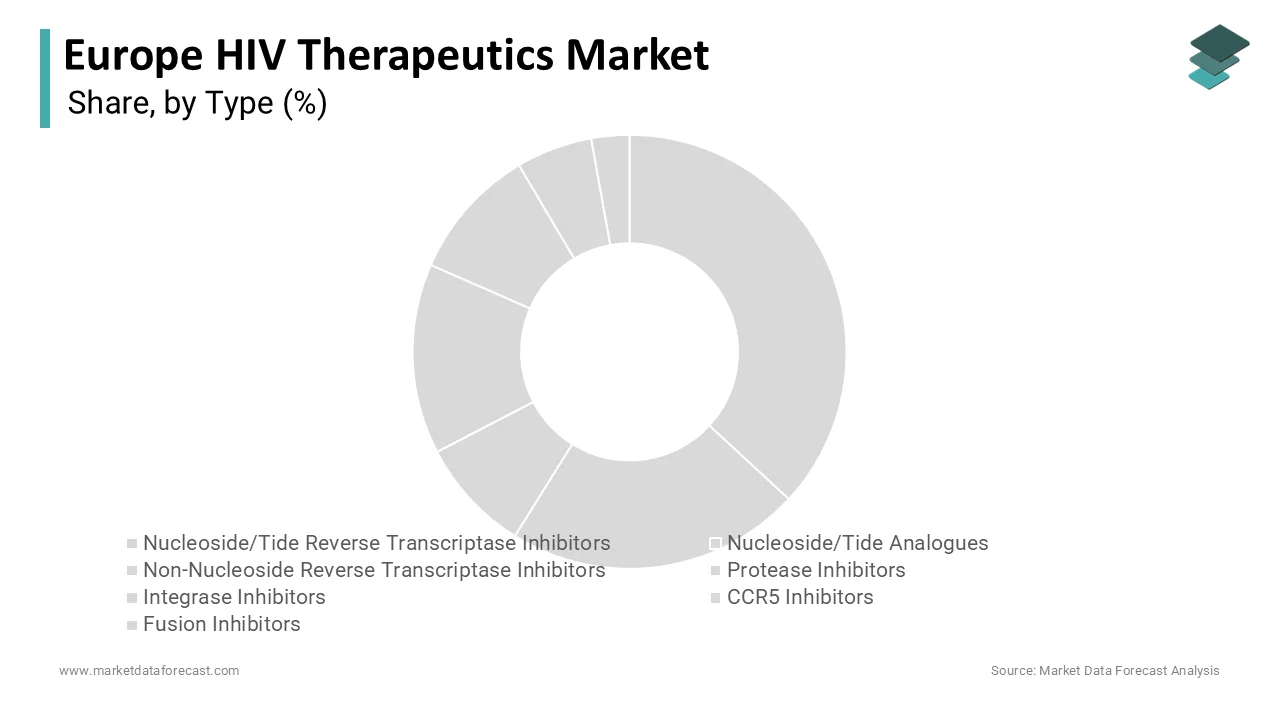
- Nucleoside/Tide Reverse Transcriptase Inhibitors
- Nucleoside/Tide Analogues
- Non-Nucleoside Reverse Transcriptase Inhibitors
- Protease Inhibitors
- Integrase Inhibitors
- CCR5 Inhibitors
- Fusion Inhibitors
By Application
- HIV Type-1
- HIV Type-2
By Country
- UK
- France
- Spain
- Germany
- Italy
- Russia
- Sweden
- Denmark
- Switzerland
- Netherlands
- Turkey
- Czech Republic
- Rest of Europe