- Product Description Description
- Table of Contents TOC
- List of Table & Figure LOT
- Get Free Sample PDF Sample PDF
Market Size, 2025
$3.06 BnMarket Estimate, 2026
$3.25 BnMarket Forecast, 2034
$5.15 BnCAGR, 2026–2034
6.43%Europe Hops Market Report Summary
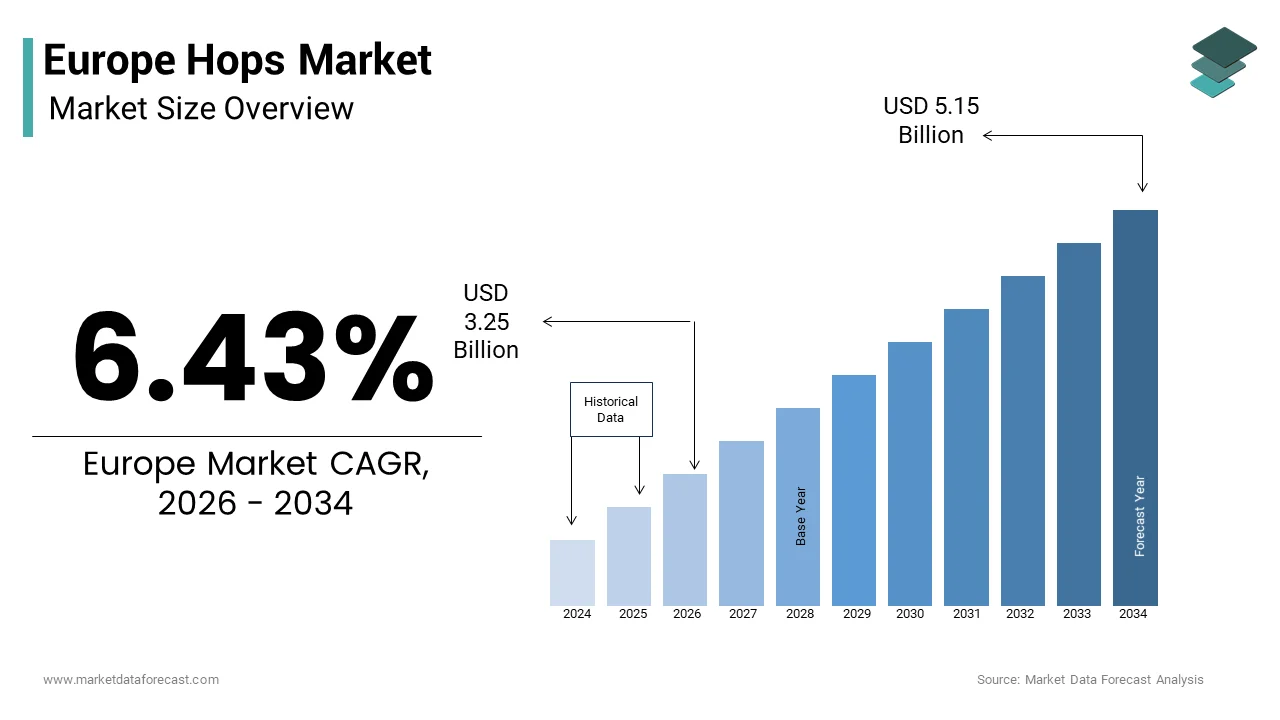
The Europe hops market was valued at USD 3.06 billion in 2025, is estimated to reach USD 3.25 billion in 2026, and is projected to reach USD 5.15 billion by 2034, growing at a CAGR of 6.43% during the forecast period from 2026 to 2034. The growth of the Europe hops market is primarily driven by the increasing demand for craft beer, rising consumption of alcoholic beverages, and the expanding brewing industry across the region. Additionally, the growing popularity of premium and flavored beers, along with innovations in hop varieties, is further supporting market expansion.
Key Market Trends
- Rising demand for craft and specialty beers is significantly boosting the consumption of aroma and flavor-enhancing hop varieties across Europe.
- Increasing focus on sustainable farming practices and organic hop cultivation is gaining traction among producers and breweries.
- Technological advancements in hop processing and storage are improving product quality and shelf life.
Growing preference for locally sourced ingredients among breweries is encouraging regional hop production. - Expansion of microbreweries and brewpubs across Europe is driving consistent demand for diverse hop profiles.
Segmental Insights
- Based on product, the others segment dominated the Europe hops market by holding a share of 51.5% in 2025. This dominance is attributed to the wide usage of various processed and specialty hop forms that cater to different brewing requirements and flavor profiles.
- Based on application, the alcoholic beverages segment accounted for 90.6% of the Europe hops market share in 2025. The segment’s leadership is driven by the extensive use of hops in beer production, where they contribute bitterness, aroma, and preservation properties.
Regional Insights
The Europe hops market shows strong regional concentration with
- Germany leading the market by accounting for 44.9% of the share in 2025, supported by its long-standing brewing tradition and large-scale hop cultivation.
- The Czech Republic holds a notable position due to its heritage hop varieties and strong beer culture.
- The United Kingdom is expected to witness a prominent CAGR over the forecast period, driven by the rapid growth of craft breweries.
- Poland is anticipated to account for a substantial market share, supported by increasing agricultural investments.
- France is projected to experience steady growth due to rising demand for premium and artisanal beers.
Competitive Landscape
The Europe hops market is highly competitive, with key players focusing on expanding production capacity, developing new hop varieties, and strengthening supply chain networks. Companies are increasingly investing in research and development to meet evolving brewer preferences and enhance product quality. Strategic collaborations with breweries and expansion into emerging markets are also shaping the competitive dynamics. Prominent players in the Europe hops market include Steiner Hops Ltd., Hops Direct, LLC., Hopsteiner, Heineken UK Limited, Yakima Chief Hops LLC., Bintani Australia PTY Ltd., New Zealand Hops Limited, BAARTH-HAAS GROUP, Hollingberry & Son Inc., Carlsberg Breweries A/S, Kalsec Inc., and Charles Faram & Co. Ltd.
Europe Hops Market Size
The Europe hops market size was valued at USD 3.06 billion in 2025 and is anticipated to reach USD 3.25 billion in 2026 to reach USD 5.15 billion by 2034, growing at a CAGR of 6.43% during the forecast period from 2026 to 2034.
Hops are the essential flowering cone used primarily for bittering, flavoring, and stabilizing beer. As the historical heartland of global brewing, Europe defines this market through a unique duality as it is both the largest producer of aroma hops and renowned for their noble characteristics, and a massive consumer driven by a deeply entrenched beer culture. The market is geographically concentrated in specific regions such as the Hallertau in Germany, the Žatec region in the Czech Republic, and Kent in England, where terroir dictates the chemical profile of alpha acids and essential oils. According to the International Hop Growers Convention, European nations accounted for 39% of total global hop production area in 2024, which is indicating the continent's agricultural dominance. The definition of this sector has expanded beyond traditional brewing to include the extraction of hop derivatives for the pharmaceutical and cosmetic industries and leveraging the plant's anti-inflammatory and sedative properties. As per the International Hop Growers Convention, Germany remains the world's single largest producing nation. The market operates within a complex framework of protected geographical indications, ensuring that varieties like Saaz and Tettnang retain their premium status. As per the German Federal Office for Agriculture, major European growing regions have seen incremental improvements in yield due to advanced trellising systems, even as climate variability poses new risks to consistent output.
MARKET DRIVERS
Resurgence of the Craft Brewing Sector and Demand for Aroma Varieties
The explosive growth and maturation of the craft brewing sector that prioritizes distinct flavor profiles over the high‑alpha acid bittering hops used in mass‑market lagers is one of the major factors driving the growth of the European hops market. Craft brewers extensively utilize aroma hop varieties such as Citra, Mosaic, and traditional noble hops to create India Pale Ales and session beers that rely on intense citrus, floral, and pine notes. According to The Brewers Association, Europe hosts a large number of independent craft breweries, each consuming significantly higher volumes of hops per hectolitre of beer produced compared to industrial macro‑breweries. This shift in brewing philosophy has created a sustained demand for specialized aromatic cultivars, which is driving growers to allocate more acreage to these high‑value crops. As per the Hop Growers of America and European counterparts, contracts for aroma hops have been increasing as brewers secure supply for innovative recipes. The trend towards dry‑hopping, a technique where large quantities of hops are added post‑fermentation to enhance aroma without adding bitterness and further amplifies consumption rates. In countries like Belgium and the UK, the proliferation of taprooms and micro‑breweries has localized demand, encouraging regional farmers to experiment with new proprietary varieties. This dynamic ensures that the market remains robust and is driven by a consumer base willing to pay a premium for diverse and complex beer experiences that only specific hop profiles can deliver.
Expansion of Non‑Alcoholic Beer and Functional Beverage Applications
The rapid expansion of the non‑alcoholic beer segment and the emerging use of hops in functional wellness beverages, which is diversifying the demand base beyond traditional alcoholic consumption and further boosting the regional market expansion. As health consciousness rises across Europe, consumers are increasingly seeking alcohol‑free alternatives that mimic the taste complexity of full‑strength beer, a feat achieved largely through sophisticated hopping techniques. As per IWSR Drinks Market Analysis, sales of no and low‑alcohol beers in Europe have been growing, which is requiring substantial hop inputs to mask the sweet wort flavors typical of dealcoholized brews. Furthermore, the intrinsic properties of hops, specifically their potential to reduce anxiety and improve sleep quality, have sparked interest from the functional beverage industry. Companies are now launching hop‑infused sparkling waters and teas that leverage these bioactive compounds without the alcohol content. According to the European Food Safety Authority, certain hop extracts have calming effects, validating health claims that drive product innovation. This dual application in both the booming non‑alcoholic beer sector and the nascent wellness drink category creates a new revenue stream for hop processors. The ability to utilize hops for flavor and function simultaneously broadens the market scope, insulating growers from fluctuations in traditional beer consumption and opening avenues for premium pricing on specialized extracts.
MARKET RESTRAINTS
Climate Change Induced Volatility in Yield and Alpha Acid Content
A critical restraint facing the Europe hops market is the increasing volatility in crop yields and chemical composition caused by shifting climate patterns and extreme weather events. Hops are highly sensitive perennial plants that require specific conditions regarding daylight, temperature, and water availability, making them vulnerable to droughts, late frosts, and excessive rainfall. According to the Joint Research Centre of the European Commission, rising temperatures in traditional growing regions like the Hallertau have already led to earlier harvest dates and altered the balance of essential oils and alpha acids, compromising the consistency required by brewers. As per the German Meteorological Service, heatwaves in recent years have reduced average hop yields in certain districts, which is forcing brewers to dip into reserve stocks or seek alternative sourcing. The unpredictability of weather patterns complicates long‑term contracting, as farmers struggle to guarantee specific quality parameters years in advance. Furthermore, water scarcity in Southern European regions limits the potential for expanding cultivation areas, constraining supply growth. As per agricultural forecasts, without significant investment in irrigation infrastructure and heat‑resistant varietals, the reliability of European hop supplies will remain a persistent bottleneck, which is hindering market stability and planning for downstream manufacturers.
High Capital Intensity and Long Lead Times for Cultivation Expansion
The substantial capital intensity and the extended biological lead time required to establish new hop yards that prevents the market from rapidly responding to surges in demand is also impeding the regional market expansion. Establishing a commercial hop garden involves significant upfront investment in trellising systems, irrigation networks, and specialized harvesting machinery. According to the International Hop Growers Convention, newly planted hop rhizomes typically take several growing seasons to reach full production maturity, which is creating a lag that makes supply adjustments sluggish. This delay means that when demand spikes due to trends like the craft beer boom, supply cannot immediately catch up and is leading to prolonged periods of shortage and inflated prices. Conversely, if market conditions soften, farmers are locked into production due to the high sunk costs, potentially leading to oversupply and financial distress. As per agricultural banks in the Czech Republic and Germany, access to financing for new hop plantations has tightened due to perceived climate risks, which is further dampening expansion efforts. The labor‑intensive nature of hop farming, particularly during the harvest season, also exacerbates the challenge, as rural labor shortages in Europe drive up operational costs. These structural barriers limit the agility of the supply side, making the market prone to cyclical imbalances that restrain steady growth and discourage new entrants from joining the cultivation sector.
MARKET OPPORTUNITIES
Development of Climate Resilient and Disease Resistant Hop Varieties
The accelerated breeding and adoption of climate‑resilient and disease‑resistant hop varieties that can thrive in changing environmental conditions while maintaining superior flavor profiles is a promising opportunity in the Europe hops market. As traditional noble hops face threats from pests like downy mildew and stress from higher temperatures, research institutions and private breeders are developing new cultivars that offer robustness without sacrificing quality. According to the Hop Research Council, recent trials in Germany and Slovenia have yielded new strains that demonstrate improved water use efficiency and enhanced resistance to common fungal pathogens. These advancements allow growers to maintain stable yields in regions previously deemed marginal or risky, which is effectively expanding the viable geographic footprint for European hop production. The introduction of such varieties also reduces the reliance on chemical pesticides, aligning with the European Union's Farm to Fork strategy which aims to cut pesticide use by 50% by 2030. As per pilot program data, farms adopting these resistant varieties have experienced reductions in production costs due to lower treatment requirements. Furthermore, these new genetics open doors for brewers seeking unique flavor notes that were previously unattainable in unstable climates. By investing in biotechnological innovation, the European hops market can future‑proof its supply chain to ensure long‑term sustainability and securing its position as the global leader in high‑quality hop production despite climatic headwinds.
Extraction of High Value Bioactive Compounds for Pharmaceutical Use
The extraction of high‑value bioactive compounds from hops for applications in the pharmaceutical and nutraceutical sectors presents a lucrative opportunity in the Europe hops market. Hops contain potent flavonoids such as xanthohumol, which have demonstrated significant anti‑cancer, anti‑inflammatory, and antioxidant properties in clinical studies, attracting attention from the medical community. As per research published in the Journal of Agricultural and Food Chemistry, the global demand for natural plant‑based therapeutics is projected to grow at a CAGR of 7%, which is creating a vast market for purified hop extracts. European processors are increasingly investing in supercritical CO2 extraction technologies to isolate these compounds with high purity, catering to the stringent standards of the pharmaceutical industry. This shift allows hop growers to monetize biomass that might otherwise be discarded or sold at lower grades for brewing. According to market analysts, the value of hop‑derived pharmaceutical ingredients can be significantly higher per kilogram than traditional brewing hops. Additionally, the use of hop extracts in natural sleep aids and anxiety supplements is gaining traction among European consumers seeking non‑synthetic solutions. By pivoting towards these high‑margin applications, the Europe hops market can mitigate risks associated with beer consumption fluctuations and unlock significant economic value from the same agricultural base.
MARKET CHALLENGES
Stringent Regulatory Compliance and Pesticide Residue Limits
One of the most formidable challenges confronting the Europe hops market is the increasingly stringent regulatory landscape regarding pesticide residues and chemical inputs, which imposes heavy compliance burdens on growers. The European Union maintains some of the toughest maximum residue limits for agricultural products globally, and hops, being susceptible to various pests and diseases, traditionally require significant crop protection measures. According to the European Food Safety Authority, recent updates to residue limits for several commonly used fungicides have forced growers to alter their treatment regimes, often resulting in lower yields or higher costs for approved alternatives. The complexity of navigating these regulations varies by member state, creating a fragmented compliance environment that complicates trade and processing. As per industry federations, the cost of testing and certification to ensure compliance with export standards has been rising, squeezing margins for small‑scale farmers. Furthermore, the push for organic certification, while offering premium prices, demands rigorous documentation and restricts the tools available for pest management, increasing the risk of crop loss. The threat of shipment rejections due to trace residue detection creates a constant state of uncertainty for exporters. According to trade reports, maintaining market access requires continuous investment in monitoring technologies and sustainable farming practices, a challenge that tests the financial resilience of many European hop producers.
Intense Global Competition and Price Volatility from New Producing Regions
The Europe hops market faces intensifying competition from emerging producing regions that offer lower production costs and aggressive pricing strategies, threatening the market share of traditional European growers. Countries in the Southern Hemisphere, such as New Zealand and Australia, as well as expanding operations in Asia, have invested heavily in modern hop farming infrastructure, enabling them to produce high‑quality aroma hops at competitive prices. According to trade data from the Global Hop Market, the share of non‑European hops in the global supply chain has been increasing, eroding the dominance of European varieties in certain segments. This influx creates downward pressure on prices, making it difficult for European farmers, who face higher labor and regulatory costs, to remain profitable without relying on the premium status of noble hops. The volatility of global hop prices, driven by speculative trading and fluctuating harvest sizes worldwide, adds another layer of difficulty for long‑term planning. As per commodity exchanges, price swings within a single fiscal year are common, destabilizing income for growers. Additionally, the strengthening of the Euro against other currencies can make European hops less attractive to international buyers. According to economic analyses, the inability to compete on cost alone forces European producers to constantly innovate and differentiate, a challenging endeavor in a commoditized global market where price often dictates purchasing decisions for large‑scale industrial brewers.
REPORT COVERAGE
| REPORT METRIC | DETAILS |
| Market Size Available | 2025 to 2034 |
| Base Year | 2025 |
| Forecast Period | 2026 to 2034 |
| CAGR | 6.43% |
| Segments Covered | By Product Type, Application By Country |
| Various Analyses Covered | Global, Regional & Country Level Analysis, Segment-Level Analysis, DROC, PESTLE Analysis, Porter’s Five Forces Analysis, Competitive Landscape, Analyst Overview on Investment Opportunities |
| Regions Covered | UK, France, Spain, Germany, Italy, Russia, Sweden, Denmark, Switzerland, Netherlands, Turkey, the Czech Republic, and the Rest of Europe |
| Market Leaders Profiled | Steiner Hops Ltd., Hops Direct, LLC., Hopsteiner, Heineken UK Limited, Yakima Chief Hops LLC., Bintani Australia PTY Ltd., New Zealand Hops Limited, BAARTH-HAAS GROUP, Hollingberry & Son Inc., Carlsberg Breweries A/S, Kalsec Inc., Charles Faram & Co. Ltd. |
SEGMENTAL ANALYSIS
By Product Insights
The others segment led the market by holding the leading share of 51.5% of the European hops market in 2025 due to the centuries‑old brewing traditions of Central Europe, where these specific varieties are legally protected and essential for producing authentic Pilsners and Lagers that define the regional beer identity. The robust system of Protected Geographical Indications and traditional branding that safeguards noble hop varieties from substitution is further driving the dominance of the others segment in the European market. Unlike American varieties which can be grown globally, noble hops are intrinsically linked to their specific terroir in Germany and the Czech Republic, creating a supply constraint that drives consistent high demand. According to the European Commission database on geographical indications, varieties like "Žatecký poloraný červeňák" (Saaz) and "Hallertauer" hold exclusive status that mandates their use in specific beer styles labeled under these regions. As per the International Hop Growers Convention, the majority of the global Saaz harvest originates from the Czech Republic, with most consumed within Europe. The inability to replicate the delicate spicy and floral notes of these hops elsewhere forces breweries to maintain long‑term contracts with European growers. This legal and sensory uniqueness prevents market erosion by newer hybrid varieties, securing the dominant position of the traditional category.
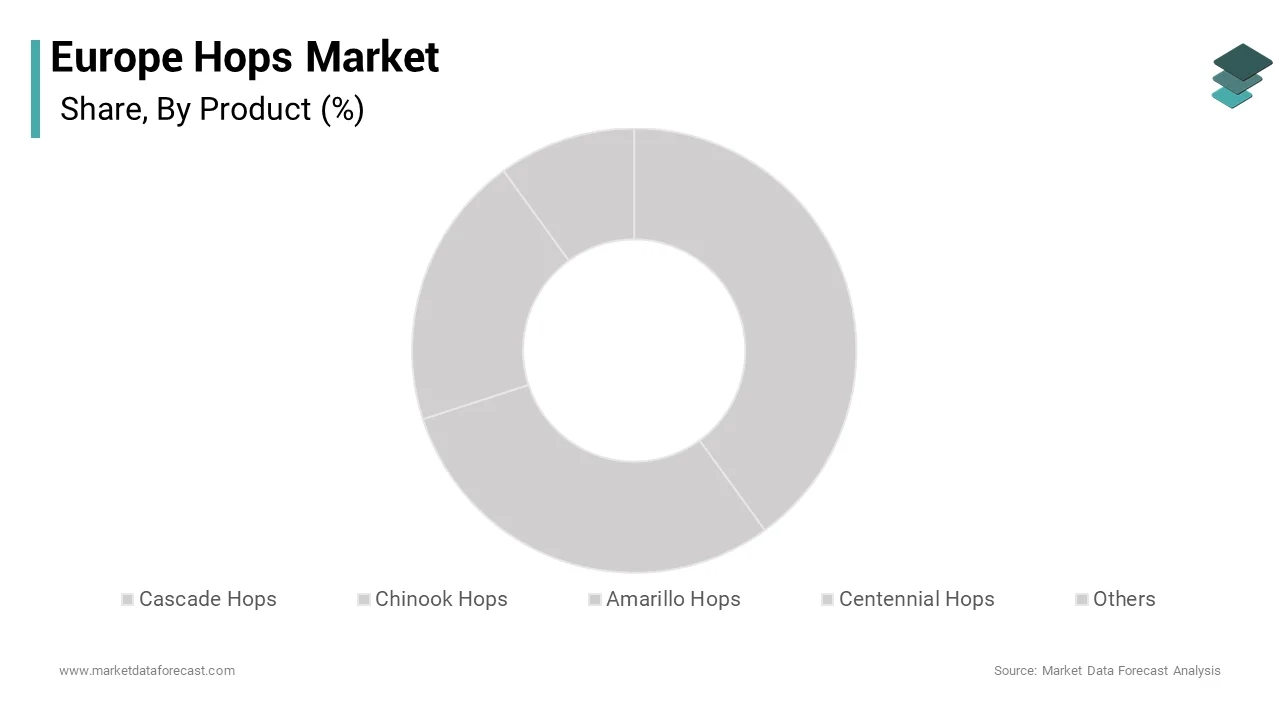
However, the cascade hops segment is projected to be the fastest‑growing product type within the Europe hops market and record a CAGR of 9.2% over the forecast period owing to the widespread adoption of American‑style craft brewing techniques and the increasing popularity of India Pale Ales among European consumers. The surge in popularity of India Pale Ale styles, particularly the New England IPA and West Coast IPA, is the foremost accelerator for Cascade hop demand due to the variety's iconic grapefruit and floral aroma profile. European craft brewers have rapidly embraced these styles, moving away from traditional malt‑forward beers to hop‑forward creations that require substantial quantities of aromatic hops like Cascade. As per the Guild of Independent Craft Brewers, IPA styles now represent a significant portion of craft beer production in the United Kingdom and Germany. Since Cascade is often the primary or secondary hop used in these recipes to achieve the desired citrus punch, its consumption scales directly with IPA production volumes. According to hop merchants, orders for Cascade rhizomes and pellets by European micro‑breweries have been rising. The versatility of Cascade allows it to be used for both bittering and late‑addition aroma, making it a staple in diverse recipe formulations. Furthermore, the trend of "hop bursting," where large amounts of hops are added late in the boil, significantly increases the weight of hops required per barrel of beer. This stylistic shift in European brewing culture ensures that Cascade remains the most sought‑after non‑native variety, driving its exceptional growth trajectory.
By Application Insights
The alcoholic beverages segment overwhelmingly dominated the Europe hops market by capturing 90.6% of the regional market share in 2025. This near‑total monopoly is driven by the fundamental role of hops as the primary bittering and flavoring agent in beer, which remains the most consumed alcoholic beverage in the region. The sheer volume of beer produced annually in Europe is further boosting the dominance of alcoholic beverages segment in the European market. Europe is consistently the largest beer‑producing continent globally, requiring thousands of tons of hops for stabilization and flavoring. As per The Brewers of Europe, the region hosts over 12000 breweries ranging from multinational giants to microscopic nano‑breweries, all of which rely on hops as a mandatory ingredient. Even with the rise of alternative beverages, beer retains a high per capita consumption rate in leading markets like Czechia and Germany, ensuring a stable and massive baseline demand. The industrial scale of lager production means that even small variations in hopping rates translate into significant tonnage requirements. According to national agricultural ministries, most of the annual European hop harvest is contracted directly by brewing companies months before harvest, highlighting the inseparable link between the crop and the beverage. The economic magnitude of the beer industry, valued at over 100 billion euros, dwarfs all other hop applications, ensuring that investment, research, and farming capacity remain focused almost exclusively on serving the brewing sector.
On the other side, the medicinal drugs segment is emerging as the fastest‑growing application for hops in Europe and is expected to expand at a CAGR of 10.5% over the forecast period owing to the increasing scientific validation of hop bioactive compounds and the rising consumer demand for natural sleep aids and anxiety remedies. The robust body of clinical research validating the therapeutic potential of hop compounds, particularly xanthohumol and humulone to treat insomnia, anxiety, and metabolic disorders is further contributing to the growth of the medicinal segment in the European market. European health authorities and research institutions have increasingly recognized the efficacy of hop extracts as safe, non‑addictive alternatives to synthetic pharmaceuticals. As per the European Medicines Agency, traditional herbal registrations for hop strobiles as a sleep aid have been rising, with new products approved across the EU. The compound xanthohumol has shown promising results in preclinical trials for anti‑inflammatory and anti‑cancer properties, attracting significant investment from pharmaceutical R&D departments. According to the European Nutraceutical Association, the market for natural sleep supplements has been growing, with hop‑based formulations capturing a significant share due to their proven sedative effects. This scientific endorsement lowers the barrier for entry into mainstream medicine and encourages doctors to recommend hop‑derived treatments. The transition from folk remedy to evidence‑based medicine is unlocking new revenue streams for hop processors who can extract and purify these compounds to pharmaceutical grades, driving rapid segment expansion.
COUNTRY ANALYSIS
Germany Hops Market Analysis
Germany led the hops market in Europe in 2025 with 44.9% of the regional market share. The dominance of Germany in the European market can be credited to its status as the world's largest producer and consumer of hops. The country's market position is anchored by the Hallertau region, which alone constitutes the largest contiguous hop‑growing area on the planet, defining global supply dynamics. The German market is characterized by a unique dual demand structure, a massive industrial brewing sector producing traditional lagers requiring noble hops, and the most vibrant craft beer scene in continental Europe driving demand for aroma varieties. As per the German Federal Office for Agriculture and Food, Germany remains the largest hop‑producing nation globally. The strict adherence to the Reinheitsgebot (Beer Purity Law) historically mandated the use of specific German hops, creating a protected domestic market that continues to influence breeding and cultivation priorities. Furthermore, Germany serves as the central trading hub for Europe, with major merchant houses based in Munich and Nuremberg facilitating exports to neighboring nations. The government provides substantial subsidies for hop research and climate adaptation, ensuring the sector remains technologically advanced. According to the International Hop Growers Convention, German varieties like Hallertau Mittelfrüh and Tettnang set the global benchmark for quality. This combination of agricultural scale, regulatory protection, and brewing culture cements Germany's dominance as the epicenter of the European hops industry.
Czech Hops Market Analysis
The Czech Republic captured a promising share of the Europe hops market in 2025 due to its exclusive production of the world‑renowned Saaz hop. The market in this country is defined by the extreme specialization in this single noble variety, which is legally protected and considered a national treasure essential for authentic Pilsner Urquell style beers. Unlike Germany's diverse portfolio, the Czech focus is narrow but deeply valuable, with Saaz hops commanding premium prices globally due to their irreplaceable spicy aroma. As per the Czech Ministry of Agriculture, the Žatec region produces the majority of the country's hop output, with yields tightly controlled to maintain quality standards. The geographical indication status of "Žatecký poloraný červeňák" ensures that only hops grown in this specific area can bear the name, creating a monopoly‑like advantage in the premium lager segment. Export data confirms that a large portion of Czech hop production is shipped internationally, highlighting its critical role in the global supply chain beyond just domestic consumption. The Czech brewing tradition, being the birthplace of the Pilsner, drives intense domestic demand as well, with the highest per capita beer consumption in the world sustaining local usage. Government support for hop gardening infrastructure and research into disease‑resistant Saaz clones further strengthens the sector. This singular focus on a high‑value heritage variety secures the Czech Republic's position as a pivotal player whose influence far exceeds its geographic size.
United Kingdom Hops Market Analysis
The United Kingdom is anticipated to record a prominent CAGR in the European hops market over the forecast period owing to a dynamic tension between its historic hop‑growing heritage and its explosive modern craft brewing revolution. While the total acreage of hop gardens in the UK is smaller than in Central Europe, the market status is defined by high innovation and the development of distinctive English aroma varieties like Fuggle and Golding. The UK market is currently driven by the fastest‑growing craft beer sector in Europe, which has revitalized demand for both traditional English hops and American‑style varieties grown domestically. As per the British Hop Association, the number of independent breweries in the UK has surpassed 2500, creating a voracious local demand that often outstrips domestic supply, necessitating significant imports while simultaneously encouraging new plantings. The climate in counties like Kent and Worcestershire remains ideal for hop cultivation, and recent initiatives have seen new hop yard installations to meet craft brewer needs. According to HM Revenue and Customs, hop imports have been rising steadily, yet there is a strong "buy local" movement among British brewers seeking to reduce carbon footprints. The UK also serves as a gateway for new hop varieties entering the European market, with breeding programs focusing on disease resistance and unique flavor profiles. This blend of historical prestige and modern entrepreneurial energy positions the UK as a crucial innovation hub within the European hops landscape.
Poland Hops Market Analysis
Poland is estimated to account for a substantial share of the European hops market over the forecast period. Poland is distinguishing itself as the fastest‑expanding producer in the region and a key low‑cost manufacturing hub for hop products. The market in Poland is defined by a strategic shift from quantity to quality, with growers increasingly adopting modern trellising systems and processing technologies to compete with German and Czech producers. Historically a supplier of bulk bittering hops, Poland has successfully diversified into aroma varieties, attracting investment from international brewing conglomerates seeking reliable supply chains outside the saturated Western European markets. As per the Polish Ministry of Agriculture and Rural Development, hop production volumes have been increasing in recent years, driven by favorable soil conditions in the Lublin region and lower labor costs. The presence of major global hop processing facilities in Poland has transformed the country into a processing powerhouse, where hops from across Europe are processed and pelletized for export. Industry reports confirm that Polish hop exports have been growing steadily, serving both the domestic brewing industry and international markets. The government's support for agricultural modernization and EU funding for rural development have accelerated this growth. By offering a competitive price point without sacrificing quality, Poland is rapidly gaining market share and establishing itself as an indispensable pillar of the European hop supply chain.
France Hops Market Analysis
France is projected to witness a notable CAGR in the European hops market during the forecast period owing to its unique position as a producer of distinctive aromatic hops that cater to the sophisticated palates of its renowned brewing and culinary sectors. The market in France is characterized by niche production in the Alsace and Nord‑Pas‑de‑Calais regions, where specific varieties like Strisselspalt are cultivated under strict geographical protections similar to wine appellations. French hops are highly prized for their delicate floral and fruity notes, making them essential for premium craft beers and specialty lagers produced domestically and exported to luxury markets. As per FranceAgriMer, the French hop sector has undergone a renaissance, with acreage increasing in response to the booming craft beer movement which now boasts over 1500 micro‑breweries. The integration of hop growing with the country's broader agricultural excellence ensures high standards of sustainability and quality. The French market is also notable for its experimentation with cross‑breeding programs aimed at developing varieties resistant to climate change while retaining unique aromatic profiles. Trade statistics confirm that French hops command a premium price per kilogram compared to standard bulk varieties, reflecting their status as a gourmet ingredient. The strong domestic consumption of beer, coupled with a cultural emphasis on terroir and origin, supports a resilient and high‑value hop industry that punches above its weight in terms of influence and quality perception within Europe.
COMPETITIVE LANDSCAPE
The competition in the Europe hops market is characterized by a dynamic interplay between established family-owned merchants, grower cooperatives, and international conglomerates who vie for dominance in a sector defined by quality and tradition. Major competitors differentiate themselves through exclusive access to protected geographical indication varieties like Saaz and Hallertau which cannot be replicated elsewhere. The market sees intense rivalry in the development of proprietary aroma hops where breeding innovation dictates market leadership and pricing power. New entrants often struggle due to the high capital requirements for land and specialized processing infrastructure needed to meet strict quality standards. Established players leverage long standing relationships with brewers to secure multiyear contracts that stabilize revenue streams amidst volatile harvest conditions. The competitive landscape is further shaped by the growing influence of craft breweries who demand small batch experimental lots and unique flavor profiles not available from bulk suppliers. Success in this environment requires a delicate balance between preserving heritage varieties and innovating for future climate scenarios while maintaining rigorous quality control throughout the supply chain.
KEY MARKET PLAYERS
A dominating players that are in the Europe hops market are
- Steiner Hops Ltd.
- Hops Direct, LLC.
- Hopsteiner
- Heineken UK Limited
- Yakima Chief Hops LLC.
- Bintani Australia PTY Ltd.
- New Zealand Hops Limited
- BAARTH-HAAS GROUP
- Hollingberry & Son Inc.
- Carlsberg Breweries A/S
- Kalsec Inc.
- Charles Faram & Co. Ltd.
- Brewers Select Limited
Top Players In The Market
- BarthHaas Group stands as a preeminent global entity in the hop industry, originating from Germany and serving as a critical link between growers and brewers worldwide. The company contributes significantly to the global market by offering comprehensive services that span breeding, trading, processing, and technical consulting for beer production. In Europe, BarthHaas maintains an extensive network of purchasing stations and processing facilities to ensure high quality standards for noble and aroma varieties. Recent actions to strengthen their market position include heavy investment in sustainable farming initiatives and the development of new hop varieties resistant to climate change impacts. They have also expanded their digital platforms to provide brewers with real time data on hop characteristics and inventory levels. By fostering direct partnerships with farmers and promoting biodiversity, BarthHaas reinforces its reputation as a steward of hop genetics while securing a reliable supply chain for international clients seeking premium European hops.
- Yakima Chief Hops is a leading merchant owned by hop growers that has established a formidable presence in the European market through strategic alliances and local processing capabilities. Although headquartered in the United States, the company plays a vital role in the global sector by facilitating the exchange of American and European hop varieties across continents. Their involvement in Europe includes operating state of the art pelleting plants and cold storage facilities to serve the dense concentration of breweries in the region. Recent actions to strengthen their market position focus on launching innovative hop products such as cryo hops and specialized blends tailored to European craft brewing trends. They have also initiated programs to support regenerative agriculture among their contract growers in Europe to ensure long term sustainability. By leveraging their global scale while maintaining a grower centric model, Yakima Chief Hops ensures consistent quality and availability, making them a preferred partner for both large industrial brewers and artisanal microbreweries across the European continent.
- Hopsteiner is a historic family-owned company based in Germany that acts as a major powerhouse in the global hop market with deep roots in European cultivation traditions. The company contributes to the global landscape by combining centuries of breeding expertise with modern biotechnology to develop unique hop varieties that define beer styles worldwide. In Europe, Hopsteiner operates numerous processing sites and maintains strong relationships with thousands of local growers to secure exclusive rights to premium noble hops. Recent actions to strengthen their market position include the acquisition of additional processing capacity to handle increasing demand for value added hop products like extracts and pellets. They have also launched educational initiatives for brewers to explore novel flavor profiles derived from their proprietary breeding programs. By focusing on innovation in aroma chemistry and sustainable supply chain practices, Hopsteiner continues to set industry standards and maintain its status as a trusted supplier for discerning brewers who require consistency and excellence in every batch of European hops.
Top Strategies Used By Key Market Participants
Key players in the Europe hops market primarily employ strategies focused on vertical integration and direct contracting with growers to secure exclusive access to premium hop varieties and ensure supply chain stability. Companies are heavily investing in research and development to breed new climate resilient hop strains that can withstand changing weather patterns while delivering unique aroma profiles demanded by craft brewers. Another major strategy involves expanding processing capabilities locally within Europe to offer value added products such as cryo hops, pellets, and extracts that reduce shipping costs and improve freshness for customers. Market participants are also prioritizing sustainability certifications and regenerative agriculture practices to appeal to environmentally conscious brewers and comply with stringent European Union regulations. Furthermore, firms are leveraging digital technologies to create transparent supply chains that allow brewers to trace hop origins and verify quality attributes in real time. Collaborative partnerships with breeding institutes and universities are common tactics used to accelerate innovation and maintain a competitive edge in variety development.
MARKET SEGMENTATION
This research report on the Europe hops market is segmented and sub-segmented into the following categories.
By Product Type
- Cascade Hops
- Chinook Hops
- Amarillo Hops
- Centennial Hops
- Others
By Application
- Medicinal Drugs
- Alcoholic Beverages
- Cosmetics
- Others
By Country
- UK
- France
- Spain
- Germany
- Italy
- Russia
- Sweden
- Denmark
- Switzerland
- Netherlands
- Turkey
- Czech Republic