- Product Description Description
- Table of Contents TOC
- List of Table & Figure LOT
- Get Free Sample PDF Sample PDF
Europe Hyaluronic Acid Market Report Summary
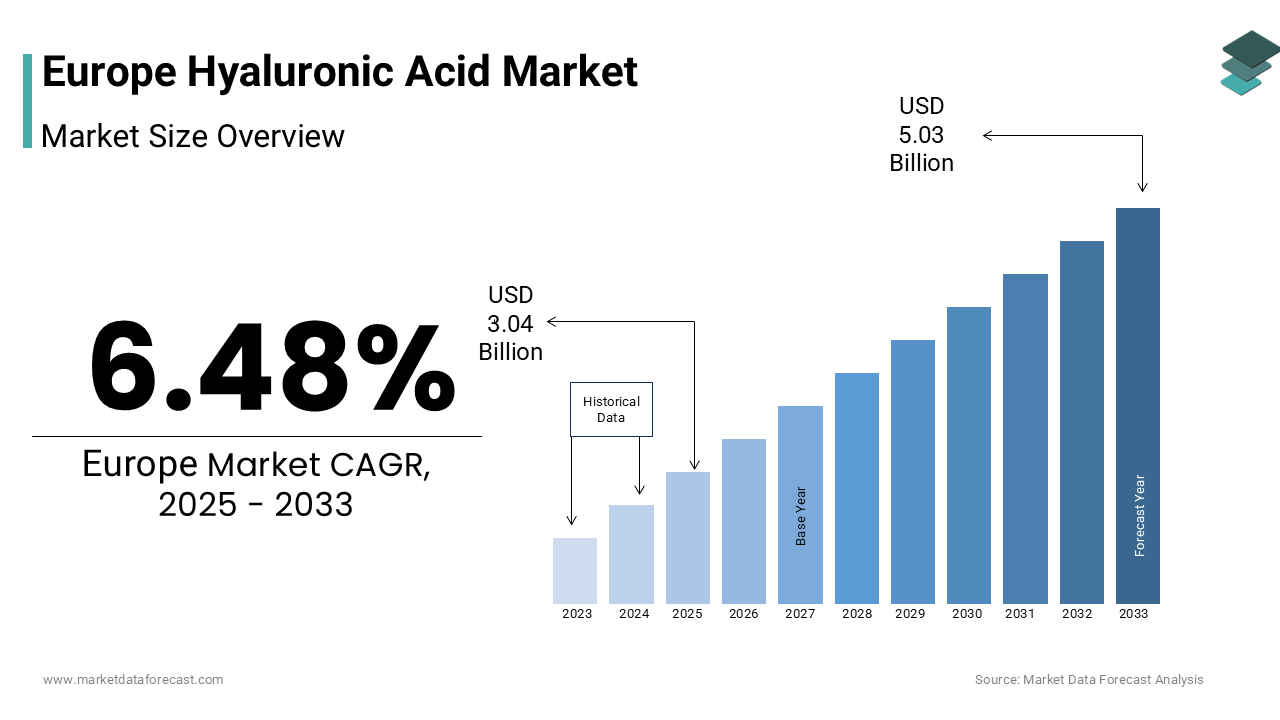
The Europe Hyaluronic Acid Market was valued at USD 2.86 billion in 2024, is projected to reach USD 3.04 billion in 2025, and is expected to grow substantially to USD 5.03 billion by 2033, expanding at a CAGR of 6.48% from 2025 to 2033. Market growth is driven by Europe’s aging population and rising prevalence of osteoarthritis, increasing demand for minimally invasive aesthetic procedures, and broader regulatory clarity for cosmetic and medical HA formulations under EU frameworks. Advances in cross-linking technologies, expansion of oral nutraceuticals and wound-care applications, and growing clinical evidence for viscosupplementation and regenerative uses are accelerating adoption, while raw material price volatility, regulatory complexity, and practitioner training gaps continue to shape commercialization strategies.
Key Market Trends
- Strong dominance of dermal filler applications driven by rising demand for minimally invasive aesthetics and “prejuvenation” among younger adults.
- Growth in oral nutraceuticals and branded HA ingredients, leveraging clinical evidence for skin hydration and joint comfort to enter beauty-by-nutrition channels.
- Expansion of bioactive HA formulations for advanced wound care and regenerative medicine, supported by clinical guidance and selective reimbursement in complex wound pathways.
- Continued innovation in cross-linking technologies and molecular weight engineering to improve longevity, rheology, and injectability of filler and viscosupplement products.
- Rising integration of digital patient engagement and treatment simulation tools to support consultation, adherence, and long-term outcome tracking.
Segmental Insights
- Based on application, the dermal fillers segment captured the largest share in 2024 (approximately 41.8%), supported by broad consumer acceptance, immediate aesthetic results, and established clinical safety profiles.
- The osteoarthritis (viscosupplementation) segment is projected to register the fastest growth (noted CAGR in report) due to increasing osteoarthritis prevalence among Europe’s aging population and pressures to delay joint replacement surgeries.
- Therapeutic uses in ophthalmology and advanced wound care represent growing niches, while oral supplementation is emerging as a cross-category growth driver bridging beauty and mobility nutrition.
Regional Insights
- Germany held the largest share at 20.4% in 2024, driven by advanced healthcare infrastructure, high procedural volumes in aesthetics and orthopedics, verticalized manufacturing capabilities, and partial reimbursement for selected viscosupplementation indications.
- France is a key market supported by deep skincare culture, high aesthetic procedure volumes, partial reimbursement for select osteoarthritis indications, and strong domestic producers using differentiated cross-linking technologies.
- The United Kingdom remains a major market with one of the highest per-capita rates of aesthetic procedures in Europe, significant private-sector uptake of viscosupplementation, robust safety monitoring via the MHRA, and active research into oral HA formulations.
- Italy is poised for robust growth due to strong beauty consciousness, medical tourism, a sizable elderly population, and homegrown manufacturers contributing to both domestic demand and exports.
- Spain offers high potential driven by medical tourism affordability, rising urban wellness trends, and growing patient awareness of joint health and dermocosmetic products.
Competitive Landscape
Competition in the Europe Hyaluronic Acid Market is shaped by multinational dermatology specialists, established pharmaceutical manufacturers, and nimble biotech firms focusing on molecular innovation, clinical evidence, and practitioner education. Market leaders emphasize proprietary cross-linking platforms, vertical control of fermentation and purification, and expansive medical training programs to secure clinician preference and patient trust. New entrants face stringent EU MDR compliance, high clinical evidence requirements, and the need to build accredited training networks. The market favors companies that combine biotechnological excellence with robust real-world data, localized market access strategies, and digital patient engagement tools. Prominent players operating in the market include Allergan, Galderma, Merz Pharma, Teoxane Laboratories, SynthRx, Bloomage BioTechnology, Anika Therapeutics, Fidia Farmaceutici, LG Chem, and Sinclair Pharma.
Europe Hyaluronic Acid Market Size
The europe hyaluronic acid market size was valued at USD 2.86 billion in 2024 and is anticipated to reach USD 3.04 billion in 2025 from USD 5.03 billion by 2033, growing at a CAGR of 6.48% during the forecast period from 2025 to 2033.
Hyaluronic acid is a naturally occurring glycosaminoglycan found in human connective tissues, synovial fluid, and skin and is renowned for its exceptional water retention capacity, which is holding up to 1000 times its weight in water. In Europe, hyaluronic acid is primarily utilized in medical aesthetics, orthopedics, ophthalmology, and skincare formulations with applications spanning dermal fillers, viscosupplementation injections, wound healing gels, and nutraceuticals. The molecule’s biocompatibility, biodegradability, and viscoelastic properties make it indispensable across therapeutic and cosmetic domains. According to Eurostat, the share of people aged 65 years and over in the European Union reached around 21.3% of the total population in 2024, which is driving higher demand for age-related therapeutic interventions such as osteoarthritis management and skin rejuvenation. The European Commission’s CosIng database lists hyaluronic acid and its salts as approved cosmetic ingredients, further cementing its regulatory legitimacy. More than 120 medical devices containing cross-linked hyaluronic acid are CE-marked for aesthetic and orthopedic use across Europe. Rising consumer preference for minimally invasive aesthetic procedures and scientifically validated skincare ingredients continues to anchor hyaluronic acid as a cornerstone bioactive compound in Europe’s health and beauty ecosystem.
MARKET DRIVERS
Aging Population and Rising Prevalence of Osteoarthritis
The rapidly aging demographic of Europe is a primary catalyst for hyaluronic acid demand, particularly in viscosupplementation therapies for osteoarthritis, which is one of the key factors propelling the growth of the European hyaluronic acid market. According to the World Health Organization, osteoarthritis affects more than 528 million people worldwide and its prevalence increases significantly among adults aged 65 years and older, which is driving higher demand for non-surgical treatment options such as hyaluronic acid injections across Europe. This degenerative joint condition leads to cartilage breakdown and synovial fluid depletion, which is diminishing natural joint lubrication. Intra-articular injections of hyaluronic acid restore viscoelasticity, reduce pain, and delay the need for surgical intervention. Over 1 million viscosupplementation procedures are performed annually across major European healthcare systems, which is reflecting broad clinical acceptance. In France, national health data indicate a steady increase in hyaluronic acid injection prescriptions in recent years, which is driven by updated clinical guidelines endorsing its use in mild to moderate knee osteoarthritis. According to Eurostat, the proportion of people aged 65 years and older in the European Union is projected to reach nearly 30% by 2050, which is expected to intensify the burden on musculoskeletal health systems and accelerate the adoption of non-surgical joint therapies. This demographic imperative, coupled with expanding reimbursement frameworks in countries such as Italy and Spain, which is solidifies hyaluronic acid’s role as a frontline therapeutic agent in Europe’s aging society.
Surge in Minimally Invasive Aesthetic Procedures
The growing cultural acceptance and accessibility of minimally invasive aesthetic treatments have significantly propelled hyaluronic acid use in dermal fillers across Europe, which is further boosting the European hyaluronic acid market growth. Unlike permanent implants, hyaluronic acid fillers offer reversible, natural looking results with minimal downtime, which is aligning with modern consumer preferences for subtle enhancement. According to the International Society of Aesthetic Plastic Surgery (ISAPS), Europe accounted for nearly 30% of all global non-surgical aesthetic procedures in 2023 with dermal fillers ranking as the second most commonly performed treatment after botulinum toxin. According to ISAPS, the United Kingdom performed approximately 900,000 hyaluronic acid filler procedures in 2023, which is reflecting steady year-on-year growth driven by increasing consumer demand for minimally invasive treatments. Regulatory clarity under the EU Medical Device Regulation has further bolstered safety and standardization, which is requiring stringent biocompatibility and longevity assessments for all CE-marked fillers. In Scandinavia and the Benelux region, preventative “prejuvenation” trends among adults under 35 are driving early adoption, while Southern European markets show strong growth in lip and cheek augmentation. This convergence of social normalization, regulatory rigor, and product innovation sustains robust demand for medical-grade hyaluronic acid in aesthetic medicine.
MARKET RESTRAINTS
Stringent Regulatory Classification and Reimbursement Limitations
The classification of hyaluronic acid products under evolving EU regulatory frameworks creates significant commercial and clinical barriers, particularly in therapeutic segments, which is impeding the growth of the European hyaluronic acid market. Under the EU Medical Device Regulation 2017 745, hyaluronic acid based dermal fillers and viscosupplements are categorized as Class III or Class IIb devices, which is requiring extensive clinical evidence, post market surveillance, and notified body audits. According to the European Commission, the process of obtaining CE certification for new hyaluronic acid formulations has become increasingly complex under the EU Medical Device Regulation, which is extending approval timelines due to stricter assessments of biodegradation profiles and impurity thresholds. National reimbursement policies remain inconsistent. For instance, Germany and France provide partial coverage for knee osteoarthritis injections, while Italy and Spain limit reimbursement to certain patient subgroups or exclude it entirely. According to the European Health Insurance Card (EHIC) framework and related national health data, only a limited number of EU member states currently offer any level of public reimbursement for viscosupplementation, which is discouraging physician adoption in cost-sensitive healthcare settings. These regulatory and fiscal constraints delay market entry, inflate compliance costs, and fragment access, which is ultimately limiting patient reach despite proven clinical benefits and rising disease burden.
Consumer Skepticism and Misinformation Around Efficacy
Persistent consumer skepticism regarding the actual efficacy and duration of hyaluronic acid products, especially in topical skincare acts as a notable restraint on market expansion. Despite its biochemical properties, not all formulations penetrate the epidermal barrier effectively, leading to variable real world outcomes. According to a 2024 survey by the European Consumer Organisation (BEUC), many respondents believed that hyaluronic acid in creams provides only temporary surface hydration without significant long-term anti-aging benefits. This perception is exacerbated by misleading marketing claims. According to the European Commission’s 2023 market surveillance, a notable share of cosmetic products labeled as “hyaluronic acid enriched” contained concentrations too low to achieve measurable dermal effects. Furthermore, social media proliferation of unverified testimonials and DIY skincare advice has diluted scientific messaging. According to the French Society of Dermatology, a large proportion of dermatologists have reported patients discontinuing topical hyaluronic acid use due to perceived ineffectiveness within a short period, which is reflecting a gap between clinical efficacy and consumer expectations. Without standardized labeling of molecular weight concentration and delivery mechanisms, consumer trust remains fragile, which is hindering premiumization and repeat purchase behavior in the rapidly growing dermo-cosmetic segment.
MARKET OPPORTUNITIES
Expansion into Medical Nutrition and Oral Supplementation
The incorporation of hyaluronic acid into oral nutraceuticals presents a high growth opportunity for the market and is highly supported by emerging clinical evidence and shifting consumer wellness paradigms. Unlike topical or injectable forms, oral hyaluronic acid targets systemic joint and skin health through dietary intake, appealing to health-conscious consumers seeking non-invasive solutions. According to the European Food Safety Authority (EFSA), low molecular weight hyaluronic acid (below 10 kDa) is recognized as safe for use in food supplements, which is following a 2023 scientific opinion confirming its bioavailability and absence of genotoxicity. According to the German Nutrition Society (DGE), clinical studies have shown that daily oral intake of hyaluronic acid can improve skin hydration and support joint comfort in older adults, which is reinforcing its dual positioning in beauty and mobility nutrition. According to NielsenIQ, hyaluronic acid supplement sales grew by more than 30% across European pharmacy and wellness channels in 2024 with strong traction in Germany, Sweden, and the Netherlands. As functional food regulations harmonize under the EU Nutrition and Health Claims Regulation, manufacturers are investing in branded ingredients with clinical backing, such as Hyabest and Mobilee, which is enabling premium positioning and crossover appeal between beauty and joint health categories.
Adoption in Advanced Wound Care and Regenerative Medicine
The role of hyaluronic acid in tissue regeneration and inflammation modulation is unlocking new applications in chronic wound management and post-surgical recovery across Europe, which is another promising opportunity in the European market. According to the European Wound Management Association, chronic wounds such as diabetic foot ulcers and pressure injuries affect millions of patients annually across the European Union, which is driving demand for bioactive dressings that accelerate healing. Hyaluronic acid-based hydrogels and membranes promote fibroblast migration, angiogenesis, and extracellular matrix reconstruction, which is critical in non-healing wounds. In 2023, the UK’s National Institute for Health and Care Excellence (NICE) included hyaluronic acid dressings in its updated guidance for complex wound care citing evidence of faster epithelialization compared to standard gauze. In Germany, statutory health insurers began reimbursing hyaluronic acid wound matrices in 2024 for patients with venous leg ulcers unresponsive to conventional therapy, which is reflecting growing clinical confidence. Academic medical centers in Switzerland and the Netherlands are also trialing hyaluronic acid scaffolds in post-oncological reconstructive surgery to minimize scarring. This therapeutic expansion backed by clinical validation and reimbursement momentum positions hyaluronic acid as a pivotal biomaterial in Europe’s evolving regenerative medicine landscape.
MARKET CHALLENGES
Price Volatility of Raw Materials and Fermentation Inputs
Fluctuations in the cost and availability of microbial fermentation substrates, such as glucose peptone and yeast extract, which pose a persistent challenge to hyaluronic acid production economics in Europe. Most high purity hyaluronic acid is produced via Streptococcus zooepidemicus fermentation, a process highly sensitive to feedstock pricing. According to the European Bioplastics Association, the average price of pharmaceutical-grade glucose in Europe has risen significantly in recent years due to increased competition from the biofuel and food additive sectors. According to the European Chemical Industry Council (Cefic), energy costs for chemical and biotechnology manufacturers rose notably in 2023 amid elevated natural gas prices, which is putting additional pressure on fermentation-based production facilities. These input volatilities compress margins for European manufacturers who lack the scale of Asian producers dominating bulk supply. According to the German Association of Biotechnology Industries, several mid-sized EU hyaluronic acid producers postponed expansion plans in 2024 due to uncertainty in raw material availability and cost forecasting. Without long-term supply contracts or vertical integration into upstream bioprocessing, European firms remain vulnerable to global commodity swings, limiting investment in next-generation production technologies such as recombinant or animal-free synthesis.
Shortage of Skilled Aesthetic Practitioners and Training Gaps
The rapid growth of hyaluronic acid filler procedures has outpaced the availability of adequately trained medical professionals in several European regions, which is compromising safety and market credibility and is further challenging the expansion of the European hyaluronic acid market. According to the European Academy of Dermatology and Venereology (EADV), only a limited number of EU member states currently require formal certification for dermal filler administration, which is leading to inconsistent practice standards across the region. In parts of Eastern and Southern Europe, non-physician injectors such as nurses and beauticians perform a significant share of aesthetic procedures, often with limited hands-on training. According to the UK’s Medicines and Healthcare products Regulatory Agency (MHRA), reports of complications from dermal fillers, such as vascular occlusion and granuloma formation have increased steadily in recent years, which is reflecting growing concern over practitioner competency and product misuse. Although industry-led initiatives such as the Restylane Academy and Teoxane Training Hub have expanded, they remain concentrated in major Western European cities. Without harmonized EU competency frameworks and accredited training pathways, the risk of suboptimal outcomes persists, potentially triggering stricter regulatory oversight and undermining consumer confidence in a high-growth aesthetic segment.
REPORT COVERAGE
| REPORT METRIC | DETAILS |
| Market Size Available | 2024 to 2033 |
| Base Year | 2024 |
| Forecast Period | 2025 to 2033 |
| Segments Covered | By Application and Region |
| Various Analyses Covered | Global, Regional & Country Level Analysis, Segment-Level Analysis; DROC, PESTLE Analysis, Porter's Five Forces Analysis, Competitive Landscape, Analyst Overview of Investment Opportunities |
| Regions Covered | North America, Europe, APAC, Latin America, Middle East & Africa |
| Market Leader Profiled | Allergan, Galderma, Merz Pharma, Teoxane Laboratories, SynthRx, Bloomage BioTechnology, Anika Therapeutics, Fidia Farmaceutici, LG Chem, and Sinclair Pharma. |
SEGMENTAL ANALYSIS
By Application Insights
The dermal fillers segment captured the major share of 41.8% of the European hyaluronic acid market in 2024. The dominance of dermal fillers segment in the European market is driven by the widespread cultural acceptance of aesthetic enhancements, the non-permanent nature of hyaluronic acid fillers, and their strong safety profile compared to alternatives. Unlike surgical interventions, dermal fillers offer immediate results with minimal recovery time, aligning with contemporary preferences for subtle and reversible beauty treatments. The rising volume of aesthetic procedures across both Western and Central Europe is further boosting the expansion of the dermal fillers segment in the European market. According to the International Society of Aesthetic Plastic Surgery, over 2.1 million hyaluronic acid filler treatments were performed in the European Union in 2023, representing a 9.5% increase from the prior year. The United Kingdom alone recorded 1.4 million non-surgical aesthetic interventions, with fillers constituting 41% of all procedures as per the British Association of Aesthetic Plastic Surgeons. Regulatory standardization under the EU Medical Device Regulation has further reinforced trust mandating rigorous clinical evaluation of biodegradability and impurity levels for all CE marked fillers. Additionally, the emergence of “preventive aesthetics” among adults under 35 in countries like Sweden and the Netherlands has expanded the consumer base beyond traditional age groups. As per a Eurobarometer consumer survey on body image, 33% of European women aged 25 to 34 expressed willingness to use dermal fillers for early wrinkle prevention, signalling a long-term shift in beauty norms that sustains demand for medical grade hyaluronic acid in aesthetic dermatology.
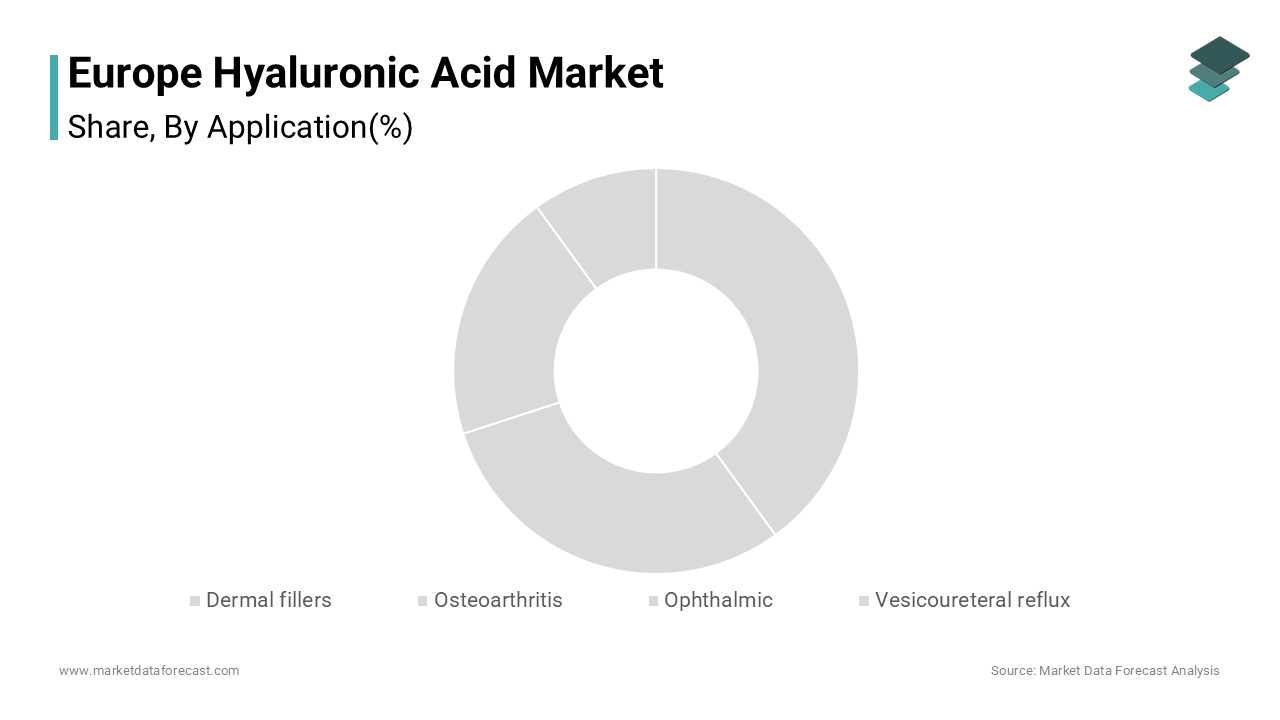
The osteoarthritis segment is predicted to showcase the fastest CAGR of 9.12% over the forecast period in the European hyaluronic acid market owing to the growing Europe’s aging population, increasing clinical endorsement of viscosupplementation, and growing pressure to delay joint replacement surgeries amid strained public healthcare resources. The prevalence of osteoarthritis is escalating rapidly across EU member states. According to the International Society of Aesthetic Plastic Surgery, 5,564,866 hyaluronic acid procedures were performed worldwide in 2023, which is representing 29% of all non-surgical procedures reported globally in 2023. According to the British Association of Aesthetic Plastic Surgeons, BAAPS members reported 9,807 non-surgical procedures in 2024, of which 3,023 were filler injections, which is 30.8% of non-surgical procedures among reporting BAAPS members.
REGIONAL ANALYSIS
Germany Hyaluronic Acid Market Analysis
Germany dominated the hyaluronic acid market in Europe by accounting for 20.4% of the regional market share in 2024. The growth of Germany in the European market is driven by its advanced healthcare infrastructure, high prevalence of age-related conditions, and robust aesthetic medicine sector. Germany serves as a key innovation and regulatory hub for medical device manufacturers operating in the EU. The growing aging population in Germany and associated musculoskeletal burden is also boosting the German market expansion. According to Germany’s Federal Statistical Office (Destatis), around 22% of Germany’s population was aged 65 years or older in 2023, which is highlighting the country’s rapidly aging demographic and increasing demand for joint and skin health therapies. According to the Federal Joint Committee (G-BA), viscosupplementation with hyaluronic acid is an approved and reimbursable treatment under Germany’s statutory health insurance for certain indications, which is reflecting broad institutional acceptance. According to the German Society for Aesthetic Plastic Surgery (DGÄPC), Germany ranks among the top European countries for the number of certified medical aesthetic clinics, which is underscoring its mature and regulated aesthetic ecosystem. These clinics increasingly use high G-prime cross-linked hyaluronic acid formulations for facial contouring, which is supported by stringent CE certification requirements that enhance consumer trust. Additionally, research institutions such as the Fraunhofer Institute are developing animal-free fermentation techniques to produce ultra-pure hyaluronic acid, which is aligning with Germany’s sustainability and innovation goals. This synergy of demographic need, clinical acceptance, regulatory rigor, and biotechnological advancement are significantly propelling the hyaluronic acid market growth in Germany.
France Hyaluronic Acid Market Analysis
France occupied the second largest share of the European market in 2024. The deeply entrenched culture of skincare, high aesthetic procedure volumes, and supportive public health policies for joint disease management in France are majorly driving the hyaluronic acid market growth in France. France blends beauty tradition with medical innovation to sustain demand across multiple segments. According to the International Society of Aesthetic Plastic Surgery (ISAPS), France ranks among Europe’s largest markets for dermal fillers, second only to the United Kingdom, which is reflecting the country’s strong demand for non-surgical cosmetic procedures. According to a 2024 Ipsos consumer survey, nearly 70% of French women aged 30 to 50 regularly use hyaluronic acid–based skincare products, which is indicating the nation’s deep-rooted dermatological culture and preference for preventive skincare. In orthopedics, France’s National Health Insurance Fund (Assurance Maladie) offers partial reimbursement for viscosupplementation in knee osteoarthritis under specific medical conditions, which is supporting patient accessibility to hyaluronic acid therapies. French regulatory authorities maintain strict oversight to ensure that only CE-marked hyaluronic acid products with validated rheological performance are approved for injection, which is minimizing counterfeit risks. The presence of leading domestic manufacturers such as Laboratoires Vivacy, known for its IPN-like cross-linking technology, further strengthens France’s position as a hub for R&D and high-quality production. These interconnected aesthetic, therapeutic, and regulatory dynamics are fuelling the hyaluronic acid market in France.
United Kingdom Hyaluronic Acid Market Analysis
The United Kingdom is another promising market for hyaluronic acid in Europe and is estimated to account for a notable share of the European market over the forecast period. The UK is one of the highest per capita rates of aesthetic procedures and growing adoption of viscosupplementation in private healthcare settings. Despite Brexit, the UK remains a key influencer in European aesthetic standards and consumer trends. According to the International Society of Aesthetic Plastic Surgery (ISAPS), the United Kingdom is one of Europe’s largest markets for non-surgical aesthetic procedures, performing hundreds of thousands of dermal filler treatments annually, which is reflecting sustained consumer demand for minimally invasive enhancements. London alone hosts more than 1,000 registered aesthetic clinics, many of which cater to international medical tourists seeking advanced cosmetic care. In orthopedics, while the NHS limits viscosupplementation to select cases, the private healthcare sector has reported steady growth in hyaluronic acid injections since 2021, which is driven by patient preference for non-surgical pain management. The UK’s Medicines and Healthcare products Regulatory Agency (MHRA) operates a comprehensive adverse event monitoring system, which is enhancing product safety and practitioner accountability. Additionally, universities such as Imperial College London are conducting research on low–molecular-weight hyaluronic acid for oral supplementation, supported by Innovate UK funding. This combination of strong aesthetic demand, private sector flexibility, and scientific advancement reinforces the UK’s leading position in the hyaluronic acid market, despite its regulatory divergence from the EU.
Italy Hyaluronic Acid Market Analysis
Italy is projected to witness a prominent CAGR in the European hyaluronic acid market during the forecast period owing to a strong beauty consciousness, rising geriatric population, and increasing medical tourism for aesthetic treatments. Italy exhibits a unique duality, which is deep-rooted skincare rituals blending with modern clinical aesthetics.According to the International Society of Aesthetic Plastic Surgery (ISAPS), Italy ranks among the top three European markets for cosmetic procedures, with dermal fillers representing one of the most frequently performed non-surgical treatments. Milan and Rome are emerging as leading destinations for medical tourists from Eastern Europe and the Middle East, which is driven by competitive pricing and a strong reputation for clinical expertise. According to the Italian National Institute of Statistics (ISTAT), about 24% of Italy’s population was aged 65 or older in 2024, which is fueling demand for osteoarthritis management and other age-related therapies. Although national reimbursement for viscosupplementation remains limited, regional health authorities in Lombardy and Emilia-Romagna have launched pilot programs to partially fund early-stage knee osteoarthritis treatments, which is reflecting growing recognition of their long-term cost benefits. Additionally, Italian pharmaceutical companies such as Fidia Farmaceutici are recognized global leaders in hyaluronic acid production for orthopedic and ophthalmic applications, exporting to more than 80 countries. Their ongoing investment in cross-linking technologies and biocompatible derivatives reinforces Italy’s position not only as a major consumer but also as a key European producer. This dual strength in demand and manufacturing solidifies Italy’s strategic importance within the hyaluronic acid value chain.
Spain Hyaluronic Acid Market Analysis
Spain is anticipated to account for a noteworthy share of the European market over the forecast period owing to the rising medical tourism, urban wellness trends, and increasing awareness of joint health in an aging society. Spain is transitioning from a traditional reliance on pharmaceuticals toward integrative aesthetic and therapeutic solutions. According to the Organisation for Economic Co-operation and Development (OECD), Spain is among Europe’s leading destinations for cross-border healthcare, which is reflecting a steady rise in international patients seeking aesthetic and wellness treatments. Cities such as Barcelona and Madrid provide high-quality procedures at costs up to 40% lower than those in Northern Europe, which is attracting clients from the UK, Germany, and Scandinavia. According to Spain’s National Statistics Institute (INE), approximately 20% of the population was aged 65 years or older in 2024, which is contributing to the growing prevalence of osteoarthritis and demand for non-surgical joint therapies. While public reimbursement for viscosupplementation remains limited, private healthcare providers in cities like Valencia and Seville have reported an increase in patient consultations for hyaluronic acid–based treatments. According to a 2024 Kantar consumer study, a majority of Spanish women aged 25 to 45 reported regular use of hyaluronic acid skincare products, which is reflecting strong consumer interest in dermocosmetics. Local biotech firms such as Hyalotech are pioneering plant-based fermentation methods to meet the rising demand for clean beauty ingredients. This convergence of medical tourism affordability, demographic aging, and biotechnology innovation positions Spain as a high-potential growth market with distinct competitive advantages.
COMPETETIVE LANDSCAPE
The Europe hyaluronic acid market features a competitive landscape shaped by a mix of multinational dermatology specialists European pharmaceutical innovators and emerging biotech firms. Competition is primarily driven by product performance safety profile and scientific credibility rather than price alone. Established players leverage proprietary cross linking technologies strong regulatory dossiers and extensive medical education networks to maintain brand loyalty among dermatologists and orthopedic specialists. New entrants face high barriers including stringent EU Medical Device Regulation compliance clinical evidence requirements and practitioner trust building. While dermal fillers dominate revenue the therapeutic segment is becoming increasingly strategic due to public health cost pressures and aging demographics. Geographic fragmentation also influences rivalry with national preferences for certain molecular formulations and varying reimbursement policies creating a need for localized commercial strategies. Overall the market rewards companies that combine biotechnological excellence with robust clinical support and digital patient engagement.
KEY MARKET PLAYERS
Some of the companies that are playing a dominating role in the Europe Hyaluronic Acid Market include
- Allergan
- Galderma
- Merz Pharma
- Teoxane Laboratories
- SynthRx
- Bloomage BioTechnology
- Anika Therapeutics
- Fidia Farmaceutici
- LG Chem
- Sinclair Pharma
Top Players in the Market
Galderma SA
Galderma SA is a global dermatology leader with a commanding presence in the Europe hyaluronic acid market through its Restylane and Azzalure product lines. The company specializes in cross linked hyaluronic acid dermal fillers engineered for facial contouring, lip enhancement, and skin rejuvenation. Galderma has strengthened its position by investing in proprietary technologies such as NASHA and OBT for improved longevity and natural movement. In recent years the company expanded its medical training academies across Germany France and the UK to certify practitioners on safe injection techniques. Galderma also enhanced its digital ecosystem with AI powered treatment simulation tools that improve patient consultation accuracy. Its commitment to clinical research and regulatory compliance under the EU Medical Device Regulation reinforces its reputation as a science driven innovator in aesthetic medicine worldwide.
Fidia Farmaceutici S.p.A
Fidia Farmaceutici S.p.A is an Italian pharmaceutical company renowned for its high purity hyaluronic acid products used in orthopedics ophthalmology and viscosupplementation. The company supplies both the European and global markets with branded formulations such as Hyalubrix and Viscoseal. Fidia has reinforced its leadership through vertical integration controlling fermentation purification and formulation processes to ensure batch consistency and safety. Recently the company launched a next generation low molecular weight hyaluronic acid gel for early stage knee osteoarthritis with extended residence time in the synovial cavity. Fidia also expanded its clinical collaboration network with university hospitals in Milan and Barcelona to generate real world evidence supporting reimbursement applications. Its focus on therapeutic efficacy and regulatory excellence positions Fidia as a trusted supplier in medical grade hyaluronic acid applications beyond aesthetics.
Laboratoires Vivacy
Laboratoires Vivacy is a French biotechnology firm specializing in innovative hyaluronic acid dermal fillers under the Stylage brand. The company distinguishes itself through its patented IPN like technology which creates a more homogeneous and resilient gel structure for natural looking results. Vivacy has deepened its European footprint by establishing direct subsidiaries in Spain Sweden and the Netherlands to enhance local distribution and medical education. In recent actions the company introduced a line of antioxidant enriched fillers that combat free radical degradation thereby extending aesthetic longevity. Vivacy also partnered with European dermatology societies to develop standardized injection protocols and adverse event reporting systems. Its emphasis on molecular innovation practitioner training and product differentiation has solidified its role as a premium player in the medical aesthetics segment across the continent and in select Asian and Latin American markets.
Top Strategies Used by the Key Market Participants
Leading companies in the Europe hyaluronic acid market focus on technological differentiation through advanced cross linking and molecular weight engineering to enhance product performance and duration. They invest heavily in clinical validation and real world evidence generation to support regulatory approvals and reimbursement claims particularly for osteoarthritis applications. Strategic expansion of medical education programs ensures proper product use and builds practitioner loyalty. Companies also pursue vertical integration of fermentation and purification processes to secure supply chain quality and reduce cost volatility. Additionally firms are increasingly embedding digital tools such as treatment simulators and patient follow up apps to improve user experience and collect longitudinal outcome data aligning with Europe’s shift toward value based aesthetic and therapeutic care.
MARKET SEGMENTATION
The research report on the europe hyaluronic acid market has been segmented and sub-segmented based on categories.
By Application
- Dermal fillers
- Osteoarthritis
- Ophthalmic
- Vesicoureteral reflux
By Country
- UK
- France
- Spain
- Germany
- Italy
- Russia
- Sweden
- Denmark
- Switzerland
- Netherlands
- Turkey
- Czech Republic
- Rest of Europe