- Product Description Description
- Table of Contents TOC
- List of Table & Figure LOT
- Get Free Sample PDF Sample PDF
Market Size, 2025
$13,646 MnMarket Estimate, 2026
$21,271 MnMarket Forecast, 2034
$741,519 MnCAGR, 2026–2034
55.88%Europe Hyper-Converged Infrastructure Market Report Summary
The Europe hyper-converged infrastructure market was valued at USD 13,646.12 million in 2025, is estimated to reach USD 21,271.57 million in 2026, and is projected to reach USD 741,519.81 million by 2034, growing at a CAGR of 55.88% during the forecast period from 2026 to 2034. The growth of the Europe hyper-converged infrastructure (HCI) market is driven by the increasing demand for scalable, software-defined data center solutions, rapid digital transformation across industries, and the growing adoption of cloud computing and virtualization technologies. The need for simplified IT infrastructure management, cost optimization, and enhanced data security is further accelerating market expansion. Additionally, the rising deployment of hybrid and multi-cloud environments and edge computing solutions is significantly boosting the adoption of HCI across Europe.
Key Market Trends
- Rapid shift toward software-defined infrastructure to improve scalability, flexibility, and operational efficiency.
- Increasing adoption of hybrid and multi-cloud strategies among enterprises driving HCI demand.
- Growing importance of edge computing and real-time data processing across industries.
- Rising focus on data security, disaster recovery, and business continuity solutions.
- Expansion of virtualization technologies and AI-driven IT operations enhancing HCI capabilities.
Segmental Insights
By Component
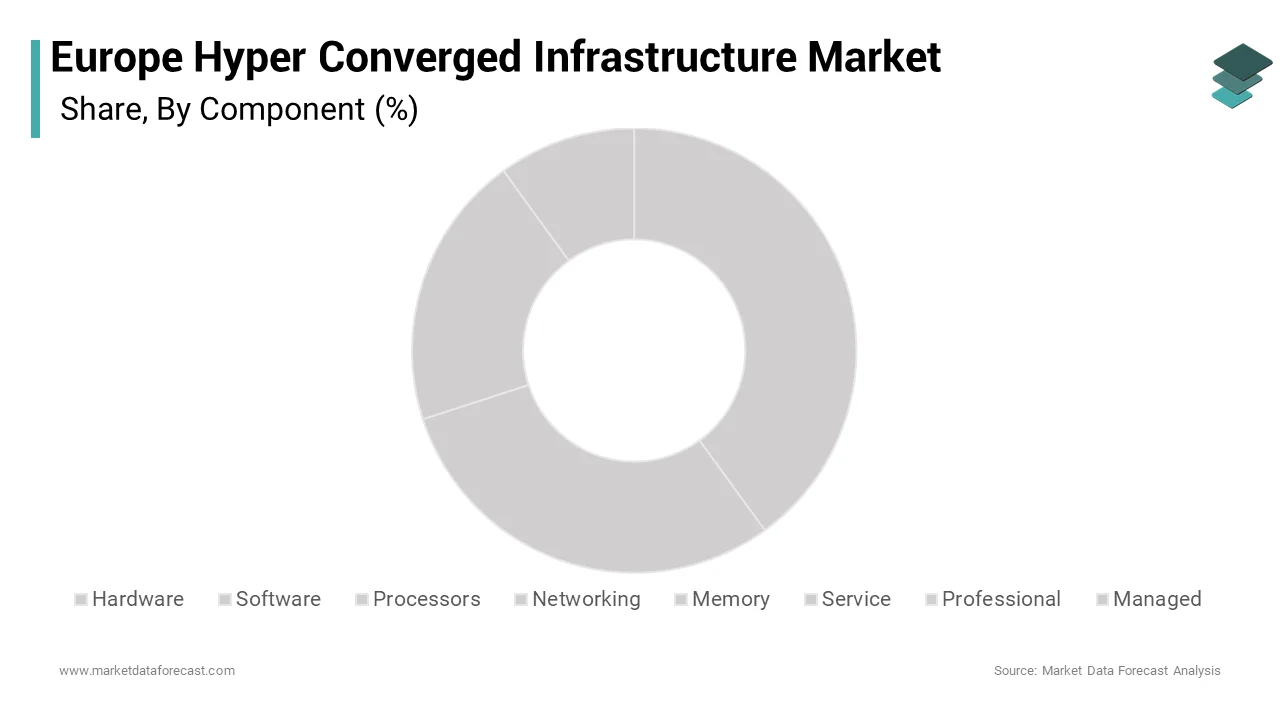
The software segment dominated the Europe hyper-converged infrastructure market, accounting for 45.7% of the market share in 2025. This dominance is attributed to the increasing reliance on software-defined storage, networking, and compute solutions that simplify infrastructure management and improve scalability.
By Hypervisor
The VMware hypervisor segment led the market with a 60.7% share in 2025. Its strong ecosystem, widespread enterprise adoption, and robust virtualization capabilities contribute to its leading position.
By Organization Size
The large enterprises segment held the major share of 65.1% in 2025, driven by high data volumes, complex IT environments, and significant investments in advanced infrastructure solutions.
By End User
The Banking, Financial Services, and Insurance (BFSI) segment was the largest, occupying a 25.3% share in 2025. The sector’s need for secure, scalable, and high-performance IT infrastructure to manage critical financial data and digital services is fueling adoption.
Regional Insights
The Europe hyper-converged infrastructure market is witnessing strong growth across major economies, supported by digital transformation initiatives and increasing enterprise IT investments.
- Germany led the market with a 22.7% share in 2025, driven by its strong industrial base and early adoption of advanced IT infrastructure.
- The United Kingdom ranked second with an 18.3% share, supported by rapid cloud adoption and a mature digital ecosystem.
- France holds a significant position due to growing investments in data centers and enterprise IT modernization.
- Italy is steadily progressing with increased adoption of digital technologies and cloud-based infrastructure.
- The Netherlands is expected to witness notable growth, driven by its expanding data center landscape and strategic position as a digital hub in Europe.
Competitive Landscape
The Europe hyper-converged infrastructure market is highly competitive, with major technology providers focusing on innovation, strategic partnerships, and product enhancements to strengthen their market presence. Companies are investing in advanced software-defined solutions, AI-driven infrastructure management, and hybrid cloud integration to meet evolving enterprise needs. The competitive landscape is characterized by continuous advancements in virtualization, storage, and networking technologies, along with increasing emphasis on security and performance optimization.
Prominent players in the Europe hyper-converged infrastructure market include Hitachi Vantara, NEC Corporation, Riverbed Technology, Cisco Systems, VMware, Hewlett Packard Enterprise, Dell, Huawei, Fujitsu, IBM, Nutanix, Microsoft, NetApp, Quantum Corporation, Scale Computing, DataCore Software, Maxta, and Sangfor Technologies.
Europe Hyper Converged Infrastructure Market Size
The Europe hyper converged infrastructure market size was valued at USD 13646.12 million in 2025 and is anticipated to reach USD 21271.57 million in 2026 to reach USD 741519.81 million by 2034, growing at a CAGR of 55.88% during the forecast period from 2026 to 2034.

Introduction and Market Definition
Hyper-Converged Infrastructure (HCI) is a software-defined IT framework that combines all the essential elements of a traditional data centre, compute, storage, networking, and management, into a single, unified software system. This technology simplifies IT management by eliminating the need for separate hardware silos and enabling scalable deployment through standard x86 servers. The adoption of this infrastructure is closely tied to the region’s aggressive digital transformation initiatives and the growing complexity of enterprise workloads. As per Eurostat, 45.2% of enterprises in the European Union with ten or more persons employed utilized cloud computing services in 2023 (rising to 52.7% in 2025), indicating a growing but varied foundation for hybrid and private cloud architectures. Furthermore, the European Commission’s Digital Decade policy aims to ensure that 75% of EU companies take up cloud computing services, big data, or artificial intelligence (using one or more of these technologies) by 2030. This regulatory push accelerates the modernization of legacy IT systems which are often inefficient and costly to maintain. The General Data Protection Regulation also influences infrastructure decisions as organizations seek greater control over data sovereignty and security which hyper converged solutions can provide through on premises or edge deployments. According to the International Data Corporation the amount of data created captured copied and consumed globally is expected to reach 175 zettabytes by 2025 necessitating robust and flexible storage solutions. Hence, European organizations are increasingly turning to hyper converged infrastructure to enhance operational agility reduce footprint and support data intensive applications in compliance with strict regional standards.
MARKET DRIVERS
Accelerating Digital Transformation and Hybrid Cloud Adoption Strategies
The rapid pace of digital transformation across the industries in the region is a primary driver for the Europe hyper converged infrastructure market. Organizations are increasingly adopting hybrid cloud strategies to balance the scalability of public clouds with the security and control of on premises data centers. As per the European Commission's 2024 State of the Digital Decade report (formerly DESI), the integration of advanced digital technologies (Cloud, AI, Big Data) by European businesses remains well below the 2030 targets, highlighting a critical need to accelerate adoption to ensure competitiveness. Hyper converged infrastructure provides the ideal foundation for hybrid cloud environments by offering consistent management interfaces and seamless workload mobility between private and public clouds. According to the International Data Corporation a significant majority of European enterprises have adopted a multi cloud strategy which requires flexible and scalable infrastructure to manage diverse workloads effectively. The ability to deploy applications rapidly and scale resources on demand allows businesses to respond quickly to market changes. Furthermore, the rise of remote work has increased the demand for virtual desktop infrastructure which is efficiently supported by hyper converged systems. These systems reduce the complexity of managing distributed IT environments and lower operational costs. The strategic imperative to modernize IT infrastructure to support digital initiatives ensures sustained demand for hyper converged solutions. Companies recognize that traditional three tier architecture cannot meet the agility requirements of modern digital business models. Thus, the transition to software defined data centers powered by hyper convergence becomes essential for maintaining competitiveness in the digital economy.
Growing Demand for Edge Computing and Low Latency Applications
The proliferation of Internet of Things devices and the need for real time data processing are propelling the growth of the Europe hyper converged infrastructure market. As per the European Commission's 5G Observatory (2024), while basic 5G coverage is high, the deployment of 5G Standalone (SA) networks, essential for ultra-low latency applications, remains limited and has not yet reached a meaningful scale across Europe. Hyper converged infrastructure units are compact and easy to deploy in remote locations making them ideal for edge computing scenarios. According to a study, the proportion of enterprise data generated and processed at the edge is expected to rise to 75% by 2025. Industries such as manufacturing healthcare and retail are leveraging edge computing to analyze data in real time for predictive maintenance patient monitoring and personalized customer experiences. Hyper converged systems provide the necessary compute and storage resources at the edge while maintaining centralized management and security policies. This distributed architecture allows organizations to process critical data closer to the source ensuring faster response times and improved operational efficiency. The European Union’s focus on smart cities and industrial automation further fuels the demand for edge infrastructure. By deploying hyper converged nodes at the edge enterprises can support mission critical applications without relying solely on centralized data centers. This trend towards decentralized computing infrastructure creates significant opportunities for hyper converged solutions to expand beyond traditional data center environments into diverse operational settings.
MARKET RESTRAINTS
High Initial Capital Expenditure and Complex Migration Processes
HCI offers significant long-term benefits, yet high initial capital expenditure acts as a restraint for many European organizations and for the Europe hyper converged infrastructure market. This is particularly true for small and medium-sized enterprises (SMEs). The cost of acquiring specialized hardware and software licenses can be prohibitive for companies with limited IT budgets. Eurostat confirms a significant digital divide, with only 17% of SMEs adopting AI technologies compared to 55% of large enterprises in 2025. The European Commission and Eurochambres identify high implementation costs and financial constraints as primary barriers preventing these SMEs from investing in advanced technologies. The transition from traditional three tier architecture to hyper converged infrastructure also involves complex migration processes that require specialized skills and planning. According to the European Centre for the Development of Vocational Training (Cedefop), there is a persistent shortage of ICT specialists and professionals with advanced digital skills required for the EU's digital transition. This skills gap increases the reliance on external consultants and training programs adding to the overall cost of implementation. Furthermore the risk of data loss or downtime during migration discourages some organizations from undertaking the transition. The lack of standardized migration tools and best practices further complicates the process. Many companies prefer to extend the life of their existing infrastructure rather than incur the high upfront costs and risks associated with migration. Until the total cost of ownership becomes more accessible and migration tools become more user friendly the adoption rate among budget constrained organizations will remain limited. This financial and technical barrier slows down the broader market penetration of hyper converged solutions.
Stringent Data Sovereignty Regulations and Compliance Requirements
Strict data sovereignty regulations and compliance requirements in the region are a barrier to the deployment of HCI, and thereby hamper the expansion of the Europe hyper converged infrastructure market. The General Data Protection Regulation imposes rigorous standards on data protection privacy and cross border data transfers which complicate infrastructure design and management. As per the European Data Protection Board (EDPB) and GDPR guidelines, organizations must restrict the transfer of personal data to third countries, effectively requiring data to be processed within the European Economic Area (EEA) unless adequate safeguards (such as Standard Contractual Clauses) are implemented to ensure equivalent protection. This requirement limits the flexibility of using global cloud providers and necessitates the use of on premises or local private cloud solutions. Hyperconverged infrastructure (HCI) supports on-premises deployment, but ensuring compliance with regulatory nuances is complex and resource-intensive. This makes, for example, managing on-premises compliance a challenge. The European Commission mandates that organizations implement rigorous risk management and incident reporting measures under regulations like NIS2 and DORA to ensure cyber resilience. While necessary for security, business associations and Commission impact assessments acknowledge that these compliance obligations can create a significant administrative burden for enterprises. The varying interpretations of GDPR by different national authorities create uncertainty for multinational corporations operating across multiple European countries. Additionally the Network and Information Security Directive requires operators of essential services to maintain high levels of cybersecurity which may involve additional investments in security features for hyper converged systems. These regulatory complexities increase the time and cost required for deployment and ongoing management. Organizations must navigate a fragmented legal landscape to ensure full compliance which can delay procurement decisions. The compliance burden remains a significant restraint on market growth. This situation will likely persist until regulatory frameworks are harmonized and clear guidance is provided.
MARKET OPPORTUNITIES
Integration with Artificial Intelligence and Machine Learning Workloads
The increasing adoption of artificial intelligence and machine learning technologies offers a significant opportunity for the Europe hyper converged infrastructure market. AI and ML workloads require substantial computational power and fast access to large datasets which hyper converged systems can provide through scalable and high performance architectures. As per the European Commission the coordinated plan on artificial intelligence aims to boost the development and uptake of AI in Europe creating a favorable environment for supporting infrastructure. Hyper converged infrastructure allows organizations to scale compute and storage resources independently to meet the demanding requirements of AI training and inference tasks. According to a source, the investment in AI technologies by European enterprises is growing rapidly driving the need for flexible and efficient IT infrastructure. Hyper converged systems enable the rapid provisioning of virtual machines and containers required for AI development and deployment. This agility accelerates the time to market for AI driven applications and services. Furthermore the integration of graphics processing units and tensor processing units into hyper converged nodes enhances their capability to handle intensive AI workloads. The ability to manage AI infrastructure through a single pane of glass simplifies operations and reduces administrative overhead. As more industries leverage AI for innovation and efficiency the demand for hyper converged infrastructure that can support these advanced workloads will continue to rise. This technological synergy offers a compelling value proposition for organizations seeking to harness the power of AI.
Expansion of Virtual Desktop Infrastructure in Remote Work Environments
The shift towards remote and hybrid work models has accelerated the adoption of virtual desktop infrastructure which is ideally suited for HCI deployments. This expansion is likely to boost the growth of the Europe hyper converged infrastructure market. As per Eurostat, the proportion of employed people in the EU usually working from home increased from 5.4% in 2019 to 9% in 2023 (with 22% working from home at least occasionally), while 60% of EU enterprises offered remote access to email, documents, and business applications in 2024. Hyper converged infrastructure provides the necessary performance and reliability to support large numbers of virtual desktops while simplifying management and reducing hardware footprint. According to the European Agency for Safety and Health at Work, the well-being of remote workers depends on managing psychosocial and physical risks, such as isolation, ergonomics, and "technostress" caused by the extensive use of digital technologies, through clear policies and training rather than just technical solutions. Hyper converged systems allow IT administrators to provision and manage virtual desktops centrally ensuring consistent performance and security policies across distributed workforces. The scalability of hyper converged infrastructure enables organizations to easily add or remove resources based on fluctuating demand. This flexibility is crucial for managing seasonal workforce changes or sudden shifts in remote work patterns. Furthermore the reduced latency and improved user experience offered by hyper converged virtual desktop infrastructure enhance productivity and employee satisfaction. As remote work becomes a permanent feature of the European labor market the demand for robust virtual desktop solutions will remain strong. This trend creates a sustained opportunity for hyper converged infrastructure providers to support the evolving needs of modern workplaces.
MARKET CHALLENGES
Security Vulnerabilities and Risk of Single Point of Failure
The potential security vulnerabilities and the risk of a single point of failure inherent in converged architectures are major challenges to the Europe hyper converged infrastructure market. Since computing storage and networking are integrated into a single system a compromise in one component can potentially affect the entire infrastructure. As per the European Union Agency for Cybersecurity, the concentration of resources creates a more attractive target for attackers and requires robust security measures to prevent unauthorized access and data breaches. Organizations must implement comprehensive security protocols including encryption access controls and continuous monitoring to mitigate these risks. According to the European Union Agency for Cybersecurity, the complexity of Software Defined Networking and Network Functions Virtualisation can introduce new vulnerabilities and expand the attack surface if not properly configured and managed. The reliance on a single vendor for hardware and software components also creates dependency risks. If a vendor experiences a security incident or supply chain disruption it can have widespread implications for customers. Additionally, the shared nature of resources in hyper converged systems means that a performance issue or failure in one workload can impact others. Ensuring high availability and disaster recovery in such environments requires careful planning and investment in redundant systems. The fear of catastrophic failures and security breaches makes some organizations hesitant to fully embrace hyper converged infrastructure. Addressing these concerns requires continuous innovation in security technologies and best practices to build trust and confidence among users.
Vendor Lock In and Limited Interoperability Issues
Vendor lock-in and limited interoperability with existing legacy systems pose significant hindrance to the Europe hyper converged infrastructure market. Many hyper converged solutions are proprietary making it difficult for organizations to switch vendors or integrate with third party technologies. As per the European Commission the lack of interoperability standards in the cloud and infrastructure market can hinder competition and innovation. Organizations that invest in a specific hyper converged platform may find themselves dependent on that vendor for future upgrades support and expansions. This dependency can lead to higher long term costs and reduced flexibility in negotiating contracts. According to the European Digital SME Alliance small and medium sized enterprises are particularly vulnerable to vendor lock in due to limited resources and bargaining power. The difficulty in migrating data and applications between different hyper converged platforms further exacerbates the issue. Organizations must carefully evaluate the long term implications of vendor selection to avoid being trapped in inflexible ecosystems. Additionally the integration of hyper converged infrastructure with legacy applications and systems can be complex and costly. The lack of standardized APIs and interfaces limits the ability to create seamless hybrid environments. European enterprises investing in hyper-converged infrastructure face a significant risk of vendor lock-in. This danger will persist until industry-wide open standards and greater interoperability are fully established.
REPORT COVERAGE
| REPORT METRIC | DETAILS |
| Market Size Available | 2025 to 2034 |
| Base Year | 2025 |
| Forecast Period | 2026 to 2034 |
| CAGR | 55.88% |
| Segments Covered | By Component, Hypervisor, Organization Size, Application, Deployment Mode, End-User, and Region. |
| Various Analyses Covered | Global, Regional, and Country Level Analysis; Segment-Level Analysis, DROC; PESTLE Analysis; Porter’s Five Forces Analysis; Competitive Landscape; Analyst Overview of Investment Opportunities |
| Regions Covered | UK, France, Spain, Germany, Italy, Russia, Sweden, Denmark, Switzerland, Netherlands, Turkey, Czech Republic, and the Rest of Europe |
| Market Leaders Profiled | Hitachi Vantara LLC (U.S.), NEC Corporation (Japan), Riverbed Technology (U.S.), Cisco Systems, Inc.(U.S.), VMware, Inc. (U.S.), Hewlett Packard Enterprise Development LP (U.S.), Dell Inc (U.S.), Huawei Technologies Co., Ltd.(China), FUJITSU (Japan), IBM (U.S.), Nutanix (U.S.), Microsoft (U.S.), NetApp (U.S.), Quantum Corporation (U.S.), Scale Computing (U.S.), DataCore Software (U.S.), Maxta (U.S.), SANGFOR TECHNOLOGIES (China) |
SEGMENTAL ANALYSIS
By Component Insights
The software segment dominated the Europe hyper converged infrastructure market and accounted for a 45.7% share in 2025. This dominance of the segment is driven by the critical role of virtualization and management layers in defining the functionality and efficiency of hyper converged systems. Software is the core enabler of hyper converged infrastructure as it abstracts computing storage and networking resources from the underlying hardware. According to a study, investment in enterprise infrastructure is rising to support digital transformation requirements. The software layer allows for seamless integration of diverse workloads and provides a single pane of glass for management which simplifies administrative tasks. The European Commission is prioritizing digital sovereignty and the cloud-to-edge continuum to meet its digital decade goals. Hyper converged software solutions offer advanced features such as data deduplication compression and erasure coding which optimize storage efficiency and reduce costs. The ability to scale software licenses independently of hardware provides flexibility for growing businesses. Furthermore the integration of artificial intelligence and machine learning capabilities into management software enhances predictive analytics and automated remediation. These intelligent features improve system reliability and performance making software the most valuable component in the hyper converged stack. The continuous innovation in software capabilities ensures that this segment remains the primary driver of value and differentiation in the market. The prevalence of subscription based licensing models for hyper converged software contributes significantly to its market dominance. Research indicates a shift toward consumption-based pricing models driven by Agentic AI. This model allows enterprises to spread costs over time rather than incurring large upfront capital expenditures making hyper converged solutions more accessible. Subscription models also include regular updates and support ensuring that customers always have access to the latest features and security patches. This continuous improvement cycle enhances the long term value proposition of hyper converged software. Additionally the ability to scale licenses up or down based on demand provides operational flexibility for businesses experiencing fluctuating workloads. The financial predictability and operational benefits of subscription based software licensing drive widespread adoption. Vendors are increasingly focusing on software innovation to differentiate their offerings and capture market share. This strategic emphasis on software ensures its continued leadership in the hyper converged infrastructure market.
The services segment is predicted to witness the highest CAGR of 12.5% during the forecast period. This rapid growth of the segment is attributed to the increasing complexity of hyper converged deployments and the need for specialized expertise. The complexity of designing deploying and managing hyper converged infrastructure drives the demand for professional and managed services. Organizations rely on service providers to assist with migration planning implementation and optimization of hyper converged environments. Service providers offer comprehensive solutions including monitoring maintenance and troubleshooting which ensure high availability and performance of hyper converged systems. The rise of hybrid cloud architectures further increases the need for integrated management services that span on premises and cloud environments. Professional services also include training and knowledge transfer enabling internal IT teams to effectively manage hyper converged infrastructure. The value added by these services in reducing downtime and improving operational efficiency justifies the investment. As hyper converged deployments become more widespread the demand for specialized services will continue to grow driving the rapid expansion of this segment. The integration of hyper converged infrastructure with cloud and security services is another key factor contributing to the fast growth of the services segment. Service providers offer managed security services including threat detection incident response and compliance management which are essential for safeguarding sensitive data. These integration services enable seamless workload mobility and data synchronization across different environments. Additionally disaster recovery as a service is gaining traction as organizations seek robust backup and recovery solutions for their hyper converged systems. Service providers leverage their expertise to design and implement effective disaster recovery strategies that minimize data loss and downtime. The convergence of infrastructure cloud and security services creates new opportunities for service providers to deliver holistic solutions. This trend towards integrated and managed services drives the accelerated growth of the services segment in the hyper converged infrastructure market.
By Hypervisor Insights
The VMware hypervisor segment led the Europe hyper converged infrastructure market and held 60.7% share in 2025. This leading position of the segment is supported by its extensive feature set reliability and widespread adoption in enterprise environments. VMware has established itself as the leading hypervisor in the hyper converged infrastructure market due to its comprehensive feature set and proven reliability. The integration of VMware vSAN with vSphere offers a seamless and tightly coupled solution that simplifies management and enhances performance. Besides, the extensive ecosystem of partners and third party integrations further strengthens VMware’s position by offering a wide range of compatible hardware and software solutions. Enterprises benefit from the extensive documentation community support and training resources available for VMware technologies. The familiarity of IT staff with VMware tools reduces the learning curve and operational risks associated with new deployments. This established presence and comprehensive functionality make VMware the preferred choice for organizations seeking a reliable and scalable hyper converged infrastructure solution. The strong vendor support and enterprise grade reliability offered by VMware contribute significantly to its market leadership. The company provides comprehensive technical assistance including proactive monitoring and troubleshooting ensuring minimal downtime and optimal performance. In addition, the regular release of updates and patches addresses security vulnerabilities and introduces new features keeping the platform current and secure. VMware’s commitment to innovation and continuous improvement ensures that its hyper converged solutions meet the evolving needs of modern enterprises. The availability of long term support contracts provides peace of mind for organizations with critical workloads. This combination of strong support and reliability makes VMware a trusted partner for enterprises deploying hyper converged infrastructure. The confidence in VMware’s ability to deliver consistent performance and support sustains its dominant position in the market.
The Kernel based virtual machine segment is estimated to register the fastest CAGR of 14.2% from 2026 to 2034 due to the rising adoption of open source technologies and cost effective solutions. In addition, the increasing preference for open source technologies is driving the rapid growth of the KVM hypervisor segment in the Europe hyper converged infrastructure market. KVM as a native part of the Linux kernel offers a robust and secure virtualization platform that integrates seamlessly with other open source tools. Further, KVM’s open nature allows for customization and integration with various hyper converged software stacks providing greater flexibility for enterprises. The active community support and continuous development of KVM ensure that it remains competitive with proprietary alternatives. Many cloud providers and technology companies are leveraging KVM for their infrastructure due to its scalability and performance. This trend towards open source virtualization is particularly strong among tech savvy organizations and startups. The freedom to modify and optimize the hypervisor code appeals to organizations with specific requirements. This shift towards open source drives the fast expansion of the KVM segment. The cost effectiveness and flexibility of KVM make it an attractive option for organizations seeking affordable hyper converged infrastructure solutions. Unlike proprietary hypervisors KVM does not require expensive licensing fees making it a budget friendly alternative. This cost advantage allows organizations to allocate resources to other strategic initiatives. Furthermore KVM’s flexibility enables custom deployments tailored to specific workload requirements. Organizations can choose from a variety of hyper converged software vendors that support KVM providing greater choice and competition. The ability to run KVM on standard hardware further reduces costs and simplifies procurement. This economic and operational flexibility appeals to a broad range of users from startups to large enterprises looking to optimize their IT spending. The combination of low cost and high flexibility ensures the rapid growth of the KVM segment in the European market.
By Organization Size Insights
In 2025, the large enterprises segment held the major share of 65.1% of the Europe hyper converged infrastructure market. This supremacy of the segment is credited to the substantial IT budgets and complex infrastructure requirements of large organizations. Large enterprises possess the financial resources and technical expertise required to invest in hyper converged infrastructure which often involves significant upfront costs. These organizations operate complex IT environments with diverse workloads requiring scalable and flexible infrastructure solutions. The ability to scale resources on demand supports business growth and innovation without the need for frequent hardware upgrades. Large enterprises also benefit from the enhanced performance and reliability offered by hyper converged systems which are critical for mission critical applications. The centralized management capabilities of hyper converged infrastructure improve operational efficiency and reduce administrative overhead. This alignment with the strategic goals of large organizations ensures their continued leadership in the market. The capacity to invest in pilot projects and large scale deployments further solidifies their position as the primary adopters of hyper converged technology. The focus on digital transformation and cloud strategy among large enterprises drives the adoption of hyper converged infrastructure. Hyper converged infrastructure provides the agile and scalable foundation required to support these digital initiatives. The ability to seamlessly integrate on premises infrastructure with public clouds enables large organizations to optimize their cloud investments and improve workload portability. Hyper converged infrastructure also supports the deployment of containerized applications and microservices which are essential for modern application development. This alignment with cloud native trends ensures that large enterprises remain at the forefront of technology adoption. The strategic importance of digital transformation and cloud integration sustains the demand for hyper converged solutions among large organizations. Their commitment to innovation and efficiency drives the continued dominance of this segment.
The medium and small sized enterprises segment is anticipated to witness the fastest CAGR of 13.8% between 2026 and 2034 over the forecast period. This quick surge of the segment is fueled by the increasing affordability and ease of management of hyper converged solutions. HCI is becoming increasingly accessible to medium and small sized enterprises due to reduced costs and simplified management interfaces. These solutions offer a plug and play experience that requires minimal IT expertise making them ideal for companies with limited technical staff. The ability to scale resources incrementally enables small businesses to pay only for what they need avoiding overprovisioning. This cost effective and user friendly approach appeals to medium and small sized enterprises seeking to modernize their IT infrastructure without significant investment. The reduced complexity of hyper converged systems also lowers the risk of deployment failures and operational errors. This accessibility drives the rapid adoption of hyper converged infrastructure among smaller organizations. The democratization of advanced IT technologies ensures the fast growth of this segment. Besides, the need for scalability and business continuity is another key driver for the rapid growth of the medium and small sized enterprises segment. Hyper converged infrastructure offers built in redundancy and data protection features that enhance business continuity and disaster recovery capabilities. Hyper converged systems provide automated backup and replication features that ensure data availability in the event of hardware failures. The scalability of hyper converged infrastructure allows small businesses to expand their IT resources as they grow without disruptive migrations. This flexibility supports business agility and responsiveness to market changes. The ability to maintain high availability and data protection with minimal effort appeals to resource constrained organizations. This focus on resilience and scalability drives the accelerated adoption of hyper converged infrastructure among medium and small sized enterprises.
By End User Insights
The Banking, Financial Services, and Insurance (BFSI) segment was the largest segment in the Europe hyper converged infrastructure market and occupied a share of 25.3% in 2025 because of the critical need for data security compliance and high performance in financial operations. Moreover, the BFSI segment operates under strict regulatory frameworks such as the General Data Protection Regulation and Payment Card Industry Data Security Standard which mandate robust data security and privacy measures. Hyper converged infrastructure provides enhanced security features including encryption access controls and audit trails that help organizations comply with these regulations. The integrated nature of hyper converged systems simplifies security management and reduces the attack surface. Financial institutions also benefit from the high availability and disaster recovery capabilities of hyper converged infrastructure which are essential for maintaining business continuity. The ability to quickly recover from disruptions minimizes financial losses and reputational damage. This focus on compliance and security ensures that the BFSI sector remains the largest consumer of hyper converged infrastructure. The trust in hyper converged technology to protect sensitive data sustains its dominance in this vertical. In addition, the high performance requirements for transaction processing and real time analytics drive the adoption of hyper converged infrastructure in the BFSI sector. Hyper converged infrastructure delivers the necessary performance through all flash storage configurations and optimized networking. Hyper converged systems provide the computational power and storage speed required to handle these data intensive workloads. The scalability of hyper converged infrastructure allows financial institutions to handle peak loads during high traffic periods without performance degradation. This reliability and performance are critical for maintaining customer satisfaction and competitive advantage. The ability to support mission critical applications with consistent performance ensures the continued leadership of the BFSI segment. So, the strategic importance of performance and agility in financial services drives sustained investment in hyper converged technology.
The healthcare and life science segment is on the rise and is expected to be the fastest growing segment in the market by witnessing a CAGR of 15.5% between 2026 and 2034. This swift expansion of the segment is propelled by the digitization of medical records and the rise of telemedicine. The healthcare sector is undergoing a rapid digital transformation with the widespread adoption of electronic health records and digital imaging systems. Hyper converged infrastructure provides the scalable and secure storage required for large volumes of medical data including high resolution images and genomic sequences. The ability to store and retrieve patient data quickly enhances clinical decision making and treatment outcomes. Healthcare providers also benefit from the high availability of hyper converged systems which ensure continuous access to critical patient information. The reduction in hardware footprint and energy consumption aligns with the sustainability goals of healthcare facilities. This transition to digital health records drives the rapid adoption of hyper converged infrastructure in the healthcare sector. The need for efficient and secure data management ensures the fast growth of this segment. The expansion of telemedicine and remote patient monitoring services is another key factor contributing to the fast growth of the healthcare segment. Hyper converged infrastructure supports the high bandwidth and low latency requirements of video consultations and real time data transmission from wearable devices. Hyper converged systems enable healthcare providers to scale their telemedicine platforms quickly to meet growing demand. The centralized management capabilities of hyper converged infrastructure simplify the deployment and maintenance of telehealth applications across multiple locations. The enhanced security features protect patient privacy during remote interactions. This support for innovative care delivery models drives the accelerated adoption of hyper converged infrastructure in healthcare. The ongoing evolution of digital health services ensures sustained growth for this segment.
COUNTRY LEVEL ANALYSIS
Germany Hyper Converged Infrastructure Market Analysis
Germany was the top performer in the Europe hyper converged infrastructure market and accounted for a 22.7% share in 2025. Its strong industrial base and focus on Industry 4.0 drive the demand for advanced IT infrastructure. Germany is home to numerous manufacturing giants that are adopting hyper converged solutions to support smart factory initiatives. According to national economic reports, the digital transformation of manufacturing is a primary focus of government strategy to enhance global competitiveness. The presence of major technology providers and data center operators in Germany further supports market growth. Studies note that while traditional industries are increasingly integrating virtual platforms, the broader adoption of off-site computing services among small and medium enterprises continues to face structural hurdles compared to neighboring regions. The stringent data protection laws in Germany encourage the use of on premises hyper converged infrastructure to maintain data sovereignty. The country’s robust telecommunications infrastructure facilitates the deployment of hybrid cloud environments. These factors combine to make Germany the largest market for hyper converged infrastructure in Europe.
United Kingdom Hyper Converged Infrastructure Market Analysis
The United Kingdom was second largest player in the Europe hyper converged infrastructure market and captured a 18.3% share in 2025. Moreover, the nation’s strong financial services and advanced digital infrastructure are foundational to its economic demand. London as a global financial hub requires high performance and secure infrastructure for trading and banking operations. National statistical data suggests that regional businesses show a strong preference for migrating services to external digital platforms to improve operational flexibility. The government’s digital strategy encourages public sector organizations to modernize their IT infrastructure. Sources emphasize that the local software and service industry acts as a significant engine for economic expansion, fostering the development of advanced computing frameworks. The presence of leading hyperscale data centers and cloud providers in the UK facilitates the integration of hyper converged systems with cloud services. The focus on cybersecurity and data protection also influences procurement decisions. These dynamics ensure the UK maintains a strong position in the regional market.
France Hyper Converged Infrastructure Market Analysis
France occupies a significant position in the Europe hyper converged infrastructure market. Its emphasis on digital sovereignty and technological independence fuels the adoption of HCI. France has implemented policies to reduce reliance on non European technology providers encouraging the use of local and secure solutions. As per the French Ministry of Economy and Finance the France 2030 investment plan includes significant funding for digital technologies and infrastructure. The healthcare and public sectors are increasingly adopting hyper converged systems to improve service delivery and data management. According to the French Digital Council the modernization of IT infrastructure is essential for maintaining competitiveness. The presence of major telecommunications operators and cloud providers in France supports the deployment of hybrid cloud architectures. The focus on innovation and security ensures steady growth in the hyper converged market. These strategic initiatives sustain France’s significant share in the European market.
Italy Hyper Converged Infrastructure Market Analysis
Italy is moving ahead steadfastly in the Europe hyper converged infrastructure market. Rising demand is being propelled by rapid digitalization efforts throughout the country's public and private sectors. Italy has launched the National Recovery and Resilience Plan which includes substantial investments in digital infrastructure and innovation. Recent national surveys indicate a steady transition toward remote computing services as local businesses look to streamline administrative processes. The manufacturing and tourism sectors are leveraging hyper converged infrastructure to improve operational efficiency and customer experience. Public policy agencies have identified the digital overhaul of government systems as a top strategic goal to improve the efficiency of services provided to the general population. The presence of local technology partners and system integrators facilitates the deployment of hyper converged solutions. The focus on sustainability and energy efficiency also influences infrastructure choices. These factors contribute to Italy’s steady presence in the regional market.
Netherlands Hyper Converged Infrastructure Market Analysis
The Netherlands is likely to expand notably in the Europe hyper converged infrastructure market during the forecast period. The country’s status as a digital hub and connectivity gateway drives the demand for advanced infrastructure. The Netherlands is home to major internet exchange points and data centers serving the entire European region. Economic analysis bureaus emphasize that the modernization of the digital landscape plays an increasingly prominent role in sustaining national productivity and innovation. The logistics and agriculture sectors are adopting hyper converged solutions to support supply chain optimization and precision farming. The latest government strategy for the digital sector emphasizes the importance of building a resilient and secure framework to support the diverse needs of both the public and private sectors. The high level of digital literacy and innovation culture in the Netherlands supports the rapid adoption of new technologies. The focus on openness and collaboration encourages the use of open source hyper converged solutions. These attributes ensure the Netherlands remains a key player in the European market.
COMPETITIVE LANDSCAPE
The competition in the Europe hyper converged infrastructure market is intense and characterized by the presence of established global technology giants and specialized software vendors. Leading companies compete on the basis of innovation performance scalability and ease of management. The market exhibits a moderate level of consolidation as major players acquire smaller firms to expand their product portfolios and technological capabilities. Differentiation is achieved through integrated software defined solutions that offer seamless hybrid cloud experiences and advanced automation features. Price competition exists but is often secondary to the value proposition of operational efficiency and total cost of ownership. New entrants face high barriers to entry due to the need for significant research and development investments and established customer relationships. However niche players continue to innovate in specific areas such as edge computing and security. Collaborative ecosystems are becoming increasingly important as stakeholders seek interoperable solutions for complex IT environments. The focus on sustainability and regulatory compliance drives continuous innovation and shapes the competitive landscape. Companies that successfully integrate these elements while maintaining strong partner networks are best positioned to succeed in this rapidly evolving market environment.
KEY MARKET PLAYERS
A few of the market players that are dominating the Europe hyper converged infrastructure market are
- Hitachi Vantara LLC (U.S.)
- NEC Corporation (Japan)
- Riverbed Technology (U.S.)
- Cisco Systems, Inc.(U.S.)
- VMware, Inc. (U.S.)
- Hewlett Packard Enterprise Development LP (U.S.)
- Dell Inc (U.S.)
- Huawei Technologies Co., Ltd.(China)
- FUJITSU (Japan), IBM (U.S.)
- Nutanix (U.S.)
- Microsoft (U.S.)
- NetApp (U.S.)
- Quantum Corporation (U.S.)
- Scale Computing (U.S.)
- DataCore Software (U.S.)
- Maxta (U.S.)
- SANGFOR TECHNOLOGIES (China)
Top Players In The Market
- Dell Technologies Inc is a global leader in the Europe hyper converged infrastructure market offering comprehensive solutions through its VxRail and VxRack platforms. The company contributes to the global market by providing scalable and secure infrastructure that supports hybrid cloud environments. Dell focuses on deep integration with VMware software to deliver seamless management and operational efficiency. Recent actions include the expansion of its AI optimized hyper converged appliances to support machine learning workloads. The company has also strengthened its partnerships with major cloud providers to facilitate hybrid cloud deployments. Dell invests heavily in research and development to enhance data protection and cybersecurity features. These initiatives help Dell maintain its competitive edge by addressing the evolving needs of enterprise customers seeking robust and flexible IT infrastructure solutions across Europe.
- Nutanix Inc is a pioneering force in the Europe hyper converged infrastructure market known for its software defined approach to data center management. The company contributes globally by promoting a cloud centric operating model that simplifies IT operations and enhances agility. Nutanix focuses on multicloud management capabilities allowing enterprises to run applications seamlessly across private and public clouds. Recent actions involve the introduction of advanced database services and enhanced security features within its platform. The company has expanded its ecosystem partnerships with hardware vendors to offer diverse deployment options. Nutanix also emphasizes sustainability by optimizing resource utilization and reducing energy consumption. These strategies strengthen its market position by providing customers with flexible secure and efficient infrastructure solutions that support digital transformation initiatives in various industries throughout the European region.
- Hewlett Packard Enterprise Company is a key player in the Europe hyper converged infrastructure market delivering innovative solutions through its SimpliVity and Nimble Storage platforms. The company contributes to the global market by integrating artificial intelligence into its infrastructure management tools for predictive analytics and automation. HPE focuses on edge computing solutions enabling businesses to process data closer to the source for reduced latency. Recent actions include the launch of green lake services which offer hyper converged infrastructure as a service model. This approach provides flexibility and scalability for enterprises seeking operational expenditure models. HPE also strengthens its position through strategic acquisitions and partnerships that enhance its software defined storage capabilities. These efforts ensure HPE remains a trusted provider of modern infrastructure solutions that drive business value and innovation for customers across Europe.
Top Strategies Used By The Key Market Participants
Key players in the Europe hyper converged infrastructure market primarily focus on product innovation and strategic partnerships to maintain competitive advantage. Companies invest heavily in research and development to integrate artificial intelligence and machine learning capabilities into their platforms. Strategic alliances with cloud providers enable seamless hybrid cloud deployments and enhanced interoperability. Manufacturers emphasize sustainability by optimizing energy efficiency and reducing carbon footprints of their infrastructure solutions. Expansion of as a service offerings provides customers with flexible consumption models and reduced capital expenditure. Additionally companies focus on enhancing cybersecurity features to address growing concerns about data protection and compliance. These strategies collectively enable key participants to meet evolving customer demands and regulatory requirements effectively while strengthening their market positions in the dynamic European technology landscape.
MARKET SEGMENTATION
This research report on the Europe hyper converged infrastructure market is segmented and sub-segmented into the following categories.
By Component
- Hardware
- Software
- Processors
- Networking
- Memory
- Service
- Professional
- Managed
By Hypervisor Type
- VMware
- Kernel-based Virtual Machine (KVM)
- Hyper-V
By Organization Size
- Medium and Small Sized Enterprises
- Large Enterprises
By Application
- Virtualizing Critical Applications
- Data Centre Consolidation
- Data Protection
- Cloud Computing
- Virtual Desktop Infrastructure (VDI)
- Remote Office Branch Office (ROBO)
By Deployment Mode
- Private Cloud
- Public Cloud
- Hybrid Cloud
By End User
- Banking, Financial Services, and Insurance (BFSI)
- IT and Telecom
- Government
- Healthcare and Life Science
- Retail
- Power and Energy
- Manufacturing
- Oil and Gas
- Mining
- Education
- Transportation and Logistics
- Media and Entertainment
By Country
- UK
- Russia
- Germany
- Italy
- France
- Spain
- Sweden
- Denmark
- Poland
- Switzerland
- Netherlands
- Rest of Europe