- Product Description Description
- Table of Contents TOC
- List of Table & Figure LOT
- Get Free Sample PDF Sample PDF
Market Size, 2025
$2,130 MnMarket Estimate, 2026
$2,467 MnMarket Forecast, 2034
$7,964 MnCAGR, 2026–2034
15.78%Europe Insulin Pump Market Summary
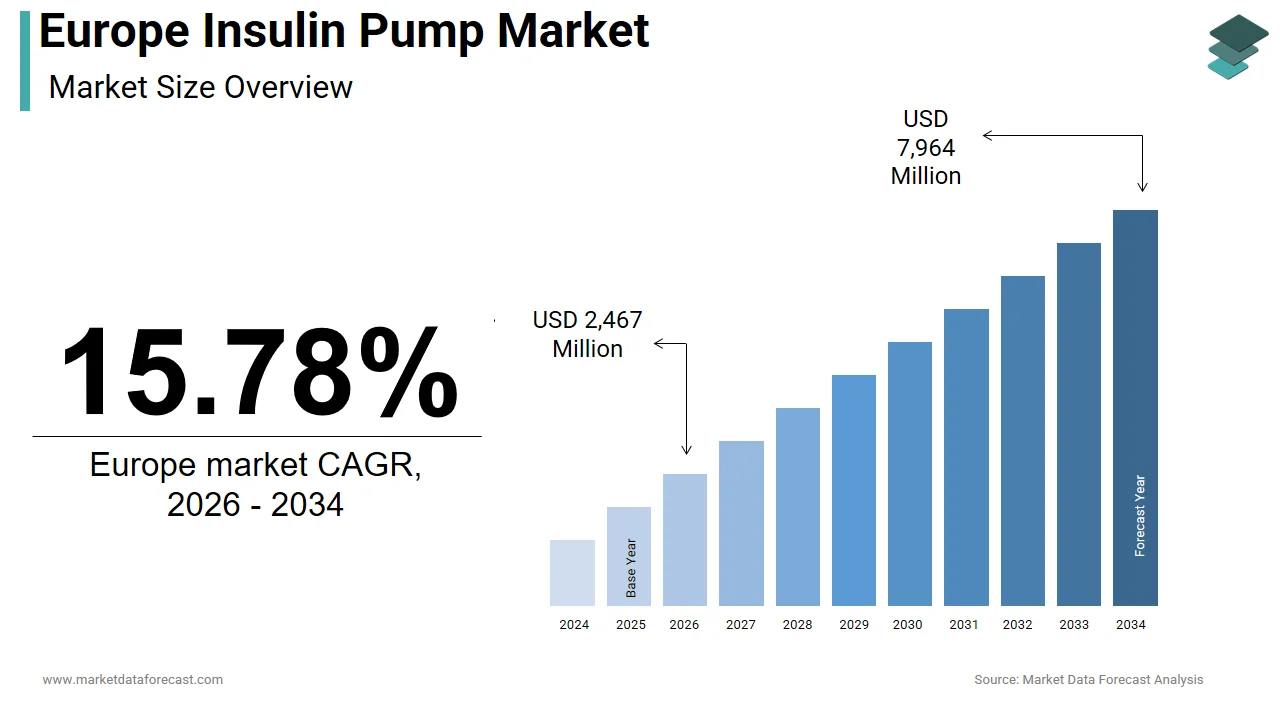
,The Europe insulin pump market was valued at USD 2,130 million in 2025, is expected to reach USD 2,467 million in 2026, and is projected to climb to USD 7,964 million by 2034, registering a strong CAGR of 15.78% from 2026 to 2034. Growth is driven by rising adoption of hybrid closed-loop systems, increasing diabetes prevalence, and strong public reimbursement frameworks in Northern and Western Europe, which are accelerating the transition from injection-based therapy to advanced automated insulin delivery.
Market Outlook at a Glance
- 2025 Market Size: USD 2,130 million
- 2026 Estimate: USD 2,467 million
- 2034 Forecast: USD 7,964 million
- CAGR (2025–2033): 78%
- Strong adoption driven by digital diabetes management, hybrid closed-loop systems, and national reimbursement models.
What Is Driving Uptake
- Rising demand for hybrid closed-loop systems among children & adolescents.
- Strong reimbursement in Nordic & Western Europe supporting early adoption.
- Increased diabetes burden across Europe requiring advanced insulin delivery.
- Integration of CGM + pump ecosystems improving clinical outcomes.
- Government-backed R&D investments for automated insulin delivery (Horizon Europe).
What Limits Market Expansion
- Wide reimbursement inequality in Southern & Eastern Europe.
- High upfront cost creating affordability gaps for Type 1 patients.
- National health authorities in some regions remain hesitant about automation.
- Limited standardized pump-training programs across underfunded systems.
- Complex regulatory pathways for algorithm-based insulin delivery systems.
High-Value Opportunity Horizons
- Expanding pump therapy for Type 2 diabetes patients with insulin deficiency.
- Growth of remote monitoring + cloud data platforms integrated with pumps.
- Increased adoption in virtual diabetes clinics and remote titration workflows.
- Simplified, user-friendly pumps for older adults and high-insulin-need patients.
- AI-driven analytics enabling personalized insulin dosing.
Risk Factors & Market Friction
- Shortage of diabetes educators and pump-trained nursing staff.
- Cybersecurity vulnerabilities increasing regulatory scrutiny.
- Data privacy concerns under GDPR slowing digital integration.
- Regional variation in clinical guidelines (France, Spain, Poland).
- Fragmented medical device algorithm evaluation across the EU.
Market Structure Snapshot
- By pump type, Traditional Pumps – Largest user base; strong clinical validation; preferred under public reimbursement.
- By End-user, Homecare – Dominant due to chronic, self-managed nature of diabetes & remote monitoring models.
Regional Pulse
Top-Tier Adoption Markets
- Germany (22.3% share): Universal reimbursement + strong research ecosystem.
- Sweden (15.7% share): World-leading hybrid closed-loop adoption; national EHR integration.
- UK: NHS pathways accelerating uptake; post-Brexit regulatory agility.
Expanding Markets
- France: Centralized care models & insurance reimbursement boosting growth.
- Italy: North–South gap reducing; growing use in pediatric Type 1 patients.
Under-Penetrated Regions
-
Southern/Eastern Europe (Romania, Greece, Bulgaria) due to funding limits.
Competitive Field Overview
- Market led by advanced algorithmic insulin delivery systems.
- Key differentiation factors: interoperability, CGM pairing, human-centered design, cybersecurity compliance.
- High regulatory barriers under EU MDR favor established players.
- Increasing competition in patch pumps and connected ecosystems.
Major Industry Participants
Animus Corporation, Asante, Cellnovo Ltd., Insulet Corporation, Medtronic, Inc., Nipro Diagnostic, Inc., Ypsomed, Roche, Sooil Development Co., Ltd., and Tandem Diabetes Care, Inc.
Strategic Moves Seen in the Market
- Push toward interoperable hybrid closed-loop platforms with multiple CGM partners.
- Heavy investments in real-world evidence to support reimbursement expansion.
- Launch of virtual onboarding & multilingual training ecosystems.
- Strengthening cybersecurity frameworks to meet EU MDR expectations.
- Partnerships with healthcare systems for data integration into national EHRs.
Europe Insulin Pump Market Size
The size of the Europe insulin pump market was valued at USD 2,130 million in 2025. This market is expected to grow at a CAGR of 15.78% from 2026 to 2034 and be worth USD 7,964 million by 2034 from USD 2,467 million in 2026.
An insulin pump refers to the wearable or implantable medical devices that deliver rapid-acting insulin subcutaneously in continuous basal and bolus doses to individuals with diabetes, primarily type 1 but increasingly type 2 as well. These devices function as artificial pancreas systems either in open-loop mode or integrated with continuous glucose monitoring to form hybrid closed-loop systems. Unlike conventional injection therapy, insulin pumps offer dynamic glycemic control mimicking physiological insulin secretion and reducing long-term complications. According to the International Diabetes Federation, an increasing number of adults in Europe are living with diabetes, with a significant portion requiring intensive management, such as insulin pump therapy. The use of insulin pumps for pediatric type 1 diabetes patients in countries like Sweden, Norway, and Germany is reportedly increasing, demonstrating growing adoption of advanced treatment methods. Furthermore, the European Commission has allocated substantial funding through its Horizon Europe and previous Horizon 2020 programs to projects advancing automated insulin delivery systems and personalized medicine, emphasizing a commitment to health innovation. This convergence of clinical need, technological advancement, and policy support positions insulin pumps as a cornerstone of modern diabetes care across Europe.
MARKET DRIVERS
Widespread Adoption of Hybrid Closed Loop Systems in Pediatric and Adolescent Populations
The integration of insulin pumps with continuous glucose monitors to form hybrid closed loop systems is a major demand driver, particularly among younger patients and their caregivers, for the Europe insulin pump market. These systems automatically adjust basal insulin delivery based on real-time glucose readings, significantly reducing hypoglycemic episodes and improving time in range. Hybrid closed-loop systems are increasingly used for managing type 1 diabetes in children. Integrated pump therapy systems are now a first-line treatment approach in many pediatric endocrinology settings in certain regions. The psychological burden of diabetes management, exacerbated by nocturnal hypoglycemia, has driven parental demand for automated solutions. The use of hybrid closed-loop technology has been associated with improved blood glucose control in adolescents. Policies in some countries are facilitating wider adoption of integrated pump and continuous glucose monitor systems for younger patient groups by explicitly covering the costs. This clinical and policy alignment establishes hybrid closed-loop technology as a transformative standard of care rather than a luxury accessory.
Strong Public Healthcare Reimbursement Frameworks in Northern and Western Europe
Robust national reimbursement systems significantly facilitate access to insulin pumps across several European countries, particularly in the Nordic region and parts of Western Europe. This, in turn, boosts the expansion of the Europe insulin pump market. A significant number of adult type 1 patients in one country utilize insulin pumps, a practice supported by a national health insurance program. In another country, health insurance plans cover pump therapy for type 1 patients who exhibit documented glycemic instability. A third country's health service has expanded the criteria for patient eligibility, mandating pump assessment for certain patients who have an elevated long-term blood sugar measure despite receiving optimal traditional therapy. Across many countries within a specific region, public funding for insulin pumps is provided either partially or fully. Eligibility criteria are increasingly linking funding to health outcomes rather than primarily focusing on cost constraints. This institutionalized access not only drives market uptake but also encourages manufacturers to tailor solutions to publicly funded care pathways.
MARKET RESTRAINTS
Significant Disparities in Reimbursement and Access Across Southern and Eastern Europe
Fragmented and often inadequate reimbursement policies in Southern and Eastern European countries are restricting the growth of the Europe inulin pump market. In Romania, Bulgaria, and Greece, public funding for insulin pumps is either limited to pediatric cases or available only through discretionary regional budgets, resulting in long waiting lists and out-of-pocket expenditures. Insulin pump usage varies significantly across different regions. A minority of individuals with type 1 diabetes in certain areas use insulin pumps. Higher adoption rates of this technology are observed in Nordic nations compared to other countries. Even in Italy, national reimbursement exists but requires complex prior authorization and is restricted to patients with recurrent hypoglycemia or HbA1c above 9 percent, a threshold many clinicians consider outdated. The expense associated with insulin pumps can present a financial challenge in non-reimbursed settings. The cost of pumps may be prohibitive for many people in certain countries. Additionally, the absence of standardized training programs for pump initiation in underfunded health systems further deters adoption. These disparities create a two-tier diabetes care landscape within Europe, undermining equity and limiting the scalability of advanced insulin delivery technologies across the region.
Clinical and Regulatory Hesitancy Toward Automation in Certain National Health Systems
Certain European health authorities remain cautious about endorsing fully automated or high automation insulin delivery systems due to perceived safety and liability concerns, despite technological maturity, which constrains the expansion of the Europe insulin pump market. In France, for example, the Haute Autorité de Santé has not yet issued a formal recommendation for hybrid closed-loop systems outside specialized centers, citing insufficient long-term outcome data in real-world settings. Similarly, the Spanish Ministry of Health classifies advanced pumps as “innovative medical devices” requiring individual hospital ethics approval, which delays widespread implementation. According to a study, only several European countries had national guidelines explicitly supporting automated insulin delivery as standard care. This regulatory ambiguity discourages primary care physicians from referring patients and complicates reimbursement negotiations. Furthermore, the European Medicines Agency does not evaluate software algorithms in pump systems, leaving validation to notified bodies under the Medical Device Regulation, which lack diabetes specific expertise. As a result, clinicians in countries like Poland and Portugal often default to multiple daily injections even when patients meet technical pump criteria. This institutional inertia slows the diffusion of life-improving technology and perpetuates outdated treatment paradigms across significant portions of Europe.
MARKET OPPORTUNITIES
Expansion of Insulin Pump Use in Type 2 Diabetes with Severe Insulin Deficiency
The growing clinical recognition of insulin pump therapy for a subset of type 2 diabetes patients characterized by severe insulin deficiency and glycemic lability provides new opportunities for the growth of the Europe insulin pump market. Traditionally reserved for type 1 diabetes, pump therapy is now being validated for “double diabetes” or late-stage type 2 cases unresponsive to basal bolus regimens. Insulin pump use for type 2 patients has shown an increase. This increase is associated with updated guidance regarding treatment options for specific patient conditions. Eligibility for pump use for type 2 patients with high insulin requirements and frequent hypoglycemia is being recognized in technology appraisals. Clinical studies have indicated that significant glycemic reductions are possible in this population using pump technology. There is a large group of individuals with insulin-deficient type 2 diabetes who may represent a potential area for future therapeutic approaches. Manufacturers are responding with simplified user interfaces and lower cost pump models tailored to older adults, thereby broadening the therapeutic and commercial horizon beyond traditional type 1 indications.
Integration of Digital Health Platforms and Remote Patient Monitoring
The convergence of insulin pumps with cloud-based digital health ecosystems offers a potential growth opportunity for the Europe insulin pump market. This is facilitated by enabling remote clinical oversight and data-driven diabetes management. Modern pumps from leading manufacturers automatically upload glucose, insulin, and activity data to secure platforms accessible by healthcare teams across Europe. Pediatric diabetes centers are integrating virtual consultation methods that utilize analytics derived from medical devices to manage patient care efficiently. Initiatives are encouraging the use of compatible diabetes technology within healthcare data exchange programs across regions. In some healthcare systems, data from patient devices is incorporated into electronic health record systems, facilitating real-time monitoring by primary care providers. Furthermore, the European Society of Endocrinology endorses remote titration protocols that use pump data to adjust regimens without patient travel. Manufacturers are enhancing certified digital infrastructure to align with regulations concerning the security and privacy of sensitive health data, which is fostering confidence in their products. This shift toward connected care not only improves outcomes but also creates recurring service revenue streams and strengthens provider loyalty beyond hardware sales.
MARKET CHALLENGES
Persistent Shortage of Trained Healthcare Professionals for Pump Initiation and Management
The insufficient number of endocrinologists, diabetes educators, and nurses trained in insulin pump therapy across the region acts as a major challenge for the Europe insulin pump market. Many regions across various member states have a lower number of certified diabetes educators compared to the suggested ratio needed to adequately support the patient population. In countries like Spain and Greece, pump initiation is restricted to a handful of university hospitals due to a lack of multidisciplinary teams capable of providing the required education and follow-up. Patients seeking training for diabetes technology, such as pumps, often experience significant delays, sometimes waiting half a year or longer, which may discourage them from pursuing treatment. Even in healthcare systems with good resources, a majority of administrative areas report experiencing staffing shortages within their diabetes technology services. This barrier is exacerbated by the complexity of newer hybrid closed-loop systems, which require additional competencies in data interpretation and algorithm management. Capacity to onboard new pump users will remain limited without coordinated investment in professional education and shifting tasks to nurse-led clinics, irrespective of device availability or reimbursement status.
Cybersecurity and Data Privacy Risks in Connected Insulin Delivery Systems
These pumps face heightened scrutiny over cybersecurity vulnerabilities and patient data protection under the EU General Data Protection Regulation and Medical Device Regulation, which hinders the expansion of the Europe insulin pump market. This is the situation when insulin pumps are evolving into internet-connected medical devices. Vulnerabilities have been identified in certain commercially available medical devices, such as insulin pumps, raising concerns about potential unauthorized access. The hypothetical nature of the risk has led regulators and clinicians to exercise caution, even in the absence of documented incidents. Reimbursement for some medical devices has encountered issues related to cybersecurity certification gaps. Furthermore, patients express concern about third-party access to their health data. Manufacturers must now undergo rigorous penetration testing and implement end-to-end encryption, which increases development timelines and costs. These regulatory and perceptual barriers delay market entry of next-generation pumps and discourage smaller innovators from entering the space, thereby limiting competition and innovation velocity in Europe’s insulin pump ecosystem.
REPORT COVERAGE
| REPORT METRIC | DETAILS |
| Market Size Available | 2025 to 2034 |
| Base Year | 2025 |
| Forecast Period | 2026 to 2034 |
| Segments Covered | By Pump Type, End User, and Region. |
| Various Analyses Covered | Global, Regional, and Country-Level Analysis, Segment-Level Analysis, Drivers, Restraints, Opportunities, Challenges; PESTLE Analysis; Porter’s Five Forces Analysis, Competitive Landscape, Analyst Overview of Investment Opportunities |
| Countries Covered | UK, France, Spain, Germany, Italy, Russia, Sweden, Denmark, Switzerland, Netherlands, Turkey, Czech Republic, and the Rest of Europe |
| Market Leaders Profiled | Animus Corporation, Asante, Cellnovo Ltd., Insulet Corporation, Medtronic, Inc., Nipro Diagnostic, Inc., Ypsomed, Roche, Sooil Development Co., Ltd., and Tandem Diabetes Care, Inc. |
SEGMENTAL ANALYSIS
By Pump Type Insights
The traditional insulin pumps segment maintained the largest share of the Europe insulin pumps market in 2024. The prominence of the traditional insulin pumps segment is attributed to extensive clinical validation and established reimbursement pathways across publicly funded healthcare systems. These reusable devices, typically worn externally with refillable insulin reservoirs and programmable basal bolus delivery, remain the standard of care due to their clinical maturity, reliability, and integration with continuous glucose monitoring systems. Many individuals who use pumps tend to favor traditional models. Data suggest that traditional pump usage is associated with established long-term outcomes related to safety and effectiveness. These outcomes have been observed across different age groups. The coverage for devices used for managing type 1 diabetes may prioritize traditional pumps. Traditional pumps are considered in situations where specific manual adjustments are thought to be clinically beneficial, such as during pregnancy or in cases involving kidney issues. Furthermore, healthcare professionals across Europe report higher confidence in troubleshooting and training patients on reusable systems, which have been in clinical use for over two decades. This entrenched clinical trust, combined with robust service infrastructure, ensures traditional pumps remain the backbone of insulin delivery despite the emergence of newer formats.
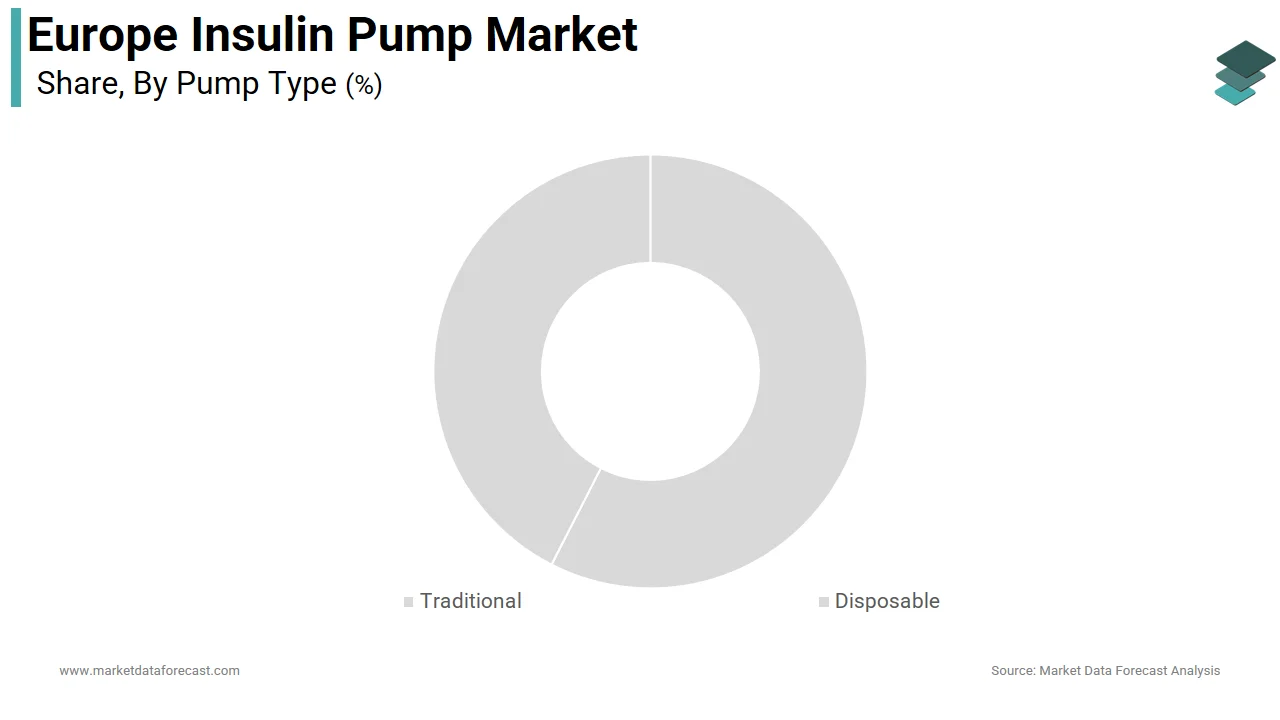
The disposable insulin pumps segment is predicted to witness the highest CAGR of 12.4% from 2025 to 2033 due to its simplified design, single-use nature, and appeal to patients seeking discretion and reduced device maintenance. Unlike traditional pumps, disposable models integrate the insulin reservoir and delivery mechanism into a compact patch worn directly on the skin, eliminating tubing and external controllers. Initiation trends among adolescents using certain medical systems are seeing a general increase. Reasons for the increase include perceptions of improved body image and enhanced convenience during physical activity. Evaluation of these systems is underway in some regions to assess their implementation within existing care frameworks. Potential benefits being considered in these evaluations relate to a reduced training burden for medical support staff. Additionally, manufacturers have enhanced functionality by incorporating Bluetooth connectivity and bolus control via smartphone apps. The growing demand for user-centric diabetes solutions, coupled with their availability to a wider patient population (beyond just Type 1 cases), is fundamentally reshaping how accessible these tools are and how consistently patients use them throughout Europe.
By End User Insights
The home care segment dominated the Europe insulin pump market by accounting for a significant share in 2024. The dominance of the home care segment is credited to the fundamental design purpose of insulin pumps as outpatient devices enabling continuous therapy outside clinical settings. The shift toward home-based diabetes management has been reinforced by national health policies promoting patient autonomy and reducing hospital dependency. New pump initiations in some European countries are predominantly managed through outpatient diabetes centers. Follow-up care for these patients is frequently conducted remotely using digital platforms. Insulin pumps are rarely used during inpatient stays. When used in a hospital setting, pumps are primarily utilized for managing blood sugar levels around the time of surgery. Instead, home care dominates due to the chronic nature of diabetes requiring lifelong therapy and the proven efficacy of pumps in reducing long-term complications when used consistently at home. The vast majority of pump users manage their devices on their own. Independent management is supported by virtual health services or local nursing staff. This model aligns with Europe’s broader strategy of de-institutionalizing chronic care, thereby cementing home care as the primary and most sustainable setting for insulin pump utilization.
The hospitals and clinics segment is estimated to register the fastest CAGR of 9.8% from 2025 to 2033. The rapid growth of the hospitals and clinics segment is driven by the increasing use of insulin pumps for inpatient glycemic management in critical care, surgical, and obstetric settings, where precision and flexibility surpass intravenous insulin protocols. Insulin pump therapy in post-bariatric surgery patients may be a beneficial approach for managing blood sugar levels compared to conventional methods. The use of a temporary insulin pump during labor for women with pre-existing type 1 diabetes is considered an approach to help manage blood sugar effectively for both the patient and the baby. Hospitals in France and Italy have established dedicated inpatient diabetes technology units staffed by endocrinology nurses trained in rapid pump initiation. Hospitals are prioritizing metrics such as length of stay and readmission rates, which is leading them to recognize insulin pumps as vital clinical tools rather than just chronic care devices, thereby accelerating institutional adoption throughout Europe's acute care landscape.
COUNTRY-LEVEL ANALYSIS
Germany Insulin Pump Market Analysis
Germany led the Europe insulin pump market and occupied a 22.3% share in 2024. The supremacy of the German market is attributed to its advanced diabetes care infrastructure and comprehensive reimbursement policies. Statutory health insurance funds cover insulin pumps for all type 1 patients meeting glycemic instability criteria with no age restrictions. The German Federal Institute for Drugs and Medical Devices actively evaluates new pump technologies, ensuring rapid market access for CE-certified devices with interoperability features. Furthermore, Germany hosts leading diabetes research centers such as the German Diabetes Center in Düsseldorf, which conducts real-world evidence studies on pump outcomes influencing clinical guidelines across Europe. Numerous certified diabetes education centers nationwide provide standardized pump training, contributing to high adherence and low discontinuation rates. This combination of universal access, scientific leadership, and structured patient support solidifies Germany’s position as the dominant and most mature insulin pump market in Europe.
Sweden Insulin Pump Market Analysis
Sweden followed closely in the Europe insulin pump market and held a share of 15.7% in 2024. The growth of the Swedish market is propelled by its national registry-driven approach and early adoption of automated insulin delivery. Type 1 diabetes patient monitoring is widespread. A significant majority of these individuals utilize insulin pumps. Most patients using pumps have adopted a specific type of automated system, known as hybrid closed-loop technology. Access to pump therapy is widely available for individuals with type 1 diabetes. The provision of this therapy does not generally require special permissions, which may help simplify the process of beginning treatment. The country’s digital health infrastructure enables seamless integration of pump data into national electronic health records, allowing endocrinologists to monitor patients remotely. Furthermore, Sweden’s national diabetes guidelines updated mandate pump assessment for all children at diagnosis, reinforcing a culture of early technological intervention. Sweden serves as a policy and clinical benchmark for insulin pump adoption throughout Europe, driven by consistent public investment in diabetes technology and outcomes research.
United Kingdom Insulin Pump Market Analysis
The United Kingdom continues to be a major player in the Europe insulin pump market because of its National Health Service pathways and post-Brexit regulatory autonomy. A policy document mentions a goal for increased pump adoption. Guidance was updated to include eligibility for some individuals with type 2 diabetes. Furthermore, the Medicines and Healthcare products Regulatory Agency has established a fast-track evaluation route for interoperable pump systems, accelerating market entry. Despite workforce shortages, the UK leverages nurse-led pump initiation programs and digital onboarding to scale access. This structured national strategy, combined with clinical innovation, positions the UK as a high-growth market driving broader European adoption trends.
France Insulin Pump Market Analysis
France grew consistently in the Europe insulin pump market due to centralized healthcare planning and growing acceptance of advanced diabetes technology. The French National Health Insurance reimburses insulin pumps for type 1 patients with documented glycemic variability under a standardized protocol managed by certified diabetology centers. France also benefits from strong domestic medtech capabilities, with companies like DBV Technologies collaborating on next-generation delivery platforms. Moreover, the national e-health strategy includes integration of pump data into the Dossier Médical Partagé, enhancing continuity of care. France is accelerating the adoption of medical pumps, especially among younger generations, driven by recent policy changes and clinical validation efforts, despite the nation's historically conservative approach to new technology.
Italy Insulin Pump Market Analysis
Italy is predicted to expand in the Europe insulin pump market from 2025 to 2033 due to regional disparities and evolving reimbursement frameworks. Insulin pump usage varies significantly across Italy, with higher adoption rates observed in Northern regions compared to the South. Efforts are underway to expand access to diabetes technologies nationally, and the approval process for certain compatible pumps has been streamlined. Adoption of insulin pumps is increasing among children with type 1 diabetes in major pediatric care settings. Furthermore, Italy participates in the EU-funded INNODIA consortium, which includes real-world pump outcome studies influencing national guidelines. Italy's northern regions, led by clinical expertise and strategic spending, are poised for significant market convergence and expansion, even with ongoing access challenges.
COMPETITIVE LANDSCAPE
Competition in the Europe insulin pump market is defined by a mix of global medical device leaders and specialized European innovators vying for clinical credibility, technological differentiation, and health system integration. The market is not driven by price but by algorithm sophistication, device reliability, interoperability, and post-market support infrastructure. Medtronic maintains a strong position through decades of clinical validation and hybrid closed-loop leadership, while Tandem and Ypsomed gain traction with user-friendly interfaces and open architecture platforms. Regulatory complexity under the EU Medical Device Regulation creates high entry barriers, favoring established players with robust quality management systems. Reimbursement heterogeneity across countries further fragments the competitive landscape, requiring tailored market access strategies. Innovation is concentrated in predictive dosing algorithms, remote monitoring capabilities, and simplified user experiences for older adults and type 2 patients. As digital health becomes central to chronic care, the ability to embed pump data into national electronic health records and telemedicine workflows increasingly determines competitive advantage across Europe.
KEY MARKET PLAYERS
The leading companies operating in the Europe application lifecycle management market include:
- Animus Corporation
- Asante
- Cellnovo Ltd.
- Insulet Corporation
- Medtronic, Inc.
- Nipro Diagnostic, Inc.
- Ypsomed
- Roche
- Sooil Development Co., Ltd.
- Tandem Diabetes Care, Inc.
TOP PLAYERS IN THE MARKET
- Medtronic is a cornerstone of the Europe insulin pump market, offering a comprehensive portfolio of traditional and hybrid closed-loop systems under its MiniMed brand. The company has played a pivotal role in shaping clinical standards for automated insulin delivery across the continent. Globally, Medtronic integrates its pump platforms with Guardian continuous glucose monitoring systems, enabling seamless data flow and algorithm-driven dosing. In Europe, it collaborates closely with national diabetes registries in Sweden and Germany to generate real-world evidence supporting reimbursement expansion. It also established a digital health partnership with the UK’s National Health Service to integrate pump data into national telehealth platforms. These initiatives reinforce Medtronic’s leadership in clinical innovation and health system integration, both in Europe and worldwide.
- Tandem Diabetes Care has emerged as a significant player in the Europe insulin pump market through its tslim X2 platform, featuring interoperability with multiple continuous glucose monitoring systems. The company’s Control IQ technology enables predictive low glucose suspend and automated bolus dosing, aligning with European demand for flexible hybrid closed loop solutions. Globally, Tandem leverages a direct-to-consumer model supported by virtual training, which it adapted for European regulatory and language requirements. The company also launched a dedicated European customer support center in Dublin to provide localized clinical and technical assistance. These strategic moves enhance accessibility and user confidence, solidifying Tandem’s presence as an agile technology-driven competitor in both European and international markets.
- Ypsomed is a leading European innovator in the insulin pump market, known for its mylife YpsoPump, a compact traditional pump with a touchscreen interface and bolus calculator. As a Switzerland-based company, it benefits from proximity to EU regulatory frameworks while maintaining global export capabilities to over 40 countries. Ypsomed emphasizes user-centric design and seamless integration with its proprietary Ypsomed Delivery Platform, which supports data sharing with healthcare providers. It also initiated a multicenter clinical study in Germany and France to validate outcomes in type 2 diabetes patients using its system. By combining regional manufacturing agility with global digital health ambitions, Ypsomed strengthens Europe’s role as a hub for differentiated insulin delivery innovation.
TOP STRATEGIES USED BY THE KEY MARKET PARTICIPANTS
Key players in the Europe insulin pump market focus on securing CE Mark certification for interoperable hybrid closed loop systems that integrate with multiple continuous glucose monitors. They invest in real-world evidence generation through collaborations with national diabetes registries and healthcare systems to support reimbursement decisions. Companies enhance user adoption by offering virtual onboarding, digital training platforms, and multilingual customer support tailored to regional needs. Strategic partnerships with diagnostic firms such as Roche and Dexcom enable seamless data exchange and improve clinical workflow compatibility. Additionally, manufacturers prioritize cybersecurity compliance and data privacy under the EU Medical Device Regulation to build trust among clinicians and patients. These strategies collectively address regulatory, clinical, and usability barriers to accelerate market penetration across diverse European healthcare environments.
MARKET SEGMENTATION
This Europe insulin pump market research report is segmented and sub-segmented into the following categories.
By Pump Type
- Traditional
- Disposable
By End User
- Hospitals & Clinics
- Homecare
- Laboratories
- Others
By Country
- UK
- France
- Spain
- Germany
- Italy
- Russia
- Sweden
- Denmark
- Switzerland
- Netherlands
- Turkey
- Czech Republic
- Rest of Europe