- Product Description Description
- Table of Contents TOC
- List of Table & Figure LOT
- Get Free Sample PDF Sample PDF
Europe Intrauterine Contraceptive Devices Market Summary
Market Size & Growth
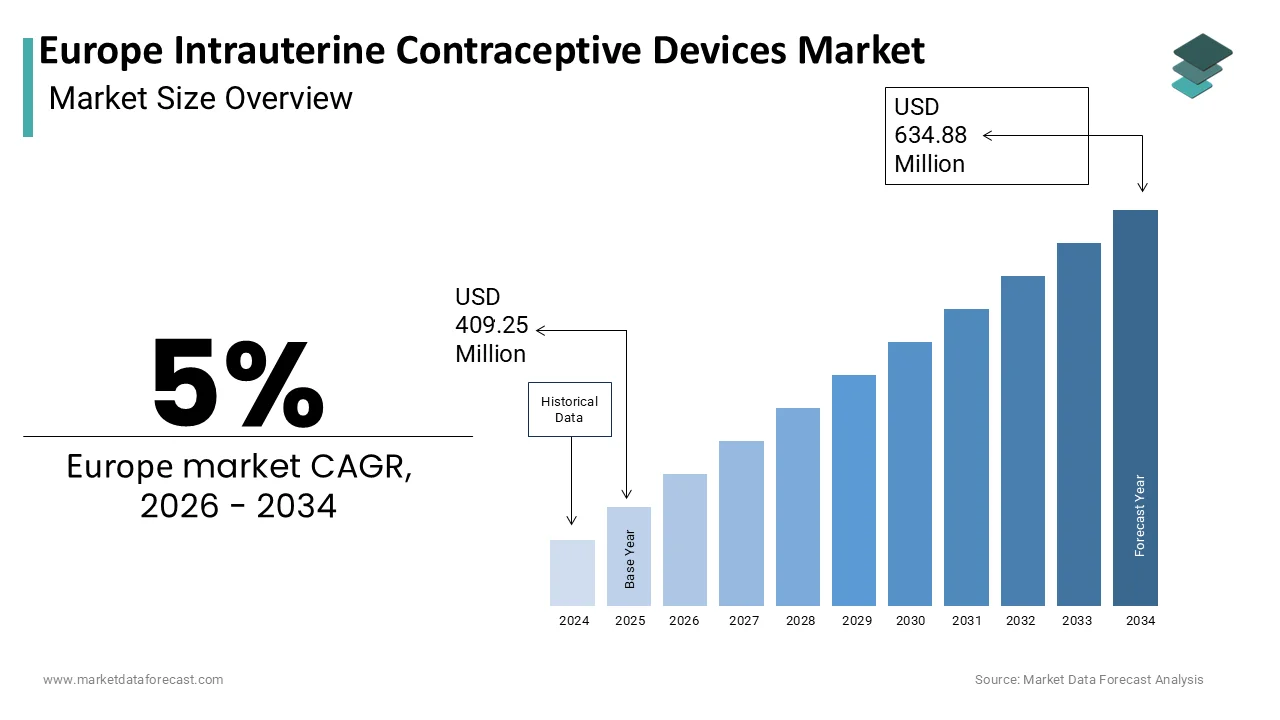
- The Europe Intrauterine Contraceptive Devices Market was valued at USD 409.25 million in 2025.
- Expected to reach USD 429.71 million by 2026 and USD 634.88 million by 2034, growing at a CAGR of 5% from 2026 to 2034.
- France leads the region, holding 20.3% of market share in 2025.
Key Market Segments
- By Product: Hormonal Intrauterine Devices, Copper Intrauterine Devices
- By Country: France leads; United Kingdom and Germany follow as major markets.
- By End User: Hospitals and Gynaecology Clinics hold the largest share at 71.6% in 2025.
Key Drivers
- Expansion of publicly funded sexual and reproductive health services, with all 27 EU member states providing public reimbursement for IUDs and 14 offering them free at point of care.
- Growing preference among urban women aged 25–39 for non-oral long-acting reversible contraception over daily oral pills.
- Integration of digital health platforms for contraceptive counselling, exemplified by Finland's 22% rise in IUD continuation through digital follow-up programs.
Key Players
Bayer, CooperSurgical Inc, Allergan plc (AbbVie), Teva Pharmaceutical, Pfizer, HRA Pharma, Besins HealthCare, Lupin Pharmaceuticals Ltd, HLL Lifecare, Agile Therapeutics, Actavis PLC, ANI Pharmaceuticals Inc., Brecuro Medical, Effik International, Eurogine, Okamoto Industries Inc.
Europe Intrauterine Contraceptive Devices Market Size
The Europe Intrauterine Contraceptive Devices Market is projected to grow from USD 409.25 million in 2025 to USD 429.71 million in 2026 and reach USD 634.88 million by 2034, registering a CAGR of 5% during the forecast period from 2026 to 2034.
Intrauterine devices are long-acting, reversible contraceptive implants placed within the uterine cavity to prevent pregnancy through mechanical or hormonal mechanisms. In Europe, these devices represent a cornerstone of reproductive autonomy,y offering efficacy rates exceeding 99% with durations of action ranging from 3 to 10 years. Their adoption is shaped by progressive sexual health policies, es public healthcare accessibility,ity and evolving gender equity norms across the region. Many women of reproductive age across the European Union have access to publicly funded contraception, including intrauterine devices, through national health services. In high‑income European countries, a notable share of women aged 20–44 use long‑acting reversible contraceptives, with intrauterine devices representing the largest portion of that category. National sexual‑health strategies in countries such as Sweden and the Netherlands require that intrauterine device insertion be made available promptly, which reflects institutional prioritisation of reproductive choice. Furthermore, the European Medicines Agency maintains rigorous post‑market surveillance for all hormone‑releasing devices to ensure safety and performance transparency. This convergence of clinical trust, policy support, and regulatory oversight defines the operational framework for intrauterine devices across Europe’s diverse healthcare systems.
MARKET DRIVERS
Expansion of Publicly Funded Sexual and Reproductive Health Services Across Europe
The integration of intrauterine devices into national health coverage has substantially increased their accessibility and uptake among women of reproductive age, which is primarily driving the growth of the European intrauterine devices market. According to the European Observatory on Health Systems and Policies, all 27 EU member states provide some form of public reimbursement for IUDs, and 14 offer them free at the point of care. Policy changes such as France’s 2022 law removing out‑of‑pocket costs for contraceptives for women under 25 have been followed by sharp increases in IUD insertions in that age group. In Sweden, the national sexual‑health strategy ensures that maternal and public sexual‑health clinics stock both copper and levonorgestrel devices and offer same‑day insertion without referral. The UK’s NHS recorded substantial IUD activity in 2023, with many local authorities reporting wait times under two weeks. By removing financial and logistical barriers, these systemic provisions make IUDs a default contraceptive option for low‑income and adolescent populations across Europe.
Growing Preference for Non‑Oral Long‑Acting Reversible Contraception Among Urban Women
European women are increasingly choosing IUDs over daily oral contraceptives because of convenience, high efficacy and reduced systemic hormonal exposure, which is further boosting the expansion of the European intrauterine devices market. For instance, a notable preference among women aged 25–39 in urban centres is for methods that remove the need for daily adherence. Digital health portals and public information services now provide accessible, evidence‑based comparisons that emphasise the substantially lower failure rates of IUDs relative to oral pills. In Denmark, the Danish Health Authority has documented a marked rise in levonorgestrel IUS prescriptions between 2020 and 2023, which is driven in part by demand for devices that reduce menstrual bleeding. Workplace wellness programmes in Nordic countries increasingly include reproductive‑health consultations where IUDs are routinely presented as first‑line options. The combination of lifestyle preferences, clinical endorsement and improved digital information access sustains strong demand for long‑acting reversible contraception among educated urban professionals seeking autonomy and reliability in family planning.
MARKET RESTRAINTS
Persistent Gaps in Provider Training and Clinical Capacity in Eastern and Southern Europe
Despite supportive policies, significant disparities in IUD access persist because trained providers are unevenly distributed, particularly in rural and underserved regions, which is a notable restraint to the growth of the European intrauterine devices market. According to the WHO Europe, low certification rates for IUD insertion in parts of Romania and Bulgaria, and professional societies in Greece report very limited numbers of clinicians trained in postpartum IUD placement, restricting immediate postnatal access. Workforce shortages also affect Western Europe as professional bodies estimate substantial deficits in sexual‑health specialists in the UK. These capacity constraints translate into extended wait times in parts of Italy and Portugal, with some audits reporting delays of up to twelve weeks. Training programmes remain fragmented, so without standardised, scalable training and task‑sharing initiatives, human‑resource gaps will continue to impede equitable access.
Cultural Stigma and Misinformation Persist in Certain Demographic Groups
Persistent misconceptions continue to suppress IUD uptake among particular populations despite robust clinical evidence to the contrary, which is further hindering the growth of the European intrauterine devices market. For instance, sizeable minorities in some Central and Eastern European countries hold erroneous beliefs about IUD risks. Religious and cultural narratives in conservative communities and among some migrant groups further discourage use, and social media amplifies misleading content at scale. Although national health agencies run counter‑messaging campaigns, their reach often lags peer‑driven digital narratives. These sociocultural barriers disproportionately affect adolescents and ethnic minorities, creating localised pockets of low utilisation that undermine broader public‑health progress and impede universal contraceptive equity across Europe.
MARKET OPPORTUNITIES
Integration of Digital Health Platforms for Contraceptive Counselling and Follow-Up
The rapid expansion of telehealth and reproductive‑health apps is opening new channels for IUD education, insertion coordination and post‑placement monitoring across Europe, which is a promising opportunity in the European intrauterine devices market. Under the European Commission’s 2025 Digital Health Action Plan, more than eighteen member states now operate national e‑health platforms that include contraceptive decision‑support tools ranking IUD options by efficacy, duration and side‑effect profiles. In the Netherlands, the government‑endorsed app “Mijn Prettige Vaginale Gezondheid” guides over 200,000 users annually through personalised IUD selection based on medical history and lifestyle. Sweden’s 1177 portal enables real‑time booking for IUD insertions at public clinics and sends integrated reminders for follow‑up checks. Digital consent workflows and remote symptom tracking facilitate earlier detection of expulsions or discomfort, which reduces complications. Finland’s Institute for Health and Welfare reports a 22% rise in IUD continuation among participants in its digital follow‑up programme. These virtual care models extend access to rural and time‑pressed populations, improve user experience and clinical safety, and create new pathways for adoption.
Development of Next Generation Devices with Dual Therapeutic and Contraceptive Functions
IUD innovation is broadening clinical utility by combining contraceptive function with therapeutic benefits for gynaecological conditions by expanding indications and patient appeal, which is another prominent opportunity in the European intrauterine devices market. The levonorgestrel‑releasing intrauterine system is now commonly prescribed for heavy menstrual bleeding, endometrial hyperplasia and as adjunct therapy in endometriosis, with a majority of gynaecologists in some countries integrating it into first‑line protocols. In 2023, the European Medicines Agency approved an IUD that pairs low‑dose levonorgestrel with an anti‑inflammatory agent for women with adenomyosis, a condition estimated to affect about 20% of European women over 35 according to University of Milan data; Karolinska University Hospital trials reported a 47% reduction in pain scores at six months. Horizon Europe research consortia are also developing devices that release antimicrobial peptides to prevent biofilm formation, a key driver of device‑related complications. By adding therapeutic functionality, these next‑generation IUDs align with value‑based care priorities and open prescription pathways beyond traditional family‑planning settings.
MARKET CHALLENGES
Stringent and Evolving Regulatory Requirements Under the EU Medical Device Regulation
The EU Medical Device Regulation has raised the bar for clinical evidence and post‑market surveillance, which is creating substantial hurdles for manufacturers of IUDs and is one of the major challenges to the growth of theEuropeane intrauterine devices market. The transition has been associated with a 40% reduction in notified‑body capacity for Class III devices such as hormone‑releasing IUS, producing approval delays of up to 18 months. Smaller innovators face particular strain because the regulation requires extensive post‑market clinical follow‑up studies, with estimated costs of €1.5–3 million per device. In 2023, two next‑generation copper IUDs were withdrawn from French and Italian markets after failing to meet new long‑term expulsion‑rate data requirements. Requirements for unique device identification and electronic implant cards have also increased clinicians’ administrative workload, reducing willingness to adopt new models. While these measures strengthen patient safety, they can slow innovation cycles and restrict access to improved designs, especially in cost‑sensitive health systems.
Inconsistent Reimbursement Policies Across National Health Systems
Wide variation in reimbursement policies across Europe creates inequitable access and commercial uncertainty for IUD manufacturers, which is further challenging the expansion of the European intrauterine devices market. Coverage differs markedly as some countries provide full public funding while others require partial out‑of‑pocket payments that can exceed €150. In Spain, reimbursement is limited to public hospitals and excludes many primary‑care settings where most contraceptive consultations take place. Manufacturers must therefore navigate 27 separate pricing and coverage negotiations, delaying pan‑European launches. Newer devices with enhanced features frequently face exclusion if they exceed historical cost benchmarks, even when clinical outcomes are superior. For example, the Netherlands only approved reimbursement for a next‑generation low‑hormone IUS in 2025 after a two‑year health‑technology assessment despite EMA approval in 2022. These reimbursement disparities constrain patient choice, deter investment in Europe‑tailored innovation and impede progress toward reproductive‑health equity.
REPORT COVERAGE
| REPORT METRIC | DETAILS |
| Market Size Available | 2025 to 2034 |
| Base Year | 2025 |
| Forecast Period | 2026 to 2034 |
| Segments Covered | By Product, End User, and Region. |
| Various Analyses Covered | Global, Regional and Country-Level Analysis, Segment-Level Analysis, Drivers, Restraints, Opportunities, Challenges; PESTLE Analysis; Porter’s Five Forces Analysis, Competitive Landscape, Analyst Overview of Investment Opportunities |
| Countries Covered | UK, France, Spain, Germany, Italy, Russia, Sweden, Denmark, Switzerland, Netherlands, Turkey, Czech Republic, Rest of Europe |
| Market Leaders Profiled | Agile Therapeutics, Actavis PLC, ANI Pharmaceuticals Inc., Bayer, Teva Pharmaceutical, Besins HealthCare, Brecuro Medical, Effik International, Eurogine, HLL Lifecare, HRA Pharma, Lupin Pharmaceuticals, Ltd, Okamoto Industries, Inc., and Pfizer. |
SEGMENTAL ANALYSIS
By Product Insights
The hormonal intrauterine devices segment occupied 61.6% of the European intrauterine devices market share in 2025. The dominance of the hormonal intrauterine devices segment in this regional market is primarily driven by the dual functionality of these devices, which provide highly effective contraception while simultaneously managing common gynaecological conditions. For instance, widespread prescribing of levonorgestrel‑releasing intrauterine systems for heavy menstrual bleeding, and population studies indicate a substantial prevalence of heavy menstrual bleeding among reproductive‑age women. National clinical guidelines in the United Kingdom’s National Institute for Health and Care Excellence explicitly recommend hormonal intrauterine devices as first‑line therapy for endometrial protection in women undergoing estrogen replacement therapy, which is further expanding their therapeutic footprint. Additionally, the public health campaigns in the Netherlands and Denmark emphasise the non‑contraceptive benefits, including reduced menstrual pain and lower risk of endometrial cancer,r which resonate strongly with health‑conscious urban women. The integration of these devices into both family planning and chronic disease management pathways has solidified their clinical and patient preference across Europe’s advanced healthcare systems.
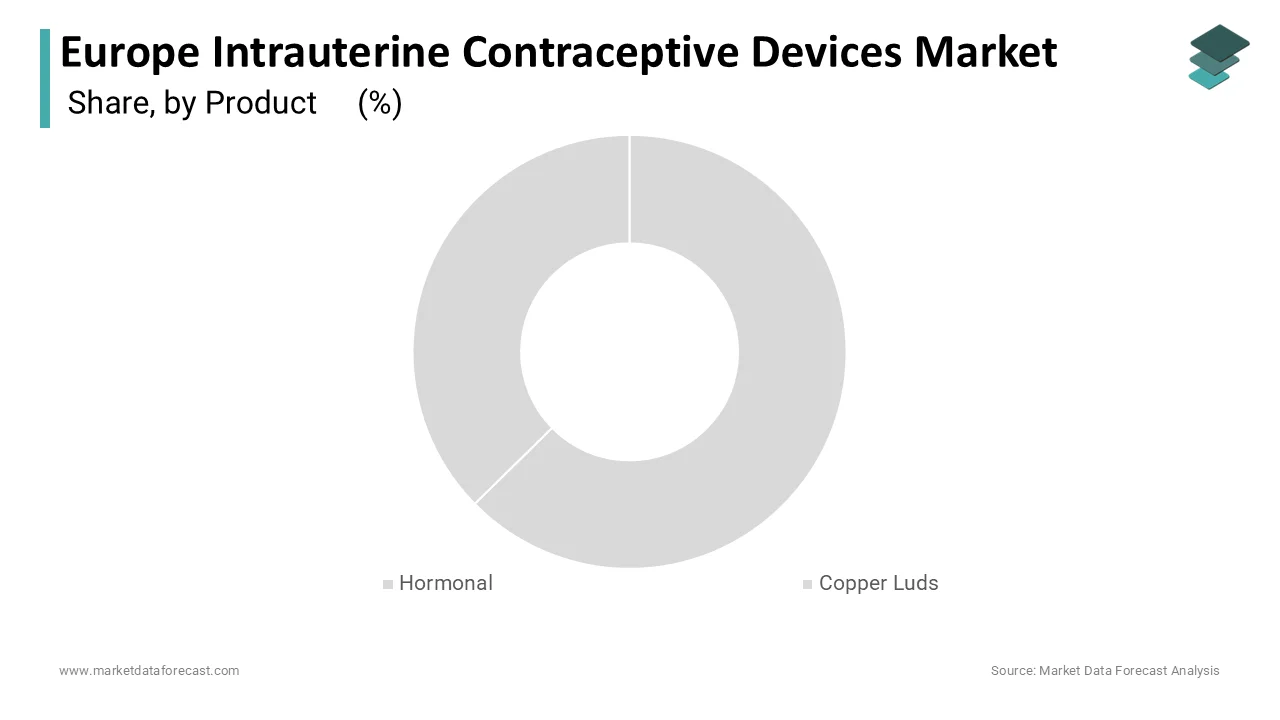
The copper intrauterine devices segment is the fastest growing category in the European intrauterine devices market and is expected to witness a CAGR of 8.89% over the forecast period, owing to the rising demand among women seeking hormone‑free contraceptives,n driven by concerns about systemic hormonal side effects and a preference for natural bodily regulation. Survey evidence and service data in several countries show growing interest in non‑hormonal long‑acting reversible methods, and some national programmes report increased copper IUD uptake, which is particularly among younger women and those with contraindications to progestins. Furthermore, environmental and consumer‑health advocacy (for example, movements highlighting hormone‑free options) have raised awareness of copper devices as a non‑synthetic alternative. National health services in multiple Member States have responded by expanding training for copper device placement in primary‑care settings to improve equitable access. These intersecting health‑autonomy, environmental and clinical‑safety considerations position copper intrauterine devices as the most dynamically expanding segment in Europe’s contraceptive landscape.
By End User Insights
The hospitals and gynaecology clinics segment occupied 71.6% of the regional market share in 2025. The leading position of hospitals and the gynaecology segment in the regional market is attributed to the procedural nature of intrauterine device insertion, which often requires pelvic examination, ultrasound guidance and immediate management of potential complications. Professional guidance and service models in many countries channel a large share of insertions into hospital outpatient departments and specialised sexual‑health clinics where trained professionals and emergency support are readily available. Reimbursement rules, certification requirements and clinical governance arrangements in several health systems also concentrate first‑time fittings in accredited clinical settings. National registries and electronic health systems in some Member States further reinforce this model by linking device implantation records to outcome monitoring and adverse‑event surveillance. These institutional, clinical and regulatory frameworks consolidate hospitals and gynaecology clinics as the primary and most trusted venues for intrauterine device services across Europe.
COUNTRY LEVEL ANALYSIS
France Intrauterine Contraceptive Devices Market Analysis
France held the leading position in the European intrauterine devices market by holding 20.3% of the regional market share in 2025. The dominance of France in the European market is anchored in universal contraceptive coverage, progressive sexual education, and a robust network of public health clinics. National reimbursement policies eliminate out‑of‑pocket costs for many young women and have been linked to notable increases in device uptake among adolescents and young adults. The national sexual‑health strategy requires local access points that offer free devices and same‑day insertion, and comprehensive school‑based sexual education reaches the vast majority of adolescents, fostering early awareness of long‑acting methods. Clinical guidance from national health authorities consistently endorses hormonal intrauterine systems for specific indications such as menorrhagia, embedding these options in routine practice. These synergies between policy, education and clinical integration sustain France’s leadership in IUD utilisation across Europe.
United Kingdom Intrauterine Contraceptive Devices Market Analysis
The United Kingdom ranks second in the European IUD market. Its performance is supported by the NHS’s integrated sexual‑health infrastructure and evidence‑based clinical guidelines. Large numbers of devices are fitted annually across sexual‑health clinics and general practices operating under standardised national protocols. National guidance recommends IUDs as a first‑line option for long‑acting reversible contraception, and mandatory clinician training helps ensure consistent service quality. Regional policies that extend free access and targeted funding to reduce wait times have further increased timely access to insertion services. These systemic efficiencies and equity‑focused policies underpin the UK’s central role in Europe’s IUD landscape.
Germany Intrauterine Contraceptive Devices Market Analysis
Germany holds a leading national position in the European IUD market, supported by high health literacy, extensive gynaecological infrastructure, and statutory health insurance coverage thatminimisess patient cost barriers. National data collection shows substantial annual insertion volumes with a strong preference for hormonal systems where therapeutic benefits are indicated. Professional training requirements for gynaecologists and public education campaigns have reduced misconceptions and improved public confidence in IUDs. Expansion of youth‑focused clinic services offering confidential care has also increased adolescent access. These clinical, regulatory and educational pillars sustain Germany’s steady demand for intrauterine contraception.
Sweden Intrauterine Contraceptive Devices Market Analysis
Sweden represents a model market for IUD integration, reflecting a long‑standing commitment to reproductive autonomy, gender equality and accessible sexual‑health services. IUDs are provided free of charge to residents through an extensive network of youth clinics that offer confidential insertion without parental involvement. National health‑record systems support tracking of device duration and replacement, contributing to high continuation rates. A large share of women in key reproductive‑age cohorts use long‑acting reversible contraception, with IUDs accounting for the majority of that use. Mandatory school sexual‑education and a strong midwifery workforce with many midwiveswho are certified to perform insertions in community settings, which further embeds IUDs in routine reproductive care.
Netherlands Intrauterine Contraceptive Devices Market Analysis
The Netherlands ranks among the top European markets for IUDs, driven by pioneering sexual‑health policies, an integrated primary‑care model and high public trust in medical institutions. A substantial proportion of women of reproductive age have used or currently use IUDs, reflecting broad societal acceptance. General practitioners are widely trained and equipped to perform same‑day insertions, supported by reimbursement that covers both device and procedure costs. Recent guideline updates recommend IUDs as a first‑line option for a wider range of women, and continuous monitoring through national surveys enables responsive policy adjustments. Public campaigns emphasise safety and efficacy, reducing persistent myths and sustaining stable, high levels of access and uptake.
TOP LEADING PLAYERS IN THE MARKET
- Bayer AG is a globally influential life sciences company with a defining role in the European intrauterine devices market through its flagship hormonal intrauterine system. The company contributes to global reproductive health by advancing long-acting reversible contraception that combines high efficacy with therapeutic benefits for menstrual disorders. Bayer has deep integration across European healthcare systems, where its device is included in national clinical guidelines and public reimbursement schemes. In recent years,s Bayer has intensified patient education efforts through digital platforms in collaboration with sexual health NGOs in Germany, France, and Sweden. It also launched a real-world evidence program tracking continuation rates and satisfaction across twenty European countries to inform clinical best practices. These initiatives reinforce its leadership in science-based contraceptive innovation and public health partnerships across the region.
- CooperSurgical Inc is a major international provider of women’s health solutions with a strong presence in theEuropeane intrauterine devices market through its copper and hormonal offerings. The company supports global access to hormone-free contraception by supplying cost-effective copper intrauterine devices to public health systems across Southern and Eastern Europe. CooperSurgical has strengthened its European footprint by expanding its training academy for healthcare providers, offering certified courses on insertion techniques and patient counselling in Italy, ly Spain and Poland. It also partnered with midwifery associations in the Netherlands and Denmark to integrate intrauterine device services into community care pathways. These actions demonstrate its commitment to expanding access through clinical education decentralised service models aligned with European reproductive equity goals.
- Allergan plc, now operating under AbbVie, continues to play a significant role in the European intrauterine devices market through its widely used levonorgestrel-releasing system. The company contributes globally by linking contraception with gynaecological therapeutic services,s enabling dual clinical utility in endometrial protection and menstrual regulation. In EuroEuropeAllergan has reinforced its position by collaborating with national gynaecological societies to devestandardisedized insertion protocols and postpost-placement follow-updelines. It also integrated its device into digital health platforms in the United Kingdom and Sweden, allowing clinicians to monitor patient outcomes through secure portals. Recent investments in real-world data collection across five European countries support health technology assessment submissions and policy advocacy. These strategies underscore its focus on clinical integration and value-based evidence generation in mature healthcare markets.
TOP STRATEGIES USED BY THE KEY MARKET PARTICIPANTS
Key players in the European intrauterine devices market prioritise alignment with national public health policies by securing inclusion in reimbursement catalogues and clinical practice guidelines. They invest in large-scale healthcare provider training programs to ensure proper insertion techniques and build clinical confidence, particularly among midwives and general practitioners. Companies leveragereal-worldd evidence studies to demonstrate long term safety continuation rates and therapeutic benefits to support regulatory and payer decisions. Strategic partnerships with sexual health NGOs and government bodies enhance public awareness and address cultural misconceptions through targeted education campaigns. Additionally, they expand digital health integration, offering apps and portals for patientfollow-upp appointment scheduling and side effect tracking to improve user experience and retention across diverse European healthcare settings.
COMPETITIVE LANDSCAPE
The European intrauterine devices market features intense yet stable competition among multinational pharmaceutical and medical device firms, distinguished by clinical credibility,y regulatory compliance, and public health alignmen, unlikee a highly fragmented market,s competition centres on therapeutic differentiation, particularly between hormonal systems offering dual contraceptive and gynaecological benefits,s and copper devices appealing to hormone-free preferences. The stringent oversight of the European Medicines Agency and national health technology assessment bodies elevates the importance of robust post market surveillance and real-world data. Companies compete not through price alone but through integration into national sexual health strategies, provider education,n and digital patient support ecosystems. Barriers to entry remain high due to regulatory complexity and the need for established relationships with ministries of health and professional societies. As reproductive autonomy gains political and social traction, competition increasingly emphasises equity, accessibility,y and holistic women’s health solutions rather than device specifications alone.
KEY MARKET PLAYERS
Some of the promising companies operating in the europe intrauterine contraceptive devices market are
- Agile Therapeutics
- Actavis PLC
- ANI Pharmaceuticals Inc.
- Bayer
- Teva Pharmaceutical
- Besins HealthCare
- Brecuro Medical
- Effik International
- Eurogine
- HLL Lifecare
- HRA Pharma
- Lupin Pharmaceuticals, Ltd.
- Okamoto Industries, Inc.
- Pfizer
MARKET SEGMENTATION
This research report has segmented and sub-segmented the Europe Intrauterine Contraceptive Devices Market into the following categories.
By Product
- Hormonal
- Copper Luds
By End User
- Hospitals GGynaecologyClinics
- Community Healthcare and Others
By Country
- United Kingdom
- France
- Spain
- Germany
- Italy
- Russia
- Sweden
- Denmark
- Switzerland
- Netherlands
- Rest of Europe