Europe Jalapeno Pepper Market Size, Share, Growth, Trends, And Forecasts Report, Segmented By End-User, And By Region (UK, France, Spain, Germany, Italy, Russia, Sweden, Denmark, Switzerland, Netherlands, Turkey, Czech Republic and Rest of Europe), Industry Analysis From 2026 to 2034
Europe Jalapeño Pepper Market Report Summary
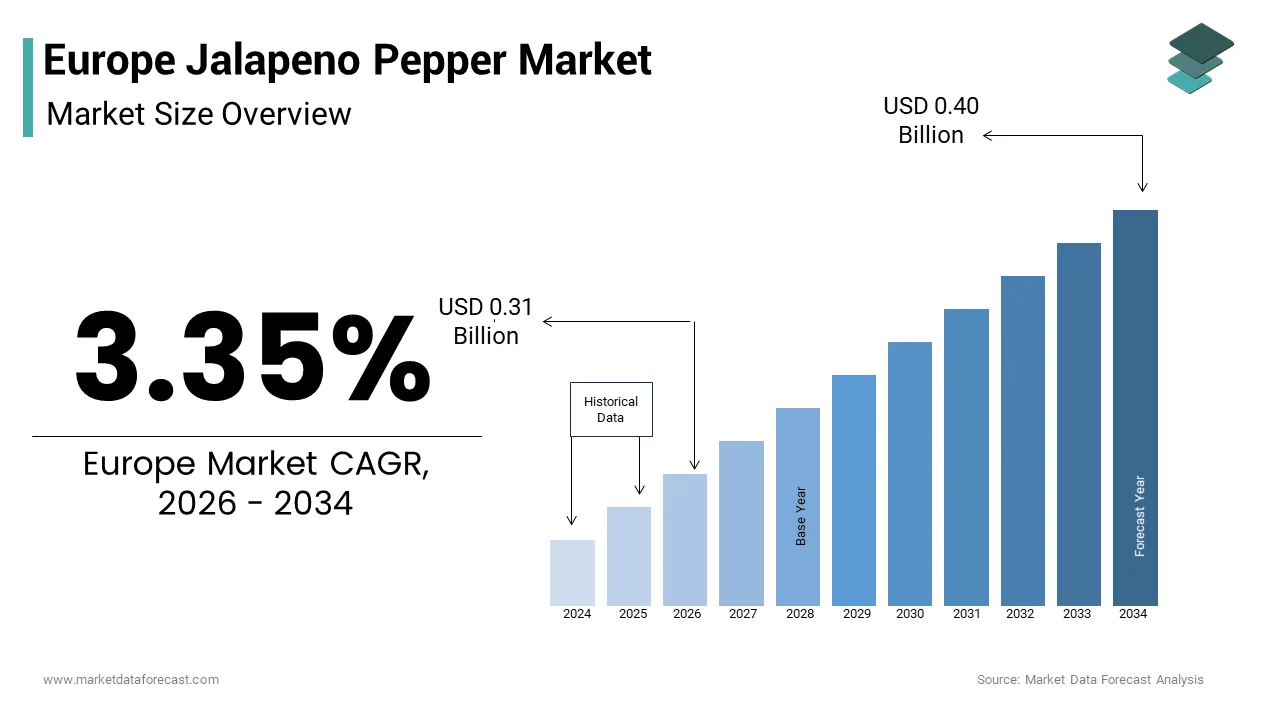
The Europe jalapeño pepper market was valued at USD 0.30 billion in 2025, is estimated to reach USD 0.31 billion in 2026, and is projected to reach USD 0.40 billion by 2034, expanding at a CAGR of 3.35% during the forecast period from 2026 to 2034. The Europe jalapeño pepper market is experiencing steady growth, driven by changing consumer food preferences, increasing demand for spicy and ethnic cuisines, and the expanding use of jalapeño peppers across processed food applications. Rising popularity of Mexican, Tex-Mex, and fusion cuisines has significantly increased the consumption of fresh, pickled, dried, and processed jalapeños throughout Europe. Food manufacturers are incorporating jalapeño peppers into sauces, seasonings, ready-to-eat meals, snacks, and convenience foods to meet evolving consumer tastes for bold and authentic flavors. Additionally, advances in greenhouse cultivation, improvements in cross-border food supply chains, and growing demand from the foodservice industry are supporting the long-term expansion of the European jalapeño pepper market.
Key Market Trends
- Consumer preference for spicy, international, and fusion cuisines is driving higher demand for jalapeño peppers across retail and foodservice channels.
- Food manufacturers are introducing innovative jalapeño-based sauces, dips, snacks, seasonings, and ready-to-eat products to diversify product portfolios.
- Greenhouse cultivation and controlled-environment agriculture are improving year-round production and supply consistency across Europe.
- Growing popularity of clean-label, natural, and minimally processed food ingredients is increasing demand for fresh and naturally preserved jalapeño products.
- Expansion of online grocery platforms and specialty food retailers is improving accessibility to premium and imported jalapeño pepper products.
Segmental Insights
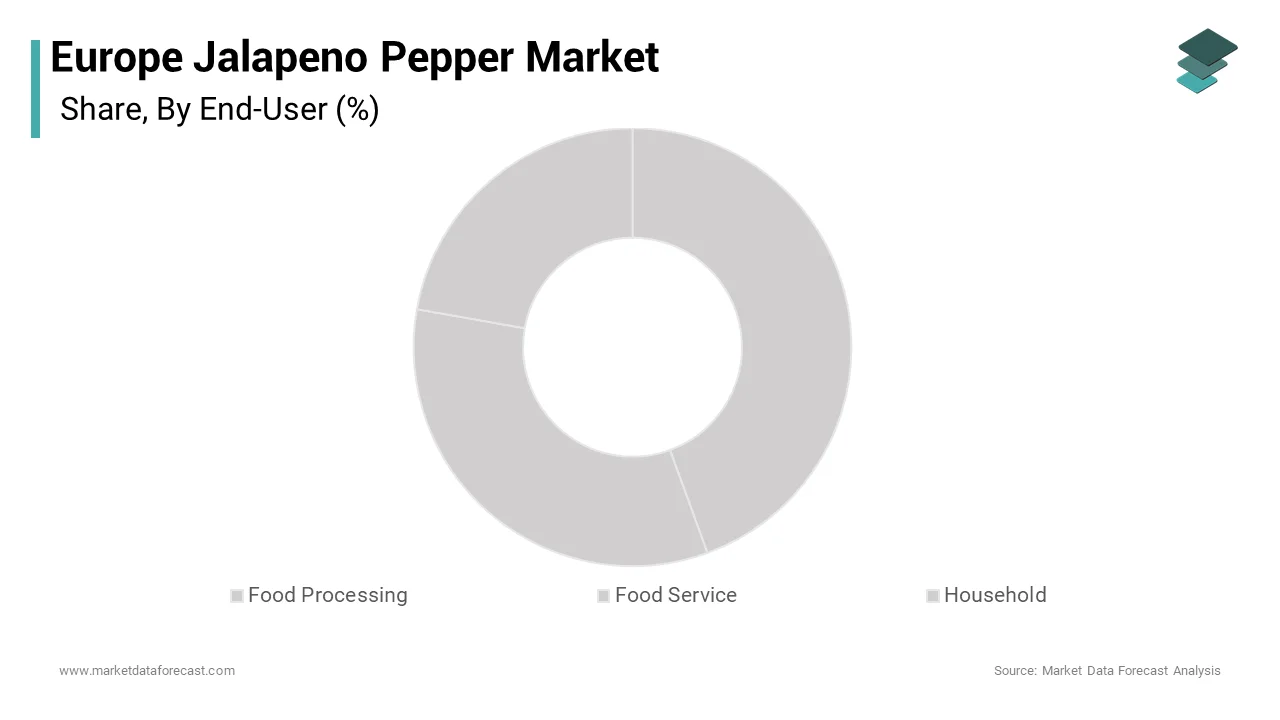
Based on end user, the food processing segment accounted for 34.2% of the Europe jalapeño pepper market share in 2025. The segment maintained its leadership due to widespread use of jalapeño peppers in sauces, condiments, canned foods, frozen meals, snack products, and processed food formulations, where consistent flavor profiles and product versatility remain essential.
Regional Insights
Germany led the Europe jalapeño pepper market by accounting for 44.8% of the regional market share in 2025. Strong demand for international cuisines, a well-developed food processing industry, and expanding multicultural consumer preferences continue to support the country's market leadership. France is expected to witness steady growth as its evolving culinary landscape embraces global flavors and premium food ingredients. Spain benefits from extensive cultivation of Capsicum varieties, particularly in agricultural regions such as Almería, strengthening both domestic supply and exports. The United Kingdom maintains a significant market position due to widespread consumer acceptance of spicy foods and a culturally diverse population, while Italy continues to expand through increasing demand for bold flavors in modern cuisine. The Netherlands plays a strategic role as a major greenhouse producer and logistics hub, facilitating efficient distribution of jalapeño peppers across European markets.
Competitive Landscape
The Europe jalapeño pepper market is characterized by the presence of agricultural producers, food processing companies, and global food brands competing through product quality, supply chain efficiency, and continuous innovation. Leading companies are expanding production capabilities, investing in sustainable farming practices, and introducing value-added jalapeño products to meet growing consumer demand. Strategic collaborations with retailers, foodservice providers, and processed food manufacturers are strengthening distribution networks across the region. Market participants are also focusing on greenhouse cultivation technologies, premium product positioning, and environmentally responsible packaging to improve operational efficiency and brand differentiation. As consumer demand for flavorful, convenient, and globally inspired food products continues to rise, innovation, consistent product quality, and sustainable sourcing will remain central to long-term competitiveness in the Europe jalapeño pepper market.
Prominent players in the Europe jalapeño pepper market include Mount Dora Farms, Can-Am Pepper Company Ltd., Unilever, Conagra Brands, Kraft Heinz, L & M Companies, Global Green Company Limited, Nature's Produce, Rich River Produce LLC, Pero Family Farms, and Watts Farm.
Europe Jalapeno Pepper Market Size
The Europe jalapeno pepper market size was valued at USD 0.30 billion in 2025 and is anticipated to reach USD 0.31 billion in 2026 to reach USD 0.40 billion by 2034, growing at a CAGR of 3.35% during the forecast period from 2026 to 2034.
The jalapeno pepper is the cultivation import distribution and consumption of Capsicum annuum specifically, the jalapeno variety, which has transitioned from a niche ethnic ingredient to a mainstream culinary staple, across the continent. As per the European Commission, strict phytosanitary regulations govern the import of fresh produce ensuring high safety standards for consumers. The rise of fusion cuisine and the popularity of Mexican and Tex Mex food concepts have normalized the use of jalapenos in everyday European cooking. European shoppers now actively seek out spicy flavor profiles in their food purchases. The growing demand for organic and sustainably grown peppers driven by health-conscious demographics. Additionally, the expansion of quick service restaurants offering spicy menu items that further stimulates commercial demand.
MARKET DRIVERS
Surging Popularity of Ethnic Cuisines and Fusion Food Trends
The surging popularity of ethnic cuisines and fusion food trends is amplifying the growth of the Europe jalapeno pepper market. Consumers across Europe are increasingly experimenting with international flavors, particularly those from Latin America, Asia Pacific, and the Middle East and Africa, where heat is a central component. European consumers express interest in trying new ethnic foods at home driving demand for authentic ingredients like jalapenos. These restaurants rely heavily on jalapenos for tacos, nachos, and salsas, creating a steady commercial demand. Furthermore, the trend of fusion cooking has integrated jalapenos into non-traditional dishes, such as pizzas, pasta, and sandwiches, broadening their application beyond ethnic boundaries. Social media platforms amplify this trend with millions of posts featuring spicy food challenges and recipes inspiring home cooks to purchase fresh and processed jalapenos. Retailers respond by expanding their international food aisles and offering ready to use jalapeno products.
Increasing Consumer Preference for Healthy and Functional Foods
The increasing consumer preference for healthy and functional foods is additionally promoting the growth of the Europe jalapeno pepper market. Jalapenos are rich in vitamins A and C capsaicin and antioxidants, which are associated with various health benefits, including metabolism boosting and pain relief. The capsaicin the active compound in chili peppers is recognized for its potential role in weight management and cardiovascular health. Consumers are replacing high calorie condiments with low calorie spicy alternatives like fresh jalapenos to enhance flavor without adding fat or sugar. The rise of plant-based diets also contributes to this trend, as individuals seek flavorful ways to prepare vegetable centric meals. Nutritionists and dietitians frequently recommend incorporating spicy peppers into daily diets to improve metabolic rate and digestion. The alignment of jalapenos with wellness trends ensures their continued relevance.
MARKET RESTRAINTS
Stringent Phytosanitary Regulations and Import Restrictions
The stringent phytosanitary regulations and import restrictions is attributed in hindering the Europe jalapeno pepper market. The European Union enforces rigorous standards on pesticide residues and pest presence in imported fresh produce to protect consumer health and local agriculture. According to the European Commission rapid alert systems frequently detect non-compliant batches of peppers from third country exporters leading to border rejections and supply disruptions. The peppers are among the top ten commodities flagged for excessive pesticide residues annually. These regulatory hurdles increase compliance costs for exporters and importers, who must invest in advanced testing and certification processes. The complexity of navigating varying national interpretations of EU rules creates fragmentation and delays in cross border trade. Any change in regulatory policy can necessitate costly adjustments in farming practices. These barriers reduce the diversity of supply sources and increase dependency on a few compliant regions. The risk of shipment rejection adds uncertainty to supply chain planning.
Climate Change Impact on Agricultural Yield and Quality
The climate change impact on agricultural yield and quality is another attribute impeding the growth of the Europe jalapeno pepper market. Jalapeno peppers require specific temperature and moisture conditions for optimal growth, which are becoming increasingly unpredictable due to changing weather patterns. According to the study, extreme weather events, such as heatwaves, droughts, and heavy rainfall have increased in frequency affecting major pepper producing regions in Southern Europe and North Africa. Heat stress can cause flower drop and reduced fruit set, while excessive rain increases the risk of fungal diseases and rot. These environmental stresses compromise both the quantity and quality of the harvest leading to price volatility and supply shortages. Farmers face higher costs for irrigation and pest control further squeezing profit margins. The unpredictability of weather makes long term planning difficult for growers and distributors. Retailers experience fluctuations in stock levels affecting consumer satisfaction. Addressing these climatic challenges requires significant investment in resilient crop varieties and sustainable farming practices.
MARKET OPPORTUNITIES
Expansion of Organic and Sustainable Farming Practices
The expansion of organic and sustainable farming practices is likely to promote new opportunities for the growth of the Europe jalapeno pepper market. Consumers are increasingly seeking produce grown without synthetic pesticides and fertilizers driven by environmental and health concerns. Jalapeno growers, who adopt organic methods can command premium prices and access niche markets that prioritize sustainability. Certification schemes, such as the EU Organic Logo enhance brand credibility and consumer trust. Retailers are expanding their organic sections offering a wider variety of certified organic peppers. The alignment with the European Green Deal and Farm to Fork Strategy provides policy support and incentives for sustainable agriculture. Innovations in biological pest control and soil management enable higher yields in organic systems. This shift towards eco-friendly production opens new revenue streams for farmers. It also appeals to environmentally conscious consumers willing to pay more for responsible products.
Growth in Value Added and Convenience Products
The growth in value added and convenience products is additional factor to leverage the growth of the Europe jalapeno pepper market. Modern consumers seek ready to eat and easy to prepare food solutions driving demand for processed jalapeno items, such as sliced pickled peppers, salsas, and hot sauces. The condiment and sauce sector is one of the fastest growing categories in the food industry. Manufacturers are innovating with unique flavor combinations and packaging formats to attract younger demographics. Ready to use jalapeno slices eliminate the need for chopping and deseeding appealing to time poor consumers. The rise of e commerce grocery shopping facilitates the distribution of specialized jalapeno products to a broader audience. Private label brands are introducing high quality jalapeno ranges offering affordable alternatives to premium brands. This trend towards convenience extends the usage occasions for jalapenos beyond traditional cooking. It also reduces food waste by providing longer shelf life options.
MARKET CHALLENGES
Supply Chain Volatility and Logistics Challenges
The supply chain volatility and logistics is a significant challenge for the growth of the Europe jalapeno pepper market. The perishable nature of fresh jalapenos requires efficient cold chain logistics to maintain quality and freshness from farm to retail shelf. The disruptions in transportation networks due to fuel price volatility labor strikes or geopolitical tensions can lead to significant spoilage and financial losses. The delays at borders and ports increase the carbon footprint and cost of fresh produce distribution. Seasonal variations in production create peaks and troughs in supply requiring flexible storage and distribution capabilities. Small and medium sized enterprises often lack the resources to manage complex supply chains effectively. Any interruption in the cold chain can result in rejected shipments and reduced shelf life. Retailers face difficulties in maintaining consistent stock levels leading to customer dissatisfaction. Ensuring resilience in the supply chain requires investment in infrastructure and digital tracking systems.
Intense Competition from Substitute Chili Varieties
The intense competition from substitute chili varieties is additionally to impede the growth of the Europe jalapeno pepper market. Consumers have a wide range of spicy peppers to choose from including serrano habanero bird’s eye and ghost peppers, which offer different heat levels and flavor profiles. The diversity of available chili varieties has expanded significantly in recent years giving consumers more options. Jalapenos face competition not only from other fresh peppers but also from powdered spices and extracts, which offer convenience and longer shelf life. The mild to medium heat of jalapenos may not satisfy consumers seeking extreme spice experiences driving them towards hotter alternatives. Marketing efforts by producers of other chili varieties can divert attention and spending away from jalapenos. Retailers must balance their assortment to cater to diverse preferences potentially reducing shelf space for jalapenos. Price competitiveness is crucial, as substitutes often offer similar culinary utility at lower costs. This competitive landscape requires jalapeno producers to differentiate their products through quality branding and versatility.
REPORT COVERAGE
| REPORT METRIC | DETAILS |
| Market Size Available | 2025 to 2034 |
| Base Year | 2025 |
| Forecast Period | 2026 to 2034 |
| CAGR | 3.35% |
| Segments Covered | By End-User, And By Country |
| Various Analyses Covered | Global, Regional & Country Level Analysis; Segment-Level Analysis, DROC, PESTLE Analysis, Porter’s Five Forces Analysis, Competitive Landscape, Analyst Overview of Investment Opportunities |
| Regions Covered | UK, France, Spain, Germany, Italy, Russia, Sweden, Denmark, Switzerland, Netherlands, Turkey, Czech Republic,c & Rest of Europe |
| Market Leaders Profiled | Mount Dora Farms, Can-Am Pepper Company Ltd, Unilever, Conagra Brands, Kraft Heinz, L & M Companies, Global Green Company Limited, Nature's Produce, Rich River Produce Llc, Pero Family Farms, Watts Farm. |
SEGMENTAL ANALYSIS
By End User Insights
The food processing segment was the largest by holding 34.2% of the Europe jalapeno pepper market share in 2025 due to the extensive use of processed jalapenos in the production of shelf stable condiments snacks and ready meals. Manufacturers utilize pickled canned and dried jalapenos to create salsas, hot sauces, nacho toppings, and spicy snack flavors that appeal to mass consumers. The long shelf life of processed jalapenos allows manufacturers to maintain consistent supply chains and reduce waste compared to fresh produce. Large scale food processors benefit from economies of scale by sourcing bulk quantities of standardized jalapeno products ensuring uniform heat levels and quality. The integration of jalapenos into mainstream products such as cheese spreads dips and frozen pizzas further cements their dominance. Retailers dedicate significant shelf space to these value added products which offer higher profit margins than raw vegetables. The convenience factor drives repeat purchases among busy households.
The food service segment is likely to register a fastest CAGR of 9.2% from 2026 to 2034 with the rapid proliferation of quick service restaurants and ethnic eateries. The popularity of Mexican Tex Mex and Asian cuisines has led to a surge in restaurant openings across major European cities, where jalapenos are a key ingredient. Spending on out of home meals in Europe has recovered strongly post pandemic with consumers prioritizing experiential dining. Jalapenos are essential for tacos burritos wings and sandwiches, making them a staple in commercial kitchens. The standardization of menus across franchise networks ensures consistent and high-volume demand for processed and fresh jalapenos. Chefs are increasingly using jalapenos to add heat and complexity to fusion dishes appealing to adventurous diners. The convenience of pre sliced or pickled jalapenos reduces preparation time in busy kitchens enhancing operational efficiency.
COUNTRY ANALYSIS
Germany Jalapeno Pepper Market Analysis
Germany was the top performer in the Europe jalapeno pepper market by holding 44.8% of share in 2025 with a strong preference for convenience foods and a vibrant food service sector. As the largest economy in Europe, Germany has a high density of quick service restaurants and supermarkets that stock a wide variety of spicy products. The country’s large immigrant population contributes to the diversity of culinary influences driving demand for authentic ingredients like jalapenos. Retailers, such as Aldi and Lidl offer affordable private label jalapeno products ensuring widespread accessibility. The presence of major food processing companies facilitates local production of pickled and canned jalapenos. Consumer awareness of health benefits associated with capsaicin supports market growth.
France Jalapeno Pepper Market Analysis
France jalapeno pepper market growth is likely to grow with its sophisticated culinary scene and growing interest in international flavors. Although traditionally resistant to spicy food French consumers are increasingly embracing heat through fusion cuisine and trendy restaurants. The influence of social media and food bloggers has normalized the use of jalapenos in home cooking. French retailers are expanding their world food aisles to include fresh and processed jalapenos. The country’s strong agricultural sector supports local greenhouse production of peppers although imports remain significant for off season supply. Gourmet food shops offer premium artisanal jalapeno products catering to affluent shoppers.
Spain Jalapeno Pepper Market Analysis
Spain jalapeno pepper market growth is driven by the extensive cultivation of Capsicum varieties, including jalapenos primarily in regions like Almeria. Agriculture Spain exports significant volumes of fresh peppers to other European countries meeting both domestic and international demand. Data from MAPA indicates that domestic consumption of spicy foods has increased due to the popularity of tapas bars offering modern twists on traditional dishes. Spanish consumers are familiar with spicy flavors from traditional chorizo and paprika making the transition to jalapenos natural. Retailers offer a wide range of fresh and preserved jalapenos at competitive prices. The country’s strategic location facilitates efficient logistics for pepper distribution.
United Kingdom Jalapeno Pepper Market Analysis
The United Kingdom holds a significant share in the Europe jalapeno pepper market characterized by a high acceptance of spicy foods and a diverse population. British consumers have a long history of enjoying hot curries and international cuisines, making them receptive to jalapenos. The UK imports substantial quantities of fresh and processed peppers to meet domestic needs. The prevalence of fast food chains offering spicy burgers and wraps drives commercial demand. Supermarkets dedicate prominent shelf space to jalapeno products, including fresh whole peppers, pickled slices, and salsas. The rise of home cooking during the pandemic increased retail sales of fresh ingredients. Online grocery platforms facilitate easy access to specialized spicy products.
Italy Jalapeno Pepper Market Analysis
Italy jalapeno pepper market growth is likely to grow with its love for bold flavors and vibrant food culture. While traditional Italian cuisine relies on mild chili flakes the introduction of jalapenos has gained traction in modern pizzerias and trattorias. The local farmers are beginning to cultivate jalapenos to meet rising demand from restaurants and retailers. The popularity of American style fast food and Mexican concepts in urban centers drives commercial usage. Italian consumers appreciate the freshness and crunch of jalapenos in salads and antipasti. Retailers offer both imported and locally grown jalapenos catering to different price points.
Netherlands Jalapeno Pepper Market Analysis
The Netherlands holds a strategic position in the Europe jalapeno pepper market, as a major logistical hub and producer of greenhouse vegetables. The country is a leading exporter of fresh peppers including jalapenos to the rest of Europe. The efficiency of Dutch greenhouse technology in producing high quality peppers year round. The multicultural population in cities like Amsterdam drives demand for spicy international cuisines. Dutch retailers are known for their wide assortment of global food products, including fresh and processed jalapenos. Consumers are increasingly health conscious favoring fresh vegetables over processed options.
COMPETITIVE LANDSCAPE
The competition in the Europe jalapeno pepper market is characterized by the presence of large multinational food corporations alongside numerous regional producers and private label brands.. Regional producers compete by offering fresh locally grown jalapenos and artisanal specialties that appeal to consumers seeking authenticity and quality. Private label brands from major supermarket chains exert significant pressure on branded products through competitive pricing and wide availability. The market is fragmented with intense competition driving continuous innovation in flavor profiles and packaging solutions. Companies differentiate themselves through sustainability credentials health benefits and culinary versatility. Regulatory compliance regarding food safety and labeling also shapes competitive dynamics.
KEY MARKET PLAYERS
A few of the market players that are dominating the Europe jalapeno pepper market are
- Mount Dora Farms
- Can-Am Pepper Company Ltd
- Unilever
- Conagra Brands
- Kraft Heinz
- L & M Companies
- Global Green Company Limited
- Nature's Produce
- Rich River Produce Llc
- Pero Family Farms
- Watts Farm
Top Players In The Market
- Unilever is a global consumer goods giant with significant involvement in the Europe jalapeno pepper market through its extensive portfolio of condiments and sauces under brands like Hellmann’s and Knorr. The company integrates jalapenos into mayonnaises dressings and snack seasonings to cater to the growing European demand for spicy flavors. Recently, Unilever has strengthened its market position by launching new product variants featuring bold heat profiles and clean label ingredients. They have invested in sustainable sourcing initiatives to ensure a stable supply of high quality peppers from certified farms. The company leverages its vast distribution network to place jalapeno infused products in major retail chains across the continent. Their focus on brand equity and marketing excellence helps maintain strong consumer loyalty.
- Conagra Brands is a key player in the Europe jalapeno pepper market primarily through its ownership of the popular Mexican food brand Old El Paso. The company offers a wide range of jalapeno based products including salsas taco kits and pickled peppers that are widely available in European supermarkets. Recently, Conagra has strengthened its position by reformulating products to reduce sodium and sugar content appealing to health-conscious consumers. They have expanded their digital marketing efforts to engage younger demographics interested in home cooking and ethnic cuisines. The company collaborates with retailers to create prominent in store displays and promotional campaigns during peak seasons. Conagra focuses on convenience and authenticity to differentiate its offerings from private label competitors.
- Kraft Heinz is a major contributor to the Europe jalapeno pepper market with a strong presence in the condiment and snacking sectors. The company features jalapenos in various products such as hot sauces cheese spreads and ready meals under well-known brands. Recently, Kraft Heinz has strengthened its market position by introducing limited edition spicy flavors and partnering with food service providers to expand reach. They have invested in supply chain optimization to improve the freshness and availability of jalapeno ingredients. The company emphasizes sustainability and responsible sourcing in its procurement practices. Kraft Heinz utilizes data analytics to identify emerging flavor trends and adapt its product lineup accordingly. Their robust branding and extensive retail partnerships ensure wide distribution.
Top Strategies Used By Key Market Participants In The Market
Key players in the Europe jalapeno pepper market, primarily focus on product innovation through the development of unique flavor combinations and convenient formats that appeal to modern consumers. Companies invest heavily in research and development to create clean label and organic jalapeno products that meet rising health standards. Strategic partnerships with local farmers and suppliers ensure a consistent and high-quality supply of fresh and processed peppers. Digital marketing campaigns and social media engagement are used to educate consumers about the versatility of jalapenos and drive brand loyalty. Expansion into e-commerce channels allows brands to reach niche audiences and offer specialized products. Sustainability initiatives, such as eco-friendly packaging and responsible sourcing are increasingly adopted to align with European environmental goals.
MARKET SEGMENTATION
This research report on the Europe jalapeno pepper market is segmented and sub-segmented into the following categories.
By End User
- Food Processing
- Food Service
- Household
By Country
- UK
- France
- Spain
- Germany
- Italy
- Russia
- Sweden
- Denmark
- Switzerland
- Netherlands
- Turkey
- Czech Republic
- Rest of Europe
Frequently Asked Questions
Why is the Europe jalapeño pepper market experiencing steady growth?
The market is expanding due to rising demand for spicy foods, increasing popularity of Mexican cuisine, growing processed food consumption, and expanding retail availability.
What are jalapeño peppers and why are they popular in Europe?
Jalapeño peppers are medium-sized chili peppers known for their mild to moderate heat and are widely used in fresh, pickled, frozen, and processed food products.
Which product segment accounts for the largest share of the Europe jalapeño pepper market?
Fresh jalapeño peppers account for the largest market share due to their extensive use in restaurants, home cooking, and fresh produce retail channels.
How do jalapeño peppers benefit the food and beverage industry?
They enhance flavor, add moderate heat, improve product variety, and are widely used in sauces, snacks, ready-to-eat meals, and condiments.
What factors are driving the growth of the Europe jalapeño pepper market?
Growing consumer interest in international cuisines, increasing demand for spicy food products, expanding foodservice industries, and rising health awareness are driving market growth.
Which industries generate the highest demand for jalapeño peppers?
Food processing companies, restaurants, snack manufacturers, sauce producers, retail supermarkets, and catering services are the primary end users.
What trends are shaping the future of the Europe jalapeño pepper market?
Organic cultivation, clean-label products, sustainable farming, premium sauces, ready-to-cook foods, and greenhouse production are shaping the market.
How are producers improving jalapeño pepper quality and supply?
Producers are adopting protected cultivation, precision irrigation, improved seed varieties, sustainable farming practices, and advanced post-harvest handling techniques.
What challenges could affect the growth of the Europe jalapeño pepper market?
Climate variability, fluctuating production costs, pest and disease outbreaks, supply chain disruptions, and changing consumer spending patterns could affect market growth.
Which countries are expected to lead the Europe jalapeño pepper market?
Germany, the United Kingdom, Spain, France, and the Netherlands are leading markets due to strong demand for ethnic cuisine, expanding food processing industries, and well-established retail networks.
Access the study in MULTIPLE FORMATS
Purchase options starting from
$ 2000
Didn’t find what you’re looking for?
TALK TO OUR ANALYST TEAM
Need something within your budget?
NO WORRIES! WE GOT YOU COVERED!
Call us on: +1 888 702 9696 (U.S Toll Free)
Write to us: sales@marketdataforecast.com