- Product Description Description
- Table of Contents TOC
- List of Table & Figure LOT
- Get Free Sample PDF Sample PDF
Market Size, 2025
$1.30 BnMarket Estimate, 2026
$1.36 BnMarket Forecast, 2034
$2.00CAGR, 2026–2034
4.92%Europe Jelly Market Report Summary
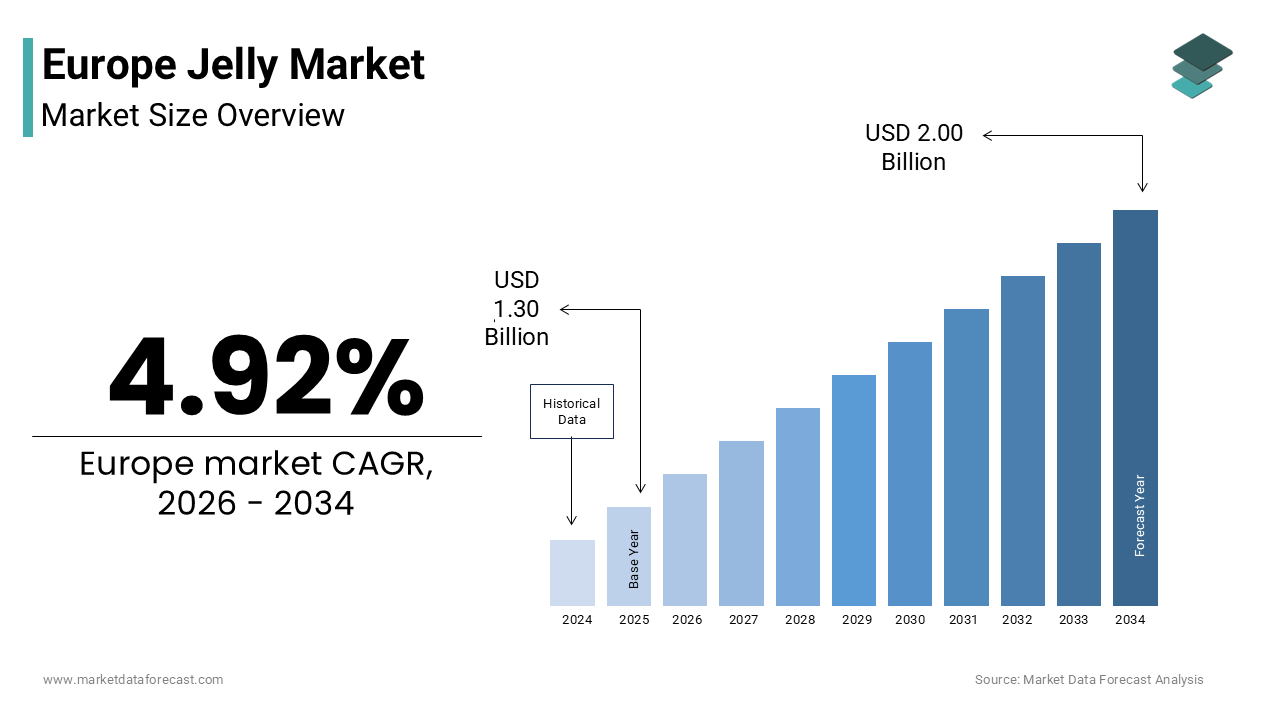
The Europe jelly market was valued at USD 1.30 billion in 2025, is estimated to reach USD 1.36 billion in 2026, and is projected to reach USD 2.00 billion by 2034, growing at a CAGR of 4.92% during the forecast period from 2026 to 2034. The growth of the Europe jelly market is driven by strong cultural integration of fruit preserves in daily diets, increasing demand for reduced-sugar and clean-label formulations, and expansion of organic and sustainable product portfolios. Regulatory reforms under the EU’s revised Breakfast Directives mandating higher fruit content and stricter labeling standards are reshaping product formulations while reinforcing quality benchmarks. Although consumer skepticism toward processed sugary spreads and competition from alternative breakfast options present challenges, innovation in natural sweeteners, circular economy initiatives, and premium artisanal positioning continue to sustain steady market expansion across Europe.
Key Market Trends
-
Growing demand for reduced-sugar and sugar-free jelly variants across Western and Northern Europe.
-
Expansion of organic, clean-label, and sustainably sourced fruit preserves.
-
Rising integration of jelly production into the circular economy and food waste reduction initiatives.
-
Premiumization through regional and terroir-based specialty fruit varieties.
-
Increasing popularity of single-serve and portable cup-based formats for on-the-go consumption.
Segmental Insights
- Based on product type, the fruit jelly segment dominated the Europe jelly market in 2025, driven by its deep-rooted culinary integration, compliance advantages under revised EU fruit content standards, and strong consumer loyalty toward traditional fruit-based spreads.
- Based on form, the ready-to-eat segment held the largest share of the Europe jelly market in 2025, reflecting strong consumer preference for convenient, shelf-stable, and no-preparation formats aligned with busy lifestyles. Based on end use, Regional Insights
Regional Insights
The Europe jelly market exhibits strong regional differentiation shaped by fruit production capacity, culinary traditions, and innovation in health-oriented formulations.
-
France led the market with 22.7% share in 2025, supported by high per capita consumption, protected geographical indication (PGI) products, and a strong domestic fruit processing infrastructure.
-
Germany accounted for 18.1% of the market share in 2025, driven by large-scale manufacturing capabilities, strong private label penetration, and rapid adoption of organic and low-sugar variants.
-
United Kingdom remains a major market, characterized by strong sugar-reduction initiatives, diversified sourcing post-Brexit, and high online grocery penetration.
-
Italy continues steady expansion, leveraging premium regional varieties and export-oriented production.
-
Poland is emerging as a key growth hub, supported by its leadership in berry production and processing capacity, supplying both domestic and export markets.
Competitive Landscape
The Europe jelly market is characterized by competition among established multinational brands, regional fruit processors, and private label manufacturers. Leading companies focus on sugar reduction, clean-label reformulation, sustainable sourcing, and recyclable packaging to align with evolving consumer preferences and EU regulatory standards. Retailers play a significant role in shaping competition through private-label expansion and shelf space allocation. Strategic investments in automation, orchard partnerships, and circular economy initiatives enhance supply chain resilience and margin stability. Prominent players operating in the Europe jelly market include Hero Group, Andros Group, Unilever, Nestlé S.A., Ferrero International S.A., Orkla ASA, Bonne Maman, Hartley’s (Hain Daniels Group), Schwartau (Hero Group), and Zentis GmbH & Co. KG.
Europe Jelly Market Size
The Europe jelly market size was valued at USD 1.30 billion in 2025 and is anticipated to reach USD 1.36 billion in 2026 from USD 2.00 billion by 2034, growing at a CAGR of 4.92% during the forecast period from 2026 to 2034.
Jelly is a thick, spreadable fruit preserve made from strained fruit juice and sugar. This product category serves both household and foodservice channels, with applications ranging from breakfast accompaniments to gourmet culinary ingredients. In 2024, European consumption of jams, jellies, purees, and pastes reached 2.3 million tons, marking a 6.9% increase over 2023. Data from Global Trade Magazine indicates that France holds the highest per capita consumption of jam, jelly, puree, and paste among European Union nations. This consumption trend positions France as the leading market for these specific products. Regulatory developments, including the EU’s revised Breakfast Directives, now mandate higher minimum fruit content and stricter labeling, reinforcing quality standards while challenging traditional formulations. Concurrently, consumer preferences are shifting toward transparency, reduced sugar, and sustainable sourcing, positioning the jelly segment at the intersection of heritage and innovation.
MARKET DRIVERS
Rising Demand for Reduced Sugar Formulations
Consumer health awareness has caused a structural shift toward low and no added sugar jelly variants across the region, which accelerates the growth of the Europe jelly market. The European Food Safety Authority links excessive free sugar intake to obesity and dental caries, prompting national dietary guidelines and reformulation initiatives. Research suggests that conventional products dominate the European market, though demand for organic and low-sugar alternatives is increasing rapidly. Germany, France, and Italy are emerging as primary markets for such innovations. The European Union has updated regulations to increase the minimum fruit content required in jams and jellies, which promotes lower sugar usage. Manufacturers are responding with natural sweeteners like stevia or concentrated fruit juices, aligning with EFSA’s safety thresholds while preserving sensory appeal, a critical balance in maintaining consumer acceptance.
Strong Cultural Integration in Daily Diets and Culinary Traditions
Jelly remains deeply embedded in European food culture, particularly in Central and Western regions, which in turn fuels the expansion of the Europe jelly market. In these areas, it functions as a staple rather than a discretionary item. France leads the European market in per capita consumption of jams and preserves, driven by strong breakfast-oriented consumption habits, with other countries like Austria also showing high, though lower, consumption levels. Ireland holds a top position in the European market for citrus preserve consumption, based on a study. Domestic production of apples, berries, and stone fruits supports localized supply chains that reinforce perceptions of authenticity. Older European consumer demographics exhibit strong brand and format loyalty towards jams and jellies, regarding them as staple pantry items. Furthermore, institutional use in school meals and senior care facilities across Scandinavia ensures baseline volume stability. This cultural resilience provides a durable foundation for premiumization and flavor innovation without sacrificing core demand.
MARKET RESTRAINTS
Stringent EU Regulatory Standards on Composition and Labeling
European jelly producers face stringent, rigid compositional standards that ensure top-tier quality but limit product innovation, and thereby impede the growth of the Europe jelly market. Under the updated Breakfast Directives, the minimum fruit content for standard jams and jellies is being increased to a higher threshold, with "extra" jams requiring an even higher minimum, with compliance mandated by 2026. Although a minimum soluble dry matter content is standard, new rules allow products to bypass this threshold if they achieve a significant reduction in sugar content. The European Parliament’s legislative update further tightens origin disclosure and restricts certain additives. While compliance with EU standards is essential, the primary reasons for border rejections of food products at the EU border are related to safety hazards such as contamination or banned residues, rather than primarily ingredient ratios. These requirements impose significant costs on small producers and exporters, limiting agility in responding to clean label trends and hindering the adoption of novel gelling or sweetening systems.
Persistent Consumer Skepticism Toward Processed Fruit Products
Jelly contends with negative perceptions as an ultra-processed and high-sugar spread, which restrains the expansion of the Europe jelly market. Public health agencies in Germany and the UK routinely categorize it alongside sugary spreads, discouraging regular consumption, especially for children. According to EFSA findings, intake of added sugars, including those added to fruit-based products, contributes to total energy consumption, and reducing these ingredients assists with maintaining a healthy daily caloric balance and weight management. Consequently, younger consumers are substituting jellies with fresh compotes, nut butters, or avocado spreads perceived as more wholesome. Research indicates that consumption of preserved fruits in Western Europe has faced downward pressure due to consumer preference for fresh, natural foods, a trend that is influencing demand for processed products in related categories. Retailers are reallocating shelf space toward refrigerated, short shelf life alternatives with minimal ingredients, marginalizing ambient jellies. The category requires effective communication about nutritional retention, upcycled ingredients, and functional benefits like pectin’s digestive properties. Without this communication, the industry faces a risk of further disengagement from health-conscious shoppers. As a result, failing to educate consumers on these aspects could hinder the growth of sustainable and functional food products.
MARKET OPPORTUNITIES
Expansion of Organic and Clean Label Product Portfolios
Expansion of organic and clean label product portfolios creates new opportunities for the Europe jelly market. The European organic food market continued to grow in 2023, with many countries experiencing a recovery in sales, as reported by FiBL and IFOAM. Demand for organic food products is highest in Western European nations, where consumers show a strong preference for transparent, clean labels and verified organic certifications. The demand for healthy, sustainable, and organic products is growing in Europe, driven by consumer concerns regarding personal health and the environmental impact of food production. Producers using regionally sourced, pesticide free fruits align with the EU’s Farm to Fork Strategy, which promotes sustainable agriculture and shorter supply chains. Innovations in natural gelling agents, such as citrus fiber or apple pectin from pomace, enable sugar reduction without compromising texture. Transparent storytelling around ethical sourcing and carbon footprint allows brands to command premiums and access new channels, including organic grocers and direct to consumer platforms.
Integration into Food Waste Reduction and Circular Economy Initiatives
Jelly production offers a scalable solution for valorizing surplus, blemished, or short shelf life fruits, which provides fresh prospects for the Europe jelly market. These types of produce contribute to Europe’s millions of tons of annual food waste. The European Union has adopted binding legislative targets requiring member states to reduce food waste in the processing and manufacturing sector by the end of the decade, driving adoption of circular economy models. Horizon Europe funded projects like SISTERS demonstrate how fruit processing can capture nutritional value while minimizing loss. Major producers including Andros (France) and Zentis (Germany) already source significant volumes from local orchards for their preserve lines. Profel Europe emphasizes that fruit processing inherently extends seasonal abundance beyond its natural window. When marketed authentically, these upcycled jellies resonate strongly. Besides, consumer studies indicate a growing preference among EU citizens for brands that take active steps to reduce food waste. This alignment with Green Deal objectives enhances brand equity and unlocks access to sustainability grants and collaborative R&D funding.
MARKET CHALLENGES
Volatility in Raw Material Availability and Pricing
Jelly manufacturers face acute exposure to climate driven fluctuations in fruit harvests, which is challenging the growth of the Europe jelly market. Adverse weather conditions, including drought and frost, caused significant volatility in European fruit yields, tightening supply. Such disruptions directly inflate input costs, particularly for raspberry, strawberry, and blackcurrant varieties. The concentration of raspberry production in Poland and Serbia creates significant supply chain dependency for the European market. High raw material costs in jelly production, specifically fruit prices, heavily influence manufacturer profitability and vulnerability to agricultural shortages. Heat-induced crop failures in France have tightened the supply of stone fruit, driving up costs for processed fruit products. Without diversified sourcing, investment in climate resilient cultivars, or vertical integration into orchard management, producers remain vulnerable to cost volatility. This volatility can force retail price increases and dampen demand.
Intensifying Competition from Alternative Breakfast Spreads
Traditional jelly faces mounting pressure from nutritionally positioned alternatives, which is limiting the expansion of the Europe jelly market. The regional nut butter ladscape is experiencing a sustained upward trajectory, supported by a shift in consumer preferences toward plant-based protein and healthy fats. Avocado spreads, hummus, and yogurt based fruit compotes are increasingly featured in morning meals, especially among urban professionals. European consumers are diversifying their pantry staples, while younger demographics increasingly favor nutrient-dense spreads over traditional options. Major retailers like Carrefour and REWE have expanded “better for you” breakfast sections, often relegating jellies to secondary placement. This fragmentation forces brands into a strategic dilemma: reposition as indulgent or heritage items, limiting volume, or invest in costly reformulation to mimic the macronutrient profiles of rivals, potentially compromising taste and texture. Either path presents significant commercial and technical hurdles in a rapidly evolving competitive landscape.
REPORT COVERAGE
| REPORT METRIC | DETAILS |
| Market Size Available | 2025 to 2034 |
| Base Year | 2025 |
| Forecast Period | 2026 to 2034 |
| CAGR | 4.92% |
| Segments Covered | By Product Type, Form, End Use and Region. |
| Various Analyses Covered | Global, Regional & Country Level Analysis, Segment-Level Analysis, DROC, PESTLE Analysis, Porter’s Five Forces Analysis, Competitive Landscape, Analyst Overview of Investment Opportunities |
| Country Covered | UK, France, Spain, Germany, Italy, Russia, Sweden, Denmark, Switzerland, the Netherlands, Turkey, the Czech Republic, and the Rest of Europe. |
| Market Leaders Profiled | Hero Group, Andros Group, Unilever, Nestlé S.A., Ferrero International S.A., Orkla ASA, Bonne Maman, Hartley’s (Hain Daniels Group), Schwartau (Hero Group), and Zentis GmbH & Co. KG. |
SEGMENTAL ANALYSIS
By Product Type Insights
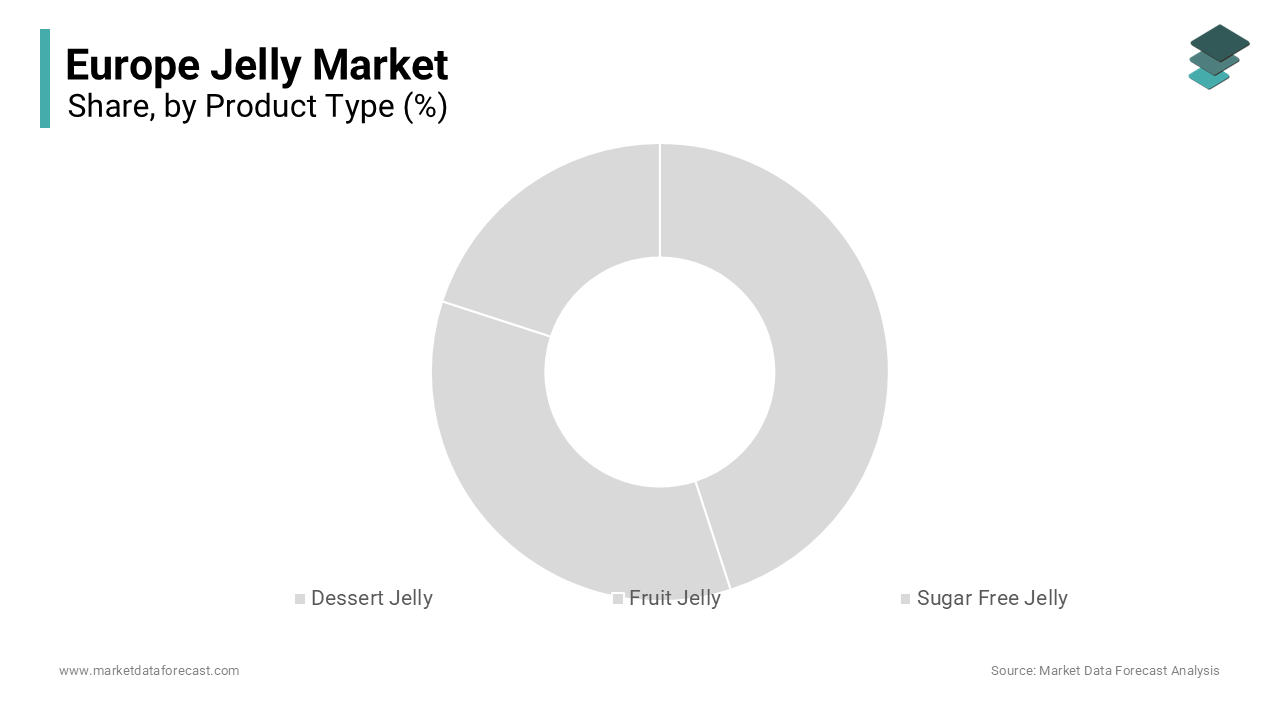
The fruit Jelly segment dominated the Europe jelly market and accounted for a substantial share in 2025. The dominance of the segment is driven by its deep integration into daily dietary habits, particularly in breakfast and snack consumption across Western and Central Europe. Fruit jelly benefits from longstanding culinary traditions that prioritize natural fruit flavors and seasonal preservation. France and Austria are leading European consumers of jams and fruit spreads, driven by established household habits. National food cultures in Germany and Italy similarly favor clear fruit gels made from locally harvested berries and stone fruits, reinforcing consumer trust in familiar formulations. The European Commission’s harmonized standards under Directive 2001/113/EC further legitimize fruit jelly by mandating minimum fruit content, enhancing perceived authenticity. Retailers allocate prime shelf space to established fruit jelly brands due to consistent turnover, especially in ambient grocery aisles. Unlike dessert or functional variants, fruit jelly requires no preparation or refrigeration, aligning with convenience expectations while maintaining a “homemade” sensory profile that appeals across age groups. The EU’s tightening compositional rules directly favor fruit jelly over alternatives. Revised 2024 European Parliament regulations have increased minimum fruit content requirements for jams and jellies, surpassing previous standards. Dessert jellies, often reliant on artificial flavors or gelling agents like gelatin, struggle to comply without reformulation. Sugar free variants face additional scrutiny regarding sweetener safety and labeling clarity. Consequently, manufacturers with legacy fruit jelly portfolios experience fewer compliance costs and smoother market access. Additionally, fruit-derived pectin is recognized as a safe, functional thickening agent within the EU. This regulatory tailwind consolidates market leadership for fruit jelly, particularly among domestic producers in berry rich regions like Poland and Serbia.
The sugar-free jelly segment is anticipated to witness the fastest CAGR of 5.8% between 2026 and 2034 due to the rising prevalence of metabolic health conditions and innovation in natural sweetening and texture stability. The surge in diabetes and obesity across Europe is accelerating demand for low sugar alternatives. The International Diabetes Federation reports a substantial, growing number of adults in the European region living with diabetes, accelerating the demand for updated clinical guidelines and increased personal dietary management. National health agencies in the UK and Germany now actively discourage high sugar condiments, redirecting consumers toward reduced calorie options. Sugar free jellies, formulated with stevia, monk fruit, or erythritol, offer palatable substitutes without spiking glycemic response. Consumer research in Europe shows a rising awareness among middle-aged adults regarding nutritional labels, with a significant proportion actively reviewing the sugar content of spreads before purchasing. This demographic shift compels mainstream brands like Hero and Zentis to launch certified low sugar lines, expanding distribution beyond niche health stores into mainstream supermarkets. The segment’s growth is further amplified by inclusion in hospital and senior care meal plans where sugar restriction is medically mandated. Advancements in clean label sweetening technologies have resolved earlier taste and mouthfeel limitations that hindered sugar free adoption. Companies now utilize enzymatically modified fruit concentrates and citrus fiber to mimic the viscosity and sweetness profile of sucrose based jellies. Driven by clean-label demands, European product launches in the spreads and preserves category have shown a growing trend towards substituting sugar with naturally derived alternatives. These improvements align with EFSA’s safety assessments confirming the acceptability of steviol glycosides at current usage levels. Additionally, partnerships between ingredient suppliers like Beneo and jelly manufacturers have enabled stable gelling at lower dry matter concentrations, meeting both sensory and regulatory requirements. Consumer skepticism toward artificial additives continues to persist. This shift toward botanical sweetening systems positions sugar-free jelly as a premium health-conscious choice, fueling trial and repeat purchase across Northern and Western Europe.
By Form Insights
The ready To Eat jelly segment led the Europe jelly market and captured a significant share in 2025. Powder Mix and Cup Based formats remain niche, primarily serving specific use cases such as institutional catering or children’s snacks. The overwhelming preference for Ready To Eat jelly reflects broader European trends toward time efficient meal solutions without sacrificing quality. Busy urban lifestyles, coupled with declining home cooking frequency, especially among dual income households, favor products requiring zero preparation. European consumers are showing an increasing preference for convenient, "ready-to-consume" breakfast options to accommodate busy, on-the-go lifestyles. Ready To Eat jellies meet this need while offering extended ambient shelf life, eliminating cold chain logistics. Supermarkets capitalize on this by placing glass jar and squeezable pouch formats at eye level in breakfast aisles, driving impulse purchases. The demand for convenient, on-the-go breakfast solutions is driving significant growth in single-serve packaging within the German and Dutch markets. Decades of investment in glass bottling, labeling, and distribution networks have cemented Ready To Eat jelly’s dominance. Legacy brands like Bonne Maman and Schwartau benefit from high brand recall and trust, reinforced by consistent texture and flavor profiles. European consumers demonstrate high loyalty to familiar jelly brands, often choosing to repurchase based on established trust and taste preferences. Retailers prefer stocking these formats due to predictable inventory turnover and minimal waste compared to perishable alternatives. Furthermore, EU packaging regulations favor recyclable glass and PET containers commonly used for Ready To Eat jellies, reducing compliance friction. This ecosystem of manufacturing scale, retail alignment, and consumer habit creates a formidable barrier for alternative forms, ensuring Ready To Eat maintains market primacy despite emerging innovations.
The cup based jelly segment is likely to experience the fastest CAGR of 6.3% during the forecast period owing to expanding appeal as a children’s snack, on-the-go consumption, and sustainability-driven packaging innovation. Single serve cup jellies are gaining traction as convenient, mess free snacks for school lunches and travel. Parents increasingly seek portion controlled, portable options that avoid excessive sugar while providing fruit based nutrition. Caregivers in Western and Northern Europe are increasingly choosing pre-portioned fruit snacks because they offer better hygiene and help manage serving sizes for children. Brands like Albi and Hero have responded with mini cups featuring reduced sugar formulas and playful designs, capturing shelf space in school supply aisles and airport kiosks. The format’s sealed nature also aligns with post pandemic hygiene expectations. Convenience-focused fruit snacks are seeing strong growth in Northern Europe as households with multiple working parents seek out quick, mess-free food options. Recent advancements in recyclable and bio based cup materials are mitigating earlier environmental criticisms. Companies are transitioning from polystyrene to mono material PET or paper lined bioplastics that meet EU Single Use Plastics Directive requirements. Industry initiatives and regulatory shifts have led to a significant increase in the use of recyclable materials for snack cups compared to previous years. Collaborations with waste management firms like Veolia ensure collection infrastructure compatibility, addressing consumer concerns about plastic waste. This eco redesign, combined with transparent sourcing claims, transforms cup jellies from indulgent treats into responsible choices. Retailers have created dedicated “sustainable snacking” sections where these products thrive, accelerating trial among environmentally conscious millennials and Gen Z shoppers.
By End Use Insights
The retail consumption segment held the majority share of the Europe jelly market in 2025. The supremacy of the segment is attributed to household penetration and breakfast ritual entrenchment, as well as e commerce and direct to consumer expansion. Jelly remains a fixture in European home pantries, particularly in countries where bread based breakfasts dominate. A substantial portion of French households stocks fruit spreads, though consumer volume spending on staples has been decreasing. This ubiquity stems from generational transmission of eating habits, where jelly is viewed as a wholesome complement to toast, croissants, or yogurt. Retailers reinforce this through bundled promotions during holiday seasons and back to school periods. Unlike institutional channels that prioritize cost per serving, retail buyers value brand heritage and flavor variety, enabling premium pricing for artisanal or regional labels. The stability of household demand, even during economic downturns, makes retail the most resilient and profitable channel, absorbing over three quarters of total production output across major manufacturing hubs in Germany and Poland. Digital retail has further solidified household dominance by enabling access to specialty and imported jellies previously unavailable in local stores. Online retailers in Europe are expanding their market share, with convenience-oriented products seeing growth. Niche producers from rural Spain or the Balkans now reach urban consumers in London or Berlin through marketplace listings, diversifying flavor offerings beyond mainstream strawberry or raspberry. Consumers for specialty food items are frequently turning to online channels to purchase in bulk. This digital layer enhances retail’s reach without cannibalizing brick and mortar sales, creating a hybrid consumption model that sustains volume leadership.
The foodservice use segment is on the rise and is expected to be the fastest growing segment in the market by witnessing a CAGR of 5.1% over the forecast period. The rapid growth of the segment is propelled by premiumization of hotel and café breakfast experiences, and integration into modern european cuisine and pastry arts. High end hotels and boutique cafés across Europe are elevating morning menus with artisanal, locally sourced jellies as part of curated breakfast experiences. In cities like Paris, Amsterdam, and Barcelona, establishments now feature house made or regional jellies, such as quince from Portugal or elderberry from Sweden, to differentiate their offerings. Western European luxury hotels are increasingly replacing mass-market condiments with artisanal or branded preserves to elevate guest experiences. This trend aligns with the broader “craft” movement, where provenance and storytelling drive perceived value. Suppliers like Andros and Darbo provide private label solutions with bespoke flavor profiles, enabling venues to claim exclusivity. European hotel occupancy is showing steady year-over-year recovery, though it remains highly seasonal with peak activity during summer months. Business and leisure travel are rebounding post-pandemic. Consequently, demand for premium accompaniments continues to rise. Beyond breakfast, chefs are incorporating fruit jellies into contemporary desserts, cheese pairings, and even savory glazes, expanding usage occasions. Michelin starred restaurants in Italy and Denmark use reduced sugar jellies as glossy finishes for tarts or acidic counterpoints to foie gras. Culinary schools across the EU now include jelly making in foundational pastry modules, normalizing its use among emerging talent. Modern European culinary curricula continue to emphasize the mastery of natural gelling agents like pectin in pastry arts. This professional endorsement filters down to mid tier bistros and bakeries, where signature jelly pairings become marketing hooks. The foodservice channel thus acts as both a volume driver and a trend incubator, introducing consumers to novel applications that later influence retail purchases, creating a virtuous cycle of innovation and adoption.
REGIONAL ANALYSIS
France Jelly Market Analysis
France was the top performer in the Europe jelly market and accounted for a 22.7% share in 2025. The demand for jelly in France is driven by centuries old fruit preservation traditions and high per capita consumption. France consistently leads Europe in the per capita consumption of jams and jellies. Regional specialties like Mirabelle plum jelly from Lorraine and blackcurrant from Burgundy enjoy protected geographical indications, reinforcing artisanal value. Major French fruit processors, including Andros, focus on utilizing local orchards to secure fruit for production. The cultural ritual of pairing baguette with high fruit content “confiture extra” remains unshaken, even among younger demographics. Government support for small fruit growers through the Common Agricultural Policy further stabilizes supply. Retail penetration is near universal, with hypermarkets dedicating entire shelves to local and organic variants. This blend of heritage, policy support, and consumer loyalty ensures France’s continued market leadership.
Germany Jelly Market Analysis
Germany was the second largest country in the Europe jelly market and captured a 18.1% share in 2025. The expansion of the German market is fuelled by large scale production and early adoption of health oriented innovations. German consumers show a strong demand for transparency, frequently scrutinizing ingredient lists for additives before purchasing food items. This has accelerated the launch of sugar reduced and organic jellies by brands like Zentis and Darbo. Driven by high consumer demand, Germany is a leading European importer of berries, ensuring consistent, year-round availability despite local climatic restrictions. Industrial clusters in North Rhine Westphalia host advanced processing facilities that meet stringent EU hygiene and traceability standards. Retailers like Aldi and Lidl drive volume through private label offerings that balance affordability with clean label claims. Furthermore, Germany’s robust export infrastructure allows surplus production to flow into neighboring markets, amplifying its influence beyond domestic borders.
United Kingdom Jelly Market Analysis
The United Kingdom continues to be a major player in the Europe jelly market. UK soft fruit consumption remains heavily influenced by international health and sustainability trends, with consumer demand focused on all-year availability and healthier snacking options. Post Brexit, UK manufacturers have diversified fruit sourcing away from EU dependencies, increasing imports from Chilean blueberries and South African citrus to ensure year round supply. Despite high import dependence, UK soft fruit growers are focusing on productivity gains through advanced, protected cultivation methods to combat labor and environmental challenges, rather than relying on increased acreage. Retail competition is intense, with Tesco and Sainsbury’s promoting British made jellies under sustainability banners. Notably, driven by health awareness, the UK market shows strong adoption of sugar reduction, with manufacturers increasingly prioritizing low-sugar claims across various food categories. This agility in formulation and sourcing, combined with strong e commerce penetration, online grocery sales grew, positions the UK as a fast adapting and influential market.
Italy Jelly Market Analysis
Italy expanded steadily in Europe jelly market due to regional diversity and premium positioning. From Sicilian blood orange marmalade to Alpine bilberry jellies, Italy leverages terroir to command higher price points. A significant portion of Italian fruit preserve production is exported to premium, nearby European markets that value the "Made in Italy" quality seal. Regional cooperatives in northern Italy, supported by EU agricultural funds, play a key role in producing high-quality jams and driving local agritourism. Domestic consumption is steady, with jelly commonly paired with aged cheeses like Parmigiano Reggiano, a practice endorsed by Slow Food movement principles. The Italian agri-food sector is seeing increased growth in organic fruit processing, aligning with national and EU-wide sustainability targets for healthier, more transparent food systems. This fusion of craftsmanship, export orientation, and sustainability drives Italy’s outsized influence relative to its population size.
Poland Jelly Market Analysis
Poland is likely to grow notably in the European jelly market from 2026 to 2034. This growth is driven primarily by its position as Europe’s leading berry producer and processor. The country is a leading European producer of berry fruits, with a significant portion of its harvest directed toward the frozen food industry. Domestic brands like Krakus and Gardenia have scaled efficiently by integrating backward into orchard ownership, achieving cost advantages. Poland’s central location enables rapid distribution across Germany, Scandinavia, and the Baltics via road and rail networks. Furthermore, the Polish food processing sector is increasingly adopting advanced, energy-efficient evaporation technologies to enhance productivity. Poland is a critical supplier in the European berry market. It maintains production levels that far exceed domestic consumption. EU cohesion funds continue to modernize cold chain and packaging infrastructure, reinforcing its role as the backbone of continental jelly production.
COMPETITIVE LANDSCAPE
The Europe jelly market features intense competition among legacy manufacturers, regional artisans, and private label producers. Established players leverage scale, brand recognition, and integrated supply chains to maintain dominance, while smaller cooperatives compete through terroir driven authenticity and organic certifications. Retailers exert significant influence by promoting cost effective private labels that challenge branded pricing. Innovation is concentrated in sugar reduction, sustainable packaging, and functional ingredients like added fiber or probiotics. Cross border trade remains robust due to harmonized EU standards, though post Brexit logistics have increased complexity for UK based firms. Consumer loyalty is high but not absolute, with younger demographics showing openness to alternative formats and ethical claims. This dynamic environment compels continuous investment in both product excellence and supply chain resilience to sustain competitive advantage.
KEY MARKET PLAYERS
Some of the companies that are playing a dominating role in the Europe Jelly Market include
- Hero Group
- Andros Group
- Unilever
- Nestlé S.A
- Ferrero International S.A.
- Orkla ASA
- Bonne Maman
- Hartley’s (Hain Daniels Group)
- Schwartau (Hero Group)
- Zentis GmbH & Co. KG
Top Players in the Market
Andros Group
Headquartered in France, Andros Group is a leading European producer of fruit based spreads including premium jellies under brands like Bonne Maman and Hero. The company operates orchards and processing facilities across Europe and sources fruit from numerous countries, enabling consistent global supply. In recent years, Andros has invested heavily in sustainable agriculture partnerships and reduced sugar formulations to align with evolving consumer preferences.
Zentis GmbH & Co KG
Based in Germany, Zentis is a century old manufacturer specializing in fruit preparations and jellies for both retail and foodservice sectors. The company supplies private label products to major European retailers and also exports its branded lines to numerous countries. Zentis has prioritized clean label innovation, recently reformulating its core jelly range to eliminate artificial additives and reduce sugar content using natural fruit concentrates.
Hero Group
Originating in Switzerland, Hero Group has established itself as a pan European leader in fruit spreads with a strong presence in Central and Southern Europe. The company emphasizes regional sourcing and culinary authenticity, offering country specific jelly varieties such as quince in Spain and sour cherry in Hungary. Hero has intensified its focus on sustainability, achieving carbon neutral certification for its German plant and transitioning all retail packaging to fully recyclable materials by 2025.
Top Strategies Used by the Key Market Participants
Key players in the Europe jelly market prioritize product reformulation to reduce sugar and eliminate artificial ingredients while maintaining sensory appeal. They invest in sustainable sourcing by partnering with local fruit growers and adopting circular economy practices such as using surplus or imperfect produce. Brand differentiation through regional flavor profiles and heritage storytelling strengthens emotional connections with consumers. Expansion into e commerce and direct to consumer models enhances accessibility and data driven personalization. Strategic facility upgrades and automation improve production efficiency and support clean label compliance. These approaches collectively reinforce market relevance amid shifting health and environmental expectations.
MARKET SEGMENTATION
This research report on the Europe Jelly Market has been segmented and sub-segmented based on the following categories.
By Product Type
- Dessert Jelly
- Fruit Jelly
- Sugar Free Jelly
By Form
- Ready To Eat
- Powder Mix
- Cup Based
By End Use
- Retail Consumption
- Institutional Use
- Foodservice Use
By Country
- UK
- France
- Spain
- Germany
- Italy
- Russia
- Sweden
- Denmark
- Switzerland
- Netherlands
- Turkey
- Czech Republic
- Rest of Europe