- Product Description Description
- Table of Contents TOC
- List of Table & Figure LOT
- Get Free Sample PDF Sample PDF
Market Size, 2025
$0.60 BnMarket Estimate, 2026
$0.64 BnMarket Forecast, 2034
$1.07 BnCAGR, 2026–2034
6.67%Europe Jimmies Market Size
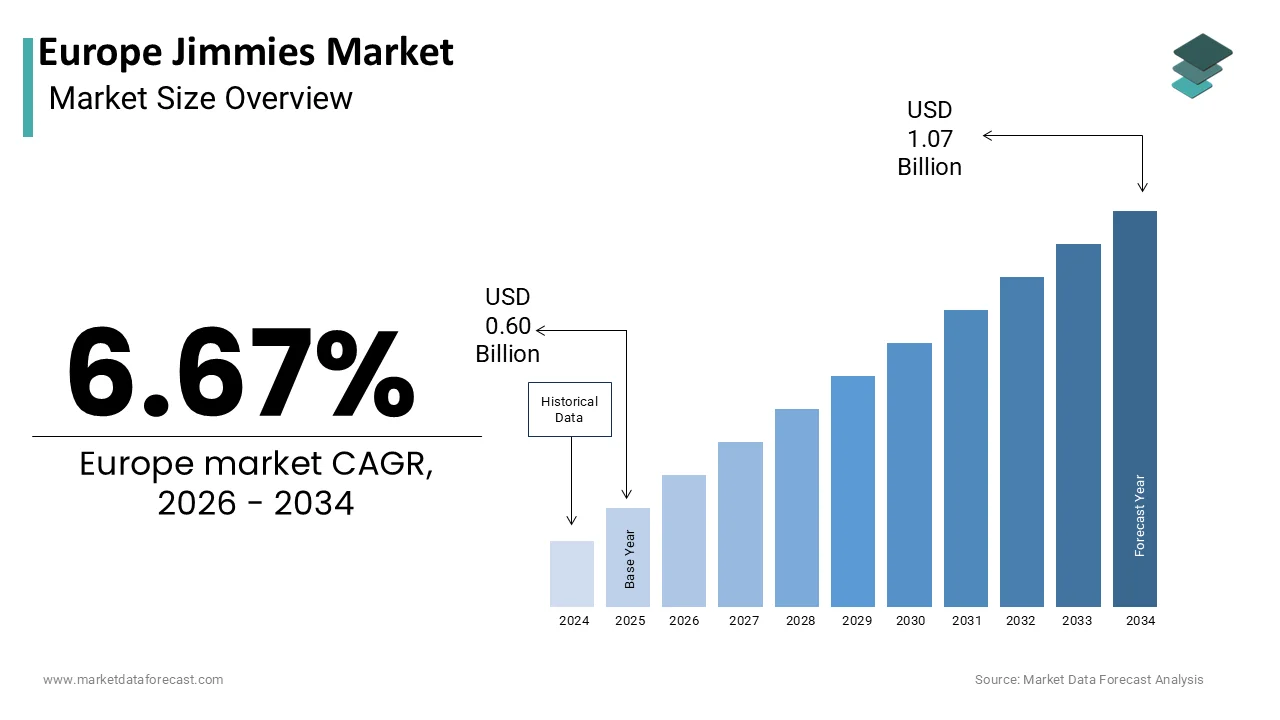
The Europe jimmies market was valued at USD 0.60 billion in 2025, is estimated to reach USD 0.64 billion in 2026, and is projected to reach USD 1.07 billion by 2034, growing at a CAGR of 6.67% from 2026 to 2034.
Jimmies are rod-shaped sugar or chocolate confectionery sprinkles used primarily as decorative toppings for baked goods, ice cream, and desserts. While the term "jimmies" is predominantly North American, in the European context, this product category falls under the broader classification of sugar decorations or vermicelli sprinkles, distinguished by their elongated cylindrical shape rather than spherical nonpareils. The market is defined by its reliance on the robust European bakery and confectionery industries, which serve as the primary downstream consumers. According to Eurostat, the European Union produces a substantial volume of bakery products, which provides a massive foundational demand for decorative ingredients. The definition extends beyond simple sugar rods to include complex variations made from cocoa, fruit concentrates, and natural colorants to meet evolving consumer preferences for clean labels. As per the European Convenience Food Federation, the proliferation of artisanal bakeries and patisseries across major urban centers has intensified the need for high-quality, visually appealing toppings. Furthermore, the market is influenced by strict food safety regulations under the European Food Safety Authority, which governs the use of food dyes and additives in confectionery. The scenario is also shaped by cultural festivities, and according to the European Travel Commission, seasonal celebrations such as Christmas and Easter drive significant spikes in home baking activities, thereby creating recurring demand peaks for decorative elements like jimmies.
MARKET DRIVERS
Expansion of the Artisanal Bakery and Premium Dessert Sector
The sustained growth of the artisanal bakery and premium dessert sector, where visual presentation is paramount to product value and consumer appeal, is majorly driving the growth of thEuropeanpe jimmies market. European consumers increasingly view baked goods not merely as sustenance but as experiential treats, driving bakeries to invest in high-quality decorations that enhance aesthetic allure. According to the European Bakers Association, the number of independent artisanal bakeries in the European Union has increased, with these establishments prioritizing unique and colourful toppings to differentiate their offerings in a crowded marketplace. This trend is particularly evident in the cake and pastry segment, where the use of textured sprinkles like jimmies adds a professional finish that justifies premium pricing. As per industry reports from France and Italy, the consumption of decorated pastries has risen, directly correlating with increased procurement of sugar decorations. The emphasis on Instagram-worthy food presentation further amplifies this driver, as bakeries seek toppings that photograph well and attract social media engagement. This symbiotic relationship between visual trends and bakery expansion ensures a steady and growing demand for jimmies across the continent.
Surge in Home Baking Activities and Digital Culinary Influence
The enduring surge in home baking activities fueled by digital culinary influence and the post-pandemic shift towards domestic hobbies is further boosting the European jimmies market expansion. The proliferation of cooking shows, online tutorials, and social media platforms has democratized professional baking techniques, which is encouraging European households to experiment with elaborate decorations previously reserved for commercial bakeries. According to the European Consumer Organisation, households in Western Europe increasingly report baking at least once a week, which is marking a substantial rise compared to pre-2020 levels. This resurgence has transformed jimmies from a niche industrial ingredient into a staple pantry item for home cooks. Platforms like Instagram and TikTok play a pivotal role, with food influencers showcasing creative uses of sprinkles, thereby normalizing their use in everyday treats. As per retail sales figures in the United Kingdom and Germany, the confectionery decoration aisle has shown notable growth, driven largely by amateur bakers purchasing multi-coloured packs for family events and birthdays. The psychological comfort derived from baking and the desire to create celebratory atmospheres at home have solidified this trend. Additionally, the availability of ready-to-use baking kits that include jimmies has lowered the barrier to entry for novices. For instance, enrolment in online baking courses has increased, further spreading knowledge about decorative techniques. This cultural shift towards domestic culinary creativity ensures a robust and expanding retail market for jimmies.
MARKET RESTRAINTS
Stringent Regulatory Scrutiny on Artificial Food Colourings
The growth of the European jimmies market is majorly restrained by the rigorous regulatory environment concerning artificial food colourings and additives, which are traditionally used to achieve the vibrant hues characteristic of many sprinkle products. The European Union maintains some of the strictest food safety standards globally, often requiring warning labels for certain synthetic dyes or banning them entirely if linked to health concerns. According to the European Food Safety Authority, the re-evaluation of food additives has led to restrictions on several dyes commonly used in confectionery. This regulatory pressure forces manufacturers to reformulate products using natural alternatives, which can be less stable, more expensive, and offer a narrower color palette. For instance, transitioning to natural colorants significantly increases production expenses, squeezing margins for manufacturers and leading to higher retail prices that may deter price-sensitive consumers. Furthermore, the complexity of navigating varying national interpretations of EU regulations creates logistical hurdles for cross-border trade within Europe. According to the legal analyses from food law firms, the threat of product recalls due to non-compliance with labeling requirements remains a constant risk, discouraging innovation in new color variants. The consumer perception that brightly coloured foods are inherently unhealthy, reinforced by public health campaigns, further dampens demand. These regulatory and perceptual barriers limit the market's ability to expand freely and constrain the variety of products available to consumers.
Growing Health Consciousness and Sugar Reduction Trends
The escalating health consciousness among European consumers, characterized by a strong movement towards sugar reduction and clean-label eating, which directly conflicts with the sugar-heavy composition of traditional jimmies, is further hampering the regional market growth. Public health initiatives across Europe have aggressively targeted sugar consumption as a key factor in obesity and diabetes, leading to a shift in consumer preferences away from purely decorative, non-nutritive sweets. According to the World Health Organization Regional Office for Europe, a significant proportion of adults in the European Region are overweight, prompting governments to implement sugar taxes and stricter labeling laws that negatively impact confectionery sales. As per consumer behavior studies conducted by Mintel, many European shoppers actively avoid products with high sugar content, often bypassing the decoration aisle entirely. This health-centric mindset is particularly prevalent among parents who are increasingly reluctant to serve sugary toppings to children, which is viewing them as unnecessary empty calories. The rise of the "free-from" movement, which advocates for products without artificial ingredients or refined sugars, which is further marginalizes traditional jimmies. Retail analytics confirm that sales of conventional sugar sprinkles have stagnated in markets with aggressive health campaigns. The inability of standard jimmies to align with nutritional goals limits their application in modern, health-focused bakeries and households, which is acting as a significant brake on market growth unless viable low-sugar alternatives are widely adopted.
MARKET OPPORTUNITIES
Development of Natural and Plant-Based Decorative Solutions
The strategic development of natural and plant-based jimmies that utilize fruit and vegetable extracts for coloring and alternative sweeteners to address health and clean-label demands is a prominent opportunity in the European jimmies market. By shifting away from synthetic dyes and refined sugar, manufacturers can tap into the rapidly growing market for wholesome, transparent ingredients that appeal to health-conscious consumers and parents. According to the Research Institute of Organic Agriculture, the demand for organic confectionery ingredients in Europe has grown significantly, indicating a strong willingness among consumers to pay a premium for natural options. Manufacturers can leverage sources like beetroot for red, spirulina for blue, and turmeric for yellow to create vibrant, safe, and label-friendly products. For instance, product launches featuring "no artificial colors" claims have shown higher success rates in retail trials compared to conventional counterparts. Furthermore, the use of sweeteners such as stevia, erythritol, or fruit concentrates can reduce the overall sugar content while maintaining the desired texture and sweetness. According to the European Food Information Council, consumers express a strong interest in buying decorative toppings if they are certified organic or made from natural ingredients. This pivot allows brands to reposition jimmies from a guilty pleasure to a permissible treat, which is unlocking new distribution channels in health food stores and organic sections of supermarkets. By aligning with the clean-label movement, the market can overcome current restraints and access a broader and more discerning customer base.
Expansion into Customizable and Thematic Product Lines
The opportunity to expand the market through customizable and thematic product lines tailored to specific cultural events, seasons, and personalization trends presents a lucrative avenue for growth. European consumers increasingly seek unique and personalized experiences, driving demand for sprinkles that match specific color schemes, holidays, or brand identities. According to Euromonitor, personalization in the food sector has led to increased sales of limited-edition and seasonal confectionery items. Manufacturers can capitalize on this by offering bespoke mixing services where bakeries and consumers can create custom color blends for weddings, corporate events, or local festivals. Additionally, developing themed collections for major European celebrations such as Oktoberfest, Carnival, or national days can drive periodic sales spikes and enhance brand relevance. As per e-commerce platforms, customized sprinkle mixes command a notable price premium compared to standard bulk packs. The rise of small-batch artisanal producers allows for agility in responding to micro-trends, such as pastel colors for baby showers or metallic finishes for luxury desserts. Furthermore, partnerships with popular media franchises or local artists to create exclusive designs can generate buzz and attract collectors. By moving beyond generic multi-color packs to curated, context-specific offerings, companies can elevate the perceived value of jimmies and foster deeper emotional connections with consumers, driving volume and margin growth.
MARKET CHALLENGES
Volatility in Raw Material Costs and Supply Chain Disruptions
The volatility in the costs of key raw materials, particularly sugar, cocoa, and natural colorants, is a significant challenge to the growth of the European jimmies market. The production of jimmies is heavily dependent on commodity prices, which are subject to fluctuations driven by climate change, geopolitical tensions, and energy costs. According to the International Sugar Organization, global sugar prices have experienced sharp swings due to poor harvests in major producing nations and export restrictions, directly impacting manufacturing margins in Europe. Similarly, the cost of cocoa has reached historic highs due to supply deficits in West Africa, forcing manufacturers to absorb costs or raise prices in a price-sensitive market. As per the European Cocoa Association, logistics costs for importing raw materials have risen following recent geopolitical conflicts, further straining the supply chain. The reliance on specific natural extracts for colorants also introduces vulnerability, as crop failures can lead to sudden shortages and price spikes for these niche ingredients. As per the Economic analyses from food industry consultancies, the inability to fully pass these cost increases onto consumers without dampening demand creates a squeeze on profitability. Furthermore, the fragmentation of the European supply chain means that disruptions in one region can ripple across the continent, delaying production and affecting availability. Managing this financial instability requires sophisticated hedging strategies and diversified sourcing, which can be challenging for smaller players, threatening the overall stability of the market.
Intense Competition from Alternative Decorative Toppings
The European market faces intense competition from a wide array of alternative decorative toppings that offer different textures, flavors, and perceived health benefits, which is threatening its shelf space and consumer preference. Products such as edible glitter, freeze-dried fruit crumbs, nut pralines, and chocolate shavings have gained popularity as consumers seek more sophisticated or natural-looking finishes for their desserts. According to the European Confectionery Association, sales of alternative toppings have grown steadily, outpacing traditional sugar sprinkles in the premium segment. Consumers, particularly in the artisanal bakery sector, are increasingly favoring toppings that add flavor complexity or textural contrast, which standard jimmies often lack. For instance, professional pastry chefs now prefer using freeze-dried fruits or nuts over sugar rods to enhance the gourmet appeal of their creations. The perception of jimmies as a childish or outdated decoration further limits their adoption in high-end dining contexts. Additionally, the rise of vegan and allergen-free trends has boosted competitors like seed-based or grain-free toppings that cater to specific dietary needs better than traditional wheat or dairy-containing jimmies. Retail audits confirm that shelf space allocated to innovative toppings is expanding, often at the expense of conventional sprinkle varieties. Overcoming this competitive pressure requires significant investment in product innovation and marketing to rebrand Jimmy's as a versatile and modern choice, a challenge that tests the adaptability of established manufacturers in a dynamic and evolving marketplace.
REPORT COVERAGE
| REPORT METRIC | DETAILS |
| Market Size Available | 2025 to 2034 |
| Base Year | 2025 |
| Forecast Period | 2026 to 2034 |
| Segments Covered | By Colorant, Application, End-User, and Region. |
| Various Analyses Covered | Global, Regional, and Country-Level Analysis, Segment-Level Analysis, Drivers, Restraints, Opportunities, Challenges; PESTLE Analysis; Porter’s Five Forces Analysis, Competitive Landscape, Analyst Overview of Investment Opportunities |
| Countries Covered | UK, France, Spain, Germany, Italy, Russia, Sweden, Denmark, Switzerland, Netherlands, Turkey, Czech Republic, Rest of Europe |
| Market Leaders Profiled | Oetker GmbH, Barry Callebaut AG, Cargill, Incorporated, Puratos Group, Irca Group, Ravifruit, Dobla, Carma, Dawn Foods, PCB Creation, Rainbow Dust Colours, PME Cake |
SEGMENTAL ANALYSIS
By Colorant Insights
The artificial colorant segment dominated the market by capturing 60.6% of the regional market share in 2025. The dominance of artificial segments in the European market is driven by the entrenched industrial reliance on synthetic dyes for their superior stability, vibrancy, and cost-effectiveness compared to natural alternatives. The growth of the artificial segment in the European market is further driven by its exceptional chemical stability under various processing conditions, including high heat, light exposure, and pH fluctuations, which are common in bakery and confectionery manufacturing. Unlike natural pigments that often degrade or change hue when subjected to baking temperatures or prolonged storage, synthetic dyes maintain their vivid intensity throughout the product lifecycle. According to the European Food Safety Authority, synthetic dyes are recognized for their ability to retain color under thermal processing, whereas natural pigments are more prone to fading. As per industry quality control reports, artificial colorants are associated with fewer product returns due to color fading compared to natural extracts. Furthermore, the long shelf life of artificially colored jimmies aligns with the distribution logistics of major European retailers, reducing waste and ensuring that products remain visually appealing on shelves for months. The inability of many natural alternatives to replicate this level of durability without significant cost penalties ensures that artificial colorants remain the preferred choice for mass-market applications where consistency is paramount.
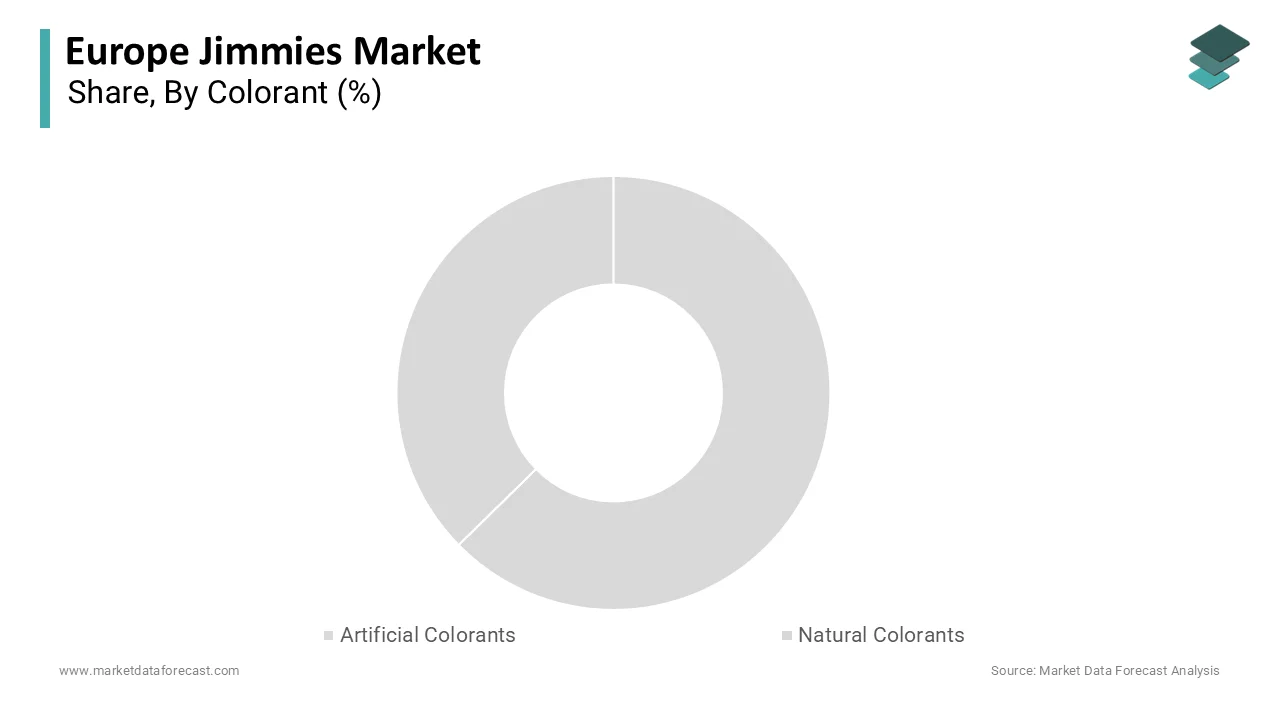
However, the natural colorant segment is projected to be the fastest-growing category and is estimated to expand at a CAGR of 10.5% over the forecast period, owing to the intensifying consumer demand for clean-label products and stringent regulatory shifts away from synthetic additives. The profound shift in European consumer preferences towards clean-label ingredients due to the increased health consciousness and skepticism regarding synthetic additives is further contributing to the expansion of the natural colorant segment in the European market. Modern shoppers increasingly scrutinize ingredient lists, actively avoiding products containing artificial numbers or chemical names, and preferring recognizable plant-based sources. According to the European Consumer Organisation, a majority of EU consumers express willingness to pay more for food products free from artificial colors, viewing them as safer and healthier options. As per trend reports from Innova Market Insights, the clean-label claim is now the top driver for new product launches in the European snack sector. This powerful consumer mandate compels Jimmy's producers to invest in natural alternatives like spirulina, turmeric, and carrot extract, accelerating the segment's growth trajectory as companies race to meet the demand for transparency and wholesomeness.
By Application Insights
The cakes and pastries segment led the market by accounting for 37.7% of the European market share in 2025. The growth of the cakes and pastries segment in the European market is attributed to the central role of visual decoration in European bakery culture, where jimmies serve as a standard finishing touch for a vast array of sweet baked goods. The deep-seated cultural tradition in Europe of celebrating life events, holidays, and social gatherings with elaborately decorated baked goods is further contributing to the expansion of the cakes and pastries segment in the European market. From birthday parties and weddings to religious festivals like Easter and Christmas, cakes adorned with colourful toppings are integral to European social rituals. According to the European Bakers Association, celebratory cakes and pastries see increased demand during peak holiday seasons, creating cyclical demand for decorative elements like jimmies. In countries such as Germany and France, the patisserie culture is highly developed, with consumers expecting a high degree of aesthetic refinement in their purchases. For instance, the presentation of food is considered nearly as important as taste, driving the consistent use of colourful toppings. This enduring cultural reliance on decorated baked goods for social cohesion ensures that the cakes and pastries segment remains the largest application area for jimmies.
On the other hand, the ice-cream and frozen desserts segment is emerging as the fastest-growing application and is expected to register a CAGR of 9.4% over the forecast period,d owing to the premiumization of the ice cream market and the increasing popularity of topping bars and customizable frozen treats. The ongoing premiumization of the ice cream market, where consumers are seeking gourmet experiences characterized by rich textures, unique flavors, and elaborate toppings, gs is further boosting the growth of the ice cream and frozen desserts segment in the European market. The perception of ice cream has shifted from a simple commodity to an indulgent treat, with jimmies playing a crucial role in adding texture and visual flair to high-end scoops and sundaes. According to the International Dairy Federation, premium and super-premium ice cream sales in Europe have been rising, with topped varieties contributing significantly to this growth. Market analysis from Euromonitor highlights that ice cream parlours offering extensive topping menus achieve higher average ticket sizes compared to those with limited options. As per consumer behavior studies, the visual contrast of colourful jimmies against creamy bases enhances the perceived freshness and fun of the product, appealing to both children and adults. This elevation of ice cream into a gourmet category ensures that jimmies become an indispensable component of the modern frozen dessert landscape.
By End-User Insights
The food manufacturers segment led the market with 56.8% of the European market share in 2025. The leading position of the food manufacturers segment in the European market can be credited to the massive scale of industrial bakery and confectionery production, which utilizes jimmies as a standard ingredient in mass-produced packaged goods. The sheer volume of industrial-scale production of baked goods and confectionery items across Europe that requires the bulk procurement of decorative ingredients is further boosting the dominance of the food manufacturers segment in the European market. Large-scale factories producing cookies, breakfast cereals, frozen waffles, and packaged cakes incorporate jimmies into their formulations to enhance visual appeal and brand recognition on supermarket shelves. According to Eurostat, the European food and beverage manufacturing sector produces large volumes of bakery and farinaceous products annually, representing a significant addressable market for industrial ingredients. For instance, jimmies are recognized as compatible decorative toppings for high-speed depositing systems to ensure efficient integration into manufacturing processes. The ability of manufacturers to purchase jimmies in bulk quantities at negotiated rates further consolidates their position as the largest consumer group. Industrial buyers account for the majority of the total volume traded in the B2B jimmies market. The relentless demand for convenient, ready-to-eat, decorated snacks from the retail sector ensures that food manufacturers remain the primary engine of consumption.
The home bakers segment is identified as the fastest-growing end-user category and is estimated to record a CAGR of 11.5% over the forecast period, due to the sustained popularity of home baking as a hobby, the influence of social media, and the availability of retail-ready decorating kits. The pervasive influence of social media platforms and digital cooking communities that inspire individuals to recreate professional-looking desserts at home is further contributing to the growth of the home bakers segment in the European market. Platforms like Instagram, TikTok, and Pinterest are filled with tutorials and images of beautifully decorated cakes and cookies, which are normalizing the use of jimmies as an essential tool for amateur enthusiasts. According to Global Web Index, a significant portion of European internet users follow food-related accounts, and engagement with baking content has been rising. For instance, sales of small-pack jimmies in the consumer aisle have increased in correlation with viral baking trends on social media. Furthermore, online baking challenges and virtual classes often feature jimmies as key components, fostering a sense of community and skill development. As per educational platform statistics, enrolment in online baking courses has grown, with decoration modules being among the most popular. This digital ecosystem creates a continuous loop of inspiration and consumption, making home bakers the most dynamic growth segment.
COUNTRY LEVEL ANALYSIS
Germany Jimmies Market Analysis
Germany led the jimmies market in Europe in 2025 with 25.5% of the regional market share. The dominance of Germany in the European market is driven by a robust industrial bakery sector, a strong tradition of coffee and cake culture, and a high concentration of confectionery manufacturers. The German market is characterized by a dual demand structure, massive industrial consumption for packaged goo ds, and a vibrant artisanal bakery scene that values high-quality decorations. According to the Federal Statistical Office of Germany, the country is recognized as the largest producer of bakery products in Europe, generating significant revenue and creating foundational demand for decorative ingredients. The cultural institution of "Kaffee und Kuchen" ensures consistent household consumption of decorated pastries, particularly on weekends. As per the German Bakers Confederation, the country has a large number of independent bakeries that utilize jimmies for seasonal specialties and children's treats. Furthermore, Germany serves as a central logistics hub for the continent, facilitating the distribution of jimmies to neighbouring markets. The presence of major global food ingredient suppliers in Germany also drives innovation in natural and functional toppings.
United Kingdom Jimmies Market Analysis
The United Kingdom captured a promising share of the European market in 2025. The UK market is defined by a highly dynamic retail environment, a strong influence of global food trends, and a burgeoning home baking community. British consumers are early adopters of new food fads, particularly those driven by social media, which has led to a surge in demand for colourful and novelty sprinkles. As per the Office for National Statistics, the UK has one of the highest rates of home baking participation in Europe, with millions of households engaging in regular baking activities. The popularity of television baking competitions has further fueled this trend, inspiring amateurs to experiment with elaborate decorations. Industry reports highlight that the UK retail sector offers the widest variety of Jimmy's products, ranging from budget private labels to premium artisanal blends. The presence of numerous specialty cupcake shops and dessert bars in London and other major cities drives significant foodservice demand. Additionally, the UK's multicultural population introduces diverse festive traditions that incorporate decorated sweets, broadening the usage occasions for jimmies.
France Jimmies Market Analysis
France is estimated to account for a prominent share of the European jimmies market during the forecast period, owing to its world-renowned patisserie heritage and a discerning consumer base that prioritizes quality and aesthetics. The French market is unique due to the high standards of its bakery industry, where decorations must complement rather than overpower the delicate flavors of fine pastries. According to the French Ministry of Agriculture, France is noted for having one of the highest densities of bakeries per capita globally, with tens of thousands of boulangeries serving as community hubs. While traditional French pastries often favor subtle decorations, there is a growing trend towards more colorful and playful designs, especially for children's birthdays and seasonal celebrations. As per consumer behavior studies, French shoppers are increasingly willing to pay a premium for natural and organic jimmies, aligning with the national emphasis on food quality and safety. The influence of high-end pastry chefs who incorporate modern decorative techniques into classic recipes is also driving demand for specialized toppings. Furthermore, the tourism sector boosts consumption, as visitors seek out iconic French sweets that often feature elegant sprinkles.
Italy Jimmies Market Analysis
Italy is anticipated to record a healthy CAGR in the European jimmies market over the forecast period due to its rich culinary history and a growing appreciation for contemporary dessert trends. The Italian market is characterized by strong regional diversity in baking traditions, with jimmies finding applications in both classic festive breads and modern gelato toppings. As per the Italian National Institute of Statistics, the consumption of sweet baked goods remains high, particularly during religious festivals and local food celebrations. The gelato industry, a cornerstone of Italian food culture, has increasingly adopted jimmies as a popular topping option, especially in tourist-heavy areas and modern gelaterias. Industry analysis indicates that demand for colorful decorations has risen among younger generations influenced by international dessert trends seen on social media. The presence of a thriving artisanal chocolate sector also contributes to demand, as jimmies are used to decorate truffles and Easter eggs. Data from trade associations shows that Italian manufacturers are increasingly focusing on high-quality, natural colorants to meet consumer expectations.
Spain Jimmies Market Analysis
Spain is estimated to exhibit a steady CAGR in the European jimmies market during the forecast period. The Spanish market is defined by the social importance of tapas and post-meal desserts, where visually appealing treats play a key role. According to the Spanish Confederation of Bakeries and Confectioneries, the sector employs a large workforce and produces a wide variety of sweet goods that often feature colorful toppings. The tradition of "La Roscón de Reyes" during Epiphany generates a seasonal spike in the consumption of candied fruits and sprinkles. As per retail data, sales of baking decorations increase during Carnival, Easter, and Christmas, reflecting the integration of sweets into Spanish cultural celebrations. The growing number of American-style donut shops and cupcake cafes in major cities like Madrid and Barcelona has further normalized the use of jimmies among the urban population. Additionally, the rise of home baking as a family activity has boosted retail sales of small-pack sprinkles. As per tourism data, international visitors encourage local businesses to adopt global dessert trends, including elaborate sprinkles.
KEY MARKET PLAYERS
Some of the companies that are playing a dominating role in the global europe jimmies market include
- Oetker GmbH
- Barry Callebaut AG
- Cargill, Incorporated
- Puratos Group
- Irca Group
- Ravifruit (Les vergers Boiron)
- Dobla (IRCA Group)
- Carma (Barry Callebaut brand)
- Dawn Foods
- PCB Creation (chocolate decorations specialist)
- Rainbow Dust Colours
- PME Cake
MARKET SEGMENTATION
This research report on the europe jimmies market is segmented and sub-segmented into the following categories.
By Colorant
- Artificial Colorants
- Natural Colorants
By Application
- Cakes & Pastries
- Ice Cream & Frozen Desserts
- Confectionery
- Others
By End-User
- Food Manufacturers
- Foodservice Providers
- Home Bakers
By Country
- Germany
- United Kingdom
- France
- Italy
- Spain
- Rest of Europe