Europe Karting Market Size, Share, Growth, Trends Research Report, Segmented By Type, End-Use, Engine, And By Region (U.K France, Germany, Spain, Italy, Sweden, Russia and Denmark, Switzerland, Netherlands, Turkey, Czech Republic and Rest of Europe), Industry Analysis Forecasts (2026 to 2034)
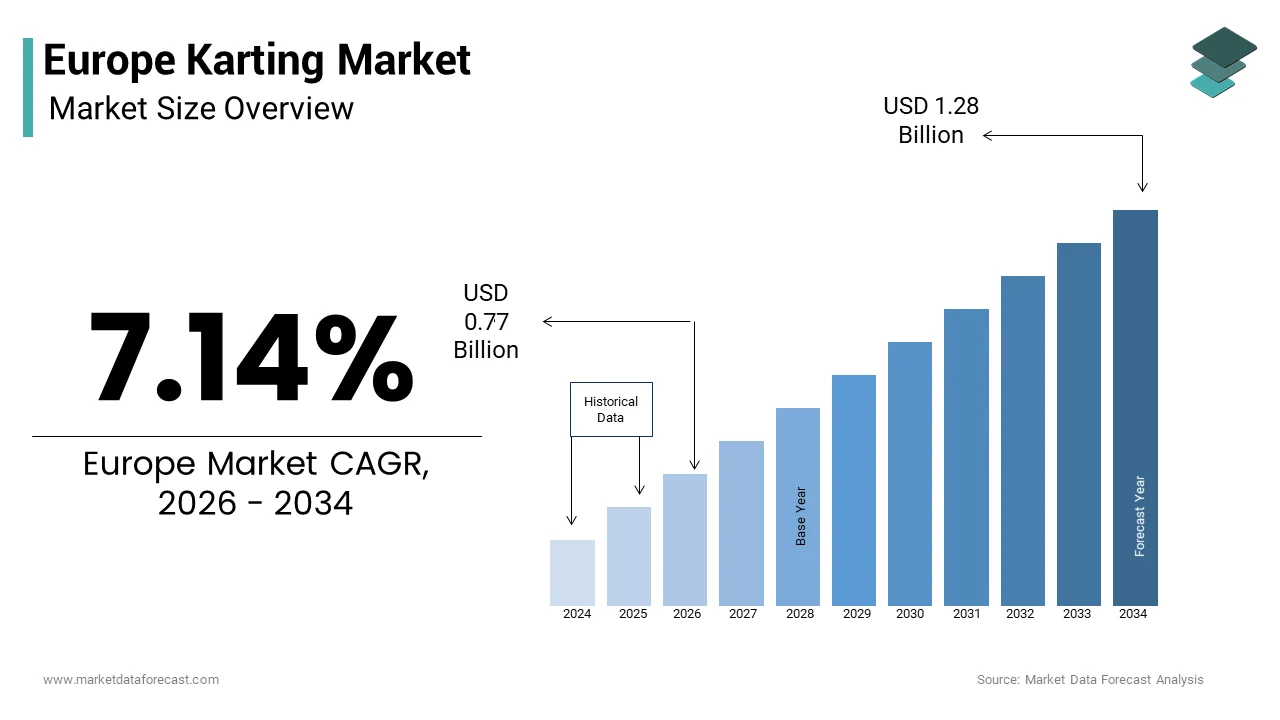
Market Size, 2025
$0.72 BnMarket Estimate, 2026
$0.77 BnMarket Forecast, 2034
$1.28 BnCAGR, 2026–2034
7.14%Europe Karting Market Size
The Europe karting market size was valued at USD 0.72 billion in 2025 and is anticipated to reach USD 0.77 billion in 2026 to reach USD 1.28 billion by 2034, growing at a CAGR of 7.14% during the forecast period from 2026 to 2034.
Introduction to the Europe Karting Market
Karting comprises a specialized ecosystem of vehicles, tracks, and support services dedicated to motorized racing on small four-wheeled circuits. This sector serves as the foundational tier for professional motorsport while simultaneously operating as a significant recreational industry. The region functions as the global epicenter for competitive karting, which is hosting the headquarters of major chassis manufacturers and the most prestigious international championships. According to the Federation Internationale de l'Automobile, Europe is recognized as a dominant region in the global karting landscape with a significant share of licensed competitors. The infrastructure includes permanent circuits ranging from local club tracks to world class facilities capable of hosting Formula One feeder series. As per Eurostat, household expenditure on leisure and recreation in Europe has remained resilient, with spending on sports activities continuing steadily. The market is currently undergoing a technological transformation driven by the shift toward electric propulsion to meet urban noise regulations and sustainability goals. National sporting bodies in countries like Italy, France, and Germany actively promote karting as a youth development program, ensuring a steady influx of participants. The interplay between high performance engineering heritage and modern environmental mandates defines the current trajectory of the industry across the continent.
MARKET DRIVERS
Escalating Popularity of Indoor Entertainment Complexes
The rapid proliferation of indoor entertainment complexes is driving the European karting market expansion. These facilities offer a controlled environment that eliminates weather dependencies, allowing for year round operations regardless of rain, snow, or extreme temperatures prevalent in Northern and Central Europe. According to the European Association of Amusement Parks and Attractions, the number of indoor family entertainment centers featuring karting tracks has been rising, driven by investor confidence in all-weather revenue models. These venues often integrate karting with other attractions such as virtual reality zones and dining areas, which is creating comprehensive destination experiences that attract families and corporate groups. According to industry operators, indoor facilities achieve higher utilization rates throughout the year compared to seasonal outdoor tracks. The ability to locate these centers in urban warehouses or shopping malls brings the sport closer to population centers, reducing travel barriers for casual participants. Furthermore, the enclosed nature of indoor tracks facilitates the adoption of electric karts by simplifying ventilation requirements and noise containment.
Strategic Role as the Primary Feeder for Professional Motorsport
The entrenched status of karting as the indispensable entry point for aspiring professional racing drivers sustains robust demand for high performance equipment and competitive events across Europe, which is further fuelling the growth of the European karting market. Nearly every current Formula One driver began their career in karting, creating a powerful aspirational pull that motivates thousands of young athletes and their families to invest heavily in the sport. As per the Commission Internationale de Karting, Europe hosts a majority of the global calendar for elite junior karting championships, drawing international talent and fostering a dense network of specialized training academies. This pipeline effect drives substantial expenditure on advanced chassis, precision engines, and technical support services, as competitors seek every possible advantage. According to national motorsport federations, registration fees for competitive youth categories have remained steady, with a large number of licensed junior racers active in the region annually. The presence of world renowned manufacturing clusters in Italy and France ensures immediate access to cutting edge technology and spare parts, reinforcing Europe as the preferred training ground. Sponsorship opportunities linked to driver progression further fuel financial investment in the sector.
MARKET RESTRIANTS
Stringent Noise Pollution Regulations in Urban Areas
The implementation of increasingly strict noise pollution regulations in urban and suburban areas is a significant restraint on the European karting market. Local municipalities across Europe are enforcing lower decibel limits to protect residential zones, forcing many outdoor tracks to reduce operating hours or face closure. According to the European Environment Agency, many cities have expanded low noise zones, directly impacting the viability of internal combustion engine venues located near population centers. Compliance often requires costly modifications such as soundproof barriers or restricted engine specifications that can diminish the performance appeal for serious racers. According to industry associations, a portion of smaller independent tracks in Western Europe have ceased operations or relocated to remote rural areas due to inability to meet new acoustic standards. The administrative burden of obtaining noise permits has also lengthened the timeline for new project approvals, stifling market growth. Operators face fines and legal challenges if they exceed limits, creating an atmosphere of regulatory uncertainty.
High Operational Costs Associated with Fuel and Maintenance
The volatile and rising costs associated with fossil fuels and intensive maintenance requirements for internal combustion engines are further hampering the karting market growth in Europe. Gas powered karts demand frequent engine rebuilds, oil changes, and spark plug replacements, alongside the continuous expense of high octane racing fuel which fluctuates with global energy prices. As per the European Karting Manufacturers Association, the operational cost per hour for running a gas powered fleet has increased due to soaring energy prices and supply chain disruptions for specialized parts. These escalating expenses squeeze profit margins, particularly for recreational venues that rely on high volume and competitive pricing to attract customers. Small business owners often struggle to pass these costs fully to consumers without reducing attendance, leading to a decline in fleet renewal rates and overall track quality. According to financial audits of mid-sized karting centers, maintenance labor now accounts for a larger share of total operating expenditures compared to previous years. The complexity of tuning two stroke engines also necessitates skilled mechanics who command higher wages, further adding to the financial burden. This economic pressure discourages new entrants and forces existing players to defer investments in infrastructure upgrades.
MARKET OPPORTUNITIES
Integration of Advanced Telemetry and Gamification Systems
The incorporation of sophisticated telemetry and gamification technologies offers a prominent opportunity for the Europe karting market to enhance customer engagement and create new revenue streams. Modern systems can track lap times, braking points, and acceleration data in real time, projecting this information onto large screens or mobile apps to create an immersive competitive experience akin to video games. According to the International Gaming Technology Association, facilities equipped with live timing and virtual competitor features have reported higher repeat visitation rates as customers strive to beat their personal bests or challenge friends digitally. This digital layer allows operators to host e sports style tournaments and league nights, attracting a younger demographic that values data driven interaction. According to venue analytics, groups participating in gamified events tend to spend more on food and beverage due to extended dwell times and social sharing. The ability to offer personalized performance reports via email or social media enhances brand loyalty and organic marketing. Furthermore, these systems enable remote diagnostics for fleet management, optimizing maintenance schedules and reducing downtime.
Expansion of Electric Karting in Mixed-Use Urban Developments
The growing trend of integrating electric karting tracks into mixed use urban developments presents a lucrative opportunity for market expansion into previously inaccessible locations. Unlike gas powered counterparts, electric karts produce zero emissions and minimal noise, making them suitable for installation in shopping malls, rooftop terraces, and underground parking structures within city centers. As per the European Council of Shopping Places, several major retail complexes in Germany and France have successfully launched indoor electric karting attractions, reporting increases in overall footfall. This synergy allows developers to offer unique experiential retail options that draw visitors who might otherwise shop online. The compact size and lack of ventilation needs for electric karts reduce construction costs and permit acquisition times, accelerating deployment. According to urban planning authorities, cities are increasingly approving entertainment projects that align with sustainability goals, favoring electric mobility solutions. Operators benefit from prime locations with high pedestrian traffic, reducing marketing costs and ensuring steady customer flow.
MARKET CHALLENGES
Shortage of Skilled Technical Personnel for Fleet Management
The acute shortage of skilled technical personnel capable of maintaining and tuning high performance karting fleets poses a significant challenge to the Europe karting market. As the technology shifts toward complex electric powertrains and sophisticated electronic management systems, the demand for technicians with specialized expertise in both mechanical and electrical domains has outpaced supply. According to the European Centre for the Development of Vocational Training, the vacancy rate for specialized automotive and motorsport technicians in the leisure sector has been rising, causing delays in fleet readiness and increased downtime for tracks. Traditional mechanics often lack the training required for high voltage battery systems and software diagnostics, necessitating costly retraining programs or reliance on external specialists. According to industry surveys, a significant portion of karting venues report reduced operating hours due to insufficient staffing for vehicle maintenance and safety inspections. This labor gap leads to inconsistent customer experiences, as poorly maintained karts suffer from performance issues or safety hazards.
Land Scarcity and Rising Real Estate Costs for Track Construction
The increasing scarcity of available land and the surging costs of real estate in Europe present a significant challenge to the European karting market. Urban expansion and agricultural preservation policies have drastically reduced the availability of suitable plots near population centers, forcing developers to look at remote locations that are less accessible to customers. As per the European Landowners Organization, the price of commercial land in peri urban areas has been rising, making the capital investment required for a standard outdoor track prohibitive for many entrepreneurs. Zoning laws often classify karting as industrial or high impact recreational use, facing strong opposition from local communities concerned about traffic and noise, even for electric venues. According to construction firms, the average time to secure planning permission for a new karting circuit has extended, delaying return on investment and increasing financing costs. The high density of existing tracks in traditional motorsport heartlands limits expansion opportunities, while greenfield sites require extensive infrastructure development.
REPORT COVERAGE
| REPORT METRIC | DETAILS |
| Market Size Available | 2025 to 2034 |
| Base Year | 2025 |
| Forecast Period | 2026 to 2034 |
| CAGR | 7.14% |
| Segments Covered | By Type, End-Use, Engine Country |
| Various Analyses Covered | Global, Regional & Country Level Analysis, Segment-Level Analysis, DROC, PESTLE Analysis, Porter’s Five Forces Analysis, Competitive Landscape, Analyst Overview on Investment Opportunities |
| Regions Covered | UK, France, Spain, Germany, Italy, Russia, Sweden, Denmark, Switzerland, Netherlands, Turkey, the Czech Republic, and the Rest of Europe |
| Market Leaders Profiled | Birel ART (IT), CRG (IT), Tony Kart (IT), Sodi Kart (FR), Intrepid (IT), Kosmic Racing (IT), Margay Racing (US), Rok Cup (IT), Gillard (AU) |
SEGMENTAL ANALYSIS
By Type Insights
The gas-powered go-karts segment dominated the market by capturing 56.5% of the regional market share in 2025. The dominance of gas-powered go-karts segment in the European market is drive by the long-standing tradition of internal combustion engine racing, the extensive existing infrastructure designed for fuel-based vehicles, and the preference of professional racers for the specific performance characteristics of gasoline engines. The vast network of established race tracks and professional leagues across Europe that are specifically engineered for internal combustion engines are further boosting the dominance of the segment in this regional market. Decades of investment have created a standardized ecosystem where regulations, safety protocols, and track layouts are optimized for the noise, speed, and exhaust profiles of gas karts. According to the Commission Internationale de Karting, most licensed competitive racing events in Europe continue to mandate or heavily favor gas-powered classes, creating locked-in demand from serious enthusiasts and aspiring professional drivers. As per national motorsport federations, there are numerous dedicated outdoor karting circuits in the EU, most of which lack the charging infrastructure required for large-scale electric operations. The familiarity of mechanics and track operators with two-stroke and four-stroke engine maintenance further reduces operational friction compared to emerging electric technologies.
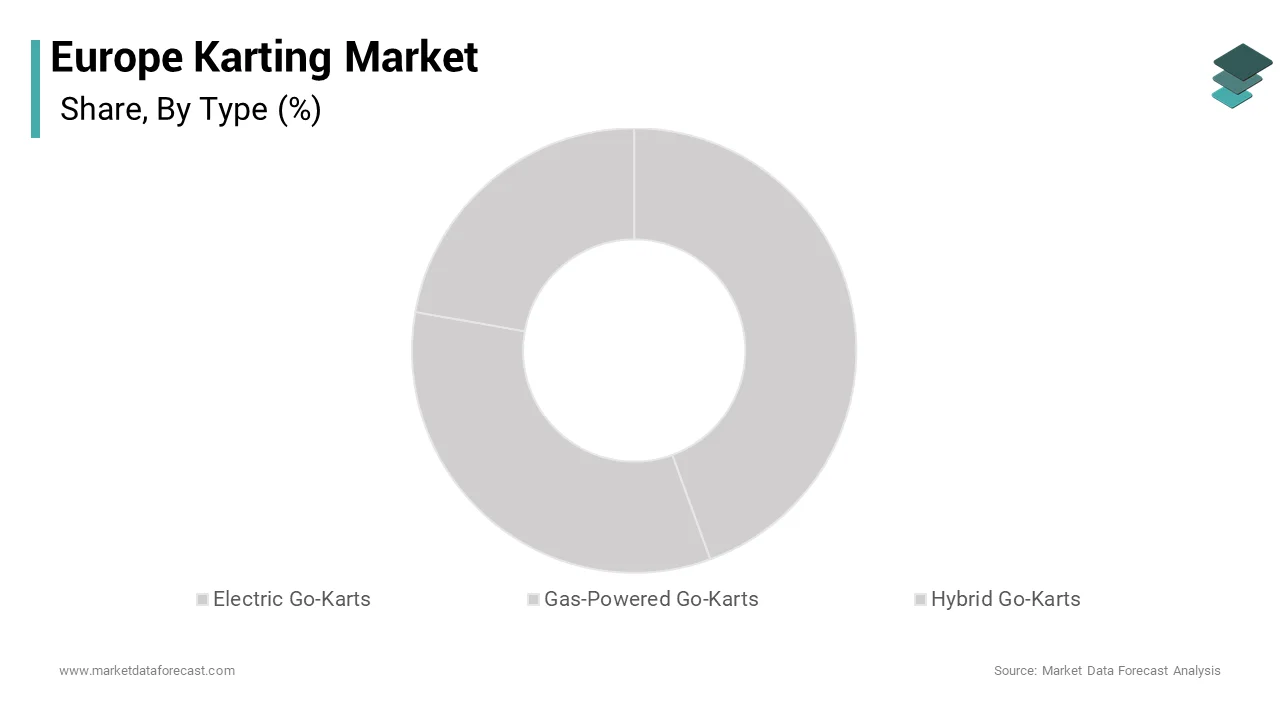
On the other hand, the electric go-karts segment is projected to register the highest CAGR of 15.1% over the forecast period owing to the stringent environmental regulations, the rise of indoor urban karting facilities, and significant advancements in battery technology that have improved range and power output. The increasingly strict environmental regulations and urban zoning laws across Europe that restrict noise pollution and exhaust emissions in city centers are further contributing to the expansion of the electric go-karts segment in the European market. Many European municipalities are designating low emission zones where traditional gas-powered vehicles are banned or heavily taxed, forcing karting operators to transition to zero-emission electric fleets to remain operational. According to the European Environment Agency, a growing number of cities in the EU have implemented or expanded low emission zones, directly impacting the viability of outdoor gas karting tracks near urban populations. As per industry associations, new permits for indoor karting facilities are now contingent upon the use of electric propulsion systems, which is leading to a surge in construction of enclosed venues equipped with electric karts.
By End Use Insights
The recreational end-use segment dominated the market by capturing 44.7% of the regional market share in 2025. The dominance of residential end-user segment in the European market is attributed to the broad appeal of karting as a leisure activity for families, corporate groups, and tourists, far outweighing the niche participation in professional competitive racing. The widespread integration of karting into family entertainment centers and tourist destinations, which is making it an accessible activity for people of all ages and skill levels is further boosting the dominance of recreational segment in the European market. Unlike competitive racing which requires licenses, specialized equipment, and significant training, recreational karting offers a low-barrier entry point where participants can drive immediately after a brief safety briefing. According to the European Association of Amusement Parks and Attractions, karting remains one of the most popular paid activities in European theme parks and leisure complexes, attracting millions of visitors annually. As per tourism boards, family-oriented karting venues see higher footfall during school holidays and weekends compared to dedicated racing circuits. The social nature of recreational karting, often enjoyed in groups for birthdays or casual outings, drives higher volume sales through group packages and party bookings.
On the other end, the indoor karting segment is anticipated to witness the fastest CAGR of 12.2% over the forecast period in the regional market owing to the growing need for year-round weather-independent operations, the proliferation of urban multi-story facilities, and the integration of advanced gamification technologies. The ability to operate consistently regardless of external weather conditions that offer a distinct advantage over traditional outdoor tracks in the variable European climate is further propelling the expansion of indoor segment in the European market. Outdoor karting suffers from significant seasonal downtime due to rain, snow, and cold temperatures, particularly in Northern and Central Europe, whereas indoor facilities maintain full capacity throughout the year. According to the European Climate Assessment, rainy days in key markets like the UK and Germany have been increasing, making weather-dependent business models increasingly risky. As per industry operators, indoor venues achieve higher utilization rates compared to outdoor tracks which face closures during winter months. This reliability attracts investors seeking stable returns and allows operators to secure long-term leases in prime urban locations.
By Engine Insights
The two-stroke engine segment dominated the Europe karting market by holding 51.5% of the regional market share in 2025 due to its unparalleled power-to-weight ratio, simplicity, and status as the standard for professional competitive racing categories. The dominance of two-stroke engines segment is further attributed to their exceptional power-to-weight ratio, which delivers the intense acceleration and high RPM capabilities required for professional karting competitions. These engines are significantly lighter than their four-stroke counterparts while producing explosive bursts of power that are essential for achieving fast lap times on technical circuits. According to the Commission Internationale de Karting, senior championship classes in Europe, including the prestigious KF and KZ categories, continue to rely on two-stroke engines because they provide the performance ceiling necessary for elite-level racing. As per engine manufacturers, two-stroke units are capable of delivering high horsepower from relatively small displacements, a benchmark that four-stroke engines struggle to match without adding substantial weight. The simplicity of the two-stroke design, lacking valves and complex timing mechanisms, also allows for easier tuning and modification by teams seeking a competitive edge.
However, the electric motors segment is projected to grow at the fastest CAGR of 16.2% over the forecast period owing to the global shift toward electrification, the suitability of electric drives for indoor environments, and the decreasing cost of battery storage systems. The exponential growth of electric motors in the karting sector is also likely to be driven by their inherent suitability for indoor environments where zero emissions and noise reduction are mandatory operational requirements. Unlike combustion engines that produce harmful exhaust fumes requiring expensive ventilation systems, electric motors operate cleanly, allowing karting tracks to be built in basements, shopping malls, and densely populated urban areas without environmental permits for air quality. According to the European Indoor Karting Association, most new indoor facilities opened in recent years were exclusively designed for electric karts due to the impossibility of venting gas engines in such locations. As per urban planning authorities, cities are increasingly approving entertainment projects only if they meet strict noise and emission standards, effectively mandating the use of electric propulsion. The silent operation of electric motors also enhances the spectator experience and allows for multiple tracks to operate in close proximity without acoustic interference. This ability to unlock premium urban real estate for karting venues is the single biggest driver propelling the electric motor segment to the forefront of market growth.
COUNTRY LEVEL ANALYSIS
Italy Karting Market Analysis
Italy dominated the karting market in Europe in 2025 with 28.8% of the regional market share. The dominance of Italy in the European market is attributed to its status as the global birthplace of competitive karting and the headquarters of major chassis and engine manufacturers. The country's market is characterized by a deep cultural immersion in motorsport, where karting is viewed as the essential first step for any aspiring Formula One driver. As per the Automobile Club d'Italia, Italy has the highest density of active karting circuits in Europe, supporting a vibrant ecosystem of clubs, schools, and international championships. The presence of industry giants like Tony Kart, CRG, and Parolin in the Lombardy region creates a concentrated hub of innovation and production that supplies the world. Italian consumers exhibit a high level of technical expertise, driving demand for top-tier competitive equipment and fostering a robust second-hand market. The government supports the sector through initiatives linking karting to youth sports development, ensuring a steady pipeline of talent.
United Kingdom Karting Market Analysis
The United Kingdom held a promising share of the European karting market in 2025. The growth of the UK in the European market is driven by its strong recreational sector, extensive network of indoor facilities, and a thriving club racing culture. The UK market is notable for its adaptation to the temperate climate through the proliferation of all-weather indoor karting centers, which operate year-round and attract diverse demographics. According to the British Karting Association, the UK hosts a large number of licensed clubs and commercial venues that cater to both casual drivers and serious racers aiming for professional careers. The influence of British success in Formula One has trickled down to grassroots karting, maintaining high participation rates among youth. As per leisure industry reports, corporate team building and family entertainment drive significant revenue, with indoor venues in London and Manchester seeing strong attendance. The regulatory framework is well-established, ensuring high safety standards that boost consumer confidence. Post-Brexit adjustments have encouraged local manufacturing of karts and parts, reducing reliance on imports.
France Karting Market Analysis
France is expected to hold a prominent CAGR in the European karting market over the forecast period owing to its large population, strong automotive heritage, and significant investment in public sports infrastructure to sustain a robust karting industry. The French market is characterized by a balanced mix of competitive racing and recreational activities, supported by a nationwide network of circuits ranging from local clubs to international-grade tracks. As per the Fédération Française du Sport Automobile, France organizes numerous regional and national karting events annually, fostering a competitive environment that nurtures young talent. The government's support for sports tourism has led to the development of large-scale karting complexes in tourist regions, attracting visitors from across Europe. According to tourism boards, karting is a popular activity for family vacations in regions like Provence and the Alps. Recent initiatives to electrify public sports facilities are beginning to influence the karting sector, with new indoor electric tracks opening in major cities.
Germany Karting Market Analysis
Germany is predicted to showcase a healthy CAGR in the European karting market over the forecast period. Germany is its engineering precision, high safety standards, and a disciplined approach to competitive karting that serves as a feeder for its dominant automotive industry. The German market is driven by a strong club culture and a high participation rate in organized racing series, reflecting the nation's passion for motorsport. According to the Deutscher Motor Sport Bund, Germany has a dense network of well-maintained tracks that adhere to rigorous technical and safety regulations, attracting serious racers from neighboring countries. The economic strength of the country supports a healthy market for premium karting equipment and professional training programs. As per industry reports, there is a growing trend toward indoor electric karting in urban centers like Berlin and Munich, aligning with national sustainability goals. German consumers prioritize quality and durability, influencing manufacturers to produce high-specification karts.
Spain Karting Market Analysis
Spain is anticipated to account for a notable share of the European karting market during the forecast period owing to its favorable climate which allows for extended outdoor racing seasons, a booming tourism industry, and a growing interest in motorsport entertainment. The Spanish market benefits from the ability to operate outdoor tracks for most of the year, reducing the need for costly indoor infrastructure compared to Northern European neighbors. As per the Real Federación Española de Automovilismo, Spain hosts several international karting championships that attract global participants, boosting the local economy and raising the profile of the sport. According to tourism sector data, karting is among the preferred activities for young travelers visiting Spain. The coastal regions and islands are dotted with karting facilities that serve as key attractions for tourists, generating significant seasonal revenue. Recent investments in modernizing older circuits and introducing electric options in urban areas are diversifying the market.
COMPETITIVE LANDSCAPE
The competition in the Europe karting market is intense and characterized by a mix of established Italian manufacturers and innovative newcomers vying for dominance through technological superiority and brand legacy. Major players compete fiercely on performance metrics such as lap times and chassis durability while increasingly differentiating themselves through sustainability credentials and electric propulsion capabilities. The rise of indoor entertainment centers has shifted focus toward reliability and low maintenance costs for rental fleets rather than pure racing speed. Traditional manufacturers leverage their historical success in Formula One feeder series to attract serious competitors and sponsorships. New entrants challenge incumbents by offering cost-effective electric solutions that comply with strict urban noise regulations. Digital integration has become a battleground with companies developing proprietary telemetry systems to enhance the user experience. Regulatory changes regarding emissions force all participants to accelerate their transition to green technologies or risk obsolescence. Smaller niche brands survive by specializing in custom builds or specific regional categories. This dynamic environment drives continuous improvement in engineering efficiency safety standards and operational models as firms strive to capture loyalty in a saturated and rapidly evolving region where tradition meets modern innovation.
KEY MARKET PLAYERS
A few of the market players that are dominating the Europe karting market are
- Birel ART (IT)
- CRG (IT)
- Tony Kart (IT)
- Sodi Kart (FR)
- Intrepid (IT)
- Kosmic Racing (IT)
- Margay Racing (US)
- Rok Cup (IT)
- Gillard (AU)
Top Players In The Market
- Tony Kart Racing Team stands as a preeminent force in the Europe karting market, renowned for producing high-performance chassis that dominate international competitive racing series. The company contributes significantly to the global sector by setting engineering benchmarks for stiffness, aerodynamics, and driver safety that influence design standards worldwide. Tony Kart recently strengthened its market position by launching advanced composite materials for chassis construction that offer superior durability and weight distribution. The firm has also expanded its junior development programs to nurture young talent across European nations, ensuring a steady pipeline of future champions who rely on their equipment. Their strategic partnerships with leading engine manufacturers allow for optimized powertrain integration that maximizes track performance. By investing in digital simulation tools for setup optimization, Tony Kart provides teams with data-driven advantages. These continuous innovations in material science and youth engagement solidify their reputation as the preferred choice for elite competitors and driving schools seeking unparalleled quality and success on the track.
- Sodikart operates as a key player in the Europe karting market, distinguished by its vertical integration strategy that encompasses chassis manufacturing, engine production, and rental fleet management. The company impacts the global landscape by supplying robust and reliable karts to both professional racers and commercial entertainment centers. Sodikart recently expanded its electric karting division to address the growing demand for zero-emission vehicles in urban indoor facilities. Their focus on developing proprietary battery management systems ensures longer run times and consistent power delivery for recreational users. The firm collaborates with major theme parks to install turnkey racing solutions that include track design and operational training. Sodikart also utilizes advanced robotics in its production lines to enhance precision and reduce manufacturing lead times. These proactive measures in electrification and automation enhance their competitive edge and reinforce their status as a versatile supplier capable of meeting diverse market needs from grassroots racing to high-end leisure attractions.
- CRG SpA holds a prominent position in the Europe karting market, leveraging its rich heritage and extensive catalog of chassis designs to serve a wide spectrum of drivers from beginners to world champions. The company contributes globally by exporting Italian engineering excellence to over fifty countries, maintaining a strong presence in all major continental championships. CRG recently strengthened its market position by introducing modular chassis architectures that allow for rapid configuration changes to suit varying track conditions and regulations. Their commitment to sustainability is evident in the adoption of eco-friendly manufacturing processes and recyclable materials for component production. The firm actively sponsors national racing series to increase brand visibility and foster community loyalty among amateur racers. CRG also enhances its after-sales support network with mobile applications that provide real-time technical assistance and parts ordering. These efforts demonstrate their dedication to innovation and customer service, securing their role as a critical partner for teams and rental operators navigating the evolving dynamics of the global karting industry.
Top Strategies Used By Key Market Participants
Key players in the Europe karting market primarily employ product diversification strategies to cater to both competitive racing and recreational segments simultaneously. Companies invest heavily in research and development to create lightweight durable chassis using advanced composite materials that enhance performance and safety. Electrification initiatives are central to corporate planning with firms developing high-capacity battery systems and silent motors for indoor urban venues. Strategic partnerships with theme parks and entertainment groups facilitate the deployment of turnkey rental solutions that include track design and maintenance services. Expansion into emerging markets through localized distribution networks allows manufacturers to increase global reach and reduce logistics costs. Adoption of digital technologies such as telemetry apps and virtual racing platforms engages younger demographics and creates new revenue streams. These multifaceted approaches enable participants to navigate regulatory pressures, meet evolving consumer demands for sustainable entertainment, and maintain competitive advantages in a dynamic regional landscape.
MARKET SEGMENTATION
This research report on the Europe karting market is segmented and sub-segmented into the following categories.
By Type
- Electric Go-Karts
- Gas-Powered Go-Karts
- Hybrid Go-Karts
By End-use
- Recreational
- Commercial
- Competitive Racing
- Indoor Karting
- Outdoor Karting
By Engine Type
- Two-Stroke Engines
- Four-Stroke Engines
- Electric Motors
By Number of Seats
- Single-Seater
- Two-Seater
- Multi-Seater
By Country
- UK
- France
- Spain
- Germany
- Italy
- Russia
- Sweden
- Denmark
- Switzerland
- Netherlands
- Turkey
- Czech Republic
Frequently Asked Questions
How is karting contributing to motorsport culture in Europe?
Karting serves as an entry-level racing platform and recreational activity that promotes motorsport participation.
What factors are driving the growth of the karting market in Europe?
Rising interest in recreational racing and increasing motorsport events are boosting market demand.
Which types of karting activities are popular in Europe?
Indoor karting, outdoor racing tracks, and competitive karting events are widely popular.
Why is karting considered a foundation for professional motorsports?
It helps drivers develop racing skills and experience before advancing to higher-level competitions.
Which consumer groups are driving demand for karting experiences?
Young adults, motorsport enthusiasts, and recreational users are key participants.
How do karting facilities generate revenue in this market?
They earn through track usage fees, events, memberships, and equipment rentals.
What challenges affect the Europe karting market?
High setup costs and regulatory requirements for safety and operations can impact growth.
How is technology influencing karting experiences?
Electric karts and digital timing systems are enhancing performance and user experience.
Which countries are key markets for karting in Europe?
Italy, Germany, France, and the United Kingdom are major markets due to strong motorsport culture.
What future trend is expected in the Europe karting market?
Growing adoption of electric karting and advanced track technologies is expected to drive market growth.
Access the study in MULTIPLE FORMATS
Purchase options starting from
$ 2000
Didn’t find what you’re looking for?
TALK TO OUR ANALYST TEAM
Need something within your budget?
NO WORRIES! WE GOT YOU COVERED!
Call us on: +1 888 702 9696 (U.S Toll Free)
Write to us: sales@marketdataforecast.com