- Product Description Description
- Table of Contents TOC
- List of Table & Figure LOT
- Get Free Sample PDF Sample PDF
Market Size, 2025
$294.18 MnMarket Estimate, 2026
$298.62 MnMarket Forecast, 2034
$336.66 MnCAGR, 2026–2034
1.51%Europe Kegs Market Size
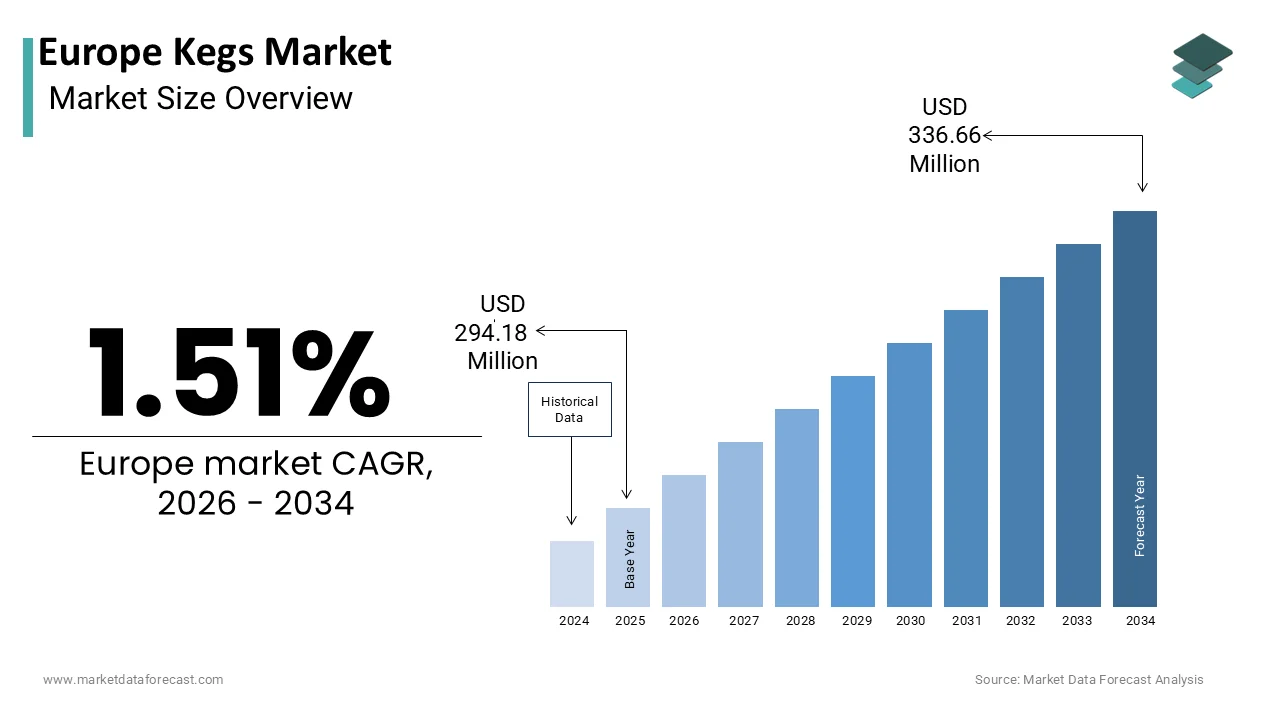
The Europe kegs market was valued at USD 294.18 million in 2025, is estimated to reach USD 298.62 million in 2026, and is projected to reach USD 336.66 million by 2034, growing at a CAGR of 1.51% from 2026 to 2034.
Kegs market encompasses the manufacturing and distribution of stainless steel and plastic containers designed for the storage and transportation of beer, cider, and other carbonated beverages. These vessels are essential for maintaining product freshness and quality from breweries to points of sale such as bars and restaurants. The region holds a profound cultural affinity for fermented beverages, which directly influences keg utilization rates. According to the Brewers of Europe, beer production in the European Union has reached substantial volumes in recent years, with Germany contributing a significant share. This scale of output necessitates a robust infrastructure of reusable kegs to support the supply chain. The density of on-trade establishments remains high across the continent, and as per Eurostat, there are hundreds of thousands of licensed premises serving alcohol in the EU, creating a consistent baseline demand for durable dispensing solutions. The shift toward sustainable packaging has also elevated the preference for metal kegs over single-use alternatives due to their longevity and recyclability. As per the European Container Consortium, stainless steel kegs are capable of enduring thousands of fill cycles, significantly reducing waste compared to disposable options. This operational efficiency aligns with broader environmental goals within the beverage industry while ensuring cost-effectiveness for brewers and distributors.
MARKET DRIVERS
Surge in Craft Brewery Proliferation Drives Specialized Keg Demand
The exponential growth of microbreweries and craft beer producers across Europe is one of the major factors propelling the European kegs market growth. Unlike large industrial breweries that often rely on standardized bulk logistics, craft brewers require smaller capacity kegs to manage limited batch sizes and diverse product portfolios. According to the Brewers of Europe, the number of active breweries in the region has surpassed several thousand, with small and independent operators accounting for the overwhelming majority. This fragmentation drives demand for varied keg formats, including 20-liter and 30-liter stainless steel units that facilitate easier handling for smaller venues. The craft sector emphasizes quality preservation, making stainless steel kegs the preferred choice due to their superior barrier properties against oxygen and light. As per the German Beer Institute, craft beer sales have been growing steadily in recent years, outpacing traditional lager segments. These trends force equipment manufacturers to innovate with lightweight yet durable designs tailored for artisanal producers. Additionally, the rise of taproom models, where breweries sell directly to consumers,s increases the turnover rate of kegs within local distribution networks. The need for rapid inventory rotation and frequent cleaning cycles further stimulates the replacement market for high-grade kegs.
Expansion of the On-Trade Hospitality Sector Fuels Volume Requirements
The recovery and subsequent expansion of the on-trade hospitality sector following global disruptions have reignited the need for extensive keg inventories across Europe, which is further fuelling the expansion of the European kegs market. Restaurants, pubs, and bars constitute the primary end users for kegged beverages, relying on these containers to serve draft products efficiently. As per Eurostat, the hospitality industry in the European Union has reported a notable revenue rebound, signaling a return to pre-crisis consumption levels. This resurgence directly correlates with increased procurement of kegs to stock cellars and meet rising consumer footfall. The cultural prevalence of beer gardens in countries like Germany and Belgium amplifies this effect during seasonal peaks. According to the German Hotel and Restaurant Association, outdoor seating capacity expansions have led to higher draft beer service requirements in major urban centers. Establishments prefer kegs for their ability to maintain carbonation and temperature control better than bottled alternatives, enhancing the consumer experience. Moreover, the trend toward premiumization in the on-trade segment encourages venues to offer a wider selection of draft beers, necessitating multiple keg lines simultaneously. As per the British Beer and Pub Association, pubs now stock a diverse range of draft brands, requiring additional keg units to accommodate rotating taps and seasonal offerings.
MARKET RESTRAINTS
Volatility in Raw Material Costs Impacts Manufacturing Margins
Fluctuating prices of key raw materials such as stainless steel and aluminum pose significant financial constraints for keg manufacturers in Europe, which is a significant impediment to the European kegs market growth. The production of high-quality kegs relies heavily on food-grade stainless steel, the cost of which is subject to global commodity market dynamics. According to the World Steel Association, stainless steel prices have shown considerable volatility due to supply chain disruptions and energy cost surges. These unpredictable variations make it difficult for manufacturers to maintain stable pricing models for their clients. As per the European Metal Federation, energy costs in Europe have risen sharply in recent periods, further exacerbating production expenses for energy-intensive processes like metal forming and welding. Additionally, the reliance on imported nickel, a critical component of stainless steel alloys, exposes the supply chain to geopolitical risks and currency fluctuations. According to the London Metal Exchange, nickel prices have demonstrated erratic behavior, which is complicating long-term procurement planning. This uncertainty forces manufacturers to hold larger reserves to hedge against price shocks, limiting their ability to expand production capacity.
Stringent Regulatory Compliance Increases Operational Complexity
The rigorous regulatory framework governing food contact materials and pressure vessels in Europe creates substantial compliance burdens for keg producers, which is also impeding the kegs market growth in Europe. Manufacturers must adhere to strict standards set by the European Food Safety Authority regarding the migration of substances from metal surfaces into beverages. As per EU Framework Regulation 1935/2004, every batch of kegs requires detailed documentation and testing to ensure no harmful chemicals leach into the stored liquid. Furthermore, kegs are classified as pressure equipment under the Pressure Equipment Directive 2014/68/EU, mandating rigorous safety assessments and certification procedures before they can be sold. According to the European Commission, non-compliance can result in severe penalties and mandatory product recalls, deterring innovation due to fear of regulatory failure. As per the European Stainless Steel Association, certification and auditing costs can account for a significant portion of production expenses for smaller firms. These financial and administrative hurdles create high entry barriers for new competitors and limit the agility of existing players to adapt to market changes. The constant evolution of safety norms requires dedicated legal and technical teams, diverting resources away from research and development activities. Consequently, the heavy regulatory load acts as a brake on market dynamism, which is forcing manufacturers to prioritize compliance over expansion initiatives.
MARKET OPPORTUNITIES
Adoption of Smart Keg Technology Opens Innovation Avenues
The integration of Internet of Things sensors into keg structures offers a promising opportunity for the Europe kegs market by enabling real-time monitoring and asset tracking. Smart kegs equipped with digital identifiers allow breweries and distributors to monitor fill levels, temperature, and location throughout the supply chain. According to the German Logistics Association, tracked assets can significantly reduce keg loss rates, addressing a chronic issue in the industry where millions of euros worth of containers go missing annually. This technology facilitates predictive maintenance and optimizes delivery routes, leading to operational savings for beverage companies. As per case studies from major European brewers, connected kegs have improved inventory accuracy to very high levels, which is ensuring venues remain stocked with popular drafts. The data generated also provides valuable consumer insights regarding consumption patterns that allow producers to tailor marketing strategies and production schedules more effectively. Furthermore, smart tagging enhances security by preventing theft and unauthorized refilling, protecting brand integrity. According to IDTechEx, the global market for smart packaging in the beverage sector is projected to grow rapidly, with Europe leading adoption due to its advanced digital infrastructure.
Circular Economy Initiatives Boost Reusable Keg Preferences
The intensifying focus on circular economy principles across Europe offers a strategic advantage for reusable keg systems over single-use alternatives. Policymakers and consumers alike are increasingly demanding sustainable packaging solutions that minimize waste and carbon footprints. As per the European Environment Agency, the beverage sector is under pressure to meet ambitious recycling targets in the coming years. Stainless steel kegs inherently support this goal due to their durability and infinite recyclability without loss of quality. According to the Steel Institute, a single stainless steel keg can replace thousands of single-use containers over its lifespan, drastically cutting down solid waste generation. This environmental benefit aligns with corporate sustainability mandates adopted by major brewing groups seeking to lower emissions. As per the Carbon Trust, optimized reusable keg pools can reduce transportation-related emissions through better load efficiency and fewer replacements. Governments are also introducing incentives for businesses that adopt closed-loop systems, further stimulating demand. According to YouGov surveys, a majority of European consumers prefer purchasing drinks from establishments that demonstrate clear environmental responsibility. This sentiment creates a competitive edge for keg manufacturers who can certify the green credentials of their products.
MARKET CHALLENGES
Logistical Inefficiencies Hinder Asset Recovery Rates
Significant challenges persist in the logistics and reverse supply chain management of kegs, which is leading to asset shrinkage and financial losses for stakeholders and challenging the kegs market expansion in Europe. The complex journey of a keg from brewery to distributor to retailer and back involves multiple handovers where tracking often becomes inconsistent. According to the European Beer Distributors Union, a notable percentage of the total keg pool is lost or damaged annually due to mishandling and poor visibility in the return loop. This attrition forces companies to manufacture replacement units, inflating capital expenditure and straining raw material supplies. The lack of standardized pooling systems across countries exacerbates the problem, as kegs shipped across borders frequently face delays in return due to bureaucratic hurdles and varying national protocols. As per DHL Supply Chain, cross-border transit times for empty kegs can vary significantly depending on the route, tying up working capital in idle assets. Additionally, the physical weight and bulk of stainless steel kegs make transportation expensive and carbon-intensive, particularly when returned empty over long distances. According to industry audits, manual reconciliation processes fail to identify discrepancies in a considerable portion of transactions. These inefficiencies erode profit margins and discourage investment in larger keg fleets.
Intense Competition from Alternative Packaging Formats Threatens Share
The Europe kegs market faces mounting pressure from alternative packaging formats such as canned craft beers and bag-in-box systems that offer greater convenience and lower logistical costs for certain segments. Cans have gained immense popularity among craft brewers due to their lower shipping weights and superior protection against light and oxygen compared to glass bottles. According to the Can Manufacturers Institute, aluminum can usage for craft beer in Europe has surged in recent years as brewers seek to reach off-trade consumers more effectively. This shift reduces reliance on kegs for brands that previously depended on draft sales. Furthermore, the rise of home entertainment and changing social habits means consumers are increasingly purchasing beer for home consumption rather than visiting pubs. As per Nielsen IQ, off-premise beer sales now account for a majority of total volume in several European markets, diminishing the relative importance of draft infrastructure. Bag-in-box technology also presents a viable alternative for events and casual gatherings, offering portability that kegs cannot match. According to Smithers, the flexibility of soft packaging appeals to younger demographics who prioritize convenience. The cost advantage of these alternatives is significant, as they eliminate the need for cleaning, sterilization, and return logistics associated with metal kegs. As per Mintel, the proliferation of ready-to-drink formats continues to fragment the beverage landscape. Unless keg manufacturers can demonstrate unique value propositions such as superior taste preservation or sustainability metrics, they risk losing market share to these agile packaging solutions.
REPORT COVERAGE
| REPORT METRIC | DETAILS |
| Market Size Available | 2025 to 2034 |
| Base Year | 2025 |
| Forecast Period | 2026 to 2034 |
| Segments Covered | By Material, Capacity, End User, Distribution Channel, and Region. |
| Various Analyses Covered | Global, Regional, and Country-Level Analysis, Segment-Level Analysis, Drivers, Restraints, Opportunities, Challenges; PESTLE Analysis; Porter’s Five Forces Analysis, Competitive Landscape, Analyst Overview of Investment Opportunities |
| Countries Covered | UK, France, Spain, Germany, Italy, Russia, Sweden, Denmark, Switzerland, Netherlands, Turkey, Czech Republic, Rest of Europe |
| Market Leaders Profiled | Blefa GmbH, SCHÄFER Container Systems, THIELMANN – The Container Company, Petainer Group Ltd., NDL Keg Inc., Dolium S.r.l, American Keg Company, Ardagh Group S.A., Julius Kleemann GmbH & Co. KG, Ningbo BestFriends Beverage Containers Co., Ltd., Shinhan Industrial Co., Ltd., OneCircle |
SEGMENTAL ANALYSIS
By Material Insights
The stainless steel segment dominated the market by commanding the highest share of 71.7% of the regional market in 2025. This overwhelming prevalence stems from the material's unparalleled durability and suitability for the rigorous hygiene standards demanded by the European beverage industry. The exceptional longevity and resistance of stainless steel to corrosion, which translates into superior economic efficiency over the product lifecycle, is further boosting the dominance of the stainless steel segment in the European market. Unlike plastic or tin alternatives, stainless steel kegs can withstand thousands of fill cycles without compromising structural integrity or product quality. According to the International Stainless Steel Forum, stainless steel kegs are recognized for their ability to endure extensive washing and filling cycles compared to other materials. As per the European Stainless Steel Association, stainless steel products in the region are widely recycled, ensuring end-of-life kegs retain scrap value and contribute to a circular economy. Industry studies conducted by the Brewers of Europe indicate that stainless steel provides thermal insulation properties that help reduce energy consumption for cooling compared to thinner-walled alternatives. Furthermore, the non-porous nature of polished steel prevents bacterial buildup, a crucial factor for complying with strict EU food safety regulations. As per guidelines from the European Food Safety Authority, surfaces in contact with food must be inert and easy to clean, a standard that stainless steel meets inherently.
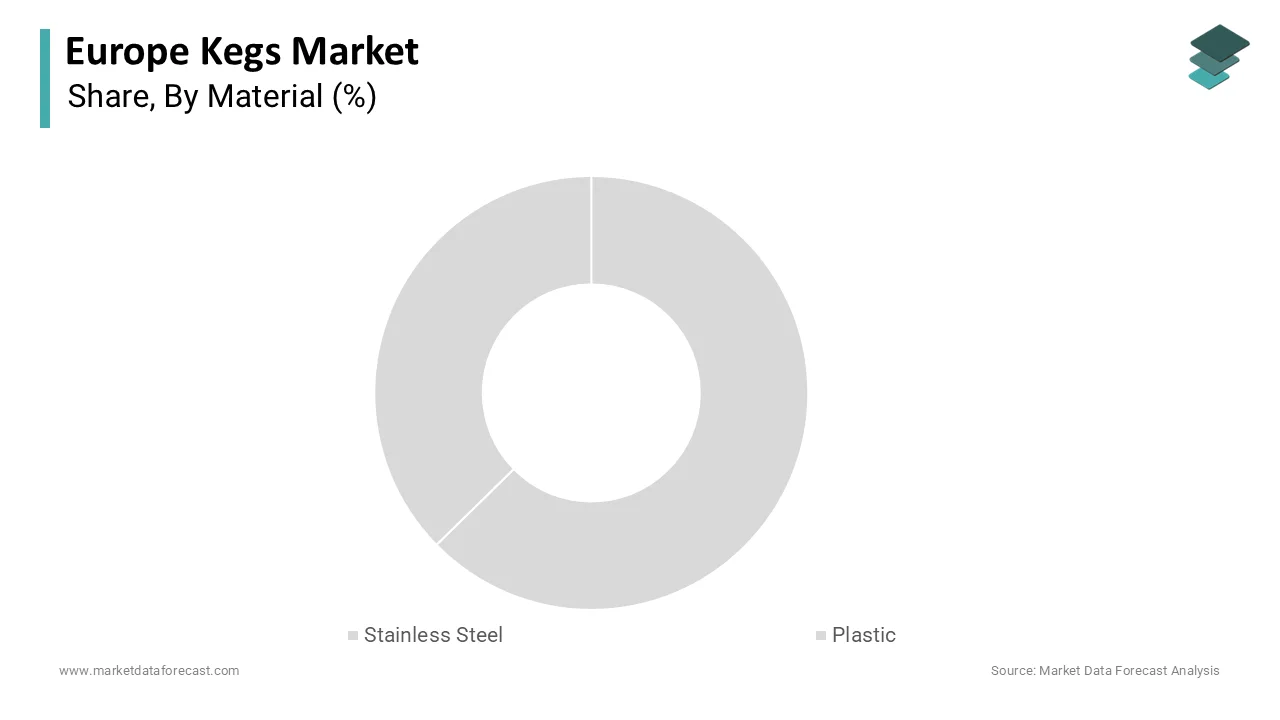
However, the plastic keg segment is projected to register the highest CAGR of 7.4% over the forecast period in the European market, owing to the rising demand for lightweight solutions in specific niche applications and the advancement of barrier technologies. The significant innovations in multilayer polymer structures that now offer oxygen barrier properties comparable to metal, coupled with substantial weight advantages that reduce logistics costs,s are further contributing to the rapid expansion of the plastic kegs segment in the European market. Modern plastic kegs utilize Ethylene Vinyl Alcohol (EVOH) layers sandwiched between polyethylene shells to prevent oxidation. According to Plastics Europe, new generation plastic kegs are recognized for their lighter weight compared to stainless steel, which contributes to reduced fuel consumption during transportation. As per logistics firms in the Netherlands, switching to plastic kegs for local deliveries has been shown to lower transport expenses due to the ability to load more units per truck. The development of returnable plastic kegs has also improved their economic proposition. Data from the American Society of Brewing Chemists indicates that modern plastic kegs maintain beer freshness for extended periods compared to earlier versions. Furthermore, the lower initial capital cost makes them accessible for startups and pop-up venues. According to Smithers, the adoption of disposable or limited-use plastic kegs for festivals and outdoor events has increased, as organizers prefer not to deal with the complex reverse logistics of retrieving heavy metal containers.
By Capacity Insights
The capacity segment, ranging from 20 litres to 4litres, re led the market by capturing 56.1% of the regional market share in 2025. This range represents the industry standard for most commercial establishments, balancing portability with sufficient volume for sustained service. The dominance of the 20-litre to 40-litre segment is fundamentally driven by its status as the universal standard for pubs, bars, and restaurants across Europe. The 30-litre keg, often referred to as the "Euro keg," has become the de facto unit of trade, allowing distributors to optimize pallet configurations and storage layouts uniformly. According to the British Beer and Pub Association, licensed premises in the UK are largely equipped with cellar racking and dispense systems designed for this capacity range. As per the German Hotel and Restaurant Association, draft beer transactions in Germany predominantly involve kegs within this capacity bracket. Industry safety reports from the Health and Safety Executive indicate that kegs larger than 40 litres increase the risk of workplace injuries due to excessive weight, prompting many venues to adhere to the smaller standard. Furthermore, the turnover rate for this size is optimal for maintaining product freshness. According to the Brewers of Europe, beer stored in 30-litre kegs maintains peak flavor profiles longer than in larger bulk containers once tapped.
On the other hand, the "Up To 20 Litre" capacity segment is anticipated to witness the fastest CAGR of 8.4% over the forecast period in this regional market, owing to the proliferation of microbreweries, the rise of home dispensing systems, and the demand for portable solutions for events. The rapid expansion of the microbrewery sector and the popularity of taproom business models are the primary catalysts for the increasing demand for kegs with capacities up to 20 litres. Small-scale producers often operate with limited batch sizes and lack the volume to fill standard 30-litre or 50-litre kegs efficiently. According to the Brewers of Europe, microbreweries in the EU have grown significantly in recent years, with many producing batches that align with 10-litre and 20-litre formats. As per craft brewing associations in Belgium, the adoption of 20-litre kegs has helped reduce waste for small producers. Data from the German Craft Beer Federation indicates that taprooms frequently utilize kegs under 20 litres for their rotating taps to ensure maximum freshness and variety. According to operational surveys, microbreweries save on logistics costs by using smaller kegs that can be loaded into standard vans rather than requiring palletized truck delivery. This alignment with the operational realities of the booming craft sector drives the accelerated adoption of sub-20 litre capacities.
By End User Insights
The alcoholic beverages segment dominated the market by accounting for 81.8% of the regional market share in 2025. The growth of the alcoholic beverages segment in the European market can be credited to the cultural fabric of Europe, where beer, cider, and wine on draft are staples of social life. The sheer volume of alcoholic beverage consumption in Europe, particularly beer, serves as the foundational pillar for the dominance of this segment. Europe is historically the global epicenter of beer culture, with countries like Germany, the Czech Republic, and Belgium boasting strong traditions of beer consumption. According to the World Health Organization, the European Region accounts for a significant portion of global alcohol consumption, with beer representing the largest share of this volume. As per the Brewers of Europe, draft beer sales in Germany are a major contributor to keg demand, requiring a massive fleet of reusable kegs to sustain daily operations. Furthermore, the prevalence of beer festivals such as Oktoberfest creates seasonal spikes in demand that reinforce the reliance on kegged formats. According to event organizers in Munich, Oktoberfest consumes millions of litres of beer annually, all served from specialized kegs, illustrating the scale of institutional demand. The integration of draft beer into the dining experience is also critical. In countries like Italy and Spain, aperitivo culture relies heavily on draft lager and prosecco. As per the Italian Hospitality Federation, wine and beer served in restaurants are predominantly on tap, driven by the perception of higher quality and better value.
On the other end, the non-alcoholic beverages segment is emerging as the fastest-growing end-user category and is estimated to expand at a CAGR of 9.4% over the forecast period, owing to the "sober curious" movement, health consciousness, and the diversification of draft offerings beyond beer. The rapid growth of the non-alcoholic keg segment is primarily fueled by a profound shift in consumer behavior toward healthier lifestyles and the rising popularity of the "sober curious" movement across Europe. Consumers are increasingly seeking sophisticated alcohol-free alternatives that do not compromise on taste or social experience. According to IWSR Drinks Market Analysis, sales of non-alcoholic beverages in Europe have grown significantly, with on-premise draft options leading the charge. As per the European Bartender School, the number of draft non-alcoholic options on bar menus has increased, reflecting a strategic pivot to capture the growing abstainer market. According to the data from YouGov, younger generations actively choose non-alcoholic drinks when socializing, creating a robust and expanding customer base. Furthermore, the improvement in brewing technology has elevated the quality of non-alcoholic drafts to near-indistinguishable levels from their alcoholic counterparts. According to the Institute of Brewing and Distilling, modern non-alcoholic lagers scored closely to traditional beers in consumer preference trials. This quality parity encourages venues to invest in separate keg lines to ensure purity, thus accelerating market growth.
By Distribution Channel Insights
The commercial liquor store segment had 61.5% of the regional market share in 2025 due to the B2B nature of the keg market and the specialized logistics required for heavy container handling. Commercial liquor stores and specialized wholesalers dominate the distribution channel because they possess the necessary infrastructure, fleet, and expertise to handle the heavy and bulky nature of kegs efficiently. Unlike general supermarkets, these entities are equipped with forklifts, pallet jacks, and loading bays designed specifically for managing stainless steel and plastic kegs. According to DHL Supply Chain, keg deliveries to hospitality venues often require specialized handling equipment that is standard in wholesale depots but absent in typical retail environments. As per Metro AG, one of Europe's leading cash-and-carry giants, its dedicated beverage divisions handle millions of keg rotations annually, demonstrating the scale required to support the market. Restaurants and bars prefer purchasing from these specialists because they can source kegs alongside other bulk supplies in a single transaction, streamlining procurement. According to the European Hospitality Industry, venue owners cite one-stop shopping and reliable return logistics as the primary reasons for sourcing kegs through commercial wholesalers. Data from industry training programs shows that wholesale distributors employ certified beer technicians who assist clients with setup and troubleshooting, fostering strong B2B relationships that drive loyalty and volume.
However, the supermarket and hypermarket segment is witnessing the fastest growth and is expected to record a CAGR of 60.6% over the forecast period, owing to the increasing availability of mini-kegs for home consumption and the blurring lines between retail and hospitality experiences. The rapid growth of the supermarket channel is largely driven by the surging demand for mini-kegs designed for home entertainment. As consumers increasingly host gatherings at home, retailers have expanded their offerings to include smaller kegs of popular beer and cider brands. According to Nielsen IQ, mini-keg sales in European hypermarkets have increased, reflecting a shift in consumption habits toward home-based socializing. Major retail chains like Carrefour and Tesco have dedicated prominent shelf space to these products, often placing them near party snacks and grilling supplies to encourage impulse buys. As per Kantar, the convenience of location is a key driver for consumers purchasing mini-kegs in supermarkets. Data from promotional calendars of major retailers shows that keg sales spike during major sporting events and holidays, with supermarkets leveraging aggressive pricing strategies to capture this demand. Furthermore, the integration of self-checkout systems and automated kiosks has made purchasing heavy items like kegs easier for shoppers. According to GS1, the implementation of scan-and-go features for bulky items has improved conversion rates for keg sales in hypermarkets. This alignment with modern retail conveniences and lifestyle trends positions supermarkets as the fastest-growing channel for keg distribution.
COUNTRY LEVEL ANALYSIS
Germany Kegs Market Analysis
Germany dominated the kegs market in Europe in 2025 with 24.4% of the regional market share. The dominance of Germany in the European market is driven by its unparalleled beer culture and dense network of breweries. The nation's status as the heartland of global brewing ensures a perpetual and massive demand for kegging infrastructure. The country boasts a large number of breweries, ranging from industrial giants to tiny village microbreweries, all of which rely heavily on kegs for distribution. According to the German Brewers Association, annual beer production in Germany is consistently high, with a significant portion destined for the on-trade sector, where keg usage is mandatory for freshness. The concept of the "Gasthaus" and beer garden is intrinsic to German social life, creating a ubiquitous need for draft systems in every town and city. As per the Federal Statistical Office of Germany, there are tens of thousands of registered beer-serving establishments, each requiring a steady rotation of kegs. The strict adherence to the Reinheitsgebot (Beer Purity Law) also influences keg selection, with brewers preferring stainless steel to ensure no external flavors contaminate the pure ingredients. Furthermore, Germany's advanced logistics network facilitates efficient keg pooling and returns, minimizing losses and maximizing utilization rates. According to the World Bank, Germany ranks among the top globally for supply chain efficiency, which supports the high-volume circulation of kegs. As per the German Engineering Federation, the beverage equipment sector is witnessing increased automation adoption, which is further solidifying Germany's dominant market position.
United Kingdom Kegs Market Analysis
The United Kingdom was the second biggest regional segment in the European kegs market in 2025. The growth of the UK in the European market is attributed to a vibrant pub culture and a dynamic craft beer revolution. Despite challenges from changing drinking habits, the UK remains a powerhouse for on-trade consumption, with the pub acting as the community hub. According to the British Beer and Pub Association, there are tens of thousands of pubs in operation across the UK, forming a dense grid of potential keg customers. The resurgence of the craft beer scene has been particularly potent in cities like London, Manchester, and Edinburgh, driving demand for diverse keg formats to accommodate small-batch experimental brews. As per SIBA (Society of Independent Brewers), independent breweries in the UK have grown steadily, directly correlating with increased keg procurement. The trend toward premiumization in pubs has led to an expansion of tap lines, with many venues now offering a wide variety of draft options. According to industry surveys, the average number of kegs held in UK pubs has increased to support this variety. Furthermore, the recovery of the hospitality sector post-pandemic has spurred refurbishments and new openings, stimulating capital expenditure on new dispensing equipment and kegs. As per the Office for National Statistics, hospitality turnover has rebounded close to pre-crisis levels, signaling a robust recovery in keg demand. The UK's leadership in smart keg technology adoption is also notable. According to pilot program results from Diageo, connected kegs have reduced stockouts in London, encouraging wider rollout and sustaining market growth.
France Kegs Market Analysis
France is estimated to secure a promising share of the European kegs market during the forecast period, due to a unique blend of traditional beer regions and a booming craft cider and wine-on-tap sector. While historically known for wine, France has seen a renaissance in its beer culture, particularly in the Alsace and Nord-Pas-de-Calais regions. According to the French Brewers Federation, beer consumption in France has shown a slight upward trend in the premium segment, where draft service is preferred. The explosion of microbreweries across the country has been a key driver. As per Infocraft, thousands of craft breweries now operate in France, many focusing exclusively on local draft distribution using small capacity kegs. Additionally, the French market is unique in its growing adoption of wine kegs for restaurants and bars, offering a sustainable alternative to bottles for house wines. According to Vinex, the use of bag-in-box and mini-keg systems for wine in the hospitality sector has grown, expanding the definition of the keg market. The strong café culture in cities like Paris and Lyon ensures a steady baseline demand for draft beverages throughout the day. As per the French Hospitality Union, tens of thousands of cafes and bars operate nationwide, providing a vast customer base for keg suppliers. Government initiatives supporting local agriculture and short supply chains have also benefited regional breweries. According to the Ministry of Agriculture, grants for sustainable packaging have incentivized the switch to reusable kegs, further boosting market activity.
Italy Kegs Market Analysis
Italy is expected to exhibit a notable CAGR in the European kegs market during the forecast period, owing to a thriving craft beer movement and the integration of draft beer into the traditional dining experience. The Italian beer market has undergone a dramatic transformation, shifting from a dominance of industrial lagers to a vibrant ecosystem of artisanal producers. According to Assobirra, the Italian beer association, the craft beer segment has grown significantly, with thousands of microbreweries now active across the peninsula. This fragmentation drives demand for kegs, as craft brewers rely on local bars and restaurants to sell their products on tap. The concept of the "birrificio" (brewpub) has become a staple of Italian nightlife, with venues brewing and serving their own beer directly from kegs. As per tourism and hospitality data, the number of brewpubs in Italy has increased, creating a self-sustaining loop of keg demand. Furthermore, the Italian dining culture is increasingly embracing draft beer as a pairing for food, moving beyond the traditional wine-only paradigm. According to the Italian Sommelier Association, restaurants now offer curated lists of craft draft beers to complement their menus. The summer festival season also plays a crucial role, with countless sagre (local food festivals) relying on temporary keg installations to serve visitors. As per event organizers, draft beer consumption during these festivals accounts for a significant portion of annual regional sales. Sustainability initiatives in the hospitality sector are also driving the adoption of reusable kegs. According to the Italian Ministry of Ecological Transition, incentives for waste reduction are encouraging venues to prioritize durable keg systems, supporting long-term market stability.
Spain Kegs Market Analysis
Spain is anticipated to showcase a healthy CAGR in the European kegs market during the forecast period, due to its intense social drinking culture, tapas tradition, and high volume of tourist-driven consumption. The Spanish lifestyle revolves around socializing in bars, leading to one of the highest densities of hospitality venues per capita in Europe. According to the Spanish Confederation of Hotels and Tourist Accommodations, there are hundreds of thousands of bars and restaurants in Spain, creating a massive installed base for keg dispensing systems. The custom of having a "caña" (small draft beer) with tapas ensures a high turnover of kegs, particularly in urban centers like Madrid, Barcelona, and Seville. As per the Mapfre Foundation, Spain ranks among the top countries in Europe for beer consumption, with draft beer accounting for the majority of on-trade sales. The tourism sector acts as a powerful multiplier, with millions of visitors flocking to coastal resorts and cities, drastically increasing seasonal demand for kegs. According to the Spanish Tourism Institute, beverage consumption in tourist hotspots rises significantly during the summer months, requiring flexible and scalable keg logistics. The rise of craft beer in Spain is now gaining momentum, with local breweries challenging the dominance of big brands. As per the Spanish Craft Beer Association, hundreds of microbreweries are active, driving diversification in the keg market. The warm climate also favors cold draft beverages, making kegs with superior cooling retention highly desirable. According to equipment sales data, demand for glycol-cooled draft systems has risen to cope with high ambient temperatures, indirectly boosting keg utilization. The ingrained bar culture ensures that Spain remains a critical and resilient market for keg suppliers.
COMPETITIVE LANDSCAPE
The competition in the Europe kegs market is characterized by a mix of established global giants and specialized regional manufacturers who vie for dominance through innovation and service excellence. The landscape is moderately consolidated,d with key players leveraging their extensive distribution networks and technological capabilities to secure long-term contracts with major breweries. Intense rivalry exists in the area of product differentiation, where companies strive to offer lighter,r more durable, and smarter keg solutions to cost-conscious and environmentally aware clients. Price competition remains relevant but is often secondary to value-added services such as asset tracking, maintenance,e, and efficient reverse logistics. New entrants face significant barriers due to high capital requirements for manufacturing and the need for compliance with strict European safety regulations. However, er the growing craft beer segment provides opportunities for niche players to thrive by offering customized small batch solutions. Overall,l the market dynamics favor those who can balance operational efficiency with sustainable practices while adapting quickly to shifting consumer preferences and regulatory landscapes.
KEY MARKET PLAYERS
Some of the companies that are playing a dominating role in the global Europe Kegs Market include
- Blefa GmbH
- SCHÄFER Container Systems
- THIELMANN – The Container Company
- Petainer Group Ltd.
- NDL Keg Inc.
- Dolium S.r.l
- American Keg Company
- Ardagh Group S.A.
- Julius Kleemann GmbH & Co. KG
- Ningbo BestFriends Beverage Containers Co., Ltd.
- Shinhan Industrial Co., Ltd.
- OneCircle (KeyKeg)
TOP LEADING PLAYERS IN THE MARKET
- Silgan Holdings Inc operates as a global leader in sustainable metal packaging solutions with a significant footprint in the European beverage sector. The company specializes in manufacturing high-quality stainless steel kegs that serve major breweries and craft producers across the continent. Their contribution to the global market involves setting industry standards for durability and recyclability while promoting circular economy principles. Recently, Silgan has focused on expanding its production capacity in Central Europe to meet rising demand from the craft brewing segment. The firm also invested heavily in advanced welding technologies to enhance product longevity and reduce material waste. By partnering with leading logistics providers,s Silgan ensures efficient reverse supply chain management for empty kegs. These strategic moves reinforce their commitment to sustainability and operational excellence. Their continuous innovation in lightweight designs helps customers reduce transportation costs and carbon emissions. This proactive approach solidifies their reputation as a preferred partner for environmentally conscious brewers seeking reliable dispensing solutions.
- Mauser Packaging Solutions stands as a pivotal player in the global industrial packaging landscape with a robust presence in the European keg market. The company offers a diverse portfolio of reusable stainless steel and plastic kegs tailored to the specific needs of beverage manufacturers. Their global contribution centers on providing integrated packaging services that include cleaning, refurbishment, and tracking capabilities. In recent development,s Mauser has accelerated the deployment of smart keg technology equipped with Internet of Things sensors for real-time asset monitoring. This initiative allows clients to optimize inventory levels and minimize loss rates throughout the distribution network. The firm also expanded its service centers in Western Europe to offer faster turnaround times for keg maintenance. By emphasizing digitalization and sustainability, Mauser strengthens its value proposition to large-scale breweries. Their commitment to reducing water and energy consumption during the cleaning process aligns with stringent European environmental regulations. These efforts demonstrate their dedication to advancing efficient and eco-friendly packaging systems for the beverage industry.
- Sotralentz GmbH is a renowned German manufacturer specializing in premium stainless steel kegs and dispensing equipment for the global beverage industry. The company plays a crucial role in supplying high-performance containers to breweries throughout Europe and beyond. Their contribution to the global market is defined by engineering excellence and adherence to strict food safety standards. Recently, Sotralentz launched a new series of lightweight kegs designed to improve handling efficiency and reduce shipping weights for distributors. The firm also enhanced its digital platform to facilitate seamless ordering and tracking for customers across multiple countries. By investing in automated production lines,s Sotralentz has increased output capacity while maintaining superior quality control. Their focus on customization allows brewers to request specific fittings and branding options to differentiate their products. Additionally, ly the company actively participates in industry initiatives promoting reusable packaging systems to minimize environmental impact. These strategic actions underscore their position as an innovator dedicated to supporting the evolving needs of modern breweries and ensuring sustainable growth in the sector.
TOP STRATEGIES USED BY KEY MARKET PARTICIPANTS
Key players in the Europe kegs market primarily employ strategies focused on technological innovation and sustainability to maintain competitive advantages. Companies are increasingly integrating Internet of Things sensors into kegs to enable real-time tracking and inventory management, which reduces loss and optimizes logistics. Another major strategy involves expanding production facilities and service centers to ensure rapid response times and reliable supply chains for customers. Manufacturers are also investing heavily in research and development to create lighter and more durable materials that lower transportation costs and environmental footprints. Strategic partnerships with breweries and logistics providers help streamline reverse supply chains and improve asset recovery rates. Furthermore, firms are adopting circular economy principles by enhancing cleaning processes to reduce water and energy consumption. These collective efforts aim to deliver superior value through efficiency, reliability,y and ecological responsibility while meeting the evolving demands of the beverage industry.
MARKET SEGMENTATION
This research report on the europe kegs market is segmented and sub-segmented into the following categories.
By Material
- Stainless Steel
- Plastic
By Capacity
- Up to 20 Litres
- 20 to 40 Litres
- Above 40 Litres
By End User
- Alcoholic Beverages
- Non-Alcoholic Beverages
By Distribution Channel
- Commercial Liquor Stores / Wholesalers
- Supermarkets / Hypermarkets
- Others
By Country
- Germany
- United Kingdom
- France
- Italy
- Spain
- Rest of Europe