- Product Description Description
- Table of Contents TOC
- List of Table & Figure LOT
- Get Free Sample PDF Sample PDF
Market Size, 2025
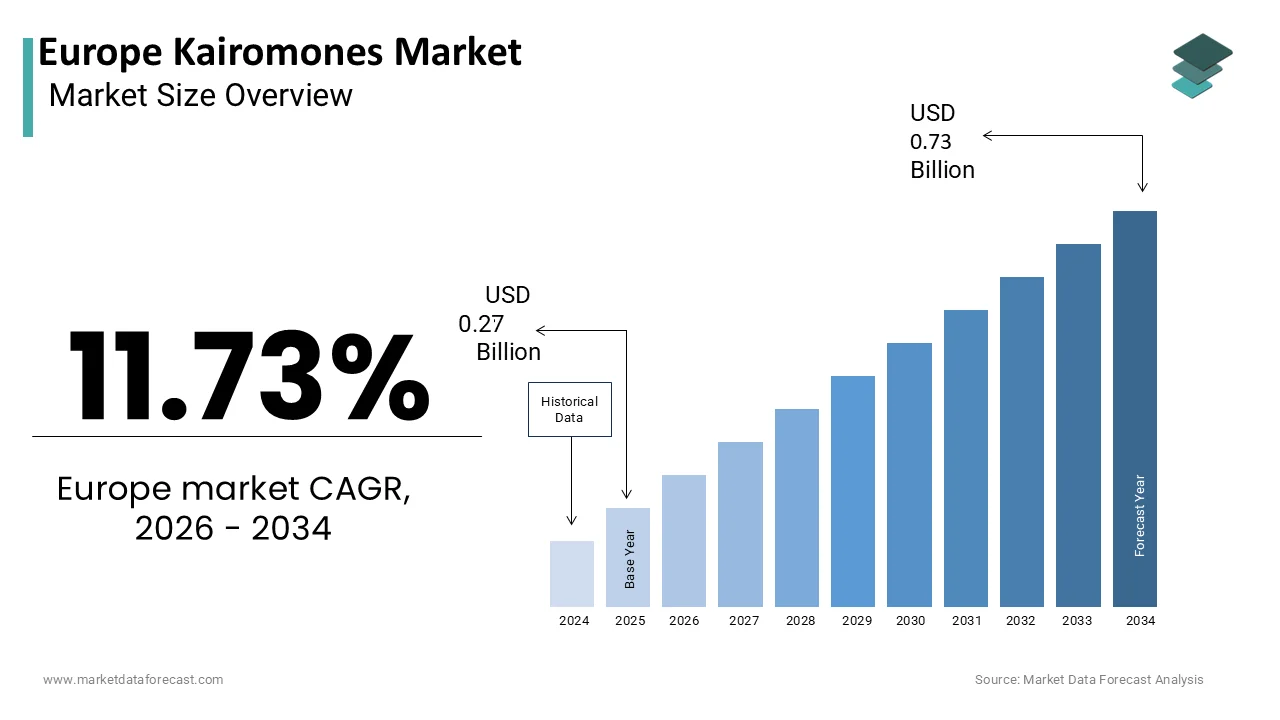
$0.27 BnMarket Estimate, 2026
$0.30 BnMarket Forecast, 2034
$0.73 BnCAGR, 2026–2034
11.73%Executive Summary: Europe Kairomones Market
- Market Scope: Comprehensive European kairomones industry analysis covering functional segments (mating disruption, detection and monitoring), crop types (horticulture crops, floriculture), regional leadership frameworks (Germany, France), strategic corporate developments, and competitive landscapes.
- Market Valuation: Valued at USD 0.27 billion (2025), estimated at USD 0.30 billion (2026), and projected to reach USD 0.73 billion by 2034, registering a robust CAGR of 11.73% (2026–2034).
- Primary Growth Drivers: Stringent EU sustainable pest management regulations (Regulation EC 1107/2009), protected agriculture biological control adoption (94% of greenhouse crops in 2024), digital agriculture integration, and organic farming residue-free demand. Restraints include complex registration, field efficacy inconsistency, and high initial costs.
Key Market Segment Metrics (2026–2034)
| Category | Leading Segment / Region (Position) | Fastest-Growing Segment |
|---|---|---|
| By Function & Crop Type | Mating disruption segment (largest functional share at 45.3% in 2025 due to proven pest reduction efficacy) & Horticulture crops (accounted for 34.7% market share in 2025) | Detection and monitoring (fastest CAGR of 8.5% via precision agriculture tech) & Floriculture (anticipated CAGR of 9.2% for ornamental maintenance) |
| By Technology & Application | Protected greenhouse biological control integration and residue-free specialty crop solutions | Digital agriculture technologies for precision release and enhanced stability dispenser innovations |
| By Region / Country | Germany (largest contributor holding 38.2% share in 2025) & France (second largest at 20.1% share, backed by European Green Deal objectives) | Intensive agricultural markets across Spain, Italy, and the Netherlands adopting eco-friendly alternatives |
Major Market Players & Market Structure
Market Structure: Highly collaborative European biological control and pest management ecosystem characterized by biotechnology company acquisitions, integrated pest management (IPM) platform integrations, and extensive farmer training programs aligned with EU environmental policies.
Key Companies: BASF SE, Syngenta Group, Shin-Etsu Chemical Co., Ltd., Biobest Group NV, Koppert Biological Systems, Russell IPM, SEDQ Healthy Crops SL, Provivi Inc., and Pherobank BV.
Europe Kairomones Market Size
The Europe Kairomones Market is projected to grow from USD 0.27 billion in 2025 to USD 0.30 billion in 2026 and reach USD 0.73 billion by 2034, registering a CAGR of 11.73% during the forecast period from 2026 to 2034.
Kairomones are semiochemicals that mediate interspecific interactions by providing a behavioral or physiological advantage to the receiving organism rather than the emitter. In the European agricultural sector, these chemical signals are increasingly utilized to enhance biological pest control strategies by attracting natural enemies, such as predators and parasitoids, to crop fields. The adoption ofkairomone-basedd solutions is deeply intertwined with the broader biological control industry, which saw 94% of greenhouse cultivation in the Netherlands utilizing biological pest control methods in 2024. Such high penetration rates in protected agriculture demonstrate the practical viability and farmer acceptance of semiochemical technologies. The European Union regulatory framework, particularly Regulation EC 1107/2009, governs the approval of these substances, ensuring they meet stringent safety and efficacy standards before entering the commercial marketplace. This significant economic footprint highlights the transition away from conventional synthetic pesticides toward ecologically sound alternatives. The strategic deployment of kairomones supports biodiversity conservation while maintaining crop yields by aligning with the European Green Deal objectives for reduced chemical usage in farming operations across member states.
MARKET DRIVERS
Stringent Regulatory Frameworks Accelerate Adoption of Eco-Friendly Pest Solutions
The rigorous regulatory environment established by the European Union for the increased utilization of kairomones in agricultural systems is fuelling the growth of the Europe kairomones market. Traditional synthetic pesticides face escalating restrictions due to their adverse environmental impacts and potential health risks, prompting farmers and agribusinesses to seek compliant alternatives. The European Food Safety Authority and other regulatory bodies prioritize low-toxicity substances, and kairomones fit this profile perfectly, as they are highly species-specific and pose minimal hazards to nontarget organisms, including mammals and birds. Farmers are compelled to adopt integrated pest management strategies to comply with national action plans derived from EU directives, which mandate the reduction of chemical pesticide reliance. The approval process for straight-chain lepidopteran pheromones and related semiochemicals under Regulation EC 1107/2009 provides a clear pathway for entry, although it remains thorough. The shift toward sustainable agriculture is not merely a trend but a regulatory necessity, driving investment in kairomone research and development.
Expanding Protected Agriculture Sector Drives Demand for Precision Pest Management Tools
The rapid expansion of protected agriculture, including greenhouses and vertical farms, is prompting the growth of the Europe kairomones market. Biological pest control was used in 94% of greenhouse crop cultivation in 2024, demonstrating the deep integration of semiochemicals in controlled environment agriculture. These enclosed settings provide ideal conditions for kairomone application, as the confined space allows for precise dispersion and enhanced effectiveness of chemical signals in attracting beneficial insects. The controlled microclimates in greenhouses ensure that volatile semiochemicals remain stable and effective for longer durations compared to open field applications. High-value crops such as tomatoes, peppers, and strawberries, which are predominantly grown in protected structures, require meticulous pest management to maintain premium quality and marketability. Kairomones enable growers to monitor and manage pest populations proactively by attracting parasitoids that target specific pests like whiteflies and aphids. The intensive nature of protected agriculture necessitates tools that do not disrupt pollination services or harm beneficial arthropods, making kairomones an indispensable component of modern horticultural practices. The technological sophistication of European greenhouse operations, particularly in countries like the Netherlands and Spain, facilitates the seamless integration of kairomone dispensers into existing automated monitoring systems.
MARKET RESTRAINTS
Complex Registration Processes Impede Rapid Commercialization of Novel Semiochemicals
The intricate and prolonged registration procedures for new kairomone products are hindering the growth of the Europe kairomones market. Although semiochemicals are considered lower risk, they still undergo rigorous evaluation under Regulation EC 1107/2009, which can delay entry and increase development costs for manufacturers. The European Union follows a strict approval process for pheromones and kairomones, requiring comprehensive data on efficacy, environmental fate, and toxicology before granting authorization This regulatory burden is particularly challenging for small and medium-sized enterprises that lack the financial resources to navigate complex submission requirements. As per reports, stringent and prolonged regulatory approval processes are cited as key restraints in the broader biorational market by limiting the speed at which innovative solutions reach farmers. Additionally, the harmonization of regulations across different European member states remains inconsistent, creating administrative hurdles for companies seeking pan-European distribution. The need for extensive field trials to demonstrate consistent performance under varying climatic conditions further extends the timeline for product commercialization. These delays hinder the ability of manufacturers to respond quickly to emerging pest threats or new agricultural needs. Consequently, the pipeline of novel kairomone formulations remains constrained, limiting the diversity of solutions available to end users. The high cost of compliance also discourages investment in niche applications, restricting the market to well-established crops and common pest species.
Performance Variability in Diverse Field Conditions Limits Farmer Confidence
The inconsistency in field efficacy of kairomone-based products under varying environmental conditions is also impeding the growth of the Europe kairomones market. Unlike synthetic pesticides that offer immediate and predictable kill rates, kairomones rely on complex ecological interactions that can be influenced by temperature, humidity, wind speed, and competing natural odors. The performance variability and limited field efficacy are recognized as major restraints in the biological control sector, affecting user trust and repeat purchases. Farmers accustomed to the reliability of conventional chemicals may hesitate to switch to semiochemicals if initial results are inconclusive or dependent on precise timing and placement. The effectiveness of kairomones in attracting natural enemies can diminish if the population of beneficial insects is already low in the area, requiring supplementary releases that add to operational costs. Environmental factors such as heavy rainfall can wash away dispensers or dilute chemical signals by reducing their attractiveness to target species. The lack of standardized application protocols across different crop types and regions further contributes to inconsistent outcomes. Growers in open field settings face greater challenges compared to those in protected environments, where conditions are more controlled. This variability necessitates extensive training and technical support for farmers, which many suppliers are unable to provide adequately. The perception of risk associated with potential crop loss due to ineffective pest control discourages cautious farmers from adopting kairomone technologies. Furthermore, the delayed action of biological control agents attracted by kairomones means that pest damage may occur before population suppression is achieved. This lag effect contrasts sharply with the immediate relief provided by chemical insecticides, making kairomones less appealing during severe pest outbreaks.
MARKET OPPORTUNITIES
Integration with Digital Agriculture Technologies Presents Significant Growth Avenues
The emergence of kairomone applications with digital agriculture technologies is creating new opportunities for the growth of the Europe kairomones market. Smart farming solutions, including Internet of Things sensors and artificial intelligence-driven monitoring systems, can optimize the deployment of kairomone dispensers by providing real-time data on pest pressure and environmental conditions. The use of drones and automated systems in agriculture is growing, enabling precise placement of semiochemical lures in hard-to-reach areas or large-scale fields. Digital platforms can analyze historical pest data and weather forecasts to predict optimal timing for kairomone release, maximizing their effectiveness in attracting natural enemies. This data-driven approach reduces waste and ensures that resources are allocated efficiently, improving the return on investment for farmers. The integration of kairomones with precision agriculture tools aligns with the European Union’s digital farm initiative, which promotes the adoption of technology to enhance sustainability and productivity. Companies developing smart dispensers that adjust release rates based on ambient temperature and humidity can offer superior performance compared to static devices. The availability of mobile applications that guide farmers through proper installation and monitoring of kairomone traps further simplifies adoption and improves user experience. The demand for integrated pest management software that incorporates semiochemical data is rising among large-scale agricultural operators. This technological synergy enables the creation of closed-loop systems, where pest detection triggers automatic kairomone release by ensuring timely intervention. Investment in research and development of smart semiochemical delivery systems is expected to drive innovation and differentiate offerings in a competitive world.
Expansion into Organic Farming and High Value Specialty Crops Offers Lucrative Prospects
The growing organic farming sector and the increasing cultivation of high-value specialty crops are expected to promote new opportunities for the growth of the Europe kairomones market. Organic certification standards strictly prohibit the use of synthetic pesticides, making kairomones an essential tool for pest management in this segment. The demand for organic produce in Europe continues to rise, with consumers willing to pay premium prices for chemically free fruits and vegetables. Kairomones support organic farming goals by enhancing biological control without leaving residues, thereby helping growers maintain certification and access. The high economic value of crops such as berries, herbs, and medicinal plants justifies the investment in advanced pest management solutions like semiochemicals. These crops are often sensitive to chemical damage, which can affect appearance and shelf life, making noninvasive kairomone-based strategies particularly attractive. Manufacturers can develop specialized formulations tailored to the specific pest complexes associated with specialty crops by offering customized solutions that command higher margins. Partnerships with organic certifying bodies and agricultural cooperatives can facilitate penetration and build trust among organic growers. The alignment of kairomones with the principles of agroecology and biodiversity conservation resonates with the values of organic farmers, fostering long-term loyalty. The integration of semiochemicals into organic pest management plans is becoming standard practice, driven by the need for effective and compliant solutions.
MARKET CHALLENGES
Limited Awareness and Technical Expertise Among Small-Scale Farmers Hinders Adoption
The limited awareness and technical expertise among small-scale and traditional farmers is a significant challenge for the growth of the Europe kairomones market. Many growers lack understanding of how kairomones function within integrated pest management systems, leading to incorrect application and subsequent failure. The complexity of biological control requires specialized knowledge that is not always accessible to smaller operations with limited resources. The misconception that kairomones act as direct pesticides rather than behavioral modifiers can result in unrealistic expectations and dissatisfaction when immediate pest kill is not observed. Training programs and educational initiatives are often insufficiently funded or poorly targeted, leaving a knowledge gap that impedes widespread adoption. Small-scale farmers may also lack the capital to invest in monitoring tools and dispensers required for effective kairomone deployment. The absence of localized demonstration projects makes it difficult for farmers to visualize the benefits and learn best practices from peers. Language barriers and limited access to digital information further exacerbate the issue in certain rural regions of Europe. The uptake of innovative technologies is slower among older demographics and smaller holdings due to risk aversion and inertia. The development of user-friendly kits with clear instructions and visual guides can help bridge the knowledge gap.
High Initial Costs and Economic Constraints Limit Market Penetration in Price-Sensitive Segments
The relatively high initial costs associated with kairomone products and their application infrastructure for the price-sensitive agricultural sector also limit the growth of the Europe kairomones market. Compared to conventional synthetic pesticides, often require higher upfront investment in dispensers, traps, and monitoring equipment. The cost-effectiveness of kairomones is realized over the long term through reduced pesticide purchases and improved crop quality, but short-term cash flow constraints deter many farmers. Small and medium-sized farms operating on tight margins may find it difficult to justify the initial expenditure without immediate financial returns. The production of synthetic kairomones involves complex chemical processes that contribute to higher unit costs compared to mass-produced generic pesticides. Additionally, the need for repeated applications or replacements of dispensers throughout the growing season adds to the operational expenses. Economic volatility and fluctuating commodity prices further strain farm budgets by making investments in premium pest management solutions less prioritized. The adoption rate of biological control agents is lower in regions with lower average farm incomes, highlighting the impact of economic constraints. Subsidies and financial incentives for sustainable agriculture are not uniformly available across all European countries, creating disparities in accessibility. The lack of economies of scale in the kairomones market compared to the established pesticide industry keeps prices elevated. Manufacturers face pressure to reduce costs while maintaining product quality, which can limit profit margins and research funding.
REPORT COVERAGE
| REPORT METRIC | DETAILS |
| Market Size Available | 2025 to 2034 |
| Base Year | 2025 |
| Forecast Period | 2026 to 2034 |
| Segments Covered | By Function, Crop Type, and Region. |
| Various Analyses Covered | Global, Regional and Country-Level Analysis, Segment-Level Analysis, Drivers, Restraints, Opportunities, Challenges; PESTLE Analysis; Porter’s Five Forces Analysis, Competitive Landscape, Analyst Overview of Investment Opportunities |
| Countries Covered | Spain, Italy, France, Germany, United Kingdom, Rest of Europe |
| Market Leaders Profiled | Koppert Biological Systems B.V., Russell IPM Ltd., Suterra LLC, Trécé Inc., Pherobank B.V., ISCA Technologies Inc., Synergy Semiochemicals Corporation, Novagrica Hellas S.A., Sanidad Agrícola Econex S.L., Bedoukian Research Inc., International Pheromone Systems Ltd., Bioiberica S.A.U. |
SEGMENTAL ANALYSIS
By Function Insights
The mating disruption segment was the largest by holding 45.3% of the Europe kairomones market share in 2025 due to its proven efficacy in reducing pest populations without direct toxicity. This function relies on saturating the environment with synthetic pheromones or kairomones to confuse male insects, preventing them from locating females for reproduction. The widespread adoption of this technique is driven by its compatibility with integrated pest management frameworks and its ability to preserve beneficial insect populations. Mating disruption technologies account for a significant portion of semiochemical sales in European horticulture, particularly in apple and pear orchards where codling moth control is important. The European Union’s push for reduced pesticide residues has accelerated the shift toward behavioral control methods, with mating disruption offering a residue-free alternative that meets strict food safety standards. The scalability of this method allows for application in both small plots and large commercial estates by making it versatile across different farming scales. The cost-effectiveness of mating disruption improves over time as pest pressure decreases, reducing the need for supplementary chemical interventions.
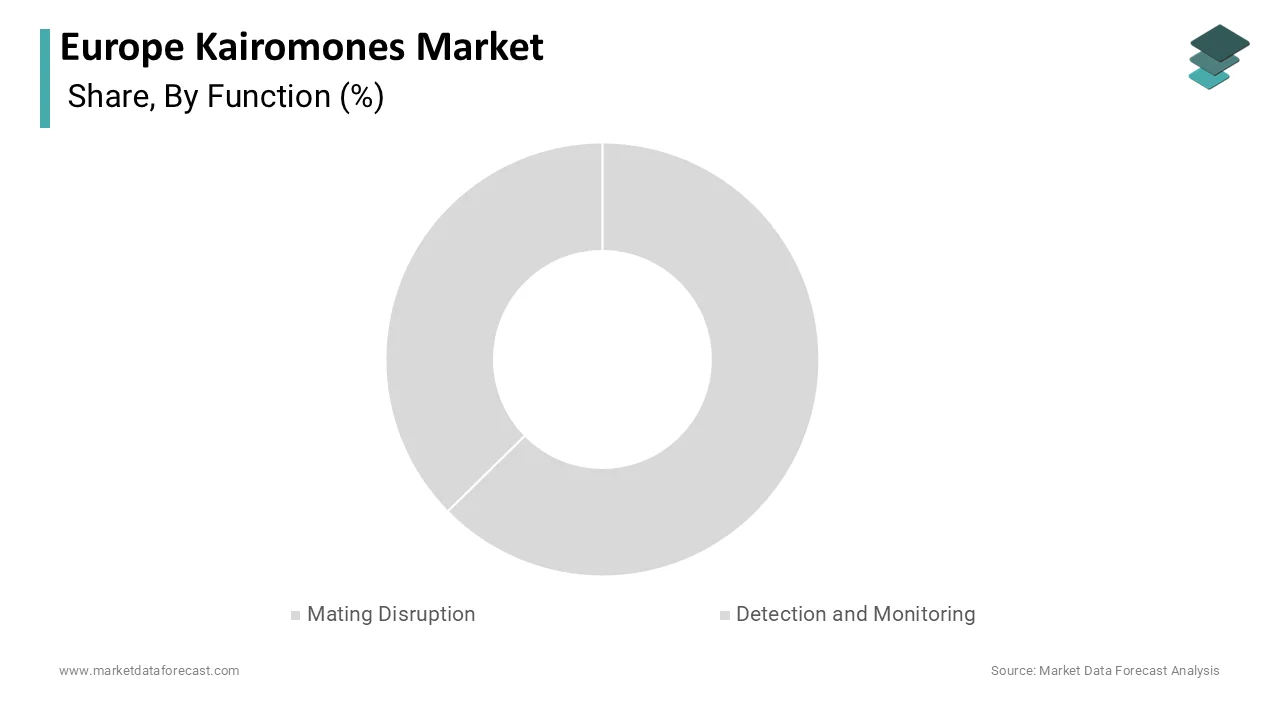
The detection and monitoring segment is anticipated to register the fastest CAGR of 8.5% from 2026 to 2034 owing to the increasing adoption of precision agriculture technologies and the need for real-time pest data to optimize intervention strategies. Kairomone-based traps serve as early warning systems, allowing farmers to detect pest presence before population thresholds are reached. The integration of digital monitoring tools, such as smart traps with image recognition capabilities, enhances the accuracy and efficiency of pest surveillance. The use of Internet of Things devices in agriculture is rising, enabling remote monitoring and data analytics for better decision-making. The European Union’s digital farm initiative supports the adoption of such technologies, providing funding and infrastructure for smart farming solutions. The ability to reduce unnecessary pesticide applications through precise timing of interventions appeals to cost-conscious and environmentally aware farmers. The scalability of monitoring systems allows for deployment across diverse crop types and farm sizes, broadening the user base. The growing complexity of pest dynamics due to climate change necessitates more sophisticated monitoring tools, driving demand for advanced kairomone-based detection systems.
By Crop Type Insights
The horticulture crops segment accounted for 34.7% of the Europe kairomones market share in 2025 due to the high-value nature of these crops and the intensive pest management required to maintain quality. Fruits, vegetables, and ornamental plants are highly susceptible to pest damage, which can severely impact yield and marketability. The European horticulture sector is characterized by high input intensity and a strong focus on sustainability, making it an ideal candidate for kairomone-based solutions. The protected cultivation of horticultural crops, particularly in greenhouses, facilitates the effective application of kairomones due to controlled environmental conditions. The stringent residue limits imposed by European retailers and consumers further drive the adoption of non-toxic pest control methods in horticulture. The high profit margins associated with horticultural crops allow growers to invest in advanced pest management technologies, including kairomones. The integration of kairomones with biological control agents is common in horticulture, creating a synergistic effect that enhances pest suppression. The continuous innovation in horticultural practices, such as vertical farming and hydroponics, also supports the use of precision pest management tools.
The floriculture segment is likely to grow at an anticipated CAGR of 9.2% from 2026 to 2034, with the increasing demand for ornamental plants and cut flowers, which require meticulous pest management to maintain aesthetic appeal. The use of kairomones in floriculture is gaining traction due to their ability to control pests without leaving residues that could affect plant health or consumer safety. The European floriculture industry is concentrated in countries like the Netherlands, which is a global leader in flower production and export. The high value of floricultural products justifies the investment in advanced pest management solutions, including kairomones. The integration of kairomones with biological control agents is common in floriculture, enhancing overall pest suppression. The growing trend of indoor gardening and houseplant ownership in urban areas also contributes to the demand for safe and effective pest control methods. The floriculture segment is witnessing increased adoption of sustainable practices, driven by consumer preference for eco-friendly products.
COUNTRY LEVEL ANALYSIS
Germany Kairomones Market Analysis
Germany was the largest contributor in the Europe kairomones market by holding 38.2% of the share in 2025, with its strong agricultural sector and commitment to environmental sustainability. The country is a leading producer of fruits and vegetables, with a significant focus on organic farming and integrated pest management. Germany has one of the largest areas under organic cultivation in Europe,y creating a substantial demand for non-toxic pest control solutions like kairomones. The German government actively supports sustainable agriculture through policies and funding initiatives, encouraging farmers to adopt eco-friendly practices. The presence of major research institutions and agricultural technology companies in Germany fosters innovation in application. The high level of technical expertise among German farmers facilitates the effective use of kairomones in various crop systems. The country’s strict environmental regulations and consumer preference for residue-free food further drive the adoption of kairomones. The strong distribution network and agricultural extension services in Germany ensure wide accessibility of kairomone products. The continuous investment in research and development by German companies contributes to the advancement of semiochemical technologies.
France Kairomones Market Analysis
France kairomones market was positioned second, holding a 20.1% the share in 2025, with its extensive viticulture and horticulture sectors. The country is one of the world’s largest producers of wine and fruits, which are highly susceptible to pest damage and require effective management strategies. The French wine industry has increasingly adopted mating disruption techniques to control grapevine pests by reducing reliance on chemical pesticides. The strong tradition of agricultural cooperatives in France facilitates the dissemination of knowledge and technology among farmers, promoting the use of integrated pest management. The high value of French agricultural exports necessitates compliance with strict international residue standards, making kairomones an attractive option for growers. The presence of leading semiochemical manufacturers and research centers in France supports the development and commercialization of innovative products. France represents a significant portion of the European semiochemical consumption, particularly in the fruit and vineyard segments.
Spain Kairomones Market Analysis
Spain kairomones market growth is expected to grow in the coming years with its large horticultural and citrus production industries. The country is a leading exporter of fruits and vegetables to the rest of Europe, requiring high standards of pest management to maintain market access. The warm climate in many regions of Spain favors year-round pest activity, necessitating continuous monitoring and control measures. Kairomones are widely used in Spanish agriculture for mating disruption and monitoring of key pests. The Spanish government supports sustainable agriculture through national action plans that promote integrated pest management practices. The adoption of protected cultivation in regions like Almeria has increased the use of kairomones in greenhouse systems. The strong export orientation of Spanish agriculture drives the need for residue-free production methods, enhancing the appeal of kairomones. The availability of technical assistance and training programs for farmers facilitates the effective implementation of semiochemical technologies.
Italy Kairomones Market Analysis
Italy's kairomones market growth is driven by its diverse agricultural landscape and strong focus on quality produce. The country is a major producer of fruits, vegetables, and olives, which require intensive pest management to ensure high yields and quality. Italy has a long history of using semiochemicals in pest control, particularly in apple and pear orchards for codling moth management. The Italian government promotes sustainable agriculture through various initiatives and subsidies, encouraging the adoption of integrated pest management practices. The presence of numerous small and medium-sized farms in Italy creates a demand for cost-effective and easy-to-use pest control solutions. Kairomones offer a scalable and efficient method for managing pests in diverse cropping systems. The strong consumer preference for traditional and organic foods in Italy drives the adoption of residue-free pest management methods. The collaboration between research institutions and agricultural organizations in Italy supports the development of localized pest management strategies. The emphasis on quality and sustainability in Italian agriculture ensures continued demand for kairomones.
Netherlands Kairomones Market Analysis
The Netherlands kairomones market is steadily growing with its advanced greenhouse agriculture and strong commitment to sustainability. The country is a global hub for horticultural innovation, with a high concentration of greenhouse production for flowers, vegetables, and fruits. The Dutch government and industry collaborate closely to develop and implement sustainable agricultural practices, supported by robust research and development infrastructure. The high level of technical expertise among Dutch growers facilitates the precise application of kairomones in controlled environments. The Netherlands is a key market for semiochemicals, with high demand for innovative and effective solutions. The presence of leading agricultural technology companies and research institutes in the Netherlands drives continuous innovation in kairomone technologies. The strong focus on circular agriculture and resource efficiency further promotes the use of sustainable pest management methods.
TOP LEADING PLAYERS IN THE MARKET
- BASF SE stands as a pivotal entity in the European agricultural sector, leveraging its extensive chemical expertise to develop advanced semiochemical solutions. The company focuses on integrating kairomones into broader integrated pest management frameworks to support sustainable farming practices across the continent. BASF actively invests in research and development to enhance the efficacy and stability of pheromone and kairomone formulations for diverse crop types. Their commitment to innovation is evident in the launch of new dispenser technologies that ensure prolonged release and improved field performance. By aligning product development with stringent European Union regulatory standards, BASF ensures compliance and safety. The company also engages in farmer education programs to promote the correct application of these biological tools. This holistic approach strengthens its reputation as a reliable provider of eco-friendly pest management solutions.
- Syngenta Group plays an important role in advancing the adoption of kairomones within European agriculture by combining digital tools with biological solutions. The company emphasizes the integration of semiochemicals into its comprehensive crop protection strategies, offering farmers holistic pest management options. Syngenta has recently strengthened its position by acquiring niche biotechnology companies specializing in pheromone and kairomone production. These acquisitions enable the firm to expand its product pipeline and enhance technical capabilities in semiochemical synthesis. The group actively promotes the use of monitoring traps equipped with kairomones to facilitate early pest detection and precise intervention timing. Syngenta collaborates with agricultural research institutions to validate the effectiveness of its products under varying European climatic conditions. Their focus on sustainability aligns with the European Green Deal objectives, driving the development of low-impact agricultural inputs. The company also provides extensive technical support and training to agronomists and growers.
- Koppert Biological Systems is a renowned leader in natural pest management, deeply embedded in the European market for biological control agents, including kairomones. The company specializes in producing high-quality semiochemicals that attract beneficial insects and disrupt pest mating cycles. Koppert continuously innovates by developing user-friendly dispensers and monitoring systems tailored for greenhouse and open field applications. The firm collaborates closely with growers to customize integrated pest management programs that incorporate kairomones effectively. Koppert places strong emphasis on knowledge transfer by offering detailed guidance on the deployment of semiochemicals to maximize efficacy. Their product range supports a wide variety of crops, from vegetables to ornamental plants, reflecting the diversity of European agriculture. The company actively participates in industry forums to advocate for the benefits of biological control methods.
TOP STRATEGIES USED BY THE KEY MARKET PARTICIPANTS
Key players in the Europe kairomones market primarily employ strategic partnerships and acquisitions to consolidate their positions and expand product portfolios. Companies frequently collaborate with research institutions to innovate and improve the efficacy of semiochemical formulations. Investment in digital agriculture technologies is another major strategy, enabling the integration of kairomone traps with smart monitoring systems for real-time data analysis. Manufacturers focus on regulatory compliance to navigate the complex approval processes in the European Union, ensuring timely market entry for new products. Education and training programs for farmers are widely implemented to enhance understanding and proper application of kairomones. Diversification of product offerings to cover various crop types and pest species helps companies capture broader market segments. Sustainable branding and alignment with environmental policies are leveraged to appeal to eco-conscious consumers and retailers.
COMPETITIVE LANDSCAPE
The competition in the Europe kairomones market is characterized by a mix of established agrochemical giants and specialized biological control firms. Large multinational corporations leverage their extensive distribution networks and financial resources to dominate the landscape, while niche players focus on innovation and specialized solutions. The market exhibits moderate fragmentation, with several key competitors vying for influence through product differentiation and technological advancements. Competitive intensity is driven by the increasing demand for sustainable agricultural practices and strict regulatory pressures on synthetic pesticides. Companies compete based on product efficacy, ease of application, and integration capabilities with other pest management tools. Strategic alliances and mergers are common tactics used to enhance market reach and acquire proprietary technologies. The emphasis on research and development allows firms to introduce novel formulations that offer superior performance under diverse climatic conditions. Customer loyalty is cultivated through comprehensive technical support and educational initiatives that demonstrate the value of kairomones. Price competition remains secondary to quality and reliability, as farmers prioritize effective pest control outcomes.
MARKET SEGMENTATION
This research report on the europe kairomones market is segmented and sub-segmented into the following categories.
By Function
- Mating Disruption
- Detection and Monitoring
By Crop Type
- Horticulture Crops
- Floriculture
By Country
- Germany
- France
- Spain
- Italy
- Netherlands
- Rest of Europe