- Product Description Description
- Table of Contents TOC
- List of Table & Figure LOT
- Get Free Sample PDF Sample PDF
Market Size, 2025
$1.98 BnMarket Estimate, 2026
$2.03 BnMarket Forecast, 2034
$2.49 BnCAGR, 2026–2034
2.59%Europe Kidney Transplant Market Report Summary
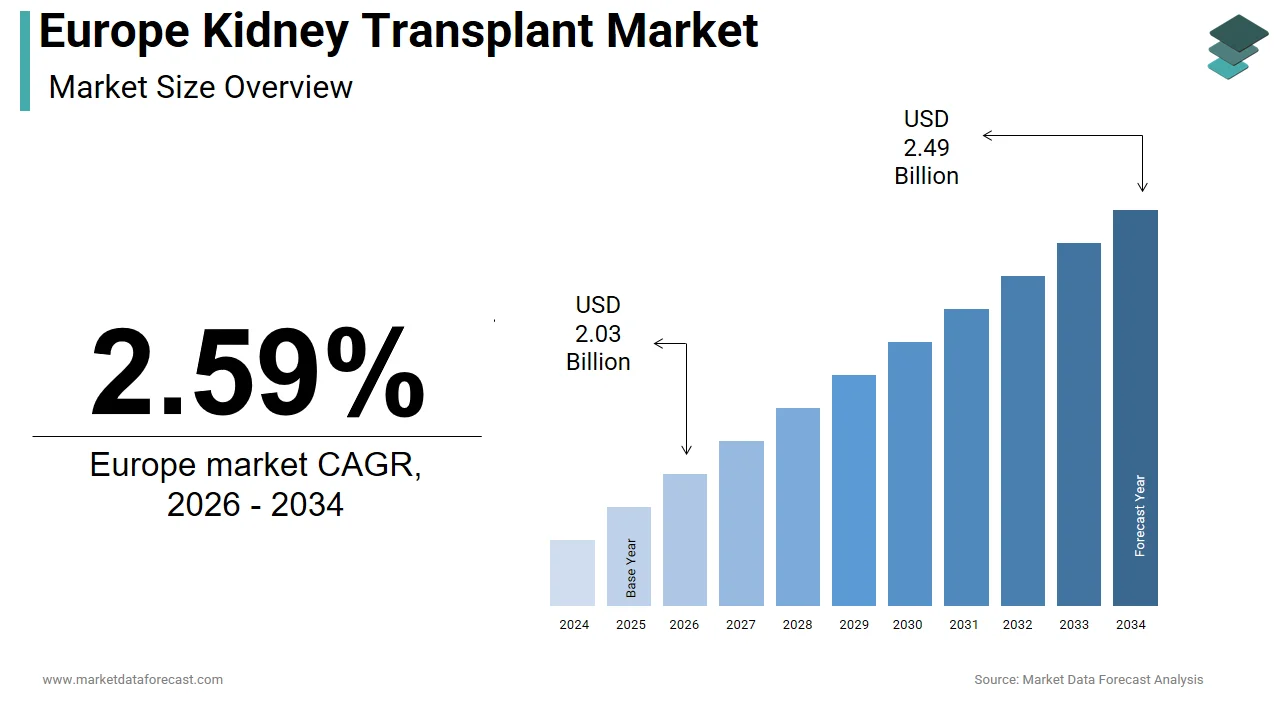
The Europe kidney transplant market was valued at USD 1.98 billion in 2025, is anticipated to reach USD 2.03 billion in 2026, and is projected to reach USD 2.49 billion by 2034, growing at a CAGR of 2.59% from 2026 to 2034. Market growth is driven by the rising prevalence of end-stage renal disease (ESRD), increasing organ donation awareness, and advancements in immunosuppressive therapies. Europe maintains strong transplant coordination systems and structured donor registries, which support steady transplant volumes. Improvements in surgical techniques, post-transplant monitoring, and long-term graft survival rates are further shaping market dynamics.
Key Market Trends
- Rising prevalence of chronic kidney disease (CKD) and ESRD.
- Increasing reliance on deceased-donor transplant programs.
- Advancements in immunosuppressive drug regimens and biologics.
- Expansion of cross-border organ sharing networks.
- Growing focus on post-transplant monitoring and long-term graft survival.
Segmental Insights
- Based on transplant type, the deceased-donor kidney transplant segment dominated the market in 2025, supported by structured national organ donation systems and strong public awareness campaigns.
- Based on age group, the adult segment held the majority share in 2025, driven by higher ESRD prevalence among middle-aged and elderly populations.
- Based on end user, the transplant centers segment led the market in 2025, reflecting their specialized infrastructure, multidisciplinary teams, and centralized transplant coordination services.
Regional Insights
The Europe kidney transplant market is witnessing stable growth across leading transplant-performing nations, supported by centralized regulatory frameworks and coordinated organ allocation systems.
- Spain led the regional market in 2025 with 24.1% share, supported by its globally recognized organ donation model and high deceased-donor transplant rates.
- Germany followed with 19.2% share in 2025, driven by strong hospital infrastructure and established transplant centers.
- France holds a significant position, supported by its centralized transplant authority and strong public health integration through national coordination mechanisms.
Competitive Landscape
The Europe kidney transplant market is characterized by the presence of pharmaceutical companies specializing in immunosuppressive therapies, biologics, and post-transplant care solutions, alongside national transplant coordination bodies. Market participants are focusing on improving graft survival outcomes, minimizing rejection risks, and expanding access to innovative biologic therapies. Strategic collaborations between transplant networks, research institutions, and drug manufacturers are shaping competitive dynamics across the region.
Prominent organizations and companies operating in the Europe kidney transplant market include Novartis AG, Roche Holding AG, Sanofi SA, NHS Blood and Transplant, Pfizer Inc., Agence de la Biomédecine, Bristol-Myers Squibb Company, AbbVie Inc., Astellas Pharma Inc., Eurotransplant International Foundation, GlaxoSmithKline plc, Johnson & Johnson, and Merck & Co., Inc.
Europe Kidney Transplant Market Size
The size of the Europe kidney transplant market was valued at USD 1.98 billion in 2025. This market is expected to grow at a CAGR of 2.59% from 2026 to 2034 and be worth USD 2.49 billion by 2034 from USD 2.03 billion in 2026.
A kidney transplant is a surgical procedure to place a healthy kidney from a donor into a person whose kidneys no longer function properly. This includes organ procurement, donor-recipient matching, surgical procedures, immunosuppressive regimens, and post-transplant care coordination. Unlike commercial markets, it operates within tightly regulated national health systems governed by ethical frameworks such as the EU’s Directive 2010/53/EU on organ donation and transplantation, which prohibits organ trade and mandates traceability, quality, and safety standards. According to sources, the number of successful kidney transplants across member states has shown a consistent upward trajectory over the last few years. However, demand vastly outstrips supply. Demand for donor kidneys continues to outpace supply significantly, resulting in extensive waiting periods for patients in several major European nations. Chronic kidney disease has become increasingly common among older adults, primarily as a secondary complication of rising metabolic and cardiovascular health challenges. This persistent organ shortage, coupled with aging populations and advances in transplant medicine, defines the structural urgency of the Europe Kidney Transplant Market.
MARKET DRIVERS
Rising Prevalence of End-Stage Kidney Disease Due to Diabetes and Hypertension
The escalating burden of end-stage kidney disease (ESKD) is the primary clinical driver of the Europe kidney transplant market. This is fueled by the growing incidence of type 2 diabetes and hypertension, both leading causes of renal failure. The International Diabetes Federation reports a substantial and growing number of adults in the EU living with diabetes, with projections suggesting a continued increase in this burden over the coming years. Simultaneously, the European Society of Cardiology indicates that a high proportion of EU adults have elevated blood pressure, which frequently remains undetected until severe kidney dysfunction has developed. These conditions progressively impair glomerular filtration, culminating in ESKD requiring dialysis or transplantation. The European Renal Association identifies diabetic nephropathy as a leading cause of new end-stage kidney disease cases, representing a major portion of annual patients requiring renal replacement therapy. Rising life expectancy has increased the number of patients reaching ESKD, thus expanding the pool of transplant candidates. National health systems increasingly recognize transplantation as the most cost-effective long-term solution, reducing annual treatment costs for dialysis post-transplant. This clinical and economic imperative intensifies pressure to expand transplant capacity across the region.
Expansion of Living Donor and Paired Exchange Programs
Living donor kidney transplantation has emerged as a critical strategy to address the chronic organ shortage, which further contributes to the expansion of the Europe kidney transplant market. It offers superior graft survival and reduced wait times compared to deceased donor transplants. Across Europe, national programs are actively promoting living donation through public awareness campaigns, streamlined evaluation protocols, and financial protections for donors. The Netherlands continues to lead European nations in the utilization of kidneys from living donors, according to insights from the Dutch Transplant Foundation (NTS). Similarly, the UK’s NHS Living Donor Scheme supports donors through reimbursement of travel and lost wages, aiming to make donation financially neutral and encouraging voluntary organ donation. Furthermore, international paired exchange networks, such as the Eurotransplant Kidney Exchange Program, enable incompatible donor-recipient pairs to find matches across borders, facilitating transplants that would otherwise be impossible. Collaborations between transplant centers in Germany, Belgium, and Austria, managed by regional organizations, have facilitated a significant number of living donor transplants through paired exchange systems. Advanced matching algorithms, paired with high public willingness to donate, are transforming transplant accessibility and outcomes continent-wide.
MARKET RESTRAINTS
Persistent Organ Shortage and Low Deceased Donation Rates in Key Regions
The severe shortage of available organs, particularly from deceased donors, despite advances in medical technology, remains the fundamental constraint on the Europe kidney transplant market. Organ donation rates vary significantly across European nations, with countries utilizing centralized coordination models generally seeing higher participation than those struggling with lower national engagement. Cultural, religious, and systemic barriers contribute to low consent rates. In regions requiring explicit consent, the absence of a documented decision often leads families to decline donation during end-of-life discussions, serving as a primary obstacle to successful organ procurement. Even in countries with presumed consent laws, inconsistent implementation and a lack of hospital infrastructure for donor identification limit yield. Consequently, A substantial number of patients across Europe continue to face life-threatening delays on transplant registries, as the demand for viable organs consistently exceeds the current supply. This structural deficit forces reliance on dialysis, a suboptimal, resource-intensive alternative, and constrains the market’s ability to meet clinical need, regardless of surgical or pharmaceutical advancements.
Stringent Regulatory and Ethical Barriers to Innovative Allocation Models
Stringent regulatory and ethical guidelines governing regional kidney transplantation promote safety and fairness, but they act as a barrier to, and slow the adoption of, innovative, modern strategies in procurement and allocation. This impedes the growth of the Europe kidney transplant market. The EU Organ Directive strictly prohibits any form of financial incentive for donation, limiting policy experimentation seen elsewhere, such as kidney voucher programs or compensated time-off schemes. Additionally, cross-border organ sharing is restricted to Eurotransplant and similar formal networks, excluding non-member states like the UK post-Brexit from seamless integration. Regulatory approval for novel preservation technologies, such as machine perfusion, is slow and fragmented across national agencies, delaying widespread adoption despite evidence of improved graft function. The introduction of rigorous, updated European medical device regulations and extensive clinical evaluation requirements has made it more challenging for manufacturers to obtain CE marking for new ex vivo organ perfusion systems. These well-intentioned safeguards, while upholding ethical standards, create bureaucratic inertia that slows the diffusion of innovations capable of expanding the usable donor pool and improving transplant outcomes.
MARKET OPPORTUNITIES
Adoption of Ex-Vivo Machine Perfusion to Expand the Donor Pool
Ex vivo machine perfusion, particularly hypothermic and normothermic perfusion, is revolutionizing kidney transplantation, which opens new opportunities for the Europe kidney transplant market. It enables the safe use of marginal or extended criteria donor (ECD) kidneys that would otherwise be discarded. These technologies maintain organ viability outside the body, allow functional assessment, and even facilitate repair of injured grafts. According to the Agence de la Biomédecine, the adoption of machine perfusion techniques has allowed France to increase the utilization of expanded criteria donor kidneys, reducing the discard rate of marginal kidneys. Similarly, NHS Blood and Transplant data shows that implementing machine perfusion, particularly for deceased donor kidneys, significantly lowers the risk of delayed graft function in recipients. The European Commission’s Horizon Europe program is funding health research projects focused on improving organ transplantation and standardizing perfusion techniques across European member states. Machine perfusion offers a sustainable, scalable solution to rejuvenate organs from older donors, transforming unusable organs into suitable transplants as the demographic shifts. This technological leap not only expands supply but also improves outcomes, positioning machine perfusion as a cornerstone of future transplant sustainability in Europe.
Integration of Artificial Intelligence for Donor-Recipient Matching and Risk Prediction
Artificial intelligence is emerging as a transformative tool in optimizing kidney transplant logistics, from predicting graft survival to enhancing donor-recipient compatibility, which provides fresh prospects for the expansion of the Europe kidney transplant market. AI algorithms can analyze vast datasets, including HLA profiles, immunological history, and comorbidities, to identify optimal matches and flag high-risk pairings before surgery. In Sweden, researchers at the Karolinska Institute are implementing AI-driven validation platforms to enhance the accuracy of clinical diagnoses and are developing predictive models to identify transplant recipients at risk of early rejection through personalized medical data. Similarly, the Eurotransplant International Foundation is piloting a machine learning system to prioritize organ allocation based on predicted long-term graft survival rather than waitlist time alone. The EU’s 1+ Million Genomes Initiative provides a robust data foundation for such innovations, enabling cross-border genomic analysis while complying with GDPR. AI improves the fairness and speed of organ allocation by moving past old matching methods, directing limited organs to patients with the best chance of long-term recovery.
MARKET CHALLENGES
Chronic Immunosuppression Burden and Long-Term Complications
Despite successful transplantation, recipients face lifelong dependence on immunosuppressive drugs to prevent organ rejection, a factor that inhibits the growth of the Europe kidney transplant market. This regimen carries significant risks and costs. These medications increase susceptibility to infections, malignancies, and metabolic disorders such as diabetes and cardiovascular disease. Kidney transplant recipients face a notably higher risk of developing metabolic complications like diabetes and various forms of cancer compared to the general population. Adherence is another challenge. A significant portion of transplant patients struggle to follow their medication schedules over time, which directly increases the likelihood of the body rejecting the donor organ. The ongoing requirement for life-long anti-rejection medication represents a substantial and continuous financial commitment for both patients and healthcare systems. Despite offering better safety, high costs, and mandatory monitoring, restrict the usage of newer agents like belatacept. The sustainability and long-term success of European kidney transplantation are hindered by the financial burden and side effects of conventional immunosuppression, pending the mainstream adoption of tolerance-inducing strategies.
Geographic and Socioeconomic Disparities in Access to Transplantation
Access to kidney transplantation in the region remains highly uneven, shaped by national healthcare structures, regional resources, and socioeconomic status, and thereby limits the expansion of the Europe kidney transplant market. Patients in Eastern and Southern Europe face significantly longer wait times and lower transplant rates than their Western counterparts. The Spanish national transplant system continues to lead the world in donor rates, achieving record-high organ transplantation figures in 2024, while Romania maintains a significantly lower, developing transplantation rate. Even within countries, disparities exist. In the UK, patients from ethnic minority backgrounds experience longer waiting times for kidney transplants due to difficulties in finding suitable matches within the predominantly white donor pool and lower rates of living donation within their own communities. Socioeconomic factors further compound inequity; low-income individuals may lack the support system needed for living donation or struggle with transportation to specialized centers. These gaps violate the principle of equitable care enshrined in EU health policy and perpetuate preventable morbidity and mortality. The inaccessibility of transplantation for many in Europe will persist without coordinated initiatives targeting infrastructure, workforce development, and anti-discrimination.
REPORT COVERAGE
| REPORT METRIC | DETAILS |
| Market Size Available | 2025 to 2034 |
| Base Year | 2025 |
| Forecast Period | 2026 to 2034 |
| Segments Covered | By Transplant, Age Group, End User, and Country. |
| Various Analyses Covered | Global, Regional, and Country-Level Analysis, Segment-Level Analysis, Drivers, Restraints, Opportunities, Challenges; PESTLE Analysis; Porter’s Five Forces Analysis, Competitive Landscape, Analyst Overview of Investment Opportunities |
| Countries Covered | UK, France, Spain, Germany, Italy, Russia, Sweden, Denmark, Switzerland, Netherlands, Turkey, Czech Republic, and the Rest of Europe. |
| Market Leaders Profiled | Novartis AG, Roche Holding AG, Sanofi SA, National Health Service Blood and Transplant (NHSBT), Pfizer Inc., Agence de la Biomédecine, Bristol-Myers Squibb Company, AbbVie Inc., Astellas Pharma Inc., Eurotransplant International Foundation, GlaxoSmithKline plc, Johnson & Johnson, and Merck & Co., Inc. |
SEGMENTAL ANALYSIS
By Transplant Type Insights
The deceased-donor kidney transplants segment led the Europe kidney transplant market by accounting for a substantial share in 2025. The leading position of the deceased-donor kidney transplants segment is attributed to the scale of organ procurement systems and ethical frameworks that prioritize deceased donation as the primary source. National transplant organizations, such as Spain’s ONT and France’s Agence de la Biomédecine, operate robust infrastructure for identifying brain-dead donors, coordinating retrieval, and allocating organs through centralized waiting lists. Across its member nations, the international organ exchange organization facilitates a significant volume of kidney transplants from deceased donors, which remain the most frequent type of organ procedure performed. Spain maintains its global leadership in organ donation through a highly effective organizational model that utilizes dedicated hospital coordination teams and a legal framework where donation is the default expectation, supported by strong family consultation. The scalability of deceased donation, supported by public trust and institutional protocols, ensures it remains the backbone of transplant activity, particularly in countries with limited living donor cultures or legal restrictions on directed donation.
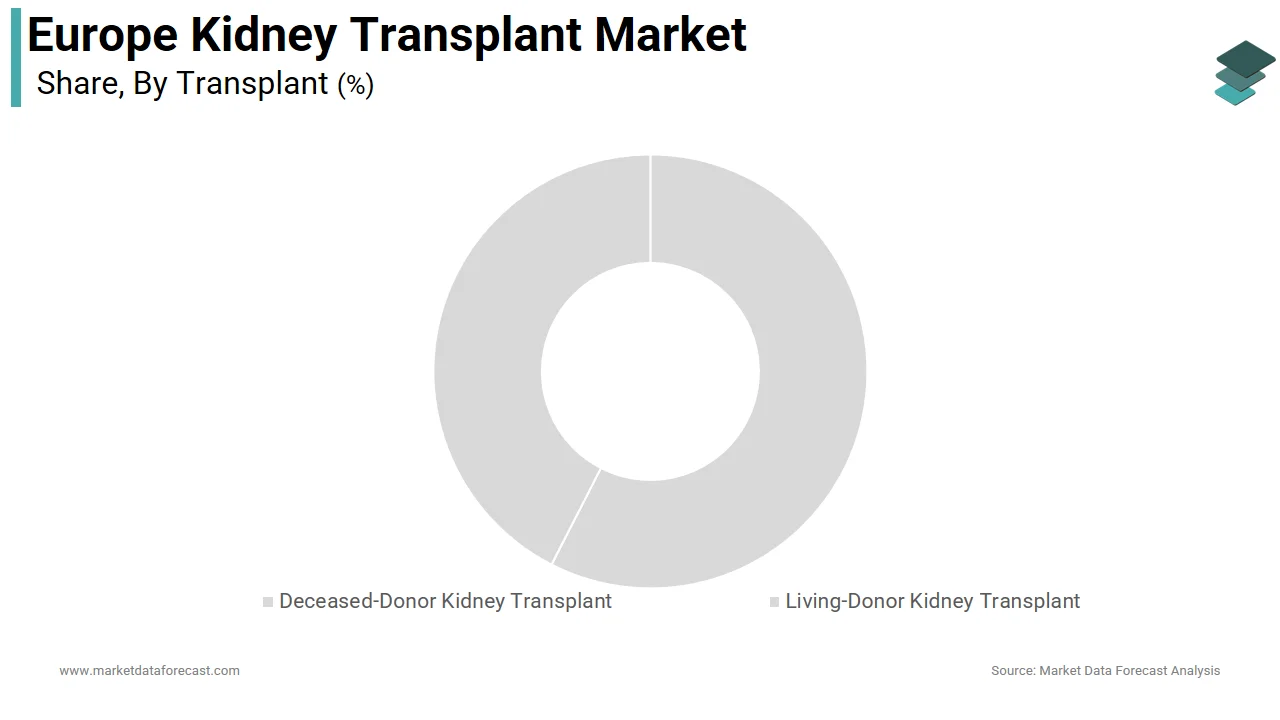
The living-donor kidney transplantation segment is likely to experience the fastest CAGR of 5.9% from 2026 to 2034 due to superior clinical outcomes, living donor grafts have a higher five-year survival rate than deceased donor kidneys, and proactive policy initiatives to overcome organ shortages. The Netherlands exemplifies this trend, where a significant portion of kidney transplants originated from living donors, supported by streamlined evaluation pathways and donor protections like wage compensation and travel reimbursement. In the UK, the Living Donor Scheme is experiencing a recovery in donation numbers, with growth seen in recent, more recent, annual reporting periods. Additionally, international cooperative networks, such as Eurotransplant, continue to facilitate cross-border organ sharing to improve outcomes for highly immunized or specialized patients, leveraging a broader pool to find compatible matches. Living donation is no longer just a niche possibility. It is now a mainstream solution across Europe, driven by better education and streamlined processes that deliver faster, more durable results for patients.
By Age Group Insights
The adult segment held the majority share of the Europe Kidney Transplant Market in 2025. The supremacy of the adult segment is credited to the high prevalence of end-stage kidney disease (ESKD) among adults, primarily driven by age-related comorbidities such as type 2 diabetes, hypertension, and glomerulonephritis. According to sources, the overwhelming majority of patients waiting for a kidney transplant are adults, with the highest concentration of individuals on the waiting list falling into middle and older age groups. National health systems prioritize adult transplants due to established surgical protocols, predictable outcomes, and cost-effectiveness compared to lifelong dialysis. Transplant centers across Germany, France, and Italy have optimized workflows for adult recipients, including standardized immunosuppression regimens and post-operative care pathways. The sheer demographic weight of aging populations ensures sustained demand, making adult transplantation the clinical and operational core of the European market.
The pediatric kidney transplantation segment is on the rise and is expected to be the fastest-growing segment in the market by witnessing a CAGR of 7.2% during the forecast period, owing to improved early diagnosis of congenital and hereditary kidney diseases, such as reflux nephropathy and polycystic kidney disease, as well as enhanced surgical techniques for small recipients. Specialized pediatric centers in London and Paris continue to achieve high transplant success rates in very young children and infants, even when dealing with complex cases. The European Society for Paediatric Nephrology, supported by national registries tracking long-term outcomes, notes that pediatric transplant numbers are sustained and growing, with registries serving as crucial tools for monitoring success. Living donor transplants, often from parents, account for a notable share of pediatric cases, ensuring better HLA matching and reduced wait times. Advances in age-specific immunosuppressive regimens are making pediatric transplants more accessible and secure, fundamentally extending the life expectancy of children across Europe suffering from kidney failure.
By End User Insights
The transplant centers segment was the largest segment in the Europe Kidney Transplant Market by accounting for a significant share in 2025. The prominence of the transplant centers segment is credited to centralized expertise, regulatory compliance, and integration with national organ allocation networks like Eurotransplant. These specialized facilities, often affiliated with university hospitals, are purpose-built for complex organ transplantation, featuring multidisciplinary teams including transplant surgeons, nephrologists, immunologists, and social workers. Spain maintains a high-volume, centralized, and standardized kidney transplant network, where a select group of accredited hospitals, supported by real-time donor coordination, handles nearly all national procedures. Transplant centers that maintain high annual volumes often achieve superior patient outcomes and lower complication rates due to increased team experience, procedural consistency, and specialized care. National health authorities designate these centers as hubs of excellence, ensuring consistent quality, data reporting, and access to advanced technologies like machine perfusion. This concentration of skill and infrastructure makes transplant centers the undisputed cornerstone of Europe’s transplant ecosystem.
The academic and research institutes segment is expected to exhibit a noteworthy CAGR of 8.4% from 2026 to 2034. The rapid expansion of the academic and research institutes segment is propelled by its dual role as clinical care providers and innovation engines, driving next-generation transplant science. Institutions like Karolinska Institutet in Sweden and Charité, Universitätsmedizin Berlin, lead clinical trials on tolerance-inducing therapies, xenotransplantation, and AI-driven donor matching. The European Commission’s Horizon Europe program is actively funding collaborative academic and industry consortia focused on advancing transplantation research, particularly in the areas of immunotherapies, cell-based treatments, and data-driven clinical outcomes. Besides, these institutes train the next generation of transplant professionals and maintain national registries that inform policy. Advancements in regenerative medicine, genomic profiling, and machine perfusion have positioned academic centers as key centers for translating research into practical applications. Their integration of research, education, and clinical care positions them as the vanguard of transplant innovation in Europe.
COUNTRY-LEVEL ANALYSIS
Spain Kidney Transplant Market Analysis
Spain dominated the Europe Kidney Transplant Market by capturing a 24.1% share in 2025. The dominance of the Spanish market is attributed to its world-renowned organ donation system and high transplant rates. The National Transplant Organization (ONT), established in 1989, operates a decentralized network of hospital-based coordinators who identify potential donors and facilitate family consent. Spain continues to maintain the highest global organ donation rate by combining a presumed consent legal framework with extensive professional training, a dedicated national transplant organization, and strong public trust. In 2024, Spain achieved record-breaking transplant activity, with the vast majority of kidney transplants originating from deceased donors, reflecting a substantial increase over previous years. The system emphasizes equity, efficiency, and transparency, serving as a model for other nations. Continuous investment in perfusion technology and cross-border collaboration within Eurotransplant further enhances outcomes. This institutional excellence, cultural acceptance, and operational maturity solidify Spain’s position as the continent’s transplant leader.
Germany Kidney Transplant Market Analysis
Germany followed closely in the Europe kidney transplant market by holding a 19.2% share in 2025. The growth of the German market is supported by high clinical standards but constrained by low deceased donor rates. Due to a system that requires explicit, prior consent for organ donation and significant challenges in obtaining family approval during difficult times, Germany continues to face a critical shortage of donor organs relative to the high number of patients awaiting life-saving kidney transplants. However, the country compensates through excellence in living donor programs and surgical innovation. University hospitals in Heidelberg and Munich perform complex re-transplants and ABO-incompatible procedures with high success rates. Germany also leads in adopting ex vivo machine perfusion, with a portion of marginal kidneys now preserved using this technology. Recent legislative efforts to introduce an opt-out system aim to boost donations, but until then, Germany’s strength lies in quality, not quantity, making it a high-value, technically advanced market.
France Kidney Transplant Market Analysis
France is another key player in the Europe kidney transplant market due to its centralized transplant authority and strong public health integration. The Agence de la Biomédecine oversees all organ donation and transplantation activities, ensuring uniform protocols and equitable access. France utilizes a legal framework of presumed consent for organ donation while maintaining strict procedures for consulting with families to identify any objections. In 2024, the nation continued to see high rates of deceased donation and a strong focus on increasing living kidney transplants, including advancing the use of paired, cross-donor exchanges. National initiatives like the “Plan Greffe” invest in transplant infrastructure and public awareness. Additionally, France pioneers research in immunosuppression minimization at institutions like Hôpital Necker. France maintains its premier position in European transplantation by balancing high-volume activity with ethical oversight and continuous clinical innovation.
United Kingdom Kidney Transplant Market Analysis
The United Kingdom is moving ahead steadfastly in the Europe kidney transplant market owing to recent legislative reform and rising living donor activity. The Organ Donation (Deemed Consent) Act 2019 shifted England, Wales, and Northern Ireland to an opt-out system, though the full impact is still unfolding. In recent periods, the UK has sustained high levels of kidney transplantation, with a significant contribution from living donors supported by NHS financial and logistical initiatives, though the total number of transplants, while strong, has not yet reached previous peak levels and continues to be dwarfed by the waiting list, with modest rather than double-digit percentage growth in living donation. Specialized centers like Guy’s Hospital in London lead in pediatric and highly sensitized transplants. Post-Brexit, the UK maintains cooperation with Eurotransplant through bilateral agreements, ensuring continued access to shared organs. The NHS Long Term Plan prioritizes transplantation as a cost-effective alternative to dialysis, driving investment in workforce and infrastructure. This blend of policy modernization, donor support, and clinical excellence positions the UK as a dynamic and evolving market.
Netherlands Kidney Transplant Market Analysis
The Netherlands is predicted to grow in the Europe Kidney Transplant Market from 2026 to 2034 due to its leadership in living donor transplantation and ethical innovation. Living kidney donation has become a primary source of transplants in several leading European programs, with some nations now seeing more transplants from living donors than from deceased ones. This growth is driven by national policies that prioritize donor welfare through standardized mental health evaluations and the elimination of financial barriers for those who choose to donate. The Dutch Transplant Foundation operates a highly efficient paired exchange program, enabling transplants for immunologically challenging cases. The country also pioneered the use of normothermic machine perfusion, improving outcomes for extended-criteria donors. Public trust in the system is high, with a significant share of citizens registered as donors. The Netherlands sets the European standard for transplant care, prioritizing equity, innovation, and donor welfare in a sustainable, human-centric model.
COMPETITIVE LANDSCAPE
Competition in the Europe Kidney Transplant Market is not commercial but institutional, defined by the performance, efficiency, and ethical rigor of national and regional transplant organizations. Entities like Eurotransplant, NHSBT, and Agence de la Biomédecine compete indirectly through transplant rates, waitlist mortality reduction, and innovation adoption rather than market share. Differentiation arises from donor system design, opt-out versus opt-in living donor infrastructure, and integration of advanced technologies like machine perfusion. Academic medical centers further shape the landscape through research leadership in immunosuppression minimization and regenerative medicine. While collaboration dominates due to shared humanitarian goals, benchmarking against international standards drives continuous improvement. The true “competition” lies in optimizing scarce organ resources to maximize patient survival and quality of life, making this a unique market where excellence is measured in lives saved, not revenue generated.
KEY MARKET PLAYERS
The leading companies operating in the Europe kidney transplant market include:
- Novartis AG
- Roche Holding AG
- Sanofi SA
- National Health Service Blood and Transplant (NHSBT)
- Pfizer Inc.
- Agence de la Biomédecine
- Bristol-Myers Squibb Company
- AbbVie Inc.
- Astellas Pharma Inc.
- Eurotransplant International Foundation
- GlaxoSmithKline plc
- Johnson & Johnson
- Merck & Co., Inc.
TOP PLAYERS IN THE EUROPE MARKET
- Eurotransplant International Foundation is a pivotal non-profit organization coordinating organ donation and transplantation across eight European countries, including Germany, the Netherlands, and Austria. It manages a unified waiting list, donor matching algorithms, and allocation protocols for thousands of patients annually. The foundation ensures equitable, transparent, and efficient organ distribution based on medical urgency and immunological compatibility. In recent years, Eurotransplant has integrated machine perfusion data into its allocation system and expanded its kidney exchange program to facilitate transplants for highly sensitized patients. It also leads cross-border training initiatives for transplant coordinators and maintains one of the world’s most comprehensive transplant registries. These efforts reinforce its role as the central nervous system of deceased and living donor kidney transplantation in continental Europe.
- NHS Blood and Transplant plays a critical role in the United Kingdom’s kidney transplant ecosystem by managing organ donation, donor matching, and transplant logistics nationwide. Following the 2020 opt-out law, NHSBT launched extensive public awareness campaigns and enhanced hospital coordination to increase donor identification. Recently, NHSBT integrated real-time graft quality metrics from ex vivo perfusion devices into its allocation algorithm to improve outcomes. It also collaborates with academic centers on trials for tolerance-inducing therapies. NHSBT enhances equitable transplant access throughout the UK by implementing strategic policies, leveraging modern technology, and fostering public engagement.
- Agence de la Biomédecine is France’s national authority overseeing organ and tissue transplantation, enforcing ethical standards, and coordinating donation activities across all hospitals. It manages the national transplant waiting list, certifies transplant centers, and promotes living donation through public education and streamlined evaluation pathways. It also leads the “Plan Greffe” initiative, investing in transplant workforce training and infrastructure modernization. The Agence de la Biomédecine maintains France's position as a top-tier, ethical transplant leader by fostering innovation, ensuring regulatory compliance, and facilitating societal debate.
TOP STRATEGIES USED BY THE KEY MARKET PARTICIPANTS
Key players in the Europe Kidney Transplant Market are expanding living donor programs through financial protections, psychological support, and streamlined evaluation pathways to address organ shortages. They are integrating ex vivo machine perfusion data into organ allocation systems to improve graft utilization and post-transplant outcomes. Organizations are enhancing cross-border kidney exchange platforms to facilitate transplants for immunologically challenging patients. Public awareness campaigns and digital donor registries are being leveraged to increase consent rates under opt-out or opt-in frameworks. Additionally, institutions are collaborating with academic centers on clinical trials for tolerance-inducing therapies and personalized immunosuppression to reduce long-term complications and improve quality of life for recipients.
MARKET SEGMENTATION
This research report on the Europe kidney transplant market has been segmented and sub-segmented into the following categories.
By Transplant
- Deceased-Donor Kidney Transplant
- Living-Donor Kidney Transplant
- Direct Donation Kidney Transplant
- Non-directed Donation Kidney Transplant
- Paired exchange Kidney Transplant
By Age Group
- Adult
- Pediatric
By End User
- Transplant Centers
- Hospitals
- Academic and Research Institutes
By Country
- UK
- France
- Spain
- Germany
- Italy
- Russia
- Sweden
- Denmark
- Switzerland
- Netherlands
- Turkey
- Czech Republic
- Rest of Europe