- Product Description Description
- Table of Contents TOC
- List of Table & Figure LOT
- Get Free Sample PDF Sample PDF
Market Size, 2025
$2.78 BnMarket Estimate, 2026
$2.89 BnMarket Forecast, 2034
$3.92 BnCAGR, 2026–2034
3.88%Executive Summary: Europe Kitchen Hood Market
- Market Scope: Comprehensive regional kitchen hood market analysis covering product types, end-use sectors, sales channels, country-specific leadership frameworks, and key competitive dynamics.
- Market Valuation: Valued at USD 2.78 billion (2025), estimated at USD 2.89 billion (2026), and projected to reach USD 3.92 billion by 2034, registering a steady CAGR of 3.88% (2026–2034).
- Primary Growth Drivers: Increasing awareness of indoor air quality, stringent European energy efficiency regulations (Ecodesign Directive), rising urbanization, and demand for smart connected kitchen appliances. Opportunities include smart controls, voice activation, motion sensors, and online retail channel expansion.
Key Market Segment Metrics (2026–2034)
| Category | Leading Segment (Base Year Position) | Fastest-Growing Segment |
|---|---|---|
| By Product & End-Use | Under cabinet kitchen hoods (held largest share of 45% in 2025); Residential segment (dominated with 70.6% share) | Wall-mounted kitchen hoods (projected fastest CAGR of 6.2%); Commercial segment (fastest CAGR of 7.8%) |
| By Sales Channel & Region | Hypermarkets and supermarkets (accounted for largest share of 40.9% in 2025); Germany (led regional market with 25% share) | Online retailing (forecast at fastest CAGR of 12.3%); United Kingdom (projected country CAGR of 5.8%) |
Major Market Players & Market Structure
Market Structure: Highly competitive European kitchen ventilation landscape focusing on continuous product innovation in smart kitchen technologies, energy-efficient designs, and sustainable manufacturing practices.
Key Companies: SOEX Group, Texaid, Recover Textile Systems, Worn Again Technologies, Carbios, Lenzing Group, and Birla Cellulose.
Europe Kitchen Hood Market Size
The Europe Kitchen Hood Market is projected to grow from USD 2.78 billion in 2025 to USD 2.89 billion in 2026 and reach USD 3.92 billion by 2034, registering a CAGR of 3.88% from 2026 to 2034.
Kitchen hoods is also known as range hoods or exhaust hoods. These are essential devices designed to remove airborne grease, smoke, odors, and heat generated during cooking. Also, these appliances are available in various types, including ducted, ductless, and island hoods, catering to diverse kitchen designs and functionalities. According to Eurostat, over 60% of European households now own kitchen hoods which is reflecting their growing adoption as a standard feature in modern kitchens. Moreover, according to the European Environment Agency, poor indoor air quality contributes to respiratory issues and is prompting consumers to invest in effective ventilation solutions.
Technological advancements have further propelled the market with innovations such as smart controls, noise reduction systems, and energy-efficient motors gaining traction. The European Commission’s Ecodesign Directive mandates that all kitchen hoods meet stringent energy efficiency standards, driving manufacturers to adopt sustainable practices. In addition, key players like Electrolux, Bosch, and Whirlpool dominate the market and are focusing on design innovation and eco-friendly features. Urbanization is increasing and compact living spaces are becoming more common, so, the demand for sleek as well as space-saving kitchen hoods is rising. This trend when coupled with growing health consciousness and regulatory support and focuses attention on the pivotal role of kitchen hoods in enhancing both functionality and sustainability in European households.
MARKET DRIVERS
Increasing Awareness of Indoor Air Quality
The growing understanding of indoor air quality and its impact on health is majorly driving the growth rate of the European kitchen hood market. The European Environment Agency reports that poor indoor air quality contributes to over 380,000 premature deaths annually in Europe due to respiratory and cardiovascular diseases. This has led consumers to prioritize effective ventilation solutions like kitchen hoods, which remove pollutants such as grease, smoke, and odors generated during cooking. According to the findings by the Eurostat, greater than 60% of European households now own kitchen hoods which is reflecting their widespread adoption as a necessity rather than a luxury. Additionally, the World Health Organization (WHO) emphasizes that reducing indoor air pollution is critical for public health, further driving demand.
Stringent Energy Efficiency Regulations
Stringent energy efficiency regulations imposed by the European Commission are another significant driver of the kitchen hood market. The Ecodesign Directive mandates that all kitchen hoods meet specific energy performance standards and is encouraging manufacturers to innovate and produce eco-friendly models. The European Commission reports that energy-efficient appliances could reduce household energy consumption by up to 20% and that is aligning with the EU’s broader climate goals. Furthermore, the International Energy Agency (IEA) reported that energy-efficient kitchen hoods not only lower electricity bills but also contribute to reducing carbon emissions. As governments incentivize green technologies and consumers prioritize sustainability, the demand for energy-efficient kitchen hoods continues to rise, propelling market expansion across the region.
MARKET RESTRAINTS
High Initial Costs and Installation Challenges
High initial cost and installation challenges associated with advanced models are key restraints for the participants in the European kitchen hood market. Eurostat marked that premium kitchen hoods equipped with smart features and energy-efficient technologies can cost up to 50% more than standard models and is making them less accessible for price-sensitive consumers. Additionally, the European Federation of National Trade Associations reports that installation costs for ducted hoods, which require professional setup and modifications to ventilation systems, can increase overall expenses by 25%. This poses a significant barrier, particularly in older European homes with limited space or outdated infrastructure. The International Energy Agency notes that retrofitting existing kitchens to accommodate modern hoods often discourages homeowners from upgrading. These financial and logistical challenges limit market penetration, particularly among lower-income households, hindering broader adoption across the region.
Limited Awareness in Rural Areas
Low awareness and adoption rate of kitchen hoods in rural areas where traditional cooking methods and open ventilation systems remain prevalent continues to be a major problem for the European kitchen hood market. According to Eurostat, only 40% of rural households in Europe own kitchen hoods, compared to over 70% in urban areas. The European Environment Agency emphasizes that rural populations often underestimate the health risks of indoor air pollution, relying on natural ventilation instead of mechanical solutions. Furthermore, the World Health Organization (WHO) reports that rural households using solid fuels for cooking are exposed to higher levels of harmful pollutants, yet adoption of kitchen hoods remains low due to cultural preferences and lack of marketing efforts targeting these regions. This urban-rural divide creates an imbalance in market growth because manufacturers focus primarily on urban centers and is leaving rural areas underserved and underpenetrated.
MARKET OPPORTUNITIES
Growing Demand for Smart and Connected Kitchen Hoods
The increasing demand for smart and connected kitchen hoods presents a significant opportunity for the European market. Eurostat reports that smart home devices including IoT-enabled kitchen appliances are projected to grow notably and is driven by rising urbanization and tech-savvy consumers. Smart kitchen hoods equipped with features such as motion sensors, voice control, and air quality monitoring are gaining traction. As per the European Consumer Organisation, over 30% of European households are willing to invest in smart appliances for enhanced convenience and energy savings. Additionally, the International Energy Agency (IEA) states that smart kitchen hoods can reduce energy consumption by up to 30% through automated operation and real-time monitoring. Manufacturers are focusing on integrating advanced technologies and thereby, this segment is poised to unlock new revenue streams and cater to the evolving preferences of modern homeowners.
Expansion into Emerging Markets and Rural Areas
The expansion of kitchen hood adoption in emerging markets and rural areas offers another major growth opportunity. According to Eurostat, only 40% of rural households in Europe currently own kitchen hoods and is leaving significant untapped potential. The European Environment Agency emphasizes that improving indoor air quality in rural regions, where traditional cooking methods are prevalent, could mitigate health risks associated with indoor pollution. Governments and NGOs are increasingly promoting awareness campaigns about the benefits of kitchen hoods, supported by subsidies for energy-efficient models By targeting these underserved regions and offering affordable, compact designs, manufacturers can broaden their customer base and drive sustainable market expansion across Europe.
MARKET CHALLENGES
Competition from Alternative Ventilation Solutions
The competition from alternative ventilation solutions, such as open windows and standalone air purifiers are significant challenges for the European kitchen hood market. The European Environment Agency reports that over 50% of rural households rely on natural ventilation methods, which are perceived as cost-effective and sufficient for air quality management. These alternatives pose a challenge to kitchen hood manufacturers as they cater to budget-conscious consumers who may not prioritize dedicated cooking ventilation. The International Energy Agency notes that while air purifiers improve overall air quality, they lack the ability to remove grease and heat effectively, creating an educational gap. Overcoming this competition requires targeted marketing and awareness campaigns to highlight the unique benefits of kitchen hoods.
Fluctuating Raw Material Costs and Supply Chain Disruptions
Fluctuating costs of raw materials and supply chain disruptions which impact production and pricing is a key challenge for the European kitchen hood market. Eurostat reports that the prices of key materials like stainless steel and aluminum, commonly used in kitchen hood manufacturing, increased by 25% in 2022 due to global supply chain constraints. The European Federation of National Trade Associations states that these cost fluctuations have led to a 10% rise in production expenses, forcing manufacturers to either absorb the costs or pass them on to consumers. This instability creates uncertainty in profit margins and slows innovation. Furthermore, the International Labour Organization stated that post-pandemic supply chain bottlenecks continue to affect timely delivery of components, delaying product launches. Addressing these challenges requires strategic sourcing, investment in local supply chains, and adaptive pricing strategies to maintain market stability and consumer affordability.
REPORT COVERAGE
| REPORT METRIC | DETAILS |
| Market Size Available | 2025 to 2034 |
| Base Year | 2025 |
| Forecast Period | 2026 to 2034 |
| Segments Covered | By Product, End Use, Sales Channel, and Region |
| Various Analyses Covered | Global, Regional, & Country Level Analysis; Segment-Level Analysis; DROC; PESTLE Analysis; Porter’s Five Forces Analysis; Competitive Landscape; Analyst Overview of Investment Opportunities |
| Regions Covered | UK, France, Spain, Germany, Italy, Russia, Sweden, Denmark, Switzerland, Netherlands, Turkey, Czech Republic, Rest of Europe |
| Market Leaders Profiled | SOEX Group, Texaid, Recover Textile Systems, Worn Again Technologies, Carbios, Lenzing Group, Birla Cellulose. |
SEGMENTAL ANALYSIS
By Product Type Insights
Under cabinet kitchen hoods lead the European market, holding a 45% share as of 2025, according to Eurostat. Their dominance is driven by affordability, ease of installation, and suitability for compact kitchens, which are prevalent in urban areas. The European Federation of National Trade Associations highlights that over 60% of European households live in apartments, fueling demand for space-saving solutions. Additionally, advancements in noise reduction and energy efficiency have enhanced their appeal. Statista reports a 5% annual growth in sales from 2020 to 2022, underscoring their importance. As urbanization rises, under cabinet hoods remain critical for addressing practical ventilation needs in smaller living spaces.
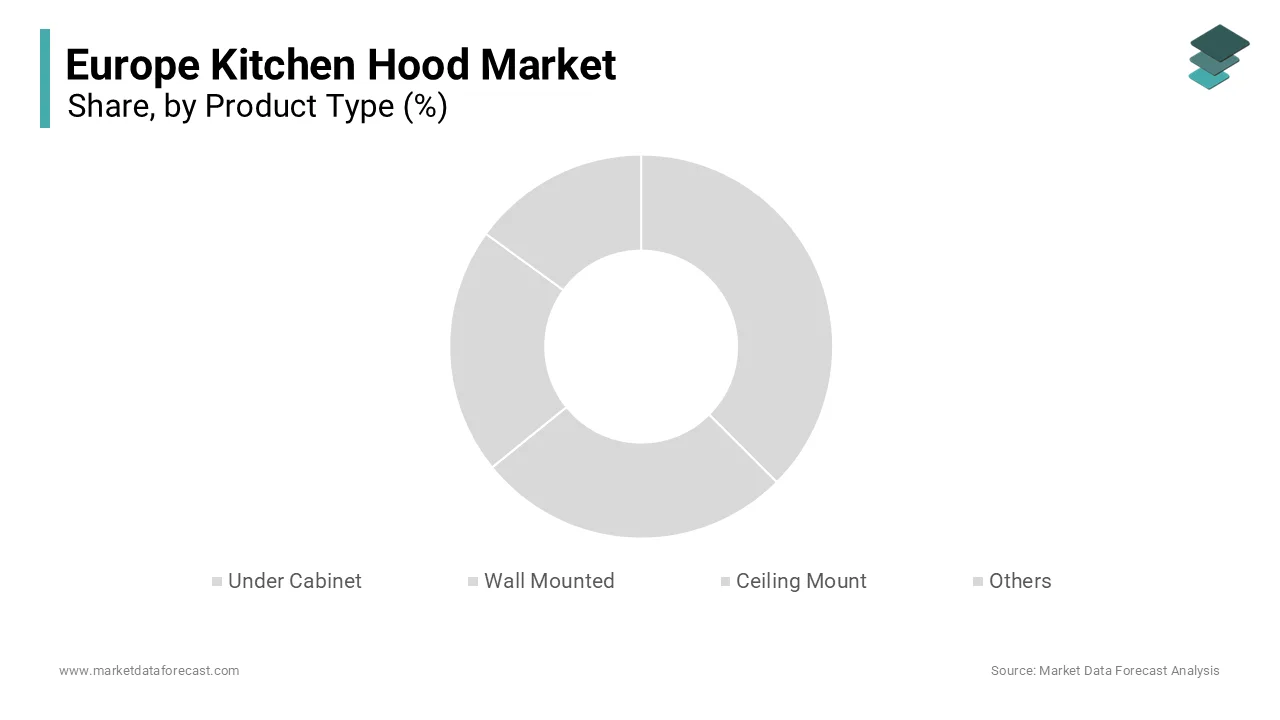
The Wall-mounted kitchen hood segment is on the rise and is expected to be the fastest growing segment in the global market by witnessing a CAGR of 6.2% during the forecast period due to their aesthetic appeal and functional versatility, catering to modern open-plan kitchens. The European Consumer Organisation notes that rising disposable incomes and a preference for premium designs drive adoption. Additionally, energy-efficient models reduce consumption by up to 25%, aligning with EU sustainability goals. With urban homeowners prioritizing style and functionality, wall-mounted hoods are set to capture a larger market share. Their ability to combine innovation with visual appeal positions them as a key driver of future growth in the European kitchen hood market.
By End-use Insights
The residential sector was the largest end-use segment in 2025 and accounted for 70.6% share of the European kitchen hood market. The increasing urbanization, with over 60% of Europeans living in apartments, necessitating compact and efficient ventilation solutions is primarily influencing the rise of this segment. The European Environment Agency reported that residential kitchen hoods are critical in reducing indoor air pollutants, which contribute to respiratory issues. Statista reports a 4.5% annual growth in residential sales from 2020 to 2022, fueled by rising health awareness and government incentives for energy-efficient appliances. Modern kitchens are becoming a focal point of home design, hence, residential kitchen hoods remain essential for both functionality and sustainability.
The commercial segment is estimated to register the fastest CAGR of 7.8%. This performance is propelled by the expansion of restaurants and cafes, alongside stricter health regulations for commercial kitchens. The European Federation of National Trade Associations notes that high-performance kitchen hoods are now mandatory to manage cooking emissions effectively. Additionally, the hospitality industry’s recovery post-pandemic has boosted demand for advanced models. With open-kitchen designs gaining popularity, aesthetically pleasing yet functional hoods are increasingly adopted. As the commercial sector continues to grow, kitchen hoods play a vital role in ensuring compliance, efficiency, and enhanced customer experiences in dining establishments across Europe.
By Sales Channel Insights
The Hypermarkets and supermarkets segment dominated the European kitchen hood market and captured a 40.9% share in 2025. The widespread accessibility is allowing consumers to physically inspect products and benefit from trusted brand visibility which propels the growth of this segment in the global market. As per the European Federation of National Trade Associations, these outlets attract high footfall, particularly in urban areas, where over 60% of households reside. Hypermarkets cater to traditional buying preferences, offering convenience and reliability. This channel is a critical touchpoint for first-time buyers, so it remains vital for driving mass adoption of kitchen hoods across Europe.
The Online retailing segment is expanding rapidly and is anticipated to witness the fastest CAGR of 12.3% owing to the increasing popularity of e-commerce platforms, with Eurostat reporting that over 70% of European households now shop online. The European Consumer Organisation notes that online channels provide competitive pricing, detailed product reviews, and doorstep delivery, appealing to tech-savvy consumers. Online retailing also enables manufacturers to reach rural and underserved markets effectively. Convenience and variety remain key consumer priorities, so online retailing is poised to reshape the future of the kitchen hood market in Europe.
REGIONAL ANALYSIS
Germany was at the forefront of the European kitchen hood market by holding a 25% share in 2024. This is propelled by the country’s strong emphasis on energy efficiency and sustainability, supported by the European Ecodesign Directive. The German Federation of Home Appliances highlights that over 70% of German households own energy-efficient kitchen hoods, reflecting high consumer awareness of indoor air quality. Additionally, Germany’s robust manufacturing base, with key players like Bosch and Siemens, fosters innovation in smart and connected hoods. Eurostat notes that urbanization rates exceed 77%, increasing demand for compact and modern designs. With government incentives promoting green technologies, Germany remains at the forefront of adopting advanced kitchen ventilation solutions.
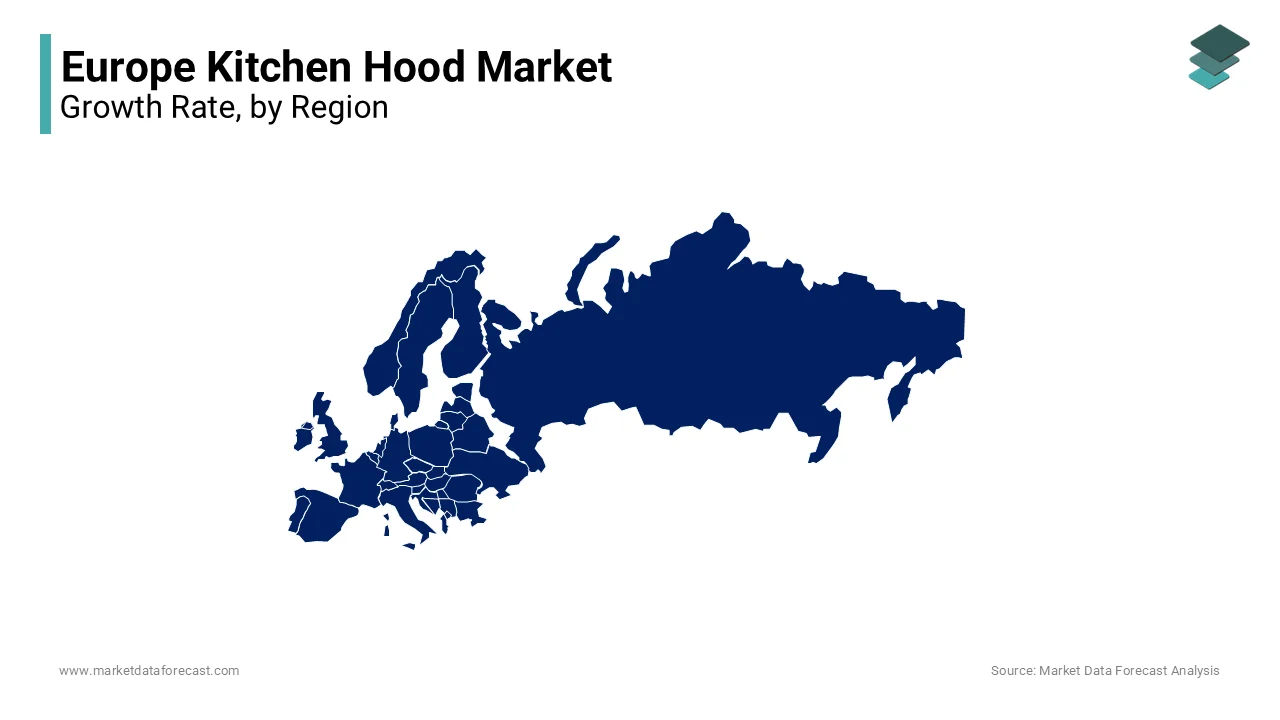
The United Kingdom is a key player in the European kitchen hood market and is estimated to register the fastest CAGR of 5.8. The British Retail Consortium stated that the rise of smart home trends has fueled demand for IoT-enabled kitchen hoods, particularly in urban areas where over 83% of the population resides. Government initiatives promoting energy-efficient appliances further boost adoption. With increasing investments in residential infrastructure and growing health consciousness, the UK continues to drive market growth through innovation and consumer-centric solutions.
Italy holds a significant portion of the European kitchen hood market. Its reputation for design excellence, with manufacturers like Elica and Faber offering sleek, aesthetically pleasing models that cater to modern kitchens are majorly contributing the development of market in this country. The Italian Association of Domestic Appliances revealed that over 65% of Italian households prioritize stylish yet functional kitchen hoods. Additionally, Eurostat notes that Italy’s urbanization rate exceeds 70%, driving demand for space-saving solutions. The European Environment Agency emphasizes that rising awareness of indoor air quality further propels adoption. There is a strong export-oriented industry and focus on premium designs, so, Italy remains a pivotal player in the European kitchen hood market.
KEY MARKET PLAYERS
Key market players of the europe kitchen hood market include SOEX Group, Texaid, Recover Textile Systems, Worn Again Technologies, Carbios, Lenzing Group, and Birla Cellulose.
MARKET SEGMENTATION
This research report on the Europe kitchen hood market is segmented and sub-segmented into the following categories.
By Product Type
- Under Cabinet
- Wall Mounted
- Ceiling Mount
- Others
By End-use
- Residential
- Commercial
By Sales Channel
- Direct Sales
- Hypermarkets/ Supermarkets
- Specialty Stores
- Multi-brand Stores
- Online retailing
- Convenience Stores
- Others
By Country
- UK
- France
- Spain
- Germany
- Italy
- Russia
- Sweden
- Denmark
- Switzerland
- Netherlands
- Turkey
- Czech Republic
- Rest of Europe