Europe Laboratory Filtration Market Size, Share, Trends & Growth Forecast Report By Technology, Product, End User and Country (UK, France, Spain, Germany, Italy, Russia, Sweden, Denmark, Switzerland, Netherlands, Turkey, Czech Republic and Rest of Europe) - Industry Analysis, From (2026 to 2034)
Market Size, 2025
$780 MnMarket Estimate, 2026
$836.39 MnMarket Forecast, 2034
$1,462 MnCAGR, 2026–2034
7.23%Europe Laboratory Filtration Market Report Summary
The Europe laboratory filtration market was valued at USD 780 million in 2025, is anticipated to reach USD 836.39 million in 2026, and is projected to reach USD 1,462 million by 2034, growing at a CAGR of 7.23% from 2026 to 2034. Market growth is driven by rising biopharmaceutical production, increasing laboratory testing volumes, and expanding research activities across life sciences and healthcare sectors. Laboratory filtration plays a critical role in sample preparation, sterilization, clarification, and purification processes. The growing focus on quality assurance, contamination control, and regulatory compliance is further accelerating market expansion across Europe.
Key Market Trends
- Rising demand for sterile filtration in biopharmaceutical manufacturing.
- Increasing adoption of membrane-based filtration technologies.
- Growing investments in biotechnology and vaccine production facilities.
- Expansion of research laboratories and contract manufacturing organizations (CMOs).
- Strengthening emphasis on regulatory compliance and quality control standards.
Segmental Insights
- Based on technology, the microfiltration segment dominated the market in 2025 by accounting for 40.8% share, driven by its widespread use in removing microorganisms and particulates in laboratory and production processes.
- Based on product, the filter membranes segment held 33.5% share in 2025, supported by high recurring demand for consumables in research and pharmaceutical laboratories.
- Based on end user, the pharmaceutical and biopharmaceutical companies segment led the market by capturing 47.3% share in 2025, driven by increasing drug production, vaccine development, and biologics manufacturing.
Regional Insights
The Europe laboratory filtration market is witnessing steady growth across major economies, supported by strong pharmaceutical ecosystems, advanced research infrastructure, and expanding biotechnology investments.
- Germany led the regional market in 2025 with 22.9% share, driven by strong pharmaceutical manufacturing capabilities and advanced life sciences research.
- Ireland held a promising share in 2025, supported by its strong presence of multinational biopharmaceutical manufacturing facilities.
- Switzerland is expected to maintain a prominent share over the forecast period, driven by its global leadership in biotechnology, pharmaceutical innovation, and high regulatory standards.
Competitive Landscape
The Europe laboratory filtration market is characterized by strong competition among global filtration technology providers and life sciences equipment manufacturers. Market players are focusing on expanding membrane technologies, improving filtration efficiency, and enhancing scalability for bioprocessing applications. Strategic partnerships, product innovations, and investments in advanced filtration systems are shaping competitive dynamics across the region.
Prominent companies operating in the Europe laboratory filtration market include Merck Millipore, Pall Corporation, GE Healthcare, Sartorius Group, 3M Purification Inc., Thermo Fisher Scientific Inc., Cantel Medical Corporation, Cuno, Dow Water & Process Solutions, FilmTec Corporation, and Sigma-Aldrich Corporation.
Europe Laboratory Filtration Market Size
The size of the Europe laboratory filtration market was valued at USD 780 million in 2025. This market is expected to grow at a CAGR of 7.23% from 2026 to 2034 and be worth USD 1,462 million by 2034 from USD 836.39 million in 2026.
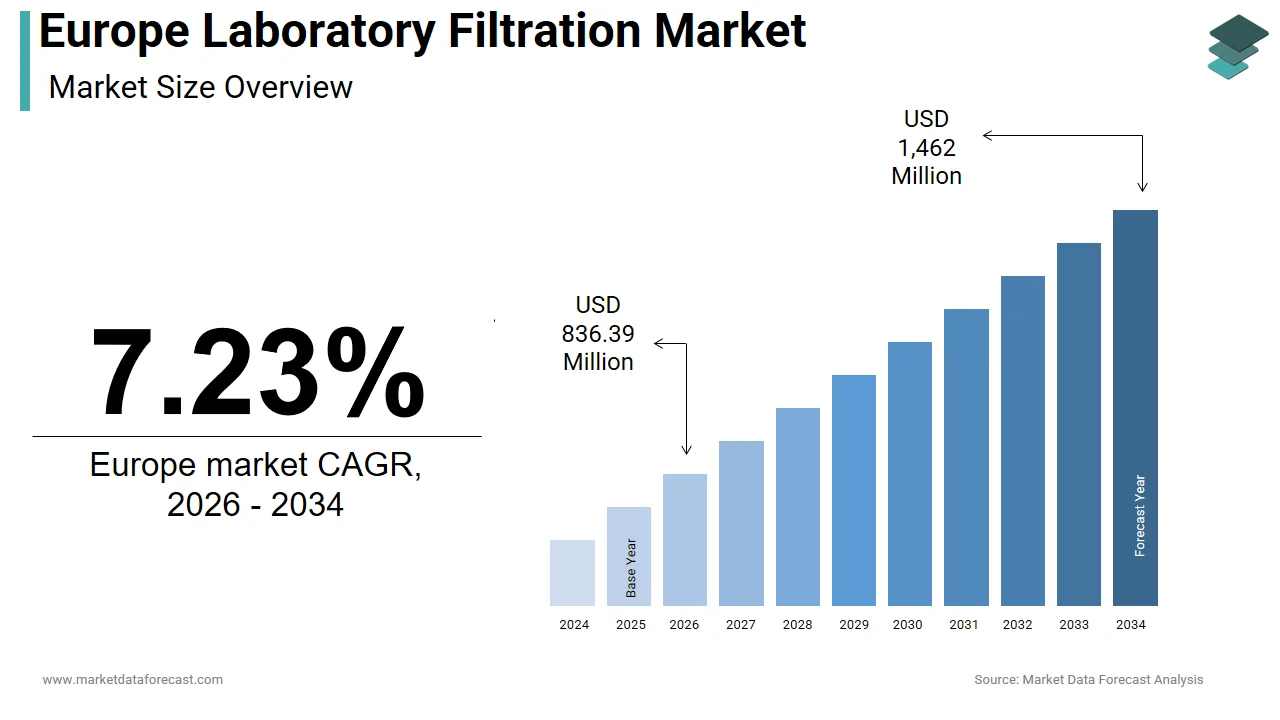
Laboratory filtration encompasses a suite of techniques and devices used to separate particulates, microorganisms, or macromolecules from liquids or gases in controlled scientific environments, ensuring sample integrity, sterility, and analytical accuracy. In Europe, these technologies are integral to pharmaceutical quality control, biotechnology R and D, academic research, and environmental testing. According to the European Medicines Agency, every batch of sterile medicinal product marketed in the European Union must undergo sterility testing using validated filtration methods compliant with Ph Eur General Chapter 2.6.1. Similarly, the European Commission mandates filtration‑based validation for water and air monitoring in Good Manufacturing Practice facilities. As per Eurostat, Europe hosts thousands of biopharmaceuticals and contract research organizations, each relying on high precision filtration for cell culture, buffer preparation, and analytical sample cleanup. The European Pharmacopoeia and ISO standards further dictate pore size accuracy, extractable limits, and bioburden control, reinforcing technical rigor. With rising investments in mRNA vaccine platforms, cell and gene therapies, and advanced materials research, laboratory filtration has evolved from a basic consumable into a critical process enabler underpinning scientific reproducibility, regulatory compliance, and innovation across the European life sciences ecosystem.
MARKET DRIVERS
Expansion of Biopharmaceutical and Advanced Therapy Manufacturing Drives Precision Filtration Demand
The rapid growth of biologics, mRNA vaccines, and cell and gene therapy production across Europe has intensified demand for high-integrity laboratory filtration systems capable of ensuring sterility and product purity, which is a major factor driving the European laboratory filtration market growth. According to the European Biopharmaceutical Review, over one hundred advanced therapy medicinal product trials were active in the European Union in 2023, with viral vector manufacturing requiring multiple sterile filtration steps for buffers, media, and final formulations. The European Medicines Agency reports that a majority of newly approved biologics between 2020 and 2023 necessitate 0.22 micron or smaller sterilizing grade filtration during production. Facilities in Ireland, Belgium, and Germany operate under stringent EMA guidelines that mandate redundant filtration for high-value products. For instance, lentiviral vector production typically involves pre-filtration, sterile filtration, and final fill filtration using low protein-binding membranes to prevent yield loss. Furthermore, the European Directorate for the Quality of Medicines requires extractable validation for all filters used in parenteral manufacturing. This regulatory and technical environment compels continuous investment in certified, single-use filtration assemblies, making advanced therapy manufacturing a primary driver of demand for high-performance laboratory filtration in Europe.
Strengthening of Regulatory Standards for Sterility and Contamination Control Enforces Technology Adoption
The tightening of European regulatory frameworks governing laboratory and manufacturing sterility has institutionalized the use of validated filtration technologies across scientific disciplines, which is further boosting the expansion of the European laboratory filtration market. Under the European Union Good Manufacturing Practice Guide Annex 1, revised in 2022, all aseptic processes must incorporate sterilizing grade filtration with integrity testing before and after use. According to the European Medicines Agency, this update has led to a marked increase in the procurement of integrity testable filter capsules and housing systems among pharmaceutical manufacturers since 2022. Similarly, the European Pharmacopoeia General Chapter 2.6.1 on sterility testing explicitly requires membrane filtration as the primary method for low bioburden samples, mandating filters with defined pore size and low binding characteristics. Environmental monitoring in cleanrooms also relies on air and liquid filtration for microbial sampling. In academic settings, Horizon Europe-funded projects on antimicrobial resistance and nanomedicine enforce strict contamination controls, necessitating Class II biosafety cabinets with HEPA filtration and sterile filtration of all culture media. These overlapping regulatory layers ensure that filtration is not optional but a non-negotiable component of scientific and industrial workflows across the European research and production landscape.
MARKET RESTRAINTS
High Cost of Advanced Filtration Systems Limits Adoption in Academic and Public Research Labs
Despite regulatory and scientific necessity, the elevated expense of high-performance laboratory filtration devices constrains consistent utilization in publicly funded and academic institutions across Europe, which is hindering the European laboratory filtration market growth. According to the European University Association, a majority of life science research laboratories in Southern and Eastern Europe reported budget shortfalls for consumables in 2023, with sterilizing-grade syringe filters and single-use capsule filters frequently reallocated or reused beyond recommended limits. As per a 2024 audit by the German Research Foundation, premium PES or PVDF membrane filters with low protein binding can cost several times more than standard cellulose acetate alternatives, which is creating affordability gaps for early-stage researchers. In countries like Poland and Greece, national research grants often exclude filtration consumables from equipment budgets, forcing labs to prioritize core instrumentation over sample preparation integrity. Even in Western Europe, post-pandemic funding reallocations have reduced per-researcher consumable allowances, as documented by the French National Centre for Scientific Research. These financial pressures compromise experimental reproducibility and increase contamination risks, particularly in sensitive applications like PCR or cell culture, thereby acting as a structural restraint on optimal filtration adoption.
Complex Validation and Documentation Requirements Increase Operational Burden
The European regulatory environment imposes extensive validation, traceability, and documentation obligations for laboratory filtration that significantly increase administrative and technical workload, which further hampers the regional market expansion. Under the EU GMP Annex 1, every sterilizing filtration event must be supported by pre-use and post-use integrity testing, batch-specific certificates of quality, and extractable profiles. According to the European Medicines Agency, a notable proportion of regulatory inspection findings in 2023 related to inadequate filtration documentation, including missing filter lot numbers or unverified pore size certifications. Small and medium enterprises, which constitute the majority of Europe’s biotech sector according to the European Federation of Pharmaceutical Industries and Associations, often lack dedicated quality assurance staff to manage these requirements. Furthermore, the European Pharmacopoeia mandates that filters used in compendial testing must be qualified for compatibility with specific analytes, necessitating in-house validation studies that can take weeks to complete. This compliance overhead delays experiments, inflates operational costs, and discourages the adoption of newer filter technologies unless they come with pre-validated regulatory dossiers. Consequently, even when technically superior, innovative filtration products face slow uptake due to documentation inertia.
MARKET OPPORTUNITIES
Rise of Single-Use Technologies in Bioprocessing Creates Integrated Filtration Demand
The accelerating shift toward single-use systems in European biopharmaceutical manufacturing is generating substantial opportunities for integrated and pre-sterilized filtration solutions, which is a notable opportunity in the European laboratory filtration market. According to the BioPlan Associates European Bioprocessing Survey, a large majority of biomanufacturers in the EU now use single-use bioreactors, with corresponding adoption of disposable filter capsules, tubing assemblies, and filter manifolds to maintain closed processing. This transition reduces cross-contamination risks and cleaning validation burdens, aligning with EMA’s emphasis on process robustness. In Ireland and Switzerland, major vaccine and monoclonal antibody producers have converted downstream purification trains to single-use formats, requiring multiple stages of depth and membrane filtration in pre-assembled configurations. The European Commission’s 2023 Pharmaceutical Strategy for Europe encourages single-use adoption to enhance supply chain resilience, indirectly boosting demand for gamma-irradiated, ready-to-use filtration devices. Companies such as Sartorius and Cytiva now offer modular filtration skids compatible with single-use bioreactors, enabling plug-and-play scalability.
Growth of Environmental and Food Safety Testing Expands Application Scope
Expanding regulatory mandates for environmental monitoring and food safety are broadening the use of laboratory filtration beyond traditional life sciences into public health and quality control domains, which is another major opportunity for the European laboratory filtration market. According to the European Environment Agency, EU member states conducted millions of water quality tests in 2023, all requiring membrane filtration for microbial enumeration under ISO 9308 standards. Similarly, the European Food Safety Authority mandates filtration-based methods for detecting Listeria and E. coli in food samples, with Regulation (EC) No 2073/2005 specifying membrane filtration as the reference technique for certain matrices. National agencies such as Germany’s Federal Institute for Risk Assessment and France’s ANSES operate high-throughput labs that process thousands of samples monthly, driving consistent demand for standardized filter units. The EU’s Water Framework Directive and Farm to Fork Strategy further institutionalize routine monitoring. Emerging contaminants such as microplastics and PFAS now require specialized filtration protocols for sample concentration, expanding demand for advanced consumables.
MARKET CHALLENGES
Shortage of Skilled Personnel in Filter Selection and Integrity Testing Impedes Optimal Use
Despite technological advancement, a persistent gap in technical expertise around filtration system selection and validation undermines effective implementation across European laboratories, which is challenging the European laboratory filtration market growth. According to the European Society for Laboratory Automation, only a minority of research technicians in non-GMP academic labs received formal training in filter compatibility, pore size selection, or integrity testing protocols in 2023. This knowledge deficit leads to frequent errors such as using hydrophilic membranes for organic solvents or omitting pre-wetting steps for PTFE filters, resulting in flow failure or sample loss. In biomanufacturing, the European Medicines Agency documented that a notable proportion of aseptic process deviations in 2023 were linked to incorrect filter handling or misinterpretation of integrity test results. Training programs remain fragmented; while Germany and the Netherlands offer certified courses through industry associations, many Southern and Eastern European countries lack structured curricula. The complexity of newer technologies, such as tangential flow filtration for mRNA purification, exacerbates the gap.
Supply Chain Fragmentation and Raw Material Volatility Disrupt Device Availability
The Europe laboratory filtration market faces recurring challenges from fragmented global supply chains and dependence on specialized polymer inputs whose availability is subject to geopolitical and industrial volatility. According to the European Commission’s Critical Raw Materials Act assessment, key filtration membrane materials such as polyethersulfone and polyvinylidene fluoride are sourced predominantly from Asia, with limited European production capacity. The 2022–2023 energy crisis in Europe disrupted local polymer compounding, leading to extended lead times for custom filter housings as reported by the European Laboratory Supply Association. Export restrictions on certain fluorochemicals from China in 2023 temporarily reduced PVDF membrane output, affecting sterility testing workflows in vaccine facilities in Belgium and Spain. Additionally, reliance on single-source suppliers for gamma irradiation sterilization creates bottlenecks during demand spikes. These vulnerabilities were highlighted during the pandemic when filter shortages delayed diagnostic kit production.
REPORT COVERAGE
| REPORT METRIC | DETAILS |
| Market Size Available | 2025 to 2034 |
| Base Year | 2025 |
| Forecast Period | 2026 to 2034 |
| Segments Covered | By Technology, Product, End User, and Country. |
| Various Analyses Covered | Global, Regional, and Country-Level Analysis, Segment-Level Analysis, Drivers, Restraints, Opportunities, Challenges; PESTLE Analysis; Porter’s Five Forces Analysis, Competitive Landscape, Analyst Overview of Investment Opportunities |
| Countries Covered | UK, France, Spain, Germany, Italy, Russia, Sweden, Denmark, Switzerland, Netherlands, Turkey, Czech Republic, and Rest of Europe |
| Market Leaders Profiled | Merck Millipore and Pall Corporation, GE Healthcare, Sartorius Group, 3M Purification Inc., Thermo Fisher Scientific Inc., Cantel Medical Corporation, Cuno, Dow Water & Process Solutions, FilmTec Corporation, GE Healthcare, and Sigma-Aldrich Corporation. |
SEGMENTAL ANALYSIS
By Technology Insights
The microfiltration segment commanded for 40.8% of the European market share in 2025. The dominance of the microfiltration segment in the European market is driven by its indispensable role in sterility assurance and microbial retention across pharmaceutical, diagnostic, and research applications. This technology, which employs membranes with pore sizes between 0.1 and 10 micrometers, is the cornerstone of bacterial removal in aqueous solutions and is explicitly mandated by regulatory bodies for sterility testing. According to the European Pharmacopoeia General Chapter 2.6.1, microfiltration using 0.45- or 0.22-micron membranes is the reference method for detecting viable microorganisms in sterile drug products. The European Medicines Agency requires that all batches of parenteral medicines undergo this test before release, generating consistent demand. Academic microbiology labs across France and Italy routinely use microfiltration for water quality analysis under ISO 9308 standards, which specify membrane filtration for enumerating E. coli and coliforms. Industrial biotechnology also relies heavily on microfiltration for cell harvesting in fermentation processes, with the European Biotechnology Association noting that a large majority of microbial bioprocesses use it as a primary clarification step.
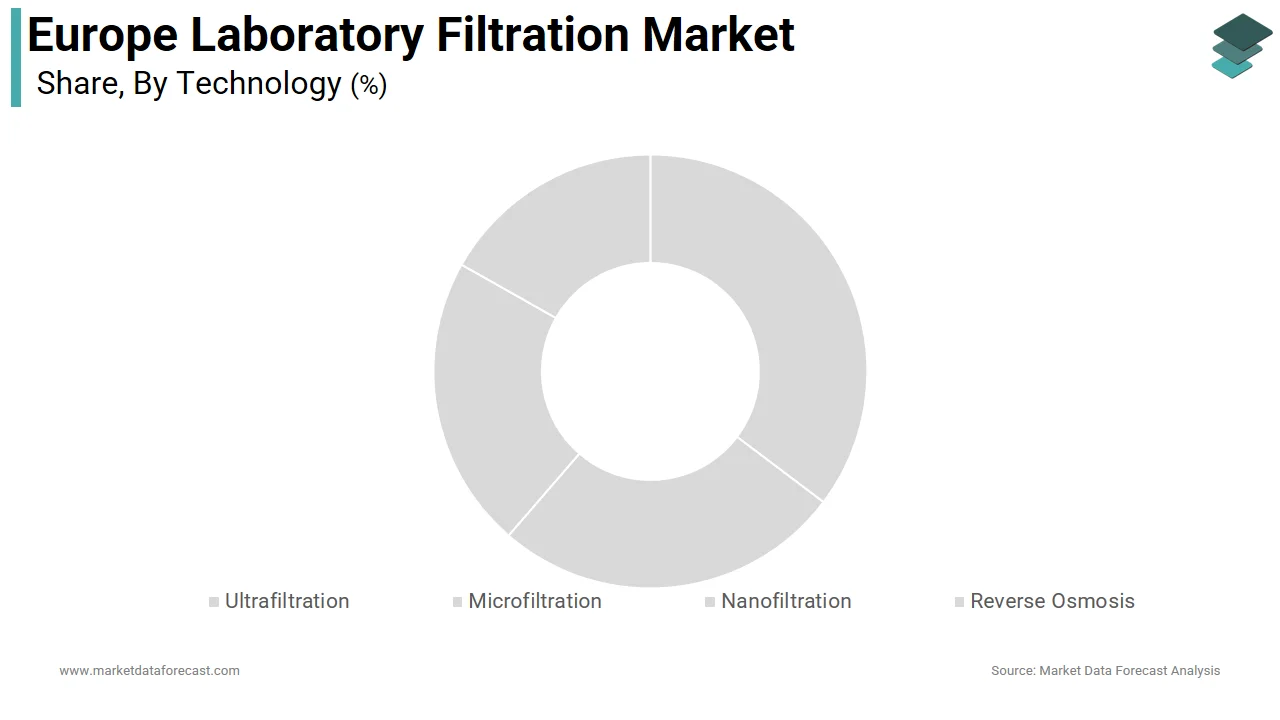
The nanofiltration segment is the fastest-growing segment and is estimated to record a CAGR of 13.1% over the forecast period due to its ability to separate multivalent ions, small organic molecules, and endotoxins while permitting monovalent salts to pass, making it critical for high-purity applications. According to the European Directorate for the Quality of Medicines, nanofiltration is increasingly adopted for endotoxin removal in recombinant protein and vaccine formulations. In 2023, the Paul Ehrlich Institute in Germany validated a nanofiltration step in the purification of an mRNA adjuvant, setting a precedent for advanced therapies. Environmental research labs in Sweden and the Netherlands also use nanofiltration to concentrate PFAS from water samples for mass spectrometry, as highlighted by the European Environment Agency’s monitoring program. Horizon Europe allocated tens of millions of euros in 2023 for membrane technologies targeting selective molecular separation, reinforcing nanofiltration’s role as the most dynamically advancing technology.
By Product Insights
The filter membranes segment occupied 33.5% of the regional market share in 2025. The growth of the filter membranes segment in the European market is attributed to the functional heart of nearly all filtration devices. These polymeric sheets determine selectivity, compatibility, and binding characteristics. According to the European Pharmacopoeia, membrane identity, pore size, and lot traceability are mandatory documentation requirements for sterility testing and analytical methods. EMA’s 2023 guidance emphasizes low protein-binding membranes like modified PES for biologics to prevent analyte loss. In academic settings, the European University Association reports that millions of membrane‑based filtration events occur monthly across EU labs for applications ranging from cell culture to environmental sampling. The rise of single-use systems in biomanufacturing has further increased demand for pre-sterilized, gamma-irradiated membranes integrated into closed assemblies.
The filtration microplates segment is predicted to witness a CAGR of 14.4% over the forecast period. Their adoption is driven by high-throughput screening in drug discovery, diagnostics, and microbiome research. According to the European Federation of Pharmaceutical Industries and Associations, a majority of early-stage drug candidates undergo solubility and permeability testing using 96‑well filtration microplates. In 2023, the European Society of Clinical Microbiology and Infectious Diseases endorsed their use for antimicrobial susceptibility testing of slow-growing pathogens. Horizon Europe projects such as MICROBIOME‑HUB employ microplates for metagenomic sequencing workflows. Diagnostic companies in the Netherlands and Denmark have integrated them into automated platforms, with the Dutch National Institute for Public Health reporting a significant increase in use between 2022 and 2023.
By End User Insights
The pharmaceutical and biopharmaceutical companies segment remained the dominant end-user segment in 2025 with a 47.3% share. The growth of this segment in the European market is driven by regulatory requirements and the scale of sterile manufacturing. Every phase of drug development relies on validated filtration for media preparation, buffer clarification, viral clearance, and final product sterilization. According to the EMA, all sterile injectables must undergo sterility testing via membrane filtration as per Ph Eur 2.6.1, and EU GMP Annex 1 mandates integrity testing for every sterilizing filter. Europe hosts over a thousand GMP-certified pharmaceutical facilities, with clusters in Ireland, Switzerland, and Belgium producing a significant portion of biologics and vaccines. The European Commission’s 2023 Critical Medicines Act emphasized domestic resilience, prompting companies to stockpile certified consumables. Advanced therapies such as CAR‑T and mRNA vaccines have further intensified demand for single-use filtration assemblies.
The academic and research institutes segment is the fastest-growing end-user segment and is expected to expand at a CAGR of 12.2% over the forecast period, owing to the public funding, emerging research fields, and adoption of advanced filtration protocols. According to the European Research Council, thousands of active grants in 2023 included laboratory filtration as a critical methodology, particularly in proteomics, extracellular vesicle isolation, and microplastic analysis. The Max Planck Society reported increased ultrafiltration use in 2023 for neurodegenerative disease research, while the Pasteur Institute integrated nanofiltration into viral discovery pipelines. Horizon Europe’s 2023–2024 program allocated billions of euros to health research, much of which requires sterile or selective filtration. Shared university core facilities in Sweden and the Netherlands are democratizing access, making academic labs increasingly sophisticated users of advanced technologies.
COUNTRY-LEVEL ANALYSIS
Germany Laboratory Filtration Market Analysis
Germany held the leading position in the European market in 2025 with 22.9% of the regional market share. The dominance of Germany in the European market is driven by its concentration of pharmaceutical manufacturing, academic excellence, and engineering precision. The country is home to over a thousand life science companies, including Bayer and Merck, as well as numerous Max Planck, Helmholtz, and Leibniz institutes that routinely employ advanced filtration in drug development and basic science. According to the German Federal Institute for Drugs and Medical Devices, all GMP facilities must validate filtration processes according to EU Annex 1, driving demand for integrity‑testable membranes and assemblies. In 2023, the German Research Foundation funded hundreds of projects requiring ultrafiltration or nanofiltration, particularly in mRNA and cell therapy. Germany’s machinery sector also supports local production of housings and manifolds, ensuring supply chain resilience.
Ireland Laboratory Filtration Market Analysis
Ireland captured a promising share of the European laboratory filtration market in 2025. Ireland is serving as Europe’s premier biopharmaceutical manufacturing hub. According to the Irish Pharmaceutical Healthcare Association, most of the world’s top biopharma companies operate GMP facilities in Ireland, producing a significant share of EU biologics and vaccines. These sites rely extensively on single‑use, pre‑sterilized filtration systems for media, buffer, and final product processing. The Health Products Regulatory Authority enforces strict compliance with EMA guidelines, including lot traceability and extractable profiling. In 2023, IDA Ireland reported that the life sciences sector accounted for over half of the country’s merchandise exports, highlighting the economic centrality of filtration‑dependent production. Academic institutions such as Trinity College Dublin also contribute through viral vector and gene therapy research.
Switzerland Laboratory Filtration Market Analysis
Switzerland is estimated to hold a prominent share of the European laboratory filtration market during the forecast period. The growth of Switzerland is driven by its filtration technology leadership and precision life sciences sector. The country hosts global innovators such as Sartorius Stedim and Pall Corporation’s European R&D center, which supply both domestic and international markets. According to Swissmedic, Swiss pharmaceutical facilities adhere to validation standards that often exceed EU requirements, particularly for sterile injectables and advanced therapies. Switzerland’s biotech firms and university hospitals routinely use nanofiltration for endotoxin removal and ultrafiltration for protein concentration. The Swiss National Science Foundation allocated tens of millions of euros in 2023 to projects involving membrane‑based separations. Switzerland’s neutrality and stable logistics infrastructure also make it a preferred location for strategic reserves of critical filtration consumables.
United Kingdom Laboratory Filtration Market Analysis
The UK is expected to exhibit a healthy CAGR in the European laboratory filtration market over the forecast period. The UK remains a powerhouse in academic research, diagnostics, and biotech innovation. According to the UK Office for Life Sciences, hundreds of university laboratories and NHS diagnostic centers use filtration daily for clinical testing, antimicrobial resistance monitoring, and biomedical discovery. The Medicines and Healthcare products Regulatory Agency maintains alignment with EU GMP standards, ensuring continued demand for certified filtration products despite Brexit. In 2023, the UK performed tens of millions of hospital‑based diagnostic tests requiring sample filtration, as documented by Public Health England. Leading institutions such as the Francis Crick Institute and University College London employ tangential flow filtration in extracellular vesicle and mRNA research. The Cambridge biotech cluster has also seen rapid growth in startups developing microfluidic and membrane‑based diagnostic platforms.
France Laboratory Filtration Market Analysis
France is estimated to account for a notable share of the European laboratory filtration market during the forecast period. The strong public investment in health research, food safety, and environmental monitoring is propelling the French market growth. According to the French National Centre for Scientific Research, hundreds of public laboratories use filtration for vaccine development, antimicrobial testing, and water quality analysis. The French Agency for Food, Environmental and Occupational Health and Safety mandates membrane filtration for pathogen detection in dairy, meat, and seafood processing facilities under Regulation (EC) No 2073/2005. In 2023, the Pasteur Institute launched a pan‑European initiative on viral filtration for emerging zoonotic threats, requiring advanced nanofiltration membranes. France’s biomanufacturing sector in Lyon and Strasbourg produces plasma derivatives and recombinant proteins that rely on sterile filtration under ANSM oversight. The government’s 2023 Biotechnology Strategy committed hundreds of millions of euros to strengthening domestic bioproduction capacity, including filtration infrastructure.
COMPETITIVE LANDSCAPE
The Europe laboratory filtration market is characterized by a concentrated yet dynamic competitive environment dominated by global life science companies with deep regulatory and technical expertise. Competition centers on membrane performance validation, support, and supply chain reliability rather than price. Established players like Sartorius Merck and Thermo Fisher leverage their manufacturing scale, scientific credibility, and regulatory track records to serve both industrial and academic segments. The market rewards innovation in low protein-binding membranes, virus retentive filters, and high-throughput formats such as filtration microplates. Regulatory scrutiny under EU GMP Annex 1 and Ph Eur creates high barriers to entry, favoring companies with robust quality management systems and pre-validated product portfolios. Academic and diagnostic users prioritize consistency and documentation, while biopharma customers demand scalability and single-use compatibility. Emerging players struggle to match the certification depth and technical service capabilities of incumbents. As advanced therapies and precision diagnostics expand, demand for specialized filtration continues to grow but remains tightly linked to trust, scientific validation, and seamless integration into regulated workflows across the European scientific landscape.
KEY MARKET PLAYERS
The leading companies operating in the Europe laboratory filtration market include:
- Merck Millipore
- Pall Corporation
- GE Healthcare
- Sartorius Group
- 3M Purification Inc.
- Thermo Fisher Scientific Inc.
- Cantel Medical Corporation
- Cuno
- Dow Water & Process Solutions
- FilmTec Corporation
- GE Healthcare
- Sigma-Aldrich Corporation
TOP PLAYERS IN THE MARKET
- Sartorius AG is a German-headquartered life sciences leader with a globally recognized portfolio of laboratory filtration products, including membrane filters, syringe filters, and single-use filtration assemblies. The company plays a pivotal role in Europe’s biopharmaceutical sector by providing GMP-compliant, pre-sterilized filtration solutions tailored for sterile processing and viral clearance. In 2024, Sartorius expanded its membrane production capacity at its Goettingen facility to meet rising demand for low protein-binding ultrafiltration membranes used in mRNA and cell therapy workflows. The company also launched a digital filter integrity verification platform integrated with laboratory execution systems to enhance compliance with EU GMP Annex 1. Through continuous innovation in material science and digital connectivity, Sartorius reinforces its position as a trusted partner for high-integrity filtration across European research and manufacturing ecosystems.
- Merck KGaA leverages its deep expertise in life science reagents and process solutions to deliver a comprehensive range of laboratory filtration products under the Millipore brand across Europe. The company supplies membranes, filtration microplates, and vacuum filtration systems to pharmaceutical, academic, and diagnostic users with a focus on reproducibility and regulatory compliance. In 2023, Merck introduced a new family of nanofiltration membranes designed specifically for endotoxin removal in advanced therapy medicinal products, addressing a critical need in the EU’s growing cell and gene therapy sector. The firm also enhanced its certification documentation to align with the European Medicines Agency’s updated extractables guidance, streamlining regulatory submissions for customers. By combining material innovation with regulatory intelligence, Merck sustains its relevance in Europe’s demanding and highly regulated filtration landscape.
- Thermo Fisher Scientific Inc maintains a strong presence in the Europe laboratory filtration market through its Nalgene and Acrodisc product lines, offering syringe filters, membrane discs, and filtration microplates to research and clinical laboratories. The company integrates filtration into broader laboratory workflows, including sample preparation for chromatography and molecular diagnostics. In early 2024, Thermo Fisher launched a low-binding syringe filter series with chemically resistant housing for use with aggressive solvents in analytical labs across Germany and the United Kingdom. The firm also expanded its e-commerce platform to provide real-time lot traceability and compliance documentation for filtration consumables, supporting audit readiness in GxP environments. Through workflow integration, e-commerce innovation, and material science advancement, Thermo Fisher continues to strengthen its position in Europe’s diverse and evolving filtration market.
TOP STRATEGIES USED BY THE KEY MARKET PARTICIPANTS
Key players in the Europe laboratory filtration market focus on regulatory alignment, product innovation, and digital integration to maintain a competitive advantage. Companies invest in membrane material science to develop low-binding, chemically resistant, and high-flow variants tailored for biologics and advanced therapies. They ensure full compliance with EU GMP Annex 1 Ph Eur standards and EMA guidelines by providing comprehensive validation documentation and integrity testing protocols. Strategic expansion of single-use and pre-sterilized offerings caters to the biopharma industry’s shift toward closed processing. Digital solutions such as QR code-based traceability and electronic certificates of analysis enhance compliance and user confidence. Additionally, firms strengthen local manufacturing and supply chains to mitigate disruption risks. These strategies collectively address Europe’s emphasis on scientific rigor, regulatory adherence, and operational resilience in laboratory filtration.
MARKET SEGMENTATION
This Europe laboratory filtration market research report is segmented and sub-segmented into the following categories.
By Technology
- Ultrafiltration
- Microfiltration
- Nanofiltration
- Reverse Osmosis
By Product
- Assembly
- Filter Paper
- Membrane
- Syringe Filters
- Filtration Microplate
- Accessories
By End User
- Pharmaceutical & Biopharmaceutical Companies
- Academic & Research Institutes
- Food & Beverage Companies
- Hospital & Diagnostic Laboratories
By Country
- UK
- France
- Spain
- Germany
- Italy
- Russia
- Sweden
- Denmark
- Switzerland
- Netherlands
- Turkey
- Czech Republic
- Rest of Europe
Frequently Asked Questions
What is the Europe laboratory filtration market?
The Europe laboratory filtration market supplies media, assemblies, and accessories for sample purification in research and pharma labs.
Why is the Europe laboratory filtration market growing?
The Europe laboratory filtration market grows from biopharma demand and stricter purity standards in analytical testing.
What products lead the Europe laboratory filtration market?
Membrane filters and filtration assemblies dominate the Europe laboratory filtration market for sterile processing needs.
Who are key players in the Europe laboratory filtration market?
Merck Millipore, Sartorius, and Thermo Fisher lead the Europe laboratory filtration market innovations in media tech.
What technologies shape the Europe laboratory filtration market?
Microfiltration and ultrafiltration drive the Europe laboratory filtration market for biopharma molecule purification.
How do membrane filters function in the Europe laboratory filtration market?
Membrane filters separate particles by pore size in the Europe laboratory filtration market HPLC sample prep routinely.
What role does vacuum filtration play in the Europe laboratory filtration market?
Vacuum systems speed solid-liquid separation in the Europe laboratory filtration market analytical workflows.
Which countries dominate the Europe laboratory filtration market?
Germany leads followed by France and UK in the Europe laboratory filtration market due to pharma hubs.
What end-users drive the Europe laboratory filtration market?
Pharma, biotech, and research institutes fuel the Europe laboratory filtration market sterile filtration needs.
How does disposable filtration benefit the Europe laboratory filtration market?
Disposable units reduce contamination risks in the Europe laboratory filtration market cleanroom environments.
Related Reports
Access the study in MULTIPLE FORMATS
Purchase options starting from
$ 2000
Didn’t find what you’re looking for?
TALK TO OUR ANALYST TEAM
Need something within your budget?
NO WORRIES! WE GOT YOU COVERED!
Call us on: +1 888 702 9696 (U.S Toll Free)
Write to us: sales@marketdataforecast.com