- Product Description Description
- Table of Contents TOC
- List of Table & Figure LOT
- Get Free Sample PDF Sample PDF
Market Size, 2025
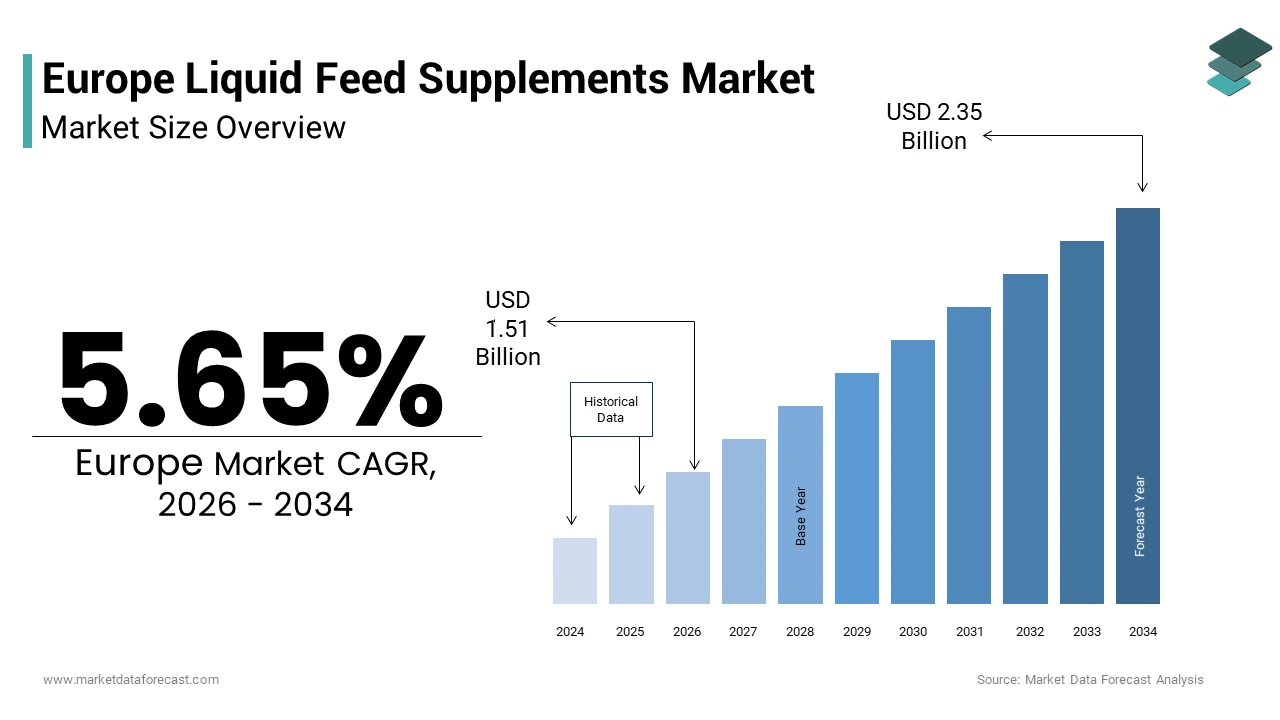
$1.43 BnMarket Estimate, 2026
$1.51 BnMarket Forecast, 2034
$2.35 BnCAGR, 2026–2034
5.65%Europe Liquid Feed Supplements Market Size
Europe's liquid feed supplements market was valued at USD 1.43 billion in 2025 and is anticipated to reach USD 1.51 billion in 2026, from USD 2.35 billion by 2034, growing at a CAGR of 5.65% from 2026 to 2034.
Liquid feed supplements comprise nutrient-dense formulations administered orally or via feeding systems to livestock, including dairy and beef cattle, swine, and poultry, to enhance digestion, immunity, growth, and productivity. These supplements deliver vitamins, minerals, amino acids, probiotics, and organic acids in a readily absorbable aqueous medium, ensuring uniform intake and rapid physiological response. Unlike dry additives, liquid formats offer superior mixing homogeneity, reduced dust exposure, and precise dosing, which are critical attributes in high biosecurity and automated European livestock operations. The adoption of liquid supplements aligns with the European Union’s Farm to Fork Strategy, which emphasizes the reduction of antimicrobial use through nutritional prophylaxis. As per the European Food Safety Authority, many intensive dairy farms in Germany, the Netherlands, and Denmark now integrate liquid microbial and mineral supplements into total mixed rations as part of antimicrobial reduction protocols. According to Eurostat data from 2024, the EU maintains a large livestock population with dairy cow numbers stabilizing due to quota adjustments and sustainability mandates. This regulatory and operational environment positions liquid feed supplements not as optional additives but as essential tools in meeting Europe’s dual objectives of animal welfare and antibiotic stewardship.
MARKET DRIVERS
Mandatory Reduction of Antimicrobial Use in Livestock Production
The European Union’s landmark Regulation EU 2019 6 on veterinary medicinal products enforces a near total ban on antimicrobial use for growth promotion and mandates strict reduction targets for therapeutic use, which is one of the major factors driving the growth of the European liquid feed supplements market. As per the European Commission’s 2024 Antimicrobial Consumption Monitoring Report, collective sales of antibiotics for food-producing animals have declined significantly since 2011, with countries like Denmark and the Netherlands achieving major reductions in the swine and poultry sectors. This regulatory pressure compels farmers to adopt nutritional alternatives that bolster innate immunity and gut health. Liquid feed supplements containing organic acids, probiotics, and phytogenics have demonstrated efficacy in reducing pathogenic load and improving feed conversion. According to a 2023 meta-analysis by the Swedish University of Agricultural Sciences, liquid blends of formic and propionic acids reduced Salmonella prevalence in finishing pigs. With the EU requiring all member states to implement national action plans on antimicrobial resistance by 2025, demand for scientifically validated liquid supplements is accelerating as a non-pharmaceutical intervention cornerstone.
Expansion of Precision Livestock Farming and Automated Feeding Systems
Modern European livestock operations increasingly rely on automated liquid feeding systems that enable real-time nutrient adjustment based on animal stage, health, and environmental conditions, which is further boosting the European liquid feed supplements market expansion. According to the European Commission’s Common Agricultural Policy Statistical Bulletin, many dairy farms in Germany and the Netherlands utilize computer-controlled concentrate and supplement dispensers integrated with milking robots. As per the Danish Agriculture and Food Council, new pig finishing units installed in Denmark feature centralized liquid supplementation capable of delivering tailored vitamin and mineral cocktails to individual pens. This infrastructure shift eliminates the inconsistencies of manual dry additive mixing and ensures every animal receives the exact nutritional dose. Furthermore, liquid formats allow immediate correction of deficiencies such as post calving hypocalcemia in dairy cows through rapid absorption. As EU subsidies increasingly favor digitalization and resource efficiency under the CAP Strategic Plans, liquid feed supplements become indispensable enablers of data-driven animal nutrition.
MARKET RESTRAINTS
Stringent Regulatory Classification and Approval Delays for Novel Ingredients
Liquid feed supplements in Europe fall under the complex regulatory framework of Regulation EC 1831 2003 on feed additives, requiring premarket authorization for each functional category, including zootechnical and sensory additives, which is hindering the European liquid feed supplements market growth. As per the European Food Safety Authority’s 2024 Annual Activity Report, the average approval timeline for a new liquid probiotic or organic acid blend is lengthy due to extensive efficacy, safety, and environmental dossiers. This delay particularly affects small and medium enterprises lacking regulatory expertise and discourages innovation in fast-evolving areas like postbiotics and phytogenic synergists. Moreover, the EU’s recent exclusion of certain phytogenic compounds from the positive list forces reformulation and revalidation. In 2023, EFSA issued negative opinions on several liquid supplement applications due to inadequate residue data in milk and meat. These regulatory hurdles fragment the market, limit ingredient diversity, and increase compliance costs, thereby constraining the introduction of next-generation formulations that could address emerging animal health challenges.
Logistical and Storage Constraints in Liquid Handling Infrastructure
The physical properties of liquid feed supplements pose significant adoption barriers, particularly for small anmedium-sizeded farms, which is also impeding the expansion of the European liquid feed supplements market. According to the European Network for Rural Development, only a minority of livestock holdings in Southern and Eastern Europe possess on-farm infrastructure capable of handling bulk liquid supplements. These farms often rely on manual top dressing, which compromises dosing accuracy and increases labor costs. Furthermore, liquid products exhibit shorter shelf lives compared to dry equivalents, as documented by the German Agricultural Society. Temperature fluctuations during summer transport in countries like Spain and Italy can degrade heat-sensitive vitamins and live microbes, reducing product efficacy. As per the European Commission’s Farm Accountancy Data Network, farms without liquid storage capacity experience higher supplement waste due to precipitation and microbial spoilage. These logistical limitations restrict market penetration beyond large integrated operations and hinder the uniform application of nutritional strategies across Europe’s diverse farming landscape.
MARKET OPPORTUNITIES
Integration of Liquid Supplements into Climate Smart Livestock Nutrition Programs
The European Green Deal’s climate neutrality targets are driving innovation in feed additives that reduce enteric methane and nitrogen excretion from livestock, which is a promising opportunity in the European liquid feed supplements market. Liquid feed supplements offer a versatile platform for delivering methane inhibitors such as 3‑nitrooxypropanol and tannin-based compounds directly into total mixed rations. As per the European Environment Agency, enteric fermentation from ruminants accounts for a significant share of EU agricultural greenhouse gas emissions, necessitating scalable mitigation tools. In 2024, the Dutch Ministry of Agriculture approved a liquid blend containing encapsulated nitrates that reduced methane output in dairy cows during a 12-week trial at Wageningen University. Similarly, liquid urea alternatives with slow-release polymers are gaining traction in beef systems to minimize ammonia volatilization. According to the EU’s Carbon Farming Initiative, financial incentives are now provided for farms adopting verified emission-reducing feed technologies. With liquid systems enabling precise and consistent delivery of these actives, they are becoming the preferred vehicle for climate-smart nutrition, creating a high-impact growth corridor aligned with EU environmental policy.
Rising Demand for Organic and Natural Liquid Supplements in Pasture-Based Systems
As per Eurostat, Europe’s expanding organic livestock sector now encompasses millions of hectares of grassland, which is creating demand for certified natural liquid supplements free from synthetic additives. Organic regulations prohibit chemically synthesized vitamins and minerals, mandating plant or fermentation-derived alternatives delivered in liquid form for better palatability and absorption in pasture-fed animals. According to the Research Institute of Organic Agriculture, many EU organic dairy farms use liquid seaweed extracts and herbal tinctures to support udder health and mineral balance. Countries such as Austria and Sweden have reported growth in natural liquid supplement usage, driven by consumer preference for residue-free animal products. Additionally, as per the EU’s updated organic regulation EU 2018 848, specific liquid probiotics and organic acids are permitted as health promoters provided they carry EU organic certification. Manufacturers are responding with cold-processed liquid blends using organic glycerin and apple cider vinegar as carriers. This niche aligns with the EU’s promotion of agroecological farming and offers premium pricing potential in value-driven supply chains.
MARKET CHALLENGES
Price Volatility of Raw Materials and Energy Intensive Production
The production of liquid feed supplements is highly sensitive to fluctuations in key raw material costs, including vegetable oils, organic acids, and fermentation media, which is a significant challenge to the growth of the European liquid feed supplements market. According to the European Commission’s Agricultural Markets Task Force, the price of food-grade glycerin increased in 2023 due to biodiesel production shifts and soybean oil market volatility. Similarly, the cost of lactic acid derived from corn starch rose following poor harvests in Eastern Europe. As per the European Feed Manufacturers Federation, these inputs constitute a large share of formulation costs. Compounding this, liquid production requires significant energy for mixing, homogenization, and aseptic bottling, with natural gas prices in Germany and Italy averaging well above pre 2021 levels as documented by Eurostat. These cost pressures squeeze margins, particularly for small formulators unable to hedge or vertically integrate. Consequently, many producers delay innovation or pass costs to farmers already facing margin compression from feed and fertilizer inflation, threatening the affordability and adoption of advanced nutritional solutions.
Lack of Standardized Efficacy Metrics and Farmer Education Gaps
Despite widespread use, the liquid feed supplement sector suffers from inconsistent performance validation and limited on-farm technical support, which is further challenging the European liquid feed supplements market growth. As per the European Federation of Feed Compounders, fewer than half of liquid products on the market publish peer-reviewed field trial data demonstrating measurable outcomes in weight gain, feed efficiency, or disease reduction. This opacity fuels skepticism among cost-conscious farmers, particularly in regions like Southern Italy and Romania, where extension services are underfunded. According to a 2024 survey by the French National Institute for Agricultural Research, many swine producers could not distinguish between different organic acid blends and often selected based on price alone. Furthermore, the mode of action for complex liquid formulations—such as synergistic probiotic prebiotic combinations—is poorly understood outside expert circles. Without standardized EU-wide efficacy benchmarks and accessible training, the market risks commoditization and suboptimal usage, undermining both animal performance and the sector’s scientific credibility. Bridging this knowledge gap is essential to unlock the full potential of liquid supplementation as a precision nutrition tool.
REPORT COVERAGE
| REPORT METRIC | DETAILS |
| Market Size Available | 2025 to 2034 |
| Base Year | 2025 |
| Forecast Period | 2026 to 2034 |
| CAGR | 5.65% |
| Segments Covered | By Type, Source, Livestock, And By Country |
| Various Analyses Covered | Global, Regional & Country Level Analysis; Segment-Level Analysis, DROC, PESTLE Analysis, Porter’s Five Forces Analysis, Competitive Landscape, Analyst Overview of Investment Opportunities |
| Regions Covered | UK, France, Spain, Germany, Italy, Russia, Sweden, Denmark, Switzerland, Netherlands, Turkey, Czech Republic,& Rest of Europe |
| Market Leaders Profiled | Cargill Inc., Westway Products, Cattle-Lac Liquid Feed, and Midwest Liquid Feeds. |
SEGMENTAL ANALYSIS
By Type Insights
The minerals segment dominated the market by holding 37.7% of the regional market share in 2025. Mineral supplementation in liquid form is indispensable for modern European dairy operations where genetic selection has produced cows with high milk yields. As per the European Commission’s Dairy Market Observatory, these animals exhibit elevated requirements for calcium, phosphorus, magnesium, and selenium, as these are the nutrients often deficient in intensively managed forage systems. Liquid mineral supplements ensure rapid bioavailability and precise delivery, critical during transition periods such as calving when hypocalcemia is a common risk, according to the Swedish University of Agricultural Sciences. As per the Netherlands Dairy Association, liquid calcium bolus or drench protocols are mandated on most commercial farms to prevent milk fever, thereby institutionalizing mineral use. Furthermore, according to the EU’s updated feed safety regulation, chelated minerals in liquid form are required for improved absorption and reduced environmental excretion. As per Eurostat, the EU maintains over 22 million dairy cows, and this scale of physiological need,d combined with regulatory and herd management imperatives,ves solidifies minerals as the largest and most non-discretionary segment in liquid supplementation.
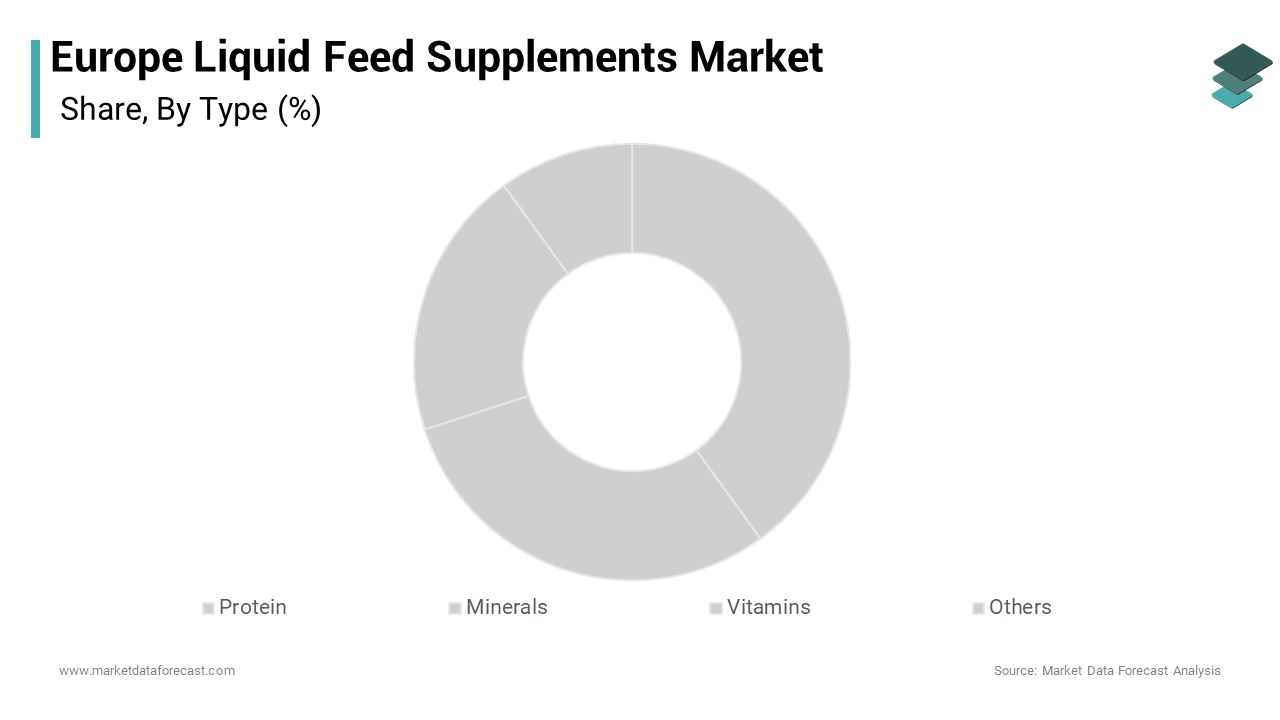
The vitamins segment is the fastest growing segment inEuropeanurope liquid feed supplements market and is predicted to witness a CAGR of 8.08% over the forecast period, owing to the EU’s antimicrobial reduction agenda, which requires farms to adopt nutritional prophylaxis against common infections. Vitamins A, E, and C function as potent antioxidants that enhance epithelial integrity and lymphocyte proliferation, critical for immune resilience. As per the European Food Safety Authority, vitamin E supplementation reduced respiratory disease incidence in weaned piglets min ulti-farm trials across Spain and Poland. Similarly, as documented by the University of Copenhagen in 2024, vitamin D3 in liquid form demonstrated efficacy in reducing mastitis prevalence in dairy cows. With the EU mandating national action plans to cut veterinary antibiotic use by 50% by 2030, vitamins have transitioned from traditional growth promoters to essential immune modulators, accelerating their integration into daily liquid feeding protocols.
By Source Insights
The molasses segment led the market by accounting for 46.1% of the regional market share in 2025. Molasses serves as the foundational liquid carrier in European feed supplementation due to its unique combination of fermentable sugars, organic acids, and trace minerals. As per the Dutch Feed Industry Association, most liquid mineral and vitamin blends for dairy cattle utilize sugar beet or cane molasses as the primary base owing to its tolerance and viscosity stability. According to the Irish Cattle and Sheep Farmers Association, molasses-based liquid supplements increased total mixed ration intake during winter housing periods when forage quality declines. Furthermore, molasses reduces dust in feed mixing operations, a key occupational health requirement under EU Directive 89 391 EEC. As per the European Commission’s Sugar Market Observatory, Europe produces millions of metric tons of sugar beet molasses annually, ensuring its entrenched role as the default liquid matrix across ruminant systems.
The urea segment is another promising segment and is estimated to witness a CAGR of 8.55% over the forecast period, owing to its critical function in synchronizing rumen-degradable protein with fermentable carbohydrate supply to optimize microbial protein synthesis and reduce nitrogen waste. As per the European Environment Agency, enteric fermentation is responsible for a significant share of EU agricultural greenhouse gas emissions, making nitrogen efficiency a climate priority. A 2024 trial at Wageningen University demonstrated that liquid slow-release urea reduced methane output per liter of milk while maintaining milk protein yield. According to the EU’s Carbon Farming Initiative, financial rewards are now offered for verified emission reductions, accelerating the adoption of liquid urea systems on high-yielding Dutch and Danish dairy farms.
By Livestock Insights
The ruminants segment held 56.5% of the regional market share in 2025. Ruminants account for the largest share of liquid feed supplement usage due to the intricate metabolic demands of high-yielding dairy cows and growing beef cattle. As per Eurostat, the EU maintains approximately 22 million dairy cows and 25 million beef cattle, requiring precise nutritional balancing. According to the European Dairy Association, many commercial dairy farms in Germany, the Netherlands, and Denmark use daily liquid calcium, magnesium, and vitamin D3 drenches to prevent transition cow disorders, which is a practice now embedded in national welfare codes. Furthermore, liquid formats enable immediate correction of forage imbalances such as low potassium during drought or high nitrate content in ensiled maize. As per the EU Common Agricultural Policy, subsidies are linked to animal health metrics, which is making liquid supplementation a non-optional management tool, ensuring consistent dominance in the ruminant segment.
The aquaculture segment is the fastest-growing livestock segment in the European liquid feed supplements market and is expected to witness a CAGR of 14.3% over the forecast period, owing to the EU’s Blue Economy Strategy, which targets growth in sustainable seafood production to reduce import dependency. As per the European Commission, Europe currently imports a majority of its seafood, creating strategic urgency to scale domestic aquaculture. Species like sea bass, sea bream, and trout require liquid vitamin C, vitamin E, and selenium supplements to prevent deficiency diseases in high-density recirculating systems. According to the Norwegian Institute of Marine Research, liquid vitamin C supplementation reduced mortality in juvenile salmon during vaccination stress. With the EU allocating funding through 2027 to modernize aquaculture facilities, liquid supplementation is becoming integral to biosecurity and welfare compliance in this rapidly expanding sector.
COUNTRY ANALYSIS
Germany Liquid Feed Supplements Market Analysis
Germany was the leading performer in the European liquid feed supplements market in 2025 and held 23.9% of the regional market share. Germany's leading spot in the European market can be attributed to its advanced dairy and pig production systems and strong regulatory enforcement of animal health standards. As per the German Federal Ministry of Food and Agriculture, the country maintains millions of dairy cows and pigs, with many dairy farms utilizing automated liquid feeding systems for mineral and vitamin delivery. The nation’s strict implementation of the EU Veterinary Medicinal Products Regulation has accelerated the adoption of liquid probiotics and organic acids as antibiotic alternatives. According to the German Animal Health Association, therapeutic antibiotic use in piglets has declined since 2020. Furthermore, Germany’s National Research Programme on Sustainable Livestock funded liquid supplement trials in 2024, focusing on methane reduction and nitrogen efficiency. The presence of major feed additive manufacturers like EW Nutrition and Dr Eckel reinforces domestic innovation and supply chain resilience. This combination of scale, regulation, and technical capability ensures Germany’s continued leadership in both volume and sophistication of liquid supplementation.
France Liquid Feed Supplements Market Analysis
France was another leading performer in the European liquid feed supplements market in 2025 and occupied 18.8% of the regional market share. The vast ruminant sector and integration of liquid nutrition into agroecological farming models have contributed to the growth of France in the European liquid feed supplements market in 2025. According to FranceAgriMer, the country manages millions of dairy cows primarily in pasture-based systems that require seasonal liquid supplementation to address forage variability. As per the French Ministry of Agriculture’s Eco Antibio 2 plan, antibiotic sales in livestock declined between 2017 and 2024, driving adoption of liquid phytogenic and organic acid blends. Additionally, France’s sugar beet industry produces large volumes of molasses annually, providing a low-cost,t sustainable base for liquid formulations. According to the National Institute for Agricultural Research, multi-farm trials in 2024 demonstrated that liquid selenium and vitamin E reduced somatic cell counts in pasture-fed herds. With the Common Agricultural Policy allocating billions of euros to French eco schemes that reward precision nutrition, France maintains a balanced market blending traditional farming with advanced liquid supplementation protocols.
Netherlands Liquid Feed Supplements Market Analysis
The Netherlands is predicted to grow at a promising CAGR in the European liquid feed supplements market over the forecast period, owing to ithighlyyer efficient dairy and pig sectors and leadership in agricultural technology. As per the Netherlands Enterprise Agency, the country produces billions of liters of milk annually from a relatively small herd, necessitating precise liquid mineral and vitamin delivery to maintain health. Dutch farms are pioneers in digital livestock management, with many dairy operations using sensor-guided liquid feeding systems that adjust supplementation based on real-time milk composition and activity data. As per the Dutch Ministry of Agriculture’s Protein Transition Program, innovation in liquid amino acid supplements has reduced soy dependency, with Wageningen University validating improvements in crude protein efficiency. Furthermore, the Netherlands is Europe’s largest exporter of feed additives, leveraging its port infrastructure and regulatory expertise to serve neighboring markets. This blend of productivity, policy, and export orientation solidifies the Netherlands as a high-impact hub for liquid supplement innovation and distribution.
Denmark Liquid Feed Supplements Market Analysis
Denmark is estimated to account for a prominent share of the European liquid feed supplements market during the forecast period due to its integrated swine value chain and world-leading antimicrobial stewardship. According to the Danish Agriculture and Food Council, the country produces tens of millions of slaughter pigs annually, with every farm required to submit annual antibiotic usage reports to the national VetStat database. This transparency has driven the adoption of liquid organic acids and probiotics in weaner diets. As per the University of Copenhagen’s 2024 research, liquid zinc and copper chelates reduced post weaning diarrhea incidence without violating EU trace mineral caps. Furthermore, Denmark’s Green Tripartite Agreement allocates funding for liquid methane inhibitors in finishing pigs, aligning supplementation with climate goals. This systems approach makes Denmark a benchmark for responsible liquid nutrition.
Spain Liquid Feed Supplements Market Analysis
Spain is estimated to showcase a notable CAGR in the European liquid feed supplements market over the forecast period, owing to its extensive poultry and dairy sectors and adaptation to Mediterranean climate challenges. As per the Spanish Ministry of Agriculture, the country produces large volumes of broilers and dairy cows annually, with heat stress during the summer months increasing demand for liquid electrolytes, vitamins, and antioxidants. According to the Spanish Poultry Association, many broiler farms now use liquid vitamin C and E blends to mitigate oxidative stress during temperature spikes. In dairy, the semi-intensive Murciano Granadina goat system relies heavily on liquid molasses-based mineral supplements to compensate for sparse native pasture. As per Spain’s National Plan for Antimicrobial Resistance, liquid probiotic adoption has been incentivized with government co-funding for small ruminant farms. The presence of major feed mills in Catalonia and Andalusia ensures localized production and rapid distribution. Despite water scarcity constraints, Spain’s market remains resilient through climate-adaptive liquid nutrition strategies tailored to its unique agroecological conditions.
COMPETITIVE LANDSCAPE
Competition in the European Liquid Feed Supplements Market is characterized by a blend of global nutrition giants and specialized European formulators competing on scientific validation, regulatory agility, ty and regional adaptability. The market is price-drivenbut centers on proven efficacy, stability,y and alignment with EU policies on antimicrobial reduction, environmental protection,n and animal welfare. Leading players differentiate through proprietary delivery technologies suchrumen-protectedcted minerals, nano-emulsified vitamins, and buffered organic acids that ensure performance under diverse climatic and management conditions. Unlike commoditized dry aadditivess liquid supplements require significant investment in formulation science, storageinfrastructurer,,e, and technical support, creating high barriers to entry. Competition is further intensified by the needcountry-specificcific registrations and farmer education, particularly in Southern and Eastern Europe, where registration lags. Companies that combine localized production, digital integration,,and sustainability credentials—such as reduced carbon footprint and circular raw material use—gain preferential access to premium dairy and swine segments. The market rewards those who can translate complex nutritional science into ppracticalal reliablee licy-compliantuid solutions.
KEY MARKET PLAYERS
Some of the major companies dominating the market with their products and services are
- Cargill Inc.
- Alltech Inc
- EW Nutrition GmbH
- Phibro Animal Health Corporation
- Westway Products
- Cattle-Lac Liquid Feed
- Midwest Liquid Feeds.
Top Players In The Market
- Alltech Inc is a global leader in animal health and nutrition with a strong presence in the Europe Liquid Feed Supplements Market through its BioMycin and ReaShure liquid product lines. The company specializes in yeast-based technologies, organic ttrace mineralsnd protected B vitamins delivered in stable liquid formats for ruminants and monogastrics. Alltech contributes to the global market bypioneering rumen-protectedd nutrient systems that enhance bioavailability while reducing environmental excretion. In recent years, the company strengthened its European position by expanding its liquid blending facility in Dunboye, Ireland, meet EU Farm to Fork antimicrobial reduction demands. It also launched a digital feed management platform that integrates liquid supplement dosing recommendations witwith on-farmrage analysis, supporting precision nutrition across dairy and swine operations in GGermanyce a, nd the Netherlands.
- Phibro Animal Health Corporation plays a significant role in the European Liquid Feed Supplements Market through its nutrition and mineral technologies tailored for high-yielding livestock systems. The company offers liquid copper, zinc, and selenium formulations compliant with EU maximum inclusion levels and leverages its global R and D network to develop heat-stable vitamin blends for Mediterranean climates. Phibro contributes to the global market by advancing trace mineral chelation science that improves absorption and reduces manure contamination. To reinforce its European footprint, the company upgraded its liquid production line in Ghent Belg,ium in 2024 to achieve full compliance with EU feed hygiene regulations. It also partnered with Dutch dairy cooperatives to field test liquid organic acid combinations that replace zinc oxide in weaner pig diets, aligning with EU sustainability mandates and enhancing farmer adoption.
- EW Nutrition GmbH is aGermany-basedd innovator in natural feed additives with deep integration into the European Liquid Feed Supplements Market through its Activo and Digestarom liquid lines. The company focuses on phytogenic and organic acid solutions that support gut health and reduce antibiotic reliance across ruminant poultry and swine sectors. EW Nutrition contributes globally by standardizing efficacy testing protocols for plant-based actives and promoting transparency in liquid formulation stability. Recently, the company enhanced its market position by inaugurating a dedicated liquid R and D center in Laudenbach, Germany, featuring accelerated shelf-life testing and viscosity modeling capabilities. It also launched a climate-resilient liquid vitamin E nanoemulsion that maintains potency at 40 degrees Celsius, supporting adoption in Southern Europe. These actions reinforce its reputation as ascience-drivenn European specialist in sustainable liquid nutrition.
Top Strategies Used by the Key Market Participants
Key players in the European Liquid Feed Supplements Market prioritize regulatory compliance by aligning formulations with EU feed additive and environmental regulations, including maximum trace mineral limits and antimicrobial reduction guidelines. They invest in localized production and R and D facilities within Europe to ensure rapid response to regional forage variability and climate challenges. Companies focus on stabilizingheat-sensitivee nutrients through microencapsulation and emulsification to extend shelf life in Mediterranean conditions. Strategic partnerships with dairy cooperatives, swine inintegrators and feed mills enable co-development of tailored liquid solutions and direct farmer access. Digital integration through feed management software that links liquid dosing to real-time animal performance data enhances precision and adoption. Sustainability is embedded through circular sourcing such as molasses valorisation and reduced nitrogen excretion claims verified by third party life cycle assessments.
MARKET SEGMENTATION
This research report on the European liquid Feed Supplements Market is segmented into the following categories.
By Type
- Protein
- Minerals
- Vitamins
- Others
By Source
- Molasses
- Corn
- Urea
- Others
By Livestock
- Ruminants
- Poultry
- Swine
- Aquaculture
- Others
By Country
- UK
- France
- Spain
- Germany
- Italy
- Russia
- Sweden
- Denmark
- Switzerland
- Netherlands
- Turkey
- Czech Republic
- Rest of Europe