- Product Description Description
- Table of Contents TOC
- List of Table & Figure LOT
- Get Free Sample PDF Sample PDF
Market Size, 2025
$3.52 BnMarket Estimate, 2026
$3.64 BnMarket Forecast, 2034
$4.79 BnCAGR, 2026–2034
3.48%Europe Liquid Fertilizers Market Size, Growth, Trends & Forecast (2026–2034)
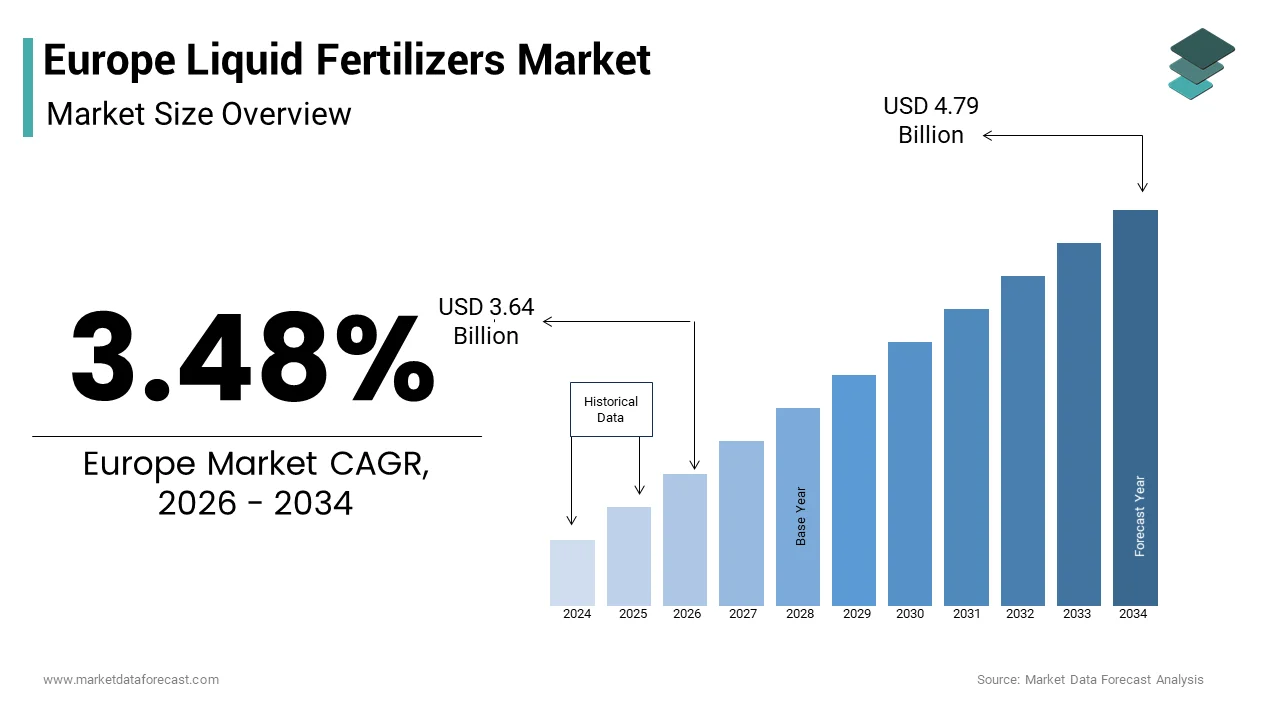
The Europe liquid fertilizers market size was valued at USD 3.52 billion in 2025, is anticipated to reach USD 3.64 billion in 2026, and is projected to scale up to USD 4.79 billion by 2034, registering a compound annual growth rate (CAGR) of 3.48% during the forecast period from 2026 to 2034. Driven by the EU's Farm to Fork Strategy targets, strict environmental mandates on nutrient runoff, and the expanding deployment of precision farming technologies, the European liquid fertilizers industry continues to grow steadily.
Key Executive Metrics (At-a-Glance)
- 2025 Base Valuation: USD 3.52 Billion
- 2026 Current Valuation: USD 3.64 Billion
- 2034 Forecast Valuation: USD 4.79 Billion
- Compound Annual Growth Rate (CAGR): 3.48% (2026–2034)
- Dominant Nutrient Segment: Nitrogen (holding 42.2% market share backed by crucial roles in chlorophyll synthesis and staple cereal crops)
- Fastest-Growing Nutrient Segment: Micronutrients (projected to grow at a CAGR of 7.8% due to soil micronutrient depletion and high-value horticulture expansion)
- Dominant Form Segment: Synthetic (capturing 76.6% market share due to high nutrient concentration, reliability, and scale for cereals and oilseeds)
- Fastest-Growing Form Segment: Organic (exhibiting an 8.2% CAGR driven by the EU 25% organic farmland target by 2030 and residue-free produce demand)
- Dominant Application Segment: Fertigation (accounting for 45% market share driven by drip and micro-irrigation systems in Southern Europe)
- Fastest-Growing Application Segment: Foliar Application (registering the fastest CAGR of 7.4% for rapid nutrient deficiency correction)
- Dominant Crop Type Segment: Fruits & Vegetables (leading with 38.5% share due to high value and intensive greenhouse cultivation)
- Fastest-Growing Crop Type Segment: Oilseeds (exhibiting a 6.9% CAGR driven by EU protein and biofuel self-sufficiency mandates)
- Dominant Country Market: Germany (holding 20.2% market share supported by strict environmental compliance, advanced arable farming, and blending infrastructure)
Core Market Drivers
- Precision Agriculture Adoption: Seamless integration with GPS-guided variable rate systems, sensor networks, and digital agronomy tools.
- Regulatory Pressure on Nutrient Runoff: Strict European environmental policies (such as the Nitrates Directive and Farm to Fork Strategy) enforcing lower loss targets.
- Controlled Environment & Organic Expansion: Growth of vertical farming and EU targets for organic land area boosting tailored liquid nutrition.
Primary Market Restraints & Challenges
- High Initial Infrastructure Costs: Substantial capital requirements for specialized storage, blending, and fertigation systems affecting smallholders.
- Regulatory Inconsistencies & Supply Volatility: Fragmented national classifications across EU member states, hazardous transport compliance (ADR), and raw material energy cost fluctuations.
Europe Liquid Fertilizers Market Segmentation Breakdown
| Segment Category | Leading Sub-Segment (2025 Base) | Fastest-Growing Sub-Segment (2026–2034) |
|---|---|---|
| By Nutrient Type | Nitrogen (dominant leader capturing 42.2% share for cereals and maize) | Micronutrients (fastest-growing at 7.8% CAGR addressing hidden hunger and orchard quality) |
| By Form | Synthetic (dominant leader capturing 76.6% share for large-scale field performance) | Organic (fastest-growing form segment at 8.2% CAGR propelled by the EU 25% organic target) |
| By Mode of Application | Fertigation (dominant share of 45% utilizing extensive drip networks in Southern Europe) | Foliar Application (fastest-growing application at 7.4% CAGR for precise rescue treatments) |
| By Crop Type | Fruits & Vegetables (leading 38.5% share driven by protected horticulture and quality) | Oilseeds (fastest-growing crop type at 6.9% CAGR backed by protein and biofuel policies) |
| By Country | Germany (market leader holding 20.2% share backed by stringent laws and infrastructure) | France & Spain (fastest-growing national markets driven by green transitions and water-saving) |
Major Industry Players Profiled
Key enterprises shaping the competitive European liquid fertilizers market include Yara International ASA, ICL Group Ltd (Israel Chemicals Ltd), Nutrien Ltd., Kugler Company, Haifa Chemicals Ltd., Agrium Inc., and Sociedad Quimica Y Minera SA (SQM).
Europe Liquid Fertilizers Market Size
The Europe's liquid fertilizers market size was valued at USD 3.52 billion in 2025 and is anticipated to reach USD 3.64 billion in 2026 to reach USD 4.79 billion by 2034, growing at a CAGR of 3.48% during the forecast period from 2026 to 2034.
Liquid fertilizers are nutrient solutions and typically contain nitrogen, phosphorus, potassium, um micronutrients that are formulated in aqueous or suspension form for precise soil or foliar application in agricultural and horticultural systems. Unlike solid fertilizers, liquid variants enable uniform nutrient distribution, rapid uptake, and compatibility with modern irrigation technologies such as fertigation and hydroponics. Europe’s adoption of liquid fertilizers is shaped by its intensive farming practice,,s regulatory emphasis on nutrient use efficiency, and growing integration of digital agronomy tools. According to Eurostat, EU farmland totals around 157 million hectares, with precision farming adoption expanding but still covering less than one‑third of this area. According to the European Nitrogen Expert Panel, average nitrogen use efficiency in Europe is about 55%–65%, which indicates the urgency of reducing losses through optimized delivery. Furthermore, the European Commission’s Farm to Fork Strategy targets a 50% reduction in nutrient losses by 2030, which is incentivizing technologies that enhance nutrient bioavailability, among which liquid fertilizers play a pivotal role. This regulatory and operational context positions liquid fertilizers as a strategic enabler of sustainable intensification in European agriculture, which is balancing productivity with environmental stewardship.
MARKET DRIVERS
Precision Agriculture Adoption Drives Demand for Customized Nutrient Delivery
The accelerating deployment of precision agriculture systems across Europe is driving the European liquid fertilizers market. Liquid formulations integrate seamlessly with GPS-guided variable rate technology and sensor-based irrigation networks, enabling real-time adjustments based on crop needs and soil conditions. According to the European Commission’s Digital Europe Programme, €7.6 billion is allocated for 2021–2027 to accelerate digital technologies across sectors, which is underpinning farm‑level adoption of data‑driven irrigation and nutrient delivery. As per peer‑reviewed analyses of Mediterranean greenhouse production, fertigation and drip‑line delivery are increasingly standard practice for high‑value horticulture, with demonstrated efficiency gains in tomato and cucumber systems. According to Copernicus Sentinel mission resources and ESA agritech initiatives, satellite‑derived vegetation indices are operationally used to inform variable‑rate prescriptions through commercial agronomic platforms across Europe. Such data-driven cultivation reduces over-application while maintaining yields, which is a critical alignment with the EU’s Sustainable Use of Pesticides Regulation, which increasingly encompasses nutrient stewardship. Consequently, liquid fertilizers have become indispensable to modern agronomic protocols that prioritize efficiency, accuracy, and environmental accountability.
Regulatory Pressure to Reduce Nutrient Runoff Favors Soluble and Controlled Release Formats
The growing incidence of stringent EU environmental policies is one of the key factors propelling the growth of the European liquid fertilizers market. According to the European Environment Agency (EEA), agriculture contributed 53% of total nitrogen and 38% of phosphorus loads in EU freshwater bodies in 2022, requiring immediate mitigation. As per the German Federal Ministry of Food and Agriculture, trials in Bavaria demonstrated a 27% reduction in nitrate leaching when urea ammonium nitrate solutions replaced granular urea in maize cultivation. Similarly, in Denmark, where fertilizer application is tightly regulated under the Water Environment Plan, over 60% of arable farms adopted liquid nitrogen in 2023 to comply with seasonal application windows. This regulatory alignment not only enhances environmental performance but also future‑proofs farming operations against tightening nutrient budgets across the continent.
MARKET RESTRAINTS
High Initial Investment in Application Infrastructure Limits Accessibility for Smallholders
One of the primary restraints facing the European liquid fertilizers market is the substantial capital required for specialized storage, mixing, and delivery systems. According to Eurostat, approximately 62% of EU farms operate on less than 10 hectares and lack the financial capacity to invest in fertigation setups that typically exceed €25,000 for a 20‑hectare unit. As per the European Network for Rural Development, only 18% of farms in Romania, Bulgaria, and Greece reported access to liquid fertilizer application equipment in 2023, which indicates a stark East‑West divide. Moreover, maintenance complexity deters adoption as liquid systems require regular calibration and flushing to prevent clogging and chemical degradation. The Common Agricultural Policy’s rural development pillar provides partial subsidies, yet uptake remains low due to bureaucratic hurdles and limited technical support. Consequently, many smallholders continue relying on solid fertilizers despite lower efficiency simply because of infrastructure inaccessibility and operational simplicity.
Logistical and Storage Challenges Due to Product Stability and Handling Requirements
The supply chain disruptions and product stability issues are hampering the European liquid fertilizers market growth. According to the European Chemicals Agency (ECHA), over 40% of liquid fertilizer incidents reported in 2023 involved tank corrosion, leakage, or precipitation due to inadequate storage conditions. As per the European Fertilizer Manufacturers Association (EFMA), transport regulations under the EU’s ADR agreement classify certain nitrogen solutions as hazardous, requiring specialized tankers and driver certification, which increases delivery costs by 15–20% compared to dry fertilizers. According to the Swiss Federal Office for Agriculture, only 28% of alpine farms use liquid fertilizers due to winter storage limitations and slope inaccessibility for tanker trucks. These operational frictions disproportionately affect seasonal and dispersed farming systems, thereby restricting market penetration despite agronomic advantages.
MARKET OPPORTUNITIES
Integration with Organic and Low-Input Farming Systems Creates Niche Expansion Potential
The growing adoption of organic farming practices is a significant opportunity for the European liquid fertilizers market. According to FiBL (Research Institute of Organic Agriculture), EU organic farmland expanded by 1.5 million hectares between 2020 and 2023, reaching 16.2 million hectares. As per the European Biostimulants Industry Council (EBIC), sales of organic liquid fertilizers grew by 19% in 2023, with strong uptake in Italy, Spain, and Austria. Trials in Emilia Romagna showed that liquid seaweed extracts increased olive yields by 14% without synthetic additives. With the EU’s target of 25% organic land by 2030 approaching, niche formulations offer a defensible and premiumized market segment insulated from commodity price volatility.
Expansion of Vertical and Urban Farming Fuels Demand for Tailored Liquid Nutrient Solutions
The development of controlled environment agriculture is another promising avenue for the European liquid fertilizers market expansion. According to the EU Urban Agriculture Initiative, more than 1,200 commercial vertical farms were operational across Europe in 2023, with concentrations in the Netherlands, Germany, and the UK. As per the Dutch Agricultural Council, urban farms in the Randstad region consumed 8,500 metric tons of liquid NPK blends in 2023, which is an increase of 34% year‑on‑year and is driven by leafy greens and herb production. According to Horizon Europe, €42 million has been allocated to optimize urban nutrient recycling, embedding liquid fertilizers in the circular food economy. This high‑tech niche offers premium margins and long‑term contracts insulated from traditional agricultural cycles.
MARKET CHALLENGES
Inconsistent Regulatory Classification Across Member States Hinders Product Harmonization
The absence of harmonized EU definitions for liquid fertilizer classifications is primarily challenging the European liquid fertilizers market. According to the European Commission’s Internal Market Scoreboard 2024, 14 countries, including France, Italy, and Poland, require additional national dossiers for liquid products already CE‑marked under EU regulation, causing delays of up to 11 months. As per the European Biostimulants Industry Council, 68% of liquid fertilizer innovators reported halted market entry in at least one EU country due to inconsistent interpretation of nutrient thresholds or microbial viability requirements. This fragmentation forces manufacturers to maintain multiple product variants, increasing R&D and compliance costs.
Vulnerability to Raw Material Price Volatility and Geopolitical Supply Disruptions
The growing instability due to raw material price volatility is also challenging the expansion of the European liquid fertilizers market. According to the International Energy Agency (IEA), average European natural gas prices in 2023 were 2.3 times higher than the 2019 baseline despite partial stabilization post‑2022 energy crisis. As per Eurostat, EU ammonia production fell by 28% between 2021 and 2023, leading to increased reliance on imports from the US and the Middle East. According to the European Fertilizer Manufacturers Association (EFMA), the EU’s Carbon Border Adjustment Mechanism now imposes levies of €12–18 per ton on imported nitrogen compounds. These pressures disproportionately affect small blenders who lack hedging capabilities, forcing them to pass costs to farmers or reduce application rates.
REPORT COVERAGE
| REPORT METRIC | DETAILS |
| Market Size Available | 2025 to 2034 |
| Base Year | 2025 |
| Forecast Period | 2026 to 2034 |
| CAGR | 3.48% |
| Segments Covered | By Nutrient, Form, Mode of Application, Crop Type & Region |
| Various Analyses Covered | Global, Regional & Country Level Analysis, Segment-Level Analysis, DROC, PESTLE Analysis, Porter’s Five Forces Analysis, Competitive Landscape, Analyst Overview on Investment Opportunities |
| Regions Covered | UK, France, Spain, Germany, Italy, Russia, Sweden, Denmark, Switzerland, Netherlands, Turkey, Czech Republic & Rest of Europe |
| Market Leaders Profiled | Haifa Chemicals Ltd, Kugler Company, Yara International ASA, Israel Chemicals Ltd, Agrium Inc, Sociedad Quimica Y Minera SA (SQM) |
SEGMENTAL ANALYSIS
By Nutrient Insights
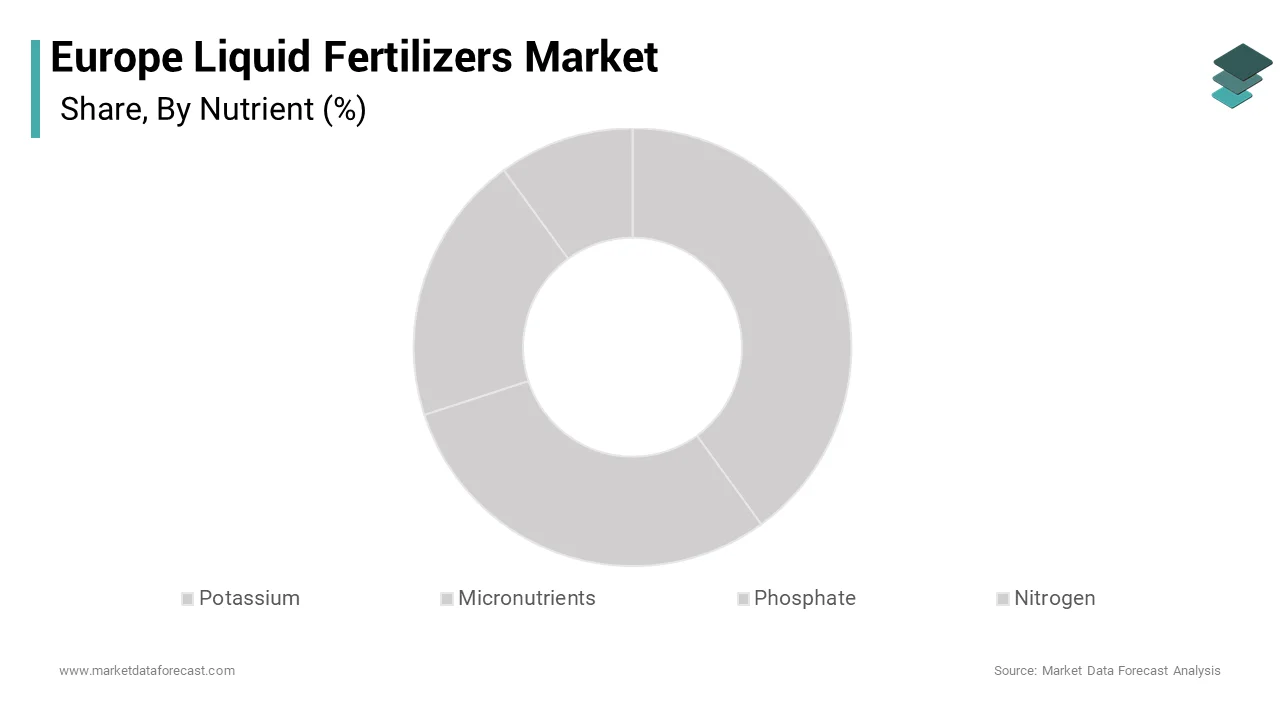
The nitrogen segment dominated the Europe liquid fertilizers market by holding 42.2% of the market in 2025. The dominance of the nitrogen segment in this European market is attributed to its fundamental role in chlorophyll synthesis and vegetative growth across staple crops such as wheat, barley, and maize. According to Eurostat, nitrogen fertilization is applied on the majority of arable land in Northern and Central Europe, with liquid forms increasingly favored for split applications aligned with crop demand. As per the European Commission’s Nitrates Directive, controlled application timing and dosage requirements are prompting the adoption of liquid formulations for precise dosing. According to national agricultural institutes in Germany and France, field studies indicate that liquid nitrogen can reduce ammonia volatilization compared to granular urea. This segment is expected to maintain steady growth over the forecast period due to regulatory alignment and agronomic efficiency.
The micronutrients segment is anticipated to grow at a promising CAGR of 7.8% over the forecast period in the European market. The rising incidence of soil micronutrient depletion and the expansion of high‑value horticulture are supporting the growth of the micronutrients segment in this European market. According to the European Soil Data Centre, deficiencies in zinc, iron, and manganese are documented across EU arable soils, with Southern regions most affected by alkaline pH and intensive cropping. As per trial reports in Spain and Italy, foliar chelated micronutrient applications have demonstrated yield and quality improvements in tree fruit and vineyards. According to the European Commission’s Farm to Fork Strategy, the link between soil health metrics and CAP incentives is encouraging structured micronutrient programs. This segment is expected to expand significantly over the forecast period as soil health and sustainability targets intensify.
By Form Insights
The synthetic liquid fertilizers segment occupied 76.6% of the Europe liquid fertilizers market share in 2024. The leading position of the synthetic segment in this European market is attributed to high nutrient concentration, consistent composition, and immediate plant availability, which is critical for large‑scale cereal and oilseed production systems. According to the German Federal Office of Agriculture, most liquid fertilizer users rely on synthetic blends for predictable performance under variable weather conditions. As per the European Environment Agency, farms adopting controlled‑release synthetic nitrogen report higher nitrogen‑use efficiency than those using conventional solid fertilizers. According to industry guidance, the integration of nitrification inhibitors in modern synthetic liquids helps reduce nitrous oxide emissions in compliance with environmental mandates. This segment is expected to remain dominant over the forecast period due to performance reliability and regulatory compliance.
The organic liquid fertilizers segment is anticipated to exhibit a CAGR of 8.2% over the forecast period in the European market. The EU’s binding target of 25% organic farmland by 2030 and rising consumer demand for residue‑free produce are favouring the growth of the organic segment in this European market. According to FiBL, organic farmland in the EU totals many millions of hectares, with Spain, Italy, and France leading adoption. As per Wageningen University trials, liquid plant protein hydrolysates have shown tomato yield and firmness improvements in controlled studies. According to market reports, rapidly expanding urban and vertical farms are increasingly adopting certified organic liquids to meet premium certification requirements. This segment is expected to grow robustly over the forecast period as organic farming targets and consumer demand accelerate.
By Mode of Application Insights
The fertigation segment captured 45% of the Europe liquid fertilizers market share in 2024. The dominance of the fertigation segment in this European market is driven by extensive adoption of drip and micro‑irrigation systems in water‑stressed regions such as Southern Europe. According to Eurostat, millions of hectares of EU farmland use fertigation, with Spain, Italy, and Greece accounting for a substantial share. As per Spain’s National Irrigation Plan, greenhouse horticulture largely relies on fertigation for NPK and micronutrient delivery to ensure uniform quality. According to DG AGRI, CAP eco‑schemes provide higher subsidies for farms implementing integrated water‑nutrient management consistent with the Water Framework Directive. This segment is expected to continue expanding over the forecast period as precision irrigation technologies advance.
The foliar application segment is expected to register the fastest CAGR of 7.4% during the forecast period in the European market. The need for rapid correction of nutrient deficiencies during critical growth stages without soil interaction limitations is propelling the growth of foliar application in this European market. According to the European Soil Data Centre, high pH and compaction constrain root uptake across a significant share of EU cropland, making foliar sprays effective. As per the German Agricultural Society, foliar nitrogen during grain filling has improved wheat protein content in regional trials. According to INRAE, foliar calcium applications have reduced bitter pit incidence in apples in orchard studies. This segment is expected to grow steadily over the forecast period as the adoption of precision foliar techniques increases.
By Crop Insights
The fruits and vegetables segment led the market and accounted for 38.5% of the Europe liquid fertilizers market share in 2024, owing to high nutrient demands and premium value of horticultural crops. According to Eurostat, protected cultivation spans hundreds of thousands of hectares across the EU, with Spain, the Netherlands, and Italy leading adoption. As per Wageningen University, most Dutch tomato and cucumber growers use tailored liquid NPK blends adjusted frequently based on plant tissue analysis. According to industry export data, berry producers in Spain apply liquid potassium and calcium to enhance shelf life for UK and German retail specifications. This segment is expected to maintain dominance over the forecast period as horticulture intensifies under sustainability and quality mandates.
The oilseeds segment is anticipated to exhibit a CAGR of 6.9% over the forecast period in the European market. Rising EU demand for domestic protein sources and biofuels is favouring the growth of the oilseeds segment in this European market. According to the European Commission’s protein and biofuel strategies, measures to reduce reliance on imported soybeans are supporting expansion in rapeseed and sunflower acreage under CAP eco‑schemes. As per the Julius Kühn Institute, split liquid sulfur and boron applications have increased rapeseed yield and oil concentration in German trials. According to regional agronomy networks, liquid micronutrient foliar sprays on sunflowers have reduced empty seed formation in Eastern European field conditions. This segment is expected to expand consistently over the forecast period as oilseed cultivation grows under EU protein and energy policies.
COUNTRY ANALYSIS
Germany Liquid Fertilizers Market Analysis
Germany led the market by holding 20.2% of the European liquid fertilizers market share in 2024. The dominating position of Germany in the European market is driven by its advanced arable farming sector, stringent environmental compliance requirements, and robust agri‑tech infrastructure. According to the German Federal Ministry of Food and Agriculture, Germany applies more than 1.2 million tonnes of nitrogen fertilizers annually, much of it in liquid form, to comply with the Fertilizer Ordinance’s seasonal and dosage restrictions. According to the German Fertilizer Association, precision farming tools such as digital soil mapping and variable rate application systems are widely adopted, favoring liquid fertilizers for targeted nutrient placement. Germany also hosts Europe’s largest fertilizer blending facilities, ensuring rapid customization for regional soil types. Research institutions like the Thünen Institute validate liquid fertilizer efficacy in reducing nitrate leaching, influencing national policy. Germany is expected to sustain its top‑tier market influence in the coming years.
France Liquid Fertilizers Market Analysis
France held a substantial share of the European liquid fertilizers market in 2024. According to FranceAgriMer, France is Europe’s largest producer of rapeseed and soft wheat, crops that increasingly rely on split liquid nitrogen applications to meet protein and oil targets. As per the French Ministry of Agriculture, over 2.8 million hectares received liquid fertilizer treatments in 2023, with fertigation adoption rising in Provence due to water scarcity. The Ecophyto Plan links fertilizer efficiency to pesticide reduction goals, encouraging integrated nutrient management. Cooperative networks such as InVivo provide on‑farm blending services, enabling real‑time formulation adjustments based on tissue analysis. France is expected to remain a dynamic and policy‑driven liquid fertilizer market in the next few years.
Spain Liquid Fertilizers Market Analysis
Spain captured a considerable share of the European liquid fertilizers market in 2024. According to the Spanish Ministry of Agriculture, Spain’s horticultural sector accounts for more than 40% of EU greenhouse production, concentrated in Almería and Murcia. The National Irrigation Observatory confirms that Spain irrigates 3.8 million hectares, with more than 70% using fertigation integrated with climate control systems. Spanish fruit and vegetable exports to the EU reached €15.3 billion in 2023, requiring consistent nutrient management to meet retailer specifications. Water reuse policies mandate closed‑loop nutrient systems where liquid formulations prevent emitter clogging and enable recycling. Spain is expected to strengthen its pivotal role in Europe’s liquid nutrition landscape in the coming years.
Netherlands Liquid Fertilizers Market Analysis
The Netherlands continued to play a notable role in the European liquid fertilizers market in 2024. According to Wageningen University, Dutch greenhouse growers apply dozens of nutrient solution recipes per crop cycle to optimize yield and resource use. DutchGreenhouses reports that over 90% of greenhouse tomato, cucumber, and pepper production uses computer‑controlled liquid feeding systems, adjusting nutrient ratios hourly based on sensor data. The Dutch government’s Mineral Policy enforces strict nitrogen and phosphate ceilings, pushing the adoption of stabilized liquid formulations that minimize losses. The Netherlands also exports precision fertigation knowledge across the EU through public‑private networks. The Netherlands is expected to maintain an outsized influence in Europe’s liquid fertilizer innovation in the coming years.
Italy Liquid Fertilizers Market Analysis
Italy remained an important participant in the European liquid fertilizers market in 2024. According to the International Olive Council, Italy had 1.05 million hectares under olive cultivation in 2024, making it the EU’s largest olive oil producer. CREA (Council for Agricultural Research) found that liquid potassium and calcium sprays reduced olive fruit drop by 22% in central regions. In the Po Valley, rice and maize growers use liquid nitrogen with nitrification inhibitors to meet Lombardy’s groundwater protection rules. Additionally, the Made in Italy brand drives premiumization, with liquid organic fertilizers derived from grape pomace and tomato residues gaining traction in certified organic vineyards. Italy is expected to sustain its strong and evolving position in the European liquid fertilizers market in the coming years.
COMPETITIVE LANDSCAPE
The Europe liquid fertilizers market features a competitive landscape shaped by a mix of global nutrient giants, regional blenders, and specialty solution providers. Competition is centered less on price and more on technical differentiation, on service integration, and regulatory compliance. Leading firms leverage digital tools, formulation science, and localized agronomic support to build long-term relationships with cooperatives and large farms. The market is highly influenced by EU policies such as the Farm to Fork Strategy, the Nitrates Directive, and national fertilizer ordinances, which create both barriers and opportunities. Companies with capabilities in stabilized nutrients, chelated micronutrients,nts, and organic compliant liquids gain preferential access to premium segments. Eastern Europe remains a growth battleground where infrastructure limitations are offset by rising adoption of precision techniques. Meanwhile, Western Europe demands innovation in sustainability and traceability. This dynamic environment rewards agility, technological depth, and policy foresight, making competition multidimensional and increasingly knowledge-driven.
KEY MARKET PLAYERS
These are the market players that dominate the Europe liquid fertilizers market.
- Haifa Chemicals Ltd
- ICL Group Ltd
- Nutrien Ltd
- Kugler Company
- Yara International ASA
- Israel Chemicals Ltd
- Agrium Inc
- Sociedad Quimica
- Y Minera SA (SQM).
Top Players In The Market
- Yara International ASA maintains a robust presence in the Europe liquid fertilizers market through an integrated network of production, blending, and distribution facilities across Norway, Germany, and the Netherlands. The company specializes in nitrogen-based and NPK liquid solutions tailored for precision agriculture and fertigation systems. In 2023, Yara launched its YaraVera liquid micronutrient range across Southern Europe to address widespread zinc and boron deficiencies in cereal and oilseed crops. It also enhanced its digital agronomy platform, tfr, to provide real-time liquid fertilizer prescriptions based on satellite imagery and soil data. These initiatives reinforce Yara’s commitment to sustainable nutrient management while strengthening its technical leadership in Europe’s evolving agricultural landscape.
- ICL Group Ltd plays a strategic role in the Europe liquid fertilizers market by offering specialty liquid formulations enriched with potassium phosphate and proprietary biostimulants. Headquartered in Israel but with major operations in Spain, the UK, and the Netherlands, ICL serves high-value horticulture and organic farming sectors. In early 2024, the company expanded its liquid production capacity at its Terneuzen facility in the Netherlands to meet rising demand for clean-label crop nutrition. ICL also introduced its Nova PeKacid line featuring clear soluble phosphorus potassium blends compatible with drip irrigation. Collaborations with European research institutes on soil health metrics further position ICL as a science-driven innovator in tailored liquid nutrition solutions across the continent.
- Nutrien Ltd actively participates in the Europe liquid fertilizers market through its European distribution arm, which supplies nitrogen and NPK solutions to cooperatives and agro retailers in FFranceermany, and Eastern Europe. The company leverages its global raw material integration to ensure a stable supply of ammonia and urea for liquid blending. In 2023, Nutrien upgraded its liquid storage and logistics infrastructure in Poland and Romania to support just-in-time delivery for spring application windows. It also partnered with local agronomists to deliver training on stabilized liquid nitrogen use under the EU’s Nitrates Directive. These localized efforts enhance Nutrien’s responsiveness to regulatory and seasonal dynamics while reinforcing its role as a reliable nutrient solutions provider in diverse European farming systems.
Top Strategies Used by the Key Market Participants
Key players in the Europe liquid fertilizers market are intensifying investments in digital agronomy platforms that integrate soil, crop, and weather data to generate customized liquid nutrient prescriptions. Companies are formulating stabilized and chelated products with nitrification inhibitors or organic acids to enhance nutrient use efficiency and comply with EU environmental regulations. Strategic partnerships with cooperatives, agro retailers, and research institutions are being established to co-develop region-specific blends and validate field performance. Expansion of blending and storage infrastructure in Eastern and Southern Europe is improving supply chain agility for seasonal demand peaks. Additionally, firms are diversifying into organic and bio-based liquid fertilizers to align with the EU’s 25 percent organic farming target by 2030. These strategies collectively address regulatory pressures, precision farming adoption,n and sustainability mandates shaping Europe’s nutrient management future.
MARKET SEGMENTATION
This research report on the Europe liquid fertilizers market is segmented and sub-segmented into the following categories.
By Nutrient Type
- Potassium
- Micronutrients
- Phosphate
- Nitrogen
By Form
- Organic
- Synthetic
By Mode of Application
- Soil
- Fertigation
- Foliar
- Others
By Crop Type
- Oilseeds
- Fruits & Vegetables
- Grains & Cereals
- Others
By Country
- United Kingdom
- France
- Spain
- Germany
- Italy
- Russia
- Sweden
- Denmark
- Switzerland
- Netherlands
- Rest of Europe