- Product Description Description
- Table of Contents TOC
- List of Table & Figure LOT
- Get Free Sample PDF Sample PDF
Market Size, 2025
$84.27 BnMarket Estimate, 2026
$90.43 BnMarket Forecast, 2034
$160.62 BnCAGR, 2026–2034
7.43%Executive Summary: Europe Magnetoencephalography Market
- Market Scope: Comprehensive European magnetoencephalography (MEG) industry analysis covering application sectors (clinical application, research), technology platforms (cryogen-free MEG, wearable OPM sensors), regional leadership frameworks (Germany, United Kingdom), strategic corporate developments, and competitive landscapes.
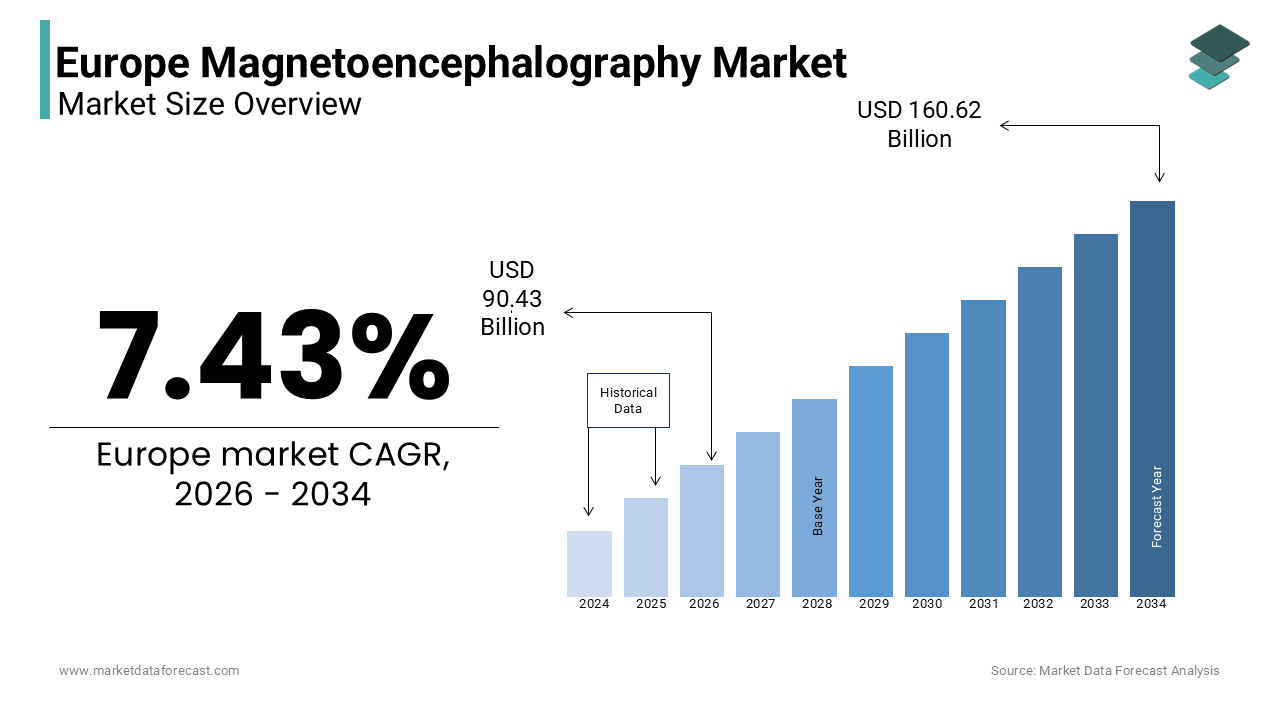
- Market Valuation: Valued at USD 84.27 billion (2025), estimated at USD 90.43 billion (2026), and projected to reach USD 160.62 billion by 2034, registering a robust CAGR of 7.43% (2026–2034).
- Primary Growth Drivers: Epilepsy surgery planning adoption, neuroscience research infrastructure investments, AI-enabled neuroimaging, Horizon Europe initiatives, presurgical localization, and demand for high-resolution functional brain mapping. Restraints include high capital/operating costs, reimbursement disparities, and specialist shortages.
Key Market Segment Metrics (2026–2034)
| Category | Leading Segment / Region (Position) | Fastest-Growing Segment |
|---|---|---|
| By Application & Technology | Clinical application segment (dominant in 2025 via epilepsy surgery planning and brain tumor mapping) | Research application segment (fastest-growing due to cognitive neuroscience investments and AI-enabled brain mapping) |
| By Innovation & Systems | High-density sensor arrays and structured European reimbursement frameworks | Cryogen-free MEG platforms and wearable optically pumped magnetometer (OPM) systems |
| By Region / Country | Germany (leading country via strong reimbursement and infrastructure) & United Kingdom (second-largest with 17.1% share in 2024 backed by NHS and NICE guidelines) | Western European clinical and academic neuroimaging research centers |
Major Market Players & Market Structure
Market Structure: Highly competitive European neuroimaging landscape focusing on cryogen-free systems, OPM-based wearable sensors, AI-driven data interpretation, modular magnetically shielded rooms, and academic-clinical research consortia.
Key Companies: Compumedics Limited, Ricoh Company, Ltd., FieldLine, Inc., MEGIN OY, CTF MEG Neuro Innovations, Inc., Cerca Magnetics Limited, MAG4Health, and Brainbox Ltd.
 Download Free Sample Report
Europe Magnetoencephalography Market Size
The europe magnetoencephalography market size was valued at USD 84.27 billion in 2025 and is anticipated to reach USD 90.43 billion in 2026 from USD 160.62 billion by 2034, growing at a CAGR of 7.43% during the forecast period from 2026 to 2034.
Magnetoencephalography (MEG) is a non-invasive neuroimaging technique that measures the magnetic fields generated by neuronal electrical activity in the human brain with millisecond temporal resolution. Within Europe this technology has gained traction primarily in specialized academic medical centers and research institutions devoted to mapping brain function with high fidelity particularly for epilepsy localization and presurgical planning in neurology and neurosurgery. Unlike functional MRI which infers neural activity through hemodynamic changes magnetoencephalography captures real time electrophysiological patterns offering unparalleled precision in identifying epileptogenic zones. As per sources, the use of magnetoencephalography within European epilepsy surgery centers for clinical diagnostic workflow is increasing, though its adoption is not universal and varies significantly across centers. According to research, Europe generally has high access to neuroimaging technology compared to low- and middle-income regions. However, the facilities are not distributed uniformly across the continent. The European Union's Horizon Europe framework is actively funding collaborative research and innovation projects that aim to integrate advanced neuroimaging techniques, such as magnetoencephalography, with artificial intelligence for the study and diagnosis of neurological and cognitive disorders. Magnetoencephalography installations are primarily concentrated in a few Western and Northern European nations, which host the majority of the continent's operational systems.
MARKET DRIVERS
Accelerating Integration of Magnetoencephalography in Epilepsy Surgical Pathways
The growing adoption of MEG in presurgical epilepsy evaluation stands as a major factor propelling the growth of the Europe magnetoencephalography market. Clinical guidelines issued by the International League Against Epilepsy explicitly recommend magnetoencephalography for localizing epileptogenic foci when noninvasive methods yield inconclusive results. According to sources, across Europe, the number of patients with drug-resistant epilepsy being evaluated for potential surgical intervention is substantial, and there is an increasing trend in the use of advanced diagnostic methods as part of the multidisciplinary presurgical evaluation, particularly in complex cases. In Germany, as in other high-income countries, national health insurance systems and reimbursement policies influence the availability and use of various diagnostic tools, including MEG, within established epilepsy surgery centers. The French National Authority for Health encourages early and comprehensive evaluation for children with drug-resistant epilepsy, which is consistent with the general trend in Europe to pursue epilepsy surgery earlier in pediatric populations. Besides, The United Kingdom's National Institute for Health and Care Excellence (NICE) guidelines support comprehensive presurgical evaluation for suitable candidates, with advanced functional imaging techniques such as magnetoencephalography playing a key role in localizing the epileptogenic zone, particularly when structural MRI findings are non-lesional. This clinical validation across multiple national frameworks reinforces sustained equipment demand particularly as referral pathways from community neurologists to tertiary epilepsy centers mature across Southern and Eastern Europe.
Rising Investment in Cognitive Neuroscience Research Infrastructure
The region’s robust public funding ecosystem for fundamental neuroscience has significantly driven MEG system deployment beyond clinical environments, which in turn boosts the expansion of the Europe magnetoencephalography market. European Union funding bodies, such as the ERC and those under the Horizon Europe framework, continue to support numerous individual research projects and large-scale initiatives exploring neuroimaging techniques, including magnetoencephalography, to understand neural mechanisms in various brain disorders. The Human Brain Project, which concluded its mandate in 2023, established a lasting European digital research infrastructure for brain science, fostering advancements in neuroscience, brain-related medicine, and high-performance computing capabilities across various institutions. The Knut and Alice Wallenberg Foundation consistently provides significant funding for long-term molecular medicine and neuroscience research initiatives in Sweden, including support for neuroimaging research and infrastructure at major institutions like the Karolinska Institutet. Similarly, the Netherlands Organisation for Scientific Research supports various collaborative research projects and networks in neuroimaging, encouraging data sharing and methodological standardization across different Dutch university centers to facilitate large-scale cognitive studies. These initiatives reflect a strategic shift toward mapping dynamic brain networks rather than static anatomy thereby elevating the modality’s scientific prestige. The resulting demand stems not from patient throughput but from institutional mandates to acquire cutting edge instrumentation that enables participation in pan European research consortia such as the EU funded BRAINMIND initiative which includes magnetoencephalography data from over fifteen thousand subjects.
MARKET RESTRAINTS
Prohibitive Capital and Operational Expenditure Constraints
The extreme financial burden associated with acquiring and maintaining MEG systems constitutes a formidable restraint, particularly in lower income European regions. This restricts the growth of the Europe magnetoencephalography market. A single magnetoencephalography installation requires a substantial initial capital outlay, excluding the additional costs associated with constructing specialized magnetically shielded rooms. Annual operational costs, encompassing expenses like liquid helium refills, specialized technician salaries, and software licensing, also exceed a considerable amount per site. These figures indicate the technology may be beyond the financial reach of many public hospitals in various countries. Even in wealthier nations, recurrent supply challenges for consumables like helium have further exacerbated running costs. Moreover, the absence of standardized reimbursement across European health systems discourages investment. This fiscal asymmetry perpetuates geographic inequities in access and stifles market expansion beyond elite academic hubs despite clinical utility being widely acknowledged.
Limited Workforce Proficiency and Standardization Gaps
A serious shortage of personnel trained in both the technical operation and clinical interpretation of MEG data impedes widespread adoption across the region, and acts as a major obstacle to the Europe magnetoencephalography market. A very small number of physicians throughout the region hold formal certification in magnetoencephalography source localization and functional mapping. This limited number is particularly noticeable in certain sub-regions where specialists serve large populations. The procedure is complex and requires collaboration among several different types of medical professionals. Official training programs for this approach are available in only a small number of countries within the area. Compounding this issue is the lack of harmonized acquisition and analysis protocols. A recent review of various operational protocols found that many European magnetoencephalography centers utilize software pipelines that are specific to their respective institutions. This practice appears to contribute to notable differences in how data is interpreted across these different facilities. The fragmentation undermines multicenter clinical trials and discourages smaller hospitals from investing in the technology due to concerns about result reproducibility. The full diagnostic potential of magnetoencephalography (MEG) in most healthcare settings will only be realized with concerted efforts to establish pan-European training curricula and standardized analytical frameworks.
MARKET OPPORTUNITIES
Advancement of Cryogen Free Magnetoencephalography Systems
The emergence of cryogen free MEG platforms leveraging optically pumped magnetometers or high temperature superconductors offers a potential opportunity for the Europe magnetoencephalography market growth. Unlike traditional systems dependent on liquid helium these next generation devices eliminate recurring cryogen costs and reduce infrastructure requirements. According to multiple sources, Commercial, cryogen-free magnetoencephalography (MEG) systems have recently achieved regulatory approval, enabling their use in clinical environments. This technology generally aims to provide signal quality comparable to conventional systems while operating without the need for liquid cryogens. Public health research bodies in the United Kingdom have provided substantial investment for the development and clinical research of this innovative neuroimaging technology. This dramatic reduction in entry barriers could enable magnetoencephalography access in countries previously excluded due to operational constraints. The potential of cryogen-free neuroimaging is being considered by various national health authorities and institutions across Europe as they develop future strategies for advanced medical diagnostics. Furthermore, these systems allow for more flexible patient positioning including upright or movement tolerant paradigms which are particularly beneficial for pediatric and movement disorder populations. Experts and industry analysts suggest that the introduction of this technological shift in neuroimaging has the potential to significantly expand the market size and hospital adoption within Europe over the coming years due to increased accessibility and reduced operational barriers.
Integration with Artificial Intelligence Driven Diagnostic Platforms
The convergence of magnetoencephalography with artificial intelligence algorithms for automated biomarker extraction gives a significant growth path by enhancing clinical decision support and expanding indications. This integration is expected to fuel the expansion of the Europe magnetoencephalography market. Researchers at various academic institutions are developing advanced deep learning models to automate the identification and detection of epileptiform discharges in neurophysiological data, which perform comparably to human experts. AI integration in medical imaging and neurophysiology workflows aims to significantly reduce the time required for expert interpretation of complex data, enabling faster and broader clinical adoption of advanced diagnostic tools. The European Commission and related health agencies consider the regulation and integration of artificial intelligence in healthcare a strategic priority, with significant efforts and funding directed towards validating AI tools for disease detection. Research institutions and national health projects in Europe and globally are leveraging AI-augmented neuroimaging platforms, including MEG, to improve the accuracy and earlier detection of neurodegenerative diseases like Alzheimer's, often showing improved diagnostic capabilities compared to traditional cognitive assessments. Such innovations not only improve diagnostic yield but also create new reimbursement pathways by demonstrating quantifiable clinical utility beyond traditional imaging. This synergy positions magnetoencephalography as a cornerstone of precision neurology in Europe’s evolving digital health landscape.
MARKET CHALLENGES
Infrastructure Dependency on Magnetically Shielded Environments
The necessity for magnetically shielded rooms imposes a persistent logistical and spatial challenge that limits MEG deployment particularly in urban hospitals with electromagnetic interference from transport systems and electronic infrastructure, and thereby inhibits the growth of the Europe magnetoencephalography market. These rooms require specialized construction using multiple layers of mu metal and aluminum costing notable amount and occupying significant meters of clinical space. Many medical facilities in densely populated areas encounter significant challenges in finding or modifying existing building layouts to meet the specific spatial and environmental requirements for advanced diagnostic technologies like magnetoencephalography.Moreover, the functionality of highly sensitive medical imaging equipment is generally vulnerable to environmental interference, as ambient magnetic noise from common urban infrastructure, such as subway lines or power grids, can compromise signal integrity. In addition, the logistical and environmental constraints of urban locations often force healthcare institutions to consider alternative sites for specialized installations, which can increase the challenges of patient access and logistics. Besides, retrofitting older hospital buildings to meet shielding standards frequently triggers heritage preservation restrictions in historic European cities further delaying implementation. Market reach will remain limited to purpose-built facilities, such as those in academic medical centers, until portable or active noise cancellation systems become more advanced.
Regulatory and Reimbursement Fragmentation Across Member States
The absence of a unified regulatory and reimbursement framework for MEG across European Union member states creates significant commercial uncertainty and hinders cross border service scalability, which constrains the expansion of the Europe magnetoencephalography market. The EU's classification (Class IIb) doesn't guarantee uniform coverage, as national policies remain varied. Reimbursement policies for advanced diagnostic technologies like magnetoencephalography (MEG) exhibit significant national and regional variations across European health systems. Coverage often depends on specific national health technology assessments, innovation funds, or regional discretion, rather than a uniform, universal approach. In Spain, the public health system delegates service provision to autonomous communities, leading to differing levels of coverage for specific treatments. However, the overarching trend involves a move toward better integration of evidence-based medical technologies within national and regional frameworks to improve patient access to non-invasive diagnostics. This inconsistency discourages private investors from establishing centralized scanning hubs that could serve multiple countries. Besides, the lack of standardized coding under the European Health Insurance Card system prevents patients from accessing magnetoencephalography services abroad even when clinically indicated. Administrative fragmentation, not clinical demand, will continue to limit market expansion until harmonization is achieved.
REPORT COVERAGE
| REPORT METRIC | DETAILS |
| Market Size Available | 2025 to 2034 |
| Base Year | 2025 |
| Forecast Period | 2026 to 2034 |
| CAGR | 7.43% |
| Segments Covered | By Application, End-Use and Region. |
| Various Analyses Covered | Global, Regional & Country Level Analysis, Segment-Level Analysis, DROC, PESTLE Analysis, Porter’s Five Forces Analysis, Competitive Landscape, Analyst Overview of Investment Opportunities |
| Regions Covered | United Kingdom, France, Spain, Germany, Italy, Russia, Sweden, Denmark, Switzerland, the Netherlands, Turkey, and the Czech Republic. |
| Market Leaders Profiled | Compumedics Limited, Ricoh Company, Ltd., FieldLine, Inc., MEGIN OY, CTF MEG Neuro Innovations, Inc., Cerca Magnetics Limited, MAG4Health, and Brainbox Ltd. |
SEGMENTAL ANALYSIS
By Application Insights
The clinical application segment captured the majority share of the Europe magnetoencephalography market in 2025. The formal inclusion of magnetoencephalography in national clinical pathways across several high-income European countries drive the supremacy of the clinical application segment. Moreover, the growth of this segment also propelled by the modality’s irreplaceable role in presurgical mapping for drug resistant epilepsy and brain tumor resection planning where millisecond level temporal resolution directly impacts surgical outcomes. In Germany, magnetoencephalography guided procedures have been well documented, reflecting its place in the standard care pathway for appropriate surgical candidates. An additional reinforcing element is the growing body of evidence supporting its use in minimizing postoperative neurological deficits. Recent research has demonstrated that patients undergoing magnetoencephalography based cortical mapping may experience a lower incidence of permanent motor or language impairment after tumor resection compared to those assessed with fMRI alone. These clinical advantages coupled with structured reimbursement in countries like France and the United Kingdom sustain robust demand from hospital neurology and neurosurgery departments.
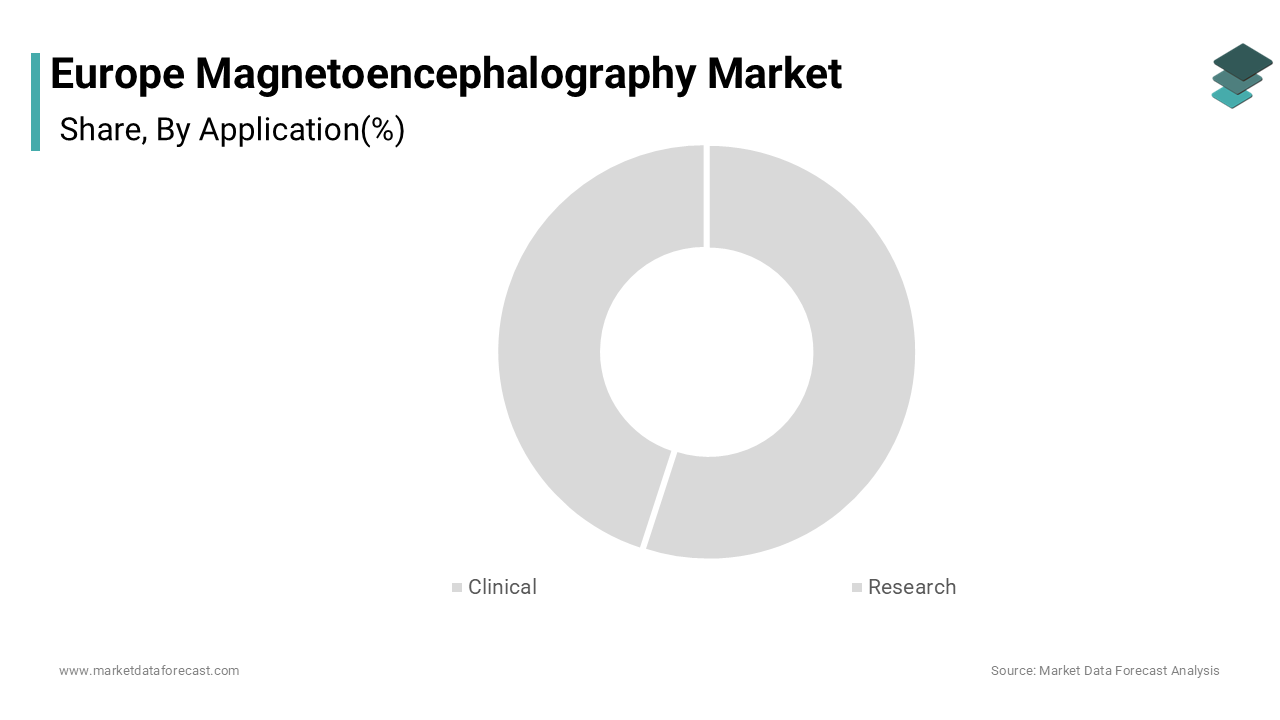
The research application segment is on the rise and is expected to be the fastest growing segment in the market by witnessing a CAGR of 9.3% from 2026 to 2034 due to a paradigm shift toward dynamic brain network analysis in cognitive and psychiatric disorders where static imaging falls short. A further driver is the surge in public funding for large scale neuroscience initiatives that prioritize magnetoencephalography for its unique temporal fidelity. The European Union has dedicated specific funding within a research framework for projects exploring the use of a particular brain imaging technology to understand neural changes related to certain complex neurological and mental health conditions. A different growth enabler is the proliferation of open science frameworks. In addition, there has been a significant expansion of shared data repositories, facilitating collaboration among different research institutions by widely hosting relevant imaging datasets. A specific regional observation indicates a marked rise in published research utilizing this advanced imaging technique, which appears to be supported by a focus on comprehensive brain mapping infrastructure initiatives. These developments position research not merely as an ancillary use but as a strategic frontier shaping next generation clinical applications.
By End Use Insights
The hospitals segment led the Europe magnetoencephalography market by accounting for a 63.2% share in 2025. The leading position of the hospitals segment is attributed to its dual role as both clinical service providers and academic referral centers where complex neurological cases converge. A further driving force is the concentration of Level IV epilepsy centers, designated by the International League Against Epilepsy, which require magnetoencephalography as a core diagnostic tool and are almost exclusively embedded within tertiary hospitals. In France, a certain number of specialized centers have been identified, all operating within public or university affiliated hospitals. A different contributing factor is the integration of magnetoencephalography into hospital based neurosurgical navigation systems. In the United Kingdom, several hospital trusts have incorporated a specific type of real-time data into intraoperative guidance platforms, which appears to be associated with fewer subsequent surgical procedures for residual issues. These operational synergies and institutional mandates cement hospitals as the central hub for magnetoencephalography deployment despite high capital costs.
The academic and research institutes segment is expected to exhibit a noteworthy CAGR of 8.7% during the forecast period owing to strategic national investments in brain science infrastructure, and the establishment of dedicated neurotechnology hubs funded through national science foundations. The Dutch Research Council (NWO) continues to provide significant funding for advanced neuroscience research infrastructure across various university laboratories through its established grant programs. An additional factor is the rising emphasis on training the next generation of neuroimaging specialists. The field of computational neuroscience, including methodologies like magnetoencephalography (MEG), is seeing a growing trend in the development of specialized academic programs at European universities. These institutes also serve as testbeds for emerging technologies such as wearable magnetoencephalography and AI driven source localization which further attract competitive research grants. Consequently, their role is evolving from passive users to active innovators shaping the future trajectory of the market.
REGIONAL ANALYSIS
Germany Magnetoencephalography Market Analysis
Germany dominated the Europe magnetoencephalography market and accounted for a 24.6% share in 2025, with its advanced neurological care infrastructure and strong public research ecosystem. The nation maintains a significant number of operational magnetoencephalography systems, positioning it as a primary hub for this technology within the region. A different factor sustaining this leadership is the nationwide integration of magnetoencephalography into the German Diagnosis Related Groups reimbursement framework which covers both epilepsy surgery planning and presurgical mapping for glioma resection. Public health insurance providers manage a substantial volume of claims and reimbursements related to these neurological procedures. National academic initiatives support collaborative neuroscience research centers that house multiple specialized imaging units within centralized facilities. The combination of clinical demand driven by high epilepsy surgery volumes and sustained federal investment in brain mapping ensures Germany’s continued dominance in both adoption and technological advancement.
United Kingdom Magnetoencephalography Market Analysis
The United Kingdom was the second-largest country in the Europe magnetoencephalography market and captured a 17.1% share in 2024 because of its globally recognized neuroscience research base and centralized healthcare system. UK's NHS is increasing its MEG network, with substantial centers in major neuroscience hubs, supporting complex neurological conditions like epilepsy. NICE guidelines in 2023 significantly boosted MEG's role in non-lesional epilepsy care, driving substantial referral growth from local hospitals into specialist services. Furthermore, UKRI funding in 2024 via the UK MEG Network is accelerating research into neurodegenerative disease biomarkers, leveraging university collaborations to boost diagnostic tools. The country also leads Europe in pediatric applications. This dual strength in clinical implementation and translational research underpins the UK’s robust market position.
France Magnetoencephalography Market Analysis
France is also noteworthy player in the European magnetoencephalography market due to a highly centralized neurology care model and targeted public health policies. However, the French National Authority for Health (HAS) provides guidelines on the use of magnetoencephalography (MEG), which is primarily available in a limited number of highly specialized epilepsy surgery centers across the country (estimated at fewer than ten). France also benefits from strategic investments by the National Center for Scientific Research which funds to upgrade magnetoencephalography systems at. Additionally, France actively participates in the EU funded BRAINMIND consortium contributing longitudinal magnetoencephalography data from over two thousand patients. These coordinated clinical and research efforts solidify France’s role as a core market driver in continental Europe.
Sweden Magnetoencephalography Market Analysis
Sweden witnessed a steady expansion in the Europe magnetoencephalography market owing to national innovation priorities. The distribution of magnetoencephalography systems within the country shows the availability of medical technology relative to the size of the population. This level of access is notable across the continent. This infrastructure has been influenced by a national strategy that prioritized the technology as a key component for advancing brain health research and clinical applications. Support for this initiative included substantial funding to help establish a central facility for brain imaging. Another factor is Sweden’s pioneering role in open data sharing. The Swedish National Data Service hosts a major public magnetoencephalography data repository that supports researchers across many countries. Besides, the Karolinska Institute incorporates magnetoencephalography into its clinical trials for novel Alzheimer’s therapeutics, allowing for real-time monitoring of neural responses. This fusion of public policy scientific openness and clinical innovation explains Sweden’s outsized market influence.
Netherlands Magnetoencephalography Market Analysis
The Netherlands is predicted to grow in the European magnetoencephalography market from 2026 to 2034 due to its integrated academic medical model and leadership in methodological standardization. The country operates eleven magnetoencephalography systems all located within university medical centers that function simultaneously as clinical service providers and research powerhouses. A notable strength involves a national platform which supports data acquisition across research locations, facilitating large-scale research studies. This initiative has aided in gathering information from a significant number of individuals for studies concerning developmental and psychotic conditions. Furthermore, the country is a central location for those who develop open-source tools widely used in research. The combination of technical standardization collaborative infrastructure and strong public funding through grants ensures the Netherlands remains a pivotal node in Europe’s magnetoencephalography ecosystem.
COMPETITIVE LANDSCAPE
The Europe magnetoencephalography market exhibits concentrated competition characterized by a handful of technologically advanced firms competing on precision performance service reliability and research integration rather than price. Incumbents leverage decades of neurophysiological expertise and deep relationships with leading academic medical centers to maintain influence over clinical guidelines and procurement decisions. New entrants face high barriers due to stringent regulatory requirements complex infrastructure needs and limited reimbursement pathways yet are gaining traction through disruptive technologies such as helium free operation and AI augmented analysis. Competition is further shaped by national health policies with Germany France and the United Kingdom serving as strategic battlegrounds due to their established neuroscience infrastructure and public funding mechanisms. Collaborative innovation rather than direct rivalry defines the current competitive landscape as players co develop standards and share data to expand the modality’s clinical footprint.
KEY MARKET PLAYERS
Some of the companies that are playing a dominating role in the Europe Magnetoencephalography Market include
- Compumedics Limited
- Ricoh Company, Ltd
- FieldLine, Inc.
- MEGIN OY
- CTF MEG Neuro Innovations, Inc.
- Cerca Magnetics Limited
- MAG4Health
- Brainbox Ltd.
Top Players in the Europe Magnetoencephalography Market
Elekta AB
Elekta AB is a pioneering force in the global magnetoencephalography market with its Neuromag technology offering high sensitivity and advanced signal processing capabilities. Headquartered in Sweden the company has been instrumental in developing clinical protocols for epilepsy and brain tumor mapping adopted across European academic hospitals. In recent years Elekta has intensified its collaboration with the Human Brain Project and launched the next generation TRIUX neo system featuring improved spatial resolution and compatibility with MRI. These initiatives reinforce Elekta’s role as a technology and support leader in the European neuroimaging ecosystem.
CTF Systems Inc (a subsidiary of MISIS Group)
CTF Systems Inc has maintained a strong presence in Europe through its ultra low noise magnetoencephalography platforms widely used in both clinical and cognitive research settings. The company’s systems are installed in leading institutions such as the University of Nottingham and the University of Tübingen where they support studies on neuroplasticity and language processing. It also partnered with European AI startups to integrate real time neural decoding software into its acquisition pipeline. These recent actions demonstrate CTF’s commitment to lowering operational barriers and enhancing analytical capabilities to meet evolving European demands for precision neurology.
Ricardo Instruments Ltd
Ricardo Instruments Ltd has emerged as an innovative participant in the European magnetoencephalography landscape by focusing on cryogen free and wearable sensor technologies. The company's smaller scale has not hindered attention for its systems, which use optically pumped magnetometers to bypass liquid helium requirements and allow for greater flexibility in patient positioning. The strategic steps position Ricardo as a disruptor accelerating accessibility across Europe.
Top Strategies Used by the Key Market Participants
Key players in the Europe magnetoencephalography market primarily pursue technological innovation through development of cryogen free and high density sensor arrays to reduce operational complexity. They actively engage in strategic academic and clinical partnerships to validate clinical utility and expand protocol adoption. Companies invest in artificial intelligence integration to automate data interpretation and shorten diagnostic turnaround. Geographic expansion into underpenetrated regions like Southern and Eastern Europe is accelerated through localized service networks and training programs. Additionally, firms participate in European Union funded neuroscience consortia to align product roadmaps with public research priorities and secure early access to emerging clinical applications.
RECENT MARKET DEVELOPMENTS
- In March 2024, Elekta AB launched its TRIUX neo magnetoencephalography system across European clinical sites featuring enhanced sensor density and real time co registration with MRI to improve presurgical mapping accuracy and strengthen the Europe magnetoencephalography market presence
- In September 2023, CTF Systems Inc introduced a modular magnetically shielded room solution reducing installation costs and enabling deployment in urban hospitals with space constraints to strengthen the Europe magnetoencephalography market presence
- In November 2023, Ricardo Instruments Ltd received CE Mark approval for its wearable optically pumped magnetometer based magnetoencephalography system eliminating liquid helium dependency and expanding accessibility to strengthen the Europe magnetoencephalography market presence
- In May 2024, Elekta AB partnered with the French National Institute of Health and Medical Research to integrate AI driven spike detection algorithms into its clinical workflow enhancing diagnostic speed and strengthening the Europe magnetoencephalography market presence
- In February 2024 Ricardo Instruments Ltd initiated a pilot program with the United Kingdom National Health Service to deploy portable magnetoencephalography units in district hospitals for pediatric epilepsy screening and strengthen the Europe magnetoencephalography market presence
MARKET SEGMENTATION
This research report on the europe magnetoencephalography market has been segmented and sub–segmented into the following categories.
By Application
- Clinical
- Epilepsy
- Dementia
- Autism
- Stroke
- Multiple Sclerosis
- Schizophrenia
- Others
- Research
By End-use
- Hospitals
- Academic & Research Institutes
- Imaging centres
By Country
- UK
- France
- Spain
- Germany
- Italy
- Russia
- Sweden
- Denmark
- Switzerland
- Netherlands
- Turkey
- Czech Republic
- Rest of Europe