- Product Description Description
- Table of Contents TOC
- List of Table & Figure LOT
- Get Free Sample PDF Sample PDF
Market Size, 2025
$8.41 BnMarket Estimate, 2026
$8.67 BnMarket Forecast, 2034
$11.07 BnCAGR, 2026–2034
3.1%Executive Summary: Europe Meat Ingredients Market
- Market Scope: Comprehensive analysis of the European meat ingredients market segmented by meat type, product categories, specific functional ingredients, and key country-level markets.
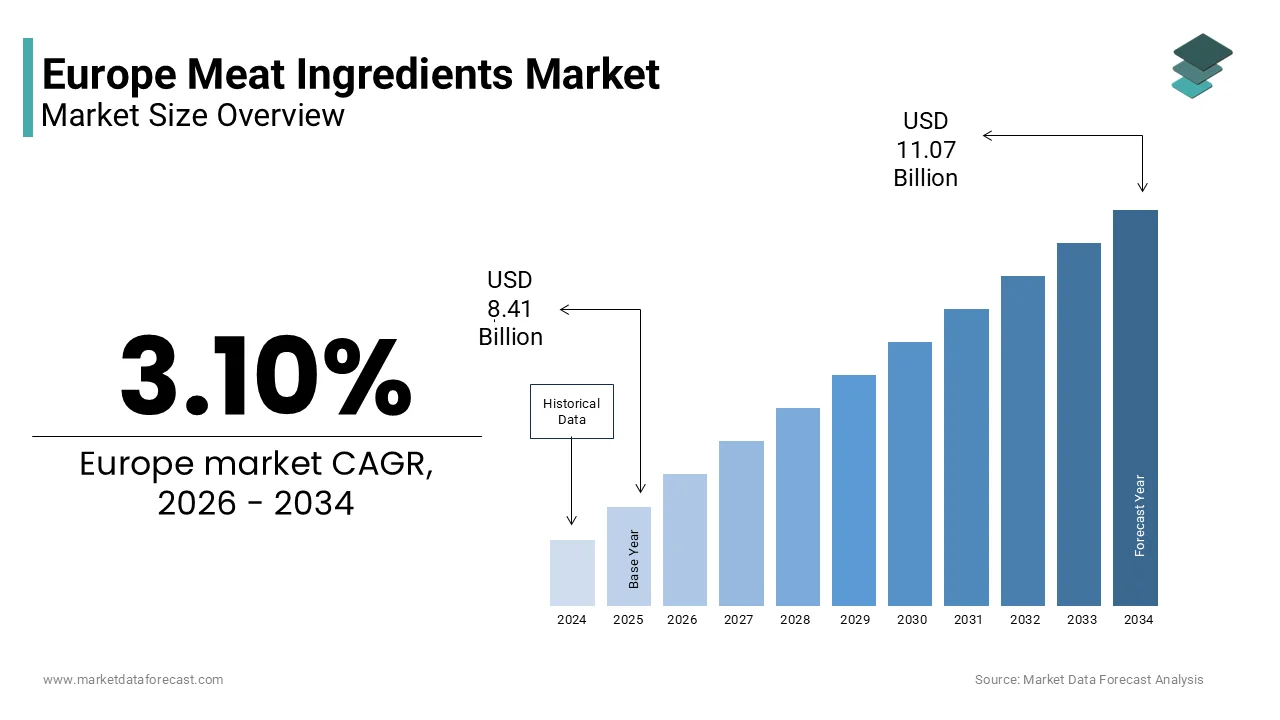
- Market Valuation: Valued at USD 8.41 billion in 2025, estimated at USD 8.67 billion in 2026, and projected to reach USD 11.07 billion by 2034, growing at a compound annual growth rate (CAGR) of 3.10% from 2026 to 2034.
- Primary Growth Drivers: Rising consumption of processed food and meat products, and an increased focus by key manufacturers on delivering superior multi-functional meat processing ingredients using advanced technologies.
Key Market Segment Metrics (2026–2034)
| Category | Leading Segment Focus | Detailed Taxonomy & Sub-Segments |
|---|---|---|
| By Type | Pork & Beef (Major market share) | Beef, Mutton (Fastest growing), Pork, & Poultry |
| By Product | Fresh Processed & Sausages (Major share) | Fresh Processed, Raw & Pre-Cooked (Fastest growing), Sausages, Cured, & Dried |
| By Ingredient | Multi-functional Additives | Binders, Extenders, Fillers, Colouring Agents, Flavoring Agents & Salts, & Preservatives |
| By Country Focus | U.K. (Market leader) & Germany (Fastest growing) | U.K., Germany, France, Italy, & Spain |
Regional Insights & Market Dynamics
United Kingdom: Holds the major share of the market, bolstered by the strong presence of industry leaders and a high concentration of meat ingredient consumers.
Germany: Acts as the fastest-growing market in Europe, driven by rising product innovation, increasing consumer demand, and higher disposable incomes.
Market Challenges & Restraints: Consumer skepticism regarding food additives and stringent government regulations governing food processing chemicals.
Key Market Leaders Profiled: E. I. Du Pont De Nemours and Company, Kerry Group PLC, Associated British Foods PLC, Wiberg GmbH, Proliant Non-Meat Ingredients, Campus SRL, Wenda Ingredients, Advanced Food Systems, Inc., Aliseia SRL, and Redbrook Ingredient Services Limited.
 Download Free Sample Report
Europe Meat Ingredients Market Size
The Europe meat ingredients market size was valued at USD 8.41 billion in 2025 and is expected to reach USD 11.07 billion by 2034 from USD 8.67 billion in 2026. The market is projected to grow at a CAGR of 3.10%.
Meat ingredients are the raw animal tissues or processed components derived from animals used in food preparation and manufacturing. This market covers a diverse array of products, including phosphates, carrageenan starches and protein isolates derived from both animal and plant sources. The European Union remains one of the largest consumers of meat products globally, which directly fuels the demand for high-quality ingredients that ensure product consistency and safety. According to research, total meat production across major global and regional markets shifts annually based on primary agricultural yields, regulatory standards, and livestock population trends. This substantial production volume necessitates robust supply chains for preservatives and binding agents that maintain product integrity during distribution. As per the European Commission, per capita meat consumption in the European Union has historically hovered around 69 kilograms, but is projected to slightly decline to 67 kilograms by 2031 due to changing consumer demands and sustainability targets. These facts underscore the intrinsic link between primary meat production and the auxiliary ingredient sector. Manufacturers must adhere to stringent regulatory frameworks established by the European Food Safety Authority, which govern the usage levels of various additives. The market dynamics are increasingly influenced by consumer preferences for clean label products, prompting innovation in natural extraction methods. This evolving landscape requires stakeholders to balance traditional processing needs with modern transparency demands while maintaining operational efficiency across the supply chain.
MARKET DRIVERS
Rising Demand for Processed and Convenience Food Products
The escalating preference for processed and convenience food items is the main factor for growth within the Europe meat ingredients market. Modern urban lifestyles across European nations have led to a significant shift in dietary habits where time-constrained consumers prioritise ready-to-eat meals and packaged meat products. According to studies, regional consumption patterns for processed food choices depend heavily on consumer lifestyles, standard retail options, and evolving market conditions. This frequent consumption pattern drives manufacturers to utilise advanced meat ingredients such as hydrocolloids and emulsifiers to maintain sensory attributes and structural integrity during storage and reheating. As per the FoodDrinkEurope industry federation, the processed food sector contributes significantly to the overall food manufacturing turnover in the region, with meat-based products representing a substantial share. The need for consistent quality in sausages, burgers and deli meats necessitates the use of specialised binding agents and moisture retainers. These ingredients prevent syneresis and ensure uniform texture, which is critical for brand loyalty in a competitive retail environment. Furthermore, the expansion of quick service restaurant chains across Central and Eastern Europe has amplified the demand for standardised meat formulations. These establishments rely heavily on pre-mixed ingredient blends to ensure taste consistency across multiple locations. Consequently, the meat ingredients market benefits from this industrial-scale adoption, where efficiency and reproducibility are paramount. The trend toward portion-controlled and individually wrapped meat snacks further accelerates the requirement for effective preservation systems. This dynamic creates a sustained pull for innovative ingredient solutions that can deliver superior performance without compromising on safety or regulatory compliance.
Technological Advancements in Clean Label and Natural Ingredient Solutions
Technological innovations focused on clean label and natural ingredient solutions also boost the expansion of the European meat ingredients market. Consumers in Europe are increasingly scrutinising food labels and actively seeking products free from artificial additives and synthetic preservatives. This shift in consumer behaviour has compelled ingredient suppliers to develop natural alternatives that offer similar functional benefits to conventional chemicals. According to the European Federation of Food Science and Technology, recent studies show that 75 % of European shoppers prefer meat products labelled as containing only natural ingredients. This preference drives research and development investments into plant-based extracts such as rosemary, acerola cherry, and celery powder, which serve as effective natural antioxidants and colour stabilisers. As per the Journal of Food Science, advancements in extraction technologies have improved the efficacy of these natural compounds, allowing them to compete with synthetic counterparts in terms of stability and performance. The ability to replace sodium nitrite with natural curing agents addresses health concerns related to nitrosamine formation while maintaining the characteristic pink colour of cured meats. Additionally, enzyme technology has enabled the creation of cleaner texturising agents that improve water-holding capacity without leaving residual tastes. These innovations align with the European Green Deal objectives, which promote sustainable and healthy food systems. Manufacturers who adopt these natural solutions gain a competitive edge by appealing to health-conscious demographics. The transition also supports corporate sustainability goals by reducing reliance on petrochemical-derived additives. This technological evolution not only meets regulatory pressures but also enhances brand equity through transparency. Hence, the market witnesses a surge in premium-priced natural ingredient segments as producers differentiate their offerings in a saturated marketplace.
MARKET RESTRAINTS
Stringent Regulatory Frameworks and Compliance Costs
Stringent regulatory frameworks and the associated high compliance costs are serious hindrances to the European meat ingredients market. The European Union maintains some of the most rigorous food safety standards globally, which require extensive testing and documentation for all food additives. According to the European Food Safety Authority, the approval process for new food ingredients can take several years and involves comprehensive toxicological assessments to ensure consumer safety. This lengthy timeline delays the introduction of innovative products and increases the financial burden on small and medium-sized enterprises. As per the European Chemicals Agency, the cost of registering a new substance under the Registration, Evaluation, Authorisation and Restriction of Chemicals regulation can exceed hundreds of thousands of euros. These high entry barriers limit the ability of smaller players to compete with established multinational corporations that have dedicated regulatory affairs departments. Furthermore, frequent updates to permitted lists and maximum usage levels create uncertainty for manufacturers who must constantly reformulate their products. The ban on certain phosphates and nitrites in specific meat categories has forced companies to seek alternative solutions that may be less effective or more expensive. This regulatory volatility disrupts supply chains and increases operational complexity. Companies must invest in continuous monitoring and legal expertise to avoid penalties and product recalls. The administrative burden diverts resources away from research and development initiatives that could drive market growth. Additionally, varying national interpretations of EU regulations within member states create fragmentation in the single market. This lack of harmonisation complicates cross-border trade and increases logistical costs. Therefore, the market faces slowed innovation rates as firms prioritise compliance over experimentation. The cumulative effect of these regulatory pressures constrains market dynamism and limits the diversity of available ingredient options for processors.
Volatility in Raw Material Prices and Supply Chain Disruptions
Volatility in raw material prices and persistent supply chain disruptions are substantial barriers to the stability of the European meat ingredients market. The production of many meat ingredients relies on agricultural commodities such as corn, potatoes, and soybeans, which are subject to fluctuating yields and global market prices. According to the European Commission, climate-induced weather events have caused significant variations in crop outputs across the continent, leading to unpredictable input costs. As per sources, severe weather anomalies and high heat across primary European growing regions have disrupted traditional agricultural yields, driving unpredictable price dynamics for processed crop ingredients. According to the International Grains Council, global grain prices experienced sharp spikes due to geopolitical tensions impacting the cost of feedstocks for fermentation-based ingredients. These price fluctuations squeeze profit margins for ingredient manufacturers who often operate on thin margins. Supply chain bottlenecks exacerbated by energy crises and transportation issues further compound these difficulties. The reliance on imported raw materials from outside the European Union exposes the market to currency exchange risks and trade barriers. Energy-intensive processes such as drying and extraction face increased operational costs due to rising electricity and gas prices. These factors force manufacturers to pass costs onto downstream processors who may resist price increases due to competitive retail pressures. The instability discourages long term contracting and investment in capacity expansion. Companies struggle to maintain consistent pricing strategies, which erodes customer trust and loyalty. Additionally, the scarcity of specific raw materials can lead to formulation compromises that affect product quality. This environment of uncertainty hampers strategic planning and reduces the overall resilience of the market. Stakeholders must navigate these external shocks while attempting to maintain service levels and product consistency.
MARKET OPPORTUNITIES
Expansion of Plant-Based and Hybrid Meat Product Segments
The rapid expansion of plant-based and hybrid meat product segments offers a lucrative opportunity for the European meat ingredients market. As consumers increasingly adopt flexitarian diets, there is a growing demand for meat analogues that mimic the texture and flavour of traditional animal proteins. According to the Good Food Institute Europe, plant-based meat alternative consumer behaviour in Europe continues to mature, heavily influenced by key commercial considerations such as price, product flavour, and product access. This trend creates new application areas for traditional meat ingredients such as methylcellulose and pea protein isolates, which are essential for creating fibrous textures in plant-based burgers and sausages. As per research, contemporary protein formulation trends show a rise in hybrid food options that blend traditional animal proteins alongside plant-derived components. These hybrid products require specialised binding and emulsifying agents to ensure cohesive structures and appealing mouthfeel. Ingredient suppliers can leverage their existing expertise in protein functionality to develop tailored solutions for this emerging category. The opportunity extends to clean label preservatives that address the shorter shelf life challenges often associated with fresh plant-based products. Furthermore, the development of fermentation-derived heme proteins opens avenues for novel ingredient partnerships. Companies that adapt their portfolios to serve both traditional and alternative protein sectors can diversify their revenue streams. This strategic pivot allows firms to mitigate risks associated with declining traditional meat consumption in certain demographics. The innovation potential in this space is vast as researchers explore new texturisation techniques and flavour masking technologies. By positioning themselves as enablers of the protein transition, ingredient manufacturers can secure long-term growth trajectories. This opportunity aligns with broader sustainability goals and attracts investment from venture capital firms focused on food tech.
Growth in E-commerce and Direct-to-Consumer Distribution Channels
The growth in e-commerce and direct-to-consumer distribution channels is a key growth area for innovation and market penetration in the European meat ingredients market. Digital platforms enable ingredient suppliers to reach smaller artisanal producers and home-based food entrepreneurs who were previously inaccessible through traditional bulk distribution networks. According to Eurostat, web-based digital applications and custom online commerce tools represent a growing avenue for business transaction turnover within regional retail structures. This shift allows specialised ingredient companies to offer niche products such as organic spices and rare hydrocolloids in smaller pack sizes suitable for small-batch production. As per studies, small-scale enterprises utilising digital commerce networks help broaden market accessibility for specialised and premium raw materials. These digital channels facilitate direct feedback loops between suppliers and end users, enabling faster product iteration and customisation. Suppliers can educate consumers about the functional benefits of specific ingredients through detailed online content and virtual workshops. This educational approach builds brand loyalty and encourages experimentation with complex formulations. The direct-to-consumer model also improves margin structures by eliminating intermediaries and reducing logistics costs associated with bulk shipments. Additionally, data analytics from online platforms provide valuable insights into emerging flavour trends and regional preferences. This intelligence allows companies to optimise their product offerings and target marketing efforts more effectively. The convenience of online ordering appeals to busy professionals who prepare gourmet meals at home using professional-grade ingredients. By embracing digital transformation, ingredient manufacturers can expand their market reach beyond industrial clients. This opportunity fosters a more inclusive and dynamic market ecosystem where innovation thrives through direct consumer engagement.
MARKET CHALLENGES
Complexity in Maintaining Cold Chain Integrity for Perishable Ingredients
The complexity in maintaining cold chain integrity for perishable meat ingredients remains a major impediment to the European meat ingredients market. Many functional ingredients such as fresh enzyme preparations and certain protein concentrates require strict temperature control to preserve their activity and prevent spoilage. According to studies, logistics and handling operations within food logistics infrastructure impact overall levels of raw material waste across global supply networks. Maintaining consistent refrigeration across multiple handover points from manufacturer to distributor to processor is logistically demanding and costly. As per sources, the global cold storage sector experiences variable changes in total operating costs based on macroeconomic energy policies and fluctuating electricity tariff standards. These rising operational expenses force suppliers to either absorb the costs or pass them on to customers, which can reduce competitiveness. Any breach in the cold chain can render entire batches of ingredients unusable, leading to financial losses and supply shortages. The infrastructure required for seamless temperature monitoring involves significant capital investment in sensors and tracking software. Smaller suppliers often lack the resources to implement such advanced systems, making them vulnerable to quality failures. Additionally, cross-border shipments within the European Union face varying infrastructure standards, which can compromise temperature consistency. Delays at customs or border checks further exacerbate the risk of thermal abuse. These logistical hurdles limit the geographic reach of suppliers who cannot guarantee product quality over long distances. The challenge is particularly acute for just-in-time delivery models where buffers for temperature fluctuations are minimal. Consequently, the market faces constraints in scaling operations for highly sensitive ingredients. Stakeholders must navigate these logistical complexities while striving to maintain product efficacy and customer satisfaction.
Consumer Scepticism Towards Ultra-Processed Food Classifications
Consumer scepticism towards ultra-processed food classifications is further constraining the expansion of the European meat ingredients market. Public health campaigns and media coverage have increasingly linked ultra-processed foods with negative health outcomes, leading to a stigma against products containing multiple additives. According to the World Health Organisation Regional Office for Europe, public awareness initiatives have highlighted the potential risks of excessive consumption of processed meats, influencing consumer purchasing decisions. This narrative creates a hostile environment for ingredients perceived as artificial or highly refined, even when they are safe and approved. As per research, consumer preferences show a generalised trend toward checking food package labelling and prioritising shorter, cleaner ingredient formulations. This perception forces manufacturers to reformulate products to reduce the number of ingredients, which can compromise texture and shelf life. The challenge lies in communicating the necessity and safety of functional ingredients to a sceptical audience. Misinformation spreads rapidly through social media, amplifying fears about specific additives such as phosphates and carrageenan. Ingredient suppliers must invest heavily in consumer education and transparent labelling to counteract these negative perceptions. However, such efforts often struggle against entrenched beliefs and emotional responses to food processing. The regulatory distinction between processed and ultra-processed foods remains ambiguous, leading to confusion among shoppers. This ambiguity allows competitors to market minimally processed alternatives that may not offer the same convenience or affordability. The resulting decline in demand for traditional processed meat products directly impacts the volume of ingredients required. Companies face the dual challenge of maintaining product quality while reducing the visible presence of additives. This tension stifles innovation and restricts the use of effective preservation technologies. The market must navigate this reputational risk while advocating for the role of science-based food processing in ensuring food security and safety.
REPORT COVERAGE
| REPORT METRIC | DETAILS |
| Market Size Available | 2025 to 2034 |
| Base Year | 2025 |
| Forecast Period | 2026 to 2034 |
| CAGR | 3.10% |
| Segments Covered | By Type, Product, Ingredient, and Region |
| Various Analyses Covered | Global, Regional, & Country Level Analysis; Segment-Level Analysis; DROC, PESTLE Analysis; Porter’s Five Forces Analysis; Competitive Landscape; Analyst Overview of Investment Opportunities |
| Regions Covered | UK, France, Spain, Germany, Italy, Russia, Sweden, Denmark, Switzerland, Netherlands, Turkey, and the Czech Republic |
| Market Leaders Profiled | E. I. Du Pont De Nemours and Company, Kerry Group PLC, Associated British Foods PLC, Wiberg GmbH, Proliant Non-Meat Ingredients, Campus SRL, Wenda Ingredients, Advanced Food Systems, Inc., Aliseia SRL, and Redbrook Ingredient Services Limited |
SEGMENTAL ANALYSIS
By Type Insights
The pork ingredients segment maintained prominence in the Europe Meat Ingredients Market in 2025. This prominent position was supported by the deep cultural integration of pork products across Central and Western European cuisines. The extensive use of pork in sausages, hams, and bacon drives a consistent demand for specialised binders, preservatives and curing agents. According to Eurostat, pork accounts for approximately half of the total meat supply in the European Union, making it the most consumed meat type across member states. This high volume necessitates large-scale industrial processing, which relies heavily on functional ingredients to maintain quality and safety standards. As per German Meat, Germany produced 4.3 million tonnes of pork in 2024 from nearly 45 million slaughtered pigs, acting as the largest pork producer in Europe. The prevalence of traditional cured meats such as prosciutto in Italy and jamón in Spain further solidifies the dominance of this segment. These products require precise control of moisture and texture, which is achieved through advanced phosphate and salt blends. The established supply chain infrastructure for pork processing supports efficient distribution of related ingredients. Manufacturers benefit from economies of scale due to the standardised nature of pork production facilities. Consumer preference for familiar tastes ensures stable demand despite fluctuations in other protein sectors. The regulatory framework for pork processing is well defined, allowing for predictable compliance costs. This stability encourages long term investments in ingredient technologies specific to pork applications. The segment benefits from continuous product development aimed at reducing sodium content while maintaining preservation efficacy. Such innovations keep the segment relevant in a health-conscious market environment.
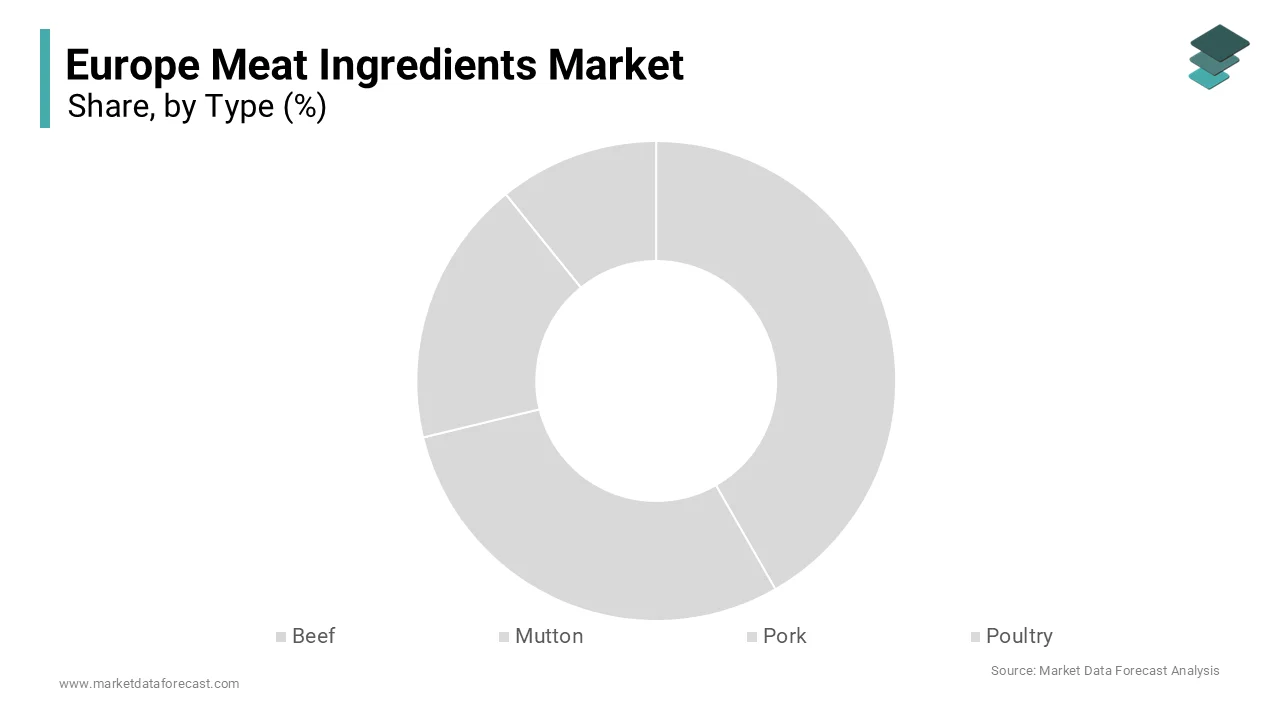
The poultry segment is experiencing the fastest growth in the European meat ingredients market due to shifting consumer preferences toward leaner protein sources and perceived health benefits. Poultry meat requires specific texturising and moisture retention solutions to compensate for its lower fat content compared to red meats. According to Eurostat, the production of poultry meat in the European Union increased by an estimated 6.0% in 2024 compared to 2023, reaching approximately 14.1 million tonnes. This growth trajectory creates expanding opportunities for ingredient suppliers who provide clean label stabilisers and natural flavour enhancers. As per research, the global consumer demand for high-value poultry meat cuts shifts handling priorities toward processed, value-added consumer configurations like marinated or ready-to-cook packaging. These convenience products rely on complex ingredient systems to ensure tenderness and flavour penetration during cooking. The versatility of poultry allows for diverse culinary applications ranging from fast food nuggets to gourmet preparations. This diversity drives demand for a wide array of functional ingredients, including starches and hydrocolloids. Health-conscious consumers view poultry as a sustainable alternative to beef and pork, which aligns with environmental goals. The lower carbon footprint of poultry production appeals to eco-friendly demographics. Ingredient manufacturers are responding by developing plant-based coatings and breading systems for fried poultry products. The expansion of quick-service restaurants offering chicken-based menus further accelerates market growth. Innovation in antibiotic-free production methods also influences ingredient choices, favouring natural preservatives. This segment offers high growth potential due to its adaptability to emerging dietary trends.
By Product Insights
In 2025, the sausages segment occupied the majority share in the European meat ingredients market because of its widespread popularity and diverse regional variations across the continent. The production of sausages requires a sophisticated blend of emulsifiers, binders, and spices to achieve the desired texture and flavour profile. According to sources, the regional market turnover for processed meats is comprised of multiple traditional cold cuts and sausage profiles whose volume proportions fluctuate based on standard merchant retail models. This substantial market share drives continuous demand for high-performance ingredients that ensure product consistency and shelf stability. As per studies, the traditional sausage and charcuterie sectors maintain production volumes dictated by historical regional demand frameworks and localised manufacturing capacities. The variety of sausage types from fresh bratwurst to dried salami necessitates specialised ingredient solutions for each application. Emulsification is critical for fine-textured sausages requiring precise control of protein and fat interactions. Binders such as carrageenan and modified starches help retain moisture during cooking and storage. The artisanal revival of traditional sausage recipes has also spurred demand for natural casings and heritage spice blends. Consumers appreciate the authenticity of regional specialities, which supports premium pricing strategies. Industrial producers leverage advanced ingredient technologies to scale up traditional recipes without compromising quality. The segment benefits from strong brand loyalty and established distribution networks. Regulatory standards for sausage composition ensure fair competition and consumer protection. This structured environment fosters innovation in reduced fat and sodium formulations. The enduring appeal of sausages as a staple food item guarantees sustained ingredient demand.
The cured meat segment is rapidly expanding in the European meat ingredients market, owing to the premiumization of charcuterie and increasing interest in artisanal food experiences. Cured products such as prosciutto, speck, and coppa rely on traditional preservation methods that utilise salts, nitrates and natural sugars. According to research, global distributions of premium European charcuterie lines depend on custom veterinary import regulations, specific trade pathways, and international promotion campaigns. This export growth stimulates domestic production and consequently increases the consumption of curing ingredients. As per sources, premium cured pork product values vary alongside evolving consumer purchasing power alignments and shifts in food-service operations. The trend toward slow food and authentic flavours encourages the use of high-quality sea salts and natural nitrate sources such as celery juice. These ingredients command higher prices but offer superior sensory attributes that justify the cost. Consumers associate cured meats with culinary sophistication and social dining experiences. The rise of gourmet grocery stores and speciality delis provides accessible retail channels for these products. Ingredient suppliers are developing customised curing kits for small-batch producers catering to the artisanal market. The emphasis on transparency in sourcing drives demand for traceable and organic curing agents. Health concerns regarding nitrites are being addressed through innovative natural alternatives that maintain safety and colour. This segment benefits from the broader trend of experiential consumption where food quality is paramount. The growth is supported by educational campaigns highlighting the craftsmanship involved in curing processes.
By Ingredient Insights
The preservatives segment continued to dominate the European meat ingredients market and held the largest share in 2025. This dominance of the segment was driven by its critical role in ensuring food safety and extending shelf life. The prevention of microbial growth and oxidation is essential for maintaining the quality of meat products during distribution and storage. According to the European Food Safety Authority, the use of approved preservatives such as sorbates and benzoates prevents millions of cases of foodborne illness annually. This public health impact underscores the indispensable nature of these ingredients in the modern food supply chain. As per research, extending the commercial shelf life of processed meat cuts helps optimise product management systems and significantly reduces baseline food waste metrics across regional storage chains. This efficiency gain is economically significant for retailers and consumers alike. The demand for preservatives is driven by the need for centralised production and long-distance transportation of meat products. Without effective preservation systems, the geographic reach of meat processors would be severely limited. Regulatory approvals ensure that only safe and tested substances are used in food applications. Consumers increasingly prefer natural preservatives such as rosemary extract and vinegar, which offer similar protective benefits. Ingredient manufacturers are investing in research to enhance the efficacy of these natural options. The balance between safety and clean label demands shapes the development of new preservation technologies. The segment remains robust due to the non-negotiable requirement for microbiological stability. Innovations in packaging technologies often complement preservative functions, creating synergistic effects. This interdependence ensures continued relevance and demand for preservation ingredients.
The flavouring agents and salts segment is quickly accelerating within the European meat ingredients market. This surge is propelled by the consumer desire for enhanced taste experiences and sodium reduction initiatives. Salt is not only a preservative but also a primary flavour enhancer that interacts with other ingredients to create complex taste profiles. According to the World Health Organisation Regional Office for Europe, efforts to reduce sodium intake have led to the development of low-sodium salt blends enriched with potassium and magnesium. These innovative blends allow manufacturers to maintain flavour intensity while meeting health guidelines. As per sources, the consumer segment for premium artisanal salts and gourmet finishing crystals displays positive demand dynamics driven by trends in professional culinary arts. This growth reflects consumer interest in premium and natural flavouring options. Flavouring agents, including yeast extracts and hydrolysed vegetable proteins, provide umami notes that compensate for reduced salt levels. The trend toward global cuisines introduces diverse spice blends and marinades that require specialized flavoring systems. Consumers seek authentic tastes from different cultures, driving demand for exotic seasoning mixes. Ingredient suppliers collaborate with chefs to develop proprietary flavour profiles for retail products. The customisation of flavour systems allows brands to differentiate their offerings in a crowded marketplace. Natural flavour extracts from herbs and spices are gaining popularity due to their clean label status. This segment benefits from the emotional connection consumers have with food taste. The ability to deliver satisfying flavours without excessive sodium supports both health and enjoyment goals.
REGIONAL ANALYSIS
Germany Market Analysis
Germany led the European meat ingredients market and captured a substantial share in 2025. This top position of the country in the regional market was attributed to its robust meat processing industry and high per capita consumption of pork products. The country serves as a major production hub for sausages and cold cuts, which require extensive use of binding and preserving ingredients. As per studies, the industrial meat processing ecosystem within Central Europe yields substantial economic turnover and incorporates complex networks of raw ingredient providers. This economic scale enables significant investment in research and development for novel ingredient applications. According to the Federal Ministry of Food and Agriculture, Germany imports substantial quantities of spices and hydrocolloids to meet the diverse needs of its processing industry. The presence of leading chemical and ingredient companies in the region fosters innovation and technical expertise. Consumer preferences for high-quality and traditional products drive demand for premium ingredients. Regulatory compliance with strict EU standards ensures high safety levels, which builds consumer trust. The transition toward clean label products is accelerating as German shoppers become more health-conscious. Local manufacturers are adapting by offering natural alternatives to synthetic additives. The strong infrastructure for logistics and distribution facilitates efficient supply chain operations. Collaboration between academic institutions and industry players promotes continuous improvement in food technology. This ecosystem supports the sustained growth of the meat ingredients market in Germany.
France Market Analysis
France was the next prominent region in the European meat ingredients market in 2025. This position of the French market was driven by its emphasis on artisanal quality and traditional charcuterie techniques. The French consumer values authenticity and origin, which drives demand for high-quality natural ingredients in meat processing. According to research, the production infrastructure for historical charcuterie and premium cured pork lines relies on steady inputs of specialised mineral salts and stabilisation components. This volume supports a niche market for premium ingredient suppliers who focus on terroir-specific products. As per studies, regional trade balances for livestock products and processed agricultural outputs adjust based on changing foreign market channels and premium brand positioning. The strict adherence to Appellation d'Origine Contrôlée labels ensures that traditional methods are preserved using approved ingredients. Consumers are willing to pay a premium for products that guarantee geographical origin and traditional preparation. This preference encourages the use of local herbs and spices in meat formulations. The market is influenced by a strong gastronomic culture that prioritises taste and texture. Ingredient innovation focuses on enhancing natural flavours rather than masking them. The regulatory environment supports traditional practices while ensuring food safety. Small and medium-sized enterprises play a significant role in the market, contributing to its diversity. The emphasis on sustainability and animal welfare also influences ingredient choices. France continues to set trends in premium meat processing that influence the broader European market.
Spain Market Analysis
Spain is rapidly expanding within the European meat ingredients market. It is particularly known for its world-renowned cured ham and sausage industries. The production of Jamón Ibérico and other cured products relies heavily on high-quality sea salts and natural drying processes. According to the Spanish Ministry of Agriculture, the export of Iberian ham reached record levels in 2024, demonstrating the global demand for Spanish meat specialities. This export success drives domestic production and increases the consumption of specific curing ingredients. As per the Spanish Federation of Meat Industries, the sector employs over 100,000 people, indicating its significant economic impact and reliance on stable ingredient supplies. The traditional methods used in Spain require precise control of humidity and temperature, which is supported by advanced monitoring technologies. Ingredient suppliers provide specialised solutions for long term curing and ageing processes. The Mediterranean diet's influence promotes the use of olive oil and herbs in meat marinades. Consumers appreciate the health benefits associated with these natural ingredients. The market is characterised by a mix of large industrial producers and small artisanal workshops. This diversity creates varied demand patterns for different types of ingredients. Regulatory frameworks protect traditional products while allowing for innovation in packaging and preservation. The focus on quality and tradition ensures the continued relevance of Spanish meat products in the European market.
Italy Market Analysis
Italy occupies a vital position in the European meat ingredients market due to its rich heritage of cured meats and sausages, such as prosciutto and salami. The Italian approach to meat processing emphasises simplicity and high-quality raw materials, which drives demand for pure and natural ingredients. According to the Italian Meat Industry Association, the production of cured meats in Italy contributes significantly to the national agricultural economy, with exports growing steadily. This growth necessitates reliable supplies of high-quality salts, spices, and natural preservatives. As per the Italian Ministry of Agriculture, Food and Forestry Policies, the sector adheres to strict Protected Designation of Origin standards, which dictate specific ingredient usage. These regulations ensure the authenticity and quality of Italian meat products. Consumers value the traditional craftsmanship involved in producing these items. The use of local herbs such as rosemary and fennel adds unique flavour profiles that distinguish Italian products. Ingredient suppliers must meet high standards for purity and origin certification. The market is influenced by strong domestic consumption and tourism, which exposes visitors to Italian culinary traditions. Innovation focuses on maintaining traditional qualities while improving efficiency and safety. The integration of modern technology with ancient recipes creates a dynamic market environment. Italy continues to influence global trends in premium meat processing through its commitment to quality.
United Kingdom Market Analysis
The United Kingdom is a key player within the European meat ingredients market, owing to a strong tradition of pork pies, sausages, and bacon consumption. The British consumer prefers convenient and ready-to-eat meat products, which drives demand for effective preservatives and binding agents. According to the Department for Environment, Food and Rural Affairs, statutory monitoring focuses heavily on reducing environmental water runoff containing agricultural nitrates and wastewater phosphates. The usage supports a steady demand for functional ingredients from both domestic and international suppliers. As per sources, operational challenges surrounding localised staffing limitations and logistical distribution disruptions create volatile operating parameters for European food and consumer processing facilities. Companies are investing in automation and efficient logistics to mitigate these issues. The post-Brexit regulatory environment requires careful navigation of trade rules for imported ingredients. Consumers are increasingly interested in locally sourced and sustainably produced meat products. This trend encourages the use of British-grown crops for extenders and fillers. The market is characterised by a mix of large supermarkets and independent butchers. Retailers play a crucial role in shaping consumer preferences through private label products. Innovation focuses on reducing salt and fat content while maintaining taste. The UK market remains resilient due to strong domestic demand and established processing capabilities.
COMPETITIVE LANDSCAPE
The competition in the Europe Meat Ingredients Market is characterized by a mix of multinational corporations and specialized regional players who vie for dominance through innovation and service excellence. Large global firms leverage their extensive research capabilities and broad product portfolios to offer comprehensive solutions to meat processors. They compete on the basis of technological superiority and ability to scale production efficiently. Regional companies often differentiate themselves by focusing on niche segments such as artisanal cured meats or organic ingredients. These smaller entities build strong relationships with local producers and emphasize traditional methods. Price competition remains intense due to the commoditized nature of some basic ingredients like salts and starches. However value added services such as technical support and custom formulation design help mitigate price pressure. Regulatory compliance acts as a barrier to entry favoring established players with robust quality assurance systems. The market sees frequent collaborations between ingredient suppliers and equipment manufacturers to provide integrated processing solutions. Consumer trends toward health and sustainability drive continuous product reformulation efforts. Companies that adapt quickly to these changes gain significant competitive advantages. The landscape is dynamic with constant entry of new startups focusing on alternative proteins and novel preservation techniques. This diversity ensures a vibrant and innovative market environment.
KEY MARKET PLAYERS
Some of the key players dominating this market are
- E. I. Du Pont De Nemours and Company
- Kerry Group PLC
- Associated British Foods PLC
- Wiberg GmbH
- Proliant Non-Meat Ingredients
- Campus SRL
- Wenda Ingredients
- Advanced Food Systems, Inc
- Aliseia SRL
- Redbrook Ingredient Services Limited.
Top Players in the Market
- Kerry Group operates as a global leader in taste and nutrition solutions with a significant presence in the European meat ingredients sector. The company specializes in developing clean label preservatives and natural flavor systems that help processors meet consumer demands for transparency. Kerry recently expanded its production capabilities in Ireland to support the growing need for plant based texturizers used in hybrid meat products. Their innovation centers focus on reducing sodium content while maintaining sensory appeal which aligns with public health goals. By leveraging advanced fermentation technologies Kerry provides unique umami flavors that enhance meat alternatives. The company collaborates closely with major retailers to create proprietary blends that differentiate private label offerings. This strategic partnership approach strengthens their position as a preferred supplier for premium meat products across Europe.
- Ingredion Incorporated delivers specialized ingredient solutions for the meat processing industry focusing on texture modification and moisture retention. The company utilizes its expertise in starches and hydrocolloids to create stable formulations for sausages and deli meats. Ingredion has recently invested in sustainable sourcing initiatives for its raw materials ensuring supply chain resilience and environmental responsibility. Their research teams develop customized binding agents that improve yield and reduce waste during processing. The company also offers technical support services to help manufacturers optimize their production lines for efficiency. Ingredion’s commitment to science based innovation allows them to address complex challenges such as fat reduction without compromising mouthfeel. This technical leadership enables clients to launch high quality products that meet evolving regulatory standards and consumer preferences in the European market.
- Cargill Incorporated plays a pivotal role in the Europe Meat Ingredients Market by providing a wide range of functional ingredients including salts spices and protein isolates. The company integrates its agricultural supply chain with food processing expertise to offer consistent and high quality inputs. Cargill has recently launched new natural curing solutions that replace synthetic nitrites appealing to health conscious consumers. Their digital platforms provide customers with real time data on ingredient performance and sustainability metrics. Cargill also focuses on circular economy principles by upcycling byproducts into valuable meat ingredients. This approach reduces environmental impact while creating new revenue streams. The company’s global reach ensures reliable delivery even during market disruptions. Cargill’s emphasis on collaboration and innovation helps processors navigate the transition toward cleaner labels and sustainable practices in the European region.
Top Strategies Used by Key Market Participants
Key players in the Europe Meat Ingredients Market primarily focus on product innovation and strategic partnerships to maintain competitive advantage. Companies invest heavily in research and development to create clean label alternatives that replace synthetic additives with natural extracts. This strategy addresses the growing consumer demand for transparency and health conscious options. Mergers and acquisitions are frequently employed to expand geographic reach and acquire specialized technologies. Firms also prioritize sustainability by sourcing raw materials from certified suppliers and reducing carbon footprints in production processes. Digital transformation is another critical strategy where companies use data analytics to predict trends and optimize supply chains. Collaboration with retail chains allows for the creation of exclusive product formulations that drive brand loyalty. Additionally manufacturers engage in consumer education campaigns to highlight the safety and benefits of functional ingredients. These multifaceted approaches ensure resilience against regulatory changes and shifting dietary preferences while fostering long term growth in the dynamic European landscape.
MARKET SEGMENTATION
This research report on the Europe meat ingredients market has been segmented and sub-segmented into the following categories.
By Type
- Beef
- Mutton
- Pork
- Poultry
By Product
- Fresh Processed
- Raw and Pre-Cooked
- Sausages
- Cured
- Dried
By Ingredient
- Binders
- Extenders
- Fillers
- Colouring
- Flavoring Agents, Salts
- Preservatives
By Country
- UK
- France
- Spain
- Germany
- Italy
- Russia
- Sweden
- Denmark
- Switzerland
- Netherlands
- Turkey
- Czech Republic
- Rest of Europe