- Product Description Description
- Table of Contents TOC
- List of Table & Figure LOT
- Get Free Sample PDF Sample PDF
Europe Medical Polymers Market Report Summary
The Europe medical polymers market was valued at USD 15.73 billion in 2024, is estimated to reach USD 16.54 billion in 2025, and is projected to reach USD 24.67 billion by 2033, growing at a CAGR of 5.14% during the forecast period from 2025 to 2033. The growth of the European medical polymers market is driven by the region’s stringent regulatory ecosystem (EU MDR), rising demand for high-performance polymers in minimally invasive medical devices, and the growing need for biocompatible, sterilizable materials across surgical, diagnostic and implant applications. Increasing adoption of disposable medical products, the expansion of advanced healthcare infrastructure, and the rising emphasis on sustainable materials further accelerate market development. Additionally, technological advancements in bioresorbable and antimicrobial polymers and increased investments in medtech manufacturing are broadening access to next-generation medical polymer solutions across Europe.
Key Market Trends
- Increasing adoption of high-purity, medical-grade polymers to comply with EU MDR, ISO 10993, and REACH material safety requirements.
- Rising demand for bioresorbable polymers in temporary implants, orthopedic fixation, and drug-eluting scaffolds to eliminate removal surgeries.
- Growing use of antimicrobial & smart polymers in infection-control surfaces, wound care, and diagnostic components.
- Accelerated shift toward recyclable and mono-material medical packaging as healthcare systems prioritize sustainability.
- Expansion of advanced polymer manufacturing technologies such as precision injection molding and high-performance extrusion for minimally invasive devices.
Segmental Insights
- Based on type, the fibers & resins segment was the largest and held a significant share of the Europe medical polymers market in 2024. The segment’s dominance is attributed to the widespread use of polypropylene, polyethylene, polycarbonate, and other engineering resins in single-use medical devices, surgical gowns, diagnostic consumables, and structural components requiring sterilization compatibility and dimensional stability.
- Based on manufacturing technology, the injection molding segment accounted for the majority share in 2024. Its dominance stems from the need for high-volume, precision manufacturing of complex medical device components used across surgical, diagnostic, and therapeutic applications. The extrusion tubing segment continues to gain traction, driven by increasing demand for catheters, IV tubing, and minimally invasive device components.
- Based on application, the medical devices & equipment segment was the largest, occupying a prominent share of the European medical polymers market in 2024. This is supported by the strong penetration of polymer components in implants, diagnostic systems, endoscopy, and single-use surgical products. The medical packaging segment is expanding rapidly due to EU regulatory validation requirements for sterile barrier systems and the rising need for sustainable packaging solutions.
Regional Insights
The Europe medical polymers market is witnessing robust growth across major economies, supported by strong medical device manufacturing capabilities, stringent regulatory compliance, and continuous technological innovation.
- Germany was the largest contributor, accounting for 25.1% of the European market share in 2024, driven by its strong medtech industry, high surgical procedure volumes, and extensive production of precision medical devices.
- France remains a key market with growing investments in domestic medtech manufacturing, strong hospital procurement systems, and increasing adoption of advanced polymer solutions in surgical applications.
- The United Kingdom continues to perform well due to its engineering expertise, R&D investments, and expansion of high-tech diagnostic and wearable medical devices.
- Sweden and the Netherlands are emerging as innovation-driven markets emphasizing sustainability, high-performance polymer materials, and modern healthcare infrastructure.
- Italy, Spain, Switzerland, Denmark, and the Czech Republic continue to show steady demand, supported by expanding biomedical manufacturing clusters and increasing adoption of minimally invasive devices.
Competitive Landscape
The Europe medical polymers market is characterized by the dominance of established chemical and materials science companies with strong regulatory compliance, advanced production capabilities, and deep integration with medical device OEMs. Leading players are focusing on developing biocompatible, sterilizable, and sustainable polymer solutions while expanding their regional manufacturing and R&D presence. Innovation in bioresorbable materials, antimicrobial additives, and recyclable packaging polymers is shaping competitive differentiation. Key strategies include strategic collaborations with medtech companies, sustainability-focused material development, and regulatory-aligned product portfolios. Prominent players in the Europe medical polymers market include BASF SE, Evonik Industries AG, Covestro AG, SABIC, Celanese Corporation, Solvay S.A., Dow Inc., Eastman Chemical Company, Arkema S.A., and DSM Biomedical.
Europe Medical Polymers Market Size
The Europe Medical Polymers Market size was valued at USD 15.73 billion in 2024 and is anticipated to reach USD 16.54 billion in 2025 from USD 24.67 billion by 2033, growing at a CAGR of 5.14% during the forecast period from 2025 to 2033.
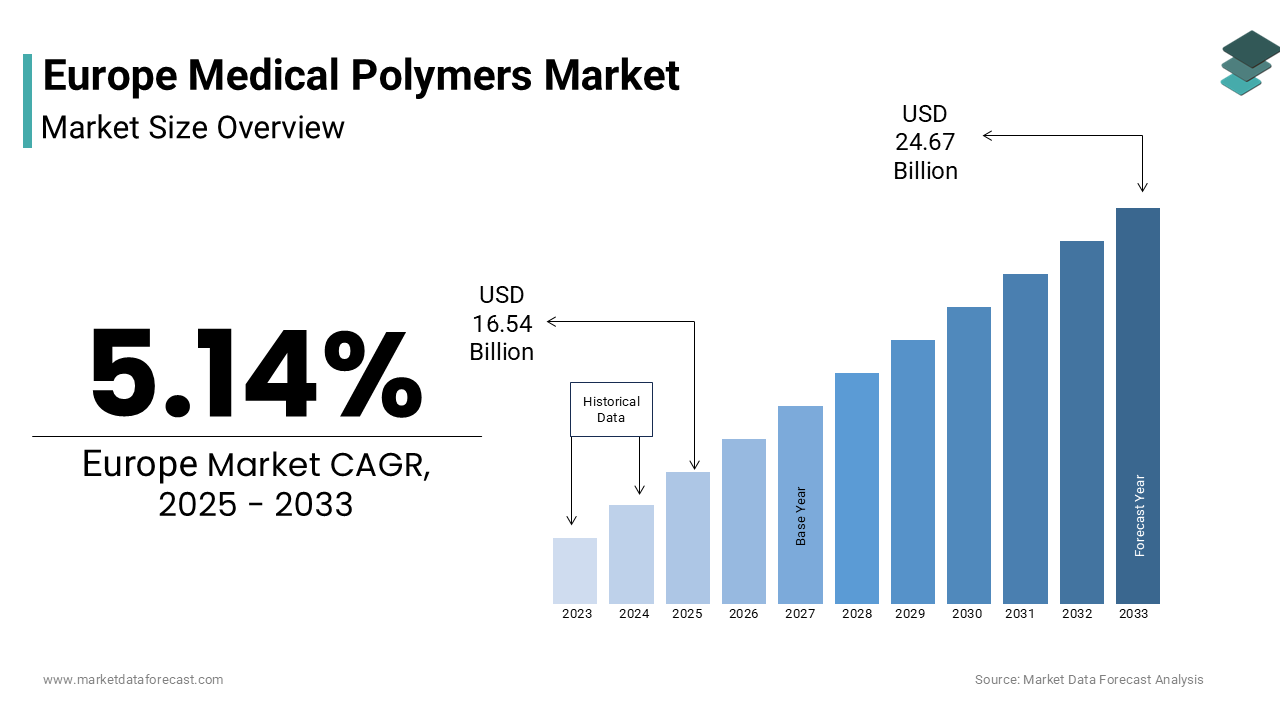
Medical polymers are high performance plastic materials engineered for use in medical devices diagnostics drug delivery systems and implantable components where biocompatibility sterilizability and mechanical precision are non-negotiable. These polymers include polyethylene polypropylene polycarbonate polyetheretherketone silicone and bioresorbable variants such as polylactic acid used in applications ranging from disposable syringes to orthopedic implants and cardiovascular stents. In Europe the selection and processing of medical polymers are governed by the stringent EU Medical Device Regulation which mandates rigorous biological evaluation under ISO 10993 standards and traceability through unique device identification systems. According to research, a vast number of diverse medical devices are widely used in the European Union, most of which utilize polymeric components. The production of single-use medical devices in the EU is substantial each year, a figure influenced by demographic shifts and increased surgical activity. The healthcare sector contributes a measurable portion to the EU’s overall carbon footprint, making material selection a key element in developing effective sustainability strategies. These regulatory clinical and environmental parameters define the strategic importance of medical polymers in Europe’s advanced healthcare ecosystem
MARKET DRIVERS
Stringent Regulatory Requirements Under the EU Medical Device Regulation
The comprehensive oversight imposed by the EU Medical Device Regulation which mandates exhaustive biological and chemical characterization of all polymeric materials used in medical devices is a primary driver of the Europe medical polymers market. According to sources, polymers intended for a specific certification process require various safety evaluations, including assessments for cytotoxicity, sensitization, irritation, genotoxicity, and implantation compatibility. Regulations restrict the use of polymers containing certain endocrine-disrupting substances unless their use is clinically necessary and adequate risk mitigation measures are in place. This has accelerated demand for advanced alternatives like polyetheretherketone and medical grade silicones that offer inherent biocompatibility without additives. Certification entities are now requiring extensive material disclosure, encouraging manufacturers to obtain polymers that have certified traceability. The list of substances requiring authorization under a major chemical regulation has recently expanded, which increases compliance considerations for manufacturers. Companies have responded by developing REACH compliant medical polymer portfolios with pre validated biocompatibility dossiers. This regulatory rigor transforms material selection from a cost decision into a compliance imperative driving consistent demand for certified high performance medical polymers across Europe.
Aging Population and Rising Demand for Minimally Invasive Procedures
The demographic shift toward an older European population is significantly boosting the expansion of the Europe medical polymers. These are used in chronic disease management, surgical implants, and single use diagnostic tools. As per studies, the proportion of older people within the population is growing. Cardiovascular diseases remain a leading cause of mortality, which drives the need for polymer-based medical devices like stents, catheters, and heart valves. A significant number of surgical procedures are performed annually across the region. A large majority of these procedures are now classified as minimally invasive, which requires precision polymer components such as endoscope housings and guidewires. The rise in diabetes has also increased the demand for polymer-based medical delivery devices like insulin pens and continuous glucose monitor housings. This clinical necessity combined with technological advancement ensures sustained growth in high value medical polymer applications across Europe’s evolving healthcare landscape.
MARKET RESTRAINTS
High Cost and Complexity of Regulatory Compliance for New Polymers
The substantial financial and temporal burden associated with achieving regulatory approval for novel or modified polymer formulations under the EU Medical Device Regulation is a significant restraint in the Europe medical polymers market. According to sources, the financial investment required to compile a complete technical file for a new medical polymer is substantial, encompassing a range of assessments including biocompatibility testing, toxicological risk evaluations, and clinical evaluations. The time it takes to obtain approval for new polymers has lengthened, which is a result of increased examination by regulatory bodies and new requirements for detailed material disclosure within the identification system.. Small and medium polymer producers often lack the resources to maintain in house regulatory expertise leading to reliance on external consultants that further inflate costs. Additionally, the continuous evaluation of polymer substances within the regulatory framework creates market uncertainty, as potential restrictions on common additives could necessitate the reformulation of established products. This regulatory friction discourages innovation in specialty polymers and favors large chemical companies with established compliance infrastructure, which thereby limits material diversity and slowing the adoption of next generation bioresorbable or antimicrobial polymers in the European medical device sector.
Limited Recyclability and Growing Pressure from Healthcare Sustainability Mandates
Mounting pressure due to the poor recyclability of single use medical devices and the healthcare sector’s growing commitment to environmental sustainability restricts the growth of the Europe medical polymers market. According to research, a significant volume of used medical plastics is generally disposed of via incineration or landfill. This disposal pattern is primarily due to common concerns about contamination and the absence of established reprocessing procedures. The disposal methods persist even for items made from potentially recyclable materials. The healthcare sector generates a large amount of plastic waste, a majority of which comes from single-use items. Regional and national governments are increasingly implementing policies and initiatives to address this waste stream. Specific regulatory approaches include restrictions on certain types of single-use medical plastic items and requirements for facilities to monitor and report their plastic usage. Medical-grade polymers, such as PETG, present a recycling challenge because the additives they contain impede standard sorting and reprocessing operations. Manufacturers are reluctant to abandon conventional plastics, despite their performance benefits, because they face significant reputational and compliance risks in the absence of standardized take-back systems and clear regulatory pathways for medical polymers.
MARKET OPPORTUNITIES
Expansion of Bioresorbable Polymers in Temporary Implant Applications
opportunity for the Europe medical polymers market. This is driven by clinical demand for materials that eliminate secondary removal surgeries and reduce long term complications. According to research, millions of bioresorbable devices including sutures stents and orthopedic fixation systems are implanted annually in the EU with demand growing at 9 percent per year. Funding has been allocated to projects that develop advanced polylactic acid and polyglycolic acid copolymers for use in cardiovascular and pediatric medical applications. These next-generation materials are being designed to have customizable degradation profiles to suit specific medical needs. Medical grade polymers are commercially available that resorb within a specific time frame while continuing to provide mechanical support during the body's healing process. The use of bioresorbable vascular scaffolds may potentially lead to a reduction in the occurrence of a particular type of post-procedure complication compared to traditional, permanent metal stents. This convergence of clinical efficacy regulatory support and reimbursement alignment establishes bioresorbable polymers as a strategic growth frontier in Europe’s advanced medical materials landscape.
Integration of Antimicrobial and Smart Polymers in Infection Control
The urgent need to combat healthcare associated infections is creating significant opportunities for the Europe medical polymers market. This provides new pathways for functionalized medical polymers embedded with antimicrobial agents or responsive sensing capabilities. Healthcare-associated infections represent a significant and widespread challenge for patient safety within European healthcare systems. In response to this concern, recent European Union healthcare guidelines encourage the integration of innovative materials, such as silver and copper ion-doped polymers, on frequently touched surfaces in new hospital facilities. The manufacturing industry is actively addressing this need with the development of advanced polymer materials, including specific grades of polyurethanes and polycarbonates, which incorporate antimicrobial additives. These new materials are designed to enhance hygiene protocols by substantially reducing the presence of microorganisms on treated surfaces. Besides, smart polymers that change color in response to pH or temperature shifts are being trialed for wound dressings and IV lines to provide real time infection alerts. This fusion of infection control policy clinical necessity and material innovation positions functional polymers as a high growth segment in Europe’s medical device ecosystem.
MARKET CHALLENGES
Supply Chain Vulnerability for Critical Polymer Feedstocks
The strategic dependency on imported monomers and additives primarily from Asia and North America, which creates supply chain fragility and price volatility, is a persistent challenge confronting the Europe medical polymers market. According to research, many key monomers used in medical devices are sourced outside the European Union. Certain polymer precursors have been added to a watch list because their production is concentrated in only a few non-EU countries. Energy market volatility has highlighted vulnerabilities, leading to a reduced European polymer production capacity This reliance forces medical device manufacturers to maintain large safety stocks increasing working capital and risking obsolescence under the Medical Device Regulation’s stringent shelf-life requirements. The medical polymer sector faces continued risks from geopolitical instability and logistics issues affecting device supply and patient care until Europe establishes domestic bio-based monomer production and circular feedstock systems, supported by initiatives like the CBE JU.
Lack of Harmonized Standards for Recycled and Bio Based Medical Polymers
The absence of unified European standards for the use of recycled and bio-based polymers in medical devices presents a major barrier that stifles circular innovation and creates regulatory uncertainty. This ultimately constrains the expansion of the Europe medical polymers market. There is a lack of a single, widely accepted test method for validating the safety and consistent mechanical performance of post-consumer recycled polymers for medical use. Certification bodies are often hesitant to grant approval for medical devices that incorporate recycled materials. Concerns exist regarding potential contaminants and the consistency between different batches of recycled content. Polymers sourced from biological origins (like corn or sugarcane) often show variations in their crystalline structure and how quickly they degrade compared to traditional fossil-based polymers. These differences necessitate a full re-evaluation process to meet established safety standards. The re-evaluation process for a new material can be a costly and extensive undertaking. The European Commission’s Circular Plastics Alliance acknowledges this gap but has yet to establish a certification pathway for medical grade recycled resins. Manufacturers will persist in utilizing new fossil-based polymers as the default option, obstructing Europe’s wider circular economy goals within the healthcare industry, until mandatory regulations and risk-assessment approval systems are established.
REPORT COVERAGE
| REPORT METRIC | DETAILS |
| Market Size Available | 2024 to 2033 |
| Base Year | 2024 |
| Forecast Period | 2025 to 2033 |
| Segments Covered | By Type, Manufacturing Technology, Application & Region |
| Various Analyses Covered | Global, Regional & Country Level Analysis, Segment-Level Analysis, Drivers, Restraints, Opportunities, Challenges, PESTLE Analysis, Porter’s Five Forces Analysis, Competitive Landscape, Analyst Overview on Investment Opportunities |
| Regions Covered | United Kingdom, France, Spain, Germany, Italy, Russia, Sweden, Denmark, Switzerland, the Netherlands, Turkey, and the Czech Republic. |
| Key Market Players | BASF SE, Evonik Industries AG, Covestro AG, SABIC, Celanese Corporation, Solvay S.A., Dow Inc., Eastman Chemical Company, Arkema S.A., and DSM Biomedical. |
SEGMENTAL ANALYSIS
By Type Insights
The fibers and resins segment was the largest segment of the Europe medical polymers market by capturing a share of 58.1% in 2024. The prominence of the fibers and resins segment is driven by their extensive use in single-use medical devices, surgical textiles, and diagnostic components where sterility, dimensional stability, and cost efficiency are paramount. Disposable syringes and IV sets are manufactured predominantly from polypropylene, polycarbonate, and polyethylene resins. Polymer-based breathing circuits and anesthesia masks are a primary choice for use in hospitals due to their clarity, chemical resistance, and ease of molding. Non-woven polypropylene surgical gowns and drapes are widely used as sterile barrier systems in operating rooms. These materials demonstrate compliance with standards for microbial barrier performance and are compatible with common sterilization methods like gamma and ethylene oxide sterilization. The scale of demand from aging populations and rising surgical volumes ensures resins and fibers remain the structural backbone of Europe’s medical polymer consumption.
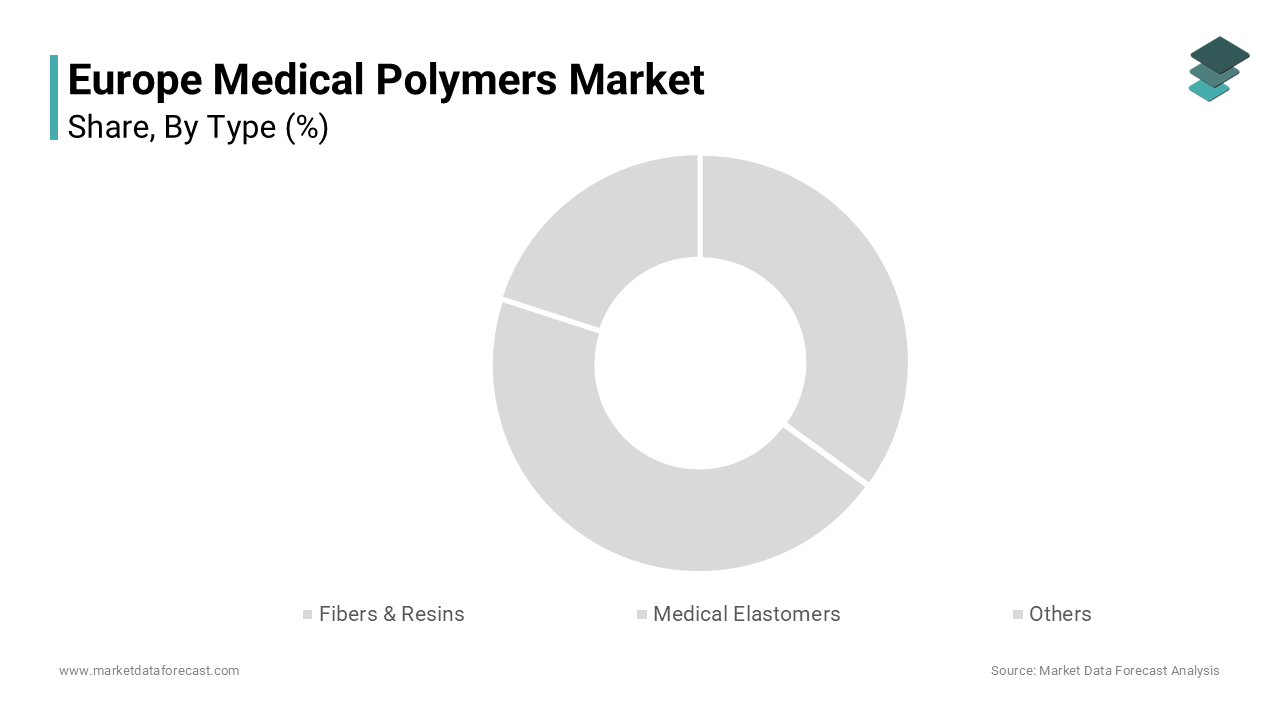
The medical elastomers segment is expected to exhibit a noteworthy CAGR of 8.9% from 2025 to 2033 due to rising demand for flexible biocompatible components in wearable medical devices catheters and implantable seals. According to sources, Newly approved medical devices, including Class IIb and Class III devices, increasingly incorporate silicone or thermoplastic polyurethane elastomers for applications involving soft tissue contact. The growing preference for home-based healthcare settings is encouraging the use of medical devices that rely on elastomers, such as wearable insulin pumps, continuous glucose monitors, and ECG patches, due to the need for skin conformity, comfort, and long-term biostability. Companies have developed medical grade silicones with enhanced tear strength and platinum cured thermoplastic polyurethanes that resist hydrolysis in vivo. Efforts are underway to develop antimicrobial elastomers intended for use in products like urinary catheters, as a strategy to help in combating healthcare-associated infections. This convergence of clinical need material innovation and regulatory support establishes medical elastomers as the highest growth polymer type in Europe’s advanced healthcare landscape.
By Manufacturing Technology Insights
The injection molding segment held the majority share of 62.2% of the Europe medical polymers market in 2024. The leading position of the injection molding segment is credited to due to its precision repeatability and suitability for high volume production of complex medical components such as syringe barrels surgical instrument housings and diagnostic cartridges. Single-use medical devices in the EU are frequently produced using injection molding. The manufacturing process utilizes the tight tolerances achievable with injection molding. Compatibility with clean room environments is a key factor in the use of this production method. Molding facilities adhere to specific standards for maintaining low particulate counts during production to ensure sterility. The efficiency of this technology is important due to the large volume of these devices used by hospitals. Leading polymer producers formulate resins with optimized melt flow indices specifically for medical injection molding to minimize shear degradation and ensure consistent mechanical properties. This combination of regulatory alignment production scalability and material science integration solidifies injection molding as the dominant manufacturing technology in Europe’s medical polymer ecosystem.
The extrusion tubing segment is predicted to witness the highest CAGR of 9.3% over the forecast period owing to the expansion of minimally invasive surgeries and home based infusion therapies requiring long continuous polymer tubes with precise inner diameters and kink resistance. Endoscopic and catheter-based procedures are increasing. Demand for multi-lumen extruded tubing for home dialysis and chemotherapy delivery is growing, influenced by policy shifts promoting outpatient care. Companies have developed co extrusion processes that combine Pebax polyurethane and silicone in a single tube to balance flexibility pushability and biocompatibility. This clinical and policy driven demand for high performance tubing establishes extrusion as the highest growth manufacturing technology in Europe’s medical polymer sector.
By Application Insights
The medical devices and equipment segment led the Europe medical polymers market by occupying a substantial share in 2024 as polymers are integral to nearly all diagnostic therapeutic and monitoring tools used in clinical settings. A vast variety of medical devices are available on the market, most of which include polymeric components. These components are utilized in everything from equipment housings to implants designed for use within the body. Millions of surgical procedures occur each year, all of which rely heavily on numerous polymer-based disposable products like sterile trays, drapes, and instrument covers. Polymer-coated cardiovascular implants, such as stents and heart valves, are frequently deployed, leveraging the polymers' role in processes like drug elution and encouraging tissue integration. Apart from these, the rise of point of care diagnostics has increased demand for cyclic olefin copolymer microfluidic chips that offer optical clarity and low protein binding. This pervasive integration across acute chronic and diagnostic care ensures medical devices remain the dominant application segment for medical polymers in Europe.
The medical packaging segment is estimated to register the fastest CAGR of 7.8% from 2025 to 2033. The swift expansion of the medical packaging segment is fuelled by the need for sterile barrier protection for single use devices and compliance with the EU Medical Device Regulation’s stringent packaging validation requirements. Sterile medical devices require packaging materials designed to maintain integrity during standard sterilization processes like ethylene oxide or gamma sterilization. Packaging materials must provide a microbial barrier performance standard. There is increasing demand for certain types of packaging, such as cyclic olefin polymer blister packs and medical grade polyethylene pouches. Industry trends favor the use of mono-material recyclable packaging solutions. The adoption of polypropylene-based form-fill-seal systems is growing, replacing traditional multi-layer laminates in many applications. Companies like Amcor and Bemis have launched certified medical packaging films with enhanced clarity and seal strength to meet these dual demands of sterility and sustainability. This regulatory and environmental convergence establishes medical packaging as the highest growth application in Europe’s polymer landscape.
REGIONAL ANALYSIS
Germany Medical Polymers Market Analysis
Germany dominated the Europe vehicle electrification market by accounting for a 25.1% share in 2024. Its dominance spans battery cells electric motors and charging infrastructure through a vertically integrated industrial ecosystem. Registrations of battery electric vehicles are increasing, with major domestic manufacturers converting production facilities to focus on electric models. Efforts are underway to expand the national charging network significantly in the coming years. The electrical grid's substantial reliance on renewable sources facilitates charging with reduced carbon emissions. Domestic suppliers play a significant role in providing essential components for the European electric drive market. This fusion of industrial might policy coherence and clean energy infrastructure solidifies Germany’s structural leadership in European vehicle electrification.
France Medical Polymers Market Analysis
France followed closely in the Europe medical polymers market and captured a share of 17.3% share in 2024 because of assertive industrial policy and equitable consumer incentives. Policy measures, including restrictions on certain vehicle types and a system of incentives and penalties, aim to encourage broad adoption of lower emission vehicles. Electric vehicles currently represent a portion of new vehicle sales. There are plans to increase domestic battery production to help reduce strategic dependence on external suppliers. A specific manufacturing hub for electric vehicles is operational in northern France with plans for increased output. The national electricity grid's low carbon intensity may enhance the potential lifecycle advantages of electric vehicles. This blend of demand stimulation supply chain sovereignty and clean energy ensures France’s cohesive and scalable electrification model.
The United Kingdom Medical Polymers Market Analysis
The United Kingdom is a key region in the Europe medical polymers market due to its fusion of advanced engineering and green finance leadership. Despite Brexit it maintains alignment with EU emissions standards and has legislated a 2030 fossil fuel vehicle ban. The number of electric vehicles being registered is increasing significantly. The UK maintains a prominent position in the development and application of power electronics, producing globally utilized motor technologies. A substantial government initiative is actively funding research into advanced, next-generation battery technology. Key financial initiatives in London have successfully supported the funding and development of electric vehicle infrastructure. Expansive urban emission zones are helping to accelerate the transition of commercial fleets, including a growing number of zero-emission taxis operating in the capital. This synergy of technological depth capital allocation and urban policy sustains the UK’s pivotal role in Europe’s electrification transition.
Sweden Medical Polymers Market Analysis
Sweden experienced a steady growth in the Europe medical polymers market owing to a model that prioritizes sustainability ethics and equity. Electric vehicles (EVs) offer among the lowest lifecycle emissions globally, supported by a significant proportion of electricity generated from hydro and nuclear sources. New vehicle registrations in the country show a general shift toward battery electric vehicles. A major automotive manufacturer is pursuing a strategy to transition to fully electric vehicle sales. Battery cells are being produced domestically using renewable energy sources and recycled materials. Government programs are providing financial support to encourage the adoption of EV fleets, including in rural areas, which helps promote inclusive access to sustainable transport options. Sweden also pioneers second life battery applications with ABB and Vattenfall deploying retired packs for grid storage. This ecosystem of clean power industrial responsibility and social inclusion makes Sweden a benchmark for sustainable vehicle electrification.
Netherlands Medical Polymers Market Analysis
The Netherlands maintains a notable share of the Europe medical polymers market due to unmatched charging density and logistics electrification. Electric cars are part of a growing trend in the Dutch market. Public charging infrastructure is widely available. Urban areas are implementing policies to encourage the use of zero-emission light commercial vehicles. Corporate fleet electrification is a significant business focus. Electric vehicles are being integrated into energy programs aimed at balancing the power grid with renewable sources. The country is a regional hub for electric vehicle logistics and distribution. This combination of infrastructural readiness policy foresight and logistical centrality cements the Netherlands as a critical enabler of Europe’s electrified mobility transition.
COMPETITIVE LANDSCAPE
The competition in the Europe medical polymers market is characterized by a mix of global chemical giants and specialized regional suppliers vying for technological leadership and regulatory compliance. Established players differentiate themselves through advanced material portfolios biocompatibility certifications and end to end application support. The landscape is marked by continuous innovation in high performance polymers such as polyetheretherketone polyphenylsulfone and thermoplastic elastomers tailored for minimally invasive devices and reusable equipment. Sustainability has emerged as a critical battleground with competitors investing in circular solutions and bio based alternatives. Strategic alliances with healthcare OEMs academic institutions and regulatory bodies further intensify rivalry as companies aim to embed their materials early in product development cycles. This dynamic environment fosters rapid advancement but also demands agility in responding to shifting clinical needs and environmental regulations across diverse European markets.
KEY MARKET PLAYERS
Some of the companies that are playing a dominating role in the Europe Medical Polymers Market include
- BASF SE
- Evonik Industries AG
- Covestro AG
- SABIC
- Celanese Corporation
- Solvay S.A.
- Dow Inc
- Eastman Chemical Company
- Arkema S.A.
- DSM Biomedical
Top Players in the Market
BASF SE
BASF SE plays a pivotal role in the Europe medical polymers market through its high performance engineering plastics and biocompatible polymer solutions tailored for medical devices and packaging. The company supplies materials such as Ultramid and Ultrason which meet stringent regulatory standards for sterilization and biocompatibility. Recently BASF has intensified its focus on sustainable polymers by launching bio based and recyclable medical grade materials. In collaboration with medical device manufacturers across Germany and France it has co developed next generation components that enhance device functionality while reducing environmental impact. These initiatives reflect its strategic commitment to innovation and sustainability in the global medical polymers industry.
Evonik Industries AG
Evonik Industries AG is a key contributor to the Europe medical polymers market leveraging its specialty polymer portfolio including resorbable and non resorbable biomaterials used in implants and drug delivery systems. The company’s RESOMER line supports advanced medical applications requiring precise degradation profiles. Recently Evonik expanded its healthcare innovation center in Birmingham UK to accelerate development of polymer based medical solutions. It also strengthened partnerships with academic institutions and medtech firms to co create tailored polymer formulations. These efforts reinforce its global leadership in high purity medical polymers and underscore its commitment to advancing therapeutic outcomes through material science.
Covestro AG
Covestro AG significantly influences the Europe medical polymers market with its polycarbonates and thermoplastic polyurethanes designed for diagnostic equipment wearable devices and hospital infrastructure. The company emphasizes material safety transparency and regulatory compliance across its healthcare portfolio. Recently Covestro launched a new grade of Makrolon polycarbonate with enhanced gamma radiation resistance suitable for single use devices. It also initiated a circular economy program to incorporate recycled content into medical grade polymers without compromising performance. Through these actions Covestro advances both product innovation and sustainability aligning with evolving healthcare demands across Europe and globally.
Top Strategies Used by the Key Market Participants
Key players in the Europe medical polymers market prioritize strategic collaborations with medical device manufacturers to co develop application specific materials that meet evolving regulatory and performance criteria. They invest heavily in research and development to introduce bio based resorbable and sterilizable polymers that align with sustainability and safety mandates. Companies also expand production capacities within Europe to ensure supply chain resilience and quicker time to market. Additionally they pursue vertical integration by acquiring specialty material startups to enhance technical capabilities. Finally they actively engage in standardization initiatives and regulatory dialogues to shape favorable policy frameworks and accelerate product approvals across the region.
MARKET SEGMENTATION
This research report on the Europe Medical Polymers Market has been segmented and sub–segmented into the following categories.
By Type
- Fibers & Resins
- Medical Elastomers
- Others
By Manufacturing Technology
- Injection Molding
- Extrusion Tubing
- Compression Molding
- Others
By Application
- Medical Devices & Equipment
- Medical Packaging
- Others
By Country
- UK
- France
- Spain
- Germany
- Italy
- Russia
- Sweden
- Denmark
- Switzerland
- Netherlands
- Turkey
- Czech Republic
- Rest of Europe