- Product Description Description
- Table of Contents TOC
- List of Table & Figure LOT
- Get Free Sample PDF Sample PDF
Market Size, 2025
$5.84 BnMarket Estimate, 2026
$6.60 BnMarket Forecast, 2034
$17.38 BnCAGR, 2026–2034
12.87%Europe Medical Spa Market Report Summary
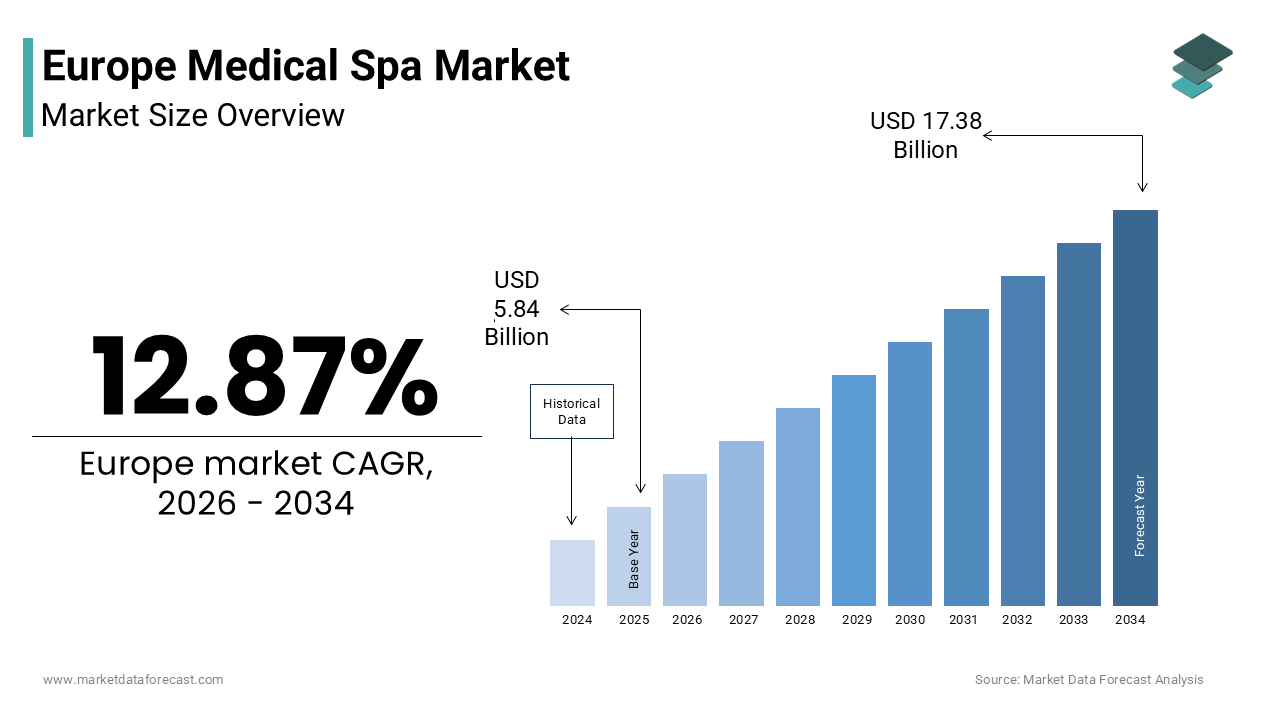
The Europe medical spa market was valued at USD 5.84 billion in 2025, is anticipated to reach USD 6.60 billion in 2026, and is projected to reach USD 17.38 billion by 2034, growing at a CAGR of 12.87% during the forecast period from 2026 to 2034. The growth of the Europe medical spa market is driven by rising integration of aesthetic wellness into preventive healthcare, increasing consumer trust in physician-supervised treatments, and growing demand for non-invasive, clinically validated rejuvenation procedures. Expanding adoption of laser therapies, injectables, body contouring, and dermatological technologies, along with Europe’s strong traditions in balneotherapy and therapeutic wellness, is further strengthening market expansion. Moreover, the incorporation of AI-based skin analysis, teleconsultation platforms, and personalized digital treatment pathways is positioning medical spas as technology-enabled preventive health hubs rather than luxury-only services.
Key Market Trends
-
Rising perception of medical spa treatments as part of preventive healthcare and healthy aging, rather than cosmetic indulgence.
-
Growing preference for physician-supervised and regulated aesthetic clinics over conventional beauty salons.
-
Increasing adoption of AI-powered skin diagnostics, teleconsultations, and personalized treatment tracking platforms.
-
Expanding demand for non-invasive procedures such as injectables, laser resurfacing, and body contouring.
-
Rapid growth of male-focused aesthetic services, reflecting changing cultural attitudes toward male grooming and wellness.
Segmental Insights
- Based on Service, the facial injectables segment held the largest share in 2025, driven by high demand for botulinum toxin, dermal fillers, and multifunctional aesthetic-medical applications such as migraine relief and facial symmetry correction.
- Based on Age group, the 30–64 years segment dominated the market, as this demographic combines strong purchasing power with proactive aging management and career-related appearance awareness.
- Based on service provider, the medical practice–associated spas segment led the market, due to higher trust, clinical integration, physician presence, and regulatory compliance.
Regional Insights
The Europe medical spa market is witnessing strong growth across major economies, supported by regulatory rigor, high consumer awareness, and integration of aesthetic medicine into healthcare systems.
- Germany leads the market, driven by strict physician-supervision regulations, high concentration of certified practitioners, and growing insurance acceptance for medically indicated aesthetic procedures.
- France holds a strong position, supported by its deep balneotherapy heritage, strict legal oversight for aesthetic procedures, and high cultural emphasis on beauty as part of health.
- The United Kingdom continues to perform well, fueled by urban professional demand, strong private healthcare infrastructure, expanding clinic regulation, and corporate wellness partnerships.
- Italy benefits from the integration of aesthetic medicine with fashion, dermatological research excellence, and international aesthetic tourism, particularly in cities like Milan and Rome.
- Switzerland is emerging as a premium growth market, characterized by longevity science leadership, elite medical wellness positioning, strict certification standards, and cross-border medical tourism appeal.
Competitive Landscape
The Europe medical spa market is characterized by the dominance of physician-led premium institutions and professionally managed regional chains operating under strict regulatory frameworks. Competitive differentiation is driven by clinical expertise, advanced aesthetic technologies, personalized treatment pathways, and integrated wellness models, rather than price alone. Leading providers are increasingly investing in AI diagnostics, digital health records, tele-aesthetics, and longitudinal care programs to improve outcomes and retention. The market rewards organizations that successfully combine medical legitimacy, technological sophistication, and luxury patient experience, while regulatory fragmentation across countries continues to favor established, compliant operators. Prominent players in the Europe medical spa market include Clinique La Prairie, Lanserhof, SHA Wellness Clinic, Chenot Group, Biovital MedSpa, Allure MedSpa, Longevity Wellness Worldwide, Chic La Vie, The Orchard Wellness & Health Resort, and Kurotel – Longevity Medical Center and Spa.
Europe Medical Spa Market Size
The Europe medical spa market size was valued at USD 5.84 billion in 2025 and is anticipated to reach USD 6.60 billion in 2026 from USD 17.38 billion by 2034, growing at a CAGR of 12.87% during the forecast period from 2026 to 2034.
A medical spa (or med spa) is a hybrid between a traditional day spa and a medical clinic, offering non-surgical aesthetic treatments in a relaxing, spa-like environment under the supervision of a licensed medical professional. Unlike conventional spas medical spas integrate physician supervised treatments such as laser resurfacing injectables body contouring and advanced dermatological therapies within a luxury service environment. This hybrid model caters to a growing demographic seeking scientifically validated rejuvenation rather than transient relaxation. Across the European Union, a significant majority of adults are increasingly focusing on preventative health and wellness, with a growing segment showing openness toward professional, non-surgical beauty enhancements. Aesthetic Clinic Growth Trend: Following the pandemic, major Western European nations are experiencing a rise in the demand for and establishment of licensed, regulated clinics offering aesthetic, non-surgical procedures. Furthermore, therapeutic Traditions Trend: European countries with deep histories of balneotherapy are maintaining and promoting their traditional, health-focused therapeutic bathing cultures as part of their living, intangible heritage. This unique blend of heritage rigor and innovation positions the medical spa sector as a critical node in Europe’s expanding preventive health economy.
MARKET DRIVERS
Rising Integration of Aesthetic Wellness into Preventive Healthcare Paradigms
European consumers increasingly view medical spa services not as indulgences but as proactive components of long-term health and aging management, a trend that acts as a key accelerator of the Europe medical spa market. Middle-aged adults increasingly perceive skin health as integral to overall physical well-being, leading to more proactive engagement with dermatological care. Public health insurance systems are beginning to explore coverage for dermatological procedures addressing medically indicated damage, suggesting a broader definition of necessary care. Outpatient clinics are documenting a high volume of procedures combining corrective, aesthetic, and functional improvements. This normalization is amplified by scientific literacy with a portion of medical spa clients in Sweden and the Netherlands consulting peer reviewed studies before selecting treatments as per sources. Medical spas thus function as accessible extensions of dermatological and anti aging medicine bridging clinical efficacy with consumer convenience and driving sustained demand beyond cosmetic vanity.
Elevated Influence of Medical Credibility and Physician Supervision
Trust in clinical oversight remains the cornerstone of consumer preference and thereby boosts the expansion of the Europe medical spa market. A significant trend across Western European markets indicates that a strong majority of clients prioritize, or exclusively select, aesthetic facilities that have a licensed physician on-site during procedures. In Italy, national regulations mandate that registered medical doctors either administer or directly supervise all injectable and energy-based treatments, resulting in a reported decrease in complication rates. Medical spas in Spain are required to register with regional health authorities, ensuring that staff credentials are verified. Across these regions, there is a consistent move toward higher professional oversight in aesthetic practices to ensure safety and quality control. This regulatory rigor reassures consumers amid rising concerns about unqualified practitioners offering similar services in unlicensed salons. Consequently, medical spas benefit from a halo of legitimacy that mass beauty outlets cannot replicate reinforcing their dominance in the premium segment and justifying higher service pricing based on safety and expertise rather than ambiance alone.
MARKET RESTRAINTS
Fragmented Regulatory Standards Across EU Member States
The absence of a unified European framework for medical spa operations creates significant compliance complexity and market fragmentation, which impedes the growth of the Europe medical spa market. While countries like France Germany and Italy enforce strict physician supervision laws others such as Poland and Romania permit nurse or technician administered treatments with minimal oversight. The lack of a consistent legal definition for "medical spa" across multiple nations can lead to uneven enforcement and potential consumer confusion regarding services. There are indications that unregulated aesthetic devices are linked to adverse incidents, particularly in jurisdictions without specific licensing for procedures. This regulatory inconsistency may complicate cross-border expansion for some operators and potentially benefit those operating in regulatory gaps. Harmonization efforts often concentrate on equipment standards rather than personnel or facility requirements, which can result in differing safety outcomes within the sector.
Persistent Shortage of Qualified Aesthetic Medical Practitioners
The rapid growth of the med spa landscape has outpaced the supply of properly trained physicians and dermatologists specializing in aesthetic medicine, which in turn poses a serious restraint to the Europe medical spa market. A notable disparity exists between the number of certified specialists available and the rising public interest in aesthetic services. The expansion of professional training programs and accredited fellowships is not keeping pace with the increasing volume of patient inquiries. The mismatch between service demand and specialist availability has encouraged non-specialist practitioners to incorporate aesthetic modalities into their offerings. There is a growing pattern of practitioners utilizing specialized equipment or techniques without having completed comprehensive, hands-on residency training. A significant portion of clinical complications in the field is being linked to insufficient operator expertise and inadequate training backgrounds. Europe's market faces ongoing safety, reputation, and growth issues until uniform, mandatory postgraduate training and certification are implemented.
MARKET OPPORTUNITIES
Expansion of Men’s Medical Aesthetic Services as a Dedicated Vertical
Men’s demand for non-invasive aesthetic treatments is emerging as a high potential growth vector across the region, and opening new paths for the Europe medical spa market. There is a growing disparity between the rising consumer demand for cosmetic services and the availability of specialized, certified practitioners to meet that demand. Also, the rate of increase in inquiries for aesthetic procedures has outpaced the growth of accredited training opportunities in specialized fellowships. This imbalance has resulted in a shift where broader, less specialized practitioners, such as general practitioners, are increasingly performing procedures, sometimes utilizing modalities outside of their primary intended application. A significant portion of complications reported in non-surgical aesthetics is associated with issues stemming from inadequate operator training or insufficient, hands-on experience. This shift opens avenues for specialized training product development and marketing strategies that move beyond token inclusion to authentic service customization.
Integration of Digital Health Technologies for Personalized Treatment Pathways
The incorporation of AI skin analysis teleconsultations and longitudinal digital health records offers an opportunity to enhance precision and retention and propel the expansion of the Europe medical spa market. According to sources, a portion of medical spas in France Germany and Switzerland now use AI powered imaging systems to assess skin aging biomarkers and simulate treatment outcomes. Platforms like SkinVision EU enable clients to track progress via smartphone with data shared securely with clinicians. Furthermore, a notable share of clinics offer pre and post procedure virtual check ins reducing no show rates as per research. These technologies not only improve clinical decision making but also foster long term client relationships through continuous engagement. Medical spas can leverage the EU’s focus on digital interoperability to transition from offering episodic transactions to becoming tech-forward hubs for personalized wellness.
MARKET CHALLENGES
Escalating Consumer Litigation and Liability Exposure
The growing prevalence of medical spa procedures runs parallel to a rise in litigation concerning informed consent and procedural expectations, which is a major challenge to the Europe medical spa market. Observations indicate a rise in legal and formal complaints regarding non-surgical aesthetic procedures, with a notable portion of these concerns stemming from inadequate pre-procedure counseling and dissatisfaction with final results. Data regarding legal proceedings shows a trend of increasing civil litigation related to aesthetic services. The upward trend in claims suggests a shift in how dissatisfaction with aesthetic treatments is addressed within legal frameworks. Many cases stem from ambiguous marketing, such as “laser facelift” implying surgical results without incisions, creating unrealistic expectations. Furthermore, the rise of social media before and after posts fuels comparative dissatisfaction even when outcomes are clinically sound. Insurers have responded by increasing professional indemnity premiums for aesthetic practitioners in high claim regions. The market faces significant financial and reputational threats due to a lack of ethical advertising, documentation, and consent protocols, which may deter new entrants and heighten consumer distrust.
Intensifying Competition from Unauthorized Aesthetic Providers
Aggressive encroachment from unlicensed beauty salons wellness centers and pop up clinics offers near identical services at lower prices without medical oversight, which slows down the expansion of the Europe medical spa market. A significant portion of injectable aesthetic treatments in certain European regions appears to occur outside of authorized medical environments, sometimes involving unauthorized or substandard products. Authorities have identified and seized substantial quantities of unapproved dermal fillers, suggesting a pattern of illicit distribution in the aesthetics market. Marketing strategies often leverage social media and promotional deals to reach cost-conscious clients, who may not be fully informed of the risks associated with these services. Observations indicate that many patients experiencing adverse outcomes initiated their procedures in non-medical settings. This underground economy not only endangers public health but also distorts price perception undermining the value proposition of legitimate medical spas that invest in training safety and compliance. Regulatory enforcement remains inconsistent allowing unsafe practices to proliferate and eroding consumer trust in the entire aesthetic category.
REPORT COVERAGE
| REPORT METRIC | DETAILS |
| Market Size Available | 2025 to 2034 |
| Base Year | 2025 |
| Forecast Period | 2026 to 2034 |
| CAGR | 12.87% |
| Segments Covered | By Service, Age, Service Type, End-User and Region |
| Various Analyses Covered | Regional & Country Level Analysis, Segment-Level Analysis, DROC, PESTLE Analysis, Porter’s Five Forces Analysis, Competitive Landscape, Analyst Overview on Investment Opportunities |
| Countries Covered | UK, France, Spain, Germany, Italy, Russia, Sweden, Denmark, Switzerland, the Netherlands, Turkey, the Czech Republic, and the Rest of Europe. |
| Market Leaders Profiled | Clinique La Prairie, Lanserhof, SHA Wellness Clinic, Chenot Group, Biovital MedSpa, Allure MedSpa, Longevity Wellness Worldwide, Chic La Vie, The Orchard Wellness & Health Resort, and Kurotel – Longevity Medical Center and Spa |
SEGMENTAL ANALYSIS
By Service Insights
The facial injectables segment dominated the Europe medical spa market by capturing a 32.2% share in 2025. The dominance of the facial injectables segment is driven by clinical versatility and social normalization. Facial injectables including botulinum toxin and hyaluronic acid fillers serve dual roles in both aesthetic enhancement and medical treatment such as migraine relief or facial asymmetry correction. A substantial number of individuals are seeking these procedures within specialized wellness and medical facilities. The application of these treatments is increasingly balanced between aesthetic enhancements and medicinal needs. A significant portion of clinical cases involves the use of these injections specifically for therapeutic interventions. The accessibility of these treatments is being influenced by shifts in how health coverage providers manage reimbursement for specific chronic conditions. Regional policy variations regarding healthcare subsidies are playing a role in how patients manage long-term neurological symptoms. The procedure’s minimal downtime, most patients resume daily activities within 24 hours, makes it highly compatible with urban professional lifestyles. Additionally fillers address volume loss linked to aging with a portion of clients aged 40 to 60 reporting improved self confidence post treatment according to a study. This functional flexibility ensures consistent demand beyond purely cosmetic motivation. Injectables have transitioned from taboo to routine self care particularly among urban professionals. Facial injectables are increasingly viewed as a standard part of personal maintenance, similar to routine dental or vision care. The transparency of public figures regarding their cosmetic procedures has contributed to a broader acceptance of these treatments. First-time consultations for procedures have risen in certain European regions, indicating a growing interest among new clients. Medical spas are adapting to time-constrained lifestyles by offering quick, short-duration appointments for injectable treatments. The European Commission’s Cosmetics Regulation Annex explicitly distinguishes injectables as medical devices reinforcing their clinical legitimacy. This societal shift transforms injectables from luxury indulgence into an accepted pillar of preventive facial health driving sustained segment leadership.
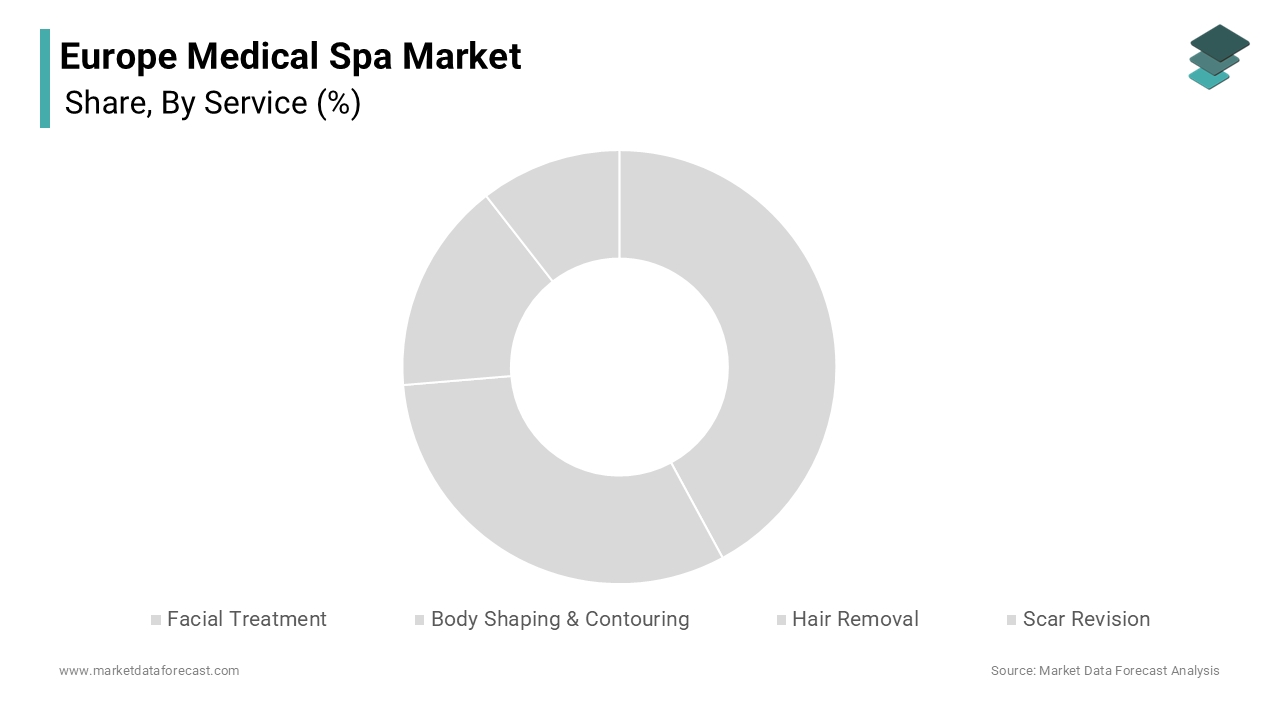
The body shaping and contouring segment is expected to exhibit a noteworthy CAGR of 13.8% from 2026 to 2034 due to technological advancement and post pandemic lifestyle recalibration. Advancements in radiofrequency cryolipolysis and high intensity focused electromagnetic technologies now deliver measurable fat reduction and muscle toning without anesthesia or recovery time. Body contouring devices designed for both fat reduction and muscle building have received expanded indications. Clinical assessments by academic medical institutions have shown significant average abdominal fat reduction after multiple treatments. Furthermore, reports indicate a high percentage of patient satisfaction with these procedures. These outcomes rival surgical liposuction for mild to moderate concerns but at half the cost and zero downtime. This democratization of body refinement fuels adoption across broader socioeconomic groups. The pandemic triggered a sustained reevaluation of health and physical self-perception across Europe. Many adults are showing a greater interest in monitoring and improving their physical composition. A notable portion of individuals are looking for non-invasive approaches to body shaping, preferring them over dietary changes alone. Public health initiatives in certain regions are incorporating body composition analysis into preventative care, facilitating connections to wellness facilities. The interest in non-surgical body contouring services is rising among men, representing a larger share of new clients in specific areas. This gender diversification expands market reach while aligning with broader trends in functional fitness and metabolic health. Medical spas position these treatments not as vanity fixes but as complements to nutrition and exercise, framing them within a credible health narrative that resonates with Europe’s evidence driven consumer base.
By Age Group Insights
The adults aged 30 to 64 segment led the Europe medical spa market by holding a significant share in 2025. The leading position of the adults segment is attributed to economic capacity and proactive aging management. This cohort combines career stability with heightened awareness of physiological aging signs. A significant portion of European households with middle-aged primary earners directs discretionary funds toward health and appearance-related services. In specific European nations, individuals in this demographic group commonly allocate substantial annual expenditures toward maintenance treatments at medical spas. Unlike younger groups they prioritize long term protocols, such as quarterly injectables or annual laser resurfacing. The European Commission’s Healthy Ageing Initiative further legitimizes this spending by framing skin and metabolic health as components of active longevity. Insurance innovations in Switzerland and the Netherlands now offer wellness savings accounts that include approved medical spa services reinforcing their status as preventive health investments rather than luxury expenses. In knowledge based European economies appearance often correlates with perceived credibility and vitality. According to research, a notable share of professionals aged 35 to 60 believe well maintained appearance influences career advancement particularly in client facing roles. Medical spas cater to this through discreet “executive rejuvenation” packages with after hours appointments and confidential billing. In the UK, a portion of London based medical spas report corporate wellness partnerships offering employee discounts as per sources. This professionalization of aesthetic care embeds medical spas into career sustainability strategies transforming treatments from indulgence into functional necessity for maintaining social and occupational relevance in aging workforces.
The geriatric segment is predicted to witness the highest CAGR of 11.2% during the forecast period owing to shifting perceptions of aging and tailored clinical protocols. Older Europeans are rejecting passive retirement in favor of vibrant longevity with appearance care seen as integral to well being. Many older adults view the condition of their skin as an indication of their general vitality. A segment of this demographic actively utilizes medical-grade treatments for skin care. Specialized aesthetic programs are emerging that combine non-invasive procedures like laser resurfacing, hydration, and targeted hand treatments for older skin. Geriatric patients often seek dermatological treatments to improve their self-perception and project a sense of capability rather than frailty. The motivation for seeking these treatments frequently extends beyond purely aesthetic concerns, focusing instead on psychological factors and confidence. National health dialogues in Sweden and Denmark increasingly include dermal integrity in senior wellness checklists validating medical spa visits as part of comprehensive aging care. Europeans are living longer and remaining socially active well into their 70s and 80s. Provisional Eurostat data shows a general upward trend in life expectancy for older adults in the European Union, accompanied by high levels of engagement in social and relationship activities within this demographic. This extended engagement drives demand for appearance maintenance that supports self confidence in dating travel and family roles. Medical spas respond with age specific safety protocols including lower energy settings medication interaction checks and seated treatment options. As part of a broader, growing interest in healthy aging and physical appearance, non-invasive aesthetic treatments are increasingly being incorporated into wellness discussions during consultations with older adults. This integration into geriatric care pathways normalizes medical spa use and ensures safe delivery expanding market participation among Europe’s rapidly growing senior population.
By Service Provider Insights
The medical practice associated spas segment was the largest segment in the Europe medical spa market by occupying a 48.7% share in 2025. The prominence of the medical practice associated spas segment is credited to clinical integration and trust capital. These spas operate as extensions of licensed medical clinics offering continuity of care from diagnosis to maintenance. The trend in France, Germany, and Italy shows a growing integration of medical spa services within dermatology practices to offer comprehensive post-procedural recovery and preventative care protocols. A patient receiving a prescription for acne may transition directly to LED therapy or chemical peels without duplication of consultation. This model reduces fragmentation and enhances treatment efficacy. In Switzerland, where private insurers encourage integrated care models, medical spas operating alongside clinics are observing better client retention compared to independent, standalone venues. The proximity to diagnostic tools like skin scanners and electronic health records ensures data driven personalization unmatched by retail spas. Patients perceive these spas as inherently safer due to physician presence and access to emergency protocols. According to research, a considerable portion of clients choose practice associated spas specifically because complications can be managed onsite. National regulations in Spain and Austria mandate that energy based devices be operated only within licensed medical facilities further concentrating demand. Additionally malpractice insurance and sterility standards mirror hospital levels creating a halo of professionalism. This trust translates into willingness to try advanced modalities, a significant share of clients in such spas opt for combination treatments versus that in standalone venues as per a study. The clinical aura thus functions as both safety net and value amplifier driving market dominance.
The group ownership spas segment is estimated to register the fastest CAGR of 12.5% from 2026 to 2034. The swift expansion of the group ownership spas segment is fueled by economies of scale and standardized quality assurance. Chains like Clinique La Prairie and Body Renewal leverage centralized procurement staff training and protocol development to deliver uniform experiences across countries. According to sources, group owned spas achieve lower cost per treatment through bulk device leasing and shared marketing. They also benefit from cross referral networks, for example a client in Madrid can continue their laser protocol in Amsterdam using the same digital treatment record. As per research, a portion of frequent medical spa users prefer chains for predictable outcomes and transparent pricing. This reliability is especially valued in fragmented markets like Eastern Europe where independent spas vary widely in standards. Group spas often serve as preferred launch partners for new aesthetic technologies due to their scale and data collection capacity. Allergan Aesthetics launched a pilot program with several European chains to test a new hyaluronic acid filler. This program includes tracking the product's effectiveness in real-time. Participating chains are granted early access to the filler compared to independent clinics, establishing an exclusive period before wider market availability. This first mover advantage attracts early adopters and media attention driving footfall. Additionally, centralized compliance teams ensure rapid adaptation to EU Medical Device Regulation updates reducing legal risk. These synergies position group spas as innovation gatekeepers accelerating their expansion while raising the competitive bar for single location operators.
REGIONAL ANALYSIS
Germany Medical Spa Market Analysis
Germany outperformed other countries in the Europe medical spa market by capturing a 21.5% share in 2025. The supremacy of the German market is propelled by rigorous medical regulation strong private healthcare infrastructure and high consumer trust in clinical settings. The majority of German medical spas are under direct physician supervision, which supports standardized safety measures. Germany has a substantial number of certified aesthetic medicine practitioners, representing a high concentration within Europe. The regulation of these facilities is overseen by medical associations. Moreover, the high number of professionals and supervised facilities suggests a robust framework for aesthetic medicine. Additionally statutory and private insurers increasingly cover medically indicated aesthetic procedures such as scar revision or post bariatric body contouring. This institutional validation transforms medical spas from luxury venues into recognized components of the national health continuum reinforcing sustained demand and professionalization.
France Medical Spa Market Analysis
France was the next prominent country in the Europe medical spa market by accounting for a 18.8% share in 2025. The growth of the French market is driven by cultural emphasis on beauty as health heritage thermal spa traditions and strict regulatory oversight. French law requires all injectable and energy based treatments to be performed by or under direct supervision of a licensed physician with facility registration mandatory at the regional level. The country is home to numerous authorized aesthetic medicine centers with Paris Lyon and Nice serving as innovation hubs. Furthermore France’s historic balneotherapy centers in Vichy and Aix les Bains have evolved into hybrid medical wellness destinations integrating dermatology with mineral water therapies. As per sources, thermal aesthetic traditions are recognized as intangible heritage enhancing national pride and consumer loyalty. This unique fusion of science tradition and regulation sustains France’s influential role in shaping European aesthetic standards.
United Kingdom Medical Spa Market Analysis
The United Kingdom holds a significant position in the Europe medical spa market due to private healthcare maturity, urban professional demand, and post Brexit regulatory autonomy. London alone hosts hundreds of CQC registered aesthetic clinics offering everything from injectables to advanced body sculpting. Practitioners in the United Kingdom are increasingly pursuing formal postgraduate training in aesthetics, resulting in a higher rate of certified professionals compared to some neighboring regions. Government initiatives to implement licensing and facility inspections are actively shaping the professional landscape for cosmetic procedures. The sector is undergoing a shift towards increased accountability and standardized oversight for practitioners and clinics. Professionalization is being strengthened through enhanced registration requirements and mandatory evaluations of clinical environments. Additionally corporate wellness partnerships with financial and legal firms drive consistent B2B demand. This blend of consumer sophistication regulatory evolution and service innovation positions the UK as a dynamic and resilient medical spa market despite broader economic uncertainties.
Italy Medical Spa Market Analysis
Italy experienced a consistent growth in the Europe medical spa market owing to the seamless integration of aesthetic medicine with fashion heritage dermatological excellence and tourism. Italian medical spas, particularly in Milan Florence and Rome, combine cutting edge technology with design led environments attracting both domestic and international clientele. The National Federation of Medical Orders enforces strict rules permitting only physicians to perform invasive or energy based procedures ensuring high safety standards. Additionally Italian research institutions lead in developing biodegradable fillers and regenerative protocols published in journals like the Journal of the European Academy of Dermatology. This scientific credibility coupled with cultural prestige cements Italy’s status as a global aesthetic destination.
Switzerland Medical Spa Market Analysis
Switzerland is anticipated to expand in the Europe medical spa market from 2026 to 2034. It distinguishes itself through premium positioning longevity science and cross border medical tourism. Swiss clinics in Geneva Zurich and Montreux are renowned for bespoke cellular rejuvenation protocols often combining nutrigenomics IV therapy and non-invasive aesthetics under integrated physician teams. The country enforces some of Europe’s strictest medical device and practitioner standards with all aesthetic providers required to maintain federal certification. Swiss medical spas serve a significant international clientele, with notable demand from specific regions. These clients seek discretion, precision, and multilingual services. Additionally, private insurers in Switzerland and Germany are increasingly covering preventive and aesthetic treatments as part of executive health packages. This convergence of scientific rigor exclusivity and cross border appeal establishes Switzerland as Europe’s high end medical spa benchmark.
COMPETITIVE LANDSCAPE
comprising elite physician led institutions and expanding regional chains operating under stringent regulatory frameworks. Unlike unregulated beauty salons medical spas must adhere to national health authority guidelines governing staff credentials facility standards and device usage which creates high entry barriers but also ensures baseline quality. Competition centers on clinical expertise technological sophistication and service integration rather than price. Leading players differentiate through longitudinal care models combining diagnostics treatment and follow up within unified medical records. Simultaneously the rise of medical aesthetic tourism intensifies rivalry among destination hubs like Switzerland France and Italy where reputation discretion and multilingual service determine client loyalty. Regulatory fragmentation across the EU such as varying definitions of who can perform injectables further complicates scaling yet incentivizes consolidation among compliant operators. The market rewards those who successfully merge medical legitimacy with luxury experience while penalizing non compliant or superficially branded competitors.
KEY MARKET PLAYERS
Some of the companies that are playing a dominating role in the Europe Medical Spa Market include
- Clinique La Prairie
- Lanserhof
- SHA Wellness Clinic
- Chenot Group
- Biovital MedSpa
- Allure MedSpa
- Longevity Wellness Worldwide
- Chic La Vie
- The Orchard Wellness & Health Resort
- Kurotel – Longevity Medical Center and Spa
Top Players in the Market
Clinique La Prairie
Clinique La Prairie is a globally recognized Swiss institution that pioneered the integration of regenerative medicine and aesthetic science within a luxury medical spa environment. Headquartered in Montreux the clinic combines advanced cellular therapies dermatological treatments and personalized wellness protocols under strict medical supervision. In 2024 Clinique La Prairie expanded its European footprint by opening a new flagship center in London featuring AI driven skin diagnostics and longitudinal anti aging tracking. It also launched a digital health passport allowing international clients to access treatment records and physician notes securely across borders. These initiatives reinforce its reputation for scientific excellence confidentiality and holistic longevity care while strengthening its appeal to high net worth individuals seeking evidence based rejuvenation in Europe.
Body Renewal
Body Renewal is a leading European medical spa chain headquartered in London with a strong presence in the United Kingdom Germany and the Netherlands. The company specializes in non invasive aesthetic treatments including laser technologies injectables and body contouring delivered by medically qualified practitioners. In 2024 Body Renewal introduced a pan European standardization of clinical protocols aligned with the EU Medical Devices Regulation ensuring consistent safety and outcomes across all locations. It also partnered with leading dermal filler and energy device manufacturers to offer exclusive early access to next generation technologies. Additionally the company enhanced its telehealth platform enabling virtual consultations and post procedure follow ups which improved client retention and accessibility particularly in Tier 2 cities lacking specialized clinics.
Vichy Catalan Institute
The Vichy Catalan Institute leverages France’s heritage in thermal medicine and dermatological research to deliver medically supervised spa experiences rooted in mineral water therapeutics and evidence based aesthetics. Operating primarily in France Spain and Italy the institute integrates Vichy’s thermal springs with advanced cosmetic dermatology including radiofrequency microneedling and biostimulatory injectables. In early 2024 the institute launched a “Medical Thermal Wellness” certification program in collaboration with European dermatology associations to train practitioners in combining balneotherapy with modern aesthetic protocols. It also introduced real time skin barrier analysis using proprietary biosensor technology to personalize treatment intensity. These actions affirm its unique positioning at the intersection of European cultural heritage and clinical innovation in the medical spa sector.
Top Strategies Used by the Key Market Participants
Key players in the Europe medical spa market employ four principal strategies to reinforce leadership and ensure sustainable growth. First they embed strict medical governance by requiring physician supervision and facility registration in compliance with national and EU health regulations. Second they invest in proprietary diagnostic and treatment technologies such as AI skin analysis and biometric tracking to enable personalized care pathways. Third they develop integrated wellness models that combine aesthetics with nutrition regenerative medicine and mental well being to move beyond episodic transactions. Fourth they establish cross border service continuity through digital health records multilingual teams and international referral networks catering to medical aesthetic tourism. These strategies collectively enhance clinical credibility consumer trust and operational differentiation in a highly scrutinized and competitive landscape.
MARKET SEGMENTATION
This research report on the Europe medical spa market has been segmented and sub-segmented based on following categories.
By Service
- Facial Treatment
- Body Shaping & Contouring
- Hair Removal
- Scar Revision
- Tattoo Removal
By Age
- Adolescent
- Adult
- Geriatric
By Service Provider
- Single Ownership Spa
- Group Ownership Spa
- Free-Standing Spa
- Medical Practice associated Spa
By End-User
- Men
- Women
By Country
- UK
- France
- Spain
- Germany
- Italy
- Russia
- Sweden
- Denmark
- Switzerland
- Netherlands
- Turkey
- Czech Republic
- Rest of Europe