- Product Description Description
- Table of Contents TOC
- List of Table & Figure LOT
- Get Free Sample PDF Sample PDF
Europe Menopause Market Report Summary
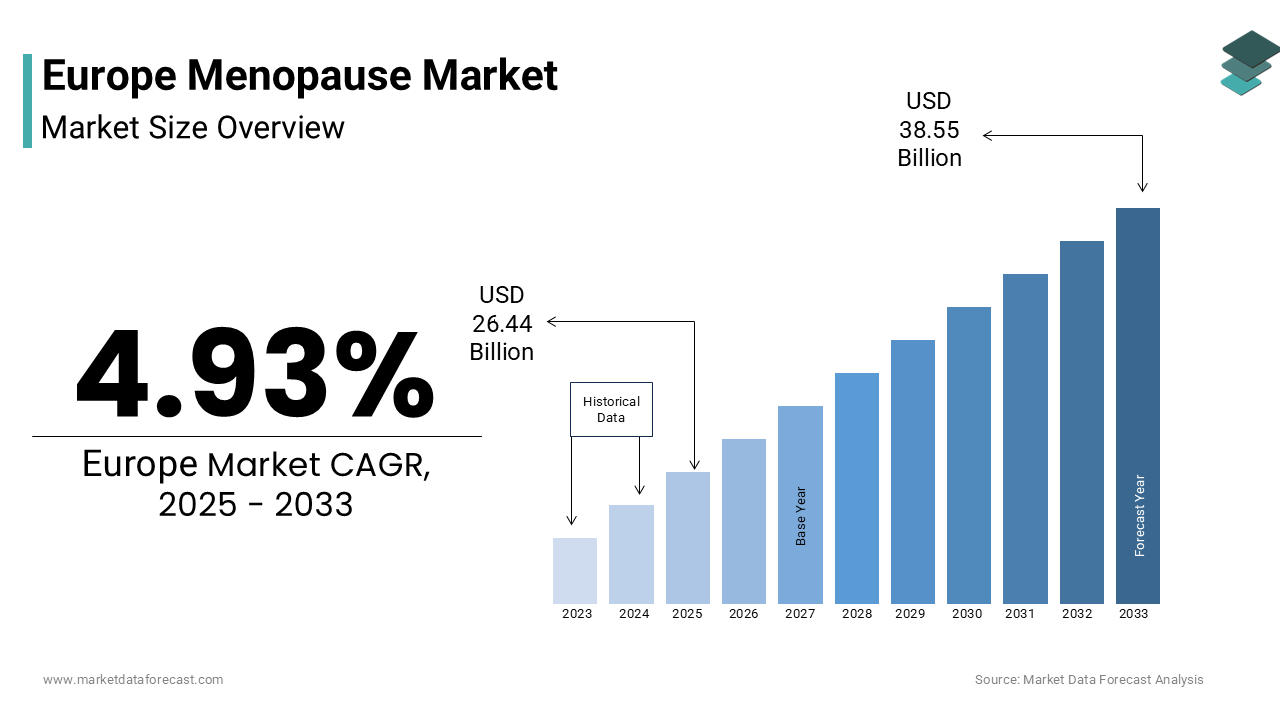
The Europe menopause market was valued at USD 25.20 billion in 2024, is estimated to reach USD 26.44 billion in 2025, and is projected to reach USD 38.55 billion by 2033, growing at a CAGR of 4.93% during the forecast period from 2025 to 2033. The growth of the Europe menopause market is driven by rising clinical awareness, evolving workplace policies supporting menopausal women, and increased adoption of both hormonal and non-hormonal therapies. Growing acceptance of dietary supplements, expansion of OTC menopause products, and the rise of digital health platforms for symptom tracking are further fueling market growth. Moreover, expanding availability of AI-powered therapeutics, favorable treatment guidelines, and strong consumer demand for safer non-hormonal alternatives are broadening access to menopause care across Europe.
Key Market Trends
- Rising workplace policies across Europe are addressing menopause as a health and equity concern, improving care access and product demand.
- Increasing clinical recognition and updated treatment guidelines encourage early, individualized hormone therapy for eligible women.
- Growing adoption of digital therapeutics and AI-powered symptom management tools integrated into telehealth pathways.
- Expanding demand for non-hormonal prescription medications with improved safety profiles for women unable or unwilling to use HRT.
- Strengthening focus on holistic and plant-based treatment choices, including phytoestrogen-rich supplements and wellness formulations.
Segmental Insights
- Based on treatment, the dietary supplements segment was the largest and held 62.3% of the Europe menopause market share in 2024. The dominance of this segment is attributed to increasing preference for phytoestrogen-based supplements and natural wellness alternatives widely available through pharmacies and retail chains.
- The OTC pharma products segment is projected to expand at a CAGR of 12.4% from 2025 to 2033, supported by expanded pharmacist-led care models and rising availability of regulated OTC solutions for symptom relief.
Regional Insights
The Europe menopause market is witnessing steady growth across major economies, supported by increasing consumer awareness, evolving healthcare policies, and rising availability of both conventional and integrative treatment options.
- The United Kingdom was the top performer, accounting for 22.3% of the Europe menopause market share in 2024, driven by strong policy leadership, NHS-integrated menopause pathways, and high retail demand for supplements and vaginal health products.
- Germany held 19.3% of the market share in 2024, supported by a strong phytotherapy tradition, robust OTC ecosystem, and partial reimbursement for menopause consultations.
- France continues to show increasing demand, driven by medicalized gynecology, national awareness campaigns, and growing adoption of premium plant-based supplements.
- Italy is emerging as a strong growth market, supported by cultural normalization, retail innovation, and rising use of Mediterranean plant-based remedies.
Competitive Landscape
The Europe menopause market is characterized by a diverse mix of global pharmaceutical leaders, nutraceutical manufacturers, and digital health innovators offering prescription therapies, OTC products, and specialized menopause wellness solutions. Leading companies are focusing on clinically validated formulations, expansion of non-hormonal drug portfolios, and integration of digital tools to enhance patient engagement. Collaborations with gynecologists, pharmacists, and medical societies are strengthening product credibility and adoption. Prominent players in the Europe menopause market include Bayer AG, AbbVie Inc., Pfizer Inc., Novo Nordisk A/S, Merck & Co., Inc., Teva Pharmaceutical Industries Ltd., Viatris Inc. (formerly Mylan), TherapeuticsMD Inc., Astellas Pharma Inc., and Ferring Pharmaceuticals.
Europe Menopause Market Size
The europe menopause market size was valued at USD 25.20 billion in 2024 and is anticipated to reach USD 26.44 billion in 2025 from USD 38.55 billion by 2033, growing at a CAGR of 4.93% during the forecast period from 2025 to 2033.
The menopause pharmaceuticals nutraceuticals medical devices and digital health solutions are designed to manage the physiological and psychological symptoms associated with perimenopause menopause and postmenopause in women, typically aged 45 to 65. This includes hormone replacement therapy non hormonal prescription drugs phytoestrogen supplements vaginal moisturizers wearables for symptom tracking and telehealth platforms offering specialized care. Menopause is no longer viewed solely as a natural life stage but as a critical window for long term health intervention, which is impacting bone cardiovascular and cognitive outcomes.
MARKET DRIVERS
-
Rising Workplace Policies and Government Initiatives Addressing Menopause as a Health and Equity Issue
The governments and employers are increasingly recognizing menopause as a workplace health and retention concern driving demand for accessible treatments and support systems, which is propelling the growth of Europe menopause market. In the United Kingdom the House of Commons Women and Equalities Committee reported in 2023 that 10% of women considered leaving their jobs due to menopausal symptoms prompting over 2500 companies including BT and Aviva to implement menopause support policies. France’s Ministry of Labour launched a national occupational health campaign in 2023 training HR professionals to accommodate menopausal employees through flexible hours and temperature-controlled workspaces.
-
Increased Clinical Recognition and Updated Treatment Guidelines
The medical understanding of menopause has evolved from symptomatic relief to long term health risk management leading to more proactive prescribing and patient engagement. The increased clinical recognition and updated treatment guidelines are also fuelling the growth of Europe menopause market. According to the European Menopause and Andropause Society, its 2023 updated guidelines now recommend individualized hormone therapy for women under 60 with severe vasomotor symptoms citing cardiovascular and bone health benefits when initiated early. The European Society of Cardiology acknowledged in its 2023 position paper that timely menopause management reduces lifetime risk of heart disease the leading cause of death in European women. Germany’s Federal Joint Committee added menopause consultations to reimbursable services in 2023, while Sweden’s National Board of Health and Welfare launched digital care pathways integrating gynecologists pharmacists and psychologists.
MARKET RESTRAINTS
-
Regulatory Hesitancy and Safety Concerns Surrounding Hormone Replacement Therapy
The lingering safety perceptions and regulatory caution continue to limit hormone replacement therapy uptake is a major factor that is restricting the growth of Europe menopause market. According to the European Medicines Agency hormone therapies remain under enhanced pharmacovigilance due to historical associations with breast cancer and thromboembolism, even though recent data from the EPIC cohort study shows risks are nuanced and time dependent. In France the National Agency for Medicines Safety maintains strict prescribing restrictions requiring annual re-evaluation and contraindicating use in women with certain risk factors. Similarly, Italy’s AIFA mandates that HRT be prescribed only after non hormonal options fail.
-
Fragmented Access to Specialized Menopause Care Across Healthcare Systems
Access to menopause specialists and integrated care pathways varies dramatically is additionally to hamper the growth of Europe menopause market. According to the European Menopause and Andropause Society, only 4 of 27 EU member states have national menopause care networks with most relying on general practitioners who receive minimal training in hormonal health. Even in advanced systems like Germany only 12% of gynecologists specialize in menopause, as per the German Society of Gynecology and Obstetrics. The European Observatory on Health Systems documented that wait times for menopause consultations exceed 14 weeks in Spain and Italy.
MARKET OPPORTUNITIES
-
Integration of Digital Therapeutics and AI Powered Symptom Management Platforms
The rise of regulated digital health tools offers scalable solutions to Europe’s menopause care gap by providing personalized clinically validated support. The integration of digital therapeutics and AI powered symptom management platforms is significantly to leverage new opportunities for the growth of Europe menopause market. According to the European Commission’s 2023 Digital Health Action Plan, menopause was identified as a priority condition for digital therapeutic development. These platforms use AI to tailor lifestyle hormone and behavioral interventions based on real time symptom logging and biometric data.
-
Expansion of Non-Hormonal Prescription Therapies with Favorable Safety Profiles
Pharmaceutical innovation in non-hormonal treatments is creating new avenues for women who cannot or choose not to use estrogen based therapies, which is another attribute boosting the growth of Europe menopause market. According to the European Medicines Agency, two novel non hormonal drugs like fezolinetant and elinzanetant received positive opinions in 2023 for moderate to severe vasomotor symptoms acting via neurokinin 3 receptor antagonism without affecting hormone levels. Bayer and Astellas are preparing commercial launches across Germany France and the UK with pricing aligned to chronic condition management. These therapies address a significant unmet need: the European Menopause and Andropause Society estimates that 40% of menopausal women are contraindicated for HRT due to personal or family medical history. Additionally, national health technology assessment bodies like Germany’s IQWiG are fast tracking evaluations for these agents recognizing their potential to reduce long term healthcare costs from untreated symptoms.
MARKET CHALLENGES
-
Persistent Social Stigma and Low Health Literacy Around Menopause
The cultural taboos and misinformation continue to deter women from seeking timely care or adhering to treatment, which is also a challenge for the growth of Europe menopause market. According to a 2023 pan European survey by the European Institute for Gender Equality 58% of women aged 45–65 reported feeling uncomfortable discussing menopause with colleagues or even healthcare providers. Misinformation abounds online with 63% of top Google results for “menopause remedies” promoting unproven supplements lacking clinical validation. This knowledge gap leads to delayed diagnosis inappropriate self-treatment and discontinuation of effective therapies.
-
Inconsistent Reimbursement and Pricing Pressures Across National Health Systems
The absence of harmonized reimbursement policies for menopause treatments creates fragmentation and access inequities. The inconsistent reimbursement and pricing pressures are a hampering the growth of Europe menopause market. According to the European Observatory on Health Systems, hormone therapy is fully reimbursed in Germany and Sweden but requires significant co payments in France and Italy. Non hormonal prescription drugs face even greater hurdles fezolinetant is not yet evaluated by most national HTA bodies delaying market access. Meanwhile over the counter supplements and digital apps fall outside public coverage despite growing clinical utility. The European Commission’s Pharmaceutical Strategy aims to improve access but menopause treatments are not prioritized as essential medicines.
REPORT COVERAGE
| REPORT METRIC | DETAILS |
| Market Size Available | 2024 to 2033 |
| Base Year | 2024 |
| Forecast Period | 2025 to 2033 |
| Segments Analysed | By Treatment and Region |
| Various Analyses Covered | Global, Regional & Country Level Analysis, Segment-Level Analysis, DROC, PESTLE Analysis, Porter’s Five Forces Analysis, Competitive Landscape, Analyst Overview on Investment Opportunities |
| Regions Analysed | United Kingdom (UK), France, Spain, Germany, Italy, Russia, Sweden, Denmark, Switzerland, the Netherlands, Turkey, the Czech Republic, and the Rest of Europe. |
| Market Leaders Profiled | Bayer AG, AbbVie Inc., Pfizer Inc., Novo Nordisk A/S, Merck & Co. Inc., Teva Pharmaceutical Industries Ltd., Viatris Inc. (formerly Mylan), TherapeuticsMD Inc., Astellas Pharma Inc., and Ferring Pharmaceuticals. |
SEGMENTAL ANALYSIS
By Treatment Insights
- The dietary supplements segment was the largest by accounting for 62.3% of the Europe menopause market share in 2024.
European women increasingly favor phytoestrogen rich supplements, such as black cohosh red clover and soy isoflavones due to perceived safety and alignment with holistic wellness trends. According to the European Food Safety Authority, over 70% of menopausal women in Western Europe have used dietary supplements to manage symptoms like hot flashes and sleep disturbances. National pharmacy chains like Boots in the UK and dm in Germany dedicate entire aisles to menopause wellness with private label and branded formulations.
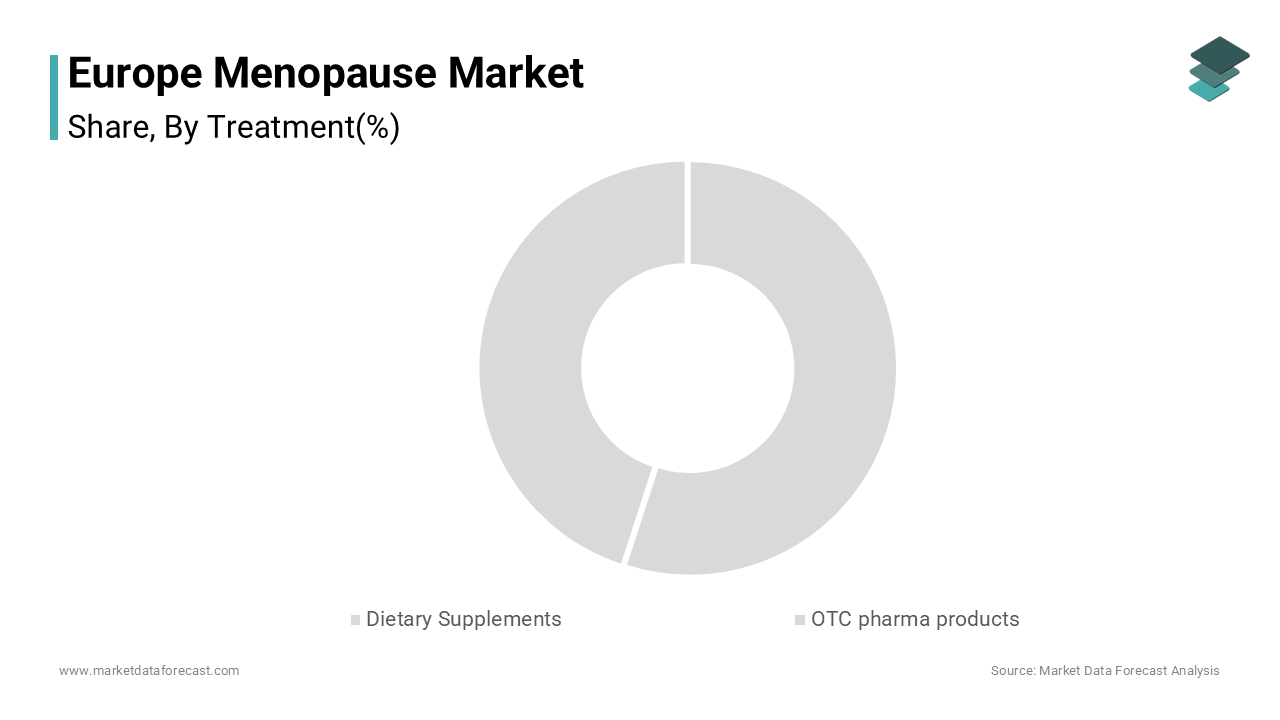
- The OTC Pharma Products segment is projected to expand at a CAGR of 12.4% from 2025 to 2033.
European health systems are increasingly empowering pharmacists to provide first line menopause support including recommending regulated OTC pharmaceuticals. According to the European Association of Hospital Pharmacists, 18 EU countries now permit pharmacists to initiate or adjust certain menopause treatments under protocol based care. In the UK, the Royal Pharmaceutical Society launched the “Menopause Ready Pharmacies” initiative in 2023 training over 5000 community pharmacists to counsel women on evidence based OTC options like vaginal moisturizers and non-hormonal analgesics.
REGIONAL ANALYSIS
United Kingdom Europe Menopause Market Analysis
- The United Kingdom was the top performer of the Europe menopause market by capturing 22.3% of share in 2024
Owing to the progressive policy leadership public awareness and integrated healthcare initiatives. The UK was the first European country to appoint a Menopause Employment Champion and mandate menopause workplace policies across the civil service. The National Health Service launched the Menopause Pathway in 2023 providing standardized care across 90% of clinical commissioning groups and approving two digital therapeutics for prescription. Retailers like Boots report that menopause product sales grew by 38% in 2023 with strong demand for both supplements and vaginal health products.
Germany Europe Menopause Market Analysis
- Germany was positioned second by occupying 19.3% of the Europe menopause market share in 2024 with its strong tradition of phytotherapy and robust over the counter healthcare model.
German women have long used herbal remedies with black cohosh formulations like Klimadynon dominating pharmacy shelves for decades. The country’s statutory health insurance system enables partial reimbursement for certain menopause consultations under new gynecological service codes introduced in 2023. Additionally, Germany hosts leading supplement manufacturers like Merck KGaA and Steigerwald which drive product innovation and export.
France Europe Menopause Market Analysis
- France menopause market growth is expected to have steady opportunities throughout the forecast period with its unique blend of medicalized gynecology and growing wellness consciousness.
French women traditionally rely on gynecologists for hormone therapy but are increasingly supplementing with plant based products as awareness grows. As per a recent survey, 54% of women aged 45 to 65 consulted a doctor about menopause in 2023, where the highest rate in the EU. The government’s 2023 “Santé Menopause” campaign trained 3000 healthcare professionals to address symptoms holistically. Retail pharmacy chains like Pharmacie Principale report double digit growth in menopause sections with premium brands like Arkopharma and Oemine leading sales.
Italy Europe Menopause Market Analysis
- Italy menopause market growth is likely to be driven by the cultural normalization and retail innovation.
Historically stigmatized menopause is now entering public discourse thanks to campaigns by the Italian Ministry of Health and celebrities like Sophia Loren speaking openly about symptoms. According to the survey, 49% of women aged 45 to 65 used menopause products in 2023, up from 31% in 2021. Local brands such as Aboca and ESI Pharma leverage Italy’s herbal medicine heritage to offer Mediterranean plant-based formulations.
COMPETITVE LANDSCAPE
The Europe menopause market features a dynamic mix of multinational pharmaceutical companies specialized nutraceutical firms and agile digital health startups competing across a spectrum from clinically validated prescription alternatives to wellness-oriented supplements. Competition is shaped less by price and more by scientific credibility regulatory compliance and integration into trusted care channels such as pharmacies and telehealth platforms. While Germany and the UK lead in product innovation and policy support Southern and Eastern Europe present high growth potential as stigma declines and retail access expands. Differentiation occurs through clinical evidence digital engagement and professional endorsement.
KEY MARKET PLAYERS
Some of the companies that are playing a dominating role in the Europe Menopause Market include
- Bayer AG
- AbbVie Inc.
- Pfizer Inc.
- Novo Nordisk A/S
- Merck & Co., Inc.
- Teva Pharmaceutical Industries Ltd.
- Viatris Inc. (formerly Mylan)
- TherapeuticsMD Inc.
- Astellas Pharma Inc.
- Ferring Pharmaceuticals
Top Players in the Market
Bayer AG
Bayer AG is a Germany based global pharmaceutical leader with a strong presence in the Europe menopause market through its women’s health portfolio. The company offers both prescription hormone therapies and a growing range of over-the-counter menopause solutions including Femarelle a clinically studied soy derivative for symptom relief. Bayer leverages its deep gynecological expertise and established pharmacy distribution network across the EU to ensure wide product accessibility. The company expanded its menopause digital ecosystem by integrating Femarelle with symptom tracking tools on its Vivira health platform. Recent actions include launching targeted educational campaigns in partnership with European medical societies to improve diagnosis rates and support informed treatment decisions. Bayer’s dual focus on science backed products and holistic patient support reinforces its leadership in Europe’s evolving menopause care landscape.
Perrigo Company plc
Perrigo is an Ireland headquartered global consumer self-care company with significant operations across Europe offering a diversified portfolio of menopause related over the counter pharmaceuticals and supplements. Perrigo emphasizes clinically validated natural ingredients such as flaxseed lignans and vitamin D to address vasomotor and bone health concerns. The company strengthened its European footprint by expanding manufacturing capacity for menopause products at its facility in Belgium to meet rising demand. Perrigo actively collaborates with pharmacy associations in France Germany and the UK to train pharmacists on menopause counseling thereby positioning its products within trusted professional care pathways and enhancing consumer confidence in non-prescription solutions.
Arkopharma
Arkopharma is a French leader in plant-based health solutions with a longstanding reputation in women’s wellness and menopause support across Europe. The company specializes in phytotherapeutic formulations using standardized extracts of black cohosh sage and red clover backed by clinical research and compliant with EU herbal medicine regulations. Arkopharma’s products are widely distributed in pharmacies hypermarkets and e commerce platforms in France Italy Spain and Germany. The company launched a new menopause range featuring chrono release technology to manage nighttime symptoms such as hot flashes and insomnia. Arkopharma also partners with French gynecological associations to provide continuing education on integrative menopause management.
Top Strategies Used by the Key Market Participants
Key players in the Europe menopause market focus on developing clinically substantiated formulations that bridge the gap between dietary supplements and pharmaceuticals to build consumer trust. They actively collaborate with healthcare professionals including gynecologists and pharmacists to embed their products within formal care pathways and professional recommendations. Companies invest in digital health integrations such as symptom trackers and telehealth platforms to enhance user engagement and treatment adherence. Strategic partnerships with national health bodies and medical societies support educational initiatives that reduce stigma and improve diagnosis rates. Additionally, they tailor product portfolios to regional preferences are emphasizing phytotherapy in Southern Europe and digital therapeutics in Northern Europe by ensuring cultural relevance and regulatory alignment across diverse European markets.
MARKET SEGMENTATION
The research report on the Europe Menopause Market has been segmented and sub-segmented based on categories.
By Treatment
- Dietary Supplements
- OTC pharma products
- Hormonal
- Non-hormonal
By Country
- UK
- France
- Spain
- Germany
- Italy
- Russia
- Sweden
- Denmark
- Switzerland
- Netherlands
- Turkey
- Czech Republic
- Rest of Europe