- Product Description Description
- Table of Contents TOC
- List of Table & Figure LOT
- Get Free Sample PDF Sample PDF
Market Size, 2025
$139.23 MnMarket Estimate, 2026
$151.30 MnMarket Forecast, 2034
$294.25 MnCAGR, 2026–2034
8.67%Executive Summary: Europe Metal Chelates Market
- Market Scope: Comprehensive European metal chelates industry analysis covering application segments, crop types, application modes, country leadership frameworks, strategic corporate developments, and competitive landscapes.
- Market Valuation: Valued at USD 139.23 million (2025), estimated at USD 151.30 million (2026), and projected to reach USD 294.25 million by 2034, registering a robust CAGR of 8.67% (2026–2034).
- Primary Growth Drivers: Widespread soil micronutrient deficiencies, high bioavailability requirements, regulatory push for biodegradable chelating agents (EDDS, IDHA) replacing EDTA, precision agriculture adoption, and circular economy water treatment. Restraints include high production costs of green alternatives and EU Fertilising Products Regulation approval fragmentation.
Key Market Segment Metrics (2026–2034)
| Category | Leading Segment (2025 Position) | Fastest-Growing Segment |
|---|---|---|
| By Application Segment | Micronutrients (dominated market with a 66.5% share in 2025) | Micronutrients (projected to witness a CAGR of 9.12% through 2033) |
| By Crop Type | Fruits and vegetables (led by crop type with 44.5% share) | Fruits and vegetables (recording highest growth rate at a CAGR of 10.5%) |
| By Application Mode | Foliar application (held largest mode share at 46.4% in 2025) | Fertigation (anticipated to grow at a CAGR of 11.5% due to precision irrigation) |
| By Region / Country | Spain (dominated European market with a 22.5% share in 2025) | Italy (second-largest), France, and Germany (soil health framework growth) |
Major Market Players & Market Structure
Market Structure: Highly strategic European specialty chemical and agricultural nutrition landscape driven by plant capacity expansions for biodegradable chelates (IDHA, EDDS), REACH compliance, and high-pH soil innovations.
Key Companies: BASF SE, Protex International, Kemira Oyj, ICL Group Ltd., Akzo Nobel N.V., Nufarm Limited, Syngenta AG, Haifa Chemicals Ltd., Van Iperen International, Aries Agro Limited, Valagro SPA, and Deretil Agronutritional.
Europe Metal Chelates Market Size
The European metal chelates market size was valued at USD 139.23 million in 2025 and is anticipated to reach a valuation of USD 151.30 million in 2026 from USD 294.25 million by 2034, growing at a CAGR of 8.67% from 2026 to 2034.

Current Introduction of the European Metal Chelates Market
Metal chelates are coordination compounds formed when metal ions bind to organic ligands such as ethylenediaminetetraacetic acid (EDTA), diethylenetriaminepentaacetic acid (DTPA), or ethylenediamine-N, N′-disuccinic acid (EDDS and create stable, water-soluble complexes that control metal reactivity and bioavailability. In Europe, these compounds are indispensable across agriculture, animal nutrition, water treatment, food processing, and industrial catalysis due to their ability to prevent metal-induced oxidation, enhance micronutrient uptake, and sequester toxic ions. According to the European Food Safety Authority, chelated trace minerals like zinc EDTA and copper glycinate are approved as feed additives under Regulation (EC) No 1831/2003 for use in livestock to improve bioavailability and reduce environmental excretion. Similarly, the European Commission permits specific chelates in food as stabilizers under Regulation (EC) No 1333/2008. In agriculture, the EU Fertilising Products Regulation (EU) 2019/1009 authorizes chelated micronutrients such as iron EDDHA for correcting soil deficiencies in high pH regions. According to Eurostat, large areas of European arable land exhibit micronutrient deficiencies such as zinc and iron, particularly in Southern Europe, which drives agronomic demand. With stringent environmental regulations phasing out persistent chelants like EDTA in favor of biodegradable alternatives such as EDDS and IDHA, the European metal chelates market operates at the intersection of performance efficacy, regulatory compliance, and sustainability.
MARKET DRIVERS
Adoption of Chelated Micronutrients in Precision Agriculture Drives Agronomic Demand
The widespread soil micronutrient deficiencies across European farmland have intensified reliance on chelated fertilizers to sustain crop yields and nutritional quality under precision farming frameworks, which is a key factor driving the growth of the European metal chelates market. According to the Joint Research Centre of the European Commission, many arable soils in the EU suffer from zinc deficiency, while calcareous soils in Spain, Italy, and Greece exhibit severe iron chlorosis in high-value crops like tomatoes and vineyards. Chelates such as iron EDDHA and zinc EDTA remain effective means of delivering bioavailable micronutrients in high pH conditions where conventional salts precipitate and become inert. The European Fertilising Products Regulation (EU) 2019/1009 explicitly lists approved chelating agents for CE-marked fertilizers, which creates a standardized pathway for agronomic use. According to the French Ministry of Agriculture, vineyards in Bordeaux increasingly use foliar iron chelates to combat chlorosis in recent years, which is improving yields. Similarly, German potato growers apply chelated manganese to prevent hollow heart disorder, a practice endorsed by the Julius Kühn Institute. As the EU’s Green Deal promotes nutrient use efficiency and soil health, chelated micronutrients are increasingly embedded in integrated crop management systems, ensuring sustained demand across Europe’s diverse agricultural landscapes.
Regulatory Push for Biodegradable Chelating Agents Accelerates Product Innovation
Europe’s environmental policies are actively reshaping the metal chelates market by restricting persistent synthetic chelants and incentivizing biodegradable alternatives, which is further contributing to the European metal chelates market expansion. According to the European Chemicals Agency, EDTA and DTPA are classified as substances of very great concern under REACH due to their poor biodegradability and potential to mobilize heavy metals in aquatic ecosystems. As a result, countries like Germany, Sweden, and the Netherlands have implemented national bans on EDTA in detergents and industrial effluents, while the EU Water Framework Directive mandates monitoring of chelant concentrations in surface waters. This regulatory pressure has catalyzed the adoption of readily biodegradable chelates such as EDDS and IDHA, which degrade significantly within week,s as confirmed by OECD 301 tests. In 2023, the European Commission included IDHA in the EU Ecolabel criteria for cleaning products, accelerating its use in industrial formulations. Major agrochemical and feed additive producers have reformulated products accordingly, with BASF and ICL introducingEDDS-basedd chelates for agricultural and animal nutrition applications. This policy-driven transition reduces ecological risk and opens new commercial avenues for sustainable chelating technologies across Europe.
MARKET RESTRAINTS
Stringent REACH Restrictions Limit Use of Conventional Chelating Agents
The European Union’s Registration Evaluation Authorisation and Restriction of Chemicals (REACH) regulation imposes significant constraints on widely used synthetic chelants, which is directly curbing their application in multiple sectors and hindering the European metal chelates market growth. According to the European Chemicals Agency, EDTA was added to the REACH Candidate List of Substances of Very High Concern due to its persistence, bioaccumulation potential, and ability to enhance heavy metal mobility in water systems. Subsequent national restrictions in Germany, Austria, and the Nordic countries have prohibited EDTA in detergents, cosmetics, and industrial cleaning, reducing its market accessibility. The European Commission’s review under the Urban Wastewater Treatment Directive found that EDTA accounted for a large share of persistent chelant load in municipal effluents, prompting calls for broader phase outs. While exemptions exist for closed loop industrial uses and certain feed applications, the regulatory uncertainty discourages long term investment in conventional chelants. Companies face costly reformulation efforts and supply chain requalification to adopt alternatives, which is creating technical and economic friction. Until biodegradable substitutes achieve equivalent performance and cost parity across all applications, these restrictions will continue to suppress demand for legacy chelating agents and fragment the market along regulatory lines.
High Production Costs of Biodegradable Chelates Impede Widespread Substitution
Despite regulatory incentives, the elevated manufacturing expenses of environmentally friendly chelating agents remain a critical barrier to their universal adoption across European industries, which is also impeding the European metal chelates market growth. According to the Fraunhofer Institute for Environmental Safety and Energy Technology, biodegradable chelates such as EDDS and IDHA cost more per kilogram than conventional EDTA due to complex synthesis routes, lower production volumes, and expensive raw materials. In price sensitive sectors like animal feed and broad acre agriculture, this premium is often prohibitive. According to the European Feed Manufacturers’ Federation, only a minority of compound feed producers in Southern Europe have fully transitioned to biodegradable chelates, citing cost as the primary constraint. Similarly, small and medium sized farms in Poland and Romania continue to use EDTA based foliar fertilizers due to budget limitations, despite national guidelines promoting alternatives. While large agribusinesses absorb the cost to meet sustainability targets, the broader market lacks the economic leverage to drive rapid substitution. Until economies of scale and process innovation narrow the price gap, the transition to green chelates will remain partial and uneven across the European value chain.
MARKET OPPORTUNITIES
Integration of Chelates in Circular Economy Water Treatment Applications
The EU’s emphasis on water reuse and industrial decarbonization is creating new opportunities for metal chelates in advanced water treatment and metal recovery systems. According to the European Environment Agency, thousands of industrial facilities in the EU generate metal laden wastewater requiring treatment before discharge or reuse. Chelating resins and soluble chelants are increasingly used to capture and concentrate critical metals like copper, nickel, and cobalt from process streams for recycling. In 2023 the EU’s Critical Raw Materials Act identified metal recovery from waste streams as a strategic priority, with chelation-based separation cited as a key enabling technology. Companies such as Lanxess and Purolite now offer specialized chelating ion exchange resins that selectively bind transition metals even in complex matrices. Pilot projects in the Netherlands and Finland use EDDS based systems to recover copper from electronic waste leachates with high efficiency according to the VTT Technical Research Centre of Finland. Furthermore, the Urban Wastewater Treatment Directive revision mandates increased water reuse by 2030, driving demand for chelant assisted membrane antifouling and scale inhibition. This alignment with circular economy principles positions metal chelates as essential tools in Europe’s resource efficiency transition.
Expansion of Chelated Trace Minerals in Sustainable Animal Nutrition
The European livestock sector’s shift toward precision nutrition and reduced environmental impact is fuelling demand for highly bioavailable chelated trace minerals in feed formulations, which is another major opportunity in the European metal chelates market. According to the European Food Safety Authority, organic trace minerals such as zinc methionine and copper glycinate exhibit higher absorption rates compared to inorganic sulfates, allowing lower inclusion levels while maintaining animal performance. This efficiency directly supports the EU’s Farm to Fork Strategy goal of reducing mineral excretion into soil and water. In Denmark and the Netherlands, national action plans on antimicrobial reduction encourage mineral optimization to strengthen immune function and reduce disease incidence. The Dutch Feed Industry Association reported in 2023 that pig and poultry premixes increasingly contain chelated zinc and manganese to support gut health and skeletal development. Additionally, the European Commission’s 2024 update to feed additive regulations streamlined approval pathways for novel amino acid-based chelates, accelerating innovation. As animal welfare standards rise and antibiotic use declines, chelated minerals are becoming integral to health oriented, low impact livestock production across Europe.
MARKET CHALLENGES
Fragmented National Approvals for Chelated Fertilizers Delay Market Harmonization
Despite the EU Fertilising Products Regulation (EU) 2019/1009, divergent national interpretations and delayed conformity assessments create market access delays for chelated micronutrient products, which is a major challenge to the European metal chelates market growth. According to the European Commission’s 2023 implementation report, fewer than half of member states have fully designated notified bodies capable of evaluating chelated fertilizers under Component Material Category 4. In countries like Italy and Spain, additional national toxicity or ecotoxicity data are still requested beyond EU requirements, extending approval timelines. This fragmentation forces manufacturers to maintain multiple product dossiers and conduct redundant testing, increasing time to market and costs. Fertilizers Europe reported in 2024 that many member companies experienced shipment delays due to inconsistent national enforcement of chelant purity thresholds. Moreover, some Eastern European countries continue to reference outdated national standards that exclude newer biodegradable chelates like IDHA from approved lists. Until full harmonization is achieved, the single market remains partially segmented, hindering innovation diffusion and creating competitive distortions for producers seeking pan European distribution of next generation chelated fertilizers.
Lack of Standardized Biodegradability Testing Protocols Undermines Green Claims
Despite the EU Fertilising Products Regulation (EU) 2019/1009, divergent national interpretations and delayed conformity assessments create market access delays for chelated micronutrient products, which is further challenging the expansion of the Despite the EU Fertilising Products Regulation (EU) 2019/1009, divergent national interpretations and delayed conformity assessments create market access delays for chelated micronutrient products. According to the Joint Research Centre, while OECD 301 tests measure ready biodegradability under ideal laboratory conditions, they often fail to reflect degradation rates in soil, seawater, or wastewater treatment plants where temperature, microbial diversity, and pH vary significantly. For instance, EDDS degrades rapidly in freshwater but persists longer in marine environments, yet current EU ecolabel criteria do not differentiate by compartment. This gap allows inconsistent green claims. A 2023 review by the European Consumer Organisation found that many chelated products marketed as biodegradable lacked compartment specific validation data. Regulators struggle to enforce restrictions without standardized field relevant protocols, and manufacturers face uncertainty in research and development prioritization. The European Chemicals Agency has acknowledged this limitation and initiated a working group to develop tiered testing frameworks, but implementation remains years away. Until robust, context specific biodegradability standards are adopted, the market risks greenwashing and suboptimal environmental outcomes despite good regulatory intent.
REPORT COVERAGE
| REPORT METRIC | DETAILS |
| Market Size Available | 2025 to 2034 |
| Base Year | 2025 |
| Forecast Period | 202 to 2034 |
| CAGR | 8.67% |
| Segments Covered | By Type, Crop Type, Mode of Application, And By Country |
| Various Analyses Covered | Global, Regional & Country Level Analysis; Segment-Level Analysis, DROC, PESTLE Analysis, Porter’s Five Forces Analysis, Competitive Landscape, Analyst Overview of Investment Opportunities |
| Regions Covered | UK, France, Spain, Germany, Italy, Russia, Sweden, Denmark, Switzerland, Netherlands, Turkey, Czech Republic & Rest of Europe |
| Market Leaders Profiled | BASF SE, Protex International, Akzo Nobel N.V., Nufarm Limited, Syngenta AG, Haifa Chemicals Ltd., Van Iperen International, Aries Agro Limited, Valagro SPA, Deretil Agronutritional. |
SEGMENTAL ANALYSIS
By Type Insights
The micronutrients segment led the Europe metal chelates market in 2025 by holding 66.5% of the European market share. The growth of micronutrients segment in this regional market is driven by widespread soil deficiencies of essential trace elements and the critical role of chelated forms in ensuring bioavailability under diverse agronomic conditions. Unlike primary nutrients such as nitrogen or phosphorus, micronutrients like iron, zinc, manganese, and copper are required in minute quantities but are frequently rendered insoluble in calcareous or high pH European soils. According to the Joint Research Centre of the European Commission, many arable soils in Southern and Central Europe exhibit zinc deficiency, while iron chlorosis affects vineyards and orchards in Spain, Italy, and Greece. Chelates such as iron EDDHA and zinc EDTA remain effective delivery methods in these conditions, as confirmed by field trials conducted by the French National Institute for Agricultural Research. The EU Fertilising Products Regulation (EU) 2019/1009 explicitly lists approved chelating agents for micronutrient fertilizers, providing a clear regulatory pathway. Furthermore, precision agriculture adoption has increased targeted micronutrient applications, with Germany’s Julius Kühn Institute reporting a rise in chelated zinc use in potato and cereal systems to prevent yield loss from hidden hunger.
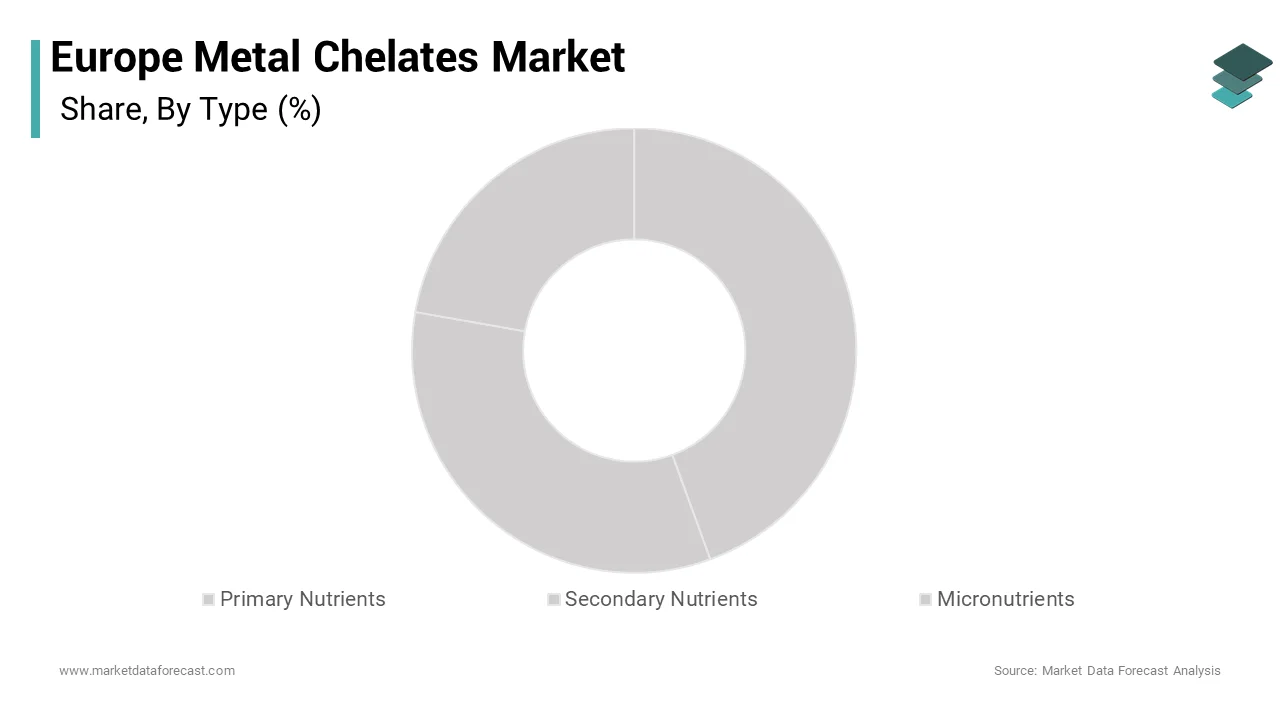
The micronutrients segment is also the fastest growing and is estimated to witness a CAGR of 9.12% over the forecast period owing to the EU’s Green Deal and Farm to Fork Strategy, which emphasize nutrient use efficiency and soil health as pillars of sustainable agriculture. According to the European Commission’s Soil Health Monitoring Framework, member states are now required to map micronutrient deficiencies and implement corrective measures, directly boosting demand for chelated solutions. In the Netherlands, the Ministry of Agriculture reported that greenhouse vegetable producers widely use iron and manganese chelates via fertigation to maintain leaf color and photosynthetic efficiency year-round. Similarly, Denmark’s Action Plan for Sustainable Agriculture mandates reduced mineral excretion, prompting a shift to highly bioavailable chelated forms that allow lower application rates. The European Food Safety Authority has also validated the superior absorption of chelated zinc in livestock feed, supporting crossover demand from animal nutrition.
By Crop Insights
The fruits and vegetables segment led the market by capturing 44.5% of the European market share in 2025. The growth of the fruits and vegetables segment in the European market is attributed to their high nutritional demands, economic value, and susceptibility to micronutrient disorders. High value horticultural crops such as tomatoes, citrus, grapes, and leafy greens require consistent micronutrient supply to maintain fruit quality, color, shelf life, and yield. According to the European Commission’s Directorate General for Agriculture, fruit orchards in Southern Europe often suffer from iron chlorosis due to calcareous soils, directly impacting photosynthesis and fruit set. In Spain, iron EDDHA chelates are routinely applied via foliar and fertigation to prevent interveinal yellowing, with the Ministry of Agriculture reporting yield improvements in treated vineyards. Similarly, Italian tomato growers in the Po Valley rely on manganese and zinc chelates to prevent blossom end rot and improve lycopene content. The EU’s Protected Geographical Indication system further incentivizes quality maintenance, making chelate use common in certified production zones.
The fruits and vegetables segment is also the fastest growing and is estimated to record a CAGR of 10.5% over the forecast period owing to the rising consumer demand for high quality, nutrient dense produce and the intensification of protected cultivation across Europe. According to Eurostat, greenhouse and polytunnel vegetable production in the EU increased significantly between 2020 and 2023, with the Netherlands, Spain, and Italy leading adoption. These controlled environments demand precise nutrient delivery, and chelated micronutrients are essential to prevent deficiencies in recirculating hydroponic systems where pH fluctuations can immobilize metals. The Dutch Greenhouse Horticulture Research Foundation reported that tomato and pepper growers widely use iron and copper chelates in nutrient solutions to maintain plant vigor. Additionally, the EU’s Organic Regulation (EU) 2018/848 permits certain biodegradable chelates like EDDS in organic horticulture, opening new markets.
By Mode of Application Insights
The foliar segment held the largest share of 46.4% of the Europe metal chelates market in 2025 due to its efficiency in bypassing soil fixation and delivering immediate correction of micronutrient deficiencies. In calcareous and high pH soils prevalent across Southern and Central Europe, soil applied micronutrients rapidly become insoluble, rendering them unavailable to plants. Foliar sprays of chelated iron, zinc, or manganese directly supply nutrients through leaf stomata and cuticles, ensuring rapid uptake during critical growth stages. According to the French Agricultural Research Institute INRAE, foliar application of iron EDDHA increased chlorophyll content in grapevines within days, significantly outperforming soil treatments. According to the European Crop Protection Association, fruit and vegetable growers in Italy and Greece rely heavily on foliar chelates during flowering and fruit set to prevent physiological disorders. Regulatory frameworks also support this method, as the EU Fertilising Products Regulation includes foliar micronutrient formulations under CE marking. The rise of drone-based precision spraying further enhances adoption, allowing targeted application with minimal waste.
The fertigation segment is the fastest growing mode of application and is estimated to witness a CAGR of 11.5% over the forecast period. The rapid adoption of precision irrigation systems in high value agriculture and the need for uniform nutrient distribution in water constrained regions are fuelling the expansion of the fertigation segment in the European market. According to the European Environment Agency, a growing share of the EU’s irrigated land is now under drip or micro irrigation, with Spain, Italy, and Greece accounting for most installations. These systems enable continuous, low dose delivery of chelated micronutrients directly to the root zone, minimizing leaching and maximizing uptake efficiency. The Spanish Ministry of Agriculture reported that almond and olive growers using fertigation with zinc and iron chelates achieved higher yields compared to conventional methods. Additionally, the EU’s Water Reuse Regulation (EU) 2020/741 promotes treated wastewater use in agriculture, but its high sodium and bicarbonate content necessitates chelates to prevent micronutrient precipitation.
Top Countries In The Market
Spain Metal Chelates Market Analysis
Spain dominated the metal chelates market in Europe by accounting for 22.5% of the European market share in 2025. The growth of Spain in the European market is driven by its extensive horticultural sector, widespread calcareous soils, and chronic micronutrient deficiencies. The country is Europe’s largest producer of fruits, vegetables, and olives, with millions of hectares of irrigated land susceptible to iron and zinc chlorosis. According to the Spanish Ministry of Agriculture, citrus and vineyard areas require regular iron EDDHA applications to maintain productivity. The Guadalquivir Valley accounts for a large share of national chelate consumption, primarily for olive and almond crops. Spain’s adoption of drip irrigation and fertigation further amplifies demand for water soluble chelated formulations. National research institutes such as IFAPA have validated the efficacy of biodegradable chelates like EDDS in reducing heavy metal uptake in leafy greens, aligning with EU sustainability goals. This combination of agronomic necessity, irrigation infrastructure, and policy alignment ensures Spain’s continued dominance in the European metal chelates landscape.
Italy Metal Chelates Market Analysis
Italy captured the second largest share of the European metal chelates market in 2025. The growth of Italy in the European market is driven by its high value fruit, vegetable, and wine production on alkaline soils that immobilize essential micronutrients. According to the Italian National Institute for Agricultural Economics, much of the country’s arable land has a pH above 7.5, creating conditions for iron and manganese deficiency in tomatoes, grapes, and kiwifruit. The Emilia Romagna and Puglia regions consume large volumes of chelated iron annually, primarily as EDDHA for foliar and fertigation use. Italy’s Protected Designation of Origin system for wines and cheeses indirectly supports chelate use by mandating consistent crop quality and yield. The Ministry of Agricultural Policies has also integrated chelated micronutrients into its National Strategy for Sustainable Use of Pesticides, recognizing their role in reducing plant stress and fungicide dependency. With over a million agricultural holdings and strong cooperative structures, Italy maintains consistent and large scale demand for both conventional and biodegradable metal chelates across its diverse agricultural landscape.
France Metal Chelates Market Analysis
France is predicted to witness a promising CAGR in the European metal chelates market during the forecast period owing to its scientific approach to soil health and strong regulatory framework for fertilizers. According to the French National Institute for Agricultural Research, many cereal and vineyard soils in the south exhibit zinc and iron deficiency, prompting widespread use of chelated micronutrients in precision farming programs. France was among the first EU countries to implement the EU Fertilising Products Regulation, enabling rapid market access for CE marked chelated fertilizers. The Ministry of Agriculture’s Ecophyto Plan encourages reduced mineral inputs through enhanced bioavailability, directly benefiting chelate adoption. In the Bordeaux wine region, vineyards widely apply iron chelates annually to combat chlorosis, with field trials showing improvements in grape quality. Additionally, France hosts key chelate manufacturers such as Kemira and BASF, which collaborate with agronomic institutes to develop region specific formulations. This blend of research, regulation, and production ensures France’s influential role in the European market.
Germany Metal Chelates Market Analysis
Germany is expected to exhibit a healthy CAGR in the European metal chelates market over the forecast period owing to its focus on technological precision and environmental compliance. According to the Julius Kühn Institute, German potato, sugar beet, and cereal farmers increasingly use chelated zinc and manganese to prevent hidden hunger and optimize yields under the national Nutrient Management Ordinance. The country’s strict enforcement of REACH and water protection laws has accelerated the shift from EDTA to biodegradable alternatives like IDHA and EDDS, particularly in regions near the Rhine and Elbe rivers. The German Fertiliser Ordinance was amended to incentivize highly efficient micronutrient sources, creating favorable conditions for chelated products. Furthermore, Germany’s leadership in agricultural machinery—companies such as Claas and Bosch—enables integration of chelate application into automated variable rate systems. With hundreds of thousands of farms adopting digital agronomy tools, Germany’s demand for precision delivered, eco compliant chelates continues to grow steadily and sustainably.
Netherlands Metal Chelates Market Analysis
The Netherlands stands out for its advanced greenhouse horticulture and circular agriculture models. According to Wageningen University, most Dutch tomato, pepper, and cucumber growers in greenhouses use chelated iron and copper in recirculating nutrient solutions to maintain plant health and prevent clogging in drip emitters. The country’s water reuse systems require chelates to stabilize micronutrients in high bicarbonate water, a practice mandated under the Dutch Fertilizers Act. The Netherlands is also a pioneer in organic chelate adoption, with EDDS approved for organic use by Skal Biocontrole in 2023, enabling export compliant production. With high fertilizer efficiency rates as per CBS Statistics, the Netherlands exemplifies how technology and regulation converge to drive high value, low volume chelate consumption. Its role as an innovation hub ensures continued influence on next generation chelating technologies across the EU.
COMPETITIVE LANDSCAPE
The Europe metal chelates market features a competitive landscape shaped by stringent environmental regulations agronomic necessity and technological differentiation. Competition is not price driven but centers on regulatory compliance biodegradability performance and application expertise. Global chemical giants like BASF and ICL dominate due to their integrated production capabilities scientific credibility and established distribution networks. However, niche players focusing on biodegradable chelants are gaining traction amid EU restrictions on persistent compounds like EDTA. The market is segmented by end use with agriculture representing the largest segment followed by water treatment and animal nutrition. Regulatory fragmentation across member states creates complexity but also opportunity for companies with agile compliance systems. Innovation is increasingly focused on amino acid and organic acid based chelates that offer environmental safety without sacrificing bioavailability. As the EU advances its Green Deal and circular economy agenda the market rewards firms that combine scientific rigor sustainability and localized agronomic support creating a high barrier to entry for new entrants lacking regulatory or technical depth.
KEY MARKET PLAYERS
The major companies dominating the market with their products and services are
- BASF SE
- Protex International
- Kemira Oyj
- ICL Group Ltd
- Akzo Nobel N.V.
- Nufarm Limited
- Syngenta AG
- Haifa Chemicals Ltd.
- Van Iperen International
- Aries Agro Limited
- Valagro SPA
- Deretil Agronutritional.
Top Players In The Market
- BASF SE is a global chemical leader with a significant footprint in the Europe metal chelates market through its portfolio of biodegradable and synthetic chelating agents under the GLYACID and Trilon brands. The company supplies chelated micronutrients for agriculture animal nutrition and industrial applications across all major European countries. In 2024 BASF expanded production capacity for its iminodisuccinic acid IDHA at its Ludwigshafen facility to meet rising demand driven by EU regulations restricting EDTA. The company also launched a new line of amino acid based chelates for organic-certified crop production aligned with the EU Organic Regulation. Through strategic R and D investments and regulatory engagement BASF continues to shape the transition toward sustainable chelating technologies while maintaining performance standards across diverse European agronomic and industrial sectors.
- ICL Group Ltd operates as a major provider of specialty fertilizers and chelated micronutrients in Europe under brands such as BUDENAP and Agromaster. The company leverages its vertically integrated phosphate and potash operations to formulate balanced nutrient solutions incorporating chelated zinc iron and manganese. In 2023 ICL introduced a new EDDS based chelate platform for high pH soils in Southern Europe offering improved biodegradability without compromising crop response. The firm collaborates with national agronomic institutes in Spain and Italy to validate field efficacy and support farmer adoption. By combining mineral science with environmental responsibility ICL strengthens its position as a trusted partner in precision and sustainable nutrient management across the European agricultural landscape.
- Kemira Oyj is a Finland based specialty chemicals company with a focused presence in the Europe metal chelates market particularly in water treatment and industrial applications. The company offers biodegradable chelants such as methylglycinediacetic acid and EDDS for use in pulp and paper metal recovery and industrial cleaning formulations. In early 2024 Kemira enhanced its chelate portfolio to comply with updated REACH and EU Ecolabel criteria enabling broader use in environmentally sensitive sectors. The firm also partners with European wastewater treatment plants to implement chelant assisted heavy metal removal systems supporting circular economy goals. Through regulatory foresight and application specific innovation Kemira reinforces its role in advancing sustainable chelation solutions beyond traditional agricultural uses in Europe.
Top Strategies Used By The Key Market Participants
Key players in the Europe metal chelates market prioritize regulatory compliance biodegradability innovation and agronomic validation to maintain competitive advantage. Companies invest in R and D to develop next generation chelants like IDHA EDDS and amino acid complexes that meet EU environmental standards while delivering agronomic efficacy. They align product portfolios with the EU Fertilising Products Regulation and REACH restrictions by phasing out EDTA and DTPA in favor of readily biodegradable alternatives. Strategic collaborations with national agricultural institutes and water authorities enable field validation and policy influence. Geographic expansion focuses on Southern Europe where soil alkalinity drives demand for iron and zinc chelates. Additionally, firms integrate chelates into broader nutrient management and circular water treatment solutions enhancing value beyond standalone products. These strategies collectively address Europe’s dual mandate of agricultural productivity and environmental sustainability.
MARKET SEGMENTATION
This research report on the European metal chelates market is segmented and sub-segmented into the following categories.
By Type
- primary nutrients
- secondary nutrients
- micronutrients
By Crop Type
- cereals & grains
- oilseeds & pulse
- fruits & vegetables
By Mode of Application
- soil
- foliar
- fertigation
By Country
- UK
- France
- Spain
- Germany
- Italy
- Russia
- Sweden
- Denmark
- Switzerland
- Netherlands
- Turkey
- Czech Republic
- Rest of Europe