- Product Description Description
- Table of Contents TOC
- List of Table & Figure LOT
- Get Free Sample PDF Sample PDF
Market Size, 2025
$1601 MnMarket Estimate, 2026
$1780 MnMarket Forecast, 2034
$4149 MnCAGR, 2026–2034
11.16%Executive Summary: Europe Microbial Inoculation Market
- Market Scope: Comprehensive regional analysis of the European microbial inoculation market, evaluating beneficial microorganisms (bacteria, fungi, and archaea) applied to soils and seeds to enhance nutrient availability and support regenerative agriculture.
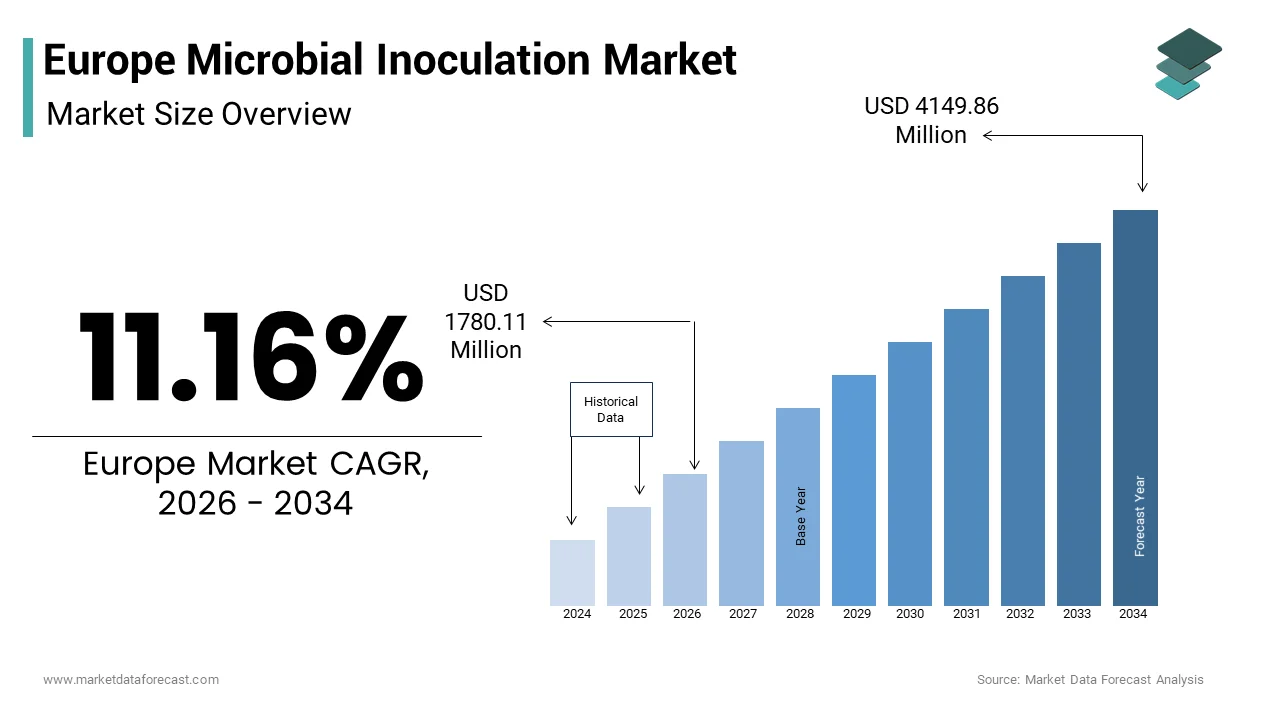
- Market Valuation: Valued at USD 1,601.39 million in 2025, estimated at USD 1,780.11 million in 2026, and projected to reach USD 4,149.86 million by 2034, registering a strong CAGR of 11.16% from 2026 to 2034.
- Primary Growth Drivers: The European Union's Farm to Fork Strategy targeting a 50% reduction in chemical pesticides, the expansion of certified organic farmland exceeding 16 million hectares, and rising adoption of regenerative soil management practices.
Key Europe Microbial Inoculation Market Metrics (2026–2034)
| Market Category | Leading Segment Focus | Fastest-Growing / Key Segment Dynamics |
|---|---|---|
| By Application | Soil Application (held 58.3% market share in 2024 for in situ ecosystem restoration and long-term soil structure) | Seed Inoculation (fastest-growing at an 11.3% CAGR driven by precision agriculture and rising legume cultivation) |
| By Crop Type | Cereals (held 36.3% share in 2024 anchored by vast wheat, barley, and maize cultivation footprints across Europe) | Fruits & Vegetables (fastest-growing at a 12.7% CAGR propelled by greenhouse horticulture and strict pesticide residue limits) |
| By Country | Germany (largest contributor with an 18.2% share in 2024 backed by advanced R&D infrastructure and organic farming) | Spain & Netherlands (rapid growth driven by water scarcity challenges, organic expansion, and high-tech greenhouse horticulture) |
Major European Market Players & Industry Structure
Market Structure: A dynamic and competitive landscape featuring global agrochemical corporations, specialized biotechnology firms, and regional biological innovators competing on strain efficacy, regulatory compliance, and formulation stability.
Key Companies: BASF SE, Novozymes A/S, Lallemand Plant Care, Bayer Crop Science, E.I. du Pont de Nemours and Company, Verdesian Life Sciences LLC, Advanced Biological Marketing Inc., and Precision Laboratories LLC.
Europe Microbial Inoculation Market Size
The Europe's microbial inoculation market size was valued at USD 1601.39 million in 2025 and is anticipated to reach USD 1780.11 million in 2026 to reach USD 4149.86 million by 2034, growing at a CAGR of 11.16% from 2026 to 2034.
Microbial inoculation is the targeted application of beneficial microorganisms, such as bacteria, fungi, and archaea, to agricultural soils, seeds, or plant roots to enhance nutrient availability, improve crop resilience, and reduce dependency on synthetic inputs. These bioinoculants primarily include nitrogen-fixing bacteria like Rhizobium and Azotobacter, phosphate-solubilizing microbes, and mycorrhizal fungi. The European market for microbial inoculants is emerging as a regenerative agriculture, aligning with the European Union’s Farm to Fork Strategy, which aims to reduce chemical pesticide use by 50% and nutrient losses by at least 50% by 2030 without compromising soil fertility. As per Eurostat, organic farming already occupied over 16 million hectares in the European Union in 2023, representing approximately 10.5% of total utilised agricultural area. According to the Food and Agriculture Organization of the United Nations, European soils exhibit significant degradation, with an estimated 25% suffering from erosion or reduced organic matter, thereby intensifying the need for biological soil restoration methods.
MARKET DRIVERS
Rising Adoption of Regenerative Agricultural Practices Drives Demand
The shift toward regenerative agriculture for microbial inoculation adoption is elevating the growth othe f the Europe microbial inoculation market. Regenerative systems prioritize soil health through practices such as cover cropping, reduced tillage, and biological inputs, all of which create ideal conditions for inoculant efficacy. According to the European Commission, 25 member states have integrated regenerative principles into their national Common Agricultural Policy strategic plans for 2023 to 2027. This policy alignment has spurred significant on-ground implementation, with countries like France and Germany allocating over 38% of their rural development budgets toward sustainable soil management projects. As per a 2024 European Environment Agency assessment, more than 42% of EU arable land is now managed under conservation agriculture frameworks that explicitly recommend microbial inoculants to restore microbial diversity. Additionally, pilot programs in the Netherlands and Denmark recorded yield stability improvements of 12 to 18% in cereal crops when microbial inoculants were combined with reduced synthetic nitrogen regimes. These outcomes reinforce farmer confidence in biological alternatives and directly stimulate inoculant uptake. The European Innovation Partnership for Agricultural Productivity and Sustainability further confirms that over 600 field trials across 18 EU nations in 2023 demonstrated consistent agronomic benefits from inoculant use under diverse climatic and soil conditions, thereby validating performance reliability and encouraging large-scale adoption.
Expansion of Organic Cropping Systems Across the EU
The steady expansion of certified organic farmland is additionally propelling the growth of the Europe microbial inoculation market. Organic standards prohibit or severely restrict synthetic fertilizers and pesticides, compelling growers to seek reliable biological alternatives for fertility and pest management. According to the Research Institute of Organic Agriculture, the total area under organic management in the European Union surpassed 16.5 million hectares in 2023. Countries, such as Austria and Estonia, now report organic coverage exceeding 25% of their total agricultural land. In this context, microbial inoculants serve as indispensable tools for nitrogen fixation and phosphorus mobilization. As per the International Federation of Organic Agriculture Movements Europe, over 70% of surveyed organic legume growers in 2024 reported routine use of rhizobial inoculants to maximize yield without chemical intervention. Furthermore, the EU Organic Action Plan explicitly endorses microbial biostimulants as key enablers of closed-loop nutrient cycling. This regulatory and consumer-driven momentum ensures sustained demand for inoculants aligned with organic certification protocols.
MARKET RESTRAINTS
Stringent EU Regulatory Requirements for Microbial Product Registration Impede Market Growth
The complex and time-intensive regulatory pathway required for product authorization is majorly restraining the growth of the Europe microbial inoculation market. Under Regulation EC 1107 2009, microbial inoculants often undergo evaluation processes comparable to those for synthetic pesticides, despite their biological origin and environmental safety profiles. According to the European Food Safety Authority, the average approval timeline for a new microbial active substance exceeds 36 months and incurs development costs exceeding 2 million euros per dossier. This burden disproportionately affects small and medium enterprises and academic spin-offs that lack the financial and technical resources to navigate the bureaucratic maze. As per the European Biostimulants Industry Council, only some microbial strains received full EU-level approval between 2018 and 2023, despite over 150 applications submitted during the same period. Furthermore, inconsistent interpretation of data requirements across member states creates additional uncertainty, as noted in a 2024 European Court of Auditors report, which highlighted that national authorities in Italy and Spain imposed supplementary toxicity studies not mandated at the EU level. These regulatory hurdles delay market entry, reduce innovation velocity, and discourage investment in novel microbial solutions even when scientific evidence supports their efficacy and safety, thereby constraining the overall market expansion trajectory.
High Sensitivity of Microbial Viability to Storage and Handling Conditions
The biological nature of inoculants renders them highly susceptible to environmental stressors, such as temperature fluctuations, UV exposure, and desiccation during transport and storage, which is degrading the growth of the Europe microbial inoculation market. According to a 2024 study by the Julius Kühn Institute in Germany, some of the commercially available liquid inoculant formulations lost more viable colony-forming units when stored above 20 degrees Celsius for over 30 days. This instability undermines field performance and erodes grower confidence in Southern Europe, where ambient temperatures frequently exceed these thresholds during spring planting seasons. As per the European Federation of Biotechnology, the lack of cold chain infrastructure in rural distribution networks across Greece, Romania, and Bulgaria exacerbates product degradation. Moreover, inadequate labeling and the absence of real-time viability indicators further complicate proper handling.
MARKET OPPORTUNITIES
Growing Public and Private Investment in Soil Health Innovation Opens New Pathways
Increased financial commitment to soil health from both governmental and private sectors is solely to enhance new opportunities for the Europe microbial inoculation market growth. The European Union’s Horizon Europe program allocated 1.2 billion euros in 2024 specifically for research and innovation in sustainable soil management, with microbial solutions receiving prominent emphasis. According to the Joint Research Centre of the European Commission, more than 40 collaborative projects funded under this portfolio directly involve microbial inoculant development for degraded soils, salinity mitigation, and carbon sequestration enhancement. Major agribusiness players, such as BASF and Syngenta, have also launched open innovation challenges in partnership with universities in Sweden and Belgium, targeting next-generation inoculants with enhanced stress tolerance. As per a 2024 analysis by the European Sustainable Agriculture Platform, public-private co-funded trials across 12 EU countries demonstrated that advanced microbial formulations increased soil organic carbon by finding consistent with the EU’s target of achieving an increase in soil carbon. These coordinated investments not only de-risk product development but also create robust validation ecosystems that accelerate commercial deployment and farmer adoption.
Integration of Microbial Inoculants into Carbon Farming and Emission Reduction Schemes
The incorporation of microbial inoculants into emerging carbon credit and climate-smart agriculture frameworks offers a novel revenue stream, and adoption incentives are additionally expected to level up the growth of the Europe microbial inoculation market. The European Commission’s Carbon Farming Initiative, launched in 2023, recognizes biological soil amendments as eligible practices for verified carbon sequestration. According to a pilot study conducted by Wageningen University in 2024, maize fields treated with mycorrhizal fungi and nitrogen-fixing bacteria sequestered an additional 0.85 tons of CO2 equivalent per hectare annually compared to conventional systems. As per the EU Climate Pact, over 1200 farms across Germany, Finland, and the Czech Republic have enrolled in carbon farming contracts that include microbial inoculant use as a prescribed practice. Moreover, the EU Emissions Trading System is exploring sectoral linkages with agriculture, potentially enabling farmers to monetize emission reductions achieved through biological inputs. This policy convergence transforms inoculants from mere agronomic inputs into climate mitigation assets, thereby unlocking new market dimensions and cross-sectoral partnerships that extend beyond traditional agricultural supply chains.
MARKET CHALLENGES
Limited Farmer Awareness and Technical Knowledge Restrict Product Utilization
The insufficient agronomic understanding among end users is one of the major challenges for the growth of the Euthe rope microbial inoculation market. Many farmers remain unfamiliar with the handling, storage, and application protocols essential for maintaining microbial viability, leading to inconsistent field performance and diminished trust in biological products. According to a 2024 survey conducted by the European Network of Agricultural Advisory Services, crop producers in Central and Eastern Europe could correctly identify optimal application timing for rhizobial inoculants relative to seed sowing. Similarly, over 55% of interviewed farmers in Spain and Portugal stored inoculant products under ambient conditions exceeding 25 degrees Celsius, significantly reducing microbial shelf life. Extension services, which traditionally disseminate such knowledge, are under-resourced in several member states. As per the Food and Agriculture Organization, the ratio of agricultural advisors to farming households in Bulgaria and Romania falls below the EU-recommended threshold of one to 500. This knowledge gap is further exacerbated by language and literacy barriers in rural communities, limiting access to technical bulletins and digital training modules.
Fragmented Supply Chains and Lack of Standardized Performance Metrics
The fragmented distribution landscape and absence of universally accepted efficacy benchmarks are also slowing down the growth of the Europe microbial inoculation market. Unlike chemical fertilizers, which have standardized nutrient grades, microbial products vary widely in strain composition, concentration, carrier material, and mode of action, making comparative evaluation difficult for both buyers and regulators. According to a 2024 assessment by the European Committee for Standardization, fewer than 15% of commercially available inoculants provide third-party verified performance data under field conditions matching EU agroclimatic zones. Additionally, supply chains often involve multiple intermediaries between manufacturers and end users, increasing costs and reducing traceability. As per the European Agricultural Machinery Association, less than 30% of seed treatment facilities in Southern Europe are equipped to handle live microbial coatings, forcing reliance on post-packaging application methods that compromise uniformity.
REPORT COVERAGE
| REPORT METRIC | DETAILS |
| Market Size Available | 2025 to 2034 |
| Base Year | 2025 |
| Forecast Period | 2026 to 2034 |
| CAGR | 11.16% |
| Segments Covered | By Application, Crop Type, and By Country |
| Various Analyses Covered | Global, Regional & Country Level Analysis, Segment-Level Analysis, DROC, PESTLE Analysis, Porter’s Five Forces Analysis, Competitive Landscape, Analyst Overview on Investment Opportunities |
| Regions Covered | UK, France, Spain, Germany, Italy, Russia, Sweden, Denmark, Switzerland, Netherlands, Turkey, the Czech Republic, and the Rest of Europe |
| Market Leaders Profiled | BASF S.E., E. I. Dupont De Nemours Company, Bayer Crop Science, Novozymes A/S, Verdesian Life Sciences LLC, Advanced Biological Marketing Inc., Brettyoung, Precision Laboratories LLC, Queensland Agricultural Seeds Pty Limited, Xitebio Technologies Incorporated. |
SEGMENTAL ANALYSIS
By Application Insights
The soil application segment accounted in holding 58.3% of the Europe microbial inoculation market share in 2024 due to the direct compatibility of soil-based delivery with regenerative farming systems that prioritize in situ microbial ecosystem restoration. Unlike seed treatments, which target specific crops at planting, soil inoculation allows for broader microbial community establishment, supporting long-term soil structure and nutrient cycling. According to the European Environment Agency, agricultural soils in the EU exhibit suboptimal microbial biomass due to historical overuse of synthetic inputs by creating an urgent demand for remedial biological applications. Furthermore, as per the Joint Research Centre of the European Commission, nearly 45% of Horizon Europe-funded soil health projects between 2022 and 2024 prioritized soil-applied microbial consortia over seed-based formats, citing enhanced persistence and adaptability across crop rotations. National policy frameworks reinforce this preference. This systemic integration into soil health policy and agronomic practice solidifies soil inoculation as the prevailing application method.
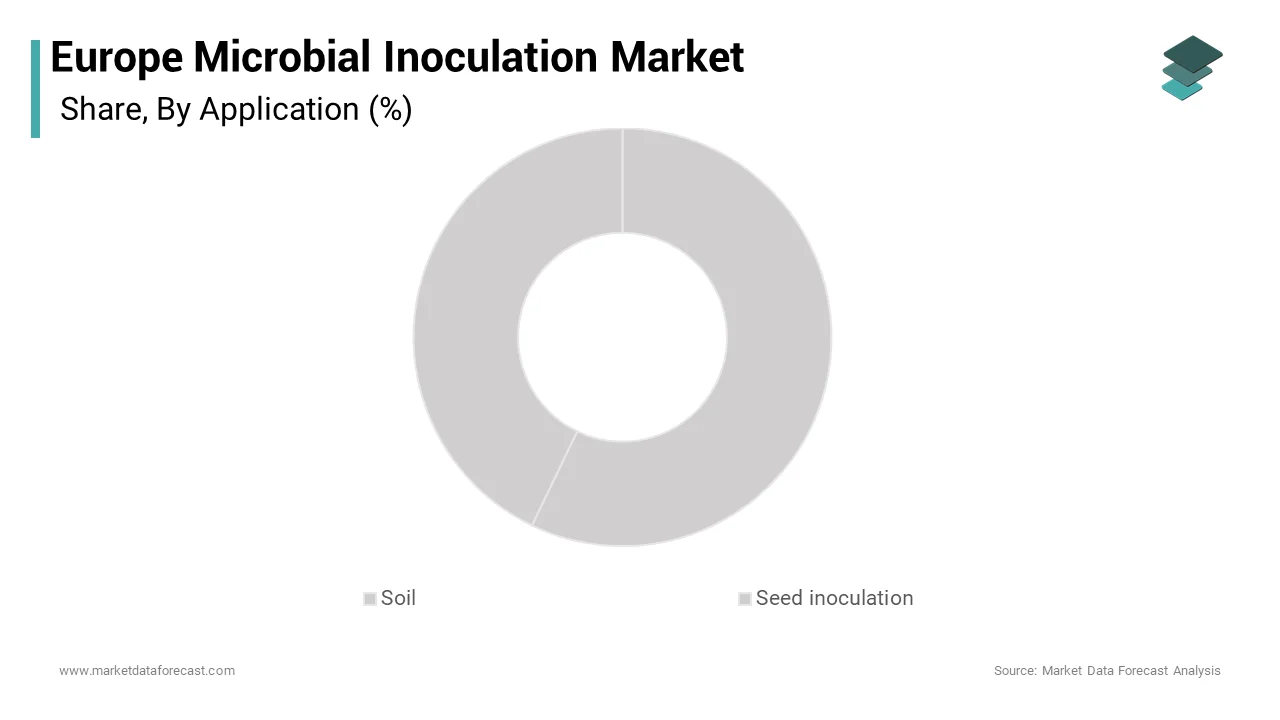
The seed inoculation segment is likely to witness the fastest CAGR of 11.3% from 2025 to 2033, with the precision agriculture adoption and rising legume cultivation under the EU Green Deal. Coating seeds with targeted microbes, such as Rhizobium or Azospirillum, ensures immediate colonization at germination, maximizing nitrogen fixation efficiency while minimizing product waste. According to Eurostat, the area under pulse cultivation in the EU increased largely due to protein crop incentives under the Common Agricultural Policy. Additionally, innovations in microbial encapsulation have extended shelf life and improved compatibility with automated seeders. These agronomic and technological synergies position seed inoculation as the high growth frontier.
By Crop Insights
The cereals segment accounted in holding 36.3% of the Europe microbial inoculation market share in 2024. The growth of the segment is driven by the vast cereal cultivation footprint across the continent, particularly wheat, barley, and maize, which together occupy over 53 million hectares of EU arable. While traditionally perceived as less responsive to inoculants than legumes, cereals are increasingly benefiting from phosphate-solubilizing bacteria and mycorrhizal fungi that enhance phosphorus uptake in low-input systems. The European Union’s Fertilising Products Regulation, revised in 2022, now includes microbial inoculants under Component Material Category 6 by enabling their integration into blended biofertilizers widely used in cereal production. As per the International Fertilizer Association, European cereal growers adopted microbial phosphate mobilizers in 2023, a threefold increase from 2019.
The fruits and vegetables segment is expected to grow at the fastest CAGR of 12.7% throughout the forecast period, with the premium value of horticultural produce, stringent residue regulations, and consumer demand for chemical-free food. Protected cultivation systems such as greenhouses and high tunnels are widely used in the Netherlands, Spain, and Italy, which offer controlled environments ideal for microbial establishment and performance monitoring. According to the European Commission’s Fresh Produce Association, microbial inoculants were used on over 38% of EU greenhouse tomato and cucumber acreage in 2024, up from 22% in 2020. Furthermore, the EU’s maximum residue limits for pesticides on leafy greens and berries have tightened by an average of 40% since 2020, compelling growers to adopt biological alternatives.
COUNTRY ANALYSIS
Germany Microbial Inoculants Market Analysis
Germany was the largest contributor in the Europe microbial inoculants market by capturing 18.2% the share in 2024 with the country’s advanced agricultural research infrastructure, stringent environmental legislation, and widespread adoption of integrated nutrient management. The German government’s National Research Strategy BioEconomy 2030 has allocated over 200 million euros since 2021 to develop soil microbiome-based solutions, with 12 public-private partnerships focused exclusively on inoculant innovation. As per the Federal Ministry of Food and Agriculture, German arable farms now practice some form of biological soil enhancement, with microbial inoculants featured in those programs. The country’s robust organic sector, covering 10.2% of total farmland as per Thünen Institute data, further amplifies demand for cereals and oilseeds. Additionally, Germany hosts three of Europe’s top five inoculant manufacturing facilities by ensuring localized supply and technical support.
France Microbial Inoculants Market Analysis
France was ranked second by holding 15.4% of the European microbial inoculation market share I 2024. The French Ecophyto Plan III, launched in 2022, mandates a 50% reduction in synthetic fertilizer use by 2030 by accelerating farmer transition to microbial alternatives. The French National Institute for Agricultural Research confirmed in a 2024 field assessment that inoculated legume rotations improved subsequent wheat yields without additional nitrogen. Moreover, France’s cooperative farming model encompasses agricultural output that enables bulk procurement and consistent agronomic training, ensuring high inoculant adoption rates.
The Netherlands Microbial Inoculants Market Analysis
The Netherlands microbial inoculation market growth is anticipated to have significant growth opportunities throughout the forecast period, with the high-tech horticulture and precision farming ecosystems. The greenhouse vegetable growers integrated microbial root inoculants into their production protocols in 2024, primarily using Trichoderma and Bacillus species to suppress soilborne pathogens. The Dutch government’s Green Deal on Sustainable Growing Media mandates that all professional growers phase out peat-based substrates by 2030, driving adoption of microbial-enriched alternatives that enhance nutrient retention and root development. Wageningen University reported in 2024 that inoculated tomato transplants in Dutch greenhouses reduced fertilizer use by 22% while maintaining yield parity.
Italy Microbial Inoculants Market Analysis
Italy's microbial inoculation market growth is likely to be driven by the vast fruit and vegetable sector and worsening soil degradation in the Po Valley. According to the Italian National Institute of Statistics, many million hectares of land are dedicated to high-value horticulture, with microbial inoculants increasingly used to manage salinity and compaction in intensive systems. The Italian Ministry of Agriculture’s 2023 National Strategic Plan for the Common Agricultural Policy allocated specifically for soil biological regeneration, with direct subsidies for inoculant purchases. A 2024 study by the Council for Agricultural Research and Economics found that mycorrhizal inoculation in tomato fields near Bologna increased water use efficiency during drought conditions. Southern regions like Puglia and Sicily are also adopting rhizobial inoculants for faba beans as part of protein crop diversification efforts.
Spain Microbial Inoculants Market Analysis
The Spanish microbial inoculation market is swiftly emerging at the fastest CAGR during the forecast period due to water scarcity challenges and expanding organic farming. As per the Ministry of Agriculture, Fisheries and Food, Spain’s organic area surpassed 2.5 million hectares in 2024, the largest in the EU, with a significant concentration in olive groves, almonds, and horticulture crops increasingly reliant on microbial support for nutrient uptake under low input regimes. Persistent drought conditions have intensified interest in drought-tolerant inoculants. The Spanish National Research Council confirmed in a 2024 field trial that maize inoculated with Azospirillum brasilense achieved higher yields under deficit irrigation compared to non-inoculated controls. Spain’s climatic vulnerability and policy responsiveness make it a compelling case for climate-adaptive inoculant deployment, driving sustained market expansion despite historical reliance on conventional inputs.
COMPETITIVE LANDSCAPE
The Europe microbial inoculation market features intense yet constructive competition characterized by a blend of multinational agrochemical firms, specialized biotechnology companies,,s and regional innovators. Competition is not primarily price-driven but centers on product efficacy, scientific validation, regulatory compliance, and agronomic support services. Leading participants invest heavily in strain discovery, formulation stability, and localized field trials to differentiate their offerings. The absence of standardized performance metrics creates both opportunity and challenge as companies must independently prove value to cautious farmers and regulators. Collaborative ecosystems involving universities, research institutes, and farmer cooperatives are increasingly common as stakeholders seek credible data to support adoption. Regulatory complexity across member states further shapes competitive dynamics, favoring companies with strong compliance capabilities and policy engagement.
KEY MARKET PLAYERS
Some of the key participants in the microbial agricultural inoculants market include
- BASF S.E
- E. I. Dupont De Nemours Company
- Lallemand Plant Care
- Bayer Crop Science
- Novozymes A/S
- Verdesian Life Sciences LLC
- Advanced Biological Marketing Inc.
- Brettyoung
- Precision Laboratories LLC
- Queensland Agricultural Seeds Pty Limited
- Xitebio Technologies Incorporated.
Top Players In The Market
- BASF SE is a globally influential player in the Europe microbial inoculation market through its extensive portfolio of biological solutions under the Inoculant and Biostimulants division. The company leverages its strong research and development capabilities to formulate advanced microbial strains tailored for European soil and crop conditions. Recently, BASF expanded its production capacity for microbial formulations at its facility in Limburg, Erhöf G, to meet rising regional demand. It also partnered with agricultural cooperatives across France and Spain to deliver integrated soil health programs combining inoculants with digital agronomic advice. These initiatives reinforce its strategic focus on sustainable agriculture and enhance its contribution to the global bioinputs market without reliance on synthetic chemistry.
- Novozymes A/S contributes significantly to the global microbial inoculation landscape through its expertise in industrial enzyme and microbial fermentation technologies. In Europe, the company offers specialized inoculant solutions that enhance nutrient cycling and stress resilience in key crops. Novozymes recently inaugurated a dedicated microbial innovation lab in Copenhagen to accelerate strain development for temperate European climates. It also launched a collaborative project with Danish and Dutch universities to validate the field performance of next-generation phosphate-solubilizing bacteria.
- Lallemand Plant Care has established a strong presence in the Europe microbial inoculation market by focusing exclusively on plant probiotics and soil health microbiology. The company supplies a diverse range of bacterial and fungal inoculants designed for cereals, pulses, and horticultural crops across EU member states. Lallemand recently enhanced its formulation stability through proprietary drying technologies that extend shelf life without refrigeration. It also initiates on-farm demonstration networks in Italy and Poland to showcase yield and soil quality benefits under real-world conditions. These efforts reflect its deep agronomic engagement and reinforce its role as a specialized global contributor to microbial inoculation science and application.
Top Strategies Used by the Key Market Participants
Key players in the Europe microbial inoculation market primarily adopt strategies centered on research and development investment, strategic partnerships with agricultural institutions, expansion of production facilities, strain development for regional agroclimatic conditions, integration of digital agronomic tools, a nd participation in policy-aligned sustainability initiatives. These companies also emphasize field validation through large-scale demonstration trials to build grower trust and ensure consistent performance across diverse European farming systems. Additionally, they focus on enhancing product shelf life through advanced formulation technologies and strengthening distribution networks via cooperatives and agro retailers to improve end-user accessibility and technical support.
MARKET SEGMENTATION
This research report on the Europe microbial inoculation market is segmented into the following categories.
By Application
- Soil
- Seed inoculation
By Crop Type
- Oilseeds
- Pulses
- Fruits and vegetables
- Cereals
- Grains
COUNTRY ANALYSIS
- UK
- France
- Spain
- Germany
- Italy
- Russia
- Sweden
- Denmark
- Switzerland
- Netherlands
- Turkey
- Czech Republic
- Rest of Europe