- Product Description Description
- Table of Contents TOC
- List of Table & Figure LOT
- Get Free Sample PDF Sample PDF
Market Size, 2025
$4.76 BnMarket Estimate, 2026
$5.46 BnMarket Forecast, 2034
$16.42 BnCAGR, 2026–2034
14.75%Executive Summary: Europe Microgrid Market
- Market Scope: Comprehensive European microgrid market analysis covering capacity segments, power sources, application sectors, national leadership shares, regulatory frameworks, and community energy initiatives.
- Market Valuation: Valued at USD 4.76 billion (2025), estimated at USD 5.46 billion (2026), and projected to reach USD 16.42 billion by 2034, registering a robust CAGR of 14.75% (2026–2034).
- Primary Growth Drivers: Shift toward decentralized renewable energy, grid modernization, energy security priorities, and supportive public funding. Key structural and policy benchmarks include over 2,500 energy communities registered across the EU, 17 EU member states incorporating microgrids into their updated National Energy and Climate Plans, and the Clean Energy for EU Islands Initiative mobilizing more than €1.5 billion alongside 147 formally adopted island energy-transition plans.
Key Market Segment Metrics (2026–2034)
| Category | Leading Segment (2025 Position) | Fastest-Growing Segment |
|---|---|---|
| By System Capacity | Less than 5 MW systems (accounted for 55.7% of the regional market in 2025) | 5–10 MW capacity segment (forecast to grow at a strong 17.7% CAGR) |
| By Power Source | Solar photovoltaic / PV (led with a 44.1% market share in 2025) | Combined heat and power / CHP (projected to record a high 22.4% CAGR) |
| By Application Sector | Commercial and industrial / C&I sector (held the leading application share in 2025) | Remote areas and island microgrids (identified as the fastest-growing application category) |
| By Country / Region | Germany (dominated Europe with a 23.5% market share in 2025) | High-growth European regional markets expanding decentralized energy networks |
Major Market Players & Market Structure
Market Structure: Highly competitive European microgrid marketplace featuring multinational electrical engineering leaders, energy management corporations, and specialized software developers competing intensely on AI-powered energy management platforms, grid-forming inverters, modular microgrid architectures, cybersecurity compliance, hardware-software interoperability, seamless renewable integration, and strategic partnerships with public institutions and local energy communities.
Key Companies: ABB, Eaton, Honeywell, Schneider Electric, Siemens, Spirae, Power Analytics Corporation, Toshiba, GE, HOMER Energy, S&C Electric, and Caterpillar.
Europe Microgrid Market Size
The Europe microgrid market size was valued at USD 4.76 billion in 2025 and is anticipated to reach a valuation of USD 5.46 billion in 2026 and USD 16.42 billion by 2034, growing at a CAGR of 14.57% from 2026 to 2034.
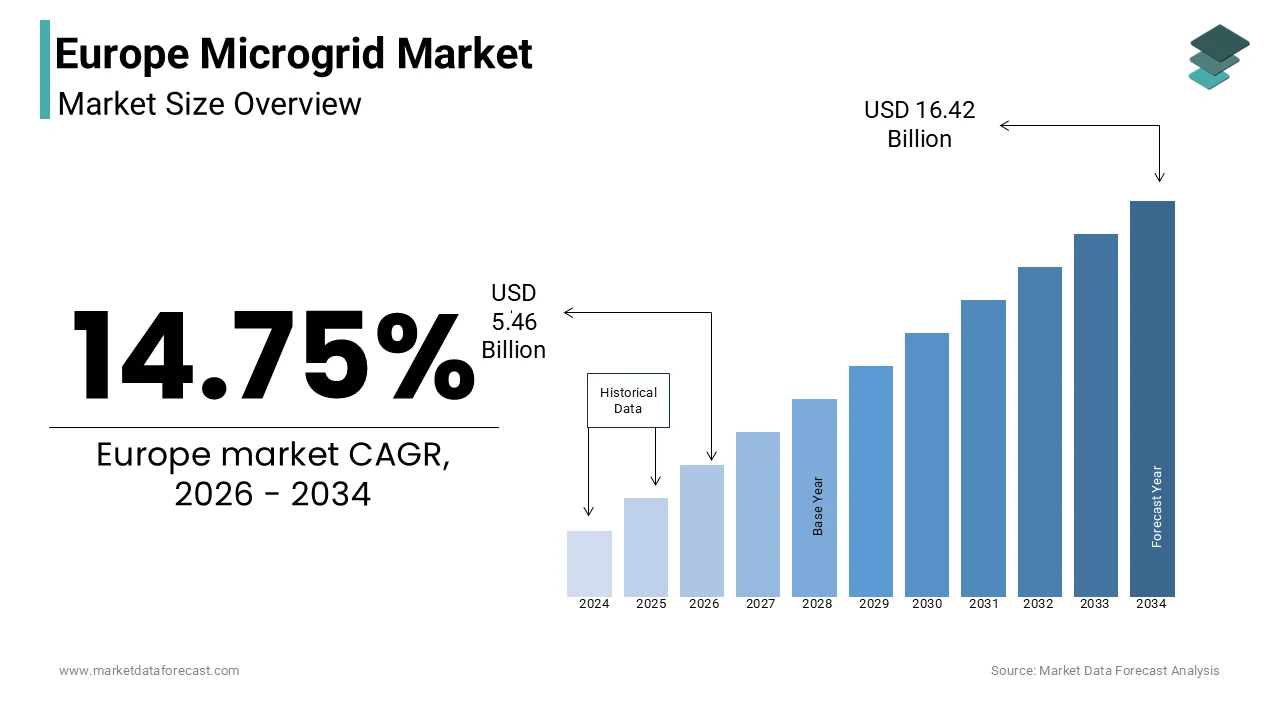
A microgrid is a localized energy system capable of operating independently or in conjunction with the main electricity grid by integrating distributed energy resources such as solar photovoltaics, wind turbines, combined heat and power units, and advanced energy storage technologies. These systems are engineered to enhance grid resilience, support decarbonization objectives, and ensure a continuous power supply to critical infrastructure, industrial facilities, and remote communities. Over 40% of the European Union’s final energy consumption in 2025 originated from sectors where microgrids offer substantial operational advantages, including public services, islands, and rural zones lacking robust grid connectivity. Furthermore, more than 2,500 energy communities had registered across the EU by early 2025, many of which rely on microgrid architectures to manage local generation and consumption. The European Commission’s Clean Energy Package and the REPowerEU Plan have reinforced policy momentum, which is positioning microgrids as strategic enablers of energy security and just transition. Unlike conventional grid extensions, microgrids in Europe emphasize digitalization, demand response integr, and consumer-centric energy management, aligning with broader climate neutrality goals set for 2050.
MARKET DRIVERS
Rising Energy Security Concerns Following Geopolitical Instability
The intensification of geopolitical tensions, particularly following the 2022 Russia-Ukraine conflict, has significantly elevated energy security as a national priority across European nations, which is directly accelerating interest in microgrid deployment and propelling the European microgrid market growth. According to the International Energy Agency, the European Union imported nearly 150 billion cubic meters of natural gas from Russia in 2021, which is making it vulnerable to supply disruptions. In response, the European Commission launched the REPowerEU initiative that explicitly encourages decentralized energy systems to reduce dependence on external fossil fuel sources. Germany has expanded its investment in community-level energy resilience projects with over 300 new microgrid pilot sites approved under its Federal Ministry for Economic Affairs and Climate Action. Similarly, France’s national energy strategy now mandates that all critical public infrastructure, including hospitals and emergency response centers, evaluate microgrid feasibility by 2026. According to the European Network of Transmission System Operators for Electricity, 17 EU member states included microgrids in their updated National Energy and Climate Plans submitted in 2025. This strategic reorientation reflects a broader institutional consensus that localized generation and storage capabilities are essential to insulating economies from volatile global energy markets and ensuring uninterrupted power during crises.
Integration of Advanced Digital Control Systems and AI-Driven Optimization
The convergence of digitalization and energy infrastructure is unlocking transformative opportunities for microgrid performance, reliability, and economic operation across Europe, which is further supporting the microgrid market expansion in Europe. Artificial intelligence-enabled energy management systems are increasingly being integrated into new microgrid projects in the EU, which are capable of forecasting load and renewable generation with high accuracy. These systems optimize the dispatch of batteries, controllable loads, and distributed generators in real time, which reduces operational costs compared to rule-based controls. Germany’s Fraunhofer Institute demonstrated in a 2025 field trial that AI-coordinated microgrids in industrial parks achieved higher self-sufficiency rates through dynamic tariff response and predictive maintenance scheduling. Furthermore, the European Union’s Horizon Europe program allocated significant funding in 2025 specifically for research into digital twins and cyber-secure microgrid controllers. Companies such as Schneider Electric and Siemens have deployed edge computing platforms that enable sub-second islanding transitions and seamless reconnection to the main grid, and capabilities validated in pilot sites across the Netherlands and Portugal. Digital microgrids are projected to reduce CO2 emissions from backup generation in the coming years. This digital layer not only enhances technical performance but also unlocks new revenue streams through participation in ancillary services markets, which is positioning microgrids as intelligent nodes in Europe’s evolving energy ecosystem.
MARKET RESTRAINTS
Stringent Regulatory and Grid Interconnection Barriers
Despite strong policy support for renewable energy, the Europe microgrid market faces considerable headwinds from fragmented and often restrictive regulatory frameworks governing grid interconnection and energy trading. As of 2025, only 11 out of 27 EU member states had established clear technical and legal protocols for microgrids to operate in grid-connected mode while retaining islanding capabilities. In countries like Spain and Italy, legacy grid codes require microgrid operators to undergo exhaustive certification processes that can extend project timelines. Additionally, the absence of harmonized standards for bidirectional power flow and real-time data exchange between distribution system operators and microgrid controllers impedes scalability. A 2025 analysis revealed that interoperability gaps remain a primary obstacle to integrating community-scale microgrids. Moreover, regulatory uncertainty around peer-to-peer energy trading, whereby microgrid participants exchange surplus electricity, remains unresolved in most jurisdictions, which is discouraging private investment. The European Court of Auditors emphasized in its 2025 performance review that inconsistent national implementation of the Clean Energy for All Europeans Directive undermines the economic viability of decentralized systems. Until regulatory alignment is achieved across technical, commercial, and legal dimensions, microgrid development will remain constrained by administrative friction rather than technological limitations.
High Capital Expenditure and Financing Gaps for Early-Stage Projects
The substantial upfront investment requirements and limited access to risk-tolerant financing, particularly for small-scale and community-led initiatives, are further hindering the European microgrid market growth. The average capital cost for a medium-scale microgrid integrating solar, battery storage, and smart controls often exceeds the budgetary capacity of most municipalities and cooperatives. Many citizen energy communities cite a lack of seed funding as the primary reason for delaying microgrid development, despite having technical feasibility studies completed. Although the EU’s Innovation Fund and Connecting Europe Facility provide grant support, disbursement mechanisms are often slow and require complex co-financing arrangements. In Eastern Europe, the gap is more pronounced, with only a small share of microgrid proposals in the Western Balkans securing full financing due to perceived credit risk anthe d the absence of local green banks. Even in wealthier nations like France and the Netherlands, private lenders remain cautious with limited energy infrastructure loans allocated to decentralized systems under 5 MW. This financing bottleneck disproportionately affects projects that lack revenue certainty from long-term power purchase agreements or grid service contracts, thereby slowing the pace of equitable energy transition.
MARKET OPPORTUNITIES
Expansion of Remote and Island Electrification Initiatives
The commitment of Europe to achieve universal energy access and climate resilience has catalyzed significant opportunities in remote and island electrification through microgrids, particularly in the EU’s outermost regions. Over 2400 inhabited islands exist within EU territory, many of which rely on expensive and polluting diesel generators for electricity. The Clean Energy for EU Islands Initiative, launched in 2017, has since mobilized more than 1.5 billion euros in public and private funding to transition these communities toward renewable-based microgrids. By early 2025, 147 island energy transition plans had been formally adopted, with dozens already implementing solar-wind hybrid microgrids integrated with battery storage. Greece has deployed multiple island microgrids under its National Recovery and Resilience Plan, which is significantly reducing diesel consumption annually. Similarly, the Nordic countries are leveraging microgrids to power Arctic research stations and sparsely populated municipalities in northern Sweden and Finland, where grid extension costs are particularly high. According to the European Investment Bank’s 2025 infrastructure outlook, decentralized renewable systems are now the default solution for new electrification projects in non-interconnected zones. This targeted policy focuses not only on addressing energy poverty but also creates replicable models for resilient infrastructure that can be adapted to mainland rural communities.
Workforce Development and Standardization Initiatives
While a challenge in the short term, the growing recognition of skills gaps has spurred coordinated efforts to build a qualified microgrid workforce, which is creating a strategic opportunity for the European microgrid market. Europe’s Pact for Skills allocated funding in 2025 to upskill workers in smart grid and microgrid technologies through modular training programs co-designed with industry leaders. National governments are also stepping in as Danish universities launched specialized microgrid engineering courses in 2025, with strong enrollment driven by employer demand. The European Committee for Electrotechnical Standardization is finalizing technical specifications for microgrid control interfaces expected to be adopted by EU member states in the coming years. Such standardization reduces design complexity and accelerates permitting. Furthermore, Erasmus+ funded cross-border apprenticeships now link students across multiple EU countries with microgrid deployment sites, fostering a mobile and adaptable talent pool. These systemic investments not only address current shortages but position Europe to export microgrid expertise globally, turning a domestic constraint into a long-term competitive advantage.
MARKET CHALLENGES
Workforce and Technical Expertise Shortages in Microgrid Deployment
The rapid technological evolution of microgrid systems has outpaced the availability of skilled professionals capable of designing, installing, and maintaining these integrated energy platforms across Europe, which is one of the major challenges to the growth of the European microgrid market. The clean energy sector will require a substantial increase in engineers and technicians by 20, 30, with microgrid-related competencies among the fastest-growing yet least addressed categories. Currently, few higher education institutions in the EU offer specialized curricula in microgrid engineering, and vocational training programs often lack hands-on modules for hybrid system integration, cybersecurity, and real-time control algorithms. For instance, many microgrid developers encountered project delays due to difficulties in recruiting personnel qualified in both power electronics and digital communication protocols. In Southern and Eastern Europe, the shortage is acute as Greece’s regulatory authority noted limited availability of certified microgrid system integrators, which is limiting deployment to a small number of sites despite abundant solar resources. Furthermore, the absence of standardized certification for microgrid operators creates inconsistencies in system quality and safety compliance. Without targeted investments in education, apprenticeships, IPs, and cross-border knowledge transfer, Europe risks undermining its microgrid ambitions not due to technological or policy gaps, but because of a human capital deficit that constrains implementation at scale.
Cybersecurity and Grid Stability Risks in Decentralized Architectures
As microgrids proliferate and interconnect with national grids via digital communication networks, they introduce new vectors for cyber threats and operational instability that challenge traditional grid management paradigms and the regional market expansion. According to ENISA, energy infrastructure cyber incidents increased between 2021 and 2025 with distributed energy resources identified as high-risk entry points due to inconsistent firmware updates and weak authentication protocols. A 2025 stress test conducted by the European Network of Transmission System Operators for Electricity simulated a coordinated attack on microgrids across Germany and Poland, revealing uncontrolled frequency deviations capable of triggering cascading grid disturbances. Moreover, the intermittent nature of renewable generation in microgrids can exacerbate voltage fluctuations when aggregated at scale. While technologies like grid-forming inverters offer solutions, their adoption remains limited in EU microgrids. Addressing these dual challenges of cyber resilience and physical stability requires coordinated investment in secure-by-design hardware, real-time monitoring, nd dynamic grid codes, without which decentralized energy systems may inadvertently compromise the very reliability they seek to enhance.
REPORT COVERAGE
| REPORT METRIC | DETAILS |
| Market Size Available | 2025 to 2034 |
| Base Year | 2025 |
| Forecast Period | 2026 to 2034 |
| CAGR | 14.75% |
| Segments Covered | By Capacity, Power Source, Application, And Region |
| Various Analyses Covered | Global, Regional & Country Level Analysis, Segment-Level Analysis, DROC, PESTLE Analysis, Porter’s Five Forces Analysis, Competitive Landscape, Analyst Overview on Investment Opportunities |
| Regions Covered | UK, France, Spain, Germany, Italy, Russia, Sweden |
| Market Leaders Profiled | ABB (Switzerland), Eaton Corp (Ireland), Honeywell (U.S.), Schneider Electric (France), Siemens (Germany), Spirae, LLC (Colorado), Power Analytics Corporation (U.S.), Toshiba Corporation (Japan), GE (U.S.), HOMER Energy (Colorado), S&C Electric (Chicago), Caterpillar (U.S.) |
SEGMENTAL ANALYSIS
By Capacity Insights
The Less than 5 MW capacity segment accounted for 55.7% of the regional market share in 2025 due to its suitability for localized applications such as rural electrification, small industrial complexes, and energy communities where grid independence and moderate power demands align with modular design. As per the European Environment Agency, citizen energy communities active in 2025 operated microgrids under 5 MW due to the regulatory support under the EU’s Clean Energy Package. Additionally, according to the European Commission’s Joint Research Centre, most microgrid pilot projects funded under Horizon 2020 between 2018 and 2025 fell below the 5 MW threshold, which reflects a strategic focus on scalability and replicability. Municipalities and cooperatives prefer this capacity range due to lower permitting complexity and faster deployment cycles that often take under 12 months compared to multiyear timelines for larger systems. In island regions such as the Greek Aegean and Italian Tyrrhenian archipelagos, solar-battery microgrids have increasingly replaced diesel generators since 2022. The standardized components, reduced land requirements, nd compatibility with residential and small commercial demand profiles are primarily driving the dominance of the less than 5 MW capacity segment in the European microgrid market.
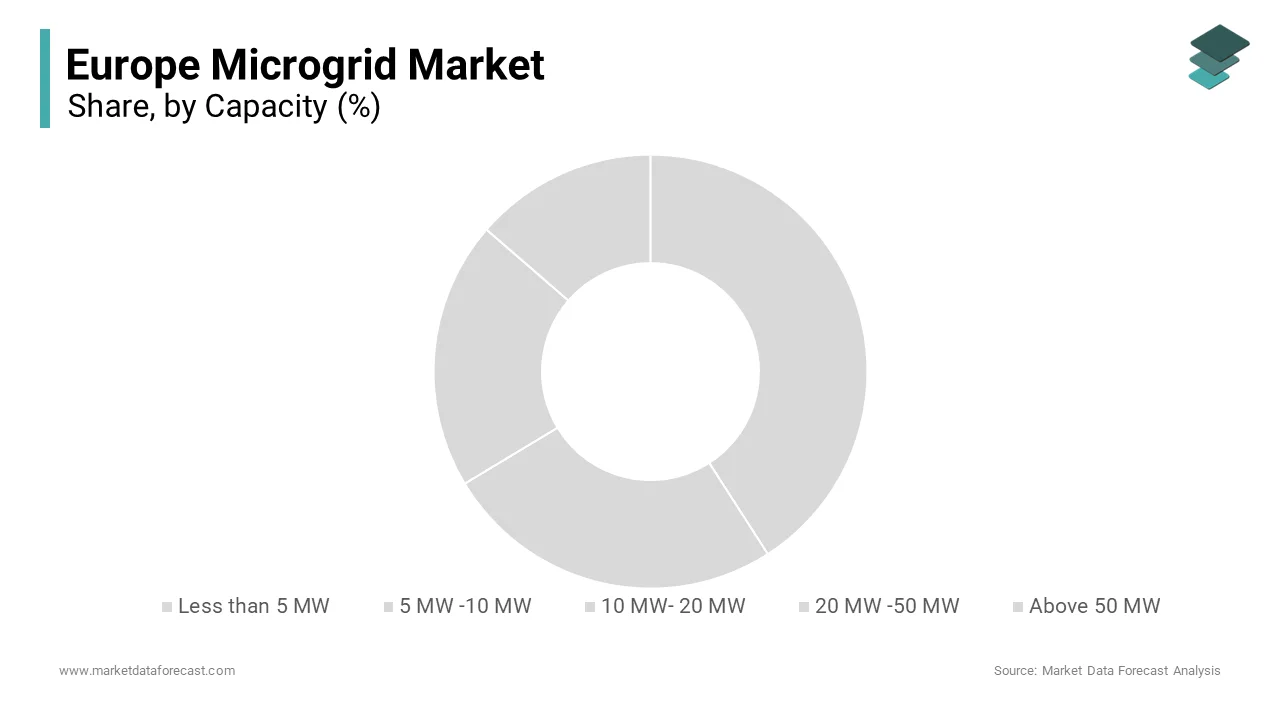
The 5 MW to 10 MW segment is predicted to be the fastest-growing segment with a CAGR of 17.7% in the European microgrid market during the forecast period, owing to the increasing adoption in industrial parks, university campuses, and medium-sized municipalities seeking energy autonomy without the capital intensity of utility-scale systems. In 2025, new microgrids were commissioned across Germany, the Netherlands, and Sweden, which are primarily serving manufacturing clusters with continuous baseload needs exceeding 3 MW. This capacity band offers optimal economies of scale, resulting in competitive levelized energy costs compared with grid tariffs in high-price regions. Furthermore, France’s National Low Carbon Strategy mandates that all industrial sites larger than 10 hectares assess microgrid feasibility by 2026, which is directly stimulating demand in this bracket. According to reports, 5 MW to 10 MW systems achieve higher revenue from frequency regulation markets compared to smaller units due to their ability to meet minimum bid thresholds. These technical and economic synergies position this segment as the sweet spot for commercial viability and policy alignment.
By Power Source Insights
The solar photovoltaics segment led the market by holding 44.1% of the European market share in 2025. The leading position of the solar PV segment in the European market is driven by plummeting module costs, policy incentives, and high solar irradiance in southern regions. According to SolarPower Europe, the weighted average cost of utility-scale solar PV in the EU declined in 2025, which is enabling cost-effective microgrid integration even without subsidies. The European Commission’s REPowerEU Plan targets 320 GW of solar capacity by 20,25 with distributed generation, including microgrids, accounting for a significant share of new installations. In Spain, rural microgrids powered predominantly by solar PV were deployed under the national self-consumption decree, which waives grid access fees for smaller systems. Moreover, the integration of bifacial modules and single-axis trackers has increased specific yields in countries like Italy and Greece. Solar PV’s modularity, silent operation, and zero fuel dependency make it ideal for sensitive environments such as schools, hospitals, and protected natural areas. The technology’s compatibility with lithium-ion storage further cements its dominance in hybrid microgrid architectures across the continent.
The combined heat and power segment is estimated to be the fastest-growing segment and is likely to witness a CAGR of 22.4% over the forecast period, owing to the industrial and district heating applications where simultaneous electricity and thermal energy production significantly boosts system efficiency. Over 280 agricultural and wastewater treatment facilities across Germany, Denmark, and the Netherlands integrated CHP-based microgrids in 2025, which utilize biogas from anaerobic digestion to achieve carbon-neutral operations. The European Commission’s Industrial Emissions Directive incentivizes CHP adoption by granting operators priority dispatch and reduced emissions compliance burdens. In Sweden, municipal district heating networks in cities like Gothenburg and Malmö now source a significant share of their thermal load from CHP microgrids fueled by forest biomass. Additionally, new EU taxonomy rules classify efficient CHP systems using renewable fuels as sustainable investments, unlocking access to green financing. Analyses confirm that CHP microgrids reduce primary energy consumption compared to separate heat and power generation, making them indispensable for decarbonizing energy-intensive sectors while enhancing local resilience.
By Application Insights
The commercial and industrial segment commanded the leading share of the European microgrid market in 2025, owing to the strong demand from manufacturing, data center, and logistics hubs seeking uninterrupted power and cost control. Industrial facilities across the EU implemented microgrids between 2021 and 2025 to mitigate rising grid tariffs. Automotive manufacturers such as BMW and Stellantis have deployed multi-megawatt microgrids at production sites in Germany and France, integrating solar PV, battery storage, and backup gas generators to ensure zero downtime during grid instability events. The European Central Bank’s corporate climate stress tests in 2025 revealed that many large industrial firms now include microgrid deployment in their operational resilience strategies. Moreover, the EU’s Corporate Sustainability Reporting Directive mandates disclosure of energy security measures, which is accelerating private sector investment. Cold chain logistics operators in the Netherlands and Spain have adopted microgrids to maintain refrigeration during outages, with numerous such systems commissioned in 2025. This segment thrives on the convergence of economic, regulatory, and reliability imperatives unique to high-value industrial operations.
The remote areas segment is expected to record the highest CAGR in the European market over the forecast period due to the urgent electrification needs in non-interconnected zones and mountainous or island regions. Many EU islands and remote alpine villages lack reliable grid access, relying instead on costly diesel generators that produce significant CO2 emissions. The Clean Energy for EU Islands Initiative has catalyzed hundreds of microgrid projects since 2022, with dozens of islands already transitioning from diesel to solar-wind hybrids with battery storage. In the French overseas territories of Guadeloupe and Martinique, multiple new microgrids were commissioned in 2025, reducing diesel imports. Similarly, Norway’s Arctic Archipelago of Svalbard is developing a wind‑battery microgrid to replace its coal-fired plant. Remote microgrid projects now achieve attractive payback periods due to falling renewable and storage costs. This segment’s growth is not merely technological but deeply socio-economic, which addresses energy poverty and enables digital inclusion and preserves fragile ecosystems from fossil fuel dependence.
COUNTRY ANALYSIS
Germany Microgrid Market Analysis
Germany dominated the microgrid market in Europe with a share of 23.5% in 2025. The Energiewende policy and robust industrial base of Germany are driving the microgrid market growth in Germany. Germany’s microgrid ecosystem is characterized by advanced integration of renewables, digital controls, and sector coupling. Germany has numerous operational microgrids serving industrial and municipal applications. The National Hydrogen Strategy and the Renewable Energies Heat Act have accelerated the adoption of hybrid systems combining solar PV, batteries, and green hydrogen electrolyzers in regions like North Rhine-Westphalia. Germany’s Climate and Transformation Fund supports community energy resilience projects, including microgrids in rural Saxony and Bavaria. Analyses by research institutes report high self-consumption rates among German microgrids, among the highest in Europe. Strong grid code reforms also allow microgrids to provide ancillary services, creating additional revenue streams. With hundreds of energy cooperatives actively involved in local generation, Germany’s bottom-up energy democracy model continues to drive decentralized infrastructure deployment at scale.
France Microgrid Market Analysis
France is a promising market for microgrids in Europe. The strategic investments in island decarbonization and industrial resilience are propelling the growth of the French microgrid market.ADEME reported that multiple microgrids were deployed in 2025 with significant activity in Corsica, Réunion,n and Martinique supporting locally tailored programs. The countryMulti-Annualual Energy Program mandates that all critical infrastructure, including military bases and hospitals, achieve energy autonomy by 2028, directly stimulating microgrid adoption. In mainland France, industrial zones in Grand Est and Auvergne-Rhône-Alpes have integrated multi-megawatt microgrids powered by solar PV and biogas CHP, reducing grid dependency for participating sites. Moreover, France’s regulated tariff system allows microgrid operators to sell surplus power at guaranteed rates, improving project economics. The French Alternative Energies and Atomic Energy Commission confirmed that AI-based energy management systems are increasingly standard in new French microgrids, optimizing battery cycling and demand response. These coordinated policies, geographic, and technological factors solidify France’s leadership in both remote and urban microgrid innovation.
Spain Microgrid Market Analysis
Spain is predicted to account for a prominent share of the European microgrid market during the forecast period owing to its exceptional solar resources and progressive self-consumption regulations. Spain’s National Commission for Markets and Competition reported widespread installation of solar microgrids in 2025, primarily in rural Andalusia, Extremadura, and the Canary Islands. Royal Decree 244/2019 eliminated charges that penalized self-consumed solar energy, catalyzing a sharp increase in microgrid applications between 2020 and 2025. The Spanish Ministry for Ecological Transition reported that microgrids now supply power to off-grid tourist resorts and agricultural cooperatives, reducing diesel use significantly each year. In the Balearic Islands, a 2025 pilot integrated floating solar, winddwind utility-scale storage across multiple microgrids, achieving very high renewable penetration as validated by the Institute for Diversification and Saving of Energy. Spain’s grid operator Red Eléctrica de España launched initiatives in 2025 to enable microgrid aggregation and virtual power plant participation, unlocking new revenue. With abundant annual sunshine in southern regions, Spain’s natural advantage, combined with regulatory foresight, ensures sustained microgrid expansion.
Italy Microgrid Market Analysis
Italy is estimated to grow at a notable CAGR in the European microgrid market during the forecast period, owing to the island electrification, agricultural modernization, and post-disaster resilience planning. Italy commissioned new microgrids in 2025, many serving the islands of Sicily and Sardinia under the National Plan for Islands. The Italian government’s fiscal incentives, including Superbonus/Ecobonus frameworks, support energy efficiency upgrades and distributed generation across public buildings and farms. In Emilia Romagna, agro‑industrial microgrids powered by biogas from livestock waste supply both electricity and thermal energy to food processing facilities, reducing emissions. Following severe flooding in 2025, authorities prioritized resilient backup power for emergency shelters, accelerating deployments in vulnerable regions. Italian commercial microgrids have achieved lower operational costs compared to grid reliance due to time‑of‑use tariff arbitrage. Italy’s blend of geographic necessity, agricultural synergies, and fiscal incentives positions it as a key growth pole in Southern Europe.
Netherlands Microgrid Market Analysis
The Netherlands is expected to exhibit a healthy CAGR in the European microgrid market over the forecast period, owing to its port industrial clusters, data center density, ty and progressive energy community laws. According to regulators and industry reports, dozens of microgrids were operational in the Netherlands by the mid-2020s with major installations at the Port of Rotterdam, Schiphol Airport, and Brainport Eindhoven. The Port of Rotterdam hosts multiple microgrids integrating wind, solar, batteries, and hydrogen to power automated terminals and refineries, as described in the port authority’s sustainability reporting. The Netherlands’ new Energy Act formally recognizes energy communities as legal entities, enabling neighbourhoods to operate peer-to-peer microgrids with dynamic pricing. Data centers, which account for a notable share of national electricity use, are also adopting microgrids, and major cloud providers and tech firms are deploying on-site renewable-plus-storage systems to support renewable commitments. National research and industry studies report that microgrids in critical infrastructure achieve very high uptime, which is essential for digital services. With some of Europe’s higher electricity prices and advanced digital grid infrastructure, the Netherlands exemplifies how microgrids can support industrial competitiveness and urban energy sovereignty.
COMPETITIVE LANDSCAPE
The Europe microgrid market features intense competition among global technology providers, local engineering firms, and emerging startups, each vying for influence through differentiation in software intelligence, hardware reliability, and service integration. Incumbents leverage decades of grid experience and established relationships with utilities and industrial clients, while agile newcomers focus on niche applications such as island decarbonization or AI-driven demand response. Regulatory complexity across EU member states creates both barriers and opportunities, prompting players to localize offerings while maintaining scalable architectures. Competition is price-driven and more centered on system resilience, interoperability, and compliance with evolving grid codes. Strategic alliances with energy communities, financial institutions, and research organizations have become critical de-risking projects and accelerate deployment. As the market evolves, collaboration often outweighs confrontation with competitors co co-developing standards and pilot sites to expand the overall addressable market and validate microgrids as essential infrastructure.
KEY MARKET PLAYERS
A few of the market players in the Europe microgrid market include
- ABB (Switzerland)
- Eaton Corp (Ireland)
- Honeywell (U.S.)
- Schneider Electric (France)
- Siemens (Germany)
- Spirae, LLC (Colorado)
- Power Analytics Corporation (U.S.)
- Toshiba Corporation (Japan)
- GE (U.S.)
- HOMER Energy (Colorado)
- S&C Electric (Chicago)
- Caterpillar (U.S.)
Top Players In The Market
- Schneider Electric is a pivotal contributor to the Europe microgrid market through its EcoStruxure Microgrid Advisor platform, which enables real-time energy optimization and resilience for industrial and commercial users. The company has deployed microgrid solutions across universities, hospitals, and remote communities in France, Germany, and the Nordics. In 2025, Schneider partnered with the European Investment Bank to co-develop financing frameworks for citizen energy communities, accelerating microgrid adoption in underserved regions. Its integration of AI-driven forecasting and grid-forming inverters has set new benchmarks for system reliability and decarbonization, aligning with EU climate objectives and reinforcing its technological leadership across global markets.
- Siemens plays a critical role in advancing Europe’s microgrid ecosystem through its Spectrum Power Microgrid Management System, which supports seamless islanding grid synchronization and distributed energy coordination. The company has executed high-profile projects in Sweden, the Netherlands, and Spain, including hybrid microgrids for ports, data centers, and military bases. In early 202,4, Siemens launched a digital twin pilot in Hamburg, enabling virtual commissioning and cybersecurity testing before physical deployment. This innovation reduces implementation risk and enhances scalability. Siemens also collaborates with European transmission system operators to align microgrid standards with continental grid codes, strengthening interoperability and positioning the company as a key enabler of Europe’s integrated clean energy transition.
- ABB contributes significantly to the Europe microgrid market with its flagship Ability Microgrid Plus solution, which integrates renewable generation,n, storage, and load management through advanced control algorithms. The company has implemented microgrids in remote Alpine villages, Greek islands, and industrial zones in Italy and Poland. In 2025, ABB partnered with the European Space Agency to develop satellite-enabled monitoring for off-grid microgrids, enhancing operational visibility in disconnected areas. It also introduced grid-forming inverter technology compliant with ENTSO-E requirements, allowing microgrids to support bulk grid stability. These initiatives underscore ABB’s commitment to merging digitalization, electrification, and sustainability while extending its influence in global microgrid deployments beyond Europe.
Top Strategies Used By The Key Market Participants
Key players in the Europe microgrid market predominantly pursue strategic partnerships with public institutions to co-develop community-scale projects that align with national energy security agendas. They invest heavily in research and development to advance AI-powered energy management and grid-forming inverter technologies, ensuring technical superiority. Companies also focus on modular and standardized microgrid designs to reduce deployment timelines and capital costs across diverse geographies. Another core strategy involves integrating cybersecurity by design principles into control systems to meet stringent EU regulatory requirements. Finally, they actively participate in iinUUU-funded demonstrators undunderHorizonevalidatee new business models and influence policy frameworks shaping future market access and scalability.
MARKET SEGMENTATION
This research report on the Europe microgrid market is segmented and sub-segmented into the following categories.
By Capacity
- Less than 5 MW
- 5 MW -10 MW
- 10 MW- 20 MW
- 20 MW -50 MW
- Above 50 MW
By Power Source
- Diesel Generators
- Natural Gas
- Solar PV
- CHP
- Others
By Application
- Educational Institutes
- Remote Areas
- Military
- Utility Distribution
- Commercial & Industrial
- Others
By Country
- UK
- France
- Spain
- Germany
- Italy
- Russia
- Sweden
- Denmark
- Switzerland
- Netherlands
- Turkey
- Czech Republic
- Rest of Europe