- Product Description Description
- Table of Contents TOC
- List of Table & Figure LOT
- Get Free Sample PDF Sample PDF
Market Size, 2025
$25.48 BnMarket Estimate, 2026
$27.56 BnMarket Forecast, 2034
$51.62 BnCAGR, 2026–2034
8.16%Europe Motorhome Market Size, Growth, Trends & Forecast (2026–2034)
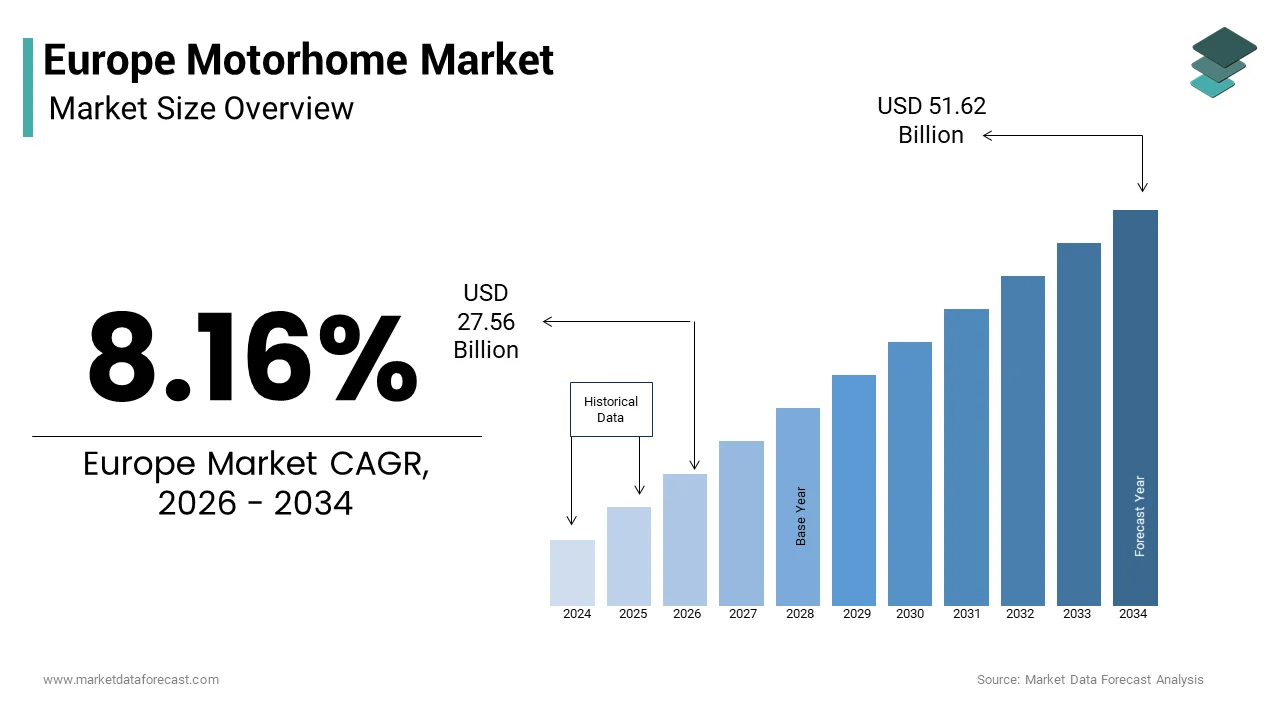
The Europe motorhome market size was valued at USD 25.48 billion in 2025, is anticipated to reach USD 27.56 billion in 2026, and is projected to scale up to USD 51.62 billion by 2034, registering a compound annual growth rate (CAGR) of 8.16% during the forecast period from 2026 to 2034. Driven by the shift toward flexible domestic travel, the boom in staycations, and advancements in connected smart/electric vehicle features, the European recreational vehicle sector continues to record robust expansion.
Key Executive Metrics (At-a-Glance)
- 2025 Base Valuation: USD 25.48 Billion
- 2026 Current Valuation: USD 27.56 Billion
- 2034 Forecast Valuation: USD 51.62 Billion
- Compound Annual Growth Rate (CAGR): 8.16% (2026–2034)
- Dominant Type Segment: Class C Segment (44.1% share in 2025)
- Fastest-Growing Type Segment: Class B / Camper Vans Segment (projected at 8.4% CAGR)
- Dominant Propulsion Segment: Diesel Segment (71.6% share in 2025)
- Dominant End-User Segment: Direct Individual Buyers Segment (77.9% share in 2025)
- Fastest-Growing End-User Segment: Rental and Sharing Fleets Segment (projected at 10.5% CAGR)
- Dominant Sales Channel: OEM Authorized Dealers Segment (68.8% share in 2025)
- Fastest-Growing Sales Channel: Online Marketplaces Segment (projected at 12.2% CAGR)
- Dominant Country Market: Germany (26.6% share in 2025) followed by France and the UK
Core Market Drivers
- Flexible Travel Preferences: Rising demand for private, self-contained travel and spontaneous road trips following modern lifestyle shifts.
- Staycations & Domestic Tourism: Economic and eco-conscious trends encouraging holidaymakers to explore local European heritage sites and national parks.
- Technological Innovation: Proliferation of IoT integration, remote monitoring systems, and eco-friendly electric motorhome platforms.
Primary Market Restraints & Challenges
- High Capital Costs: Steep initial purchase prices, continuous insurance/maintenance expenses, and rising interest rates restricting mid-income accessibility.
- Stringent Regulations: Tough EU Euro 7 emission laws and expanding urban low-emission zones (LEZs) creating operational and compliance barriers.
- Infrastructure Deficits: Limited availability of dedicated overnight parking spaces and waste service areas in high-density southern European tourist spots.
Europe Motorhome Market Segmentation Highlights
| Segment Category | Largest Market Segment | Fastest-Growing Market Segment |
|---|---|---|
| By Type | Class C Segment (44.1% share in 2025) | Class B / Camper Vans (8.4% CAGR) |
| By Propulsion | Diesel Segment (71.6% share in 2025) | Electric / Hybrid Solutions |
| By End-User | Direct Individual Buyers (77.9% share in 2025) | Rental & Sharing Fleets (10.5% CAGR) |
| By Sales Channel | OEM Authorized Dealers (68.8% share in 2025) | Online Marketplaces (12.2% CAGR) |
| By Country | Germany (26.6% share in 2025) | United Kingdom, France, and Italy |
Major Industry Players Profiled
Key manufacturing leaders shaping the European motorhome landscape include Erwin Hymer Group, Trigano S.A., Thor Industries Inc., Knaus Tabbert AG, Rapido Group, Swift Group, Hymer GmbH & Co KG, Dethleffs GmbH & Co. KG, Adria Mobil, and Burstner GmbH.
 Download Free Sample Report
Europe Motorhome Market Size
The Europe motorhome market size was valued at USD 25.48 billion in 2025 and is anticipated to reach USD 27.56 billion in 2026 to reach USD 51.62 billion by 2034, growing at a CAGR of 8.16% during the forecast period from 2026 to 2034.
Motorhome encompasses a specialized segment of the recreational vehicle industry characterized by self-propelled vehicles equipped with living quarters and travel amenities. These vehicles integrate transportation and accommodation, allowing users to explore diverse geographical landscapes with autonomy and comfort. The sector has evolved from a niche hobby into a mainstream tourism alternative driven by shifting consumer preferences towards flexible and private travel experiences. As per Eurostat, domestic tourism expenditure in the European Union reached 280 billion euros in 2022, indicating a robust internal demand for leisure activities. The proliferation of digital nomadism further influences this landscape as remote work capabilities enable extended stays in rural and coastal regions. According to the European Camping and Caravanning Federation, the number of certified campsites across Europe exceeds 13000, providing essential infrastructure support for motorhome users. The demographic profile of users is expanding beyond traditional retirees to include younger families and professionals seeking sustainable travel options. This shift is supported by improved road infrastructure and enhanced vehicle technology that prioritizes fuel efficiency and environmental compliance. The integration of smart technologies in modern motorhomes enhances user experience through automated climate control and connectivity features. Consequently, the market reflects a dynamic interplay between technological innovation, regulatory frameworks, and evolving lifestyle trends shaping the future of mobile hospitality in the region.
MARKET DRIVERS
Rising Preference for Flexible and Safe Travel Options
The increasing consumer preference for flexible and safe travel options is propelling the expansion of the Europe motorhome market. The global health crisis accelerated a shift away from crowded public transport and shared accommodation towards private and controlled environments. Motorhomes offer a self-contained solution that minimizes contact with external populations while allowing access to natural and secluded destinations. According to the European Travel Commission, international tourist arrivals in Europe are recovering but domestic travel remains strong, with 70% of Europeans preferring to vacation within their own country or neighboring states. This trend underscores the desire for security and flexibility in travel planning. As per a survey by Booking.com, 65% of travellers express interest in road trips due to the ability to change itineraries spontaneously without penalty. The autonomy provided by motorhomes aligns with this demand for adaptability, enabling users to avoid congested tourist hubs and explore lesser-known regions. Furthermore, the rise of remote work allows individuals to combine leisure with productivity, extending the duration of trips. This behavioural shift is not transient but represents a structural change in travel habits where safety and freedom are paramount. Manufacturers respond by designing vehicles with enhanced hygiene features and workspace functionalities catering to this new paradigm. The sustained interest in domestic exploration ensures continued demand for motorhomes as a preferred mode of travel.
Growth of Domestic Tourism and Staycations
The expansion of domestic tourism and the popularity of staycations are also contributing to the Europe motorhome market growth. Economic uncertainties and environmental consciousness encourage consumers to explore local attractions rather than undertaking long-haul international flights. Motorhomes facilitate this by providing an affordable and immersive way to experience national heritage sites and natural parks. According to the World Tourism Organization, domestic tourism accounts for approximately 80% of total tourism spending in developed economies, highlighting its economic significance. In Europe, countries like Germany, France, and Italy see substantial internal movement during peak seasons. As per the Federal Statistical Office of Germany, domestic overnight stays in 2023 reached 417 million, which is representing a significant portion of the tourism sector and reflecting a strong inclination towards local exploration. Motorhomes enable travelers to access remote areas that are often inaccessible by conventional hotels, thereby distributing tourism benefits more evenly across regions. The development of dedicated motorhome service areas and improved camping infrastructure supports this trend by enhancing convenience and accessibility. Government initiatives promoting regional tourism further incentivize residents to discover their own countries. This localized approach reduces carbon footprints associated with air travel, aligning with sustainability goals. The versatility of motorhomes makes them ideal for short weekend getaways as well as extended holidays, catering to diverse travel needs and reinforcing their role in the domestic tourism ecosystem.
MARKET RESTRAINTS
High Initial Purchase Costs and Maintenance Expenses
High initial purchase costs and ongoing maintenance expenses act as significant restraints on the Europe motorhome market. Motorhomes represent a substantial financial investment, with prices ranging from 50000 euros for basic models to over 150000 euros for luxury units. This high entry barrier limits accessibility for middle-income households and younger demographics who may lack sufficient capital or credit availability. According to the European Automobile Manufacturers Association, the average price of new passenger cars has risen significantly in recent years, a trend that extends to recreational vehicles due to shared supply chain pressures. As per data from ADAC, the annual maintenance, insurance, and storage costs for a motorhome can exceed 3000 euros, adding to the total cost of ownership. Inflationary pressures and rising interest rates further exacerbate these financial burdens, making financing less attractive for potential buyers. The depreciation rate of motorhomes is also steep, with values dropping by a significant margin in the first year, discouraging resale-oriented purchases. Economic volatility leads consumers to prioritize essential expenditures over discretionary leisure assets. Additionally, the complexity of motorhome systems requires specialized servicing, which is often more expensive than standard automotive repair. These financial constraints restrict market expansion to affluent segments and hinder broader adoption among price-sensitive consumers. Until financing options become more favorable or entry-level models become more affordable, the high cost structure will remain a persistent obstacle to market growth.
Stringent Environmental Regulations and Emission Standards
Stringent environmental regulations and emission standards pose a considerable restraint on the Europe motorhome market by imposing rigorous compliance requirements on manufacturers and users. The European Union Euro 7 emission norms aim to drastically reduce nitrogen oxide and particulate matter emissions from all road vehicles, including recreational ones. According to the European Commission, these regulations necessitate advanced after-treatment systems that increase vehicle weight and complexity, potentially impacting performance and fuel efficiency. As per the International Council on Clean Transportation, heavy-duty vehicles, which share chassis technology with larger motorhomes, face stricter limits that require significant engineering adjustments. Compliance with these standards drives up production costs, which are passed on to consumers, further elevating purchase prices. Additionally, many European cities are implementing low-emission zones that restrict access for older or higher-emitting vehicles, limiting the usability of motorhomes in urban areas. As per the European Environment Agency, over 320 low-emission zones are currently operational in Europe, with plans for expansion creating logistical challenges for motorhome tourists. The push towards electrification also presents technical hurdles, as battery technology for large recreational vehicles is still developing in terms of range and charging infrastructure. These regulatory pressures force manufacturers to innovate rapidly while managing costs, creating a challenging operating environment. The uncertainty surrounding future regulations may also deter investment in traditional internal combustion engine models, slowing down product development cycles.
MARKET OPPORTUNITIES
Integration of Smart Technology and Connectivity Features
The integration of smart technology and connectivity features presents a major opportunity for the Europe motorhome market by enhancing user experience and operational efficiency. Modern consumers expect seamless digital integration in their vehicles, similar to smartphones and home automation systems. Manufacturers are incorporating Internet of Things devices that allow remote monitoring of battery levels, water tanks, and temperature controls via mobile applications. According to Gartner, the number of connected cars globally is expected to grow significantly, creating a fertile ground for advanced telematics in recreational vehicles. As per a study by Deloitte, 70% of car buyers consider connectivity features as important factors in their purchasing decisions, a trend that extends to the motorhome segment. Smart systems enable predictive maintenance alerts, reducing downtime and repair costs by identifying issues before they escalate. Integration with navigation platforms that provide real-time information on campsite availability and height restrictions enhances travel convenience. The adoption of solar panels coupled with smart energy management systems allows for off-grid sustainability, appealing to eco-conscious travelers. These technological advancements differentiate products in a competitive market and justify premium pricing. Furthermore, connectivity facilitates social sharing and community building among motorhome enthusiasts, fostering brand loyalty. By leveraging digital innovation, manufacturers can attract tech-savvy demographics and expand the appeal of motorhoming beyond traditional user bases.
Expansion of Eco Friendly and Electric Motorhome Models
The development and expansion of eco-friendly and electric motorhome models offer significant opportunities for market growth amidst growing environmental awareness. Consumers are increasingly seeking sustainable travel options that minimize carbon footprints and align with green lifestyle values. Electric motorhomes produce zero tailpipe emissions and operate quietly, enhancing the nature experience without pollution. According to the European Alternative Fuels Observatory, the number of electric light commercial vehicles, which serve as base chassis for smaller motorhomes, is growing rapidly due to supportive policies. As per the European Automobile Manufacturers Association, several major manufacturers have announced plans to launch fully electric or hybrid motorhome models by 2026, targeting the premium segment. Government incentives, such as tax rebates and subsidies for zero-emission vehicles, lower the effective cost for buyers, encouraging adoption. The improvement in battery energy density allows for longer driving ranges, making electric motorhomes more practical for extended trips. Charging infrastructure is expanding across Europe, with fast-charging stations becoming more common along major tourist routes. Partnerships between vehicle manufacturers and energy providers facilitate integrated solutions, including home charging packages. This shift towards electrification not only meets regulatory requirements but also appeals to a broader audience concerned about climate change. By pioneering sustainable mobility solutions, companies can capture early-adopter market share and establish leadership in the emerging green recreational vehicle sector.
MARKET CHALLENGES
Limited Availability of Dedicated Parking and Service Infrastructure
A major challenge facing the Europe motorhome market is the limited availability of dedicated parking and service infrastructure in popular tourist destinations. Many historic cities and coastal areas lack adequate facilities for large recreational vehicles, leading to congestion and unauthorized parking issues. According to the European Camping and Caravanning Federation, there is a significant disparity between the number of motorhomes on the road and the capacity of designated service areas, particularly in southern Europe. As per local municipal reports in cities like Barcelona and Venice, restrictions on motorhome parking have tightened due to space constraints and resident complaints. This lack of infrastructure creates inconvenience for users who struggle to find safe and legal places to park overnight or dispose of waste. The absence of standardized service points for water refilling and sewage disposal complicates long-distance travel and hygiene management. Tourists often face fines or eviction from informal spots, disrupting their travel experience. Local authorities are hesitant to invest in infrastructure due to seasonal demand fluctuations and land use conflicts. This infrastructural deficit limits the attractiveness of certain destinations for motorhome travelers and restricts market growth. Addressing this challenge requires coordinated planning between tourism boards, local governments, and private operators to develop sustainable and accessible facilities that accommodate the growing number of recreational vehicles.
Supply Chain Disruptions and Raw Material Shortages
Supply chain disruptions and raw material shortages present a critical challenge to the Europe motorhome market by affecting production timelines and cost stability. The market relies on a complex global network for components such as semiconductors, chassis parts, and interior materials. According to the European Automobile Manufacturers Association, the automotive sector continues to face delays due to geopolitical tensions and logistical bottlenecks, impacting just-in-time manufacturing processes. For instance, the shortage of specific electronic components has led to production halts for several major motorhome manufacturers, resulting in extended delivery times for customers. The volatility in prices of steel, aluminum, and lithium affects overall manufacturing costs, forcing companies to adjust pricing strategies frequently. These uncertainties make it difficult for dealers to maintain inventory levels and for consumers to plan purchases. The dependency on single-source suppliers for critical parts increases vulnerability to disruptions. Manufacturers are attempting to diversify supply chains, but this transition requires time and investment. The resulting instability erodes consumer confidence and may lead to order cancellations. Furthermore, the inability to meet demand promptly allows competitors with better supply chain resilience to gain market share. Overcoming these logistical hurdles requires strategic stockpiling and stronger supplier relationships to ensure consistent production flow and market reliability.
REPORT COVERAGE
| REPORT METRIC | DETAILS |
| Market Size Available | 2025 to 2034 |
| Base Year | 2025 |
| Forecast Period | 2026 to 2034 |
| CAGR | 8.16% |
| Segments Covered | By Type, Propulsion, End-user, Sales Channel, Length Size, and Country. |
| Various Analyses Covered | Global, Regional, and country Analysis, Segment-Level Analysis, DROC, PESTLE Analysis, Porter’s Five Forces Analysis, Competitive Landscape, Analyst Overview of Investment Opportunities |
| Regions Covered | North America, Europe, APAC, Latin America, Middle East & Africa |
| Market Leaders Profiled | Erwin Hymer Group, Trigano S.A., Thor Industries Inc., Knaus Tabbert AG, Rapido Group, Swift Group, Hymer GmbH & Co KG, Dethleffs GmbH and Co. KG, Eura Mobil GmbH, Groupe Pilote, Rimor, Adria Mobil, Auto-Trail, Burstner GmbH, Laika Caravans, Hobby Wohnwagenwerk, Carthago Reisemobilbau, Westfalia Mobil, Possl Group, Chausson (Groupe Trigano), Sunlight GmbH, Malibu GmbH |
SEGMENTAL ANALYSIS
By Type Insights
The class C segment dominated the market by holding 44.1% of the regional market share in 2025. The growth of class C segment in the European market is driven by the optimal balance between drivability and living space that Class C vehicles offer to European consumers. These vehicles are built on a cutaway van chassis with an attached cab section, which provides additional sleeping space without the excessive length of Class A models. According to the European Caravan Federation, Class C motorhomes are particularly popular among families and first-time buyers due to their manageable size and ease of parking in urban environments. As per data from major manufacturers, the average length of a Class C motorhome is between 6 and 7 meters, making them suitable for narrow European roads and standard camping pitches. The versatility of these vehicles allows them to serve as both daily drivers and holiday homes, appealing to a broad demographic. The availability of diverse floor plans, ranging from compact couple layouts to spacious family configurations, further enhances their appeal. Additionally, the lower purchase price compared to Class A models makes them accessible to middle-income households. The robust resale value of Class C motorhomes also encourages investment as owners can recoup a significant portion of the initial cost. This combination of practicality, affordability, and flexibility ensures that Class C remains the preferred choice for the majority of motorhome enthusiasts in Europe.
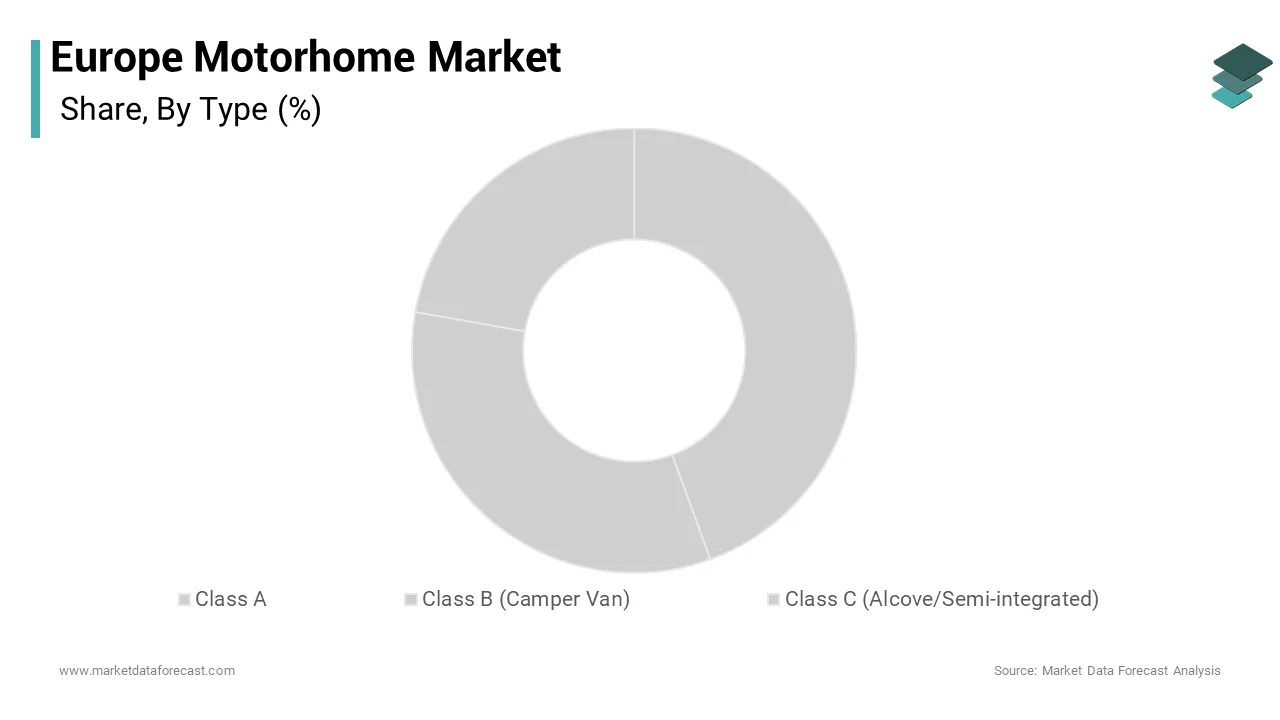
However, the class B segment is projected to witness a promising CAGR of 8.4% over the forecast period owing to the rising demand for compact and versatile recreational vehicles. Also known as camper vans, Class B motorhomes are built on standard van chassis and offer a discreet profile that blends in with regular traffic. According to the International Council on Clean Transportation, the fuel efficiency of smaller vehicles is a key factor in consumer preference amidst rising energy costs. Class B motorhomes consume significantly less fuel than larger counterparts, making them economically attractive for long-distance travel. As per a survey by Campercontact, 60% of new users prefer camper vans for their ability to access remote locations and urban areas where larger vehicles are restricted. The growth of the digital nomad lifestyle further fuels this segment as professionals seek mobile offices that are easy to maneuver and park. Manufacturers are responding by integrating high-end amenities into compact spaces, utilizing smart design solutions to maximize utility. The lower entry price point compared to Class C and Class A models also attracts younger demographics and retirees downsizing from larger homes. The increasing availability of electric and hybrid van bases provides a pathway for sustainable mobility, aligning with environmental regulations. These factors collectively drive the rapid expansion of the Class B segment in the European market.
By Propulsion Insights
The diesel segment led the market by holding the 71.6% of the regional market share in 2025. The growth of diesel segment in the European market is attributed to the superior torque and fuel efficiency of diesel engines, which are essential for hauling heavy recreational vehicles over varied terrains. According to the European Automobile Manufacturers Association, diesel engines remain the preferred powertrain for light commercial vehicles, which form the base of most motorhomes, due to their durability and longevity. As per data from ADAC, diesel motorhomes offer a driving range of up to 800 kilometers on a single tank, reducing the frequency of refueling stops during long trips. The extensive network of diesel refueling stations across Europe ensures convenience and accessibility for travelers even in remote regions. Although environmental regulations are tightening, diesel technology has advanced with improved emission control systems such as AdBlue injection, making them compliant with Euro 6 standards. The higher resale value of diesel motorhomes compared to gasoline equivalents also supports their popularity among buyers who view the vehicle as an asset. Furthermore, the towing capacity of diesel engines allows users to carry additional equipment such as bicycles or small boats, enhancing the recreational experience. These operational advantages ensure that diesel remains the backbone of the European motorhome propulsion landscape despite the emergence of alternative fuels.
By End User Insights
The direct individual buyers segment led the market by holding 77.9% of the regional market share in 2025. The growth of the direct individual buyers segment in the European market is driven by the strong cultural affinity for ownership and the desire for personalized travel experiences among European consumers. Motorhomes are often viewed as long-term investments that provide freedom and flexibility for holidays and weekend getaways. According to the European Camping and Caravanning Federation, the majority of campsite users in Europe own their vehicles, indicating a mature market for private ownership. As per data from national registration authorities in Germany and France, the number of newly registered motorhomes to private individuals has remained stable or grown annually despite economic fluctuations. The ability to customize interiors and equipment allows owners to tailor the vehicle to their specific needs, enhancing satisfaction and loyalty. Financing options, such as low-interest loans and leasing programs, make ownership more accessible to a wider audience. The social aspect of motorhoming, including clubs and rallies, fosters a sense of community that reinforces the value of ownership. Additionally, the residual value of well-maintained motorhomes remains high, encouraging buyers to invest in quality units. These factors ensure that direct individual purchases continue to constitute the bulk of market activity.
However, the rental and sharing fleets segment is the fastest-growing end-user category and is expected to witness a CAGR of 10.5% over the forecast period owing to the rising popularity of experiential travel and cost-effective tourism. Consumers increasingly prefer renting motorhomes for short-term trips to avoid the high upfront costs and maintenance responsibilities of ownership. According to Statista, the online vehicle rental market in Europe is expected to grow significantly as digital platforms simplify the booking process and expand inventory availability. As per a report by McKinsey and Company, the sharing economy has transformed the travel industry, with peer-to-peer rental platforms allowing individuals to monetize their idle vehicles. This model provides renters with access to a diverse range of vehicles at competitive prices while offering owners an additional revenue stream. The flexibility of rental agreements appeals to younger travelers and families who wish to test the motorhome lifestyle before committing to a purchase. Tourism boards promote rental options to attract visitors who seek immersive nature experiences without the burden of logistics. The expansion of rental fleets by major companies and startups increases accessibility in key tourist destinations. This trend towards access over ownership drives the rapid growth of the rental and sharing segment in the European market.
By Sales Channel Insights
The OEM authorized dealers segment dominated the Europe motorhome market by capturing 68.8% of the regional market share in 2025. The dominance of OEM authorized dealers segment is attributed to the established through the trust and reliability associated with official dealership networks, which offer comprehensive after-sales support and warranty services. According to the European Automobile Manufacturers Association, authorized dealers provide specialized expertise in vehicle maintenance and repairs, which is crucial for complex recreational vehicles. As per consumer surveys, the majority of buyers prefer purchasing from authorized dealers due to the assurance of genuine parts and certified technicians. Dealerships often facilitate financing and insurance packages, simplifying the acquisition process for customers. The physical presence of showrooms allows potential buyers to inspect vehicles firsthand, which is ensuring satisfaction with layout and build quality. Manufacturers rely on these channels to maintain brand standards and deliver consistent customer experiences. The establishment of service centers alongside sales outlets creates a holistic ecosystem that supports owners throughout the vehicle lifecycle. This integrated approach builds long-term relationships and encourages repeat business. The dominance of authorized dealers is further reinforced by exclusive distribution agreements that limit the availability of new models through other channels. These factors solidify the position of OEM authorized dealers as the primary sales channel in the European motorhome market.
On the other end, the online marketplaces segment is experiencing the fastest growth and is predicted to register a CAGR of 12.2% over the forecast period owing to the digitalization of retail and the increasing comfort of consumers with online transactions. Digital platforms offer a wide selection of new and used motorhomes with detailed specifications, images, and virtual tours, enabling informed decision-making from home. According to Eurostat, e-commerce sales in the automotive sector have risen steadily as buyers seek convenience and transparency in pricing. As per data from leading online automotive portals, the number of listings for recreational vehicles has increased by 25% in the past year, reflecting growing supplier participation. Online marketplaces facilitate price comparison and user reviews, helping buyers identify the best deals and reputable sellers. The integration of secure payment systems and logistics services simplifies the purchasing process, reducing friction for remote buyers. Peer-to-peer platforms also enable direct transactions between individuals, expanding the reach of the secondary market. The ability to access a broader inventory beyond local dealerships appeals to niche buyers seeking specific models or features. This digital shift enhances market efficiency and accessibility, driving the rapid expansion of online sales channels in the European motorhome industry.
COUNTRY-LEVEL ANALYSIS
Germany Motorhome Market Analysis
Germany dominated the motorhome market in Europe in 2025 with 26.6% of the regional market share. The dominance of Germany in the European market can be credited to the country strong manufacturing base and high disposable income levels. According to the Kraftfahrt Bundesamt, the Federal Motor Transport Authority, new registrations of motorhomes in Germany in 2023 reached 68469 units, reflecting sustained consumer interest. Germany is home to leading manufacturers such as Hymer and Knaus Tabbert, which influence global trends and innovation. As per the German Camping Club, the number of members has grown steadily, indicating a vibrant community of enthusiasts. The extensive network of campsites and service areas supports widespread adoption and usage. Government policies promoting domestic tourism further stimulate market growth. The preference for high-quality and technologically advanced vehicles characterizes the German market. Investment in electric mobility infrastructure also supports the transition towards sustainable motorhoming. Germany central location in Europe makes it a hub for cross-border travel, enhancing the utility of motorhomes. The combination of industrial strength, consumer wealth, and supportive infrastructure ensures Germany continued leadership in the regional market.
France Motorhome Market Analysis
France held a promising share of the Europe motorhome market in 2025 due to its diverse landscapes and strong camping culture. The country offers a wide variety of destinations, from coastal regions to mountain ranges, attracting both domestic and international tourists. According to the Fédération Française de Camping et de Caravanning, the number of motorhomes in France is estimated to be around 600000, representing a significant community of users. As per data from the French Ministry of Tourism, domestic travel accounts for a significant portion of leisure activities, supporting steady demand for recreational vehicles. The government has invested in improving camping infrastructure, including designated motorhome areas, to enhance visitor experience. France is also a key production center for motorhomes, with several major manufacturers operating facilities within its borders. The popularity of "slow travel" and eco-tourism aligns well with the motorhome lifestyle. Regulatory support for sustainable tourism practices encourages the adoption of cleaner vehicles. The strong tradition of summer holidays and extended vacations provides a consistent seasonal demand peak. These factors contribute to France prominent position in the European motorhome landscape.
United Kingdom Motorhome Market Analysis
The United Kingdom is estimated to witness a healthy CAGR in the Europe motorhome market over the forecast period owing to a strong preference for domestic exploration. The island geography and scenic countryside make motorhoming an attractive option for locals seeking affordable holidays. According to the National Caravan Council, the UK motorhome and camper van market has shown significant growth, with the leisure vehicle industry contributing billions to the UK economy. As per data from the Driver and Vehicle Licensing Agency, new registrations of motorhomes reached approximately 12000 in 2023, showing resilience despite economic challenges. The rise of "staycations" following global travel disruptions has accelerated this trend as consumers discover local attractions. The UK market is notable for its high adoption of Class B camper vans due to narrower roads and limited parking space. Retailers and rental companies have expanded their offerings to meet this demand. Government initiatives promoting rural tourism support the development of infrastructure. The strong second-hand market also facilitates entry for new users. The cultural emphasis on outdoor activities and nature appreciation sustains long-term interest in motorhoming. These dynamics ensure the UK remains a key player in the regional market.
Italy Motorhome Market Analysis
Italy is predicted to hold a notable share of the Europe motorhome market over the forecast period owing to its rich cultural heritage and favorable climate. The country extensive coastline and historical sites attract motorhome tourists from across Europe. According to the Associazione Produttori Caravan e Camper, the Italian motorhome market has seen steady production growth, with Italy being one of the top manufacturers of recreational vehicles in the region. As per data from the Italian Ministry of Tourism, the camping and caravanning sector accounts for over 50 million overnight stays annually, supported by improved campground facilities. The government has implemented programs to promote open-air tourism, recognizing its economic potential for local communities. Italy diverse geography, from the Alps to the Mediterranean islands, offers varied travel experiences for motorhome users. The integration of renewable energy solutions in campsites aligns with broader environmental goals. Italian manufacturers are focusing on stylish designs and innovative features to appeal to premium segments. The growing popularity of the sharing economy also influences the market, with an increasing number of rental platforms offering localized services. Italy strategic investments in tourism infrastructure and the promotion of regional heritage ensure its significance in the European motorhome industry.
COMPETITVE LANDSCAPE
The competition in the Europe motorhome market is intense characterized by a mix of established manufacturers and emerging niche players. Leading companies differentiate themselves through brand reputation product quality and technological innovation. The market sees significant rivalry in the premium segment where craftsmanship and customizability are key selling points. Price competition remains fierce in the entry level sector prompting manufacturers to optimize production efficiencies. Strategic alliances and acquisitions are common as companies seek to expand their product portfolios and geographic reach. Innovation in sustainable technologies such as electric powertrains and solar integration serves as a critical competitive advantage. Regulatory compliance regarding emissions and safety standards shapes competitive dynamics by raising entry barriers. Customer service and after sales support also play vital roles in building brand loyalty and retaining market share. The rise of online sales platforms increases transparency and allows consumers to compare options easily forcing dealers to enhance value propositions. Overall the landscape is dynamic with continuous adaptation to consumer preferences and regulatory changes driving competitive strategies.
KEY MARKET PLAYERS
A few of the market players that are dominating the Europe motorhome market are
- Erwin Hymer Group
- Trigano S.A.
- Thor Industries Inc.
- Knaus Tabbert AG
- Rapido Group
- Swift Group
- Hymer GmbH & Co KG
- Dethleffs GmbH and Co. KG
- Eura Mobil GmbH
- Groupe Pilote
- Rimor
- Adria Mobil
- Auto-Trail
- Burstner GmbH
- Laika Caravans
- Hobby Wohnwagenwerk
- Carthago Reisemobilbau
- Westfalia Mobil
- Possl Group
- Chausson (Groupe Trigano)
- Sunlight GmbH
- Malibu GmbH
Top Players In The Market
- Trigano SA stands as a leading European manufacturer of leisure vehicles with a strong presence in the motorhome segment. The company operates multiple brands including Adria and McLouis catering to diverse consumer preferences across the continent. Trigano focuses on vertical integration by producing key components in house which enhances quality control and cost efficiency. Recently the company has expanded its production capacity in France and Italy to meet rising demand for recreational vehicles. Trigano also invests in sustainable manufacturing practices aligning with environmental regulations and consumer expectations. Their strategic acquisitions of smaller brands have broadened their product portfolio and market reach. By leveraging economies of scale and extensive distribution networks Trigano maintains a competitive edge. The company continues to innovate in design and technology ensuring their vehicles meet modern travel needs. This comprehensive approach solidifies their position as a key player in the global recreational vehicle industry.
- Hymer GmbH & Co KG is a prominent German manufacturer known for high quality motorhomes and caravans under brands such as Eura Mobil and Sunlight. The company emphasizes premium engineering and innovative design appealing to discerning customers seeking comfort and reliability. Hymer recently launched new electric and hybrid models demonstrating commitment to sustainable mobility solutions. The company strengthens its market position through continuous research and development in lightweight construction and energy efficiency. Hymer also expands its service network across Europe ensuring robust after sales support for customers. Strategic partnerships with chassis suppliers like Fiat and Mercedes Benz ensure access to advanced automotive technologies. The focus on digital connectivity features enhances user experience and attracts tech savvy buyers. Hymer’s dedication to craftsmanship and innovation reinforces its reputation in the premium segment. These efforts contribute significantly to the global advancement of recreational vehicle standards and customer satisfaction.
- Knaus Tabbert AG is a major player in the European motorhome market recognized for its diverse range of recreational vehicles. The company owns well known brands such as Knaus Weinsberg and Tabbert catering to various market segments from entry level to luxury. Knaus Tabbert focuses on modular production systems that allow for customization and efficient manufacturing. Recent initiatives include the development of eco friendly materials and energy efficient appliances within their vehicles. The company actively engages in digital transformation by enhancing online sales platforms and customer interaction tools. Knaus Tabbert also expands its international presence through strategic exports and localized marketing campaigns. Investment in employee training ensures high standards of craftsmanship and innovation. The company’s adaptability to changing consumer trends and regulatory requirements supports sustained growth. By prioritizing quality and customer centric design Knaus Tabbert maintains a strong competitive position in the dynamic European leisure vehicle landscape.
Top Strategies Used By Key Market Participants
Key players in the Europe motorhome market primarily focus on product diversification and technological innovation to capture varying consumer segments. Manufacturers invest heavily in developing electric and hybrid models to comply with stringent environmental regulations and appeal to eco conscious buyers. Strategic expansions into emerging markets and enhancement of distribution networks help increase brand visibility and accessibility. Companies also prioritize vertical integration to control supply chains and reduce production costs ensuring competitive pricing. Digitalization of sales channels including online configurators and virtual showrooms improves customer engagement and streamlines the purchasing process. After sales service improvements such as extended warranties and mobile repair units enhance customer loyalty and brand trust. Collaborations with technology firms enable the integration of smart features like connectivity and automation. These strategies collectively drive growth and resilience in a competitive and evolving market environment.
MARKET SEGMENTATION
This research report on the Europe motorhome market is segmented and sub-segmented into the following categories.
By Type
- Class A
- Class B (Camper Van)
- Class C (Alcove/Semi-integrated)
By Propulsion
- Diesel
- Gasoline
- Hybrid
- Battery-Electric
By End User
- Direct Individual Buyers
- Rental and Sharing Fleets
- Corporate / Event and Hospitality Fleets
By Sales Channel
- OEM-Authorized Dealers
- Online Marketplaces
- Direct-to-Consumer (Factory Delivery)
By Length/Size
- Up to 6 m
- 6 to 7.5 m
- Above 7.5 m
By Country
- UK
- Russia
- Germany
- Italy
- France
- Spain
- Sweden
- Denmark
- Poland
- Switzerland
- Netherlands
- Rest of Europe