- Product Description Description
- Table of Contents TOC
- List of Table & Figure LOT
- Get Free Sample PDF Sample PDF
Market Size, 2025
$216.28 MnMarket Estimate, 2026
$233.67 MnMarket Forecast, 2034
$433.67 MnCAGR, 2026–2034
8.04%Europe N Acetylcysteine Market Report Summary
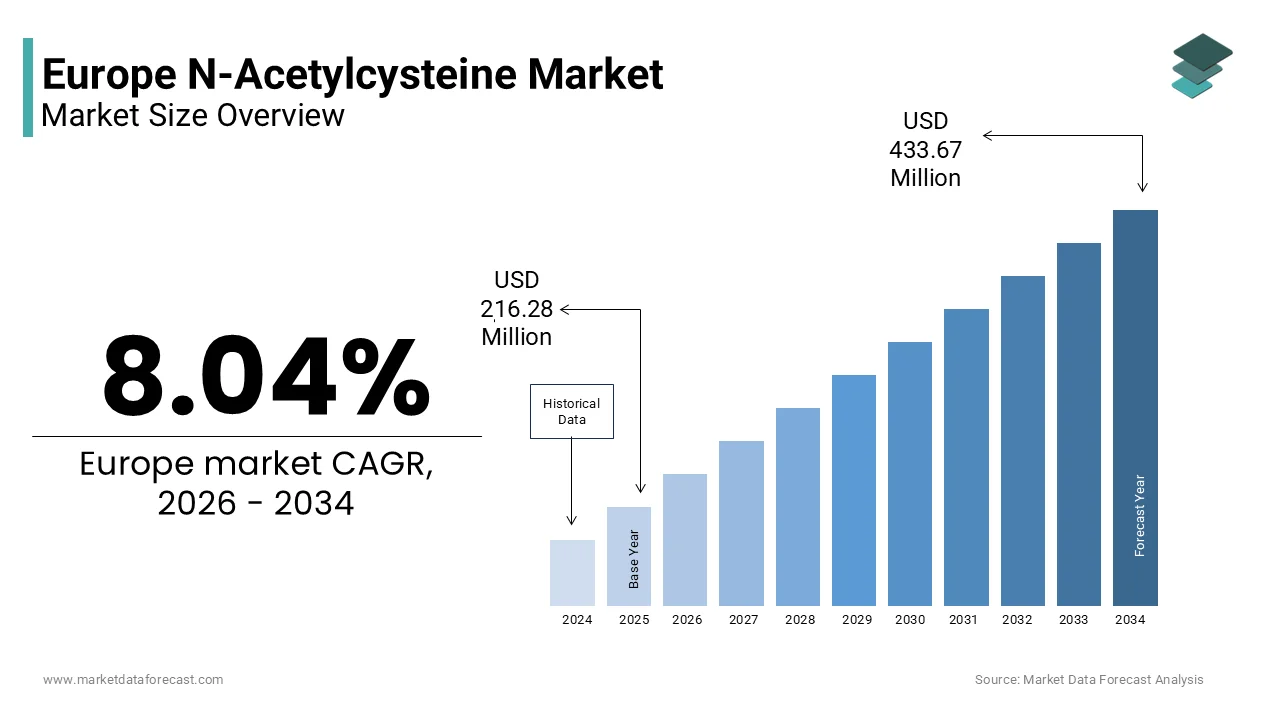
The Europe N Acetylcysteine market was valued at USD 216.28 million in 2025 and is projected to reach USD 433.67 million by 2034 from USD 233.67 million in 2026, growing at a CAGR of 8.04% during the forecast period. Market growth is driven by increasing prevalence of respiratory disorders, rising demand for antioxidant based supplements, and expanding therapeutic applications in liver detoxification and chronic obstructive pulmonary disease management. Growing awareness regarding preventive healthcare, rising over the counter supplement consumption, and strong pharmaceutical distribution networks across Europe are further accelerating market expansion.
Key Market Trends
- Rising incidence of respiratory diseases such as chronic bronchitis and COPD, increasing demand for mucolytic therapies across Europe.
- Growing consumer preference for antioxidant and immune support supplements containing N Acetylcysteine.
- Expansion of hospital and clinical usage for acetaminophen overdose treatment and liver protection therapies.
- Increasing regulatory focus on pharmaceutical grade purity and quality assurance in nutraceutical formulations.
- Strengthening pharmacy and retail distribution channels to enhance accessibility of therapeutic and dietary supplement products.
Segmental Insights
- Based on form, the powder segment dominated the Europe N Acetylcysteine market by accounting for 70.6% of the regional market share in 2025. The segment’s dominance is attributed to its wide usage in pharmaceutical formulations, bulk manufacturing efficiency, and ease of dosage customization in both therapeutic and supplement applications.
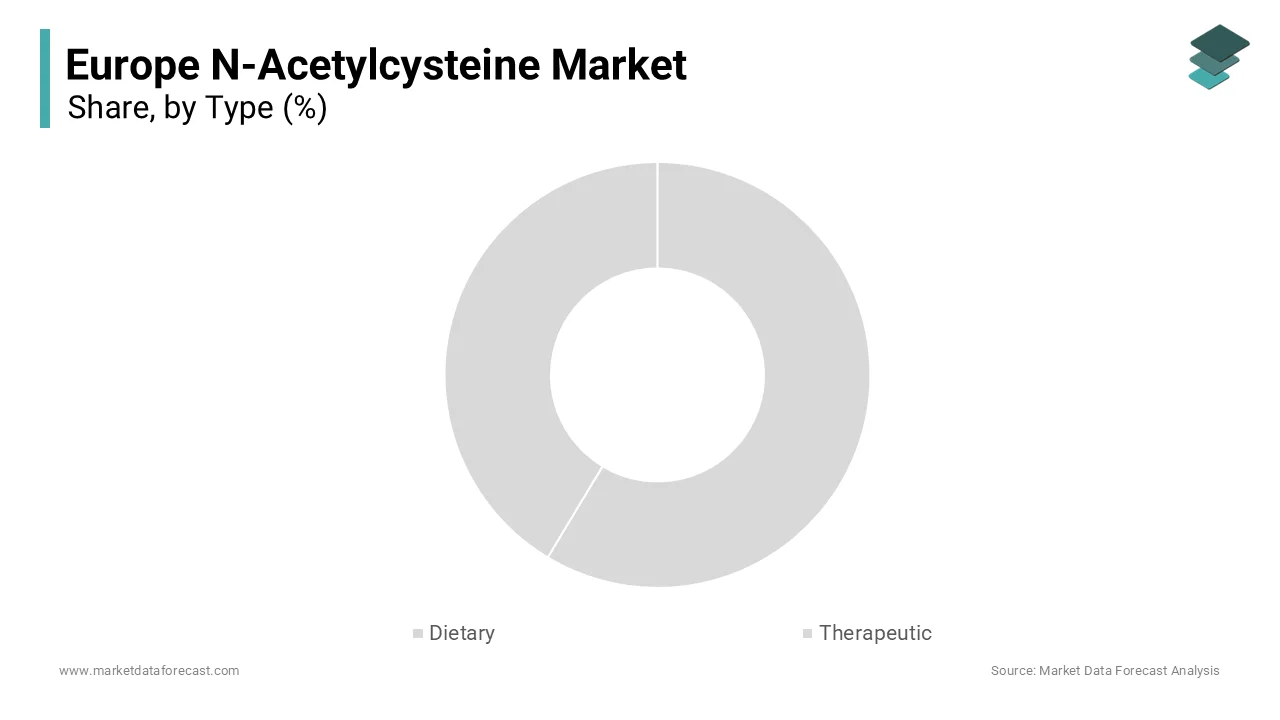
- Based on type, the therapeutic segment led the market by holding 65.5% of the European market share in 2025. This leadership is driven by extensive clinical use of N Acetylcysteine in respiratory care, liver detoxification, and critical care settings.
- Based on distribution channel, the pharmacies segment dominated the market by commanding 60.6% of the regional market share in 2025. Pharmacies remain the primary sales channel due to prescription based demand, professional guidance, and strong trust among patients.
Regional Insights
- Germany led the N Acetylcysteine market in Europe in 2025 by holding 24.4% of the regional market share. The country’s strong pharmaceutical manufacturing base, advanced healthcare infrastructure, and high awareness of respiratory health management contribute significantly to regional demand.
- Other European countries also show steady growth, supported by increasing supplement consumption, expanding hospital networks, and rising investment in pharmaceutical research and development.
Competitive Landscape
The Europe N Acetylcysteine market is moderately consolidated, with key pharmaceutical manufacturers and specialty chemical producers focusing on high purity production, regulatory compliance, and expanded distribution partnerships. Companies are investing in product innovation, quality control systems, and strategic collaborations to strengthen their regional presence. Prominent players in the Europe N Acetylcysteine market include Zambon S.p.A., Axplora Pharmazell, Moehs, Nippon Rika, Wuhan Grand Hoyo, Pharma Nord ApS, Manus Aktteva Biopharma LLP, Sigma Aldrich Corporation, Fresenius Kabi, and Boehringer Ingelheim.
Europe N-Acetylcysteine Market Size
The Europe N-Acetylcysteine market size was valued at USD 216.28 million in 2025 and is projected to reach USD 433.67 million by 2034 from USD 233.67 million in 2026, growing at a CAGR of 8.04%.
N-Acetylcysteine (NAC) is a thiol-containing amino acid derivative and is primarily valued for its mucolytic, antioxidant, and hepatoprotective properties. In Europe, NAC is regulated both as a prescription pharmaceutical and used in hospital settings for acetaminophen overdose and as a nebulized agent for chronic respiratory conditions and as a dietary supplement supporting respiratory, liver, and cognitive health. Unlike in the United States, where NAC’s regulatory status has been contested, the European Union maintains a clear dual pathway: approved medicinal products under EMA oversight and food supplements governed by national implementations of Directive 2002/46/EC. According to the European Medicines Agency, patient treatments involving NAC were widely administered across EU hospitals in 2023. As per the European Responsible Nutrition Alliance, consumer demand for NAC as a standalone supplement also grew in Western Europe, which is driven by interest in glutathione support and respiratory resilience. This dual identity, as both a critical medicine and a wellness nutrient, defines the structural and regulatory complexity of the European NAC landscape.
MARKET DRIVERS
High Burden of Chronic Respiratory Diseases Across Europe
Chronic obstructive pulmonary disease (COPD) and bronchiectasis represent a significant public health challenge in Europe, which is directly driving sustained demand for NAC as a mucolytic and anti-inflammatory agent and is one of the major factors driving the growth of the European N-Acetylcysteine market. According to the European Respiratory Society, millions of Europeans suffer from COPD, with prevalence particularly high among adults aged 40 and above in countries such as Germany and Portugal. Clinical guidelines from the European Medicines Agency and national bodies recommend long term oral NAC therapy to reduce exacerbation frequency and improve mucus clearance. Hospitals across Italy and Spain routinely administer nebulized NAC to manage thick secretions in cystic fibrosis and post viral bronchitis cases. This entrenched clinical utility, backed by decades of research and reimbursement coverage, ensures consistent pharmaceutical demand that transcends market fluctuations.
Growing Consumer Interest in Antioxidant and Detoxification Support
Beyond clinical use, NAC is increasingly sought by European consumers as a precursor to glutathione for liver detoxification, mental clarity, and immune resilience, which is further propelling the expansion of the European N-Acetylcysteine market. As per the European Consumer Organisation, supplement users across Europe actively seek ingredients that support cellular detox and oxidative stress management. NAC’s role in replenishing glutathione stores resonates strongly in urban populations exposed to air pollution and lifestyle stressors. Retail data shows standalone NAC supplement sales have grown in major markets such as Germany and the UK, often marketed alongside milk thistle and selenium. The rise of functional wellness, where prevention is prioritized over treatment, has normalized NAC as a daily maintenance nutrient. As scientific literacy increases, consumers recognize NAC not just as a drug but as a foundational molecule for redox balance, expanding its relevance into preventive health domains.
MARKET RESTRAINTS
Strict Regulatory Classification Limiting Supplement Innovation
The European NAC market faces significant constraints due to divergent regulatory interpretations of its status as a medicinal substance versus a food ingredient. While NAC is permitted in supplements under certain national frameworks, several member states restrict its inclusion in high dose formulations unless classified as a medicine. According to the European Commission’s Novel Food Catalogue, NAC is considered a pharmacologically active compound, triggering pre market safety assessments that delay product launches. The European Food Safety Authority has not issued a positive opinion on NAC as a novel food, creating legal uncertainty for manufacturers. As a result, many brands limit doses to below clinically studied levels, diminishing perceived efficacy. This regulatory ambiguity stifles innovation and prevents the development of science backed high potency supplements that could address specific health needs.
Limited Reimbursement for Long Term Oral NAC in Certain Countries
Despite strong clinical evidence, reimbursement policies for long term oral NAC therapy vary significantly across Europe, which is restricting patient access and market growth. In countries such as the Netherlands and Denmark, NAC is reimbursed only for acute acetaminophen overdose or inpatient nebulization, not for chronic outpatient use in COPD or bronchiectasis. According to the European Observatory on Health Systems and Policies, only a minority of EU member states provide full or partial reimbursement for daily oral NAC in respiratory indications. This forces patients to pay out of pocket for ongoing treatment, reducing adherence and limiting prescriber willingness to initiate therapy. In contrast, Italy and Spain include NAC in national formularies for chronic respiratory care, resulting in higher utilization rates. Without harmonized reimbursement policies, the therapeutic potential of NAC remains underutilized in key markets, constraining overall pharmaceutical demand despite proven clinical benefit.
MARKET OPPORTUNITIES
Integration into Mental Health and Cognitive Wellness Formulations
Emerging neuroscience research linking oxidative stress to mood disorders offers a transformative opportunity for the European N-Acetylcysteine market. As per the European Neuropsychopharmacology journal, clinical trials have demonstrated that NAC supplementation can reduce symptoms of depression, anxiety, and compulsive behaviours by modulating glutamate and restoring redox balance. According to the World Health Organization’s European office, millions of people in the EU suffer from depression or anxiety, creating vast unmet need for adjunctive nutritional strategies. Supplement brands in Sweden and the UK are now incorporating NAC into nootropic and mood support blends alongside magnesium, L-theanine, and saffron. As digital mental health platforms expand, NAC is positioned as a science backed nutrient for brain resilience. With growing destigmatization of mental health, this application could redefine NAC beyond respiratory and liver support into a cornerstone of cognitive self-care.
Expansion in Hospital Formulations for Critical Care and Antidote Use
NAC’s irreplaceable role as the primary antidote for acetaminophen overdose ensures steady demand in emergency and critical care settings across Europe, which is another notable opportunity for the European N-Acetylcysteine market. According to the European Association of Poison Centres, paracetamol poisoning cases are reported annually in the EU, nearly all treated with intravenous NAC protocols. Beyond overdose, emerging applications in intensive care—such as mitigating contrast induced nephropathy and reducing ventilator associated pneumonia—are gaining traction. As per the European Society of Intensive Care Medicine, multicenter studies have shown NAC infusion reduces oxidative damage in septic patients. Hospitals in France and Germany are now stockpiling NAC as part of standard critical care kits. As healthcare systems prioritize cost effective interventions with strong safety profiles, NAC’s versatility in acute settings offers a stable and expanding pharmaceutical channel insulated from consumer market volatility.
MARKET CHALLENGES
Supply Chain Vulnerability Due to Concentrated API Sourcing
The European NAC market is highly dependent on a limited number of active pharmaceutical ingredient (API) suppliers, primarily located in China and India, creating significant supply chain fragility. As per the European Directorate for the Quality of Medicines, the majority of NAC API imported into the EU originates from a handful of manufacturers. Geopolitical tensions, export restrictions, or environmental shutdowns in these regions can abruptly disrupt availability. In past years, environmental inspections in China temporarily halted production at major facilities, causing NAC shortages in European hospitals. Unlike small molecule generics with diversified sourcing, NAC’s specialized synthesis process limits alternative suppliers. European manufacturers lack domestic API capacity due to high production costs and regulatory barriers. Until vertical integration or regional API production is established, the market remains exposed to external shocks that can compromise both pharmaceutical and supplement supply.
Scientific Misalignment Between Medical and Supplement Applications
The disconnect between clinically validated dosing regimens and commercially available supplement formulations is further challenging the growth of the European N-Acetylcysteine market. Medical studies demonstrating NAC’s efficacy in psychiatric or respiratory contexts typically use higher daily doses, yet most European supplements cap at lower levels due to regulatory caution or stability concerns. As per the University of Copenhagen, the majority of over-the-counter NAC products in EU pharmacies contain subtherapeutic doses unlikely to achieve meaningful plasma concentrations. This gap erodes consumer trust and fuels skepticism among healthcare professionals who view supplements as ineffective. Without regulatory pathways to approve higher doses for specific health claims—or clear labeling distinguishing pharmaceutical grade from nutritional use—the market risks bifurcation: one segment for credible medical use and another for symbolic wellness, undermining NAC’s full potential as a bridge between medicine and prevention.
REPORT COVERAGE
| REPORT METRIC | DETAILS |
| Market Size Available | 2025 to 2034 |
| Base Year | 2025 |
| Forecast Period | 2026 to 2034 |
| CAGR | 8.04% |
| Segments Covered | By Form, Type, Distribution Channel, and Region |
| Various Analyses Covered | Global, Regional, & Country Level Analysis; Segment-Level Analysis; DROC, PESTLE Analysis; Porter’s Five Forces Analysis; Competitive Landscape; Analyst Overview of Investment Opportunities |
| Regions Covered | UK, France, Spain, Germany, Italy, Russia, Sweden, Denmark, Switzerland, Netherlands, Turkey, and the Czech Republic |
| Market Leaders Profiled | Zambon S.p.A., Axplora (Pharmazell), Moehs, Nippon Rika, Wuhan Grand Hoyo, Pharma Nord ApS, Manus Aktteva Biopharma LLP, Sigma-Aldrich Corporation, Fresenius Kabi, and Boehringer Ingelheim |
SEGMENTAL ANALYSIS
By Form Insights
The powder form segment dominated the Europe N-Acetylcysteine market by accounting for 70.6% of the regional market share in 2025. The dominance of the powder segment in the regional market is driven by its prevalence in both pharmaceutical and high dose supplement applications where precise dosing and rapid dissolution are critical. In hospital settings, intravenous and nebulized NAC formulations are derived from sterile powder concentrates, ensuring stability and compatibility with clinical protocols. According to the European Medicines Agency, therapeutic NAC used in EU hospitals is predominantly administered via reconstituted powder solutions for acetaminophen overdose and respiratory indications. In the consumer segment, powder allows for flexible dosing that aligns with clinical research thresholds, while avoiding binders, sweeteners, and gelling agents required in chewable formats. Its cost efficiency and shelf stability further reinforce its dominance across medical and wellness channels.
The gummies segment is on the rise and is estimated to witness a CAGR of 12.6% over the forecast period owing to the rising demand for palatable, convenient, and visually appealing supplement formats, particularly among younger demographics and those averse to swallowing pills. As per the European Consumer Organisation, adults aged 18 to 35 show strong preference for gummy vitamins due to taste and ease of use. Brands in the UK and Germany have launched NAC gummies combined with vitamin C and zinc, targeting immune and respiratory wellness. Advances in encapsulation technology now protect NAC’s thiol group from oxidation in moist gummy matrices, improving shelf life. Retailers report double digit growth in gummy supplement sales, with NAC emerging as a premium addition to functional lines. As the boundary between medicine and lifestyle blurs, gummies transform NAC from a clinical compound into an accessible daily ritual.
By Type Insights
The therapeutic segment led the market by holding 65.5% of the European market share in 2025. The growth of the therapeutic segment in the European market is driven by its irreplaceable role in clinical medicine. NAC is the gold standard antidote for acetaminophen overdose, with intravenous protocols mandated in all EU emergency departments. According to the European Association of Poison Centres, paracetamol poisoning cases across the continent are treated annually with NAC. Additionally, it is a first line mucolytic for chronic bronchitis, COPD, and cystic fibrosis, with national guidelines in Italy, Spain, and France recommending long term oral or nebulized use. Hospitals administer millions of NAC treatments yearly, as per the European Medicines Agency. Reimbursement coverage in most countries ensures consistent procurement, while its inclusion in WHO’s Model List of Essential Medicines underscores global recognition. This entrenched medical utility makes the therapeutic segment the structural core of the European NAC market.
The dietary segment is the fastest-growing category in the Europe N-Acetylcysteine market and is predicted to register a CAGR of 10.6% over the forecast period. The growing consumer interest in NAC as a foundational antioxidant for liver detoxification, mental clarity, and immune resilience outside clinical settings is majorly propelling the growth of the dietary segment in this regional market. As per the European Responsible Nutrition Alliance, supplement users actively seek ingredients that support cellular antioxidant defense, with NAC increasingly recognized for its role in glutathione synthesis. Brands in Sweden and the Netherlands now offer NAC in clean label capsules and gummies, often paired with milk thistle or selenium for synergistic effects. The rise of digital health platforms has further normalized self-directed use, with telehealth consultations frequently recommending NAC for stress and pollution exposure. As preventive wellness gains cultural traction, NAC transitions from a hospital drug to a mainstream nutritional staple.
By Distribution Channel Insights
The pharmacies segment dominated the market by commanding for 60.6% of the regional market share in 2025. The growth of pharmacies segment in the European market is attributed to their dual role as dispensers of prescription NAC and trusted advisors for over-the-counter supplements. In countries like Germany, France, and Italy, pharmacists are legally authorized to recommend specific NAC dosages for respiratory or liver support, creating a high trust environment. According to the European Pharmaceutical Market Research Association, therapeutic NAC and dietary NAC are predominantly sold through community pharmacies. National health systems often integrate pharmacy dispensing into post discharge care, prescribing NAC for COPD management after hospitalization. The physical presence of trained professionals reassures consumers about product quality and appropriate use, especially for a molecule with both medicinal and nutritional identities. This institutional credibility and accessibility solidify pharmacies as the primary gateway for NAC across Europe.
The online channel segment is the fastest-growing distribution segment in the Europe N-Acetylcysteine market and is estimated to witness a CAGR of 13.5% over the forecast period owing to the rise of e health platforms, direct to consumer brands, and pandemic accelerated digital adoption. As per Eurostat, Europeans increasingly purchase health products online, with vitamin and supplement categories showing the highest repeat purchase rates. Specialized retailers in Germany and the UK offer NAC in various forms with detailed scientific explanations and subscription options. Telehealth services routinely recommend NAC during virtual consultations, linking directly to e commerce partners for fulfillment. Additionally, online platforms enable access to higher dose or imported formulations not available in local pharmacies, appealing to informed consumers. As digital literacy rises and logistics improve, online channels are reshaping how Europeans discover, evaluate, and procure NAC.
REGIONAL ANALYSIS
Germany N-Acetylcysteine Market Analysis
Germany led the N-Acetylcysteine market in Europe in 2025 by holding 24.4% of the regional market share. The dominance of Germany in the European market is attributed to its advanced healthcare system, high burden of respiratory disease, and strict regulatory oversight. As per the German Respiratory Society, millions of Germans suffer from COPD, creating sustained demand for mucolytic NAC therapy. The country’s statutory health insurance fully reimburses NAC for both acute overdose and chronic respiratory indications, ensuring broad patient access. Pharmacies, governed by the Federal Institute for Drugs and Medical Devices, maintain rigorous quality control, reinforcing consumer trust in both pharmaceutical and supplement forms. Leading hospitals in Berlin and Munich routinely use IV NAC in intensive care, while research institutions such as Charité Hospital publish influential studies on NAC’s neuroprotective potential. This fusion of clinical necessity, reimbursement support, and scientific rigor positions Germany as the most influential NAC market in Europe.
Italy N-Acetylcysteine Market Analysis
Italy captured the second largest share of the European N-Acetylcysteine market in 2025. The growth of Italy in the European market can be credited to its exceptionally high utilization of NAC in both hospital and outpatient respiratory care. National guidelines from the Italian Medicines Agency recommend long term oral NAC for bronchiectasis and COPD, resulting in widespread prescription use. Italy also reports one of Europe’s highest rates of paracetamol consumption, driving consistent antidote demand. As per ISTAT, respiratory diseases remain a leading cause of hospitalization, further amplifying NAC use in clinical settings. Community pharmacies play a central role, with pharmacists actively advising on dosage and formulation. Italian researchers at the University of Milan have pioneered studies on NAC’s role in reducing contrast induced nephropathy, expanding its critical care applications. This deep integration into public health protocols and clinical practice sustains Italy’s position as a high throughput therapeutic market.
United Kingdom N-Acetylcysteine Market Analysis
The United Kingdom is estimated to capture a prominent share of the European N-Acetylcysteine market during the forecast period due to its blend of NHS clinical use and booming digital wellness sector. While the NHS prescribes NAC for acetaminophen overdose and select respiratory cases, private demand is surging through online platforms and telehealth services. As per the UK Office for National Statistics, online supplement sales have grown significantly, with NAC featured in liver and immune support bundles. Startups in the UK incorporate NAC into nootropic and mood formulas based on emerging psychiatric research. The MHRA maintains clear distinction between medicinal and supplement NAC, enabling innovation in the latter space. Furthermore, UK universities lead European research on NAC’s role in compulsive disorders, influencing consumer perception. This dynamic interplay of public health infrastructure and private digital innovation makes the UK a forward looking and adaptive NAC market.
France N-Acetylcysteine Market Analysis
France is projected to grow at a healthy CAGR in the European market during the forecast period owing to its centralized healthcare system and strong emphasis on evidence-based medicine. The French National Authority for Health includes NAC in its official treatment protocols for COPD and drug induced liver injury, ensuring nationwide standardization. Social Security reimbursement covers both IV and oral NAC, resulting in high adherence rates. As per Santé Publique France, NAC prescriptions are issued annually through hospital pharmacies and community networks. French clinicians are early adopters of nebulized NAC for post viral bronchitis, a common winter condition. Additionally, the country’s strict supplement regulations under ANSM limit high dose formulations, reinforcing the primacy of pharmaceutical NAC. This tightly integrated model creates a stable and clinically grounded market distinct from more consumer driven regions.
Spain N-Acetylcysteine Market Analysis
Spain is anticipated to account for a substantial share of the European N-Acetylcysteine market over the forecast period owing to the expanding public access and growing medical tourism for respiratory and detoxification therapies. The Spanish National Health System covers NAC for overdose and severe COPD, though regional disparities exist. As per the Spanish Society of Pulmonology, millions of Spaniards suffer from chronic bronchitis, driving outpatient NAC use. Private clinics in Barcelona and Madrid also offer NAC infusion packages for liver detox and wellness, attracting international clients seeking affordable integrative care. Rising awareness of air pollution’s health impacts, particularly in Madrid and Valencia, has further boosted preventive supplement demand. This combination of improving domestic coverage, cross border medical appeal, and environmental health concerns positions Spain as a dynamic growth market in Southern Europe.
COMPETITIVE LANDSCAPE
The Europe N-Acetylcysteine market features a dual competitive landscape comprising established pharmaceutical companies and specialized nutraceutical suppliers. On the therapeutic side firms like Zambon dominate through hospital contracts clinical guidelines and reimbursement coverage ensuring steady volume in respiratory and emergency care. In the dietary segment competition is more fragmented with private label manufacturers and digital wellness brands vying for consumer attention through clean label claims and functional positioning. Regulatory complexity creates high barriers yet also limits innovation due to divergent national interpretations of NAC’s status as a medicine or supplement. Generic manufacturers compete on price in the API space while premium players differentiate through purity delivery technology and scientific backing. As research expands into psychiatric and detoxification applications new entrants are emerging but face challenges in building trust without clinical validation. Overall competition hinges on balancing medical authority with consumer accessibility across a molecule that straddles two worlds.
KEY MARKET PLAYERS
Some of the notable key players in the Europe N-Acetylcysteine market are
- Zambon S.p.A.
- Axplora Pharmazell
- Moehs
- Nippon Rika
- Wuhan Grand Hoyo
- Pharma Nord ApS
- Manus Aktteva Biopharma LLP
- Sigma Aldrich Corporation
- Fresenius Kabi
- Boehringer Ingelheim
Top Players in the Market
- Zambon S.p.A. is a leading European pharmaceutical company with deep expertise in respiratory and critical care therapeutics, including N-Acetylcysteine. Headquartered in Italy the company supplies high quality NAC in both intravenous and oral formulations to hospitals and pharmacies across Europe. Zambon’s NAC products are widely used for mucolytic therapy in COPD bronchiectasis and acetaminophen overdose protocols. The company leverages its strong hospital distribution network and scientific credibility to maintain clinical relevance. Recently Zambon enhanced its NAC portfolio by launching a ready to use intravenous solution that reduces preparation time in emergency settings. It also partnered with European respiratory societies to support real world evidence studies on long term NAC use in chronic lung diseases reinforcing its commitment to therapeutic innovation and patient outcomes.
- Swiss Pharma International Ltd is a key supplier of N-Acetylcysteine active pharmaceutical ingredient and finished dosage forms serving both pharmaceutical and nutraceutical markets across Europe. Based in Switzerland the company adheres to stringent EU GMP standards and supplies bulk NAC powder to generic manufacturers and supplement brands. Its reputation for purity stability and regulatory compliance makes it a preferred partner for companies seeking reliable sourcing. In recent years Swiss Pharma invested in advanced lyophilization technology to improve the shelf life of NAC injectables. It also expanded its clean room facilities to meet growing demand for high dose oral capsules used in liver and mental health applications demonstrating agility in responding to evolving market needs.
- Merck KGaA plays a strategic role in the Europe N-Acetylcysteine market through its life science and healthcare divisions. While not a primary finished dose manufacturer Merck supplies high purity NAC raw material to pharmaceutical producers and develops proprietary stabilization technologies that enhance bioavailability and shelf life. The company’s SAFC portfolio includes pharma grade NAC meeting EP USP and JP standards ensuring global compatibility. Merck also supports clinical research on novel NAC applications including neuroprotection and oxidative stress management. Recently it launched a new antioxidant formulation platform incorporating NAC into lipid-based delivery systems to improve cellular uptake. This scientific backing strengthens its position as an enabler of next generation NAC therapeutics and supplements across Europe.
Top Strategies Used by the Key Market Participants
Key players in the Europe N-Acetylcysteine market focus on regulatory excellence by ensuring strict compliance with EMA national pharmacopeia and food supplement directives to maintain product legitimacy. They invest in formulation innovation such as ready to use IV solutions stabilized oral capsules and gummy formats to address diverse clinical and consumer needs. Companies strengthen hospital and pharmacy partnerships through medical education and real-world evidence generation to reinforce therapeutic credibility. Strategic expansion into mental health and liver wellness segments allows them to tap into growing preventive health trends. Additionally, they secure supply chain resilience by vertically integrating API production or partnering with certified European manufacturers to mitigate geopolitical and quality risks associated with Asian sourcing.
MARKET SEGMENTATION
This research report on the European N-Acetylcysteine market has been segmented and sub-segmented based on categories.
By Form
- Tablets and Capsules
- Powder
- Gummies
- Sprays
- Others
By Type
- Dietary
- Therapeutic
By Distribution Channel
- Pharmacies
- Online
- Supermarkets and Hypermarkets
- Others
By Country
- UK
- France
- Spain
- Germany
- Italy
- Russia
- Sweden
- Denmark
- Switzerland
- Netherlands
- Turkey
- Czech Republic
- Rest of Europe