- Product Description Description
- Table of Contents TOC
- List of Table & Figure LOT
- Get Free Sample PDF Sample PDF
Market Size, 2025
$0.72 BnMarket Estimate, 2026
$0.81 BnMarket Forecast, 2034
$1.99 BnCAGR, 2026–2034
11.87%Europe Nanofibers Market Report Summary
The Europe nanofibers market was valued at USD 0.72 billion in 2025, is estimated to reach USD 0.81 billion in 2026, and is projected to reach USD 1.99 billion by 2034, growing at a CAGR of 11.87% during the forecast period from 2026 to 2034. Market growth is driven by stringent EU air and water quality regulations, increasing adoption of nanofiber-based solutions in healthcare and regenerative medicine, and strong public funding for advanced materials under EU programs. Nanofibers owing to their ultra-fine structure, high surface area, tunable porosity, and superior mechanical properties are becoming integral to Europe’s industrial policy, environmental mandates, and digital health agenda.
Key Market Trends
- Rising use of nanofiber membranes in advanced air and water filtration to meet tightening EU environmental standards.
- Accelerated adoption of nanofiber scaffolds in wound care, tissue engineering, and drug delivery systems.
- Growing interest in nanofiber-based battery separators to enhance safety and performance in electric mobility.
- Expansion of smart textiles using nanofibers for health monitoring, protection, and wearable sensing.
- Increased public–private R&D collaborations supported by Horizon Europe and national innovation programs.
Segmental Insights
- By product type, polymeric nanofibers dominated the Europe nanofibers market in 2024, supported by their biocompatibility, versatility, and regulatory acceptance in filtration, medical, and textile applications. Carbon nanofibers are projected to grow at the fastest rate during the forecast period, driven by demand from electric vehicles, batteries, aerospace, and energy storage systems.
- By end-user industry, the healthcare and biomedical segment held the largest share in 2024 due to extensive use of nanofiber-based wound dressings, tissue scaffolds, and medical filtration systems. The energy segment is expected to register the highest CAGR, supported by Europe’s decarbonization goals and the need for advanced materials in batteries, fuel cells, and hydrogen technologies.
Regional Insights
- Germany led the Europe nanofibers market in 2024, driven by a strong chemical engineering base, stringent air-quality regulations, and extensive public research funding.
- France followed closely, supported by defense, aerospace, nuclear safety applications, and advanced medical use cases.
- Sweden continues to gain traction due to leadership in battery innovation, bio-based nanofibers, and sustainable industrial strategies.
- The United Kingdom remains a key hub for biomedical and defense-related nanofiber innovation, backed by strong university spin-outs and industrial partnerships.
- The Netherlands is emerging as a fast-growing market with strengths in nanofiber membranes, water treatment, and collaborative pilot-scale commercialization.
Competitive Landscape
The Europe nanofibers market is highly specialized and fragmented, with competition centered on performance, application specificity, scalability, and regulatory compliance rather than price. Market participants range from large industrial material suppliers to niche technology providers and research-driven startups. Collaboration through EU-funded consortia is common, helping address challenges related to standardization, safety assessment, and scale-up. Strategic investments in pilot lines, green manufacturing processes, and application-specific co-development are shaping competitive positioning across healthcare, energy, filtration, and advanced textiles. Prominent players in the Europe nanofibers market include Toray Industries, Inc., 3M Company, DuPont de Nemours, Inc., Arkema Group, Ahlstrom-Munksjö, Kolon Industries, Inc., Freudenberg Group, Elmarco, Nantong Jiuding New Materials Co., Ltd., and Hansol PCS Co., Ltd.
 Download Free Sample Report
Europe Nanofibers Market Size
The europe nanofibers market size was valued at USD 0.64 billion in 2024 and is anticipated to reach USD 0.72 billion in 2025 from USD 1.75 billion by 2033, growing at a CAGR of 11.87% during the forecast period from 2025 to 2033.
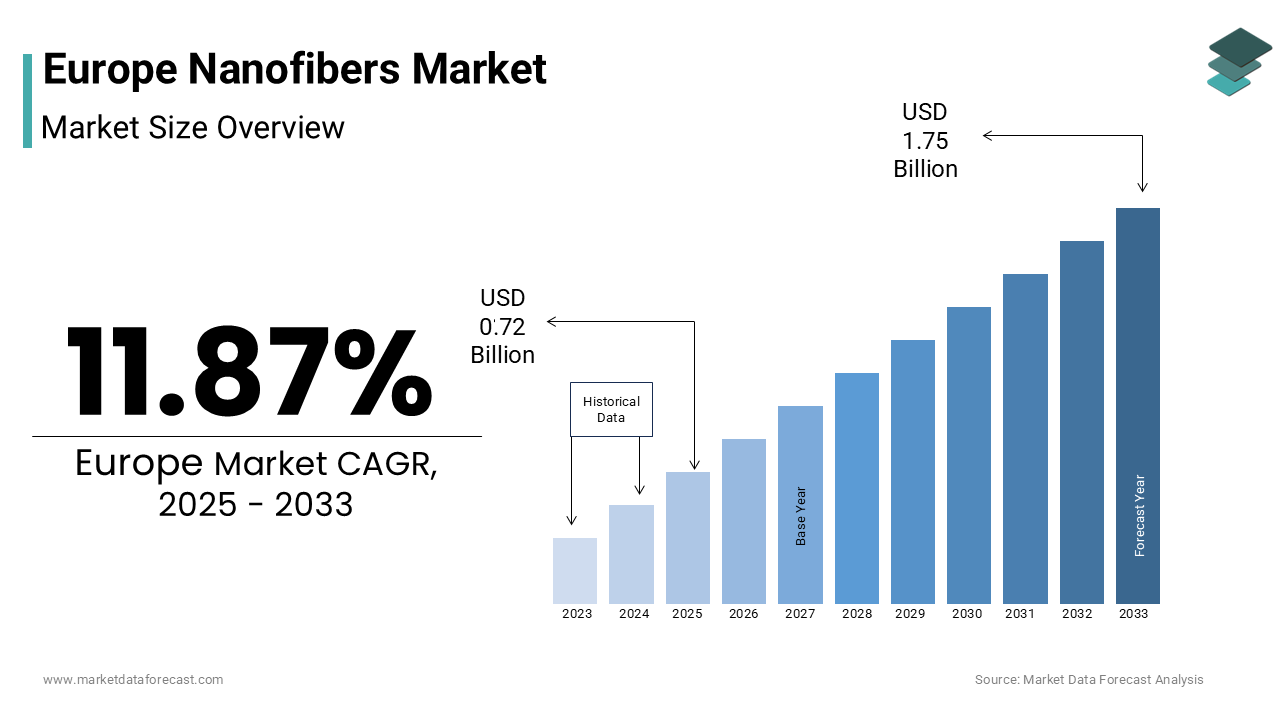
Nanofibers are ultra-fine fibers with diameters typically under 100 nanometers (though sometimes up to 1000 nm), possessing unique properties like large surface area, high porosity, and excellent mechanical strength, derived from polymers (natural or synthetic) or inorganic materials. Unlike conventional materials nanofibers offer exceptionally high surface area to volume ratios tunable porosity and mechanical reinforcement at minimal weight, attributes leveraged across high value sectors. As per sources, European Union funding programs, such as Horizon Europe, extensively support a broad range of research institutions and small to medium enterprises in developing new nanofiber innovations across various applications. The European Commission recognizes nanotechnology as a vital Key Enabling Technology that supports strategic innovation and resilience in sectors like healthcare and sustainable technologies. European countries and cities are increasingly exploring and implementing advanced air filtration solutions, including high-efficiency systems in public transport, to help meet stricter air quality regulations. Besides, the medical field, within the European regulatory framework, is seeing increased use and development of innovative nanofiber-based materials for advanced wound care and tissue regeneration applications. This market is not speculative but embedded in Europe’s industrial policy digital health agenda and environmental performance mandates making it a cornerstone of next generation material science.
MARKET DRIVERS
Stringent EU Air and Water Quality Regulations Driving Advanced Filtration Demand
Binding environmental directives require ultra efficient filtration systems in industrial public and residential settings, which drives the growth of the Europe’s nanofibers market. Updated air quality standards are encouraging the integration of advanced filtration materials into heating, ventilation, and air conditioning systems, as well as public transportation and industrial facilities. New regulatory requirements for medical facilities focus on the use of specialized filtration layers designed to trap extremely fine airborne particles. Environmental directives for water treatment emphasize the use of high-efficiency membranes to intercept microplastics and chemical residues during the filtration process. The transition toward these advanced materials is being driven by their ability to maintain high air purity while reducing the mechanical resistance that typically increases energy demand. There is an observable shift toward using synthetic fibers with extremely small diameters to improve the overall efficiency of purification technologies across multiple sectors. These regulatory imperatives transform nanofibers from optional enhancements into compliance necessities across critical infrastructure.
Integration of Nanofibers in Advanced Wound Care and Regenerative Medicine
The European healthcare sector is increasingly adopting nanofiber scaffolds for chronic wound management and tissue engineering due to their biomimetic structure and drug delivery capabilities, which further boosts the expansion of the Europe nanofibers market. According to sources, a significant number of individuals across the continent experience long-lasting wounds, which represent a substantial financial burden on healthcare infrastructure. Nanofiber dressings such as those based on polylactic acid or chitosan replicate the extracellular matrix promoting faster epithelialization and reducing infection risk. Medical regulatory bodies have recently approved numerous medical devices that utilize nanofiber technology. These new products include specialized applications such as patches designed for diabetic ulcers and nerve repair guides that can be absorbed by the body. Reports from a major medical institution in one Scandinavian country indicate a noticeable decrease in the time required for certain types of leg ulcers to heal when treated with specific collagen nanofibers. There has been a significant financial commitment from a major research funding body to support the development of individualized nanofiber implants for the regrowth of both skin and cartilage. This convergence of clinical efficacy regulatory endorsement and public funding establishes nanofibers as indispensable tools in Europe’s shift toward precision and regenerative medicine.
MARKET RESTRAINTS
High Production Costs and Limited Scalability of Electrospinning Technologies
The high cost and low throughput of dominant manufacturing methods like electrospinning restrict the growth of the Europe nanofibers market despite strong demand. Industrial-scale electrospinning lines produce significantly less material per minute compared to established conventional nonwoven manufacturing processes. This production disparity results in medical-grade nanofibers being substantially more expensive per square meter than standard meltblown fabrics. Achieving increased production scale requires significant financial investment, and a majority of new companies in the nanofiber sector view limitations in production expansion as a primary obstacle to market entry. Emerging methods such as centrifugal spinning and solution blow spinning have yet to receive the necessary certification for applications in the medical or filtration fields. The widespread adoption of nanofibers is contingent upon overcoming current scalability and cost hurdles. Until then, they will occupy only premium application spaces.
Regulatory Uncertainty and Lack of Harmonized Safety Standards for Nanomaterials
The absence of unified EU-wide safety and classification protocols for nanofibers creates significant market entry delays and compliance risks, which constrains the expansion of the Europe nanofibers market. The classification of nanofibers is determined by physical and chemical characteristics, but interpretation of these criteria differs among various regulatory bodies. Regional authorities have established different evidentiary requirements for the safety assessment of specific polymer materials based on their physical dimensions. Inconsistent data requirements across jurisdictions compel developers to prepare varied documentation to satisfy localized safety standards. Varying regulatory expectations result in extended timelines for bringing new materials to the commercial market. A unified methodology for evaluating specific health risks associated with these materials remains absent despite ongoing efforts to establish common standards. Consequently, many industrial buyers delay adoption fearing future regulatory reversals. As per a survey, a portion of hospital procurement officers avoid nanofiber filters due to unresolved occupational safety questions. This regulatory fragmentation stifles investment and innovation despite clear technical and environmental benefits.
MARKET OPPORTUNITIES
Deployment in Next Generation Battery Separators for Electric Mobility
The region’s electric vehicle ecosystem, which uses advanced battery separators, enhances safety, energy density, and charging speed, offering potential opportunities for the Europe nanofibers market growth. Numerous large-scale battery production facilities are currently being established across the region to significantly expand domestic energy storage manufacturing. Standard separator materials often face challenges regarding heat resistance and efficient energy flow during intensive use. Advanced membrane technologies, such as those utilizing ceramic layers or specialized synthetic fibers, allow for stable operation at higher temperatures and support rapid energy replenishment. Collaboration between established manufacturers and material innovators is focused on creating bio-based components that improve environmental sustainability and domestic resource independence. The integration of nanofiber-based separators enhances the longevity of energy storage units while minimizing the likelihood of overheating incidents. The EU’s Net Zero Industry Act classifies advanced battery materials as strategic and provides state aid for domestic production. Nanofiber separators present a significant opportunity for scalable and high-value production, which aligns with Europe's strategic goals as electric vehicle sales boom towards 2027.
Integration into Smart Textiles for Health Monitoring and Protective Gear
The convergence of nanofibers with wearable electronics is opening intelligent textile applications in healthcare defense and occupational safety across the region, which is anticipated to propel the expansion of the Europe nanofibers market. As per research, nanofiber based fabrics embedded with conductive polymers can detect chemical warfare agents and physiological stress markers in real time. In healthcare the EU funded “SmartSkin” project developed hospital gowns with piezoelectric nanofibers that monitor patient respiration and movement without external sensors. Advanced textile materials are being integrated into healthcare environments to improve patient safety outcomes. Regional innovation initiatives are providing substantial financial support to expand the production of specialized fabrics with multiple functional properties. Modern textile developments are merging traditional protection with digital capabilities, such as environmental sensing and connectivity. Commercial industries are adopting protective apparel that utilizes integrated technology to monitor the conditions of workers in industrial settings. The evolution of fiber technology allows for a single material to simultaneously address hygiene, filtration, and communication needs. The composition of the population across the region is increasingly characterized by a greater proportion of older individuals.
MARKET CHALLENGES
Fragmented Supply Chain for High Purity Precursor Polymers
Persistent supply insecurity for medical and electronic grade precursor polymers such as polyvinylidene fluoride polylactic acid and polyacrylonitrile inhibits the growth of the Europe nanofibers market. The European nanofiber industry heavily relies on importing key feedstocks from international suppliers outside the EU. Domestic EU suppliers frequently face challenges in obtaining required certifications for key application standards, such as those for biocompatibility and flammability. The EU supply chain for specialty polymers used in medical nanofibers faces significant production limitations and potential vulnerabilities. Geopolitical disruptions such as the Red Sea shipping crisis caused lead times to extend several weeks as per sources. This dependency contradicts the EU’s strategic autonomy goals and increases costs for European nanofiber producers who pay premiums for certified materials. Europe's progress in nanofiber innovation will be stalled at the raw material stage unless there is simultaneous investment in polymer refining and certification infrastructure.
Limited End User Awareness and Technical Integration Capabilities
Many potential adopters in construction automotive and consumer goods lack the technical expertise to integrate nanofibers into existing product designs, despite proven performance, which slows down the expansion of the Europe nanofibers market. According to a survey, a majority of SMEs in manufacturing expressed interest in nanofibers but lacked knowledge in key areas like processing and performance. Filter manufacturers struggle with nanofiber lamination durability while textile firms face challenges in weaving or knitting ultrafine mats. Only a small portion of engineering curricula in EU universities include nanofiber processing modules, contributing to a skills gap. Product liability concerns, particularly the need for long-term durability data, discourage the adoption of nanofiber composites among some suppliers. Despite technical guidelines being offered by organizations such as CEN and VDI, adoption of these standards is not widespread. The market's underutilization of nanofiber potential will persist until standardized integration protocols and accessible training programs are implemented, even with current regulatory and environmental tailwinds.
REPORT COVERAGE
| REPORT METRIC | DETAILS |
| Market Size Available | 2024 to 2033 |
| Base Year | 2024 |
| Forecast Period | 2025 to 2033 |
| CAGR | 11.87% |
| Segments Covered | By Product Type, End-user Industry and Region. |
| Various Analyses Covered | Global, Regional & Country Level Analysis, Segment-Level Analysis, DROC, PESTLE Analysis, Porter’s Five Forces Analysis, Competitive Landscape, Analyst Overview of Investment Opportunities |
| Regions Covered | United Kingdom, France, Spain, Germany, Italy, Russia, Sweden, Denmark, Switzerland, the Netherlands, Turkey, and the Czech Republic |
| Market Leaders Profiled | Toray Industries, Inc., 3M Company, DuPont de Nemours, Inc., Arkema Group, Ahlstrom-Munksjö, Kolon Industries, Inc., Freudenberg Group, Elmarco, Nantong Jiuding New Materials Co., Ltd., and Hansol PCS Co., Ltd.. |
SEGMENTAL ANALYSIS
By Product Type Insights
The polymeric nanofibers segment led the Europe nanofibers market and captured a 46.5% share in 2024. The leading position of the polymeric nanofibers segment is attributed to its versatility biocompatibility and established manufacturing infrastructure using techniques like electrospinning. Materials such as polylactic acid polyacrylonitrile and polyvinyl alcohol dominate applications in filtration wound care and textiles where controlled degradation and non-toxicity are essential. A significant majority of approved medical nanofiber devices in the European market utilize polymeric bases, a choice heavily influenced by their established ability to comply with stringent biocompatibility and safety standards. Efforts to improve air quality in public transport across Europe involve adopting advanced filtration systems, including high-efficiency options that leverage modern materials to better meet evolving health and environmental guidelines. Additionally, Polymeric nanofibers contribute to the European Union’s broader circular economy strategy, especially variants based on polylactic acid and other materials that are compostable under specific industrial conditions. Research by reputable institutes, such as the Fraunhofer Institute, highlights the exceptional filtration efficiency and breathability of modern polymeric nanofiber masks, which has led to their increased adoption in medical and clinical environments. This combination of regulatory alignment safety and functional adaptability ensures polymeric nanofibers remain the backbone of the European market.
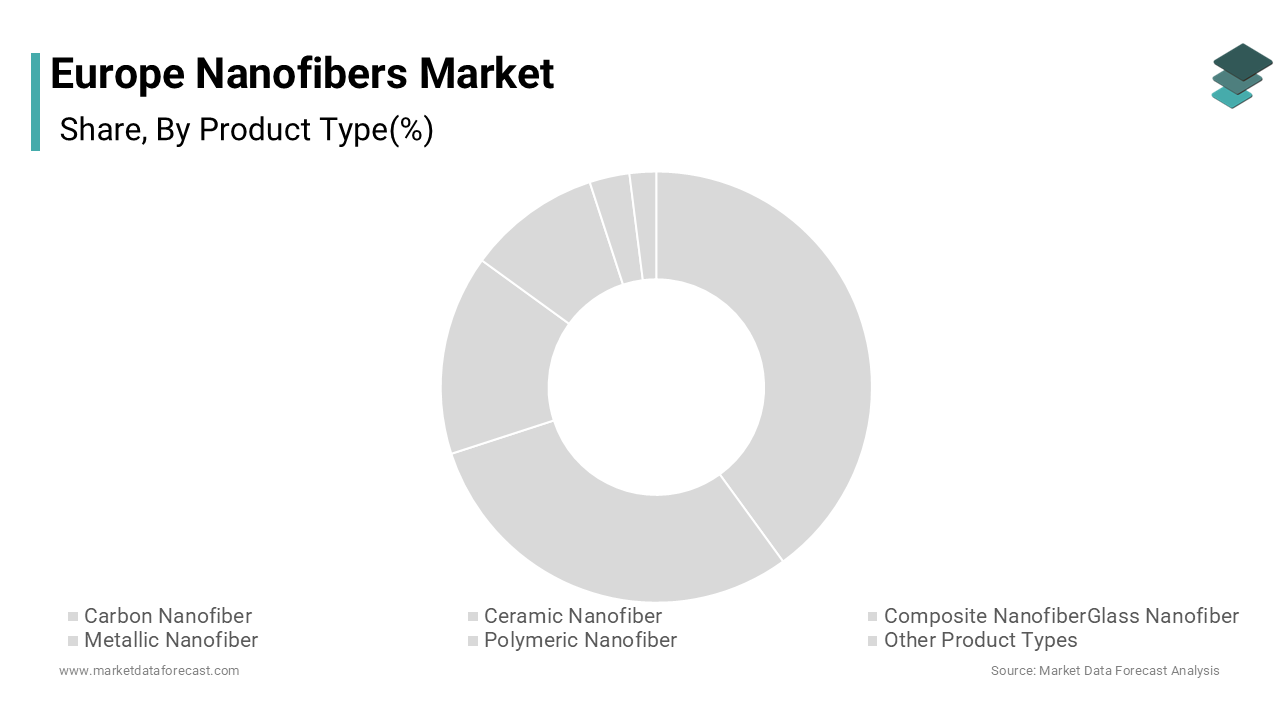
The carbon nanofibers segment is anticipated to witness the fastest CAGR of 18.7% from 2025 to 2033 due to demand for lightweight high strength conductive materials in electric vehicles energy storage and aerospace. European industrial partnerships are increasingly adopting advanced carbon nanomaterials as conductive additives in lithium-ion battery anodes to enhance charging efficiency and extend the operational life of power cells. Northvolt’s Swedish production facilities are integrating specialized carbon additives into premium battery cells to meet the high-performance requirements of its major automotive partners like Volvo. Airbus is advancing the use of reinforced carbon composites in aircraft wing assemblies to achieve significant weight savings and improve fuel efficiency while maintaining high structural standards. European Union regulations now designate advanced materials for clean energy as strategic priorities, providing streamlined regulatory paths and financial support to scale up domestic manufacturing of critical battery components. Furthermore, the European Space Agency employs carbon nanofibers in satellite thermal management systems due to their exceptional thermal conductivity. Propelled by Europe's goal of achieving significant battery capacity (measured in GWh) by 2030 and rapid decarbonization in the aerospace sector, carbon nanofibers are on the verge of exponential expansion in valuable industrial applications.
By End User Industry Insights
The healthcare and biomedical segment dominated the Europe nanofibers market by accounting for a 28.2% share in 2024. The supremacy of the healthcare and biomedical segment is credited to the region’s advanced medical infrastructure regulatory support and aging population. Nanofiber based wound dressings tissue scaffolds and drug delivery systems address critical needs in chronic disease management and regenerative medicine. The prevalence of chronic wounds in Europe represents a substantial and growing burden on healthcare systems and the population due to factors such as an aging demographic and increased incidence of related conditions like diabetes. Nanofiber dressings are a promising area of research in advanced wound management because they can effectively mimic the natural extracellular matrix, which aids the healing process in various experimental and clinical settings. Regulatory agencies like the European Medicines Agency (EMA) have approved various medical devices and materials incorporating nanotechnology for clinical use, although specific annual approval numbers for a narrow category like nanofiber devices are not publicly listed in bulk approvals. European Union research programs, such as Horizon Europe, consistently allocate significant funding to foster innovation and development in advanced biomaterials and personalized medical technologies. Hospitals across Germany and the Netherlands now use nanofiber air filters in operating rooms to maintain ISO Class 5 cleanliness. This deep integration into clinical pathways and public health funding ensures healthcare remains the largest and most stable nanofiber application domain.
The energy segment is likely to experience the fastest CAGR of 20.3% over the forecast period owing to Europe’s aggressive decarbonization targets and the need for advanced materials in batteries fuel cells and hydrogen systems. European energy policy continues to prioritize massive scaling of hydrogen production capacity, supported by advancements in membrane technology that enhance the efficiency of splitting water into fuel. In batteries carbon and ceramic nanofibers enhance thermal stability and ion transport enabling safer fast charging cells. Major European battery manufacturers are centralizing their research in Sweden to develop advanced anode materials that maintain high capacity over long-term use. Collaborative energy research institutes are identifying that nanofiber-based separation layers are a critical safety feature in preventing overheating and fire risks in electric vehicle power systems. Furthermore, nanofiber catalysts in fuel cells increase surface area and reduce platinum loading lowering costs. Increasing public funding and the steady growth of the electric vehicle market are positioning advanced material innovations as the primary driver for a sustainable energy transition.
REGIONAL ANALYSIS
Germany Nanofibers Market Insights
Germany outperformed other countries in the Europe nanofibers market and held a share of 23.5% in 2024. The dominance of the German market is driven by its world class chemical engineering sector advanced manufacturing base and strong public research funding. The country hosts leading producers like Freudenberg Performance Materials and Elmarco which supply nanofiber filters to automotive and medical industries across Europe. According to the German Federal Ministry of Education over 120 million euros were allocated in 2024 to the “NanoMatFutur” program supporting nanofiber startups in energy and healthcare. Germany’s stringent air quality laws mandate nanofiber HEPA filters in all new public buildings and hospitals as per the Federal Environment Agency. The Fraunhofer Society operates five dedicated nanofiber pilot lines enabling rapid scale up from lab to industrial production. Germany leads Europe in nanofiber composite innovation, evidenced by numerous patents for high-performance automotive, aerospace, and filtration applications, showcasing its role as a key European tech hub.
France Nanofibers Market Insights
France followed closely in the Europe nanofibers market and accounted for a 18.6% share in 2024. The demand of nanofibers in France is because of its leadership in defense aerospace and nuclear safety applications of nanofibers. The French Alternative Energies and Atomic Energy Commission operates Europe’s largest nanofiber filtration test facility developing ceramic nanofiber membranes for radioactive particle capture in nuclear plants. Advanced aerospace engineering now utilizes ultralight nanofiber materials within engine liners to achieve substantial quietness and noise control in modern aircraft. National French funding programs prioritize the development of nanofibers for next-generation energy storage solutions and advanced medical wound management. Specialized medical facilities in major French cities utilize bio-based nanofiber treatments as a primary method for healing severe burn injuries. International economic reviews recognize France as a top-tier European leader in fostering collaborative research between public agencies and private industries for advanced materials. This strategic focus on high reliability sectors ensures France’s influential role in specialized nanofiber deployment.
Sweden Nanofibers Market Insights
Sweden maintains a noteworthy position in the Europe nanofibers market due to its fossil free industrial strategy leadership in battery innovation and strong academic research in sustainable nanomaterials. The country is home to Northvolt’s flagship gigafactory which uses carbon nanofibers in battery anodes and partners with KTH Royal Institute of Technology on cellulose nanofiber separatorsThe Swedish government and its agencies are consistently funding the expansion of the national bioeconomy and advanced biomaterial innovations, including significant investments in carbon capture technologies from biomass to achieve climate goals. Research institutions, including the Karolinska Institute, are engaged in a growing body of research and clinical trials demonstrating that advanced nanofiber wound dressings derived from biopolymers like collagen show promise in significantly improving healing outcomes for chronic wounds compared to traditional care. Sweden’s stringent occupational safety laws also mandate nanofiber filters in mining and metalworking industries protecting workers from ultrafine particulates. This integration of green industry health and safety makes Sweden a model for purpose driven nanofiber adoption.
The United Kingdom Nanofibers Market Insights
The United Kingdom is moving ahead steadfastly in the Europe nanofibers market owing to excellence in biomedical nanofibers defense applications and university spin out commercialization. Imperial College London and the University of Manchester are widely recognized as prominent global centers for advanced materials research, including extensive work on graphene and carbon nanofibers, engaging actively with industrial partners and contributing to commercialization efforts. Defence Applications: The UK Ministry of Defence actively funds research and innovation into advanced materials, including those with potential for protective equipment, through various accelerator and grant programs to sustain a technological advantage in defense and security applications. Healthcare Innovations: Nanofiber wound dressings, including those incorporating polyvinyl alcohol and antimicrobial agents, represent a significant area of research interest in the UK and globally due to their potential to improve wound healing and address infection control challenges compared to some traditional treatments. Despite Brexit the UK remains integrated into EU research through Horizon Europe associate status enabling continued collaboration. Companies like Promethean Particles operate continuous hydrothermal synthesis lines producing hundreds of tons of metal oxide nanofibers annually. This blend of scientific depth defense innovation and clinical validation sustains the UK’s strong position in high value nanofiber niches.
Netherlands Nanofibers Market Insights
The Netherlands is estimated to witness a healthy CAGR in Europe nanofibers market from 2025 to 2033 due to its open innovation ecosystem port logistics and leadership in nanofiber membrane technology. The country hosts the European Nanofibers Hub at the University of Twente which provides shared pilot lines for SMEs across Europe. Companies like SolVin and Membrana develop polymeric nanofiber membranes for water desalination and pharmaceutical filtration with exports to numerous countries. Financial commitments show a notable increase toward scaling up domestic nanofiber production capabilities, with a specific focus on applying this material within energy sector infrastructure. The application of nanofiber technology also extends to improving air quality management in large public facilities, where these filters have shown high efficiency in removing airborne particulates in operational settings. This pattern indicates a dual application strategy: one focused on industrial clean energy advancement, and the other on public health and air quality improvement. The Netherlands Organisation for Applied Scientific Research runs standardized testing protocols for nanofiber safety accelerating regulatory approval. This collaborative infrastructure knowledge sharing and export orientation positions the Netherlands as a critical enabler of European nanofiber commercialization.
COMPETITIVE LANDSCAPE
Competition in the Europe nanofibers market is defined by a dynamic interplay between specialized technology providers large industrial integrators and research driven startups each navigating a landscape shaped by scientific complexity regulatory scrutiny and high performance demands. Unlike commoditized materials nanofibers compete on tailored functionality durability and application integration rather than price. German and Czech firms lead in scalable production platforms while UK and Swedish entities excel in inorganic and biomedical formulations. The market is highly fragmented with no single player dominating across all segments yet collaboration is common through EU funded consortia addressing shared challenges in standardization safety and end of life. Barriers to entry remain high due to capital intensity technical expertise and certification timelines yet the strategic importance of nanofibers in clean tech health and defense ensures sustained investment. This ecosystem rewards innovation that bridges laboratory promise with industrial pragmatism.
KEY MARKET PLAYERS
Some of the companies that are playing a dominating role in the europe nanofibers market include
- Toray Industries, Inc.
- 3M Company
- DuPont de Nemours, Inc.
- Arkema Group
- Ahlstrom-Munksjö
- Kolon Industries, Inc.
- Freudenberg Group
- Elmarco
- Nantong Jiuding New Materials Co., Ltd.
- Hansol PCS Co., Ltd.
Top Players in the Market
Freudenberg Performance Materials GmbH & Co KG
Freudenberg Performance Materials is a German leader in technical textiles with a strong focus on nanofiber innovation for filtration medical and automotive applications. The company supplies nanofiber-enhanced media to numerous countries and has pioneered scalable electrospinning processes compatible with industrial production lines. In Europe Freudenberg collaborates with hospital networks to deploy antimicrobial nanofiber wound dressings and with automotive OEMs for cabin air filters that capture ultrafine particles. It also expanded its pilot production facility in Weinheim to support battery separator development for European gigafactories. These moves reinforce Freudenberg’s role as a bridge between advanced material science and real world industrial adoption.
Elmarco s r o
Elmarco s r o is a Czech technology company renowned for developing the world’s first industrial scale nanofiber production line and remains a key enabler of nanofiber commercialization across Europe. The company licenses its Nanospider technology to filter manufacturers medical device firms and research institutions in numerous countries. In Europe Elmarco partners with universities and SMEs through EU Horizon projects to tailor nanofiber solutions for water purification and wound care. It also co founded the European Nanofiber Producers Network to harmonize quality standards and reduce time to market. By democratizing access to scalable manufacturing Elmarco strengthens Europe’s strategic autonomy in advanced materials.
Promethean Particles Ltd
Promethean Particles Ltd is a UK based innovator specializing in continuous hydrothermal synthesis of metal oxide and ceramic nanofibers for energy catalysis and electronics. The company operates one of Europe’s largest nanomaterial production facilities capable of manufacturing 500 metric tons annually under ISO 13485 standards. Its nanofibers are used in solid oxide fuel cells lithium sulfur batteries and antimicrobial coatings across global supply chains. It also partnered with the Faraday Institution to develop silicon carbon nanofiber anodes for next generation batteries. Through precision engineering and clean production Promethean positions Europe at the forefront of functional inorganic nanofibers for decarbonization technologies.
Top Strategies Used by the Key Market Participants
Key players in the Europe nanofibers market prioritize scalable and sustainable manufacturing by investing in solvent free or green chemistry production methods to align with REACH and circular economy principles. They actively co develop application specific grades with end users in healthcare energy and filtration to ensure performance validation and regulatory compliance. Companies engage in public private partnerships under Horizon Europe to de risk R and D and accelerate pilot to production transitions. Strategic expansion of pilot lines and shared innovation hubs enables SMEs to access industrial scale testing without capital burden. Additionally firms pursue harmonized safety and performance certifications across EU member states to overcome regulatory fragmentation and build market trust in nanofiber reliability.
MARKET SEGMENTATION
This research report on the europe nanofibers market has been segmented and sub–segmented into the following categories.
By Product Type
- Carbon Nanofiber
- Ceramic Nanofiber
- Composite NanofiberGlass Nanofiber
- Metallic Nanofiber
- Polymeric Nanofiber
- Other Product Types
By End-user Industry
- Electronics
- Healthcare and Biomedical
- Automotive
- Energy
- Chemical
- Aerospace and Aviation
- Defense and Security
- Composites
- Textile
- Other End-user Industries
By Country
- UK
- France
- Spain
- Germany
- Italy
- Russia
- Sweden
- Denmark
- Switzerland
- Netherlands
- Turkey
- Czech Republic
- Rest of Europe