- Product Description Description
- Table of Contents TOC
- List of Table & Figure LOT
- Get Free Sample PDF Sample PDF
Market Size, 2025
$57.24 BnMarket Estimate, 2026
$63.94 BnMarket Forecast, 2034
$154.95 BnCAGR, 2026–2034
11.7%Europe Nanomedicine Market Size, Growth, Trends & Forecast (2026–2034)
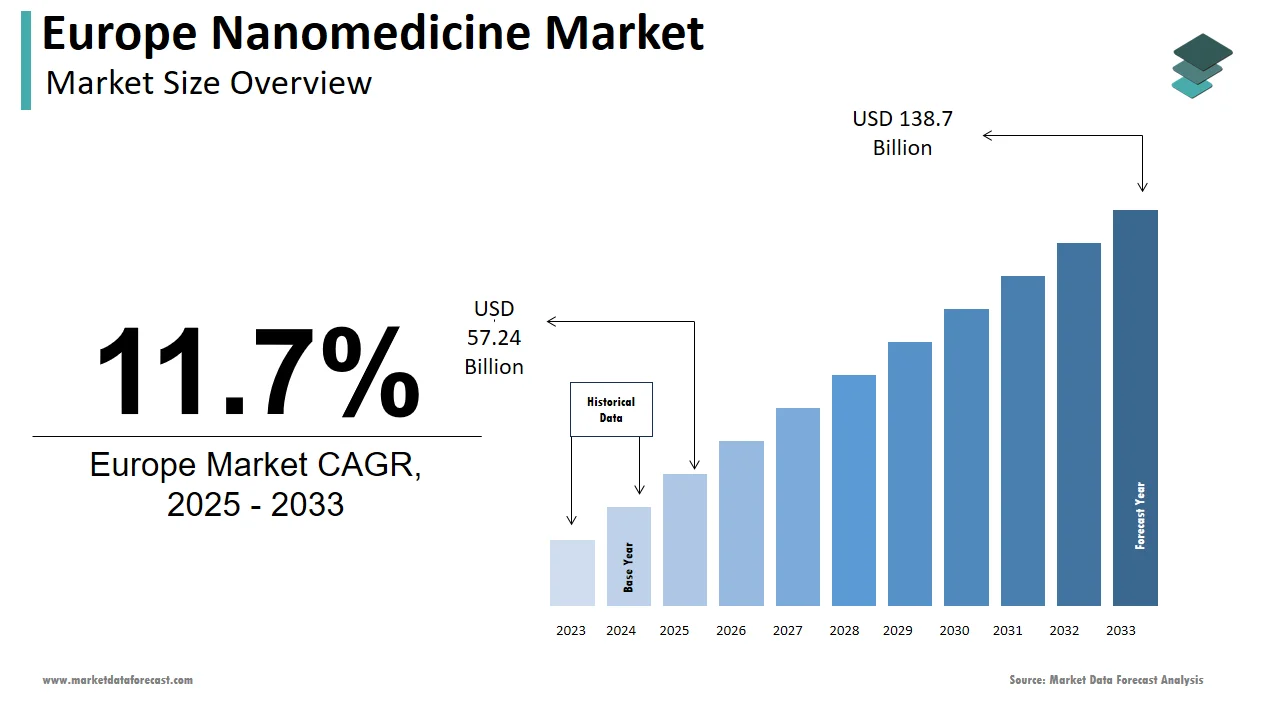
The Europe nanomedicine market size was valued at USD 57.24 billion in 2025, is estimated to reach USD 63.94 billion in 2026, and is projected to scale up to USD 154.95 billion by 2034, registering a compound annual growth rate (CAGR) of 11.7% during the forecast period from 2026 to 2034. Driven by strong public funding in precision oncology, the large-scale integration of nanocarriers into mRNA vaccine platforms, and breakthroughs in targeted drug delivery systems, the nanomedicine sector continues to expand rapidly across the European region.
Key Executive Metrics (At-a-Glance)
- 2025 Base Valuation: USD 57.24 Billion
- 2026 Current Valuation: USD 63.94 Billion
- 2034 Forecast Valuation: USD 154.95 Billion
- Compound Annual Growth Rate (CAGR): 11.7% (2026–2034)
- Dominant Product Segment: Drug Delivery (holding 46.3% market share in 2024 due to its pivotal role in enhancing therapeutic efficacy and reducing systemic toxicity)
- Fastest-Growing Product Segment: Vaccines (estimated to witness the fastest CAGR of 17.2% from 2026 to 2034, catalyzed by LNP-based mRNA platforms)
- Dominant Disease Type Segment: Oncological Diseases (accounting for 52.3% market share in 2024 driven by enhanced permeability and retention effects in solid tumors)
- Fastest-Growing Disease Type Segment: Neurological Diseases (projected to grow at a CAGR of 19.4% from 2026 to 2034 via blood-brain barrier penetration)
- Dominant Nanomolecule Segment: Nanoparticles (largest share at 68.2% in 2024, including liposomes, polymeric micelles, and solid lipid nanoparticles)
- Fastest-Growing Nanomolecule Segment: Nanoshells (expected to grow at the fastest CAGR of 21.3% from 2026 to 2034 for image-guided photothermal therapies)
- Dominant Country: Germany (holding 24.6% of the European market share in 2024 backed by a world-class research infrastructure and the Paul Ehrlich Institute)
Core Market Drivers
- Strong Public Investment in Precision Oncology: Millions allocated via Horizon Europe and EU cancer missions to accelerate targeted nanocarrier adoption in refractory malignancies.
- Validation of mRNA Vaccine Platforms: Real-world success of ionizable lipid nanoparticles paving the way for scalable delivery across diverse therapeutic classes.
Primary Market Restraints & Challenges
- Complex and Evolving Regulatory Landscape: Absence of a unified EU legal definition for nanomaterials, causing case-by-case evaluation ambiguities.
- GMP Nanomanufacturing Scalability Limits: Technical hurdles in maintaining tight batch-to-batch consistency and high throughput for microfluidic mixing systems.
- Long-Term Toxicity & IP Fragmentation: Inadequate chronic exposure safety data and overlapping patent thickets obstructing seamless cross-licensing.
Europe Nanomedicine Market Segmentation Breakdown
| Segment Category | Leading Sub-Segment (2024/2025 Base) | Fastest-Growing Sub-Segment (2026–2034) |
|---|---|---|
| By Product | Drug Delivery (46.3% share in 2024 for targeted pharmacokinetics) | Vaccines (projected at a 17.2% CAGR) |
| By Disease Type | Oncological Diseases (52.3% share in 2024 leveraging tumor retention effects) | Neurological Diseases (19.4% CAGR for blood-brain barrier transport) |
| By Nanomolecule Type | Nanoparticles (68.2% share in 2024, including liposomes and lipid systems) | Nanoshells (21.3% CAGR for photothermal ablation and diagnostics) |
| By Country | Germany (24.6% market share backed by robust biopharma and PEI oversight) | United Kingdom / France (expanding via agile regulatory pathways and clinical networks) |
Major Industry Players Profiled
Key corporations shaping the competitive European nanomedicine landscape include Johnson & Johnson, Merck & Co., BioNTech, Pfizer, Abbott Laboratories, GE Healthcare, Celgene Corporation, Novartis, Nanosphere, Inc., Gilead Sciences, Hoffmann-La Roche, Nanospectra Biosciences, and Arrowhead Pharmaceuticals.
Europe Nanomedicine Market Size
The nanomedicine market size in Europe was valued at USD 57.24 billion in 2025. The European market is estimated to be worth USD 154.95 billion by 2034 from USD 63.94 billion in 2026, growing at a CAGR of 11.7% from 2026 to 2034.
Nanomedicine is the development and clinical application of engineered nanoscale materials typically 1 to 100 nanometers in size for diagnostics, drug delivery, regenerative medicine, and theranostics. These include lipid nanoparticles, polymeric micelles, dendrimers, and inorganic nanostructures designed to enhance therapeutic precision, reduce systemic toxicity, and overcome biological barriers such as the blood-brain barrier. Nanomedicine is particularly transformative in oncology, where targeted delivery systems improve tumor accumulation while sparing healthy tissue. According to the European Medicines Agency, over 50 nanomedicinal products have received centralized marketing authorization in the European Union since 2000, including Doxil, Onivyde, and mRNA-based vaccines utilizing lipid nanoparticles. The European Commission classifies nanomedicine as a Key Enabling Technology under its Horizon Europe framework, recognizing its cross-sectoral impact on health and biotechnology. As per the European Society for Nanomedicine, more than 120 nanomedicine clinical trials were active across EU member states in 2023, with 68% focused on cancer and 18% on rare diseases. National regulatory bodies such as Germany’s Paul Ehrlich Institute and France’s ANSM maintain specialized evaluation pathways for nanomaterials due to their unique physicochemical properties. This advanced yet tightly governed ecosystem positions Europe as a global leader in the responsible translation of nanoscale innovations from bench to bedside.
MARKET DRIVERS
Strong Public Investment in Precision Oncology Accelerates Nanocarrier Adoption
The strategic focus on precision medicine in cancer care has created fertile ground for nanomedicine deployment in hard-to-treat malignancies is propelling the growth of the Europe nanomedicine market. The European Joint Programme on Rare Cancers and the EU’s Mission on Cancer have allocated over 1.2 billion euros since 2021 to support targeted therapies, including nanodelivery platforms. According to the Organisation for Economic Co-operation and Development, over 3.9 million new cancer cases are diagnosed annually in Europ,e with pancreatic glioblastoma and ovarian cancers exhibiting five-year survival rates below 30% due to poor drug penetration. Nanomedicines address this by enhancing tumor accumulation through the enhanced permeability and retention effect or active ligand targeting. A 2023 multicenter trial coordinated by the European Organisation for Research and Treatment of Cancer demonstrated that liposomal irinotecan improved median overall survival in metastatic pancreatic cancer by 3.8 months compared to standard therapy. National cancer plans in Germany and the Netherlands now include nanomedicines in reimbursement pathways for specific indications.
Integration of Nanomedicine into mRNA Vaccine Platforms Validates Scalable Delivery
The unprecedented success of mRNA vaccines during the pandemic cemented lipid nanoparticles as a clinically proven and manufacturable nanomedicine platform. The integration of nanomedicine into mRNA vaccine platforms validates that scalable deliveries are leveraging the growth of the Europe nanomedicine market. According to the European Centre for Disease Prevention and Control, over 550 million doses of mRNA vaccines were administered in the EU by early 2024, all relying on ionizable lipid nanoparticles for cytosolic delivery. This real-world validation has catalyzed the repurposing of the same delivery architecture for other indications. The European Medicines Agency has granted priority review to three non-COVID mRNA nanomedicines in 2023, including a melanoma vaccine and a cystic fibrosis therapy. BioNTech’s manufacturing facility in Marburg, Germany, now operates as a dedicated mRNA nanomedicine hub producing clinical-grade lipid nanoparticles for 17 pipeline candidates.
MARKET RESTRAINTS
Complex and Evolving Regulatory Classification Creates Approval Uncertainty
Nanomedicines face regulatory ambiguity in Europe due to the absence of a unified legal definition and inconsistent classification across member states is a restricting factor for the growth of the Europe nanomedicine market. While the European Medicines Agency provides scientific guidance, the lack of binding nano-specific legislation means products are evaluated on a case-by-case basis, often leading to divergent requirements. Germany’s Paul Ehrlich Institute mandates separate genotoxicity studies for nanocarriers even when the active substance is already approved, whereas Sweden’s Medical Products Agency accepts extrapolated data under certain conditions.
Limited Scalability of GMP Compliant Nanomanufacturing Constrains Commercial Viability
Producing nanomedicines at a commercial scale, while maintaining batch-to-batch consistency, remains a significant technical hurdle is limiting the growth of the Europe nanomedicine market. Most nanoformulations require precise control of size, polydispersity, and surface charge parameters highly sensitive to mixing speed, temperature, and raw material variability. Microfluidic mixing used in lipid nanoparticle production achieves high reproducibility, but current commercial systems max out at 20 liters per hour, limiting mass production. These constraints inflate costs and delay market acces,s particularly for orphan disease applications where patient pools are small yet manufacturing complexity remains high.
MARKET OPPORTUNITIES
Expansion into Neurological Disorders Unlocks High Unmet Medical Need
The strategy to overcome the blood-brain barrier with a major obstacle in treating neurodegenerative and neuro oncologic conditions affecting millions, is creating new opportunities for the growth of the Europe nanomedicine market. According to the European Brain Council, over 165 million people in the EU suffer from brain disorders, including Alzheimer’s, Parkinson’s, and glioblastoma, with annual economic costs exceeding 800 billion euros. Traditional therapeutics fail to achieve therapeutic concentrations in the brain due to efflux pumps and tight endothelial junctions. However, engineered nanoparticles coated with transferrin or angiopep ligands have demonstrated 5 to 8 fold higher brain uptake in preclinical models. Researchers at the University of Copenhagen showed that polymeric nanoparticles loaded with curcumin reduced amyloid beta plaques by 41% in a transgenic Alzheimer’s mouse model. The EU’s Innovative Health Initiative launched the “Nano4Brain” consortium in 2024 with 90 million euros in funding to advance clinical translation.
Growth of Inorganic Nanotheranostics for Image-Guided Therapy
Multifunctional inorganic nanoparticles, such as iron oxide, gold, and quantum dots, enable simultaneous diagnosis and treatment termed theranostics, which is revolutionizing personalized intervention in oncology and cardiovascular disease. The growth of inorganic nanotheranostics for image-guided therapy is escalating the growth of the Europe nanomedicine market. According to the European Society of Radiology, over 50 million MRI procedures are performed annually in the EU, creating a ready clinical infrastructure for nanoparticle-based contrast agents. Ferumoxytol, an iron oxide nanoparticle approved for anemia, is now repurposed off-label as an MRI contrast agent in pediatric and renal-impaired patients due to its superior safety profile. A 2024 trial at the German Cancer Research Center demonstrated that gold nanoshells conjugated with anti-EGFR antibodies enabled real-time photoacoustic imaging and localized photothermal ablation of head and neck tumors with 92% lesion regression. The European Commission’s Horizon Europe program has prioritized theranostic platforms, allocating 110 million euros in 2023 to projects integrating imaging biomarkers with targeted nanotherapy.
MARKET CHALLENGES
Inadequate Long-Term Toxicity and Biodistribution Data Undermine Clinical Confidence
Many nanomedicines lack comprehensive data on chronic exposure, organ accumulation, and immune interactions over extended periods is one of the challenges for the growth of the Europe nanomedicine market. According to the European Commission’s Scientific Committee on Emerging and Newly Identified Health Risks, certain nanomaterials like cationic lipids and quantum dots show potential for lysosomal dysfunction and oxidative stress in animal models after repeated dosing. A 2023 review by the Karolinska Institutet found that only 28% of nanomedicine clinical trials registered in the EU Clinical Trials Register included long-term follow-up beyond 12 months. This data gap fuels caution among clinicians and payers, particularly for chronic conditions requiring repeated administration. The European Society of Medical Oncology has issued guidance recommending enhanced post-marketing surveillance for nanotherapeutics due to unknown risks of accelerated blood clearance or anti-PEG antibody formation.
Intellectual Property Fragmentation Hinders Collaborative Innovation
The highly patent landscape with overlapping claims on core technologies, such as lipid formulations targeting ligands and manufacturing processes, is acting as a barrier for the growth of the Europe nanomedicine market. According to the European Patent Office, over 12,000 nanomedicine-related patents were filed between 2018 and 2023, but fewer than 15% are held by single entities, with most requiring cross licensing. This thicket impedes technology transfer from academia to industry as startups face prohibitive legal costs to navigate freedom to operate analyses. The situation is exacerbated by national variations in patent enforcement, where German courts tend to uphold broad nano composition claims while Dutch tribunals favor narrow functional interpretations.
REPORT COVERAGE
| REPORT METRIC | DETAILS |
| Market Size Available | 2025 to 2034 |
| Base Year | 2025 |
| Forecast Period | 2026 to 2034 |
| Segments Covered | By Product, Disease Type, Nanomolecule Type, and Country |
| Various Analyses Covered | Global, Regional, and Country-Level Analysis, Segment-Level Analysis, Drivers, Restraints, Opportunities, Challenges; PESTLE Analysis; Porter’s Five Forces Analysis, Competitive Landscape, Analyst Overview of Investment Opportunities |
| Country Covered | UK, France, Spain, Germany, Italy, Russia, Sweden, Denmark, Switzerland, Netherlands, Turkey, Czech Republic, and the Rest of Europe. |
| Market Leaders Profiled | Johnson & Johnson, Merck & Co., BioNTech, Pfizer, Abbott Laboratories, GE Healthcare, Celgene Corporation, Novartis, Nanosphere, Inc, Gilead Sciences, Hoffmann-La Roche, Nanospectra Biosciences, and Arrowhead Pharmaceuticals |
SEGMENTAL ANALYSIS
By Product Insights
The drug delivery segment accounted in holding 46.3% of the Europe nanomedicine market share in 2024, with its pivotal role in enhancing therapeutic efficacy and reducing systemic toxicity across multiple disease areas. Nanoparticle-based drug delivery systems have demonstrated consistent clinical benefits in cancer therapy by improving pharmacokinetics and tumor targeting. According to the European Organisation for Research and Treatment of Cancer, over 60% of active nanomedicine trials in the EU focus on oncology with liposomal doxorubicin and albumin-bound paclitaxel as standard of care in specific indications. A 2023 meta-analysis published in The Lancet Oncology found that nanoformulated chemotherapies reduced severe neutropenia by 38% and increased progression-free survival by 2.4 months compared to conventional regimens. The European Medicines Agency has granted marketing authorization to 14 nanodelivery cancer drugs since 2010, with 9 currently reimbursed in Germany, France, and Italy. Hospitals across Europe are increasingly integrating these into treatment protocols for metastatic breast, ovarian, and pancreatic cancers where conventional therapy fails.
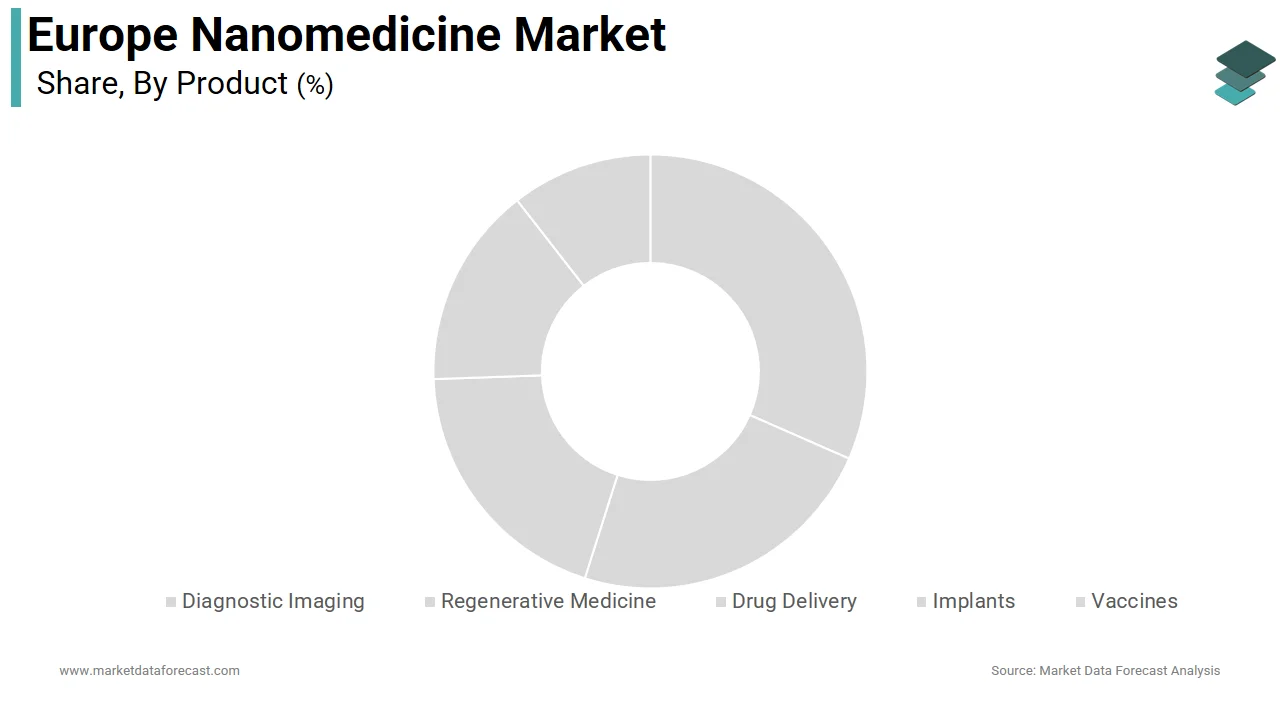
The vaccines segment is estimated to witness the fastest CAGR of 17.2% from 2026 to 2034. The success of SARS-CoV-2 vaccines has catalyzed the expansion of lipid nanoparticle-based platforms into therapeutic vaccination for cancer and autoimmune disorders. According to the European Commission’s Health Emergency Preparedness and Response Authority, over 450 million euros were allocated in 2023 to sustain mRNA manufacturing capacity in the EU for future threats and non-infectious applications. BioNTech and CureVac now have 22 therapeutic mRNA vaccine candidates in clinical development, including personalized melanoma vaccines and tolerogenic formulations for multiple sclerosis
By Disease Type Insights
The oncological diseases segment accounted in holding 52.3% of the Europe nanomedicine market share in 2024. Solid tumors exhibit the enhanced permeability and retention effect, with a phenomenon where leaky vasculature and poor lymphatic drainage allow nanoparticles between 10 and 200 nanometers to accumulate preferentially in malignant tissue. According to the German Cancer Research Center, nanoformulated drugs achieve tumor concentrations 3 to 5 times higher than free drugs while reducing off-target exposure. The European Society for Medical Oncology now includes liposomal doxorubicin in its guidelines for metastatic breast cancer and ovarian cancer based on improved safety and quality of life metrics. National health systems in Germany, France, and the Netherlands recognize the value of nanomedicines in oncology through favorable reimbursement decisions.
The neurological diseases segment is projected to grow at a CAGR of 19.4% from 2026 to 2034. Neurodegenerative and neuro oncologic conditions have long resisted treatment due to the blood-brain barrier excluding over 98% of small molecule drugs. Nanomedicine offers a solution through surface functionalization with ligands like transferrin or angiopep 2 that trigger receptor-mediated transcytosis. Researchers at the University of Copenhagen demonstrated that lipid nanoparticles loaded with siRNA reduced mutant huntingtin protein by 52% in a Huntington’s disease model. The European Commission has elevated brain health as a strategic priority under its Mission on Cancer and the upcoming Mission on Neurodegenerative Diseases. The 2023 EU Action Plan on Brain Health allocated 220 million euros specifically for advanced delivery platforms, including nanomedicine.
By Nanomolecule Type Insights
The nanoparticles segment was the largest by accounting for 68.2% of the Europe Nanomedicine Market share in 2024. The vast majority of authorized nanomedicines in Europe utilize nanoparticle formats, including liposomes, polymeric micelles, and solid lipid nanoparticles. According to the European Medicines Agency, 42 of the 50 centrally approved nanomedicines are nanoparticle-based based with lipid systems alone accounting for 28 products, including all mRNA vaccines and major oncology drugs like Doxil and Onivyde. These platforms are favored for their ability to encapsulate both hydrophilic and hydrophobic payloads, protect labile molecules from degradation, and enable controlled release kinetics.
The nanoshells segment is expected to grow at the fastest CAGR of 21.3% from 2026 to 2034. Gold nanoshells engineered to absorb near-infrared light enable highly localized tumor destruction with minimal damage to surrounding tissue. Nanoshells can also be conjugated with antibodies for active targeting. Anti-EGFR-coated shells demonstrated 4.7-fold higher tumor accumulation in xenograft models as validated by photoacoustic imaging. The European Society of Radiology recognizes nanoshells as emerging contrast agents that provide real-time treatment monitoring. The European Commission classifies therapeutic nanoshells as combination products requiring coordinated evaluation under both medicinal and medical device regulations. Companies like Nanospectra Biosciences have established partnerships with European hospitals to co-develop irradiation protocols, ensuring clinical readiness.
COUNTRY LEVEL ANALYSIS
Germany Nanomedicine Market Analysis
Germany was the largest contributor by holding 24.6% of the Europe Nanomedicine Market share in 2024 from its world-class research infrastructure, robust biopharma industry, and proactive regulatory environment. Germany hosts the Paul Ehrlich Institute, the EU’s most experienced national competent authority for nanomedicine evaluation, and the German Cancer Research Center, a global leader in nano oncology trials. The nation’s strong engineering base enables advanced GMP manufacturing with BioNTech’s Marburg facility producing lipid nanoparticles for over 20 pipeline candidates. Universities like Heidelberg and Tübingen consistently rank among the top globally for nanomedicine publications.
United Kingdom Nanomedicine Market Analysis
The United Kingdom nanomedicine market was next by holding 18.3% of share in 2024, with its excellence in translational research and agile regulatory pathways. The Medicines and Healthcare products Regulatory Agency maintains a dedicated nanomedicine unit that offers scientific advice within 30 days faster than most EU counterparts. Post Brexit, the UK has leveraged regulatory autonomy to fast-track promising candidates, with four nanomedicines receiving Innovative Licensing and Access Pathway designation in 2023. Companies like Oxford Nanoimaging and Sphere Medical are commercializing diagnostic and monitoring nanoplatforms.
France Nanomedicine Market Analysis
France nanomedicine market growth is likely to grow with its strength in clinical validation and public health integration. France’s National Cancer Institute operates one of Europe’s most active nanomedicine trial networks with 28 ongoing studies in 2024 focused on liposomal and polymer-based systems. Institutions like Institut Curie and INSERM lead in nanoparticle biodistribution and toxicity research, ensuring rigorous safety evaluation. The French government’s “France 2030” investment plan allocated 150 million euros to advanced therapies, including nanomedicine manufacturing scale-up.
COMPETITIVE LANDSCAPE
The Europe Nanomedicine Market features a highly specialized and science-driven competitive landscape where innovation quality and regulatory acumen outweigh scale. Competition is bifurcated between large pharmaceutical firms with integrated nano platforms and agile biotech startups spun out of leading universities. Success hinges on the ability to navigate complex regulatory pathways, establish robust manufacturing processes, and generate compelling clinical evidence of improved therapeutic index. Unlike a commoditized market, differentiation arises from proprietary materials targeting ligands and release kinetics that address specific biological barriers. The European Medicines Agency’s proactive stance on nanomedicine creates a level playing field but demands rigorous characterization. Intellectual property remains a critical battleground with overlapping patents requiring strategic licensing. Public funding through Horizon Europe and national programs reduces early-stage risk, yet commercialization requires deep technical and regulatory expertise.
KEY MARKET PLAYERS
Some of the companies that are playing a dominating role in the Europe carbon steel market include
- Johnson & Johnson
- Merck & Co.
- BioNTech
- Pfizer
- Abbott Laboratories
- GE Healthcare
- Celgene Corporation
- Novartis
- Nanosphere, Inc.
- Gilead Sciences
- Hoffmann-La Roche
- Nanospectra Biosciences
- Arrowhead Pharmaceuticals
TOP PLAYERS IN THE MARKET
- BioNTech is a German biotechnology pioneer that transformed the global perception of nanomedicine through its lipid nanoparticle-based mRNA vaccines. The company leverages its proprietary NanoDelivery platform to develop targeted cancer immunotherapies and infectious disease vaccines beyond SARS-CoV-2. BioNTech actively contributes to global nanomedicine advancement by sharing manufacturing protocols with the World Health Organization and establishing mRNA production hubs in Africa and Asia. In Europe, the company has expanded its Marburg facility into a dedicated nanomedicine innovation center capable of producing clinical and commercial batches of lipid nanoparticles for over 20 pipeline candidates. Recent initiatives include partnerships with the European Medicines Agency to define quality standards for next-generation RNA nanocarriers, reinforcing its leadership in both therapeutic innovation and regulatory science.
- Roche is a Swiss multinational that integrates nanomedicine into its oncology and ophthalmology portfolios through proprietary drug delivery systems. The company’s antibody drug conjugates and nanoparticle formulations enhance tumor targeting while minimizing systemic exposure. Roche contributes globally by embedding nanotechnology in its companion diagnostics strategy, enabling precision dosing based on biomarker profiles. In Europe, Roche collaborates with academic centers like ETH Zurich to develop stimuli-responsive nanocarriers for brain delivery and maintains a dedicated nano characterization unit at its Basel headquarters. Recent actions include the launch of a digital nanotoxicology database aligned with EU regulatory requirements and investment in continuous manufacturing technologies to ensure batch consistency for complex nanoformulations across its global supply chain.
- Novartis is a global pharmaceutical leader with a strategic focus on nanomedicine for ocular and oncology applications. The company’s proprietary lipid and polymer-based platforms enable sustained drug release in the eye and targeted delivery to hematologic malignancies. Novartis contributes to the global nanomedicine ecosystem by participating in international standardization initiatives, including the International Council for Harmonisation and the International Organization for Standardization. In Europe, the company has strengthened its position through partnerships with the Innovative Health Initiative to advance nanotherapeutics for rare diseases and by establishing a nano GMP production line at its Stein site in Switzerland. Recent efforts include launching a real-world evidence program to track long-term safety of nanomedicines in chronic conditions and expanding its regulatory affairs team specializing in nano combination products.
TOP STRATEGIES USED BY THE KEY MARKET PARTICIPANTS
Key players in the Europe Nanomedicine Market prioritize platform technology development to enable rapid repurposing across therapeutic areas. They invest heavily in GMP-compliant, scalable manufacturing to overcome production bottlenecks and ensure batch consistency. Strategic collaborations with academic institutions and public research initiatives accelerate preclinical validation and clinical translation. Companies actively engage with the European Medicines Agency to shape regulatory guidelines and secure scientific advice early in development. Digital tools are deployed for nano characterization data management and real-world safety monitoring. Investment in combination products that merge diagnostics with therapy enhances precision and reimbursement potential.
MARKET SEGMENTATION
This Europe nanomedicine market research report is segmented and sub-segmented into the following categories.
By Product
- Diagnostic Imaging
- Regenerative Medicine
- Drug Delivery
- Implants
- Vaccines
- Others
By Disease Type
- Cardiovascular Diseases
- Neurological Diseases
- Ophthalmological Diseases
- Infectious Diseases
- Immunological Diseases
- Orthopedic Disorders
- Oncological Diseases
- Others
By Nanomolecule Type
- Nanotubes
- Nanoparticles
- Nanodevices
- Nanoshells
- Others
By Country
- UK
- France
- Spain
- Germany
- Italy
- Russia
- Sweden
- Denmark
- Switzerland
- Netherlands
- Turkey
- Czech Republic
- Rest of Europe