- Product Description Description
- Table of Contents TOC
- List of Table & Figure LOT
- Get Free Sample PDF Sample PDF
Market Size, 2025
$5.10 BnMarket Estimate, 2026
$5.39 BnMarket Forecast, 2034
$8.34 BnCAGR, 2026–2034
5.62%Executive Summary: Europe Natural Growth Promoters Market
- Market Scope: Comprehensive Europe natural growth promoters market analysis covering diverse product categories (acidifiers, phytogenics, probiotics, prebiotics, etc.), intensive livestock and aquaculture applications, and country-level leadership frameworks.
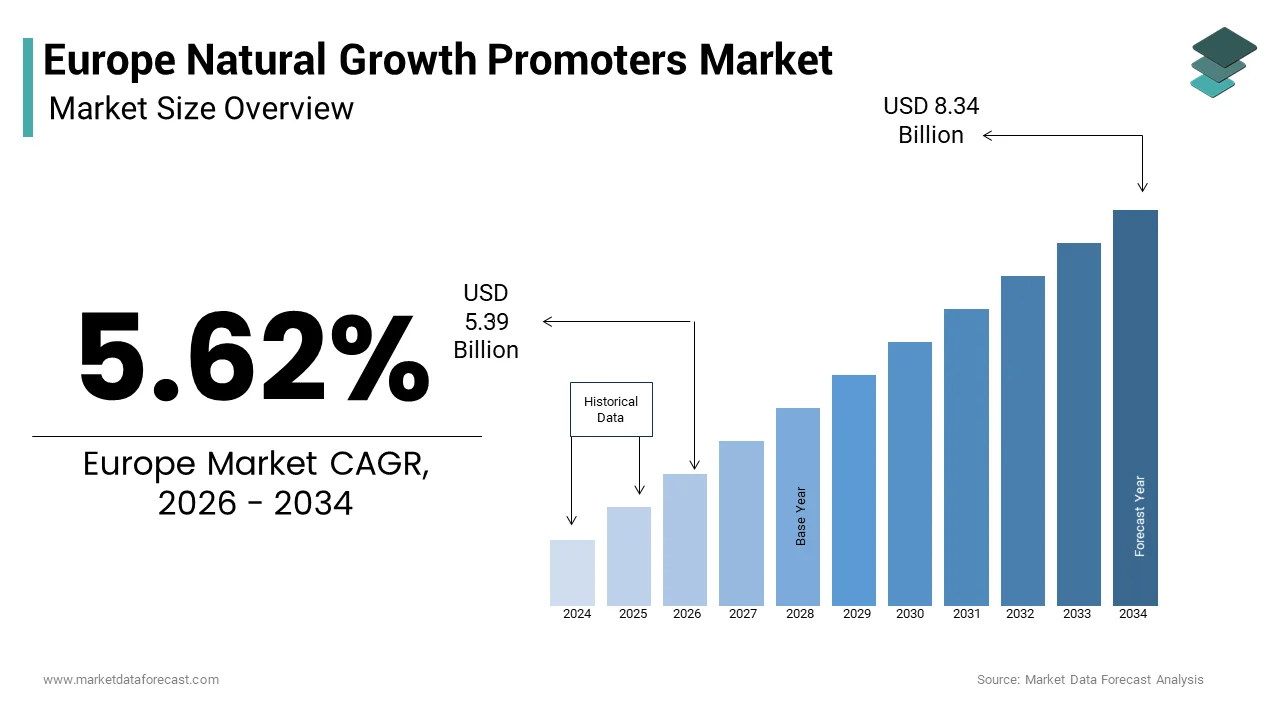
- Market Valuation: Valued at USD 5.10 billion (2025), estimated at USD 5.39 billion in 2026, and projected to reach USD 8.34 billion by 2034, registering a steady CAGR of 5.62% (2026–2034).
- Primary Growth Drivers: Foundational EU bans on antibiotic growth promoters (Regulation EC No 1831/2003 and Regulation EU 2019/6), intense consumer and retailer pressure for antibiotic-free meat production, and the European Commission’s Farm to Fork Strategy. Key market restraints include high product costs, variable real-world efficacy, and complex, lengthy EU regulatory approval processes.
Key Market Segment Metrics (2026–2034)
| Category | Leading Segment (2025 Position) | Fastest-Growing Segment |
|---|---|---|
| By Product | Acidifiers (held the majority market share in 2025 due to well-established efficacy, cost-effectiveness, and pathogen control) | Phytogenics (estimated to register the fastest CAGR of 8.6% driven by clean-label preferences and multi-functional benefits) |
| By Application | Poultry (largest application segment in 2025 owing to massive scale, high production intensity, and strict pathogen control mandates) | Aquaculture (anticipated to witness the fastest CAGR of 9.3% fueled by EU support for domestic sustainable seafood and strict water-environment health rules) |
| By Country / Region | Germany (led the European market with a 19.1% share in 2025 supported by massive swine herds, strict national action plans, and a world-class feed industry) | Netherlands & France (experiencing strong growth via advanced precision farming, circular bio-based ingredient adoption, and organic farming targets) |
Major Market Players & Market Structure
Market Structure: Highly consolidated top-tier landscape featuring global agribusiness giants and specialized regional feed additive manufacturers competing on scientific validation, digital nutrition integration, and multi-functional gut health solutions.
Key Companies: Cargill Animal Health, Cargill Incorporated, Nutreco N.V., ADM Animal Nutrition, Bayer Animal Health, Royal DSM N.V., Alltech, Inc., Yiduoli, Elanco Animal Health, Zoetis, Inc., Novozymes, Kemin, and DuPont.
Europe Natural Growth Promoters Market Size
The Europe natural growth promoters market size was valued at USD 5.10 billion in 2025 and is anticipated to reach a valuation of USD 5.39 billion in 2026 from USD 8.34 billion by 2034, growing at a CAGR of 5.62% from 2026 to 2034.
Current Introduction Of The Europe Natural Growth Promoters Market
Natural growth promoters (NGPs) refer to a category of non antibiotic feed additives used in livestock production to enhance animal performance, gut health, and feed efficiency through natural biological mechanisms. These include probiotics, prebiotics, organic acids, phytogenics (plant extracts), enzymes, and essential oils, all of which function by modulating the gut microbiome, improving nutrient digestibility, or stimulating the immune system. The European NGP market is fundamentally shaped by the region’s pioneering regulatory stance against antimicrobial growth promoters, which were banned in 2006 under Regulation (EC) No 1831/2003. This policy shift transformed NGPs from niche supplements into essential tools for sustainable livestock farming. The European Medicines Agency indicates a significant, sustained decline in veterinary antimicrobial sales for food-producing animals over the last decade, reflecting the success of policy measures in shifting industry reliance toward alternatives. According to Eurostat, the European Union maintains a massive, stable, or growing output of pig and poultry meat, creating a large, sustained population of livestock that requires effective, non-antibiotic, natural health management strategies. The European Commission’s Farm to Fork Strategy acts as a primary market driver by setting ambitious, long-term targets to halve antimicrobial sales for livestock, solidifying the role of natural growth promoters in the future of sustainable animal agriculture.
MARKET DRIVERS
Stringent EU Ban on Antibiotic Growth Promoters as a Foundational Demand Driver
The complete and long-standing prohibition of antibiotic growth promoters in European animal feed is the single most powerful driver of the Europe natural growth promoters market. The European Union implemented a pioneering, total ban on antibiotic growth promoters in feed in two thousand six, requiring the livestock industry to transition toward better husbandry practices and non-antibiotic feed alternatives for health management. Farmers could no longer rely on low dose antibiotics to prevent subclinical disease and promote growth, forcing a fundamental rethinking of animal nutrition and health management. According to sources, this regulatory shift directly catalyzed the development and adoption of a wide array of NGP technologies across the continent. The ban is not merely historical. It is actively reinforced by subsequent legislation like Regulation (EU) 2019/6, which eliminated all forms of routine antibiotic use in 2022. This continuous tightening of the regulatory environment ensures that demand for NGPs is not a temporary trend but a structural necessity of European farming. The entire livestock sector, from small family farms to large integrated operations, is now permanently locked into a production model where NGPs are indispensable for maintaining productivity, making this regulatory framework the bedrock of the market’s existence and growth.
Rising Consumer and Retailer Pressure for Antibiotic Free Meat Production
Intense consumer and retailer-driven demand for meat produced without routine antibiotics is a major commercial engine for the Europe natural growth promoters market. European consumers are increasingly aware of the link between farm antibiotic use and the global antimicrobial resistance crisis, leading them to actively seek out “raised without antibiotics” or “RWA” labeled products. This consumer sentiment has been translated into concrete action by major supermarket chains, which have implemented strict sourcing policies for their private label meat. For instance, retailers like Tesco in the UK and Carrefour in France require suppliers to demonstrate minimal or zero antibiotic use throughout the animal’s life. According to research, a substantial majority of consumers demonstrate a willingness to pay more for animal products that guarantee higher welfare standards, which includes the reduced use of antibiotics in farming. To meet these commercial requirements and access lucrative retail contracts, farmers must adopt comprehensive health management strategies where NGPs play a central role. This market pull from the top of the food chain creates a powerful economic incentive that drives consistent and growing demand for effective natural growth promoters across the European livestock industry.
MARKET RESTRAINTS
High Cost and Variable Efficacy of Natural Growth Promoter Formulations
The high cost and inconsistent performance of many NGP products compared to the predictable results once delivered by antibiotics are a significant restraint on the Europe Natural Growth Promoters Market. NGPs are often complex biological or botanical mixtures whose efficacy can be highly sensitive to factors like diet composition, animal age, health status, and environmental conditions. A formulation that works brilliantly on one farm may show marginal results on another, creating uncertainty for producers operating on thin margins. The International Scientific Association for Probiotics and Prebiotics (ISAPP) indicates that while natural feed additives are effective alternatives to traditional growth promoters, their inconsistent results in practical farming environments continue to be a significant challenge for large-scale livestock producers. Research emphasizes that, although promising, performance variability and stability remain key concerns for commercial adoption. Furthermore, these specialized additives are considerably more expensive than conventional feed ingredients. For example, high quality protected organic acids or multi strain probiotic blends can add several euros per ton to feed costs. In a competitive global market where European farmers face pressure from imports produced under less stringent rules, this cost premium can be a major barrier to adoption, especially for smaller operations, limiting the market’s penetration and overall growth potential.
Complex and Lengthy EU Regulatory Approval Process for Feed Additives
The European Union’s rigorous and time-consuming regulatory pathway for authorizing new feed additives acts as a major brake on innovation and the expansion of the Europe natural growth promoters market. Under Regulation (EC) No 1831/2003, any new NGP must undergo a comprehensive scientific evaluation by the European Food Safety Authority to prove its safety for the target species, consumers, and the environment, as well as its efficacy for the claimed purpose. This process can take five to seven years and cost several million euros, a prohibitive investment for small and medium sized enterprises and ingredient suppliers. As per the European Commission’s Directorate General for Health and Food Safety, only a limited number of new active substances have been authorized in the past decade. This regulatory bottleneck stifles the introduction of novel, potentially more effective NGP solutions and limits the toolbox available to nutritionists. Consequently, the market is dominated by a relatively narrow set of established ingredients, slowing the pace of innovation and preventing the rapid adaptation needed to address emerging animal health challenges in a post antibiotic era.
MARKET OPPORTUNITIES
Integration of NGPs with Precision Livestock Farming Technologies
The convergence of NGP formulations with precision livestock farming (PLF) technologies holds substantial potential for the Europe natural growth promoters market. Modern European farms are increasingly equipped with sensors, automated feeders, and data analytics platforms that monitor individual animal health, feed intake, and growth in real time. This granular data allows for a revolutionary shift from one size fits all feeding to dynamic, responsive nutrition programs. NGP suppliers can leverage this infrastructure to develop “smart” additive packages that are automatically adjusted based on real time animal performance metrics. For example, if a monitoring system detects a slight drop in feed conversion ratio, the system could trigger an increase in a specific enzyme or probiotic blend in the next ration. According to the European Commission, a significant and growing portion of pig farms in the EU already employ digital monitoring technologies to improve efficiency and welfare, with adoption rates expected to increase further by the end of the decade. This digital ecosystem creates a new market for data driven, adaptive NGP solutions that move beyond static supplementation to become an integrated component of intelligent farm management, offering unprecedented levels of efficiency and health optimization.
Development of Locally Sourced and Circular Economy Based NGP Ingredients
The European Green Deal and its associated Farm to Fork Strategy create a strong opening for the Europe natural growth promoters market. This is achieved through the promotion of locally sourced, sustainable, and circular economy-based ingredients. There is a growing push to replace imported feed additives with those derived from European agricultural by products or novel bio based sources. This includes using spent grain from breweries as a prebiotic fiber source, extracting essential oils from regional aromatic plants, or developing microbial strains from local soil ecosystems. Horizon Europe has increased funding for research projects exploring the use of alternative, waste-based, and sustainable ingredients to improve the circularity and reduce the environmental footprint of animal feed production. These locally produced NGPs offer a compelling narrative of traceability, reduced carbon footprint, and support for rural economies. For European farmers and feed mills, they represent a way to align with sustainability goals while potentially reducing dependency on volatile global supply chains. This alignment with core EU policy objectives is opening new avenues for innovation and market differentiation, positioning locally sourced NGPs as a high growth frontier.
MARKET CHALLENGES
Lack of Standardized Methods for Evaluating NGP Efficacy
The absence of universally accepted, standardized protocols for evaluating the efficacy of different NGP products is among the major challenges to the Europe natural growth promoters market. Unlike pharmaceuticals, which have clear clinical trial endpoints, the effects of NGPs are often subtle, multifactorial, and context dependent, making them difficult to measure consistently. One research trial might use weight gain as the primary metric, while another focuses on feed conversion ratio or gut health biomarkers, making cross study comparisons nearly impossible. According to a study, this methodological inconsistency is a major barrier to building a robust body of scientific evidence that can convince skeptical producers. The lack of reliable, comparable data hinders farmers' purchasing decisions and complicates regulatory assessment of new dossiers. This knowledge gap fuels skepticism and slows adoption, as the industry lacks a common language to define and measure success, ultimately hindering the market’s ability to mature and gain universal trust.
Fragmented Implementation of Animal Health and Welfare Policies Across Member States
The uneven application of animal health, welfare, and environmental regulations across EU member states creates a complex and fragmented operating environment, and thereby limits the expansion of the Europe natural growth promoters market. This fragmentation complicates the development and marketing of standardized NGP (Next Generation Product) solutions. EU-level directives establish minimum standards, but individual countries frequently implement stricter rules. For example, Sweden and Denmark have national bans on certain zinc oxide levels that go beyond EU norms, while Southern European nations may have more lenient enforcement of weaning age requirements that affect NGP needs. The European Court of Auditors indicates that inconsistency in the enforcement of EU-wide animal welfare and feed laws exists, with notable disparities in how often inspections are conducted and how penalties are applied for non-compliance across different countries. This regulatory patchwork forces NGP manufacturers to develop multiple product variants to meet local requirements, increasing R and D and production costs. It also creates market distortions where farmers in less regulated regions can use cheaper, less advanced health management strategies, gaining a competitive cost advantage. This lack of harmonization undermines the EU’s goal of a level playing field and impedes the widespread adoption of best practice NGP protocols, ultimately hindering collective progress toward the bloc’s ambitious antimicrobial reduction and sustainability targets.
REPORT COVRAGE
| REPORT METRIC | DETAILS |
| Market Size Available | 2025 to 2034 |
| Base Year | 2025 |
| Forecast Period | 2026 to 2034 |
| CAGR | 5.62% |
| Segments Covered | By Product, Application, and By Country |
| Various Analyses Covered | Global, Regional & Country Level Analysis, Segment-Level Analysis, DROC, PESTLE Analysis, Porter’s Five Forces Analysis, Competitive Landscape, Analyst Overview on Investment Opportunities |
| Regions Covered | UK, France, Spain, Germany, Italy, Russia, Sweden, Denmark, Switzerland, Netherlands, Turkey, the Czech Republic, and the Rest of Europe |
| Market Leaders Profiled | include Cargill Animal Health, Bayer Animal Health, Royal DSM N.V., Alltech, Inc., Yiduoli, Elanco Animal Health, Zoetis, Inc., Novozymes, Kemin, and DuPont. |
SEGMENTAL ANALYSIS
By Product Insights
The acidifiers segment held the majority share of the Europe Natural Growth Promoters Market in 2025. The supremacy of the segment is driven by itswell established efficacy, cost effectiveness, and broad applicability across multiple livestock species. One more reason for growth here is its scientifically validated role in maintaining a healthy gut environment and controlling pathogenic bacteria like Salmonella and E. coli. Organic acids like formic, propionic, and lactic acid lower the pH of the upper gastrointestinal tract, creating a bactericidal environment that inhibits pathogens while optimizing enzymatic activity and nutrient uptake. This mechanism is particularly critical in young animals with immature digestive systems, such as weaned piglets and broiler chicks. According to sources, the use of acidifiers is a key component of integrated control programs for Salmonella in poultry and swine, which are major public health concerns. Their direct, measurable impact on reducing pathogen load and improving feed conversion ratio has made them a non negotiable tool for European farmers operating under strict food safety and antimicrobial reduction mandates. This robust scientific foundation and clear functional benefit ensure their continued widespread adoption. The entrenched position of acidifiers is further reinforced by their economic advantage and operational simplicity. Compared to more complex biological additives like probiotics or synbiotics, acidifiers are relatively inexpensive to produce and incorporate into standard feed rations. They are available in both liquid and dry forms, making them compatible with a wide range of feed manufacturing processes without requiring significant changes to existing infrastructure. The European Feed Manufacturers’ Federation indicates that the long-standing European Union prohibition on antibiotic growth promoters has made the inclusion of acidifiers a standard practice in animal feed production across the region. These additives are widely adopted in the nutrition of young poultry and swine to support intestinal health and enhance the efficiency of feed digestion while remaining an economically viable solution for producers. In an industry characterized by tight margins and intense global competition, this economic efficiency is a decisive factor. The ability to deliver a tangible health and performance benefit at a manageable cost makes acidifiers the foundational building block of most European NGP strategies, solidifying their status as the market’s dominant product segment.
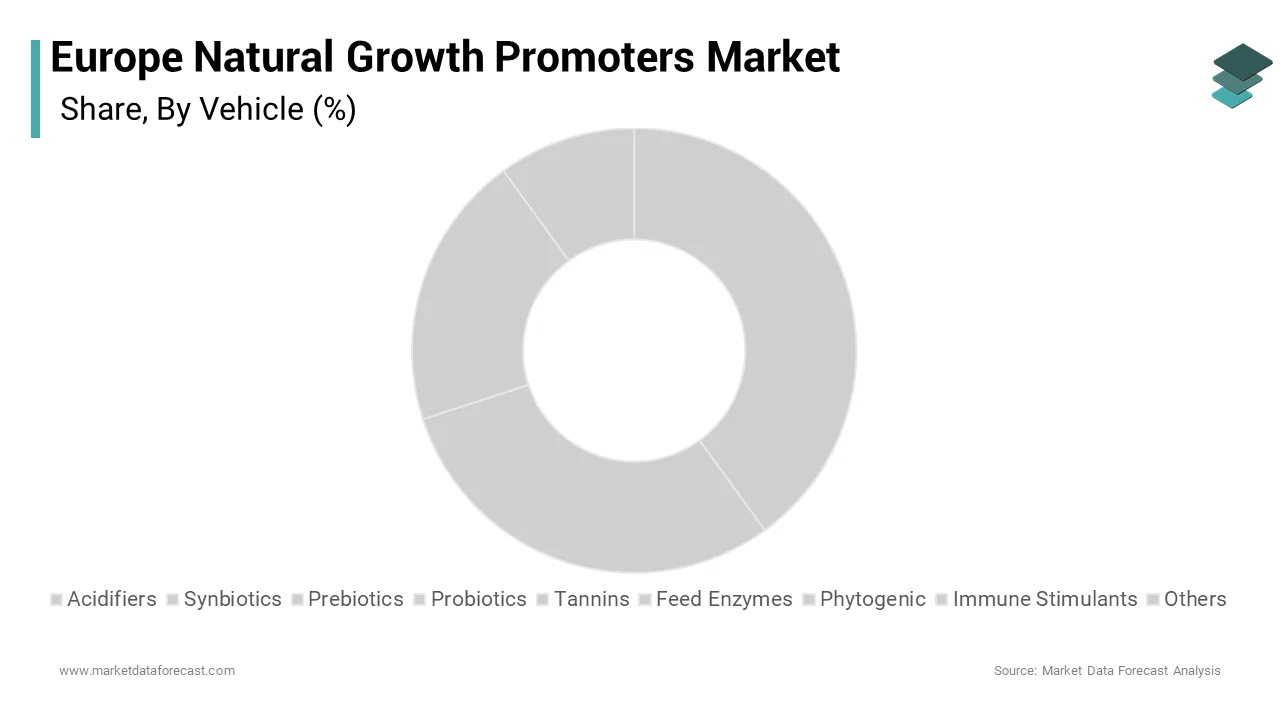
The phytogenic segment is estimated to register the fastest CAGR of 8.6% from 2026 to 2034. Phytogenics, derived from herbs, spices, and essential oils, are experiencing explosive growth due to its powerful alignment with consumer preferences for natural, plant based, and “clean label” solutions in the food chain. European consumers increasingly view synthetic additives with suspicion and are drawn to products that highlight natural ingredients. This sentiment is directly transmitted to the farm level, where producers seek NGPs that can be marketed as part of a natural rearing story. Ingredients like oregano, thyme, and cinnamon not only have documented antimicrobial and antioxidant properties but also carry a positive, familiar image with the public. According to a study, the demand for feed additives with a clear natural origin has become a key purchasing criterion for integrators supplying premium meat brands. This consumer driven pull creates a strong commercial incentive for farmers to adopt phytogenic products, transforming them from a mere technical solution into a valuable marketing asset that commands price premiums in the retail sector. Further support for this segment comes fromthe rapid adoption of phytogenics is their multi functional nature, offering benefits that extend far beyond simple growth promotion. Many phytogenic compounds possess potent antioxidant properties that improve meat quality and shelf life by reducing lipid oxidation. Others have anti inflammatory effects that support overall animal health and resilience, while some act as appetite stimulants, encouraging feed intake during periods of stress. The European Federation of Animal Science indicates that incorporating specific aromatic plant essential oil blends into broiler diets enhances bird performance efficiency and improves the oxidative stability of the meat. This ability to address multiple challenges, performance, health, and product quality, with a single additive makes phytogenics an exceptionally efficient tool for modern, integrated livestock operations. This holistic value proposition, combined with their natural appeal, is the engine behind their exceptional growth trajectory in the European market.
By Application Insights
The poultry segment was the largest segment in the Europe Natural Growth Promoters Market in 2025 because of the sector’s massive scale, high production intensity, and its central role in European food security and protein supply. It’s dominance is a direct consequence of the sheer volume of birds produced and the inherent biological vulnerabilities of intensive broiler production. The European Union ranks among the world's leading poultry producers, with 2024 estimates from Eurostat indicating that production reached a new record high, driven by significant increases in slaughterhouse output. Broilers are bred for extremely rapid growth, which places immense metabolic stress on their developing digestive and immune systems, making them highly susceptible to enteric disorders like necrotic enteritis. In the absence of antibiotic growth promoters, this vulnerability creates a massive, continuous demand for effective NGPs to maintain flock health and performance. The short production cycle of just six to seven weeks leaves no room for error. Any setback in the first week can have irreversible consequences for final weight and feed efficiency. This high stakes environment makes the consistent use of NGPs like acidifiers, probiotics, and phytogenics a non optional management practice for virtually every commercial poultry operation in Europe, generating the largest and most stable application-based demand in the market. Also helping this segment is the intense regulatory and public health focus on controlling foodborne pathogens like Salmonella and Campylobacter, for which poultry is a primary vector. The European Union has implemented some of the world’s most aggressive control programs for these pathogens, with mandatory monitoring and strict limits at the point of slaughter. According to the European Food Safety Authority and the European Centre for Disease Prevention and Control, Salmonella causes a significant number of human infections annually in the European Union, with poultry meat identified as a major source of transmission. To comply with these regulations and avoid costly condemnations or recalls, poultry producers rely heavily on NGPs as a critical pre harvest intervention. Acidifiers and specific probiotic strains are proven to reduce pathogen colonization in the bird’s gut, directly contributing to safer food. This regulatory pressure, backed by the threat of financial penalties, ensures that NGP use in poultry is not just about performance but is a fundamental requirement for legal and safe market access, cementing its position as the leading application segment.
The aquaculture application segment is anticipated to witness the fastest CAGR of 9.3% over the forecast period owing to the European Union’s strategic push to expand domestic, sustainable seafood production to enhance food security and reduce reliance on imports. The EU’s Farm to Fork Strategy and the Common Fisheries Policy explicitly support the growth of environmentally responsible aquaculture. The European Commission has implemented strategic guidelines designed to foster a more sustainable, resilient, and competitive aquaculture sector, focusing on environmental performance and increased organic production within the EU by the end of the decade. This policy driven expansion is creating a new and dynamic market for NGPs in species like salmon, sea bass, and trout. Unlike terrestrial livestock, fish are raised in a water environment where disease can spread rapidly, and the use of antibiotics is even more tightly restricted due to environmental concerns. This makes preventive health management through NGPs absolutely critical. As new farms come online and existing ones intensify, the demand for specialized aquatic NGP formulations is growing at a pace that far outstrips other traditional livestock sectors. In addition, this segment is helped by the unique physiology of fish and the high economic value of many farmed aquatic species, which justifies investment in advanced health solutions. Fish lack a stomach in many species, making them reliant on dietary enzymes and gut health modulators for efficient nutrient absorption. Furthermore, their immune system is heavily influenced by water quality and diet, creating a direct link between feed composition and disease resistance. Studies supported by aquaculture research, including those within European contexts, indicate that incorporating prebiotics and probiotics into aquaculture diets enhances survival rates, strengthens immune responses, and improves feed efficiency, offering a valuable alternative to antibiotic use. The premium market price of species like Atlantic salmon means that even small improvements in performance or health translate into significant financial gains, making farmers more willing to adopt innovative and higher cost NGP solutions. This combination of biological necessity and strong economic incentive is propelling the aquaculture segment to become the fastest growing application area in the European NGP market.
COUNTRY ANALYSIS
Germany Natural Growth Promoters Market Analysis
Germany led the European Natural Growth Promoters Market and accounted for a 19.1% share in 2025. Its dominance is supported by a powerful combination of a massive livestock population, a world class feed industry, and a proactive regulatory environment. Germany is home to Europe’s largest pig herd, with millions of head, creating an enormous baseline demand for swine NGPs. The country also hosts several global feed additive and premix manufacturers, fostering a culture of innovation in feed formulation. The German government’s National Action Plan on Antimicrobial Resistance has been particularly stringent, accelerating the phase out of zinc oxide and antibiotics well ahead of EU deadlines. This regulatory foresight has pushed German farmers and feed mills to the forefront of adopting advanced NGP solutions. Furthermore, the country’s strong cooperative farming structure ensures rapid dissemination of best practices and new technologies across its vast agricultural sector, solidifying its status as the market’s central hub.
France Natural Growth Promoters Market Analysis
France followed closely in the Europe natural growth promoters market and occupied a share of 16.3% in 2025. The growth of the French market is fuelled by a large and diverse livestock sector, with significant populations of both pigs and poultry, and a national agricultural policy that strongly emphasizes food sovereignty and reduced dependency on imports. The French Ministry of Agriculture’s plan aims to double the area of organic farmland, a trend that directly boosts demand for certified organic NGPs that comply with strict standards prohibiting synthetic additives. France's poultry production showed a notable recovery in 2024, driven by a strong, increasing consumer preference for chicken, while pig meat production faced ongoing difficulties in meeting domestic consumption, causing a decline in the national self-sufficiency rate. The French feed industry has responded to these dual pressures of scale and sustainability by investing heavily in local NGP sources like plant extracts from native aromatic herbs. This strategic focus on local, sustainable, and high quality feed production underpins France’s robust and resilient NGP market.
Spain Natural Growth Promoters Market Analysis
Spain continues to be a major player in the Europe natural growth promoters market due to a highly intensive and export oriented livestock sector, particularly in pig production, where it is the EU’s top producer. According to studies, the country maintains the largest pig herd in the European Union, which has reached a high level despite recent pressures from regulatory and economic constraints. This significant population is sustained by a robust, export-oriented industry that manages both Asian demand and other international markets. This scale of production creates a massive, consistent demand for cost effective yet high performing NGPs to maintain health and productivity without antibiotics. Spanish integrators have been at the forefront of adopting large scale, automated feeding systems that rely on precisely formulated NGP blends to maintain uniformity and health across vast operations. However, the market also faces challenges from water scarcity and environmental regulations in key production regions like Catalonia, which are pushing innovation toward more water efficient and environmentally friendly feed formulations. The interplay between massive scale, export orientation, and environmental pressures makes Spain a critical and evolving market for NGP technologies.
United Kingdom Natural Growth Promoters Market Analysis
The United Kingdom occupies a noteworthy position in the European market owing to a highly consolidated agricultural sector, world leading research institutions, and a strong consumer-driven focus on animal welfare and antibiotic reduction. Following its departure from the European Union, the United Kingdom has maintained high, though in some areas less restrictive, regulations on veterinary antibiotic use compared to new EU standards. This regulatory and cultural environment has fostered a thriving market for premium, science backed NGPs that incorporate the latest advances in gut health and immunity. The UK is also a hub for feed additive innovation, with companies collaborating closely with universities like the University of Nottingham and Scotland’s Rural College. This ecosystem of science, regulation, and market demand for high welfare products ensures the UK remains a key and sophisticated market for advanced NGP solutions.
Netherlands Natural Growth Promoters Market Analysis
The Netherlands is likely to expand in the Europe natural growth promoters market over the forecast period. Despite its relatively small land area, the country is an agricultural powerhouse and a global leader in feed technology and precision livestock farming. The Dutch feed industry is renowned for its efficiency, innovation, and export orientation, serving not only its own dense livestock population but also acting as a technology hub for the wider European market. According to research, the country is home to some of the most technologically advanced pig and poultry farms in the world, where data from sensors and automated systems is used to tailor NGP rations in real time. The Dutch government’s “Protein Transition” policy actively supports the development and use of alternative proteins and sustainable feed additives. This unique blend of technological sophistication, policy support for innovation, and a strong export focus makes the Netherlands a disproportionately influential player in shaping the future of the European NGP market.
COMPETITIVE LANDSCAPE
The competitive landscape of the Europe Natural Growth Promoters Market is characterized by a mix of global agribusiness giants and specialized regional players, with competition intensifying around innovation, scientific validation, and service depth. The market is highly consolidated at the top, where multinational corporations leverage their vast R and D resources, global supply chains, and established brand reputations to dominate the premium segment. Competition is not primarily price based but revolves around the ability to deliver scientifically validated, multi functional solutions that demonstrably improve gut health, feed efficiency, and pathogen control. Regulatory compliance with the EU’s strict feed additive authorization process is a baseline requirement, raising the barrier to entry for smaller firms. The most successful companies differentiate themselves through integrated offerings that combine advanced formulations with digital monitoring tools and on farm technical support. This ecosystem approach fosters strong customer loyalty and long term partnerships, making the market increasingly difficult for new entrants to penetrate without significant technological or strategic differentiation.
KEY MARKET PLAYERS
Key players in the Europe Natural Growth Promoters Market include
- Cargill Animal Health
- Cargill Incorporated
- Nutreco N V
- ADM Animal Nutrition
- Bayer Animal Health
- Royal DSM N.V.
- Alltech, Inc.
- Yiduoli
- Elanco Animal Health
- Zoetis, Inc.
- Novozymes
- Kemin
- DuPont.
Top Players In The Market
- Cargill is a global leader in agricultural and food solutions with a significant footprint in the European natural growth promoters market. The company offers a comprehensive portfolio of feed additives, including acidifiers, probiotics, and phytogenic blends under its proprietary brands. Cargill leverages its extensive R and D network to develop science backed NGP solutions that align with Europe’s stringent antimicrobial reduction policies. To strengthen its position, Cargill has invested in digital nutrition platforms like its “SowNest” and “PigCHAMP” systems, which integrate real time farm data with feed formulation to optimize gut health and performance. The company also actively collaborates with European research institutions to validate novel functional ingredients, ensuring its products meet the highest standards of efficacy and sustainability across the continent.
- Headquartered in the Netherlands, Nutreco is a powerhouse in animal nutrition, operating through its well known Trouw Nutrition brand. The company is deeply embedded in the European NGP landscape, offering science driven solutions such as its “Selko” range of acidifiers and “NutriOpt” precision feeding programs. Nutreco’s strategy centers on gut health innovation, underpinned by its proprietary “Precision Nutrition” approach that combines microbiome analysis with targeted additive delivery. In recent years, the company has significantly expanded its production capacity for specialty organic acids and phytogenics in Europe. It has also launched digital advisory services that connect feed formulation with on farm performance metrics, reinforcing its role as a strategic partner rather than just a supplier to European livestock producers.
- Archer Daniels Midland Company, through its ADM Animal Nutrition division, is a major force in the European natural growth promoters ingredient and premix market. The company supplies a wide array of amino acids, enzymes, organic acids, and phytogenic extracts that are critical components of high quality NGP formulations. ADM has strengthened its European presence by focusing on sustainable sourcing and circular economy principles, including investments in plant based antimicrobials from European botanical sources. The company has also enhanced its technical service capabilities, deploying field nutritionists across key European markets to work directly with feed mills and integrators on customizing NGP programs. This hands on, science based support model has deepened its integration into the European feed value chain.
Top Strategies Used By The Key Market Participants
Key players in the Europe Natural Growth Promoters Market employ a multifaceted strategic approach centered on four pillars. First, they prioritize continuous innovation in non antibiotic solutions, investing heavily in R and D for functional additives like next generation phytogenics, protected organic acids, and multi strain probiotics. Second, they pursue vertical integration and strategic partnerships to secure sustainable and traceable raw material supplies, particularly for plant based ingredients. Third, they leverage digitalization by developing data driven nutrition platforms that link feed formulation to real time animal performance metrics from precision livestock farms. Fourth, they expand their technical service networks to provide on farm advisory support, transforming their role from product suppliers to holistic gut health management partners for integrated livestock producers across the region.
MARKET SEGMENTATION
This research report on the Europe natural growth promoters market is segmented and sub-segmented into the following categories.
By Product
- Acidifiers
- Synbiotics
- Prebiotics
- Probiotics
- Tannins
- Feed Enzymes
- Phytogenic
- Immune Stimulants
- Others
By Application
- Poultry
- Aquaculture
- Swine
- Ruminants
- Others
By Country
- UK
- France
- Spain
- Germany
- Italy
- Russia
- Sweden
- Denmark
- Switzerland
- Netherlands
- Turkey
- Czech Republic
- Rest of Europe