- Product Description Description
- Table of Contents TOC
- List of Table & Figure LOT
- Get Free Sample PDF Sample PDF
Market Size, 2025
$141 MnMarket Estimate, 2026
$147.20 MnMarket Forecast, 2034
$208 MnCAGR, 2026–2034
4.4%Europe Neonatal Phototherapy Equipment Market Report Summary
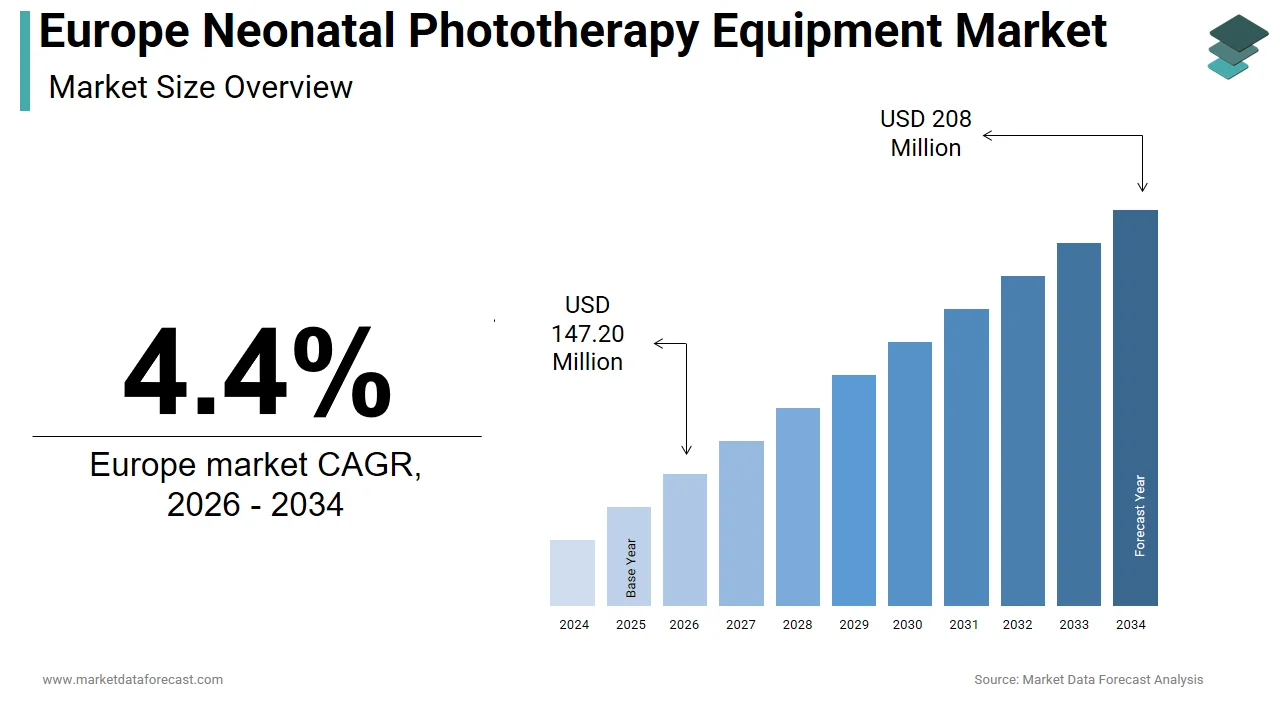
The Europe neonatal phototherapy equipment market was valued at USD 141 million in 2025 and is expected to grow from USD 147.20 million in 2026 to USD 208 million by 2034, registering a CAGR of 4.4% from 2026 to 2034. Market growth is driven by the rising incidence of neonatal jaundice, improvements in neonatal care infrastructure, and increasing adoption of advanced phototherapy technologies across hospitals and clinics. Growing awareness of early bilirubin management, coupled with investments in neonatal intensive care units (NICUs), is further supporting demand for efficient and safe phototherapy equipment across Europe.
Key Market Trends
- Increasing adoption of LED-based phototherapy systems due to energy efficiency and improved treatment outcomes.
- Rising investments in neonatal intensive care units (NICUs) across public and private healthcare facilities.
- Growing emphasis on early detection and management of neonatal jaundice.
- Technological advancements are improving device portability, safety, and ease of use.
- Continued demand from hospitals is driven by standardized neonatal treatment protocols.
Segmental Insights
- Based on type, the LED phototherapy equipment segment occupied the majority share of 64.3% in 2025, driven by superior energy efficiency, longer lifespan, and consistent light intensity.
- Based on end user, the hospitals and clinics segment led the market in 2025, supported by high patient volumes, availability of advanced neonatal care units, and preference for in-house treatment.
- Based on application, he neonatal jaundice management segment dominated the market in 2025, driven by the high prevalence of hyperbilirubinemia and the effectiveness of phototherapy as a first-line treatment.
Regional Insights
The Europe neonatal phototherapy equipment market is witnessing steady growth across major healthcare systems, supported by structured neonatal care networks and standardized treatment protocols.
- Germany dominated the market with a 22.1% share in 2025, driven by advanced neonatal care infrastructure and widespread adoption of modern phototherapy systems.
- The United Kingdom ranked second with a 15.8% share, supported by strong NICU capacity and well-established neonatal screening programs.
- France maintains a significant share due to its nationally coordinated perinatal network, which standardizes equipment specifications and neonatal treatment protocols across regional centers.
Competitive Landscape
The Europe neonatal phototherapy equipment market is characterized by the presence of global medical device manufacturers and specialized neonatal care equipment providers. Companies are focusing on product innovation, improving treatment efficiency, and ensuring compliance with strict medical safety standards. Strategic partnerships with hospitals and neonatal care networks, along with continuous upgrades in LED technology, are strengthening competitive positioning across the region.
Prominent companies operating in the Europe neonatal phototherapy equipment market include GE Healthcare, Natus Medical Incorporated, Drägerwerk AG & Co. KGaA, Phoenix Medical Systems Pvt. Ltd., Solarc Systems Inc., Herbert Waldmann GmbH & Co. KG, Atom Medical Corporation, Philips Lighting Holding B.V., Nice Neotech Medical Systems Pvt. Ltd., BiliCare International Ltd, and National Biological Corp.
Europe Neonatal Phototherapy Equipment Market Size
The size of the Europe neonatal phototherapy equipment market was valued at USD 141 million in 2025. This market is expected to grow at a CAGR of 4.4% from 2026 to 2034 and be worth USD 208 million by 2034 from USD 147.20 million in 2026.
Neonatal phototherapy equipment consists of medical devices designed to treat neonatal jaundice (hyperbilirubinemia) by exposing a newborn's skin to specific wavelengths of visible light, typically in the blue-green spectrum. These systems utilize high-intensity light in the blue-green spectrum (typically 460 to 490 nanometers) to isomerize unconjugated bilirubin into water-soluble forms that can be excreted without hepatic conjugation. Equipment types include overhead units, fiberoptic blankets, and hybrid systems, with modern devices emphasizing spectral precision, thermal stability, and integration with neonatal intensive care workflows. Visible jaundice is a common observation in term and late preterm infants shortly after birth, and some of these newborns require phototherapy. A portion of the total annual live births in the region undergoes phototherapy interventions to treat this condition. The market for neonatal phototherapy devices is heavily influenced by a strict regulatory framework requiring thorough clinical evaluations, and post-market surveillance is mandatory for certain classified devices. This environment prioritizes safety, efficacy, and interoperability, driving innovation toward smarter, more compact, and family-centered phototherapy solutions across Europe’s diverse perinatal care landscape.
MARKET DRIVERS
High Incidence of Neonatal Jaundice Drives Universal Clinical Adoption
Neonatal jaundice remains one of the most common conditions requiring medical intervention in newborns across the region, a factor that is significantly boosting the growth of the Europe neonatal phototherapy equipment market. This prevalence ensures consistent demand for phototherapy equipment in both tertiary and secondary care settings. Elevated bilirubin levels are frequently observed in both full-term and preterm newborns during the initial days following birth. A notable portion of infants reach clinical benchmarks that necessitate the use of light-based medical interventions. Clinical practices in various regions have shifted toward systematic screening of newborns to identify these levels before hospital discharge. These assessment patterns have contributed to the integration of phototherapy as a routine element within standard postnatal care. Moreover, the rise in late preterm births, accounting for a portion of EU deliveries as per sources, increases vulnerability as these infants have immature liver function and higher bilirubin production. Hospitals thus treat phototherapy not as optional but as essential infrastructure, driving replacement cycles and technology upgrades to ensure compliance with evolving safety and efficacy standards across Europe’s perinatal network.
Stringent EU Medical Device Regulation Elevates Safety and Performance Standards
The implementation of the European Union Medical Device Regulation 2017/745 has greatly influenced the Europe neonatal phototherapy equipment market. This shift occurred because the regulation raised the bar for clinical evidence, post-market surveillance, and device traceability. Under the MDR, phototherapy systems are classified as Class IIa or IIb medical devices requiring comprehensive technical documentation, clinical evaluation reports, and involvement of notified bodies. Strict European MDR requirements for biocompatibility, software validation, and risk management have forced manufacturers to either redesign or withdraw many legacy phototherapy devices from the market. This regulatory rigor has accelerated the transition from conventional fluorescent lamp systems to LED-based platforms that offer stable spectral output, lower heat emission, and reduced maintenance, features now considered essential for MDR compliance. Hospitals increasingly procure only MDR-certified devices, creating a de facto market filter that favors manufacturers with robust quality management systems. Hospitals across key European nations are delaying the procurement of neonatal equipment, waiting for vendors to achieve mandatory MDR certification. Thus, the regulation acts not as a barrier but as a catalyst for innovation, ensuring that only the safest and most effective phototherapy technologies remain in clinical use across Europe.
MARKET RESTRAINTS
Limited Reimbursement for Home-Based Phototherapy Restricts Care Model Innovation
The absence of standardized reimbursement pathways for home-based or outpatient phototherapy limits the adoption of portable and fiberoptic systems outside hospital settings, and is a major restraint on the Europe neonatal phototherapy equipment market. Despite clinical evidence showing that home phototherapy is safe and effective for mild to moderate jaundice, most European healthcare systems, including those in Germany, France, and Italy, only reimburse inpatient treatment, citing concerns over monitoring and liability. The availability of standardized, funded protocols for home-based phototherapy services is currently limited to a small number of European nations. The restricted coverage of at-home phototherapy options means that hospital settings are typically utilized, even for cases with lower risk profiles. The reliance on hospital-based care for this treatment may contribute to higher levels of inpatient bed utilization and associated healthcare expenses. Data indicate a potential opportunity for shifting a portion of phototherapy cases from hospital settings to home-based care using appropriate monitoring and equipment. Mismatched reimbursement and clinical governance stifle portable device innovation, slowing patient-centered models and prolonging hospital dependency across Europe.
High Equipment Costs and Budget Constraints in Public Hospitals Limit Upgrades
Fiscal austerity and capital budget limitations in publicly funded European healthcare systems impede the timely replacement of aging phototherapy units, particularly in Southern and Eastern regions, and pose a serious barrier to the Europe neonatal phototherapy equipment market expansion. Conventional phototherapy devices using fluorescent lamps, though less effective and more energy intensive, remain in use in a portion of neonatal units in countries like Romania, Greece, and Bulgaria due to insufficient funds for LED-based upgrades. Observations indicate a substantial disparity in the replacement cycles for specialized infant care technology between certain European regions and Northern European counterparts, with the former experiencing longer usage periods. Modern LED treatment systems represent a significant capital investment, posing financial challenges for medical facilities functioning under strict budgetary constraints. Regional efforts to address pandemic-related financial deficits have resulted in temporary pauses on non-emergency medical device procurement, which affects the modernization of neonatal equipment. The combination of limited funding and procurement restrictions directly impacts the pace at which outdated equipment is replaced. Furthermore, EU funding mechanisms like the Recovery and Resilience Facility prioritize large infrastructure over individual medical devices, leaving gaps in neonatal care modernization. This financial bottleneck not only compromises treatment efficacy, older units often deliver subtherapeutic irradiance, but also increases long term operational costs through higher energy consumption and bulb replacement needs, creating a cycle of underinvestment that affects the most vulnerable patients.
MARKET OPPORTUNITIES
Integration of Smart Monitoring and Telehealth in Neonatal Care
The convergence of phototherapy with digital health technologies exhibits a major opportunity to enhance treatment precision and enable remote care models across the region, which is likely to propel the Europe neonatal phototherapy equipment market. Next-generation systems now incorporate real-time bilirubin trend prediction, irradiance sensors, and thermal monitoring that feed data directly into electronic health records and neonatal dashboards. Hospitals piloting digital, intelligent phototherapy platforms are demonstrating improved, efficient care by tailoring treatment duration to patient needs, thereby reducing the time infants spend in treatment. Moreover, integration with telehealth allows community midwives and pediatricians to monitor jaundiced infants discharged early using wearable bilirubin sensors paired with home phototherapy blankets, supported by AI-driven clinical decision tools. The European Commission is investing in digital health initiatives to advance maternity care, specifically utilizing remote monitoring technologies for newborn care. Intelligent phototherapy systems align with strategic priorities for sustainable, family-centered neonatal care, facilitating safe early discharge and remote follow-up to reduce length of stay and optimize capacity.
Expansion of Regional Neonatal Networks and Equipment Standardization
The development of integrated perinatal networks across the region offers a strategic potential to standardize phototherapy protocols and drive coordinated equipment procurement, which is expected to fuel the expansion of the Europe neonatal phototherapy equipment market. Countries like Austria and the Netherlands have implemented national neonatal transport systems where high-risk infants are stabilized at local hospitals and transferred to regional hubs, requiring consistent device performance across all network sites. These networks increasingly adopt common clinical pathways that specify minimum irradiance levels, treatment duration thresholds, and device interoperability standards. This standardization creates economies of scale for bulk purchasing and facilitates staff training across facilities. The European Reference Network for Rare Diseases also promotes unified jaundice management protocols, indirectly boosting demand for MDR-compliant phototherapy systems with documented performance metrics. Transitioning from individual hospital purchasing to regional consortia enables a shift toward value-based selection, prioritizing clinical outcomes over initial costs. This approach accelerates the adoption of advanced LED and hybrid platforms, ensuring consistent therapeutic efficacy across Europe’s interconnected neonatal care networks.
MARKET CHALLENGES
Shortage of Skilled Neonatal Staff Affects Optimal Device Utilization
The persistent shortage of trained neonatal nurses and physicians, particularly in rural and Eastern European regions, is a serious obstacle limiting the effectiveness and growth of the Europe neonatal phototherapy equipment market. Many European Union neonatal units are experiencing significant shortages of specialized nursing staff, with several nations reporting particularly low levels of adequate staffing. This staffing deficit contributes to challenges in utilizing the full technical capabilities of advanced neonatal phototherapy equipment. Time constraints and training limitations often result in the underutilization of advanced phototherapy features, such as precise irradiance calibration and optimal fiberoptic blanket positioning. In understaffed units, a significant portion of phototherapy treatments are delivered with lower than recommended intensity, which may reduce treatment efficacy. The reduced efficacy of phototherapy in understaffed environments potentially results in extended lengths of stay for neonatal patients. Furthermore, high staff turnover impedes consistent protocol adherence and device maintenance. Automated alerts on smart systems reduce risks, but human supervision remains critical for monitoring bilirubin and positioning eye protection. Europe’s advanced medical technology cannot compensate for staffing gaps; targeted training and retention are essential to ensuring successful jaundice treatment for newborns.
Lack of Harmonized Clinical Guidelines Across EU Member States
The absence of unified European clinical protocols for neonatal phototherapy creates variability in treatment thresholds, device selection, and duration, which hinders market predictability and equitable care, and thereby negatively impacts the expansion of the Europe neonatal phototherapy equipment market. Clinical guidelines for initiating newborn jaundice treatment show considerable variation between different national organizations, despite the existence of widely referenced, foundational recommendations. Phototherapy initiation thresholds for infants with similar gestational ages are lower in some European regions compared to others. Comparative analysis indicates that treatment thresholds for infants at specific ages and gestational stages vary by a wide margin across different European nations. These variations suggest a lack of international consensus regarding the precise serum bilirubin level at which intervention should begin. This inconsistency leads to overuse in some regions and delayed intervention in others, affecting both clinical outcomes and equipment utilization patterns. Manufacturers must therefore customize training materials and technical support for each market, increasing operational complexity. Moreover, regulatory bodies evaluate devices against local standards, making pan-European clinical trials difficult. The European Society for Neonatal Intensive Care has called for a harmonized European jaundice management framework, but progress remains slow due to national autonomy in healthcare policy. The absence of clinical alignment ensures continued market fragmentation along national lines, which restricts economies of scale and slows the dissemination of optimal neonatal phototherapy practices across Europe.
REPORT COVERAGE
| REPORT METRIC | DETAILS |
| Market Size Available | 2025 to 2034 |
| Base Year | 2025 |
| Forecast Period | 2026 to 2034 |
| Segments Covered | By Type, End-user, Application, and Country. |
| Various Analyses Covered | Global, Regional, and Country-Level Analysis, Segment-Level Analysis, Drivers, Restraints, Opportunities, Challenges; PESTLE Analysis; Porter’s Five Forces Analysis, Competitive Landscape, Analyst Overview of Investment Opportunities |
| Countries Covered | UK, France, Spain, Germany, Italy, Russia, Sweden, Denmark, Switzerland, Netherlands, Turkey, Czech Republic, and the Rest of Europe. |
| Market Leaders Profiled | GE Healthcare, Natus Medical Incorporated, Drägerwerk AG & Co KGaA, Phoenix Medical Systems Pvt. Ltd., and Solarc Systems Inc., Herbert Waldmann GmbH & Co. KG, Atom Medical Corporation, Philips Lighting Holding B.V., nice Neotech Medical Systems Pvt. Ltd., BiliCare International Ltd, National Biological Corp. |
SEGMENTAL ANALYSIS
By Type Insights
The LED phototherapy equipment segment occupied the majority share of 64.3% of the Europe neonatal phototherapy in 2025. The supremacy of the LED phototherapy equipment segment is attributed to its superior spectral precision, energy efficiency, and compliance with modern medical device regulations. Unlike conventional fluorescent systems that emit broad-spectrum light, including non-therapeutic wavelengths, LED units deliver targeted irradiance between 460 and 490 nanometers, the optimal range for bilirubin isomerization, maximizing treatment efficacy while minimizing heat emission and skin exposure to unnecessary light. Light-emitting diode (LED) devices are achieving necessary therapeutic light intensities for neonatal care while using less energy than traditional fluorescent alternatives. Modern medical device regulations are facilitating the adoption of LED platforms due to their ability to address safety, thermal, and spectral stability requirements more readily. Healthcare facilities in various regions are transitioning to LED-based equipment for neonatal units, with this technology becoming the preferred choice for new acquisitions. This combination of clinical superiority, regulatory alignment, and operational cost savings solidifies LED technology as the standard of care across Europe’s advanced perinatal infrastructure.
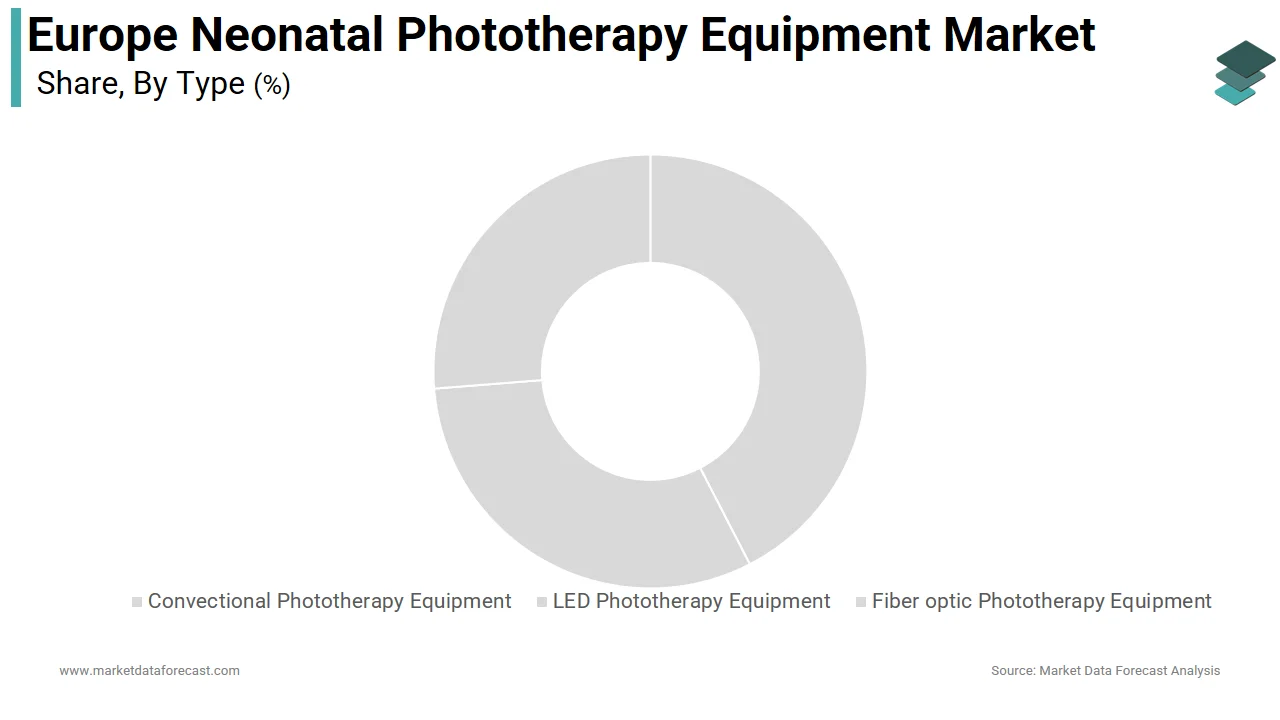
The fiber optic phototherapy equipment segment is estimated to register the fastest CAGR of 9.4% between 2026 and 2034, owing to increasing demand for flexible patient-centered care that supports kangaroo mother care and reduces separation between newborns and parents. Fiber optic systems, such as phototherapy blankets or pads, deliver light directly to the infant’s skin through woven optical fibers, enabling treatment while the baby remains in skin-to-skin contact or during transport. The use of combined fiber optic and overhead LED light therapy appears to shorten overall treatment time. Fiber optic devices may also support continuous feeding and interaction, potentially leading to improved infant weight gain. Some European countries have included fiber optic tools in their guidelines for managing jaundice, allowing for earlier patient discharge. Within European perinatal care frameworks, there is growing recognition of technology that enables continued treatment at home. Fiber optic phototherapy is becoming a cornerstone of holistic neonatal management in Europe as clinical standards increasingly emphasize parental bonding and neurodevelopmental support.
By End User Insights
In 2025, the hospitals and clinics segment led the Europe neonatal phototherapy equipment market by accounting for a substantial share. The leading position of the hospitals and clinics segment is credited to clinical protocols that mandate inpatient monitoring for all but the mildest cases of neonatal jaundice. European guidelines from bodies such as the National Institute for Health and Care Excellence and the German Society of Neonatology require serial bilirubin measurements, temperature control, eye protection, and nursing oversight during phototherapy, all of which necessitate hospital infrastructure. A substantial number of newborns annually require phototherapy for jaundice, with most treatments occurring in hospital settings. Home-based phototherapy remains limited even in areas with established alternative care models, due to factors such as stringent eligibility requirements and reimbursement challenges. Furthermore, hospital procurement follows centralized tenders that favor durable high-throughput systems with MDR certification, ensuring long term clinical reliability. The integration of phototherapy into electronic health records and neonatal dashboards further embeds these devices within institutional workflows. Hospitals will remain the primary hub for phototherapy delivery across Europe until home-based alternatives receive broader policy and reimbursement support.
The home users segment is estimated to register the fastest CAGR of 11.2% over the forecast period. This expansion is fueled by the convergence of clinical evidence, policy innovatio,n and digital health infrastructure, enabling safe outpatient management of mild jaundice. Reimbursement for home-based neonatal phototherapy is established in some European countries, with pilot programs in other nations suggesting a move towards broader implementation. These programs frequently use remote monitoring tools like wearable sensors and digital image sharing to track bilirubin and ensure safety. Clinical reviews suggest home phototherapy can be a safe alternative, potentially reducing readmissions and improving the parental experience. Portable phototherapy units are increasingly designed to meet home-use safety requirements, including irradiance and thermal controls. European digital health initiatives are exploring the use of these technologies to support family care and address hospital capacity needs. Growing evidence and better reimbursement are transforming home phototherapy from a niche treatment into a mainstream care option across Europe
By Application Insights
The neonatal jaundice management segment dominated the Europe neonatal phototherapy equipment market by capturing a significant share in 2025. The prominence of the neonatal jaundice management segment is driven by the condition’s universal clinical relevance and standardized treatment protocols. Phototherapy is the first-line intervention for unconjugated hyperbilirubinemia, which affects a significant share of all newborns in Europe, with 4 to 6 percent requiring active treatment to prevent neurotoxicity. National health systems treat it as essential infrastructure, with every maternity unit required to maintain functional equipment under EU clinical safety directives. In contrast, phototherapy for skin diseases such as psoriasis or eczema in infants is exceptionally rare and typically managed with topical agents or narrowband UVB units, not classified under neonatal equipment. The European Medicines Agency does not approve neonatal phototherapy devices for dermatological indications, reinforcing strict application boundaries. This near-total focus on jaundice ensures that product development, clinical validation, and regulatory approval remain exclusively aligned with bilirubin reduction efficacy and neonatal safety parameters.
The neonatal jaundice management segment is also the fastest-growing application segment with a projected CAGR of 7.8% between 2026 and 2034 due to rising preterm birth rates and enhanced screening protocols. Observations indicate a rise in the recorded rate of preterm births across European regions compared to previous levels. Data suggest that infants born in the late preterm period are more vulnerable to experiencing severe jaundice, partly related to the maturation stage of their liver. There is a reported shift toward implementing universal bilirubin screening for newborns before hospital discharge in a significant number of European nations. This widespread adoption of screening is associated with an increase in the early identification and management of neonatal jaundice. The integration of transcutaneous bilirubinometers with phototherapy systems enables real-time dose adjustment, improving outcomes and reducing length of stay. Additionally, the European Reference Network for Rare Diseases has expanded guidance on hereditary causes of hyperbilirubinemia, such as Gilbert syndrome, requiring prolonged phototherapy support. These factors collectively expand the treatable population and treatment duration, reinforcing neonatal jaundice as the sole and accelerating application for phototherapy equipment across Europe.
COUNTRY-LEVEL ANALYSIS
Germany Neonatal Phototherapy Equipment Market Analysis
Germany dominated the Europe neonatal phototherapy equipment market by accounting for a share of 22.1% in 2025. The dominance of the German market is driven by its high birth volume, advanced neonatal infrastructure, and strict adherence to medical device regulations. The nation experiences a consistent, high volume of annual live births, with a notable portion of infants requiring phototherapy treatment. Numerous specialized neonatal intensive care units are equipped with certified LED phototherapy systems and integrated monitoring technology. Guidelines exist to ensure regular irradiance audits and staff competency assessments for device utilization. Inpatient phototherapy services are fully covered by public health insurance, with streamlined access. Major medical device manufacturers maintain research centers in the country, often collaborating with academic hospitals to develop advanced phototherapy systems. This combination of clinical rigor, technological investment, and universal coverage positions Germany as the benchmark for neonatal phototherapy standards across Europe.
United Kingdom Neonatal Phototherapy Equipment Market Analysis
The United Kingdom was the second largest country in the Europe neonatal phototherapy equipment market by holding a 15.8% share in 2025. The expansion of the UK market is attributed to its evidence-based National Institute for Health and Care Excellence guidelines that standardize phototherapy thresholds across all NHS trusts. The NHS procurement framework prioritizes MDR-compliant LED systems with centralized tenders driving rapid technology refresh cycles. The UK also leads in integrating phototherapy into digital care pathways. Pilot initiatives in Scotland and Wales are leveraging telehealth to manage low-risk phototherapy at home, successfully freeing up hospital beds despite a lack of formal reimbursement. The UK's influential role in shaping European clinical and procurement standards stems from its powerful academic neonatal networks and unified health system.
France Neonatal Phototherapy Equipment Market Analysis
France maintains a significant share of the Europe neonatal phototherapy equipment market owing to its nationally coordinated perinatal network comprising numerous regional centers that dictate equipment specifications and treatment protocols. Neonatal births in this context are associated with a specific frequency of phototherapy intervention. Administering phototherapy involves standardized guidelines, emphasizing LED technology and irradiance monitoring. Regulatory standards for neonatal devices mandate additional clinical utility assessments beyond initial CE marking, prioritizing high-performance systems for public hospitals. Public procurement groups such as UNIFED negotiate bulk contracts for MDR-certified phototherapy units, achieving cost efficiency without compromising quality. France also invests in staff training through the National Perinatal Plan, which includes phototherapy competency modules for all neonatal nurses. This top-down integration of policy procurement and education ensures consistent, high-quality care and steady demand for advanced equipment across the country.
Sweden Neonatal Phototherapy Equipment Market Analysis
Sweden expanded steadily in the European market. The country is a global leader in family-centered neonatal care that directly influences phototherapy adoption patterns. Neonatal jaundice management is shifting towards decentralized, technology-enabled, and patient-centered approaches. This includes universal bilirubin screening and an increasing number of mild jaundice cases being managed at home with portable fiber optic devices and telehealth oversight. Hospitals prioritize devices that support kangaroo care with flexible overhead arms and low noise operation. The Karolinska Institute actively researches phototherapy outcomes linking device type to neurodevelopmental metrics. This humanistic approach, combined with a strong digital health infrastructure, makes Sweden a high-value market for innovative patient-centered phototherapy solutions that balance efficacy with developmental care principles.
Netherlands Neonatal Phototherapy Equipment Market Analysis
The Netherlands is likely to grow in the Europe neonatal phototherapy equipment market from 2026 to 2034 due to a highly efficient perinatal system that maximizes resource utilization through early discharge and home follow-up. The national birth numbers are accompanied by the integration of specific bilirubin guidelines directly into maternity software systems. Perinatal data registration systems facilitate widespread tracking and quality benchmarking across medical facilities. Reimbursement policies support home phototherapy for qualifying infants, allowing a portion of cases to be managed in home settings using certified portable technology. National health strategies emphasize the adoption of technologies designed to reduce hospital stays while maintaining safety standards. Dutch hospitals also lead in equipment sharing agreements within regional networks, optimizing capital expenditure. This pragmatic focus on outcomes, efficiency, and family involvement positions the Netherlands as a model for scalable, sustainable neonatal phototherapy care in Europe.
COMPETITIVE LANDSCAPE
The Europe neonatal phototherapy equipment market features a competitive landscape shaped by the tension between global medtech leaders and specialized innovators. Established players like GE Healthcare and Dräger dominate high acuity hospital settings with integrated intensive care platforms that emphasize safety, precision, and regulatory compliance under the EU Medical Device Regulation. In contrast, niche firms such as BiliCare target emerging care models focused on home-based treatment and family-centered design. Competition centers on clinical validation, interoperability, and alignment with national perinatal strategies rather than price alone. The market is highly regulated, with lengthy certification cycles creating high entry barriers for new entrants. Innovation is increasingly systemic, focusing on smart monitoring, telehealth integration, and flexible delivery formats that support both hospital efficiency and developmental care principles. Public procurement processes favor vendors with proven, reliable service infrastructure and adherence to clinical guidelines. As European health systems seek to balance quality, sustainability, and cost, the most successful companies are those that offer not just devices but comprehensive solutions that enhance outcomes across the entire neonatal jaundice care pathway.
KEY MARKET PLAYERS
The leading companies operating in the Europe neonatal phototherapy equipment market include:
- GE Healthcare
- Natus Medical Incorporated
- Drägerwerk AG & Co. KGaA
- Phoenix Medical Systems Pvt. Ltd.
- Solarc Systems Inc.
- Herbert Waldmann GmbH & Co. KG
- Atom Medical Corporation
- Philips Lighting Holding B.V.
- Nice Neotech Medical Systems Pvt. Ltd.
- BiliCare International Ltd
- National Biological Corp.
TOP PLAYERS IN THE MARKET
- GE Healthcare is a global leader in neonatal care solutions and plays a pivotal role in the Europe neonatal phototherapy equipment market through its advanced LED-based systems such as the Giraffe and Lullaby platforms. The company integrates phototherapy with vital sign monitoring and electronic health records to support data-driven clinical workflows in compliance with the EU Medical Device Regulation. GE Healthcare collaborates with leading European academic hospitals to validate treatment efficacy and refine human-centered design features. It also expanded its service and training infrastructure across Central and Eastern Europe to support public hospital procurement and ensure optimal device utilization in resource-constrained settings.
- Drägerwerk AG & Co KGaA is a Germany-headquartered medical technology company renowned for its high-precision neonatal phototherapy systems that combine therapeutic efficacy with thermal regulation and safety. Its Isolette and Babytherm platforms are widely deployed in European level III neonatal intensive care units due to their robust engineering and seamless interoperability with critical care ecosystems. Dräger emphasizes compliance with stringent MDR requirements through comprehensive clinical documentation and software validation. It also enhanced its digital dashboard to display irradiance metrics alongside physiological parameters supporting holistic neonatal management. Dräger’s commitment to German engineering excellence and clinical safety reinforces its trusted position across Europe’s most demanding perinatal environments.
- BiliCare International Ltd is a specialized innovator focused on decentralized neonatal phototherapy solutions that enable safe home-based and outpatient care across Europe. The company’s BiliCocoon and BiliBed systems are among the few MDR-certified devices explicitly approved for domiciliary use, featuring automatic thermal control, parental guidance interfaces, and cloud-connected monitoring. BiliCare has established reimbursement pathways in Sweden, the Netherlands, and Denmark, and supports national pilot programs in France and Germany through partnerships with regional health authorities. BiliCare meets Europe’s demand for sustainable, flexible neonatal care by prioritizing family-centered models and digital health integration over traditional hospital structures.
TOP STRATEGIES USED BY THE KEY MARKET PARTICIPANTS
Key players in the Europe neonatal phototherapy equipment market prioritize compliance with the EU Medical Device Regulation by investing in clinical evidence, software validation, and post-market surveillance systems. They integrate phototherapy devices with electronic health records and neonatal dashboards to enable data-driven care and interoperability. Companies develop adaptive and smart features such as real-time irradiance adjustment, bilirubin trend correlation, and thermal safety alerts to enhance treatment precision. Strategic focus on family integrated care drives innovation in fiberoptic blankets and portable systems that support kangaroo mother care and early discharge. Manufacturers expand service and training networks across Southern and Eastern Europe to support public hospital procurement and ensure optimal device utilization. Partnerships with national health authorities, midwifery associations, and academic hospitals facilitate clinical validation and guideline alignment. Additionally, firms pursue MDR certification for home use indications to unlock reimbursement and scale decentralized care models aligned with Europe’s digital health and sustainability priorities.
MARKET SEGMENTATION
This Europe neonatal phototherapy equipment market research report is segmented and sub-segmented into the following categories.
By Type
- Convectional Phototherapy Equipment
- LED Phototherapy Equipment
- Fiber optic Phototherapy Equipment
By End User
- Hospital & Clinics
- Home Users
By Application
- Skin disease treatment
- Neonatal Jaundice Management
By Country
- UK
- France
- Spain
- Germany
- Italy
- Russia
- Sweden
- Denmark
- Switzerland
- Netherlands
- Turkey
- Czech Republic
- Rest of Europe