- Product Description Description
- Table of Contents TOC
- List of Table & Figure LOT
- Get Free Sample PDF Sample PDF
Market Size, 2025
$25.07 BnMarket Estimate, 2026
$26 BnMarket Forecast, 2034
$39.07 BnCAGR, 2026–2034
3.68%Europe Niobium Market Size, Growth, Trends & Forecast (2026–2034)
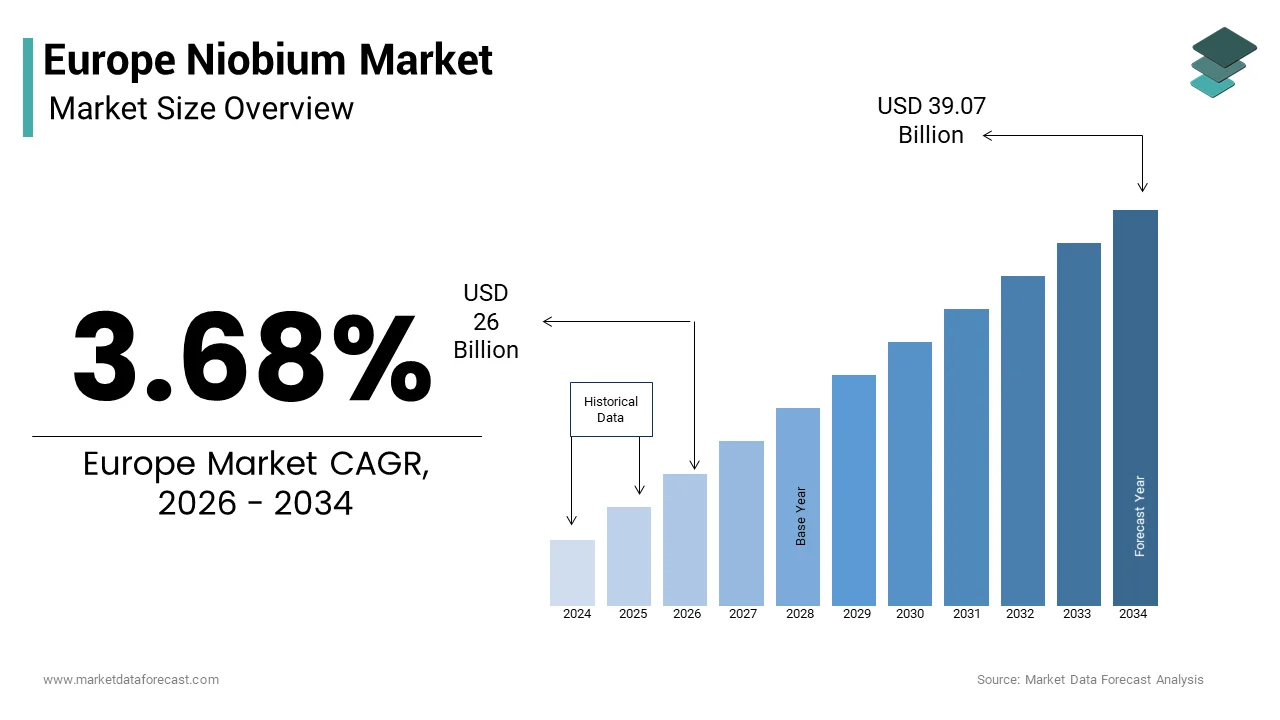
The Europe niobium market size was valued at USD 25.07 billion in 2025, is anticipated to reach USD 26.00 billion in 2026, and is projected to scale up to USD 39.07 billion by 2034, registering a compound annual growth rate (CAGR) of 3.68% during the forecast period from 2026 to 2034. Driven by the rapid deployment of offshore wind energy infrastructure, automotive industry lightweighting trends, and critical classification under EU raw material policy, the European niobium sector continues to expand steadily.
Key Executive Metrics (At-a-Glance)
- 2025 Base Valuation: USD 25.07 Billion
- 2026 Current Valuation: USD 26.00 Billion
- 2034 Forecast Valuation: USD 39.07 Billion
- Compound Annual Growth Rate (CAGR): 3.68% (2026–2034)
- Dominant Occurrence Segment: Carbonatites and Associates Segment (94.1% share in 2025)
- Fastest-Growing Occurrence Segment: Columbite Tantalite Segment (projected at 4.1% CAGR)
- Dominant Type Segment: Ferroniobium Segment (80.9% share in 2025)
- Fastest-Growing Type Segment: Niobium Oxide Segment (projected at 6.2% CAGR)
- Dominant Application Segment: Steel Segment (91.2% share in 2025)
- Fastest-Growing Application Segment: Superconducting Magnets Segment (projected at 6.6% CAGR)
- Dominant End-User Segment: Industrial Manufacturing Segment (84.4% share in 2025)
- Fastest-Growing End-User Segment: High Technology & Research Segment (projected at 7.2% CAGR)
- Dominant Country Market: Germany (23.5% share in 2025) followed by Italy and France
Core Market Drivers
- Offshore Wind Energy: Massive expansion of European wind turbine capacity requiring high-strength, fatigue-resistant foundation steels.
- Automotive Lightweighting: Strict EU vehicle emissions standards prompting the adoption of advanced high-strength steels (AHSS) microalloyed with niobium.
- Critical Raw Material Status: Official European Commission classification underlining its vital role in industrial competitiveness and supply chain security.
Primary Market Restraints & Challenges
- Extreme Import Dependency: 100% reliance on external mining sources (primarily Brazil and Canada), exposing local supply chains to geopolitical and trade risks.
- Stringent Environmental Costs: Energy-intensive processing requirements and strict EU carbon pricing regulations under the Emissions Trading System.
- Raw Material Price Volatility: Global commodity price swings and lack of transparent pricing mechanisms affecting downstream manufacturing budgets.
Europe Niobium Market Segmentation Highlights
| Segment Category | Largest Market Segment | Fastest-Growing Market Segment |
|---|---|---|
| By Occurrence | Carbonatites and Associates (94.1% share in 2025) | Columbite Tantalite (4.1% CAGR) |
| By Type | Ferroniobium Segment (80.9% share in 2025) | Niobium Oxide Segment (6.2% CAGR) |
| By Application | Steel Segment (91.2% share in 2025) | Superconducting Magnets (6.6% CAGR) |
| By End-User | Industrial Manufacturing (84.4% share in 2025) | High Technology & Research (7.2% CAGR) |
Major Industry Players Profiled
Key corporations dominating the European niobium landscape include CBMM, AMG Advanced Metallurgical Group, CMOC, NioCorp Development Ltd, Magris Performance Materials, Australian Strategic Materials Ltd, American Elements, Admat Inc., Changsha South Tantalum Niobium Co. Ltd, Grandview Materials, and Titanex GmbH.
 Download Free Sample Report
Europe Niobium Market Size
The Europe niobium market size was valued at USD 25.07 billion in 2025 and is anticipated to reach USD 26 billion in 2026 to reach USD 39.07 billion by 2034, growing at a CAGR of 3.68% during the forecast period from 2026 to 2034.
Europe Niobium Market Strategic Analysis
Niobium serves as a critical strategic metal within the European industrial landscape primarily due to its exceptional ability to enhance the strength and toughness of steel alloys. This refractory element is indispensable for manufacturing high performance materials used in infrastructure automotive components and energy transmission systems. The European Union classifies niobium as a critical raw material because of its economic importance and supply risk, underscoring its vital role in maintaining industrial competitiveness. As per the European Commission, the dependency on imports for niobium remains near 100% since there are no active primary mines within the region. This total reliance on external sources creates a unique market dynamic where downstream consumption drives import volumes rather than domestic extraction. The metal’s application extends beyond traditional steel strengthening into emerging sectors such as superconducting magnets for medical imaging and particle accelerators. According to the International Niobium Association, the majority of global niobium production is consumed in steel applications where it allows for weight reduction and improved durability. In Europe, the push for sustainable construction practices has elevated the demand for high strength low alloy steels that utilize niobium microalloying. The geopolitical landscape further influences availability as supply chains concentrate heavily in specific nations outside the continent. Understanding this market requires analyzing the interplay between stringent environmental regulations, advanced manufacturing needs, and the securement of stable supply routes for this essential alloying element.
MARKET DRIVERS
Expansion of Offshore Wind Energy Infrastructure Drives Niobium Consumption
The aggressive expansion of offshore wind energy capacity across Europe is boosting the demand for niobium due to the metal’s crucial role in producing high strength steel for turbine foundations and towers. Offshore wind turbines require materials that can withstand harsh marine environments, extreme loads, and fatigue over decades of operation. Niobium microalloyed steel offers the necessary combination of high strength, weldability, and toughness required for these massive structures. As per WindEurope, the European Union has set ambitious offshore wind capacity targets to meet climate neutrality goals. This demands the construction of thousands of new turbines, each requiring substantial amounts of specialized steel. For instance, a single large offshore wind turbine foundation can contain several hundred tons of high grade steel where niobium additions improve structural integrity while reducing overall weight. The transition away from fossil fuels has accelerated investment in renewable energy projects, with countries like Germany, the United Kingdom, and the Netherlands leading deployment. According to the European Wind Energy Association, the sector has invested billions of euros in new installations in recent years, reflecting robust growth. This surge in infrastructure development directly translates to increased consumption of niobium ferroalloys as steelmakers prioritize materials that enhance efficiency and longevity. The regulatory framework supporting green energy further solidifies this demand driver, ensuring sustained uptake of niobium enhanced materials in the energy sector.
Automotive Industry Shift Toward Lightweight High Strength Steel Boosts Demand
The European automotive sector’s pursuit of vehicle lightweighting to meet stringent emission standards significantly propels demand for niobium containing advanced high strength steels, which is further fuelling the growth of the European niobium market. Regulatory pressures from the European Union mandate reductions in carbon dioxide emissions from new passenger cars, which is compelling manufacturers to reduce vehicle mass without compromising safety. Niobium enables the production of thinner yet stronger steel sheets, essential for car bodies, chassis, and suspension components. As per the European Automobile Manufacturers Association, new cars sold in Europe must comply with increasingly tight emission targets and is driving innovation in material science. The use of niobium microalloyed steel allows for weight savings in certain structural parts compared to conventional steel. This reduction directly contributes to lower fuel consumption in internal combustion engines and extended range in electric vehicles. With the rapid electrification of the European fleet, the need for lightweight materials becomes even more critical to offset the heavy weight of battery packs. According to industry data, electric vehicle production in Europe has grown significantly in recent years, indicating a shifting landscape that favors advanced materials. Automakers are increasingly adopting third generation advanced high strength steels that rely on niobium for optimal performance. This technological shift ensures that niobium remains integral to the automotive supply chain as manufacturers strive to balance performance, safety, and environmental compliance in their vehicle designs.
MARKET RESTRAINTS
Supply Chain Vulnerability Due to Extreme Import Dependency Restricts Market Stability
The Europe niobium market faces a severe restraint stemming from its complete reliance on imports, which exposes the region to significant supply chain vulnerabilities and geopolitical risks. Europe lacks any primary niobium mining operations, meaning that 100% of its supply must be sourced from external producers, primarily located in Brazil and Canada. This concentration of supply creates a precarious situation where any disruption in these source countries can have immediate and profound effects on European industries. As per the European Commission’s Critical Raw Materials Act, the supply risk for niobium is classified as high due to the limited number of global suppliers and the lack of domestic alternatives. Political instability, trade disputes, or logistical bottlenecks in exporting nations can lead to sudden price spikes or shortages that disrupt manufacturing processes. According to the International Trade Centre, fluctuations in export policies from major producing nations can create uncertainty for European buyers who have no leverage to influence production decisions. This dependency also limits the ability of European companies to negotiate favorable terms or secure long term contracts at stable prices. The absence of a local mining base means that Europe cannot buffer against global market volatility through domestic stockpiles or increased local production. Consequently, industries such as construction and automotive must constantly navigate the risks associated with this unilateral dependence, which is making supply security a persistent challenge for market participants.
Stringent Environmental Regulations Increase Operational Costs for Downstream Users
Strict environmental regulations within the European Union impose substantial compliance costs on industries that process and utilize niobium, thereby acting as a restraint on market growth. The production of niobium ferroalloys and its integration into steel manufacturing are energy intensive processes that generate significant carbon emissions and industrial waste. As per the European Green Deal, industries are required to drastically reduce their carbon footprint, which necessitates expensive upgrades to facilities and adoption of cleaner technologies. Steelmakers, who are the primary consumers of niobium, face increasing pressure to decarbonize their operations under the EU Emissions Trading System. This system puts a price on carbon emissions, forcing companies to purchase allowances or invest in low carbon production methods. According to the European Environment Agency, the cost of carbon allowances has risen sharply in recent years, adding financial burden to heavy industries. These increased operational costs can dampen demand for niobium as manufacturers seek to optimize expenses or explore alternative materials with lower environmental impact. Additionally, the extraction and processing of niobium abroad must also adhere to growing sustainability standards imposed by European buyers who are increasingly conscious of the environmental footprint of their supply chains. Compliance with these standards often requires additional auditing and certification processes, which add to the overall cost structure. The regulatory landscape thus creates a complex environment where economic viability must be balanced against environmental responsibility, potentially slowing down the adoption rate of niobium intensive solutions in certain applications.
MARKET OPPORTUNITIES
Recycling Initiatives and Circular Economy Models Present Significant Growth Avenues
The growing emphasis on circular economy principles within Europe is a substantial opportunity for the niobium market through the development and expansion of recycling initiatives. As natural resources become scarcer and environmental concerns mount, the recovery of niobium from end of life steel products and industrial scrap offers a sustainable alternative to primary sourcing. Although currently limited, the technology for recovering niobium from steel scrap is advancing, allowing for the reintroduction of this valuable element into the production cycle. As per the European Steel Association, the recycling rate of steel in Europe is among the highest globally, providing a vast potential feedstock for niobium recovery. By integrating niobium rich scrap into electric arc furnace operations, steelmakers can reduce reliance on virgin ferroalloys while lowering energy consumption and emissions. This approach aligns with the European Union’s Circular Economy Action Plan, which aims to minimize waste and maximize resource efficiency. According to the Joint Research Centre, improving the recycling efficiency of critical raw materials like niobium can enhance supply security and reduce environmental impact. Companies that invest in innovative sorting and processing technologies to recover niobium from complex waste streams will gain competitive advantage. Furthermore, the development of closed loop systems where niobium is retained within the material lifecycle offers long term economic benefits. This shift towards sustainability not only mitigates supply risks but also appeals to environmentally conscious consumers and regulators, creating a new value proposition for niobium in the European market.
Advancements in Superconducting Applications Open New High Value Markets
Emerging advancements in superconducting technologies offer a lucrative opportunity for the niobium market in Europe, particularly in the fields of medical imaging and scientific research. Niobium titanium and niobium tin alloys are essential materials for creating superconducting magnets, which operate at extremely low temperatures and enable powerful magnetic fields. These magnets are critical components in magnetic resonance imaging machines used widely in healthcare diagnostics, as well as in particle accelerators like the Large Hadron Collider at CERN. As per CERN, the continuous upgrade and expansion of particle physics facilities require substantial quantities of high purity niobium based superconductors. The healthcare sector in Europe is also expanding its diagnostic capabilities with an increasing number of MRI installations driven by an aging population and advanced medical needs. According to the European Coordination Committee of the Radiological Electromedical and Healthcare IT Industry, the demand for medical imaging equipment continues to grow steadily across the region. This trend drives the need for reliable supplies of niobium for superconducting wire production. Additionally, the development of fusion energy technologies, which rely heavily on superconducting magnets, represents a future growth frontier. European projects focused on nuclear fusion are investing heavily in research and development, creating potential long term demand for specialized niobium products. Diversifying into these high value applications allows market participants to move beyond traditional steel markets and tap into sectors with higher margins and less price sensitivity.
MARKET CHALLENGES
Volatility in Raw Material Prices Impacts Downstream Manufacturing Stability
The Europe niobium market faces a significant challenge from the inherent volatility in raw material prices, which destabilizes planning and budgeting for downstream manufacturers. Since Europe depends entirely on imports, price fluctuations in the global market are transmitted directly to local buyers without the buffer of domestic production. These price swings are often driven by changes in demand from major consuming nations, shifts in currency exchange rates, and disruptions in logistics. As per the World Bank, metals markets including niobium have experienced considerable instability in recent years due to global economic uncertainties. This unpredictability makes it difficult for European steelmakers and automotive manufacturers to forecast costs accurately, leading to hesitation in long term procurement contracts. Sudden price increases can erode profit margins for industries operating on thin margins, forcing them to pass costs onto consumers or reduce production volumes. According to the European Federation of Steel Traders, price volatility complicates inventory management and financial hedging strategies for traders and end users. The lack of transparency in pricing mechanisms for minor metals like niobium exacerbates this issue, as buyers often lack real time information to make informed decisions. Furthermore, the concentrated nature of the supply market means that individual producers have significant influence over pricing, leaving European buyers with limited negotiating power. This financial uncertainty acts as a deterrent to investment in new projects that rely heavily on niobium, thereby constraining market expansion and innovation in key industrial sectors.
Geopolitical Tensions and Trade Policy Shifts Threaten Supply Continuity
Geopolitical tensions and evolving trade policies is further challenging the expansion of the Europe niobium market by threatening the continuity and reliability of supply chains. As global powers engage in strategic competition, the flow of critical raw materials like niobium can become subject to political leverage and trade restrictions. The European Union’s efforts to diversify its supply sources and reduce dependency on single regions may lead to friction with existing trading partners. As per the European External Action Service, geopolitical instability in various parts of the world can disrupt shipping routes and access to key mining regions. Trade barriers such as tariffs, export quotas, or sanctions can abruptly alter the availability of niobium in the European market. The recent trend towards protectionism in global trade has increased the risk of supply interruptions for critical materials. According to the Chamber of Commerce, unexpected changes in trade agreements can create administrative burdens and delays for importers. Additionally, the push for friend shoring or near shoring supply chains may require significant restructuring of existing logistics networks, which involves high costs and operational complexities. European companies must navigate a complex web of international regulations and diplomatic relations to secure stable supplies. This geopolitical uncertainty necessitates constant monitoring and adaptation of supply chain strategies, diverting resources from core business activities. The potential for political disputes to escalate into trade conflicts remains a persistent threat that could severely impact the availability and cost of niobium for European industries reliant on this critical metal.
REPORT COVERAGE
| REPORT METRIC | DETAILS |
| Market Size Available | 2025 to 2034 |
| Base Year | 2025 |
| Forecast Period | 2026 to 2034 |
| CAGR | 3.68% |
| Segments Covered | By Occurrence, Type, Application, End-user, Country |
| Various Analyses Covered | Global, Regional & Country Level Analysis, Segment-Level Analysis, DROC, PESTLE Analysis, Porter’s Five Forces Analysis, Competitive Landscape, Analyst Overview on Investment Opportunities |
| Regions Covered | UK, France, Spain, Germany, Italy, Russia, Sweden, Denmark, Switzerland, Netherlands, Turkey, the Czech Republic, and the Rest of Europe |
| Market Leaders Profiled | Admat Inc., American Elements, Australian Strategic Materials Ltd, CBMM, AMG Advanced Metallurgical Group, Changsha South Tantalum Niobium Co. Ltd, CMOC, Grandview Materials, Magris Performance Materials, NioCorp Development Ltd, Titanex GmbH. |
SEGMENTAL ANALYSIS
By Occurrence Insights
The carbonatites and associates segment commanded a dominant position in the Europe niobium market by holding 94.1% of the European market share in 2025. This prevalence is primarily driven by the geological reality that nearly all commercially viable niobium deposits globally are associated with carbonatite complexes. The superior economic viability and processing efficiency of pyrochlore minerals found within these carbonatite structures compared to columbite tantalite ores is further boosting the leading position of carbonatites and associates segment in the European market. As per the British Geological Survey, carbonatite hosted deposits offer higher grades and simpler beneficiation processes, which significantly reduce production costs. The majority of niobium imported into Europe originates from the Araxá mine in Brazil, a carbonatite deposit that provides a consistent and high volume supply of ferroniobium, the preferred form for European steelmakers. According to the International Niobium Association, the energy required to process carbonatite ores is substantially lower than that for hard rock columbite deposits. This efficiency translates into competitive pricing, which is critical for the price sensitive European construction and automotive sectors. Furthermore, established supply chains from carbonatite producers are deeply integrated with European industrial consumers, ensuring reliable delivery schedules. The consistency in chemical composition from these sources allows steel manufacturers to maintain strict quality control standards without frequent process adjustments. This operational stability reinforces the preference for carbonatite derived niobium across the region.
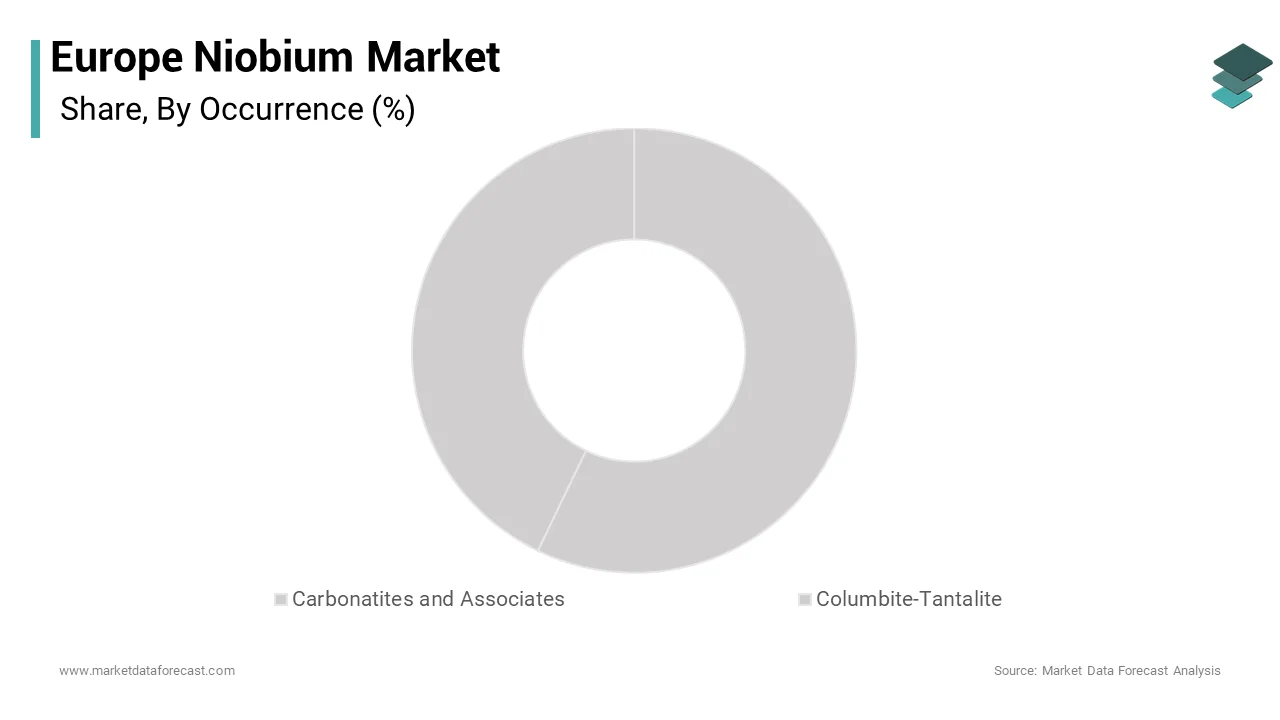
However, the columbite tantalite segment is anticipated to record a CAGR of 4.1% over the forecast period in the European market owing to the increasing strategic interest in diversifying supply sources away from traditional carbonatite dominated channels. As geopolitical tensions rise, European industries are exploring alternative mineral sources to mitigate supply chain risks. Columbite tantalite often occurs as a byproduct of tin and tantalum mining, presenting an opportunity for integrated resource recovery. According to the European Commission’s Critical Raw Materials Alliance, there is growing emphasis on sourcing niobium from diverse geological settings to enhance supply security. The development of new extraction technologies has made processing columbite tantalite ores more economically feasible, allowing for efficient separation of niobium from tantalum, which is also critical for the electronics industry. As per the Joint Research Centre, research initiatives are focusing on improving the yield and purity of niobium from complex ore bodies. This technological progress is attracting investment into exploration projects within Europe and neighboring regions that host columbite tantalite deposits. Additionally, rising demand for tantalum in consumer electronics indirectly supports the availability of niobium from these sources. This symbiotic relationship between the two metals creates a robust growth trajectory for the columbite tantalite segment as industries seek to optimize resource utilization.
By Type Insights
The ferroniobium segment occupied 80.9% of the European market share in 2025. The growth of the ferroniobium segment in the European market can be credited to the extensive use of ferroniobium as an additive in the production of high strength low alloy steels. The primary driving factor is the seamless integration of ferroniobium into standard steelmaking processes such as basic oxygen furnaces and electric arc furnaces. As per the World Steel Association, the addition of small amounts of niobium in the form of ferroniobium significantly improves the strength, toughness, and weldability of steel. This enhancement allows manufacturers to produce thinner and lighter steel sections without compromising structural integrity. The automotive and construction sectors in Europe are the largest consumers of these advanced steels. According to the European Automobile Manufacturers Association, the shift towards lightweight vehicles to meet emission standards has increased demand for ferroniobium treated steels. The cost effectiveness of ferroniobium compared to pure niobium metal makes it the preferred choice for bulk steel applications. The established infrastructure for handling and storing ferroniobium alloys further supports its widespread adoption. Steelmakers benefit from the predictable behavior of ferroniobium during alloying, ensuring consistent product quality. The regulatory push for sustainable construction practices also favors the use of high strength steels that reduce material usage. This alignment with environmental goals reinforces the dominant position of ferroniobium in the European market.
On the other end, the niobium oxide segment is experiencing the fastest growth and is expected to witness a CAGR of 6.2% over the forecast period. The increasing demand for high purity niobium compounds in specialized applications such as ceramics, capacitors, and optical glasses is propelling the growth of the niobium oxide segment in the European market. Niobium oxide is a key ingredient in the production of lithium niobate crystals, which are essential for telecommunications and signal processing devices. As per the European Telecommunications Network Operators Association, the rollout of fifth generation networks requires advanced components that utilize niobium based materials. The miniaturization of electronic devices has also boosted demand for niobium oxide in multilayer ceramic capacitors, which offer high capacitance in small volumes and are ideal for smartphones and portable electronics. According to the European Component Distributors Association, the market for passive electronic components is growing steadily, driven by the Internet of Things and automation trends. Additionally, niobium oxide is used in manufacturing specialized glass with high refractive indices for camera lenses and scientific instruments. The pharmaceutical industry is also exploring niobium oxide for potential biomedical applications due to its biocompatibility. Research institutions in Europe are investing in developing new niobium based materials for energy storage and catalysis. This diversification of applications beyond traditional metallurgy is propelling growth of the niobium oxide segment. The high value added nature of these applications allows for greater profit margins despite lower volumes compared to ferroniobium.
By Application Insights
The steel segment dominated the Europe niobium market with 91.2% of the regional market share in 2025. This dominance of the steel segment in the European market is attributed to the indispensable role of niobium in enhancing the mechanical properties of structural and pipeline steels. The construction industry requires materials that offer high strength and durability while reducing overall weight, and niobium microalloying refines grain structure to improve toughness and resistance to cracking. As per the European Construction Industry Federation, niobium reinforced steels enable more efficient building designs and reduced material consumption. Infrastructure projects such as bridges and skyscrapers benefit from these properties to ensure resilience against dynamic loads and environmental stresses. The automotive sector also contributes significantly, using niobium strengthened steels for frames and safety components. According to the International Organization of Motor Vehicle Manufacturers, demand for safer and more fuel efficient vehicles drives adoption of advanced high strength steels. In the energy sector, niobium containing pipes are critical for oil and gas transmission due to their resistance to corrosion and high pressure. European steel producers have optimized processes to maximize niobium’s benefits, embedding it deeply into industrial supply chains. This integration ensures steel remains the primary application for niobium, supported by proven performance and lack of viable substitutes.
On the other side, the superconducting magnets segment is anticipated to witness a CAGR of 6.6% over the forecast period in the European market owing to the advancements in medical imaging technology and large scale scientific research. Niobium titanium and niobium tin alloys are essential for superconducting coils in MRI machines. As per the European Society of Radiology, the number of MRI scanners in hospitals across Europe is increasing to meet diagnostic needs of an aging population. Niobium superconductors enable higher magnetic fields and better image resolution, critical for early disease detection and precise interventions. In research, projects like ITER (International Thermonuclear Experimental Reactor) rely heavily on niobium superconducting magnets for plasma confinement. CERN’s particle accelerators also require significant quantities of high quality superconducting wires. Fusion energy initiatives across Europe are driving further demand, as compact fusion reactors depend on advanced magnet systems achievable only with niobium based superconductors. The specialized nature of this application creates strong pricing power for suppliers. Government funding for healthcare and scientific infrastructure supports sustained growth, ensuring superconducting technology remains a strategic frontier for niobium applications.
By End User Insights
The industrial manufacturing segment accounted for the largest share of 84.4% of the regional market in 2025. The dominance of industrial manufacturing segment in the European market is primarily driven by the Europe’s massive steel production, which incorporates niobium for enhanced performance. As per the European Automobile Manufacturers Association, millions of tons of steel used annually in passenger car production are microalloyed with niobium. Steel mills are direct purchasers of ferroniobium, supplying processed steel to automotive and construction industries. According to the World Steel Association, Europe produces around 130 million tons of crude steel annually. Even small niobium additions per ton translate into substantial demand. Construction projects also rely on niobium reinforced rebar and beams. The proven reliability of niobium in industrial applications makes it the preferred choice for engineers and designers. Long term contracts between suppliers and steelmakers reinforce stability, while regulatory pushes for lightweighting and sustainability ensure continued demand.
However, the high technology and research segment is expected to grow at the fastest CAGR of 7.2% over the forecast period. This includes manufacturers of medical imaging equipment, semiconductor tools, and scientific institutions. As per the European Coordination Committee of the Radiological Electromedical and Healthcare IT Industry, demand for MRI systems is rising, driven by healthcare access and technological progress. These systems rely on niobium superconducting magnets, requiring specialized procurement. Research facilities such as CERN and national laboratories are expanding capabilities, which is demanding custom niobium components for accelerators and fusion experiments. According to the European Research Council, funding for large scale research infrastructure has increased, supporting specialized material acquisition. The semiconductor industry is also exploring niobium compounds for next generation chip manufacturing. These applications demand high precision and purity, creating niche but rapidly growing markets. Suppliers meeting stringent standards are seeing strong demand growth. This segment represents the frontier of niobium applications, where innovation and strategic importance drive value beyond traditional steel markets.
COUNTRY LEVEL ANALYSIS
Germany Niobium Market Analysis
Germany stood as the largest consumer of niobium in Europe by capturing 23.5% of the European market share in 2025. The dominance of Germany in the European market is attributed to the country’s robust automotive and heavy engineering industries, which are major users of high strength steel. The German automotive sector is undergoing a significant transformation toward electric mobility, requiring lightweight materials to extend vehicle range. As per the German Association of the Automotive Industry, EV production in Germany has surged, demanding advanced steel solutions incorporating niobium. Germany’s strong manufacturing base ensures steady demand for niobium ferroalloys from domestic steel producers. The country’s commitment to renewable energy also drives demand through offshore wind farm construction in the North Sea. According to the Federal Ministry for Economic Affairs and Climate Action, Germany aims to expand offshore wind capacity significantly by 2030, requiring large volumes of niobium enhanced steel for turbine foundations. Leading steel manufacturers such as ThyssenKrupp and Salzgitter AG are at the forefront of developing new steel grades optimized for niobium usage. Germany’s focus on industrial efficiency and sustainability aligns well with the benefits of niobium microalloying. Its central location in Europe further strengthens its role as a hub for distribution and logistics of niobium products to neighboring countries.
Italy Niobium Market Analysis
Italy had the second largest share of the European niobium market in 2025. The growth of Italy in the European market is attributed to the strong construction sector and specialized automotive manufacturing industry. Infrastructure projects including bridge repairs and seismic retrofitting require high performance steel materials. As per the National Institute of Statistics, Italy invests heavily in public works, stimulating demand for niobium reinforced steel. The automotive sector, with its premium manufacturers, prioritizes performance and safety, adopting advanced high strength steels. According to the Italian Automobile Manufacturers Association, luxury and sports car production often uses niobium alloys for weight reduction. Shipbuilding also contributes to demand, with high strength steel plates used in naval and commercial vessels. Italian steel producers such as Acciaierie d’Italia are key players in the supply chain. The government’s national recovery and resilience plan includes significant funding for infrastructure modernization, sustaining demand for niobium materials. Italy’s Mediterranean location facilitates trade and logistics for imports, reinforcing its market position.
France Niobium Market Analysis
France is estimated to account for a promising share of the European niobium market during the forecast period owing to its diversified industrial base and ambitious energy transition policies. Aerospace and nuclear energy sectors consume specialized alloys containing niobium, while construction and automotive industries account for the largest demand volumes. As per the French Ministry of Ecological Transition, strict building regulations encourage sustainable and durable materials, favoring niobium microalloyed steel. The automotive industry, led by Renault and Stellantis, is transitioning toward EV platforms requiring lightweighting solutions. France’s commitment to nuclear energy supports demand for high quality materials in plant maintenance and upgrades. The extensive railway network also requires modernization with high strength rails. French steel producers such as ArcelorMittal France play a crucial role in supply. Government green deal initiatives promote carbon reduction, supporting niobium adoption. Strong R&D capabilities foster innovation in new applications, ensuring France remains a significant consumer.
United Kingdom Niobium Market Analysis
The United Kingdom is predicted to register a healthy CAGR in the European niobium market over the forecast period with strong demand from offshore wind energy and automotive sectors. The UK is a global leader in offshore wind installation, consuming large volumes of niobium strengthened steel for turbine foundations. As per the Offshore Wind Industry Council, the UK hosts some of the largest offshore wind farms globally. The automotive industry, though smaller than Germany’s, remains a key consumer of advanced steels. According to the Society of Motor Manufacturers and Traders, premium vehicle production relies on lightweight materials to meet performance and efficiency targets. Construction projects such as railway upgrades also contribute to demand. The government’s net zero strategy emphasizes renewable energy and sustainable construction, supporting long term niobium demand. UK steel producers continue supplying high quality niobium treated steels despite challenges. Independent trade policy allows flexible sourcing from global suppliers, helping maintain supply stability.
Spain Niobium Market Analysis
Spain is anticipated to showcase a notable CAGR in the European niobium market over the forecast period with demand driven by construction, infrastructure, and automotive manufacturing. The construction industry is experiencing a revival supported by EU recovery funds invested in housing and public infrastructure. As per the Spanish Ministry of Transport, Mobility and Urban Agenda, these projects require large volumes of steel, with niobium microalloyed steel preferred for durability. The automotive sector is a major exporter, with plants operated by international manufacturers. According to the Spanish Association of Automobile and Truck Manufacturers, production volumes remain high, driving demand for advanced steel grades. Renewable energy growth, particularly in solar and wind, also requires structural steel components. Spain’s geographic position makes it a gateway for trade with Africa and Latin America, influencing logistics. Domestic steel producers are integrating niobium into product portfolios to meet international standards. Government emphasis on sustainable urban development supports high performance materials, while climate conditions favor corrosion resistant steels enhanced by niobium. Together, domestic demand and export oriented manufacturing sustain Spain’s niobium market.
COMPETITIVE LANDSCAPE
The competition in the Europe niobium market is characterized by a high degree of concentration among a few global suppliers who dominate the supply chain. Since Europe lacks domestic primary production the market relies heavily on imports from established international producers. This dynamic creates an oligopolistic structure where key players exert significant influence over pricing and availability. Competitive differentiation is largely achieved through product quality reliability of supply and technical support services rather than price alone. Suppliers compete by offering specialized alloys and customized solutions tailored to the specific needs of European steelmakers and high tech industries. Sustainability credentials have become a critical competitive factor as customers prioritize environmentally responsible sourcing. Companies that demonstrate strong adherence to environmental social and governance criteria gain a distinct advantage. Innovation in application development also drives competition as firms seek to expand niobium usage into new sectors such as renewable energy and electronics. The barrier to entry remains high due to the capital intensive nature of mining and processing. Consequently existing players focus on strengthening long term contracts and strategic alliances to secure their market positions against potential new entrants or alternative material substitutes.
KEY MARKET PLAYERS
A few of the market players that are dominaring the Europe niobium market are
- Admat Inc.
- American Elements
- Australian Strategic Materials Ltd
- CBMM
- AMG Advanced Metallurgical Group
- Changsha South Tantalum Niobium Co. Ltd
- CMOC
- Grandview Materials
- Magris Performance Materials
- NioCorp Development Ltd
- Titanex GmbH
Top Players In The Market
- Companhia Brasileira de Metalurgia e Mineração stands as the global leader in niobium production and supply. The company maintains a dominant position by controlling vast reserves in Brazil and operating advanced processing facilities. CBMM supplies the majority of ferroniobium consumed in Europe serving critical sectors such as automotive and construction. Recently the company has focused on sustainability initiatives including carbon neutral production goals to align with European environmental standards. It actively collaborates with European steelmakers to develop new high strength steel grades. CBMM also invests heavily in research and development to expand applications beyond traditional metallurgy. Its strategic partnerships with local distributors ensure reliable delivery and technical support for European clients. This approach strengthens its long term relationships and secures its position as the primary supplier in the region.
- CMOC Group Limited is a major multinational mining company with significant interests in niobium and phosphates. The company operates the Niobrás mine in Brazil which is a key source of niobium products for the global market. In Europe CMOC focuses on providing consistent supply of ferroniobium to steel producers. The company has implemented rigorous quality control measures to meet the stringent requirements of European industries. Recent efforts include enhancing logistics efficiency to reduce lead times and improve supply chain reliability. CMOC also engages in sustainable mining practices to address environmental concerns raised by European regulators. By leveraging its integrated operations from mine to market the company ensures competitive pricing and product availability. Its commitment to operational excellence supports its growing presence in the European niobium landscape.
- AMG Advanced Metallurgical Group is a specialized technology driven company that processes niobium and other rare metals. The company operates facilities in Europe and plays a crucial role in converting raw niobium into high value added products. AMG supplies niobium oxide and other compounds for specialized applications such as superconductors and ceramics. It focuses on innovation and custom solutions for high tech industries including healthcare and aerospace. Recent actions include expanding its processing capabilities to handle diverse feedstocks and improve yield efficiency. AMG also emphasizes circular economy principles by developing recycling technologies for niobium containing materials. Its strong technical expertise and customer centric approach allow it to serve niche markets effectively. This specialization differentiates AMG from bulk commodity suppliers and strengthens its competitive edge in Europe.
Top Strategies Used By The Key Market Participants
Key players in the Europe niobium market primarily employ strategies focused on supply chain integration and sustainability compliance. Companies are increasingly investing in vertical integration to secure raw material sources and reduce dependency on external suppliers. This approach ensures stable production volumes and mitigates risks associated with geopolitical tensions. Another major strategy involves enhancing environmental performance to meet strict European Union regulations. Firms are adopting cleaner production technologies and setting carbon neutrality targets to appeal to eco conscious customers. Strategic partnerships with local steelmakers and research institutions are also common. These collaborations facilitate the development of innovative steel grades and new applications for niobium. Additionally companies are optimizing logistics networks to improve delivery efficiency and reduce costs. Digitalization of supply chain management is being utilized to enhance transparency and responsiveness. These combined strategies help participants maintain competitiveness and address the evolving demands of the European market effectively.
MARKET SEGMENTATION
This research report on the Europe Niobium market is segmented and sub-segmented into the following categories.
By Occurrence
- Carbonatites and Associates
- Columbite-Tantalite
By Type
- Ferroniobium
- Niobium Oxide
- Niobium Metal
- Vacuum-grade Nb Alloys
By Application
- Steel
- Super-alloys
- Superconducting Magnets and Capacitors
- Batteries
- Other Applications
By End-user
- Construction
- Automotive and Shipbuilding
- Aerospace and Defense
- Oil and Gas
- Other End-users
By Country
- UK
- France
- Spain
- Germany
- Italy
- Russia
- Sweden
- Denmark
- Switzerland
- Netherlands
- Turkey
- Czech Republic