Europe Organic Fruits And Vegetables Market Size, Share, Growth, Trends, and Forecast Research Report - Segmented By Crop (Organic Fruits, Organic Vegetables), Form, End Use, Distribution Channel, and Region (UK, France, Spain, Germany, Italy, Russia, Sweden, Denmark, Switzerland, Netherlands, Turkey, Czech Republic and Rest of Europe) - Industry Analysis (2026 to 2034)
Market Size, 2025
$14.81 BnMarket Estimate, 2026
$16.14 BnMarket Forecast, 2034
$32.18 BnCAGR, 2026–2034
9.01%Europe Organic Fruits and Vegetables Market Report Summary
The Europe organic fruits and vegetables market was valued at USD 14.81 billion in 2025, is estimated to reach USD 16.14 billion in 2026, and is projected to reach USD 32.18 billion by 2034, growing at a CAGR of 9.01% during the forecast period. Market growth is driven by increasing consumer preference for chemical free food products, rising health awareness, and expanding demand for sustainable agriculture practices. Organic fruits and vegetables are widely preferred due to their perceived health benefits, environmental sustainability, and clean label appeal. The growing emphasis on healthy eating habits and government support for organic farming are further supporting strong market expansion across Europe.
Key Market Trends
- Rising consumer demand for chemical free and natural food products is driving market growth.
- Increasing awareness regarding health and environmental sustainability is boosting organic produce consumption.
- Growing preference for fresh and minimally processed foods is supporting market expansion.
- Expansion of supermarkets and organized organic retail channels is enhancing product accessibility.
- Government initiatives promoting organic farming and sustainable agriculture are influencing market development.
Segmental Insights
- Based on crop, the organic vegetables segment accounted for 56.5% of the Europe organic fruits and vegetables market share in 2025. This dominance is attributed to high daily consumption and strong demand for organic leafy greens, tomatoes, carrots, and other vegetables.
- Based on form, the fresh organic fruits and vegetables segment held 71.2% of the Europe market share in 2025, driven by consumer preference for fresh produce and minimally processed foods.
- Based on end use, the fresh consumption segment accounted for 64.6% of the Europe organic fruits and vegetables market share in 2025, supported by increasing direct household consumption of organic produce.
- Based on distribution channel, the supermarkets segment held 54.9% of the European market share in 2025, supported by wide product availability and expanding organic product sections in retail stores.
Regional Insights
- The Europe organic fruits and vegetables market is experiencing strong growth across the region, supported by increasing organic food consumption and sustainable agriculture initiatives.
- Germany was the leading contributor in 2025 and is expected to maintain its dominance during the forecast period, driven by strong consumer demand for organic products and national goals to expand organic farmland to 30% by 2030.
Competitive Landscape
The Europe organic fruits and vegetables market is moderately competitive, with key players focusing on organic product expansion, sustainable sourcing, and strengthening retail distribution networks to enhance their market position. Companies are investing in certified organic farming, fresh produce supply chains, and premium organic product portfolios. Prominent players in the Europe organic fruits and vegetables market include The Whitewave Foods Company, H.J. Heinz Company, CSC Brands LP, General Mills, Inc., Juices International Pty. Ltd, Activz, Z Natural Foods, LLC, Organic Valley Family of Farms, Iceland Foods Ltd, and Green Organic Vegetable Inc..
Europe Organic Fruits and Vegetables Market Size
The Europe organic fruits and vegetables market size was valued at USD 14.81 billion in 2025 and is projected to reach USD 32.18 billion by 2034 from USD 16.14 billion in 2026, growing at a CAGR of 9.01%.
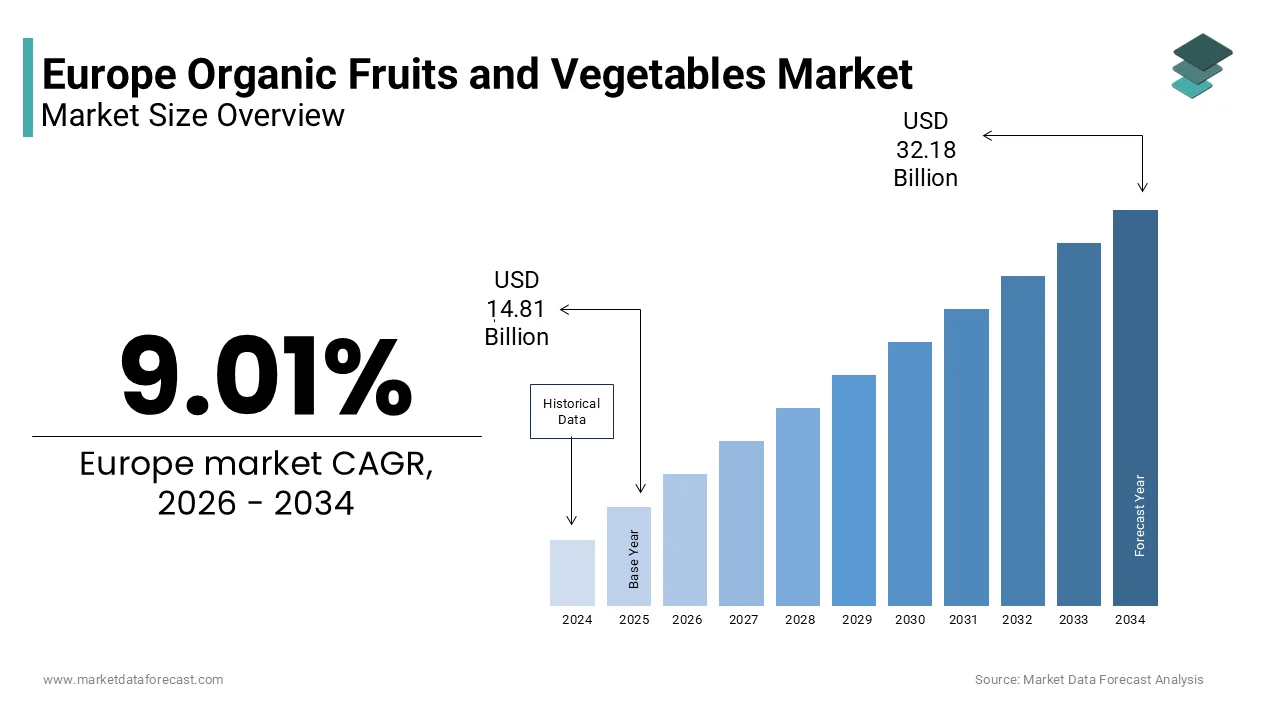
Organic fruits and vegetables represents a dynamic and rapidly evolving sector within the broader agricultural landscape characterized by the production and distribution of fresh produce cultivated without synthetic pesticides fertilizers or genetically modified organisms. This market is deeply intertwined with the European Union’s strategic policy frameworks aimed at promoting sustainable farming practices and enhancing biodiversity. According to Eurostat, the total area dedicated to organic farming in the European Union reached 16.9 million hectares in 2022, which accounts for 10.4% of the total utilized agricultural area. This substantial land allocation underscores the region's commitment to environmentally friendly agriculture. Consumer behavior in Europe is increasingly driven by health consciousness and environmental stewardship leading to a steady rise in demand for clean label food products. As per the Research Institute of Organic Agriculture FiBL, the number of organic producers in Europe reached 480000 in 2022, reflecting a robust supply side response to growing consumer interest. The regulatory environment is stringent with the EU Organic Regulation ensuring high standards for certification and labeling which builds consumer trust. Retail channels are diversifying beyond specialized health food stores to include mainstream supermarkets and online platforms making organic produce more accessible. The integration of organic fruits and vegetables into public procurement policies such as school meals further stimulates demand. Climate change mitigation strategies also play a crucial role as organic farming is perceived to have a lower carbon footprint. The market is supported by strong governmental subsidies and incentives that encourage farmers to transition from conventional to organic methods. This holistic ecosystem of policy support consumer awareness and retail expansion defines the current state of the Europe Organic Fruits and Vegetables Market.
MARKET DRIVERS
Stringent Government Regulations and Supportive Policies Under the Farm to Fork Strategy
The European Union’s Farm to Fork Strategy is one of the major factors propelling the expansion of the European organic fruits and vegetables market. The strategy aims to have at least 25% of the EU’s agricultural land under organic farming by 2030, which creates a favorable regulatory environment for organic producers. According to the European Commission, this target is backed by significant financial support through the Common Agricultural Policy which provides direct payments to farmers who adopt organic practices. This financial incentive reduces the economic risk associated with the transition period during which yields may temporarily decline. The strategy also emphasizes the reduction of pesticide use by 50% by 2030, which indirectly boosts the competitiveness of organic produce that is naturally free from synthetic chemicals. As per the European Environment Agency, the implementation of these policies has contributed to a 5.1% increase in organic farmland across the European Union in 2022. The regulatory framework ensures uniform standards across the region facilitating cross border trade and reducing barriers for exporters. Consumer confidence is further bolstered by the mandatory EU organic logo which guarantees compliance with strict production rules. The alignment of national policies with EU directives creates a cohesive market environment that encourages investment in organic infrastructure. Governments are also investing in research and development to improve organic farming techniques and crop resilience. This comprehensive policy support system not only drives supply but also educates consumers about the benefits of organic consumption. The long term commitment of policymakers signals stability to investors and farmers fostering sustained growth in the sector.
Increasing Consumer Awareness Regarding Health Benefits and Environmental Sustainability
Rising consumer awareness about the health benefits of consuming pesticide free produce and the environmental advantages of organic farming is further contributing to the regional market growth. Europeans are increasingly concerned about the potential health risks associated with chemical residues in conventional food leading them to seek safer alternatives. According to a survey conducted by the European Consumer Organisation BEUC, 92% of consumers perceive food as sustainable if it is produced with little or no pesticides. This shift in consumer preference is particularly pronounced among Millennials and Generation Z who prioritize sustainability and ethical sourcing in their purchasing decisions. The prevalence of lifestyle related diseases such as obesity and diabetes has also prompted individuals to adopt healthier diets rich in organic fruits and vegetables. As per the World Health Organization, non-communicable diseases account for 90% of all deaths in the WHO European Region, driving preventive health measures through diet. Organic produce is perceived to have higher nutritional value including elevated levels of antioxidants and vitamins which appeals to health conscious consumers. Media coverage and educational campaigns by non-governmental organizations further amplify awareness about the negative impacts of conventional farming on soil health and water quality. Social media influencers and nutritionists play a significant role in promoting organic lifestyles creating a cultural shift towards clean eating. Retailers respond to this demand by expanding their organic assortments and providing clear information about product origins. The transparency offered by organic certification allows consumers to make informed choices reinforcing their loyalty to organic brands. This deep seated consumer conviction ensures steady demand growth regardless of economic fluctuations.
MARKET RESTRAINTS
High Production Costs and Price Premiums Restrict Accessibility for Price Sensitive Consumers
The high production costs associated with organic farming and the resulting price premiums constitute a significant restraint for the Europe organic fruits and vegetables market. Organic cultivation requires more labor intensive practices such as manual weeding and natural pest control which increases operational expenses compared to conventional farming. According to the Thünen Institute, the production costs for organic vegetables can be significantly higher than those for conventional counterparts due to lower yields and higher input costs. These costs are passed on to consumers making organic produce significantly more expensive. In times of economic uncertainty and high inflation consumers become more price sensitive and may revert to cheaper conventional options. As per Eurostat, the annual inflation rate in the Euro area reached 2.4% in early 2024, affecting household purchasing power and reducing discretionary spending on premium food items. The price gap between organic and conventional produce remains a barrier for low and middle income households who constitute a large portion of the population. While some consumers are willing to pay a premium many are constrained by budget limitations. The lack of economies of scale in certain regions further exacerbates the cost issue as smaller production volumes lead to higher per unit costs. Supply chain inefficiencies such as the need for separate handling and storage to prevent contamination also add to the final retail price. Government subsidies help mitigate some costs but do not fully bridge the price gap. Until production efficiencies improve and costs decrease the market will remain limited to affluent segments. This economic barrier hinders mass adoption and limits the overall market penetration of organic fruits and vegetables.
Complex Certification Processes and Regulatory Compliance Burdens Hinder Small Farmer Participation
The complex and costly certification processes required for organic labeling pose a significant restraint for small and medium sized farmers in the Europe organic fruits and vegetables market. Obtaining and maintaining organic certification involves rigorous documentation regular inspections and adherence to strict standards which can be administratively burdensome. According to the International Federation of Organic Agriculture Movements IFOAM, the global organic retail sales reached nearly 135 billion euros in 2022, but the costs of documentation and auditing remain a heavy weight for small scale producers. For smallholders these costs represent a substantial financial burden that may outweigh the benefits of organic premiums. The bureaucratic complexity varies across member states creating inconsistencies and confusion for farmers operating in multiple jurisdictions. As per the European Court of Auditors, the administrative burden of the organic control system has been identified as a challenge that can discourage small operators from entering or staying in the market. The time required to complete the conversion period typically two to three years during which farmers must follow organic rules but cannot sell their produce as organic further deters participation. During this period farmers face reduced yields and higher costs without the ability to command higher prices. The lack of technical expertise and support services in rural areas also impedes the transition process. Many farmers lack access to training on organic methods and pest management strategies. The fear of losing certification due to accidental contamination or minor infractions adds to the risk perception. These structural barriers limit the supply of organic produce and concentrate market power among larger agribusinesses. Simplifying certification procedures and providing targeted support for smallholders are essential to overcoming this restraint.
MARKET OPPORTUNITIES
Expansion of E-Commerce Platforms and Direct to Consumer Models Offers Significant Growth Potential
The rapid expansion of e-commerce platforms and direct to consumer DTC models presents a major opportunity for the Europe organic fruits and vegetables market. Digitalization has transformed the way consumers purchase groceries enabling them to access a wider variety of organic products from the comfort of their homes. According to Statista, the online grocery market in Europe is projected to reach approximately 135.5 billion dollars by 2027, driven by convenience and increased digital literacy. Organic producers can leverage these platforms to reach customers directly bypassing traditional intermediaries and retaining a larger share of the revenue. Subscription boxes featuring seasonal organic fruits and vegetables have gained popularity offering convenience and personalized experiences. As per the Food and Agriculture Organization of the United Nations, digital tools enable better traceability and transparency allowing consumers to verify the origin and quality of their produce. Social media marketing and influencer partnerships help brands build communities and engage with health conscious consumers effectively. The COVID 19 pandemic accelerated the adoption of online shopping habits which have persisted post pandemic. Retailers are investing in last mile delivery solutions including cold chain logistics to ensure the freshness of perishable items. Direct sales through farmers markets and community supported agriculture CSA schemes are also digitizing expanding their reach. This shift empowers smaller producers to compete with larger retailers by highlighting their unique value propositions. The data generated from online transactions enables companies to understand consumer preferences and tailor their offerings. Embracing digital channels allows the market to tap into urban demographics who value convenience and sustainability.
Innovation in Packaging Solutions and Sustainable Supply Chain Practices Enhances Brand Value
Innovation in eco-friendly packaging solutions and sustainable supply chain practices offers a significant opportunity for differentiation in the Europe organic fruits and vegetables market. Consumers who buy organic products are typically environmentally conscious and expect the packaging to align with their values. According to the European Bioplastics Association, packaging remains the largest market segment for bioplastics accounting for 41.3% of the total bioplastics market in 2025. Companies that adopt plastic free or recyclable packaging can enhance their brand image and appeal to this discerning customer base. Innovations such as edible coatings and smart labels that monitor freshness reduce food waste and extend shelf life. As per the Waste and Resources Action Programme WRAP, household food waste in the European Union is estimated at nearly 59 million tonnes annually, and improved packaging is seen as a primary tool to mitigate this loss. Sustainable supply chain practices such as local sourcing and reduced transportation distances lower the carbon footprint of organic produce. Retailers are collaborating with suppliers to implement circular economy principles where packaging materials are reused or recycled. The introduction of transparent blockchain technology allows consumers to track the journey of their food from farm to fork ensuring authenticity. Brands that communicate their sustainability efforts effectively can command premium prices and foster loyalty. Government initiatives supporting green packaging innovations provide additional incentives for companies to invest in these technologies. The alignment of packaging strategies with broader environmental goals strengthens the overall value proposition of organic products. This holistic approach to sustainability resonates with modern consumers and drives competitive advantage.
MARKET CHALLENGES
Climate Change and Extreme Weather Events Pose Risks to Crop Yields and Supply Stability
Climate change and the increasing frequency of extreme weather events is majorly challenging the growth of the European organic fruits and vegetables market. Organic farming relies heavily on natural ecosystems and is often more vulnerable to weather fluctuations than conventional farming which uses synthetic inputs to mitigate stress. According to the European Environment Agency, extreme climate events in the European Union have resulted in crop losses up to 30% higher than historical trends had predicted over the past decade. These conditions can lead to significant crop losses particularly for sensitive fruits and vegetables such as berries and leafy greens. As per the Joint Research Centre of the European Commission, climate change could reduce maize and wheat yields by 2050 by up to 49% in southern Europe if current trends continue. Organic farmers have fewer tools to combat pests and diseases that thrive in changing climatic conditions. The unpredictability of weather patterns makes planning and harvesting difficult leading to supply shortages and price volatility. Water scarcity is another critical issue in regions like Spain and Italy where irrigation is essential for vegetable production. The lack of resilient crop varieties adapted to organic systems further exacerbates the problem. Insurance costs for organic farms are rising due to increased risk exposure. Supply chain disruptions caused by weather related infrastructure damage also affect distribution. Adapting to climate change requires significant investment in research and infrastructure which may be beyond the means of small farmers. This environmental vulnerability threatens the consistent availability of organic produce and challenges the long term sustainability of the sector.
Labor Shortages and Dependency on Seasonal Workers Impact Operational Efficiency
Labor shortages and the dependency on seasonal workers constitute another notable challenge for the Europe organic fruits and vegetables market due to the labor intensive nature of organic farming. Organic cultivation requires manual tasks such as weeding harvesting and pest monitoring which cannot be easily mechanized. According to the European Commission, the agricultural workforce is expected to shrink by 2% annually, falling from 17 million workers in 2020 to just 7.7 million by 2030. The reliance on migrant seasonal workers has been disrupted by political changes such as Brexit and the pandemic leading to labor gaps during critical harvest periods. As per the National Farmers Union in the United Kingdom, the agricultural sector has faced vacancies as high as 12% in recent seasons, impacting the ability to harvest crops at peak quality. Similar issues are reported in Germany France and Italy where farmers struggle to find sufficient labor. The lack of available workers leads to delayed harvesting which affects the quality and shelf life of perishable fruits and vegetables. Higher wages are required to attract domestic workers increasing production costs. The uncertainty surrounding labor availability makes it difficult for farmers to plan production schedules. Mechanization solutions for organic farming are still in early stages and often expensive. The physical demands of organic farming deter potential workers. Addressing this challenge requires policy interventions to improve working conditions and attract labor. Automation and robotics offer long term solutions but require significant capital investment. Until these issues are resolved labor constraints will continue to hinder market growth and efficiency.
REPORT COVERAGE
| REPORT METRIC | DETAILS |
| Market Size Available | 2025 to 2034 |
| Base Year | 2025 |
| Forecast Period | 2026 to 2034 |
| CAGR | 9.01% |
| Segments Covered | By Crop, Form, End Use, Distribution Channel, and Region |
| Various Analyses Covered | Global, Regional, & Country Level Analysis; Segment-Level Analysis; DROC, PESTLE Analysis; Porter’s Five Forces Analysis; Competitive Landscape; Analyst Overview of Investment Opportunities |
| Regions Covered | UK, France, Spain, Germany, Italy, Russia, Sweden, Denmark, Switzerland, Netherlands, Turkey, and the Czech Republic |
| Market Leaders Profiled | The Whitewave Foods Company, H.J. Heinz Company, CSC Brands LP (Campbell Soup Company), General Mills, Inc,Juices International Pty. Ltd, Activz, Z Natural Foods, LLC, Organic Valley Family of Farms,Iceland Foods Ltd, Green Organic Vegetable Inc |
SEGMENTAL ANALYSIS
By Crop Insights
The organic vegetables segment held the dominating position in the European market in 2025 with 56.5% of the regional market share. The growth of the organic vegetables segment in the European market is driven by the fundamental role vegetables play in the daily diets of European consumers who are increasingly adopting plant based eating patterns. The versatility of vegetables allows them to be incorporated into a wide variety of meals from salads to cooked dishes making them a staple purchase. According to the European Commission, vegetables represent one of the most significant categories within the organic sector, with production areas expanding across the Union. The shorter growth cycles of many vegetable crops allow farmers to harvest multiple times per year ensuring a consistent supply chain and steady revenue stream. As per Eurostat, the area under organic vegetable cultivation reached 722000 hectares in 2022, reflecting strong producer commitment. Root vegetables leafy greens and brassicas are particularly popular due to their resilience and nutritional density. Retailers prioritize shelf space for organic vegetables because of their high turnover rates and consumer demand for freshness. The integration of organic vegetables into public sector catering such as schools and hospitals further boosts volume sales. Government initiatives promoting vegetable consumption as part of healthy lifestyle campaigns also support this segment. The lower price premium compared to organic fruits makes vegetables more accessible to a broader demographic. Supply chain efficiencies for vegetables are well established reducing post-harvest losses. The cultural emphasis on fresh ingredients in Mediterranean and Northern European cuisines alike ensures sustained demand. This broad acceptance and frequent consumption pattern solidify the dominance of organic vegetables in the regional market.
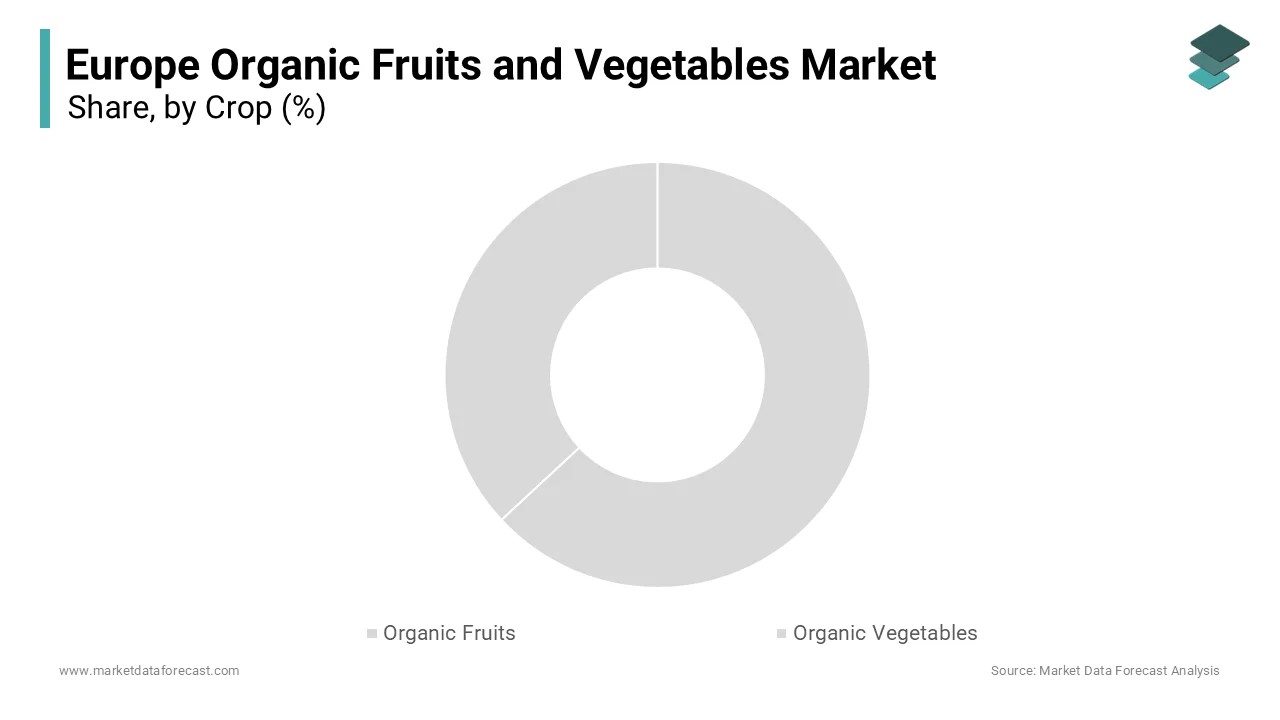
However, the organic fruits segment is anticipated to progress at a CAGR of 10.4% over the forecast period in the European market owing to the increasing trend of healthy snacking where consumers replace processed snacks with fresh fruit options. Apples berries and citrus fruits are particularly favored for their portability and natural sweetness. According to the International Fruit Association, organic apples and berries are seeing double digit growth in consumption across major European markets. The rising awareness of the importance of antioxidants and vitamins in boosting immunity has further propelled fruit consumption. As per the World Health Organization, regular intake of fruits and vegetables is recommended to reduce the risk of chronic diseases, a message that is resonating with modern European shoppers. The availability of exotic and out of season organic fruits through improved global supply chains has expanded consumer choices. Premiumization trends see consumers willing to pay higher prices for organic berries which are perceived to have higher susceptibility to pesticide residues in conventional farming. The rise of smoothie bars and juice clubs in urban centers also drives demand for organic fruits as base ingredients. Retailers are introducing ready to eat fruit packs to cater to busy lifestyles enhancing convenience. Marketing campaigns highlighting the superior taste and texture of organic fruits resonate with quality conscious buyers. The expansion of organic orchards in countries like Poland and Italy supports local supply. This combination of health trends convenience and premium positioning drives the rapid expansion of the organic fruits segment.
By Form Insights
The fresh organic fruits and vegetables segment dominated the market by holding 71.2% of the regional market share in 2025. This dominance is attributed to the strong consumer preference for the sensory attributes of fresh produce including taste texture and appearance. Europeans traditionally value fresh ingredients in their cooking and dining experiences viewing them as superior in nutritional content compared to processed alternatives. According to the Food and Agriculture Organization of the United Nations, fresh produce accounts for the bulk of organic market value as consumers prioritize minimally processed foods. The short supply chains associated with fresh organic products often involve local farmers markets and community supported agriculture schemes which build trust and loyalty. As per the Research Institute of Organic Agriculture FiBL, direct sales and fresh retail channels remain the primary point of purchase for organic consumers across Europe. The perception that fresh organic items retain maximum vitamin and mineral content drives regular purchases among health conscious families. Retailers invest heavily in cold chain infrastructure to maintain the quality of fresh organic goods from farm to shelf. The visual appeal of fresh organic produce in supermarkets attracts impulse buyers and reinforces the premium image of the category. Seasonal variations in fresh produce availability create recurring demand spikes for specific items such as strawberries in summer or pumpkins in autumn. The lack of preservatives in fresh organic aligns with the clean label movement. Consumer education on proper storage and preparation of fresh organic items further enhances satisfaction. This deep rooted cultural and nutritional preference ensures that fresh forms remain the cornerstone of the organic market.
On the other hand, the frozen organic fruits and vegetables segment is estimated to be the fastest growing segment and grow at a CAGR of 12.5% over the forecast period in the European market owing to the increasing demand for convenience among urban consumers who seek quick and easy meal solutions without compromising on health standards. Frozen organic produce offers the advantage of long shelf life and reduced preparation time appealing to busy households. According to the European Frozen Food Federation, frozen food consumption is growing as it allows for better stock management and nutrient preservation. The ability to portion control and reduce food waste is another significant driver as frozen items can be used as needed without spoilage. As per the Waste and Resources Action Programme WRAP, frozen food can significantly reduce domestic waste levels as consumers only prepare what they consume. The availability of diverse mixed vegetable blends and fruit mixes for smoothies caters to specific culinary needs. Improvements in freezing technology such as individual quick freezing IQF ensure that the texture and flavor of organic produce are maintained. Retailers are expanding their frozen organic aisles to meet this growing demand. The cost effectiveness of frozen organic produce compared to fresh out of season items also attracts budget conscious shoppers. The rise of home cooking trends during and after the pandemic has sustained interest in convenient yet healthy ingredients. Manufacturers are innovating with new product formats such as spiralized vegetables and fruit purees in frozen forms. This alignment with modern lifestyle needs positions frozen organic produce for sustained high growth.
By End Use Insights
The fresh consumption segment led the market with 64.6% of the regional market share in 2025. The cultural emphasis on home cooked meals using fresh ingredients is deeply ingrained in European societies. According to Eurostat, household consumption of fresh fruits and vegetables remains a core part of the European diet, with organic shares steadily climbing. The trend towards healthy eating and weight management drives individuals to incorporate more raw fruits and vegetables into their daily diets. As per the European Consumer Organisation BEUC, shoppers are increasingly looking for organic fresh produce to minimize exposure to pesticide residues. The popularity of salad bars and fresh fruit snacks in workplaces and schools also contributes to this segment. Retailers promote fresh organic produce through attractive displays and promotional offers that stimulate immediate purchase. The perception of freshness as a indicator of quality and safety reinforces consumer preference. Direct to consumer channels such as farmers markets and box schemes cater specifically to this end use providing high quality seasonal produce. The simplicity of consuming fresh organic items without extensive processing appeals to time constrained consumers who still prioritize health. Government dietary guidelines recommending five portions of fruits and vegetables daily support this consumption pattern. The widespread availability of fresh organic options in mainstream supermarkets ensures accessibility. This habitual and health driven consumption behavior secures the leading status of the fresh consumption segment.
However, the food processing segment is predicted to expand at a CAGR of 11.4% over the forecast period in the European market owing to the increasing incorporation of organic fruits and vegetables as ingredients in processed food products such as baby food juices soups and ready meals. Manufacturers are responding to consumer demand for clean label and organic certified processed foods. According to the European Organic Processors Association, the number of certified organic processors has risen significantly to meet the demand for value added organic products. The baby food sector is a key driver as parents prefer organic ingredients for their infants due to safety concerns. As per Statista, the organic baby food market in Europe is witnessing strong expansion as it becomes a standard preference for many families. The demand for organic fruit juices and smoothies is also rising among health conscious adults seeking convenient nutrition. Processed organic vegetable products such as canned tomatoes and frozen mixes are gaining traction in the food service industry. Regulatory standards for organic processed foods ensure that integrity is maintained throughout the supply chain. Innovation in product development such as organic fruit bars and vegetable chips expands the range of available options. Retailers are dedicating more shelf space to organic processed items recognizing their potential. The ability of processed organic products to offer longer shelf life and convenience appeals to modern consumers. Collaborations between farmers and processors ensure a stable supply of raw materials. This integration of organic produce into value added products drives the rapid expansion of the food processing segment.
By Distribution Channel Insights
The supermarkets segment dominated the market with 54.9% of the European market share in 2025. The growth of the supermarkets segment in the European market can be credited to the widespread presence of supermarket chains across Europe and their ability to offer a comprehensive range of organic products under one roof. Consumers prefer supermarkets for the convenience of one stop shopping and the assurance of consistent quality and availability. According to the European Retail Round Table, supermarkets are the main channel for organic food sales as they have integrated organic products into their regular offerings. Major retailers such as Tesco Carrefour and Rewe have dedicated organic sections that enhance visibility and accessibility. As per NielsenIQ, private label organic brands in supermarkets are often more affordable, attracting a wider consumer base. The ability of supermarkets to leverage economies of scale allows them to offer organic produce at more affordable prices compared to specialty stores. Promotional activities and loyalty programs further drive sales within this channel. The integration of online shopping and home delivery services by supermarkets has expanded their reach to customers who prefer digital convenience. Trust in supermarket supply chains regarding food safety and certification builds consumer confidence. The strategic placement of organic produce near conventional items encourages trial and switching. Supermarkets also collaborate with local suppliers to ensure freshness and support regional agriculture. This combination of convenience variety affordability and trust solidifies the dominance of supermarkets in the distribution landscape.
REGIONAL ANALYSIS
Germany Organic Fruits and Vegetables Market Analysis
Germany dominated the organic fruits and vegetables market in Europe in 2025 and is expected to remain the largest organic market in Europe for the next few years as the country strives to reach its domestic goal of 30% organic farmland by 2030. Germany holds a significant share of the European market driven by a deeply ingrained "Bio" culture and high consumer spending power. According to the German Federation of the Organic Food Industry BÖLW, the organic market in Germany reached a turnover of over 15 billion euros in 2023. The country has a well developed network of specialized organic supermarkets as well as a strong organic presence in conventional retail. As per the Federal Ministry of Food and Agriculture BMEL, the government provides extensive support for the expansion of organic farming through its strategy for organic agriculture. This regional leadership is supported by high consumer awareness of animal welfare and environmental protection.
France Organic Fruits and Vegetables Market Analysis
France is projected to see substantial growth in organic fruit and vegetable production for the next few years as the national "Ambition Bio" program continues to incentivize farm conversions. France is the second largest market in Europe characterized by a rapid increase in organic agricultural land over the past decade. According to Agence Bio, organic land in France reached approximately 10% of the total utilized agricultural area in 2022. The French government has implemented laws that mandate at least 20% of organic products in public canteens, providing a massive boost to the sector. Consumer demand for local organic produce is exceptionally high with "Made in France" organic labels commanding a premium.
Italy Organic Fruits and Vegetables Market Analysis
Italy is likely to maintain its position as a leading exporter of organic produce for the next few years, benefiting from its diverse climate and strong Mediterranean organic tradition. Italy is a major producer of organic fruits and vegetables particularly citrus tomatoes and olives. According to the Italian Ministry of Agriculture, organic agricultural land in Italy covers nearly 19% of the total utilized area, which is significantly higher than the EU average. The country benefits from a strong domestic market as well as being a hub for organic food processing. As per the Italian Federation of Organic and Biodynamic Agriculture FederBio, the sector is supported by a robust network of regional cooperatives that facilitate export to Northern Europe.
Spain Organic Fruits and Vegetables Market Analysis
Spain is expected to transition from being a primary export hub to a growing domestic market for the next few years as local consumer interest in organic products intensifies. Spain has the largest area of organic farmland in Europe traditionally focused on exporting to the rest of the EU. According to the Spanish Ministry of Agriculture, Fisheries and Food, organic land reached 2.6 million hectares in 2022. While exports still dominate domestic consumption is rising as supermarkets expand their organic ranges. As per the Spanish Society of Organic Farming SEAE, the region is investing in water efficient organic technologies to combat the challenges of climate change and drought.
United Kingdom Organic Fruits and Vegetables Market Analysis
The United Kingdom is projected to see a rise in organic imports and niche domestic production for the next few years as consumers maintain a high interest in sustainability despite post Brexit trade complexities. The UK organic market is characterized by a strong consumer base and a high reliance on e commerce and box schemes. According to the Soil Association, the organic market in the UK grew to over 3 billion pounds in 2023. While the sector faces challenges regarding labor and trade regulations the demand for high quality ethically sourced organic produce remains robust. As per the Department for Environment Food and Rural Affairs Defra, the government is exploring new environmental land management schemes that could support organic practices.
COMPETITIVE LANDSCAPE
The competition in the Europe organic fruits and vegetables market is characterized by a dynamic mix of specialized organic distributors large multinational retailers and local producers vying for market dominance. Specialized players differentiate themselves through superior quality transparency and strong relationships with organic farmers. Large retailers leverage their extensive networks and economies of scale to offer competitive prices and wide availability. Private label organic brands from major supermarket chains pose significant competition by providing affordable alternatives that meet strict certification standards. This pressure forces independent brands to emphasize unique value propositions such as biodynamic farming or rare varieties. Innovation in packaging and product formats serves as a key differentiator in a crowded marketplace. Regulatory compliance with EU organic standards is a baseline requirement but exceeding these standards builds brand loyalty. Consumer trust is paramount leading companies to invest heavily in traceability technologies and certification marks. The rise of direct to consumer models through online platforms disrupts traditional retail channels offering convenience and personalized experiences. Seasonal fluctuations and supply chain vulnerabilities create opportunities for agile competitors to capture market share. Strategic collaborations between producers and retailers enhance supply chain efficiency and product visibility. The competitive landscape requires continuous adaptation to changing consumer preferences and regulatory environments to maintain relevance and profitability.
KEY MARKET PLAYERS
Some of the key players in Europe organic fruits and vegetables market are
- The Whitewave Foods Company
- H.J. Heinz Company
- CSC Brands LP (Campbell Soup Company)
- General Mills, Inc.
- Juices International Pty. Ltd
- Activz
- Z Natural Foods, LLC
- Organic Valley Family of Farms
- Iceland Foods Ltd
- Green Organic Vegetable Inc.
Top Players in the Market
- Eosta BV is a pioneering distributor of organic fruits and vegetables based in the Netherlands with a significant influence on the global organic trade network. The company contributes to the global market by establishing transparent supply chains that connect growers directly with retailers across Europe and beyond. Eosta recently strengthened its market position by enhancing its Nature and More transparency program which provides detailed sustainability scores for each product. In March 2023 the company expanded its logistics capabilities to reduce carbon emissions during transportation. This initiative aligns with growing consumer demand for environmentally responsible sourcing. Eosta collaborates closely with farmers to implement regenerative agricultural practices ensuring long term soil health. Their commitment to fair pricing models supports producer livelihoods and stabilizes supply. By leveraging digital tools for traceability Eosta builds trust with conscious consumers. The company also engages in educational campaigns to highlight the benefits of organic farming. These strategic actions reinforce its reputation as a leader in sustainable produce distribution and drive continued growth in the European market.
- Bio Planete Ölmühle Ferdinand Brinkmann GmbH is a prominent player in the European organic sector known for its extensive range of organic oils and fresh produce ingredients. The company contributes to the global market by setting high standards for organic processing and quality assurance. Bio Planete recently invested in expanding its production facilities in Germany to increase capacity for organic fruit and vegetable processing. In June 2022 the company launched a new line of certified organic snack products featuring dried fruits and vegetables. This move diversifies its portfolio and appeals to health conscious consumers seeking convenient options. The organization prioritizes sustainable packaging solutions using recyclable materials to minimize environmental impact. Bio Planete partners with local farmers to source raw materials ensuring freshness and supporting regional agriculture. Their focus on innovation leads to the development of unique flavor profiles and product formats. The company actively participates in industry forums to promote organic standards and best practices. These efforts enhance brand loyalty and strengthen its competitive position in the evolving European organic landscape.
- HiPP GmbH and Co KG is a leading family owned company specializing in organic baby food and related products including organic fruits and vegetables. The company plays a crucial role in the global market by advocating for strict organic regulations and sustainable farming methods. HiPP recently strengthened its market position by increasing its investment in biodynamic farming projects across Europe. In September 2023 the company introduced new organic fruit purees sourced exclusively from partner farms adhering to biodiversity standards. This initiative highlights their commitment to ecological balance and high quality ingredients. HiPP utilizes advanced testing methods to ensure the absence of pesticides and contaminants in their products. The company engages in extensive consumer education programs about the importance of organic nutrition for children. Their transparent labeling practices build trust with parents and caregivers. HiPP also supports research into sustainable agricultural techniques to improve crop resilience. These strategic actions reinforce its leadership in the organic segment and drive sustained demand for its products across European markets.
Top Strategies Used by the Key Market Participants
Key players in the Europe Organic Fruits And Vegetables Market employ several strategic initiatives to maintain competitiveness and drive growth. Supply chain transparency is central as companies implement blockchain technology to provide consumers with detailed information about product origin and farming practices. Strategic partnerships with local farmers ensure consistent supply and support sustainable agricultural methods. Investment in cold chain infrastructure minimizes post harvest losses and maintains product quality during distribution. Manufacturers focus on eco friendly packaging solutions to align with consumer values regarding environmental sustainability. Digital marketing campaigns highlight health benefits and ethical sourcing to engage conscious consumers effectively. Companies expand their product portfolios to include value added items such as pre cut vegetables and fruit snacks for convenience. Diversification into online retail channels enhances accessibility and reaches broader demographics. Regular certification audits ensure compliance with stringent organic standards building consumer trust. Collaborative efforts with retailers promote private label organic brands offering competitive pricing. These multifaceted strategies enable key participants to navigate market complexities and sustain their leadership positions effectively.
Europe Organic Fruits And Vegetables Market News
- In March 2023, Eosta BV expanded its logistics capabilities to reduce carbon emissions during transportation and strengthen the Europe Organic Fruits And Vegetables Market presence
- In June 2022, Bio Planete Ölmühle Ferdinand Brinkmann GmbH launched a new line of certified organic snack products featuring dried fruits and vegetables and strengthen the Europe Organic Fruits And Vegetables Market presence
- In September 2023, HiPP GmbH and Co KG introduced new organic fruit purees sourced exclusively from partner farms adhering to biodiversity standards and strengthen the Europe Organic Fruits And Vegetables Market presence
- In January 2023, Eosta BV enhanced its Nature and More transparency program to provide detailed sustainability scores for each product and strengthen the Europe Organic Fruits And Vegetables Market presence
- In November 2022, Bio Planete Ölmühle Ferdinand Brinkmann GmbH invested in expanding its production facilities in Germany to increase capacity and strengthen the Europe Organic Fruits And Vegetables Market presence
MARKET SEGMENTATION
This research report on the Europe organic fruits and vegetables market is segmented, and sub segmented into following categories.
By Crop
- Organic Fruits
- Organic Vegetables
By Form
- Fresh
- Frozen
- Puree
- Powdered
By End Use
- Fresh Consumption
- Food Processing
By Distribution Channel
- Supermarkets
- Variety stores
- Convenience Stores
By Region
- UK
- France
- Spain
- Germany
- Italy
- Russia
- Sweden
- Denmark
- Switzerland
- Netherlands
- Turkey
- Czech Republic
- Rest of Europe
Frequently Asked Questions
1. What is the Europe organic fruits and vegetables market?
The Europe organic fruits and vegetables market covers the production, distribution, and consumption of organically grown fresh produce cultivated without synthetic pesticides, fertilizers, or genetically modified organisms.
2. What factors are driving growth in the Europe organic fruits and vegetables market?
Key drivers include rising health awareness, growing demand for chemical-free food, strong government support for organic farming, and increasing environmental concerns.
3. Which organic fruits and vegetables are most popular in Europe?
Popular products include organic apples, bananas, berries, tomatoes, carrots, leafy greens, and potatoes.
4. How does organic certification impact the market?
Organic certification builds consumer trust and ensures compliance with European Union organic farming standards, significantly influencing purchasing decisions.
5. Which distribution channels dominate the Europe organic produce market?
Supermarkets and hypermarkets lead distribution, followed by specialty organic stores, farmers’ markets, and online retail platforms.
6. Which countries are major contributors to the Europe organic fruits and vegetables market?
Germany, France, Italy, Spain, and the United Kingdom are key contributors due to high consumer demand and strong organic farming infrastructure.
7. How does sustainability influence the organic produce market?
Sustainability is central to the market, as organic farming promotes soil health, biodiversity, and reduced environmental impact.
8. What challenges does the Europe organic fruits and vegetables market face?
Challenges include higher prices compared to conventional produce, limited shelf life, and supply constraints due to seasonal production.
9. Who are the key players in the Europe organic fruits and vegetables market?
The market consists of organic farmers, cooperatives, distributors, and large retailers offering private-label organic products.
10. What is the future outlook for the Europe organic fruits and vegetables market?
The market is expected to grow steadily, supported by expanding organic farmland, policy support, and rising consumer awareness.
Related Reports
Access the study in MULTIPLE FORMATS
Purchase options starting from
$ 2000
Didn’t find what you’re looking for?
TALK TO OUR ANALYST TEAM
Need something within your budget?
NO WORRIES! WE GOT YOU COVERED!
Call us on: +1 888 702 9696 (U.S Toll Free)
Write to us: sales@marketdataforecast.com