- Product Description Description
- Table of Contents TOC
- List of Table & Figure LOT
- Get Free Sample PDF Sample PDF
Market Size, 2025
$0.79 BnMarket Estimate, 2026
$0.83 BnMarket Forecast, 2034
$1.17 BnCAGR, 2026–2034
4.88%Executive Summary: Europe Paclobutrazol Market
- Market Scope: Comprehensive European paclobutrazol market analysis covering technical and specialty types, decorative and non-food crop applications, country-level landscapes, and regulatory compliance frameworks.
- Market Valuation: Valued at USD 0.79 billion in 2025, estimated at USD 0.83 billion in 2026, and projected to reach USD 1.17 billion by 2034, registering a compound annual growth rate (CAGR) of 4.88% from 2026 to 2034.
- Primary Growth Drivers: Expansion of professional ornamental horticulture and urban greening initiatives, strict regulatory acceptance for non-food applications under EU pesticide frameworks (Regulation EC No 1107/2009), demand for water-efficient and compact landscaping solutions, and the integration of slow-release delivery systems. Key market restraints include absolute prohibitions on edible food/feed crops, strict buffer zone and aquatic safety regulations, and environmental persistence concerns.
Key Market Segment Metrics (2026–2034)
| Category | Leading Segment (2025 Position) | Fastest-Growing Segment |
|---|---|---|
| By Type | 95% Technical Grade (TC) (held the majority market share in 2025 as the primary high-purity raw material for formulation manufacturers) | Specialized & Granular Formulations (experiencing the fastest growth driven by low-risk delivery systems and reduced environmental drift) |
| By Application | Decorative / Ornamental Plants (captured the largest share in 2025 due to legal restrictions limiting use exclusively to non-food crops) | Decorative Plants (projected to expand at the fastest CAGR fueled by urban sustainability policies and e-commerce retail expansion) |
| By Country / Region | Western & Central Europe / Netherlands & Germany (dominated as major hubs for ornamental horticulture, greenhouse production, and green space management) | Southern & Northern European Nurseries (growing steadily backed by municipal urban heat and water conservation greening initiatives) |
Major Market Players & Market Structure
Market Structure: Highly specialized, low-volume, and intensely regulated agrochemical market featuring a small group of multinational leaders focusing on regulatory reliability, microencapsulation technology, and precision digital stewardship.
Key Companies: BASF SE, Syngenta Group, UPL Limited, Bailing Agrochemical, India Pesticides Limited, Jiangsu Sevencontinent Green Chemical, R.V. Agri Corporation, Yancheng Limin Chemical, Yuelian, Rainbow, Jiannong, Jiangsu Luye Agrochemicals, and Canary Agrochemicals Pvt. Ltd.
Europe Paclobutrazol Market Size
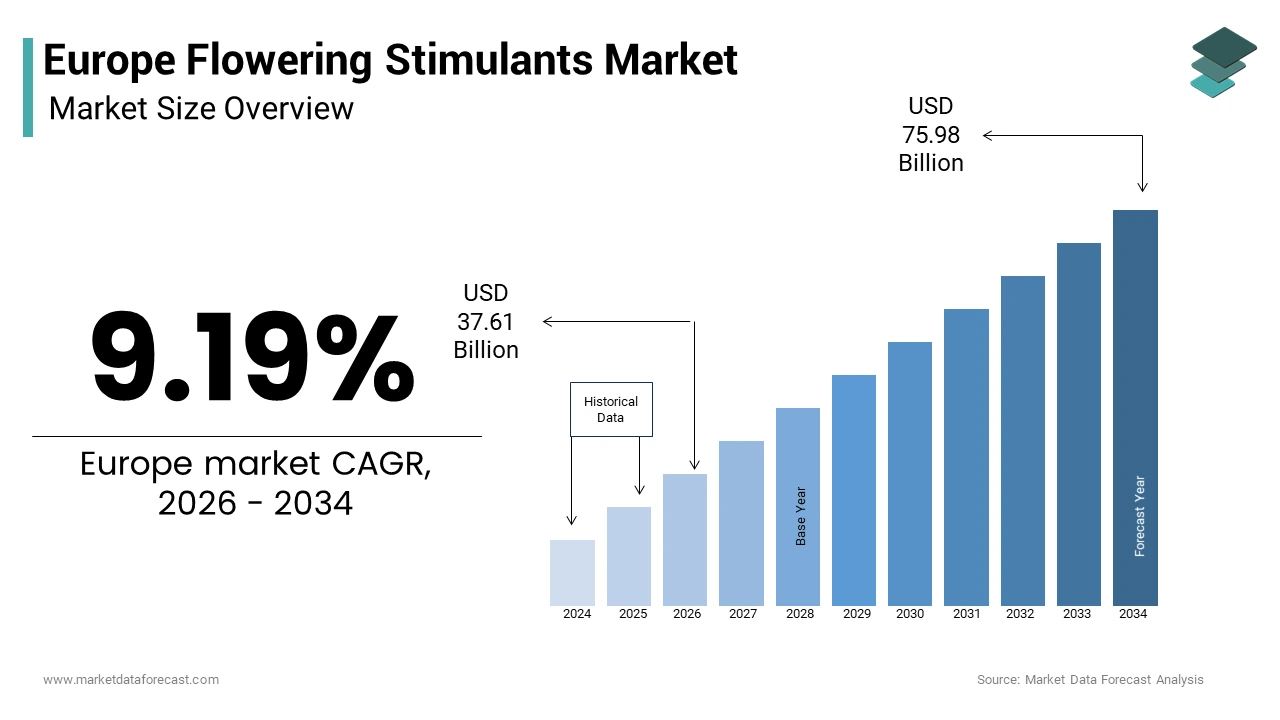
Europe Paclobutrazol Market size was valued at USD 0.79 billion in 2025 and is anticipated to reach USD 0.83 billion in 2026 from USD 1.17 billion by 2034, growing at a CAGR of 4.88% from 2026 to 2034.
Current Introduction Of The Europe Paclobutrazol Market
Paclobutrazol is a triazole-class plant growth regulator that inhibits gibberellin biosynthesis to control vegetative growth, enhance flowering, and improve stress tolerance in a range of horticultural and ornamental crops. In Europe, its application is primarily restricted to non-food uses due to regulatory constraints under Regulation EC No 1107/2009 governing pesticide approval. The compound is widely employed in professional turf management, ornamental nurseries,s and potted plant production,n where compact growth and uniform flowering are commercially critical. The European Union remains a global leader in the cultivation of ornamental plants and flowers, with a major portion of the industry's production and value concentrated in a few key nations, most notably the Netherlands, Germany, and Italy. Additionally, across the continent, urban planners and environmental agencies are increasingly prioritizing the maintenance of green spaces, such as public parks and sports facilities, to enhance biodiversity and climate resilience. This focus on managed landscapes has driven interest in sustainable turf management solutions that lower maintenance requirements and conserve water resources. Paclobutrazol is not allowed on EU food crops, yet it promotes the European Green Deal’s goals for sustainable, resource-efficient, and greener urban environments through ornamental plant management. Strict authorization protocols enforced by the European Food Safety Authority require comprehensive environmental fate and ecotoxicity data, ensuring only targeted low-risk applications are permitted within the bloc.
MARKET DRIVERS
Expansion of Professional Ornamental Horticulture in Urban Landscaping
The rapid growth of professional ornamental horticulture, driven by urban greening initiatives and demand for aesthetic landscaping,g is a key driver of tEuropeanope paclobutrazol market. Urban populations are increasingly concentrated in cities, leading to a rise in municipal investments for green spaces like parks, vertical gardens, and street trees. This growth in urban greening has created a greater demand for ornamental plants that possess uniform, compact, and drought-resilient characteristics. To meet these specific aesthetic and structural standards for urban environments, there is a widespread application of growth regulators, such as paclobutrazol, by commercial growers. The use of these regulators is common in the production of specific potted plants to manage stem growth and ensure consistent flowering for retail and public procurement. Commercial nurseries frequently utilize these agents to ensure plants meet the requirements for public infrastructure projects. The compound’s ability to reduce irrigation needs further supports its use in water-stressed regions like Southern Spain. Urban heat-fighting initiatives now rely heavily on paclobutrazol to produce the resilient, low-maintenance plants needed for modern cities.
Regulatory Acceptance in Non-Food Applications Under the EU Pesticide Framework
The continued authorization of paclobutrazol for non-food ornamental and turf uses under the EU’s stringent pesticide regulation provides a stable legal foundation for its commercial deployment, which propels the expansion of the European paclobutrazol market. Regulatory reviews have facilitated the continued use of this plant growth regulator for specific, non-dietary applications, reflecting a reassessment of its risk profile. The approved use of this substance is restricted to non-food settings, such as professional turf, ornamental nurseries, and greenhouse operations. Application conditions include specific restrictions designed to manage potential environmental risks, particularly regarding aquatic safety. Certain jurisdictions have further narrowed the permitted usage to contained, closed systems to minimize potential off-site movement. The regulatory status of this substance is based on a risk assessment that differentiates its toxicological profile from other, more restricted alternatives. This regulatory clarity enables manufacturers to invest in formulation innovation and technical support without fear of abrupt withdrawal, ensuring consistent supply for Europe’s high-value ornamental sector.
MARKET RESTRAINTS
Stringent Restrictions on Use in Edible Crops and Buffer Zone Requirements
The prohibition of paclobutrazol on all food and feed crops in the European Union significantly limits its market scope and deters broader agricultural adoption, which in turn restrains the growth of the European paclobutrazol market. Regulatory reviews in certain regions have indicated that potential residue and endocrine risks hinder authorization for edible crops, despite common usage elsewhere. Farmers in these regions face restricted access to the substance’s yield-stabilizing effects for food production. Permitted uses in non-food sectors often involve stringent environmental regulations, such as significant buffer zones near water sources, which complicate application. The compliance, documentation, and spatial planning demands associated with these regulations have led to a decline in usage among some smaller nurseries. These restrictions not only shrink the addressable market but also create competitive disadvantages for EU growers compared to third-country producers who use paclobutrazol on export-oriented crops. The regulatory asymmetry undermines innovation incentives and confines the molecule to a narrow niche despite its agronomic efficacy.
Environmental Persistence and Ecotoxicity Concerns in Aquatic Ecosystems
Persistent concerns regarding paclobutrazol’s environmental fate, particularly its mobility in soil and toxicity to aquatic organisms,s act as a major restraint on its use across the region and the expansion of the European paclobutrazol market. The substance undergoes moderate degradation in aerobic soil environments but possesses high water solubility, which raises the likelihood of it moving through the soil into groundwater. Laboratory investigations have indicated that the compound causes chronic toxicity to aquatic organisms such as algae and daphnia at low concentration levels, highlighting a risk for surface water contamination. Certain European countries have introduced specific national restrictions, such as requiring impermeable liners in nurseries and prohibiting use during periods of heavy rain. These regulatory actions have resulted in increased operational costs for ornamental plant producers, the Swedish Board of Agriculture noted. The inclusion of this compound on a European environmental watch list ensures enhanced monitoring, which could lead to further limitations on its usage. Such ecological scrutiny constrains formulation development and discourages new entrants from investing in paclobutrazol-based solutions despite its horticultural benefits.
MARKET OPPORTUNITIES
Development of Microencapsulated and Slow-Release Formulations
The advancement of microencapsulated and polymer-coated slow-release formulations offers a significant opportunity for the European paclobutrazol market. These technologies enhance the precision and environmental compatibility of paclobutrazol. These technologies enable controlled release of the active ingredient over weeks rather than days, reducing application frequency and minimizing runoff. Agricultural product developers are introducing controlled-release formulations for soil application that respond to environmental conditions, which can reduce the total amount of active ingredient required while maintaining effectiveness. Research indicates that these moisture-activated, gradual-release methods may minimize the amount of chemical that washes through the soil compared to traditional drenching techniques. There is a trend toward developing solid-based application systems, such as tablets or granules, designed to improve dosage precision and mitigate issues associated with aerial spray drift. Biodegradable delivery technologies are being adopted to support compliance with regional environmental regulations regarding chemical drift. The European Innovation Partnership for Agricultural Productivity and Sustainability has recognized such delivery systems as best practices for reducing chemical load in urban horticulture. These advanced formulations help meet the demand for lower environmental impact, making paclobutrazol a smarter tool in modern integrated plant management.
Integration with Digital Precision Agriculture Platforms
The convergence of paclobutrazol application with digital horticulture platforms offers a major prospect to optimize dosing and demonstrate stewardship compliance, which is anticipated to boost the expansion of tEuropeanope paclobutrazol market. Leading ornamental producers in the Netherlands and Belgium now integrate paclobutrazol treatment data into farm management software such as 365FarmNet and Grodan’s e-Gro platform, enabling real-time tracking of application timing rates and environmental conditions. Professional agricultural operators in the Netherlands are increasingly required to maintain comprehensive electronic records of plant growth regulators to ensure regulatory compliance and environmental safety. This digitization not only streamlines regulatory reporting but also generates agronomic insights, such as correlation between dosage and flowering uniformity, that refine future protocols. Companies like Bayer are piloting AI-driven recommendation engines that adjust paclobutrazol prescriptions based on plant species, light intensity,y and substrate type. Research conducted by prominent Dutch agricultural institutions indicates that integrating digital monitoring tools into farming practices enhances resource utilization and operational efficiency without compromising the standard of the harvest. Under the EU’s digital farming initiatives, paclobutrazol is being reimagined: it is no longer just a static substance but a dynamic element within data-centric sustainable cultivation.
MARKET CHALLENGES
Limited Availability of Approved Alternatives for Growth Regulation
The scarcity of equally effective and legally approved alternatives for chemical growth regulation in ornamental horticulture poses a persistent challenge for the regional growers reliant on paclobutrazol. This challenges the growth of the European paclobutrazol market. Mechanical methods like pruning are feasible but often impractical for mass production due to high labor requirements. Regulatory pressure is increasing for several established chemical growth regulators, with some options facing restricted authorization while others have been removed from the market. A substantial segment of the horticultural sector indicates a lack of effective, available alternatives for managing plant compactness in key seasonal crops. This dependency creates vulnerability. Any future restriction on paclobutrazol would disrupt production cycles and reduce product uniformity essential for retail acceptance. Breeding dwarf varieties offers long-term promise but requires years of development and lacks flexibility across diverse species. The market is restricted to a monolithic, single-molecule solution, exhibiting limited adaptability to changing regulations until new bio-based agents gain acceptance.
Fragmented National Implementation of EU Pesticide Regulations
Divergent national interpretations of EU pesticide rules create operational uncertainty and compliance inefficiencies for paclobutrazol users across member states, which further limits the expansion of the European paclobutrazol market. EU member states often introduce local restrictions on substances, despite the existence of a shared regulatory framework. The application of plant protection products can vary significantly between neighboring countries based on specific habitat protections or risk assessments. Certain jurisdictions may impose stricter oversight or special permitting requirements for specific classes of chemical substances, regardless of their status at the broader regional level. These differing national regulations frequently necessitate that international businesses manage distinct, tailored product inventories and training procedures for each market. Managing varied compliance requirements across different regions tends to create additional administrative complexity and overhead for organizations operating in multiple locations. A grower operating in both Italy and Denmark may face conflicting buffer zone requirements or record-keeping formats, complicating cross-border operations. The lack of harmonized enforcement undermines the single market principle and discourages investment in standardized application technologies. The current regulatory patchwork regarding paclobutrazol, pending stronger EU-wide alignment, remains a barrier for innovation.
REPORT COVERAGE
| REPORT METRIC | DETAILS |
| Market Size Available | 2025 to 2034 |
| Base Year | 2025 |
| Forecast Period | 2026 to 2034 |
| CAGR | 4.88% |
| Segments Covered | By Type, Application, and By Country |
| Various Analyses Covered | Global, Regional & Country Level Analysis, Segment-Level Analysis, DROC, PESTLE Analysis, Porter’s Five Forces Analysis, Competitive Landscape, Analyst Overview on Investment Opportunities |
| Regions Covered | UK, France, Spain, Germany, Italy, Russia, Sweden, Denmark, Switzerland, Netherlands, Turkey, the Czech Republic, and the Rest of Europe |
| Market Leaders Profiled | Bailing Agrochemical, India Pesticides Limited, Jiangsu Sevencontinent Green Chemical, R.V. Agri Corporation, Yancheng Limin Chemical, Yuelian, Rainbow, Jiannong, Jiangsu Luye Agrochemicals, and Canary Agrochemicals Pvt. Ltd. |
SEGMENTAL ANALYSIS
By Type Insights
The 95% technical grade (TC) paclobutrazol segment held the majority share of the European paclobutrazol market in 2025. The dominance of the 95% technical grade (TC) paclobutrazol segment is driven by its role as the primary raw material for formulation manufacturers who convert it into drenches, granules,s or microencapsulated products tailored to specific horticultural needs. The high purity level ensures consistent biological activity and simplifies regulatory dossier preparation under EU Regulation EC No 1107/2,009 which requires detailed impurity profiling for active substances. In the Netherlands, ornamental plant protection formulators generally prioritize sourcing technical-grade paclobutrazol from established European suppliers to ensure consistent batch-to-batch product performance. Furthermore, the European Pharmacopoeia recognizes 95% TC as the reference standard for analytical testing, thereby enabling accurate residue monitoring in environmental samples. Industrial users of paclobutrazol prefer high-purity, stable technical grades that demonstrate strong, long-term retention of potency under varied storage conditions. The 95% TC segment remains an irreplaceable component of the paclobutrazol value chain, as no other economically viable grade is authorized within the EU.
The other segment is likely to experience the fastest CAGR of 6.4% between 2026 and 2034 due to demand for user-friendly and environmentally optimized delivery systems that reduce operator exposure and environmental drift. Registrations for specialized formulations of a certain growth regulator have shown an upward trend, with a notable portion of new approvals favoring granular forms. These granular formulations are designed to allow for targeted application directly to the root zone, which helps minimize unintended spread, aligning with stricter, revised regulations regarding pesticide application near sensitive areas. The use of specific coated tablet formulations has demonstrated a reduction in the downward movement of the compound through growing media compared to liquid applications, while still facilitating consistent flowering in potted plant production. In France, Italy, and Belgium, national action plans are driving rapid adoption of low-risk plant protection products among professional nurseries by offering tax rebates and fast-track authorization to ensure efficacy and compliance.
By Application Insights
The decorative plants segment was the largest segment in the European paclobutrazol market by capturing a significant share in 2025. The supremacy of the decorative plants segment is attributed to the irreplaceable role of the molecule in producing compact, uniformly flowering ornamentals essential for retail and landscaping markets. Major flower producers in a key European exporting nation utilize growth regulators to manage plant height and coordinate flowering for market demand. A substantial volume of ornamental plants is cultivated in controlled environments, where the application of substances to control growth is a common procedure. The market demands precise plant specifications, and failure to meet these height requirements often results in significant financial losses for producers. The use of chemical regulation is driven by the economic need to meet seasonal sales targets and quality standards. Controlled environment techniques, including the use of growth regulators, are a standard practice for producing potted plants in this region. Moreover, municipal green space contracts in cities like Paris and Berlin require uniform plant architecture for public installation,s, making paclobutrazol-treated stock commercially non-negotiable. Decorative horticulture is the primary legal application for paclobutrazol in the EU, driven by a lack of alternative mechanical or genetic solutions for most species.
The decorative plants segment is also the fastest-growing application projected to expand at a CAGR of 5.9% from 2026 to 2034, owing to urban greening policies,s rising disposable income, and the expansion of e-commerce in ornamental retail. Urban sustainability initiatives in Europe are influencing municipal commitments to expand green spaces, which in turn affects the demand for nursery-produced landscape plants. Consumer interest in indoor plants in Scandinavian markets appears linked to lifestyle changes and wellness trends that favor home greenery. The rise of online horticultural retail creates pressure for consistent product aesthetics, promoting the use of growth regulators to manage plant uniformity. Trends toward perennial and woody plant production are changing growth regulator application patterns, as these plants often require multiple treatments. Specific types of nursery stock, such as certain perennials, may require higher application rates of growth regulators per unit area compared to traditional annual flower production. Paclobutrazol remains critical to the commercial success of Europe’s diversifying and professionalizing ornamental industry.
COMPETITIVE LANDSCAPE
The European paclobutrazol market features limited but intense competition among a small group of multinational agrochemical companies operating under one of the world’s most stringent regulatory frameworks. Since paclobutrazol is prohibited on all food and feed crops in the EU, the market is confined exclusively to ornamental horticulture, turf and professional landscaping, preating a highly specializedlow-volumeolume segment. Competition is not driven by price but by regulatory reliability, formulation innovation, and technical service depth. Companies must maintain full compliance with EU Regulation EC No 1107/2009, including comprehensive environmental fate data and annual renewal submissions to national authorities. The absence of generic competition—due to high dossier costs and limited market size—favors established players with existing approvals. However,r divergent national interpretations of buffer zones and application methods fragment the market and increase operational complexity. As the EU promotenon-chemicalal alternatives through Horizon Europe funding, long-term viability depends on demonstrating clear agronomic necessity and environmental responsibility. Consequently, the market remains stable but constrained, with innovation focused on precision delivery and digital compliance rather than expansion.
KEY MARKET PLAYERS
Key players in the market include
- Bailing Agrochemical
- BASF SE
- UPL Limited
- Syngenta Group
- India Pesticides Limited
- Jiangsu Sevencontinent Green Chemical
- R.V. Agri Corporation
- Yancheng Limin Chemical
- Yuelian
- Rainbow
- Jiannong
- Jiangsu Luye Agrochemicals
- Canary Agrochemicals Pvt. Ltd.
Top Players In The Market
- BASF SE is a pivotal player in the European paclobutrazol market through its high-purity technical-grade active ingredient and formulated solutions for professional ornamental horticulture. The company supplies paclobutrazol to major formulation houses across the EU under strict compliance with Regulation EC No 1107/2009 and maintains full dossiers with the European Food Safety Authority. It also enhanced its digital stewardship platform, offering growers real-time application guidance aligned with national buffer zone requirements. These initiatives reinforce BASF’s role as a science-driven partner committed to sustainable ornamental production while ensuring regulatory continuity in a highly scrutinized chemical environment.
- Syngenta Group contributes significantly to the European paclobutrazol market by integrating the molecule into its professional ornamental portfolio under brands like Pacis and Cycocel. The company leverages its global R&D network to develop application-specific formulations tailored to EU regulatory and environmental standards. It also partnered with Wageningen University to validate reduced irrigation needs in paclobutrazol-treated plants, supporting water efficiency claims. By aligning product innovation with urban greening and resource conservation agendas, Syngenta strengthens its position as a solutions provider beyond mere chemical supply in Europe’s evolving horticultural landscape.
- UPL Limited plays a growing role in theEuropeane paclobutrazol market by offering cost-effective technical-grade material and co-formulated plant growth regulators compliant with EU pesticide regulations. The company operates a dedicated regulatory affairs team in Brussels, ensuring timely renewals and national authorizations across member states. It also invested in green chemistry upgrades at its European logistics hub to reduceits rbon footprint during distribution. These actions demonstrate UPL’s commitment to responsible market access and customer support while navigating the complex regulatory terrain of non-food crop protection in Europe.
Top Strategies Used By The Key Market Participants
Key players in the European paclobutrazol market employ four core strategies to sustain operations amid regulatory and environmental scrutiny. First, they invest in advanced formulation technologies such as microencapsulation and polymer coating to minimize environmental exposure and enhance user safety. Second,d they strengthen regulatory compliance through robust documentation, digital stewardshipols, and country-specific authorization management. Third, they provide technical agronomicsupport including on-site training and digital application guides to ensure correct usage and documentation. Fourth, they align product benefits with EU policy priorities such as urban greening, water efficiency, and reduced pesticide drift to justify continued use non-foodood applications. These strategies collectively enable companies to maintain access to a narrow but critical niche while demonstrating responsible stewardship in a high-scrutiny regulatory environment.
MARKET SEGMENTATION
This research report on the European paclobutrazol market is segmented and sub-segmented into the following categories.
By Type
- 95% TC
- others
By Application
- decorative plants
- fruits
- vegetables
- cash crops
- others
By Country
- UK
- France
- Spain
- Germany
- Italy
- Russia
- Sweden
- Denmark
- Switzerland
- Netherlands
- Turkey
- Czech Republic
- Rest of Europe