- Product Description Description
- Table of Contents TOC
- List of Table & Figure LOT
- Get Free Sample PDF Sample PDF
Market Size, 2025
$107.70 MnMarket Estimate, 2026
$108.77 MnMarket Forecast, 2034
$119.15 MnCAGR, 2026–2034
0.98%Europe Paper and Pulp Market Report Summary
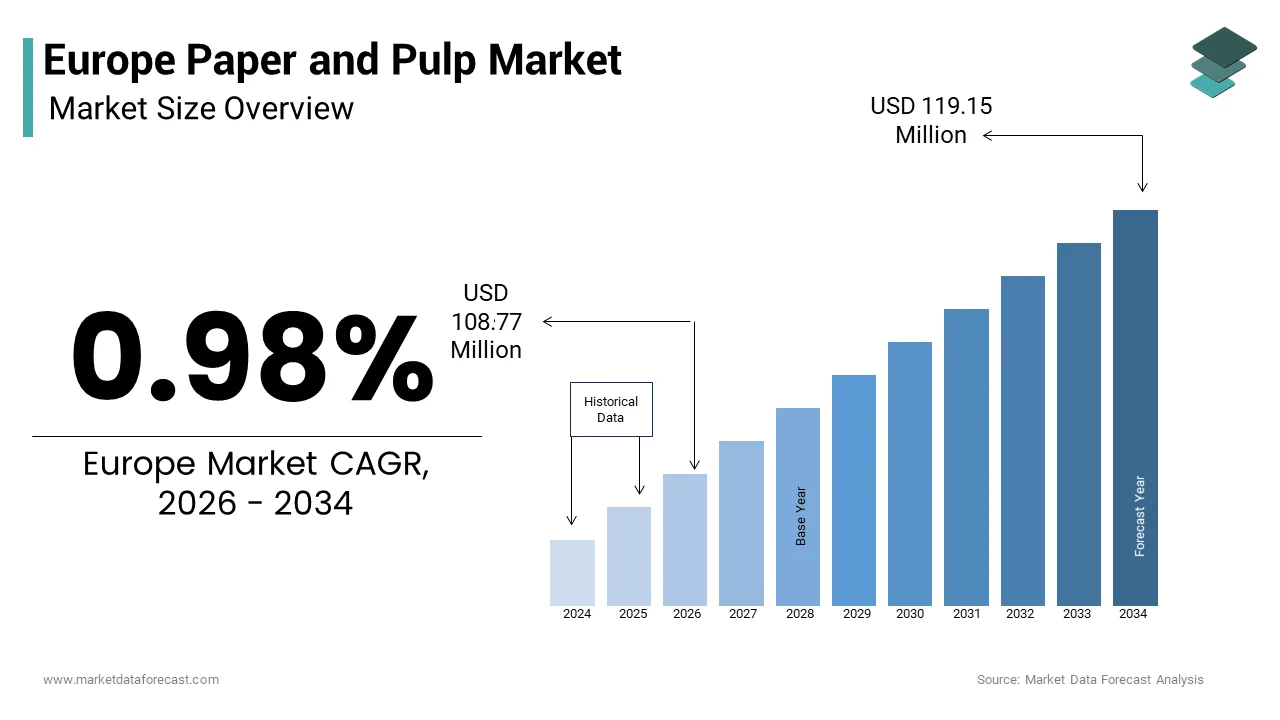
The Europe paper and pulp market was valued at USD 107.70 million in 2025, is estimated to reach USD 108.77 million in 2026, and is projected to reach USD 119.15 million by 2034, growing at a CAGR of 0.98% during the forecast period from 2026 to 2034.
The growth of the market is primarily driven by steady demand from the packaging industry, increasing adoption of sustainable and recyclable materials, and the ongoing transition toward a circular economy in Europe. The rise of e-commerce and retail sectors is sustaining demand for paper-based packaging solutions, while regulatory pressure to reduce plastic usage is further supporting market stability. However, the market is experiencing relatively slow growth due to digitalization reducing paper consumption and maturity in traditional paper segments.
Key Market Trends
- Strong demand for paper-based packaging driven by e-commerce growth and sustainable packaging preferences.
- Shift toward eco-friendly and recyclable materials, supported by strict European environmental regulations.
- Declining demand for printing and writing paper due to increasing digital transformation across industries.
- Innovation in specialty papers and pulp products, including bio-based and high-performance materials.
- Adoption of circular economy practices, with increased recycling and efficient resource utilization.
Segmental Insights
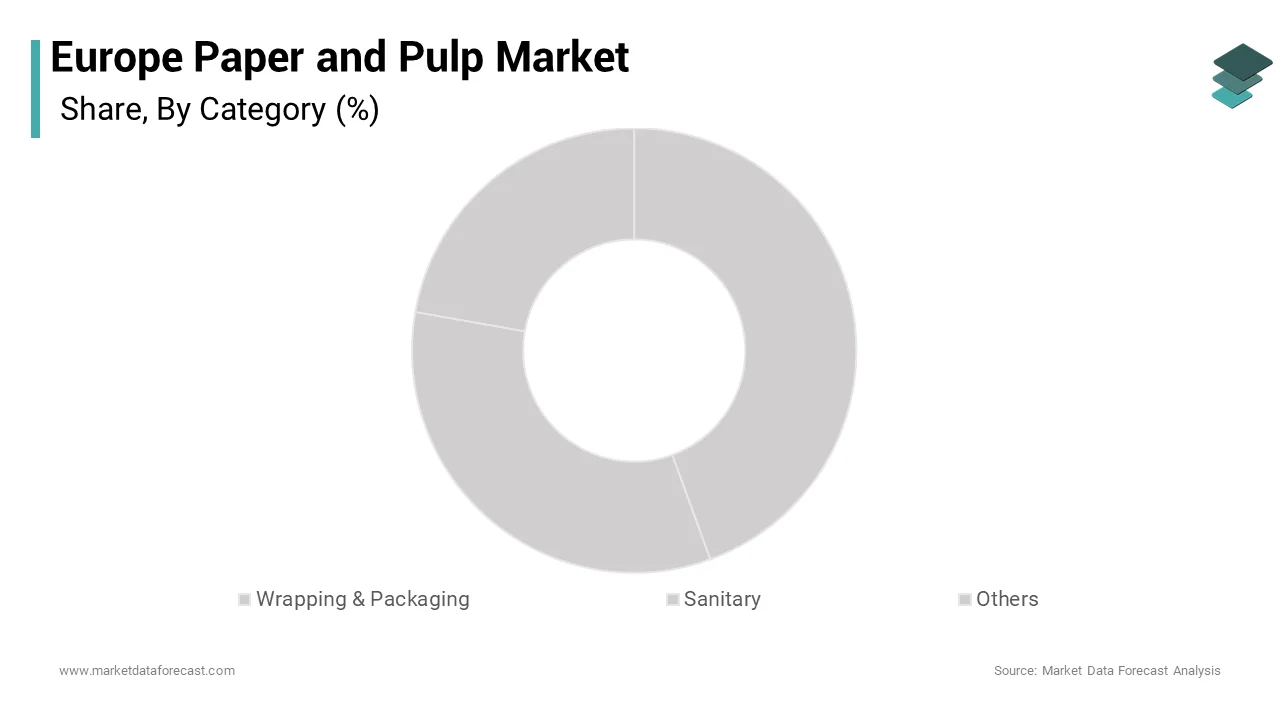
- By Category: The wrapping and packaging segment dominated the market, accounting for 58.3% share in 2025, driven by rising demand for sustainable packaging solutions across retail, logistics, and e-commerce sectors.
Regional Insights
The Europe paper and pulp market shows stable performance across key countries, supported by industrial strength, sustainability initiatives, and resource availability.
- Germany led the market, accounting for 22.4% share in 2025, driven by its strong industrial base and packaging demand.
- Italy held the second-largest share at 16.4%, supported by its well-established manufacturing and packaging industries.
- France is expected to grow steadily, fueled by its large retail sector and leadership in sustainability regulations.
- Sweden is a key contributor, benefiting from abundant forest resources and advanced bioeconomy strategies.
- Finland is emerging as a major hub due to its large-scale production of paperboard pulp and specialty paper products for global markets.
Competitive Landscape
The Europe paper and pulp market is moderately consolidated, with leading players focusing on sustainable production, innovation in bio-based materials, and expansion of packaging solutions. Companies are investing in advanced pulp technologies, recycling infrastructure, and strategic partnerships to maintain competitiveness in a low-growth but essential industry.
Prominent players in the Europe paper and pulp market include International Paper, Stora Enso Oyj, Metsä Group, Domtar Corporation, Georgia-Pacific LLC, Nine Dragons Worldwide Investment Group, Billerud AB, UPM, SCA, Oji Holdings Corporation, Sappi Ltd, Nippon Paper Industries, and Smurfit WestRock.
Europe Paper and Pulp Market Size
The Europe paper and pulp market size was valued at USD 107.70 million in 2025 and is anticipated to reach USD 108.77 million in 2026 to reach USD 119.15 million by 2034, growing at a CAGR of 0.98% during the forecast period from 2026 to 2034.
Current Introduction of the Paper and Pulp Market
The paper and pulp is the regional industrial economy encompassing the production of mechanical and chemical pulps as well as various grades of paper and paperboard. The sector is currently undergoing a structural transformation driven by the decline in graphic paper demand and the simultaneous surge in packaging requirements due to e commerce growth. As per Eurostat the manufacturing sector in the European Union accounted for approximately 15% of the total gross value added in 2023 highlighting the enduring industrial significance of material production. The transition towards a circular economy is central to current market dynamics with high recycling rates defining the operational landscape. According to the European Environment Agency the recycling rate of paper and cardboard in the EU reached 72% in recent years demonstrating a mature recovery infrastructure. The European Commission’s Circular Economy Action Plan further mandates sustainable product design influencing pulp sourcing and manufacturing processes. Energy intensity remains a critical factor as pulp and paper production is energy heavy. The International Energy Agency notes that the industry is one of the largest industrial consumers of biomass energy in Europe. Regulatory frameworks such as the Industrial Emissions Directive strictly control environmental impacts. These factors collectively shape a market that is increasingly focused on sustainability efficiency and adaptation to digital consumption patterns.
MARKET DRIVERS
Expansion of E Commerce and Sustainable Packaging Demand
The rapid expansion of e commerce and the consequent demand for sustainable packaging solutions serve is accelerating the growth of Europe paper and pulp market. As consumers shift towards online shopping, the need for durable recyclable and biodegradable packaging materials has intensified replacing single use plastics. According to Eurostat the share of individuals in the European Union who bought goods or services online reached 74% in 2023 reflecting a sustained digital consumption trend. This shift directly correlates with increased demand for corrugated board and cartonboard which are predominantly made from recycled pulp and virgin fiber. The European Union’s Single Use Plastics Directive prohibits certain plastic products and encourages the use of paper based alternatives further accelerating this transition. As per the European Corrugated Packaging Industry the production of corrugated cardboard has shown consistent growth driven by the logistics and retail sectors. Paper packaging is perceived as environmentally friendly due to its high recyclability and bio based origin aligning with corporate sustainability goals. Major retailers are committing to zero waste initiatives prioritizing paper based packaging for both primary and secondary applications. The versatility of paper allows for innovative designs that protect products while minimizing material usage. Additionally, the growth of food delivery services has boosted demand for grease resistant and sturdy paper containers. This structural shift in consumer behavior and regulatory support ensures a robust and growing demand for paper and pulp products in the packaging segment.
Revival of Hygiene and Tissue Product Consumption
The steady demand for hygiene and tissue products for fluff pulp and tissue grades is also fuelling the growth of Europe paper and pulp market. Heightened health awareness following global health crises has ingrained stricter hygiene practices, among consumers leading to increased usage of facial tissues toilet paper and paper towels. According to the European Tissue Symposium, the per capita consumption of tissue products in Western Europe remains among the highest globally indicating a mature but stable market. The aging population in Europe further contributes to this demand as elderly care requires substantial amounts of absorbent hygiene products. As per Eurostat, the proportion of the population aged 65 and over in the EU is projected to increase significantly in the coming decades sustaining long term demand for hygiene papers. Manufacturers are innovating with premium softness and strength characteristics driving value growth even if volume growth is moderate. The shift towards sustainable sourcing in tissue products also drives demand for certified virgin pulp and high-quality recycled fibers. Retailers are expanding their private label tissue offerings which often utilize efficient supply chains and standardized pulp grades. Additionally, the hospitality sector’s recovery post pandemic has restored demand for commercial tissue products in hotels and restaurants.
MARKET RESTRAINTS
Volatility in Energy Costs and Supply Security
The fluctuating energy costs and concerns regarding supply security is significantly declining the growth of Europe paper and pulp market. The production of pulp and paper is highly energy intensive requiring substantial amounts of electricity steam and heat. According to the International Energy Agency, industrial energy prices in Europe experienced extreme volatility in recent years due to geopolitical tensions and shifts in natural gas supplies. As per Eurostat, producer prices for energy in the manufacturing sector increased dramatically affecting the operational costs of paper mills. High energy costs erode profit margins and reduce the competitiveness of European producers compared to regions with lower energy expenses such as North America or Asia. Many mills have been forced to reduce production capacity or temporarily shut down lines to manage costs leading to supply constraints. The transition to renewable energy sources while necessary requires significant capital investment and time. Dependence on imported fossil fuels exposes the industry to external shocks and currency fluctuations. Additionally, the cost of carbon allowances under the European Union Emissions Trading System adds to the financial burden. These economic pressures limit the ability of companies to invest in modernization and expansion. The uncertainty regarding future energy prices complicates long term planning and strategic decision making.
Stringent Environmental Regulations and Compliance Costs
The strict environmental regulations and the associated compliance costs is additionally restricting the growth of Europe paper and pulp market. The industry is subject to rigorous standards regarding emissions wastewater treatment and resource usage under frameworks, such as the Industrial Emissions Directive. According to the European Environment Agency, the paper and pulp sector is a significant source of industrial emissions necessitating continuous investment in abatement technologies. As per the study, the implementation of the Best Available Techniques reference documents requires mills to adopt advanced pollution control measures which involve substantial capital expenditure. Compliance with these regulations increases operational costs and can lead to production delays during upgrades. The European Green Deal aims for climate neutrality by 2050 imposing stricter limits on carbon footprints and encouraging the phase out of fossil fuels. Small and medium sized enterprises often struggle to meet these stringent requirements due to limited financial resources. Additionally, the Regulation on Deforestation free Products imposes strict due diligence obligations on operators ensuring that wood fiber does not contribute to deforestation. This adds administrative burdens and requires robust traceability systems. The complexity of navigating varying national implementations of EU directives further complicates compliance.
MARKET OPPORTUNITIES
Development of Bio based Materials and Biorefinery Integration
The development of bio-based materials and the integration of biorefinery concepts is certainly a major factor setting up new opportunities for the growth of Europe paper and pulp market. Pulp mills are increasingly transforming into biorefineries that produce not only paper and pulp but also bioenergy biochemicals and biomaterials. According to the European Bioplastics Association, the demand for bio based plastics and materials is growing as industries seek sustainable alternatives to fossil based products. As per the Joint Research Centre, lignin a by product of the pulping process can be valorized into high value chemicals adhesives and carbon fibers. This diversification allows producers to create new revenue streams and reduce dependency on traditional paper markets. The European Union’s Bioeconomy Strategy supports the development of innovative bio based solutions providing funding and policy incentives. Companies are investing in research and development to extract hemicellulose and cellulose nanofibers for use in pharmaceuticals cosmetics and composite materials. The production of bioethanol and other renewable fuels from pulp residues also contributes to energy security and sustainability goals. This transition aligns with circular economy principles and reduces waste. The potential to supply high performance bio materials to various industries positions the paper and pulp sector as a key player in the green economy. This strategic shift opens up lucrative markets beyond traditional paper applications.
Expansion of Digital Printing and Specialty Paper Applications
The expansion of digital printing technologies and the growth of specialty paper applications is another factor to elevate the growth of the Europe paper and pulp market. While graphic paper demand has declined overall niche segments such as labels packaging and decorative papers are experiencing growth. According to the European Digital Print Association, digital printing allows for short runs customization and rapid turnaround times driving demand for high quality coated and uncoated papers. Specialty papers used in filtration electrical insulation and medical applications also offer high value opportunities. The increasing complexity of supply chains requires detailed labeling which boosts demand for adhesive labels and tags. Additionally, the rise of home decoration trends has increased demand for decorative laminates and wallpapers made from specialty papers. Manufacturers are innovating with functional coatings that provide barrier properties moisture resistance or antimicrobial effects. These value-added products command higher margins and are less susceptible to competition from digital media. The ability to produce customized and high-performance papers allows European producers to differentiate themselves in a competitive global market. Investing in advanced coating and finishing technologies enables mills to capture these emerging opportunities.
MARKET CHALLENGES
Competition from Alternative Packaging Materials
The intense competition from alternative packaging materials, such as plastics metals and glass is one of the challenges for the growth of Europe paper and pulp market. Although paper is favored for its sustainability plastics remain dominant in many applications due to their superior barrier properties lightweight nature and low cost. According to Plastics Europe, the production of plastics in Europe remains substantial with continuous innovation in recycling and bio based plastics enhancing their competitiveness. As per the European Aluminium Association, aluminum packaging offers excellent protection and infinite recyclability appealing to food and beverage manufacturers. Glass also retains a strong position in premium segments due to its perceived quality and inertness. The development of advanced plastic films with improved recyclability threatens the market share of paper based packaging. Additionally, the higher weight of paper compared to plastic can increase transportation costs and carbon emissions. Consumers sometimes perceive paper packaging as less convenient or durable than plastic alternatives. The industry must continuously innovate to improve the performance of paper barriers against moisture oxygen and grease. Regulatory changes favoring plastics if they achieve higher recycling rates could also impact demand.
Supply Chain Disruptions and Raw Material Availability
The supply chain disruptions and the availability of raw materials is additionally to degrade the growth of Europe paper and pulp market. The industry relies heavily on wood fiber which is subject to fluctuations in availability due to weather events pests and forestry policies. According to the Food and Agriculture Organization of the United Nations forest resources in Europe face pressures from climate change affecting growth rates and harvest volumes. As per Eurostat, disruptions in logistics and transportation networks have impacted the timely delivery of raw materials and finished products. The dependence on imported pulp from regions such as South America and Asia exposes European producers to geopolitical risks and trade barriers. Shortages of recycled fiber due to collection inefficiencies or export restrictions further complicate supply. The concentration of suppliers for certain chemicals and machinery adds vulnerability to the supply chain. Labor shortages in the forestry and manufacturing sectors also hinder operations. These disruptions lead to production delays increased inventory costs and reduced reliability.
REPORT COVERAGE
| REPORT METRIC | DETAILS |
| Market Size Available | 2025 to 2034 |
| Base Year | 2025 |
| Forecast Period | 2026 to 2034 |
| CAGR | 0.98% |
| Segments Covered | By Category, Country |
| Various Analyses Covered | Global, Regional & Country Level Analysis, Segment-Level Analysis, DROC, PESTLE Analysis, Porter’s Five Forces Analysis, Competitive Landscape, Analyst Overview on Investment Opportunities |
| Regions Covered | UK, France, Spain, Germany, Italy, Russia, Sweden, Denmark, Switzerland, Netherlands, Turkey, the Czech Republic, and the Rest of Europe |
| Market Leaders Profiled | International Paper (U.S.), Stora Enso Oyj, Metsa Group, Domtar Corporation (U.S.), Georgia-Pacific LLC (U.S.), Nine Dragons Worldwide (China) Investment Group Co., Ltd. (China), Billerud AB (Sweden), UPM (Finland), Svenska Cellulosa Aktiebolaget SCA (Sweden), Oji Holding Corporation (Japan), Sappi Ltd (South Africa), Nippon Paper Industries Co., Ltd. (Japan), Smurfit WestRock (Ireland) |
SEGMENTAL ANALYSIS
By Category Analysis
The wrapping and packaging segment was the largest by holding 58.3% of the Europe paper and pulp market share in 2025 owing to the structural shift in consumer behavior towards online shopping and the regulatory push to replace single use plastics with sustainable alternatives. The exponential growth of e commerce, which necessitates robust protective packaging solutions, such as corrugated boxes and cartons is boosting the growth of segment. As per the study, the production volume of corrugated board has consistently increased reflecting its critical role in logistics and retail supply chains. Furthermore, the European Union’s Single Use Plastics Directive mandates a reduction in plastic waste encouraging brands to adopt paper based packaging for food beverages and personal care products. Paper packaging offers high recyclability and biodegradability aligning with corporate sustainability goals and consumer preferences. The versatility of paper allows for innovative designs that enhance brand visibility while ensuring product safety. Major retailers are increasingly committing to plastic free initiatives further solidifying the dominance of paper packaging. The integration of digital printing technologies also enables customization and short run productions making paper packaging more attractive for marketing purposes.
The healthcare packaging segment is expected to witness a fastest CAGR of 6.2% from 2026 to 2034, driven by stringent hygiene standards and an aging population. The growth of the segment is driven by the increasing demand for sterile and safe packaging solutions for medical devices pharmaceuticals and diagnostic kits. The heightened focus on infection control and patient safety following recent global health crises, which has elevated the importance of reliable packaging barriers. According to the European Federation of Pharmaceutical Industries and Associations the pharmaceutical sector in Europe continues to expand requiring specialized packaging that ensures product integrity and traceability. As per the Medical Device Coordination Group new regulations emphasize the need for packaging that maintains sterility throughout the supply chain favoring medical grade paperboards and blister packs. The aging demographic in Europe further amplifies demand for healthcare products and consequently their packaging. Additionally, the rise of home healthcare and self testing kits creates new opportunities for user friendly and informative paper based packaging. Manufacturers are innovating with antimicrobial coatings and smart packaging features that monitor temperature and humidity. The regulatory environment supports the use of sustainable materials in healthcare reducing the environmental footprint of medical waste.
COUNTRY LEVEL ANALYSIS
Germany Paper And Pulp Market Analysis
Germany was the largest contributor in the Europe paper and pulp market by holding 22.4% of the share in 2025 with its robust manufacturing base and strong export orientation. The country’s market status is characterized by high demand for packaging materials particularly corrugated board and cartonboard to support its industrial and retail sectors. As per the Association of the German Paper Industry, Germany is one of the leading producers of paper and cardboard in Europe with a strong focus on recycling and sustainability. The country’s advanced waste management infrastructure ensures high recovery rates of used paper supporting the circular economy. German consumers are increasingly demanding eco friendly packaging prompting retailers to shift away from plastics. The government’s commitment to climate neutrality drives investment in energy efficient production technologies. Additionally, the growth of e commerce in Germany further boosts demand for shipping containers.
Italy Paper And Pulp Market Analysis
Italy paper and pulp market was positioned second by holding 16.4% of share in 2025 with its strong packaging industry and cultural emphasis on food and luxury goods. The market status is defined by significant production of specialty papers and high-quality packaging materials for the food beverage and fashion sectors. According to the Italian National Institute of Statistics, the food and beverage sector contributes significantly to the national economy driving consistent demand for paper based packaging. As per the Italian Pulp and Paper Industry Association, Italy is a leader in the production of tissue paper and specialty grades leveraging its technological expertise. The country’s design heritage influences packaging trends with brands prioritizing visual appeal and sustainability. The tourism sector also contributes to demand for hospitality related paper products. Government incentives for sustainable practices encourage the adoption of recycled materials.
France Paper And Pulp Market Analysis
France paper and pulp market growth is anticipated to grow with its large retail sector and regulatory leadership in sustainability. The French Anti Waste Law for a Circular Economy, which mandates stricter requirements for packaging recyclability and reduced plastic use. According to the French Ministry of Ecological Transition this legislation accelerates the transition to paper based packaging across various sectors. As per the French Paper and Cardboard Industry Union, domestic production remains stable with a focus on high value added products. The luxury goods sector in France relies heavily on premium paper packaging for perfumes cosmetics and fashion items enhancing brand prestige. French consumers are highly aware of environmental issues driving demand for certified sustainable products. The government’s support for local forestry and bioeconomy initiatives strengthens the supply chain. Additionally, the growth of organic food markets boosts demand for eco-friendly packaging. France’s commitment to cultural and environmental preservation influences market trends.
Sweden Paper And Pulp Market Analysis
Sweden paper and pulp market growth is fueled with its abundant forest resources and advanced bioeconomy strategies. The country’s extensive forest coverage which provides a reliable and renewable source of raw material for the industry. According to a study, the forest industry is a major contributor to the national economy with significant investments in green technologies. As per the Swedish Forest Industries Federation, Sweden is a global leader in the production of market pulp and paperboard emphasizing environmental stewardship. Swedish companies are at the forefront of developing fossil free production processes reducing carbon emissions. The domestic demand for packaging is supported by a strong retail sector and high e commerce penetration. Sweden’s reputation for sustainability enhances the global competitiveness of its paper products.
Finland Paper And Pulp Market Analysis
Finland paper and pulp market growth is likely to grow with the large scale production of paperboard pulp and specialty papers for global markets. The presence of major forest industry corporations that invest heavily in research and development to create new bio based solutions is also elevating the growth of the market. The country is a pioneer in digitalization and automation within mills improving efficiency and reducing environmental impact. Demand for packaging materials remains strong due to global e commerce trends. Finland’s commitment to carbon neutrality drives the adoption of renewable energy in production processes. The industry’s collaboration with universities and research institutes fosters innovation in product development. Finland’s strategic focus on sustainability and technology ensures its continued relevance and competitiveness in the European paper and pulp market.
COMPETITIVE LANDSCAPE
The competition in the Europe paper and pulp market is characterized by the presence of large integrated forest industry groups and specialized producers. Market leaders compete on the basis of product quality sustainability credentials and operational efficiency. The shift towards circular economy principles drives innovation in recycling technologies and bio based materials. Competitive dynamics are influenced by fluctuating raw material costs and energy prices which impact profitability. Companies differentiate themselves through unique product offerings such as barrier coated papers and specialty pulps. Strategic alliances with customers and suppliers strengthen supply chain resilience. Regulatory frameworks such as the European Green Deal shape competitive landscapes by setting strict environmental standards. Companies that invest in green technologies and sustainable practices gain a competitive advantage. The decline in graphic paper demand forces players to pivot towards packaging and hygiene segments. Consolidation through mergers and acquisitions optimizes capacity and reduces costs.
KEY MARKET PLAYERS
A few of the market players that are in the Europe paper and pulp market are
- International Paper (U.S.)
- Stora Enso Oyj
- Metsa Group
- Domtar Corporation (U.S.)
- Georgia-Pacific LLC (U.S.)
- Nine Dragons Worldwide (China) Investment Group Co., Ltd. (China)
- Billerud AB (Sweden)
- UPM (Finland)
- Svenska Cellulosa Aktiebolaget SCA (Sweden)
- Oji Holding Corporation (Japan)
- Sappi Ltd (South Africa)
- Nippon Paper Industries Co., Ltd. (Japan)
- Smurfit WestRock (Ireland)
Top Players In The Market
- Stora Enso is a leading global provider of renewable solutions in packaging biomass and wooden construction materials with a significant footprint in the Europe paper and pulp market. The company focuses on replacing fossil-based materials with innovative wood based products. Recent actions include investing heavily in biorefinery capabilities to produce biochemicals and advanced fiber materials. Stora Enso has divested from declining graphic paper segments to concentrate on high growth areas such as e commerce packaging and liquid packaging boards. The company actively collaborates with brand owners to develop recyclable packaging solutions that meet stringent sustainability standards. Their commitment to carbon neutrality drives continuous improvement in operational efficiency and product innovation across European markets.
- UPM Kymmene Corporation is a frontrunner in the forest industry offering a wide range of paper pulp and energy products. The company plays a crucial role in the Europe paper and pulp market by providing high quality label papers packaging materials and specialty pulps. Recent strategies involve expanding its bioforestry portfolio through investments in biochemicals and renewable fuels. UPM has upgraded several mills to enhance production efficiency and reduce environmental impact. The company emphasizes responsible sourcing and sustainable forest management ensuring long term raw material availability. UPM engages in partnerships with customers to create value added solutions for labeling and packaging needs. Their integrated business model allows for efficient resource utilization and waste reduction. This approach supports their goal of leading the industry beyond fossils in the European region.
- Metsa Group is a cooperative group owned by Finnish forest owners that operates extensively in the Europe paper and pulp market. The company is renowned for its high quality market pulp paperboard and tissue products. Recent actions include the commissioning of new bioproduct mills that significantly increase production capacity while minimizing environmental footprint. Metsä Group invests in research and development to create new wood based materials for various applications including textiles and composites. The company prioritizes sustainable forestry practices ensuring that all wood raw material is traceable and certified. Metsä Group collaborates with stakeholders to promote the use of renewable materials in place of plastics. Their focus on customer centric innovation and operational excellence strengthens their market position.
Top Strategies Used By Key Market Participants
Key players in the Europe paper and pulp market primarily focus on transitioning towards biorefinery models to diversify product portfolios beyond traditional paper. Companies invest heavily in research and development to create innovative wood based materials such as biochemicals and textiles. Strategic divestments from declining graphic paper segments allow redirection of capital to high growth areas like packaging and hygiene. Sustainability initiatives drive improvements in energy efficiency and carbon footprint reduction. Partnerships with brand owners facilitate the development of recyclable and plastic free packaging solutions. Digitalization of supply chains enhances operational transparency and customer service. Expansion into emerging markets strengthens global presence and revenue streams. These strategies enable participants to adapt to changing market dynamics and regulatory requirements while maintaining competitiveness in the European region.
MARKET SEGMENTATION
This research report on the Europe paper and pulp market is segmented and sub-segmented into the following categories.
By Category
- Wrapping & Packaging
- Food & Beverage Packaging
- Healthcare Packaging
- Personal Care Packaging
- Others
- Printing & Writing
- Books and Publishing
- News Print
- Others
- Sanitary
- Others
By Country
- UK
- France
- Spain
- Germany
- Italy
- Russia
- Sweden
- Denmark
- Switzerland
- Netherlands
- Turkey