- Product Description Description
- Table of Contents TOC
- List of Table & Figure LOT
- Get Free Sample PDF Sample PDF
Market Size, 2025
$185.47 MnMarket Estimate, 2026
$194.85 MnMarket Forecast, 2034
$322.04 MnCAGR, 2026–2034
5.06%Europe Paprika Market Size, Growth, Trends & Forecast (2026–2034)
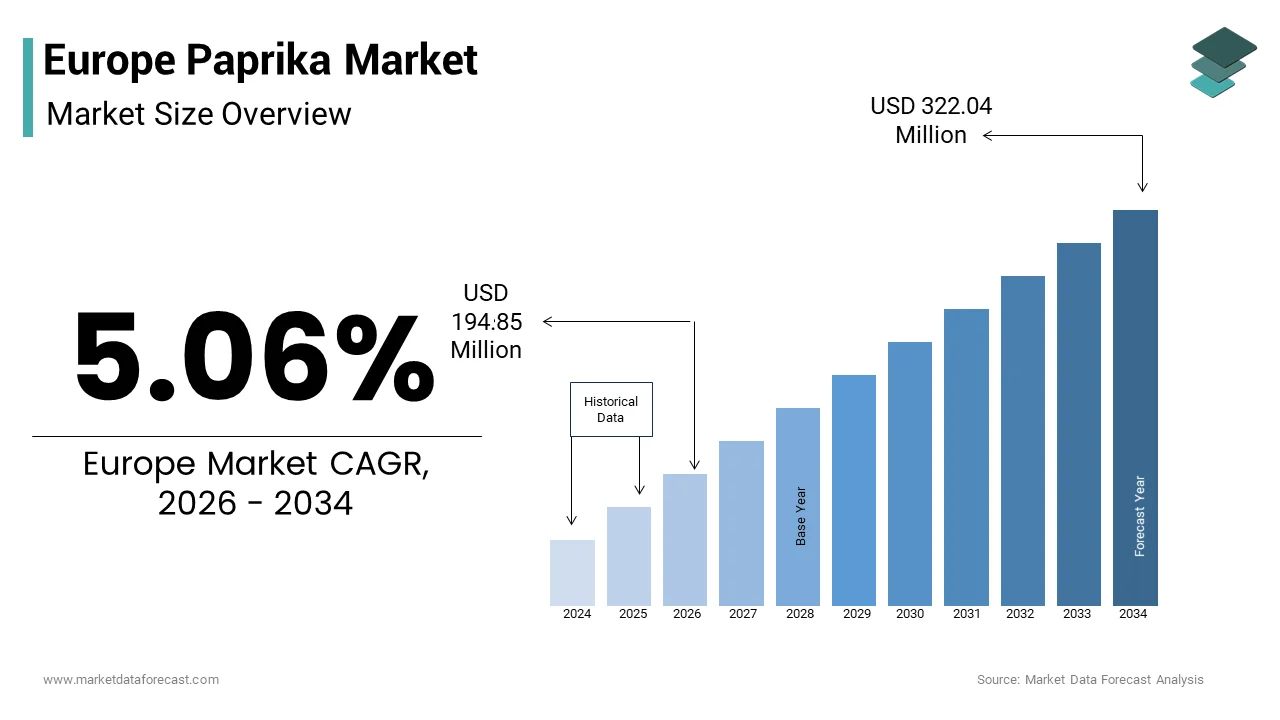
The Europe paprika market size was valued at USD 185.47 million in 2025, is anticipated to reach USD 194.85 million in 2026, and is projected to scale up to USD 322.04 million by 2034, registering a compound annual growth rate (CAGR) of 5.06% during the forecast period from 2026 to 2034. Driven by surging demand for natural food colorants, rich culinary heritages, and rapid expansions into clean-label formulations, the European paprika sector remains an essential pillar of the region's food and spice industries.
Key Executive Metrics (At-a-Glance)
- 2025 Base Valuation: USD 185.47 Million
- 2026 Current Valuation: USD 194.85 Million
- 2034 Forecast Valuation: USD 322.04 Million
- Compound Annual Growth Rate (CAGR): 5.06% (2026–2034)
- Dominant Application Segment: Food Application Segment (Largest share in 2025)
- Fastest-Growing Application Segment: Pharmaceuticals Application Segment (projected at 7.2% CAGR)
- Dominant Type Segment: Vegetable Paprika Segment (Major share in 2025)
- Fastest-Growing Type Segment: Paprika Oleoresin Segment (projected at 6.8% CAGR)
- Dominant Country Market: Spain (28.4% share in 2025) followed by Hungary and Germany
Core Market Drivers
- Natural Food Colorants: Rising consumer shifts away from synthetic dyes (like Red 40) toward natural, plant-based coloring agents.
- Culinary Heritage: Deep-rooted traditions in Southern and Central Europe alongside expanding mainstream interest in ethnic cuisines.
Primary Market Restraints & Challenges
- Climate Volatility: Droughts and heatwaves in core growing regions like Spain and Hungary disrupting crop yields and raw material stability.
- Regulatory Complexity: Strict EU pesticide residue limits and quality testing requirements increasing operational expenses for processors.
Europe Paprika Market Segmentation Highlights
| Segment Category | Largest Market Segment | Fastest-Growing Market Segment |
|---|---|---|
| By Application | Food Application Segment | Pharmaceuticals Application Segment (7.2% CAGR) |
| By Type | Vegetable Paprika Segment | Paprika Oleoresin Segment (6.8% CAGR) |
| By Country | Spain (28.4% share in 2025) | Hungary and Germany |
Major Industry Players Profiled
Key spice processors, extract manufacturers, and agricultural leaders shaping the European paprika market include Kalsec Inc (US), Synthite Industries Ltd (India), Akay Natural Ingredients Pvt Ltd (India), Chr. Hansen Holding A/S (Denmark), Naturex (France), Evesa (Spain), Kancor Ingredients Limited (India), Plant Lipids (India), and Frutarom Industries Ltd (Israel).
 Download Free Sample Report
Europe Paprika Market Size
The Europe paprika market size was valued at USD 185.47 million in 2025 and is anticipated to reach USD 194.85 million in 2026 to reach USD 322.04 million by 2034, growing at a CAGR of 5.06% during the forecast period from 2026 to 2034.
Current Introduction of the Europe Paprika Market
Paprika is a vital spice derived from dried and ground fruits of the Capsicum annuum family, encompassing varieties that range from sweet to hot profiles. This pigment rich powder serves as an essential ingredient in European culinary traditions, within Hungarian and Spanish gastronomies, while also functioning as a natural colorant in processed food industries. The deeply influenced by agricultural outputs in key producing nations, such as Spain and Hungary, which collectively dominate regional supply chains. Consumer preferences have shifted towards authentic and organic variants, driven by heightened health consciousness and demand for clean label ingredients. According to Eurostat, the European Union imported approximately 45000 metric tons of peppers and capsicums in 2024, reflecting steady demand despite climatic volatility. The integration of paprika into ready to eat meals and snack formulations has further expanded its application scope beyond traditional cooking. As per the Food and Agriculture Organization, global production of capsicums reached 38 million metric tons in 2023, with Europe contributing significantly through high value added processed exports. The regulatory framework governing food additives strictly monitors pesticide residues, influencing sourcing strategies for manufacturers. This stringent compliance environment ensures product safety but adds complexity to supply chain management. The interplay between traditional agricultural practices and modern industrial processing defines the current operational landscape, where quality consistency remains paramount for maintaining competitive advantage in both domestic and export markets.
MARKET DRIVERS
Surging Demand for Natural Food Colorants Drives Market Expansion
The escalating consumer preference for natural food colorants over synthetic alternatives is propelling the growth of Europe paprika market. Paprika oleoresin and powder provide vibrant red hues without the health concerns associated with artificial dyes like Red 40 or Carmine. According to the European Food Safety Authority, the approval and usage limits for natural colorants have become more favorable, encouraging food manufacturers to reformulate products. The shift is particularly evident in the meat processing sector, where paprika is extensively used in sausages and cured meats to enhance visual appeal. Furthermore, the rise in vegan and plant based diets has increased the demand for natural coloring agents in alternative protein products. Manufacturers are increasingly sourcing high astaxanthin and capsanthin content paprika to meet these specific industrial needs. The versatility of paprika as both a flavor enhancer and a coloring agent provides a dual value proposition, making it indispensable in the formulation of snacks, sauces, and dairy alternatives. This multifaceted utility ensures sustained demand from industrial buyers who prioritize both aesthetic quality and nutritional integrity in their final products.
Culinary Heritage and Ethnic Cuisine Popularity Fuel Consumption Rates
The deep-rooted culinary heritage of Southern and Central Europe, combined with the rising popularity of ethnic cuisines, significantly propels the consumption of paprika is also fuelling the growth of Europe paprika market. Hungary and Spain remain the cultural epicenters of paprika usage, integrating it into iconic dishes such as goulash, paella, and chorizo. According to the Hungarian Central Statistical Office, domestic consumption of paprika per capita remains among the highest globally, with average annual household purchases exceeding 0.5 kilograms. The widespread adoption of Mediterranean and Eastern European diets across Northern and Western Europe has further diversified the consumer base. The tourism sector also plays a pivotal role, as travelers returning from culinary holidays often seek to replicate authentic flavors at home, driving retail sales of premium and smoked paprika varieties. Additionally, the proliferation of cooking shows and digital culinary content has educated consumers on the nuanced differences between sweet, hot, and smoked paprika, encouraging experimentation. This educational aspect has led to a segmentation of the market, with gourmet and artisanal brands gaining market share against generic commodities. The emotional connection consumers have with traditional recipes ensures a stable baseline demand, while the curiosity for new flavor profiles opens avenues for product innovation and premiumization within the retail sector.
MARKET RESTRAINTS
Climate Volatility and Agricultural Yield Instability Restrict Supply
The climate change induced weather extremes by disrupting agricultural yields and affecting product quality is hampering the growth of Europe paprika market. Paprika cultivation requires specific climatic conditions, including warm temperatures and adequate rainfall during the growing season. However, recent years have witnessed increased frequency of droughts and heatwaves in key producing regions such as Andalusia in Spain and the Great Plain in Hungary. According to the European Drought Observatory, severe drought conditions affected 47% of the EU territory in 2023, leading to a 15% reduction in capsicum yields in affected areas. Such volatility results in fluctuating supply volumes and unpredictable pricing structures, challenging manufacturers who rely on consistent raw material availability. The sensitivity of capsicum plants to temperature stress also impacts the concentration of pigments and flavors, potentially lowering the grade of the harvested crop. As per the Joint Research Centre, climate models predict a further increase in summer temperatures by 2 degrees Celsius by 2030, which could exacerbate these agricultural challenges. Farmers face higher irrigation costs and increased risk of crop failure, which translates into higher input costs for processors. This instability forces companies to diversify sourcing strategies, often importing from non-European countries, which may introduce complexities related to quality control and regulatory compliance. The inherent dependency on seasonal harvests means that any adverse weather event can have immediate and prolonged effects on market stability by limiting the ability of suppliers to meet long term contracts reliably.
Stringent Regulatory Compliance and Pesticide Residue Limits Increase Costs
The rigorous regulatory framework governing pesticide residues and food safety standards is additionally elevating the growth of Europe paprika market. The European Union maintains some of the strictest maximum residue levels for pesticides in food products globally, requiring extensive testing and certification for both domestic and imported paprika. According to the Rapid Alert System for Food and Feed, notifications regarding excessive pesticide residues in spices and herbs have remained consistent, with paprika frequently cited due to its susceptibility to pest infestations during cultivation. Compliance with these standards necessitates significant investment in quality assurance protocols, laboratory testing, and traceability systems, thereby increasing operational costs for producers and importers. Small and medium sized enterprises often struggle to bear these financial burdens, leading to market consolidation favoring larger players with robust compliance infrastructure. Furthermore, the ban on certain conventional pesticides has limited the tools available to farmers for crop protection, potentially reducing yields and increasing vulnerability to diseases. This regulatory pressure also extends to labeling requirements, demanding transparency about origin and processing methods.
MARKET OPPORTUNITIES
Expansion into Organic and Sustainable Product Segments Offers Growth Potential
The growing consumer inclination towards organic and sustainably sourced food products is majorly creating new opportunities for the growth of Europe paprika market. Organic paprika, cultivated without synthetic pesticides or fertilizers, commands a premium price and appeals to health conscious and environmentally aware consumers. Certification bodies, such as Euro Leaf provide trusted verification by enhancing consumer confidence and brand loyalty. Companies that invest in organic supply chains can differentiate themselves in a crowded market, capturing higher margins and fostering long term customer relationships. The demand for sustainable packaging solutions further complements this trend, with buyers preferring products housed in recyclable or biodegradable materials. Additionally, the integration of blockchain technology for supply chain transparency allows brands to verify the origin and ethical standards of their sourcing, appealing to the modern ethically minded shopper. This technological advancement enables marketers to tell compelling stories about farmer partnerships and environmental stewardship, adding value beyond the physical product.
Innovation in Value Added and Convenience Formats Drives New Revenue Streams
The development of value added paprika products, such as infused oils, seasoning blends, and ready to use pastes is also to escalate the growth of Europe paprika market. Modern consumers prioritize convenience and flavor complexity, seeking products that simplify meal preparation without compromising on taste. According to Innova Market Insights, launches of spice blends with functional benefits, such as added antioxidants or anti-inflammatory properties, increased by 15% in Europe in 2025. Paprika’s compatibility with other spices and herbs allows for creative formulation of unique flavor profiles tailored to specific cuisines or dietary preferences, such as low sodium or keto friendly options. The rise of single serve packaging and resealable containers enhances product usability and freshness, addressing common consumer pain points related to spice storage. As per Euromonitor International, the convenience food sector continues to expand, with seasoned ingredients playing a crucial role in product innovation. Manufacturers can leverage this trend by collaborating with chefs and food scientists to create proprietary blends that offer distinct sensory experiences. Furthermore, the integration of paprika into snack foods, such as flavored nuts and crackers, opens up new distribution channels beyond the traditional spice aisle. By focusing on product innovation and convenience, companies can attract younger demographics who are less likely to engage in traditional cooking from scratch, thereby expanding the total addressable market and driving incremental sales growth.
MARKET CHALLENGES
Supply Chain Disruptions and Geopolitical Instability Pose Operational Challenges
The geopolitical tensions and logistical disruptions by affecting the reliability and cost efficiency of supply chains is one of the challenges for the growth of Europe paprika market. Europe relies on imports from various global regions to supplement domestic production, making it vulnerable to international trade fluctuations. According to the United Nations Conference on Trade and Development, global shipping costs experienced volatility in 2024 due to regional conflicts and port congestions, impacting the timely delivery of agricultural commodities. Any disruption in key transit routes can lead to delays and increased freight expenses, squeezing profit margins for importers and distributors. Additionally, trade policies and tariffs imposed by exporting countries can alter the economic viability of sourcing paprika from specific regions. These logistical hurdles complicate inventory management and require companies to maintain higher safety stocks, tying up capital and increasing storage costs. The lack of diversification in sourcing channels further exacerbates this risk, as reliance on a limited number of suppliers can lead to shortages during crises. Companies must navigate this complex geopolitical landscape by developing resilient supply chain strategies, including multi sourcing and nearshoring options.
Adulteration and Quality Fraud Undermine Consumer Trust and Brand Integrity
The prevalence of adulteration and quality fraud in the spice industry, threatening consumer trust and brand reputation, which is a challenge for the growth of Europe paprika market. Paprika is susceptible to adulteration with inferior fillers, artificial colors, or other cheaper spices to reduce production costs. According to the European Spice Association, incidents of economically motivated adulteration in spices have been reported regularly, with paprika being a frequent target due to its high value and vibrant color. Such practices not only deceive consumers but also pose potential health risks if unauthorized substances are used. Detecting adulteration requires sophisticated analytical techniques, such as high performance liquid chromatography, which can be costly and time consuming for routine quality control. Brands that fail to ensure product purity face severe reputational damage and legal consequences, including recalls and fines. Maintaining rigorous quality assurance protocols throughout the supply chain is essential but challenging, particularly when dealing with multiple suppliers and intermediaries. The lack of standardized testing methods across different jurisdictions further complicates enforcement efforts. Consumers are becoming increasingly skeptical, demanding greater transparency and proof of authenticity.
REPORT COVERAGE
| REPORT METRIC | DETAILS |
| Market Size Available | 2025 to 2034 |
| Base Year | 2025 |
| Forecast Period | 2026 to 2034 |
| CAGR | 5.06% |
| Segments Covered | By Application, Type, and Region. |
| Various Analyses Covered | Global, Regional, and Country Level Analysis; Segment-Level Analysis, DROC; PESTLE Analysis; Porter’s Five Forces Analysis; Competitive Landscape; Analyst Overview of Investment Opportunities |
| Regions Covered | UK, France, Spain, Germany, Italy, Russia, Sweden, Denmark, Switzerland, Netherlands, Turkey, Czech Republic, and the Rest of Europe |
|
Market Leaders Profiled | Chr. Hansen Holding A/S, Ungerer & Company, Akay Natural Ingredients Pvt Ltd, Kalsec Inc, Synthite, Unilever Food Solutions, Ingredientes Naturales Seleccionados, Evesa, Frutarom Industries Ltd, Kancor Ingredients Limited, Plant Lipids, Naturex |
SEGMENTAL ANALYSIS
By Application Insights
The food application segment was the largest by holding a prominent share of the Europe paprika market in 2025 with the extensive use of paprika as both a flavoring agent and a natural colorant in a wide array of culinary products. The European processed food industry relies heavily on paprika to enhance the visual appeal and taste profile of meat products, snacks, sauces, and ready meals. According to the European Commission, the food and beverage sector represents the largest end user of natural spices, with paprika being a staple ingredient in traditional dishes across Southern and Central Europe. The rising demand for clean label products has further solidified this position, as manufacturers replace synthetic additives like Red 40 with paprika extract to meet consumer preferences for natural ingredients. Additionally, the growth of the convenience food sector, which includes frozen meals and packaged snacks, has amplified the demand for consistent and high quality spice blends. The versatility of paprika allows it to be integrated into diverse food categories, from dairy alternatives to plant based meats, ensuring its continued relevance and high volume usage.
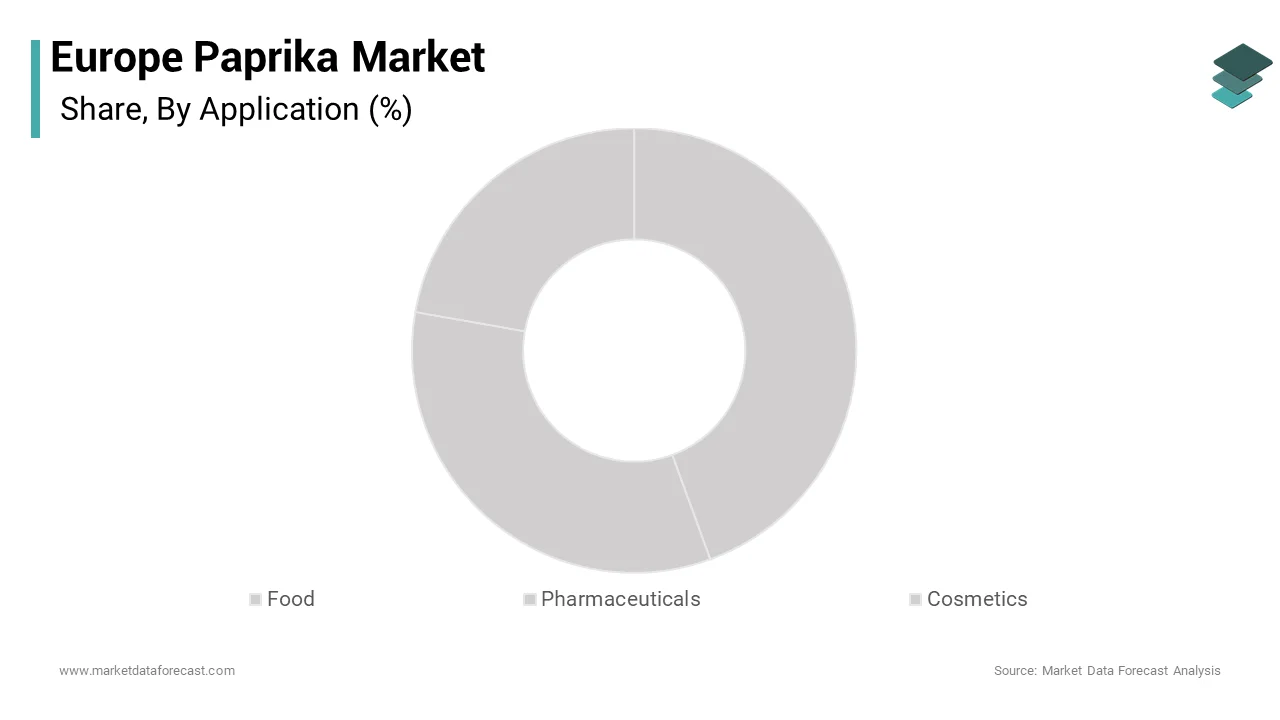
The pharmaceuticals application segment is projected to register a fastest CAGR of 7.2% from 2026 to 2034 with the increasing recognition of capsicum extracts for their therapeutic properties, particularly in pain management and anti-inflammatory treatments. Capsaicin, the active component in hot paprika varieties, is widely used in topical analgesics for conditions such as arthritis, neuropathy, and muscle pain. According to the European Medicines Agency, the approval of capsaicin-based therapies has expanded, leading to greater adoption in clinical settings and over the counter medications. The aging population in Europe, with individuals aged 65 and above constituting 21% of the total population, drives the demand for effective pain relief solutions. Furthermore, the shift towards natural and herbal remedies in complementary medicine has boosted the integration of paprika extracts into dietary supplements and wellness products. As per the World Health Organization, the global market for herbal medicines is expanding, with Europe being a key contributor due to stringent quality standards and high consumer trust. Research into the antioxidant and metabolic benefits of capsicum compounds has also opened new avenues for pharmaceutical applications, including weight management and cardiovascular health supplements.
By Type Insights
The vegetable paprika segment was accounted I holding a significant share of the Europe paprika market in 2025 with its widespread acceptance in household cooking and traditional culinary practices across the continent. Consumers prefer vegetable paprika for its authentic flavor profile and versatility in everyday meal preparation, ranging from stews and soups to marinades and rubs. According to the Food and Agriculture Organization, the production of dried capsicum fruits for direct consumption remains higher than that for oleoresin extraction in Europe, reflecting strong domestic demand. The cultural significance of paprika in countries like Hungary and Spain reinforces its status as a kitchen staple, ensuring consistent retail sales. The availability of various grades, including sweet, hot, and smoked varieties, caters to diverse consumer preferences and culinary traditions. Additionally, the rise of home cooking trends, accelerated by recent global events, has increased the frequency of spice purchases among consumers seeking to replicate restaurant quality meals at home. The tangible nature of vegetable paprika allows for easy integration into traditional recipes, maintaining its relevance despite the emergence of specialized extracts.
The paprika oleoresin segment is esteemed to witness a fastest CAGR of 6.8% throughout the forecast period with the increasing demand from industrial food processors for standardized and efficient coloring solutions. Oleoresins offer superior consistency in color intensity and stability compared to ground paprika, making them ideal for large scale manufacturing of processed foods, beverages, and confectionery. According to the European Food Safety Authority, the use of natural oleoresins as food additives has been streamlined, facilitating easier incorporation into industrial formulations. The efficiency of oleoresins in terms of dosage and storage also appeals to manufacturers looking to optimize production costs and supply chain logistics. Furthermore, the growth of the ready to eat and convenience food sectors, which require uniform product appearance, has bolstered the adoption of oleoresins. The ability to customize color shades and ensure batch to batch consistency provides a competitive advantage to food brands, driving higher uptake of this specialized form. Technological advancements in extraction methods have also improved the yield and quality of oleoresins by making them more accessible and cost effective for industrial users, thereby fueling their rapid market penetration.
COUNTRY LEVEL ANALYSIS
Spain Paprika Market Analysis
Spain was the largest contributor in the Europe paprika market by holding 28.4% of share in 2025 with its favorable climatic conditions in regions, such as Extremadura and Murcia, which are ideal for capsicum cultivation. Spain is renowned for its Pimentón de la Vera, a protected designation of origin product that commands premium prices in both domestic and international markets. According to the Ministry of Agriculture, Fisheries and Food of Spain, the country produced over 15000 metric tons of paprika in 2024, with a significant portion dedicated to export. The strong branding associated with Spanish paprika, particularly its smoked varieties, has created a loyal consumer base across Europe. The integration of advanced agricultural technologies and sustainable farming practices has further enhanced yield quality and consistency. Additionally, the robust tourism industry in Spain promotes local culinary heritage, driving domestic consumption and international interest. The government’s support for agricultural cooperatives and quality certification schemes ensures that Spanish paprika maintains high standards is gearing up the growth of the market in this country.
Hungary Paprika Market Analysis
Hungary paprika market is expected to register a prominent CAGR during the forecast period, which is integral to its national identity and cuisine, notably in dishes like goulash and paprikash. Hungary is particularly known for its high quality sweet and hot paprika varieties, which are protected by geographical indication labels. As per the research, the country exports approximately 8000 metric tons of paprika annually, primarily to neighboring European countries and beyond. The emphasis on traditional processing methods and strict quality control measures ensures that Hungarian paprika retains its distinct flavor and color profiles. The government’s initiatives to promote agricultural heritage and support local farmers have helped maintain production levels despite climate challenges. Additionally, the growing interest in authentic ethnic cuisines across Europe has boosted demand for Hungarian paprika in gourmet and specialty food segments.
Germany Paprika Market Analysis
Germany paprika market growth is likely to have a prominent growth opportunities in coming years with a pivotal role in distributing paprika products, across Central and Northern Europe. According to Destatis, the Federal Statistical Office of Germany, the country imported over 10000 metric tons of paprika and capsicum products in 2024, reflecting strong demand from both industrial and retail sectors. The German food processing industry utilizes significant quantities of paprika in the production of sausages, snacks, and ready meals, driven by the country’s large population and high disposable income. As per the German Food Industry Association, the trend towards convenient and flavorful food options has increased the usage of spice blends containing paprika. Furthermore, the growing awareness of health and wellness has led to higher demand for organic and natural paprika variants.
France Paprika Market Analysis
France paprika market growth is steadily growing with the growing appreciation for diverse culinary flavors and gourmet ingredients, driven by a sophisticated food culture. According to the Study, the import of spices and herbs has increased by 8% annually, with paprika gaining popularity in both professional kitchens and household cooking. The influence of Mediterranean cuisine, which heavily features paprika, has contributed to its rising acceptance in French gastronomy. As per the survey, the demand for premium and artisanal paprika varieties, such as smoked and organic options, has surged among discerning consumers. The expansion of the ethnic food sector, including North African and Middle Eastern cuisines, has further diversified the usage of paprika in France. Additionally, the trend towards home cooking and experimental dining has encouraged consumers to explore new spice profiles, boosting retail sales.
Italy Paprika Market Analysis
Italy paprika market is propelling with the incorporated paprika into its culinary repertoire, particularly in modern interpretations of Mediterranean dishes. According to survey, the consumption of exotic spices has grown by 6% in recent years, with paprika benefiting from this trend. The use of paprika in pizza toppings, pasta sauces, and cured meats has become more common, reflecting evolving consumer tastes. The growth of the food service sector, including restaurants and catering services, has also contributed to increased paprika usage. Additionally, the health conscious segment of the population is driving demand for natural and organic paprika, aligning with the broader Mediterranean diet principles.
KEY MARKET PLAYERS
A few of the market players that are dominating the Europe paprika market are
- Chr. Hansen Holding A/S
- Ungerer & Company
- Akay Natural Ingredients Pvt Ltd
- Kalsec Inc
- Synthite
- Unilever Food Solutions
- Ingredientes Naturales Seleccionados
- Evesa
- Frutarom Industries Ltd
- Kancor Ingredients Limited
- Plant Lipids
- Naturex
Top Players In The Market
- Kalsec Inc operates as a prominent supplier of natural ingredients and extracts including paprika oleoresins for the global food industry. The company leverages advanced extraction technologies to deliver consistent color and flavor solutions to European manufacturers. Recent initiatives focus on expanding sustainable sourcing networks and enhancing production capabilities in key regions. Kalsec emphasizes transparency and traceability in its supply chain to meet stringent European regulatory standards. By investing in research and development the firm creates innovative paprika based formulations that address clean label demands. Their strategic partnerships with local growers ensure high quality raw materials while supporting agricultural communities. This approach strengthens their reputation for reliability and quality among major food processors across the continent.
- Synthite Industries Ltd stands as a leading global producer of spice extracts and oleoresins with a significant footprint in Europe. The company specializes in paprika oleoresin production utilizing state of the art processing facilities to maintain superior product quality. Synthite has recently enhanced its logistics infrastructure to ensure timely delivery and reduce supply chain disruptions for European clients. Their commitment to sustainability is evident through certifications and eco friendly manufacturing practices. The firm actively engages in collaborative projects with food technologists to develop customized paprika solutions for diverse applications.
- Akay Natural Ingredients Pvt Ltd is a key player in the global spice extract market offering a wide range of paprika products. The company serves the European market by providing high purity paprika oleoresins and powdered forms tailored to specific industrial needs. Akay has recently invested in upgrading its quality control laboratories to adhere to rigorous international safety standards. Their strategy includes expanding distribution channels and strengthening relationships with local distributors in Europe. The firm prioritizes sustainable agriculture by working closely with farmers to improve crop yields and quality. Through continuous innovation in extraction techniques Akay ensures potent and stable paprika extracts.
Top Strategies Used by the Key Market Participants
Key players in the Europe paprika market primarily employ vertical integration strategies to secure reliable raw material supplies and control quality from farm to fork. Companies invest heavily in sustainable sourcing initiatives to align with consumer preferences for ethical and environmentally friendly products. Product innovation remains a central focus with firms developing specialized paprika extracts and blends that cater to clean label trends. Strategic partnerships and collaborations with local distributors enhance market penetration and ensure efficient logistics across diverse European regions. Additionally, manufacturers prioritize regulatory compliance by obtaining relevant certifications to build trust and facilitate smoother market access. Digital transformation efforts are also underway to improve supply chain transparency and traceability using advanced tracking technologies. These combined approaches enable companies to mitigate risks associated with climate volatility and fluctuating prices while maintaining competitive advantage through differentiated offerings and robust operational efficiency in a dynamic market landscape.
COMPETITIVE LANDSCAPE
The competition within the Europe paprika market is characterized by a mix of established global extract manufacturers and regional agricultural producers who vie for dominance through quality differentiation and supply chain resilience. Major players compete on the basis of product purity consistency and adherence to strict European food safety regulations which serve as significant barriers to entry for smaller entities. The market exhibits moderate consolidation as larger firms acquire niche suppliers to expand their portfolio and geographic reach. Competitive intensity is heightened by the growing demand for organic and sustainably sourced paprika prompting companies to invest in certified farming practices and transparent sourcing models. Price volatility due to climatic factors further influences competitive dynamics forcing participants to optimize operational efficiencies and diversify sourcing locations. Innovation in extraction technologies and product formulation provides a distinct advantage allowing firms to offer value added solutions that meet specific industrial requirements.
MARKET SEGMENTATION
This research report on the Europe paprika market is segmented and sub-segmented into the following categories.
By Type
- Vegetable
- Spice Powder
- Paprika Oleoresin
- Others
By Application
- Food
- Pharmaceuticals
- Cosmetics
By Country
- UK
- Russia
- Germany
- Italy
- France
- Spain
- Sweden
- Denmark
- Poland
- Switzerland
- Netherlands
- Rest of Europe