- Product Description Description
- Table of Contents TOC
- List of Table & Figure LOT
- Get Free Sample PDF Sample PDF
Market Size, 2025
$2.30 BnMarket Estimate, 2026
$2.37 BnMarket Forecast, 2034
$2.98 BnCAGR, 2026–2034
2.92%Europe Pasta Sauce Market Size, Trends, and Growth Forecast (2026–2034)
- Market Scope: Comprehensive regional industry analysis of the European pasta sauce market covering product varieties, packaging innovations, retail distribution, country-level frameworks, and changing consumer dining habits.
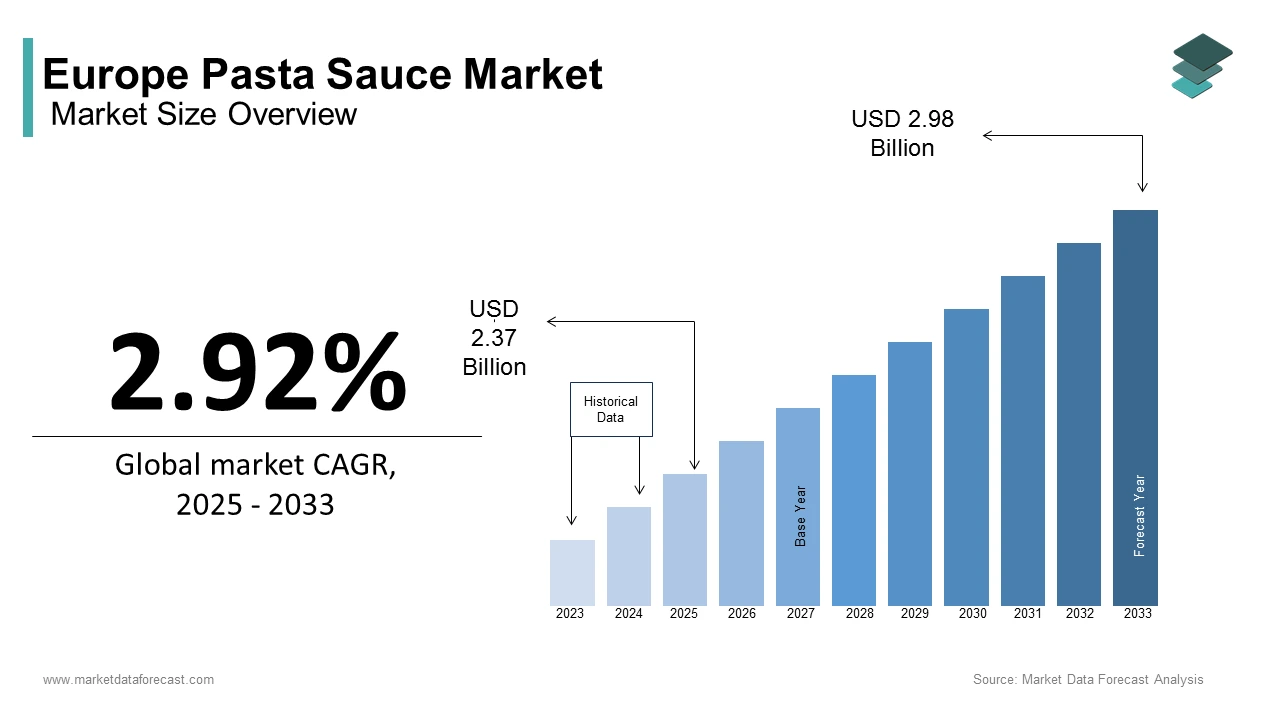
- Market Valuation: The Europe pasta sauce market size was valued at USD 2.30 billion in 2025, is estimated at USD 2.37 billion in 2026, and is projected to reach USD 2.98 billion by 2034, registering a compound annual growth rate (CAGR) of 2.92% from 2026 to 2034.
- Primary Growth Drivers: Rising preference for convenience and ready-to-use foods amidst busy urban lifestyles, growing consumer inclination toward healthy, organic, and clean-label ingredients, and expansion of e-commerce grocery platforms.
Key Europe Pasta Sauce Market Segment Metrics (2026–2034)
| Category | Leading Segment (2025 Position) | Fastest-Growing Segment |
|---|---|---|
| By Product Type | Tomato-based sauces (captured 61.6% share anchored by deep Southern European culinary traditions) | Pesto sauces (projected at the highest CAGR of 7.5% driven by gourmet and authentic flavor trends) |
| By Packaging Type | Glass bottles (held 53.8% share favored for product preservation, safety, and premium quality perception) | Pouches (expected to register an 8.2% CAGR due to convenience, lightweight nature, and portion control) |
| By Region | Italy (led with 23.1% regional share driven by highest per capita consumption and heritage) | United Kingdom and Germany (accelerating via private-label demand, health foods, and e-commerce) |
Major Market Players & Competitive Landscape
Market Structure: Fragmented and highly competitive marketplace featuring established multinational corporations, regional producers, and private-label brands competing on price positioning, organic product innovations, and sustainable packaging initiatives.
Key Companies: Barilla S.p.A., Ebro Foods S.A., Mizkan Holdings Co. Ltd., The Kraft Heinz Company, Mars Incorporated, Premier Foods plc, Conagra Brands Inc., Del Monte Foods Inc., Saclà, and Princes Group.
 Download Free Sample Report
Europe Pasta Sauce Market Size
The Europe pasta sauce market size was calculated to be USD 2.30 billion in 2025 and is anticipated to be worth USD 2.98 billion by 2034 from USD 2.37 billion in 2026, growing at a CAGR of 2.92% during the forecast period.
Pasta sauce constitutes a vital segment within the broader culinary landscape and is defined by its deep integration into daily dietary habits across the continent. This market encompasses a diverse array of tomato-based preparations, cream-infused variants, and pesto formulations that serve as essential accompaniments to pasta dishes. The cultural significance of pasta in European cuisine, particularly in Southern regions such as Italy and Spain, establishes a foundational demand that transcends seasonal fluctuations. Consumers increasingly view these sauces not merely as condiments but as central components of meal preparation, driven by the convenience they offer in modern urban lifestyles. The definition extends to include both traditional recipes passed down through generations and innovative blends that cater to evolving palates. As per Eurostat, household expenditure on food and non-alcoholic beverages in the European Union accounted for approximately 14.3% of total consumption expenditure in 2024, which indicates the substantial role of grocery items in household budgets. Furthermore, according to the data from the Food and Agriculture Organization of the United Nations, Europe remains one of the largest consumers of tomatoes globally, with an annual per capita consumption exceeding 30 kilograms in several member states. This high volume of raw ingredient usage underscores the intrinsic link between agricultural output and processed sauce production. The market is characterized by a blend of artisanal producers and large scale manufacturers, each contributing to a rich tapestry of flavors and textures that define the contemporary European dining experience.
MARKET DRIVERS
Rising Preference for Convenience Foods amidst Busy Urban Lifestyles
The accelerating pace of urban life across Europe has fundamentally altered consumer cooking habits, which is driving a significant surge in demand for ready to use pasta sauces and is one of the significant factors propelling the European pasta sauce market growth. Modern professionals and dual income households frequently face time constraints that limit their ability to prepare meals from scratch, making convenient solutions highly attractive. As per the European Commission, the average working hours in many EU countries remain substantial, with full time employees working an average of 40.2 hours per week in 2024. This temporal pressure necessitates food options that reduce preparation time without compromising on taste or perceived quality. Pasta sauces offer an ideal solution, allowing consumers to create a complete meal in under 15 minutes. The trend is particularly pronounced in Northern European nations such as Germany and the United Kingdom, where the adoption of convenience foods has grown steadily. According to industry tracking data, sales of shelf-stable meal solutions increased by 7.2% year on year in 2025 across major European retailers. This shift is not limited to basic tomato sauces but extends to premium and gourmet varieties that promise restaurant quality experiences at home. The psychological appeal of homemade meals combined with the practicality of jarred sauces creates a powerful value proposition. Manufacturers have responded by enhancing packaging convenience and offering single-serve portions, further aligning product offerings with the needs of smaller households and individuals. This structural change in consumer behavior ensures sustained demand for pasta sauces as a staple convenience item.
Growing Consumer Inclination towards Healthy and Organic Ingredients
A profound shift in health consciousness among European consumers is reshaping the pasta sauce market, with a marked preference for products featuring organic, natural, and clean-label ingredients, which is further boosting the regional market expansion. Individuals are increasingly scrutinizing nutritional labels, seeking options free from artificial preservatives, added sugars, and high sodium content. This trend is driven by rising awareness of the link between diet and long-term health outcomes, including cardiovascular disease and obesity. As per the World Health Organization, non -communicable diseases account for nearly 90% of all deaths in the European Region, prompting public health initiatives that encourage healthier eating habits. Consequently, demand for organic pasta sauces has surged, with organic food sales in Europe reaching 54.3 billion euros in 2024, according to the Research Institute of Organic Agriculture. Consumers are willing to pay a premium for sauces made from organically grown tomatoes and herbs, perceiving them as safer and more nutritious. This demand is particularly strong among millennials and Generation Z demographics, who prioritize sustainability and transparency in their food choices. Brands that obtain certifications such as the EU Organic Logo gain a competitive edge, as these symbols serve as trusted indicators of quality. The emphasis on clean labels also extends to sourcing practices, with buyers favoring companies that demonstrate ethical supply chains. This health-driven segment continues to expand, compelling manufacturers to reformulate existing products and introduce new lines that align with stringent health standards, thereby driving innovation and value growth within the market.
MARKET RESTRAINTS
Volatility In Raw Material Prices Due To Climate Change Impacts
The growing volatility in raw material prices due to the adverse effects of climate change on agricultural yields is a significant restraint on the European pasta sauce market growth. Tomatoes, the primary ingredient in most pasta sauces, are highly sensitive to weather conditions, including temperature fluctuations, droughts, and excessive rainfall. Recent years have witnessed extreme weather events across Southern Europe, the region responsible for the majority of tomato production on the continent. According to the Copernicus Climate Change Service, Europe experienced its warmest year on record in 2024, with close to half of the continent seeing record high temperatures. Such conditions have led to reduced crop yields and inconsistent quality, forcing processors to source materials from alternative, often more expensive, regions. As per the International Monetary Fund, food price inflation in Europe remained elevated at 6.4% in early 2025, partly due to supply chain disruptions in the agricultural sector. These cost increases are difficult to fully pass on to price-sensitive consumers, thereby squeezing profit margins for manufacturers. Additionally, the unpredictability of harvests complicates inventory management and long-term planning for sauce producers. Small and medium-sized enterprises are particularly vulnerable, as they lack the financial reserves to absorb sudden cost spikes. This instability threatens the consistency of supply and pricing, potentially dampening consumer confidence if retail prices rise sharply. The industry must therefore invest in resilient agricultural practices and diversified sourcing strategies to mitigate these risks, yet the inherent uncertainty of climate patterns remains a persistent challenge to market stability and growth.
Stringent Regulatory Frameworks Regarding Food Safety and Labeling
The rigorous regulatory environment that imposes strict requirements on food safety, labeling, and ingredient sourcing is acting as a significant restraint on market entry and expansion. The European Union maintains some of the highest food safety standards globally, governed by regulations such as the General Food Law and specific directives on contaminants and additives. Compliance with these regulations requires substantial investment in quality control systems, testing protocols, and documentation, which can be burdensome for smaller producers. According to the European Commission, notifications on food safety risks via the Rapid Alert System for Food and Feed rose by 12% in 2024, totalling 5,250. Any deviation from compliance can result in costly recalls, legal penalties, and reputational damage. Furthermore, recent updates to labeling regulations mandate detailed disclosure of allergens, nutritional information, and origin of ingredients, requiring manufacturers to constantly update packaging and marketing materials. The implementation of the Farm to Fork Strategy aims to make food systems fair, healthy, and environmentally friendly, imposing additional obligations on producers regarding sustainability claims and carbon footprint reporting. These regulatory demands increase operational costs and extend time to market for new products. Companies must navigate a complex web of national and supranational laws, which vary slightly across member states, adding layers of administrative complexity. This regulatory burden can stifle innovation and limit the ability of agile startups to compete with established players who have dedicated compliance departments, thereby consolidating market power among larger entities.
MARKET OPPORTUNITIES
Expansion of E-Commerce Platforms for Grocery Shopping
The rapid expansion of e-commerce platforms for grocery shopping presents a substantial opportunity for the Europe pasta sauce market, which is enabling brands to reach a broader audience and enhance customer engagement. The digital transformation of retail has accelerated significantly, with online grocery sales becoming a mainstream channel for household provisions. According to Eurostat, the share of enterprises conducting e-sales reached 23.59% in 2024, with web sales being the dominant method across all EU countries. This shift allows pasta sauce manufacturers to bypass traditional retail bottlenecks and offer direct to consumer models, providing greater control over branding and customer data. Online platforms facilitate the discovery of niche and artisanal products that may not secure shelf space in conventional supermarkets, thereby fostering diversity and innovation. Subscription services and bundled meal kits further drive repeat purchases, creating stable revenue streams. The ability to leverage data analytics enables companies to personalize marketing efforts and recommend products based on individual preferences, enhancing customer loyalty. Moreover, e commerce reduces geographical barriers, allowing regional brands to expand their reach across national borders within Europe. The convenience of home delivery appeals to busy consumers and those with limited mobility, expanding the potential customer base. As logistics networks improve and delivery times shorten, the attractiveness of online grocery shopping continues to grow. Manufacturers who invest in robust digital presence and seamless online shopping experiences are well-positioned to capitalize on this trend, driving volume growth and brand visibility in an increasingly digital marketplace.
Innovation In-Plant Based And Alternative Protein Sauces
The growing popularity of plant-based diets and alternative proteins offers a lucrative opportunity for innovation within the European pasta sauce market. As more consumers adopt vegetarian, vegan, or flexitarian lifestyles, there is increasing demand for sauces that complement plant-based meals or incorporate vegetable-derived proteins. According to the Good Food Institute Europe, the retail market for plant based foods in Europe grew by 12% in 2024, outpacing the overall food market. This trend encourages manufacturers to develop sauces enriched with legumes, mushrooms, or nuts, providing additional protein and nutritional value. Such innovations appeal not only to vegans but also to health conscious omnivores seeking to reduce meat consumption. The versatility of pasta sauces allows for easy integration of these ingredients, creating hearty and satisfying meals without animal products. Brands can differentiate themselves by highlighting the functional benefits of these formulations, such as higher fiber content or lower saturated fat levels. Collaborations with plant based protein producers can lead to co branded products that leverage the strengths of both categories. Additionally, the use of upcycled ingredients, such as vegetable peels or stems, aligns with sustainability goals and appeals to environmentally conscious consumers. This segment offers high growth potential as it taps into multiple megatrends, including health, sustainability, and ethical consumption. By pioneering new flavor profiles and textures, companies can capture early adopters and establish leadership in this emerging category, driving long term value creation.
MARKET CHALLENGES
Supply Chain Disruptions Geopolitical Instabilities
The significant challenges from supply chain disruptions exacerbated by geopolitical instabilities that threaten the consistent availability of key ingredients and packaging materials is majorly challenging the expansion of the European pasta sauce market. Conflicts and trade tensions can lead to sudden restrictions on imports, tariffs, or logistical bottlenecks, which can impact the flow of goods across borders. The reliance on imported ingredients, such as spices, oils, and certain vegetables, makes the market vulnerable to external shocks. According to the European Central Bank, non-cash payment transactions grew by 7.7% in the first half of 2025, but structural supply chain pressures remained elevated with average delivery times extending by 15% compared to pre-pandemic levels. Geopolitical tensions in Eastern Europe and the Middle East have particularly affected energy costs and transportation routes, increasing the expense of moving goods. These disruptions force manufacturers to seek alternative suppliers, often at higher costs and with longer lead times. The uncertainty complicates procurement strategies and inventory management, leading to potential stockouts or excess inventory. Small businesses are disproportionately affected, as they lack the bargaining power and resources to secure reliable supply lines. Furthermore, political instability can influence consumer confidence and spending behavior, leading to fluctuating demand. Companies must develop robust risk management frameworks, including diversified sourcing and strategic stockpiling, to mitigate these risks. However, the unpredictable nature of geopolitical events means that supply chain resilience remains a critical and ongoing challenge for the industry.
Intense Market Competition and Price Sensitivity
The intense competition among numerous established brands and private label offerings is further challenging the regional market growth. The market is fragmented, with a mix of multinational corporations, regional players, and local artisans vying for shelf space and consumer attention. Private label brands, offered by major supermarket chains, have gained substantial market share due to their competitive pricing and improved quality. According to tracking data, private label accounts for approximately 35% of total packaged food sales in Europe, exerting downward pressure on branded product prices. This competitive landscape forces manufacturers to engage in frequent promotions and discounts, eroding profit margins. Consumers, facing economic uncertainties and inflationary pressures, are increasingly likely to switch to lower-priced alternatives, making brand loyalty fragile. Differentiation becomes challenging in a crowded market where product features are often similar. Companies must invest heavily in marketing and innovation to maintain relevance, yet these expenditures further strain financial resources. The threat of new entrants, particularly in the niche and organic segments, adds to the competitive intensity. To survive, firms must achieve operational efficiencies and scale, which can be difficult for smaller producers. This environment of relentless competition and price war dynamics poses a persistent challenge to profitability and sustainable growth, requiring strategic agility and continuous value proposition enhancement.
REPORT COVERAGE
| REPORT METRIC | DETAILS |
| Market Size Available | 2025 to 2034 |
| Base Year | 2025 |
| Forecast Period | 2026 to 2034 |
| CAGR | 2.92% |
| Segments Covered | By Product Type, Packaging Type, And Region |
| Various Analyses Covered | Global, Regional & Country Level Analysis; Segment-Level Analysis; DROC, PESTLE Analysis; Porter’s Five Forces Analysis; Competitive Landscape; Analyst Overview of Investment Opportunities |
| Regions Covered | UK, France, Spain, Germany, Italy, Russia, Sweden, Denmark, Switzerland, Netherlands, Turkey, and the Czech Republic |
| Market Leaders Profiled | Barilla S.p.A., Ebro Foods S.A., Mizkan Holdings Co. Ltd., The Kraft Heinz Company, Mars Incorporated, Premier Foods plc, Conagra Brands Inc., Del Monte Foods Inc., and Saclà, Princes Group |
SEGMENTAL ANALYSIS
By Product Type Insights
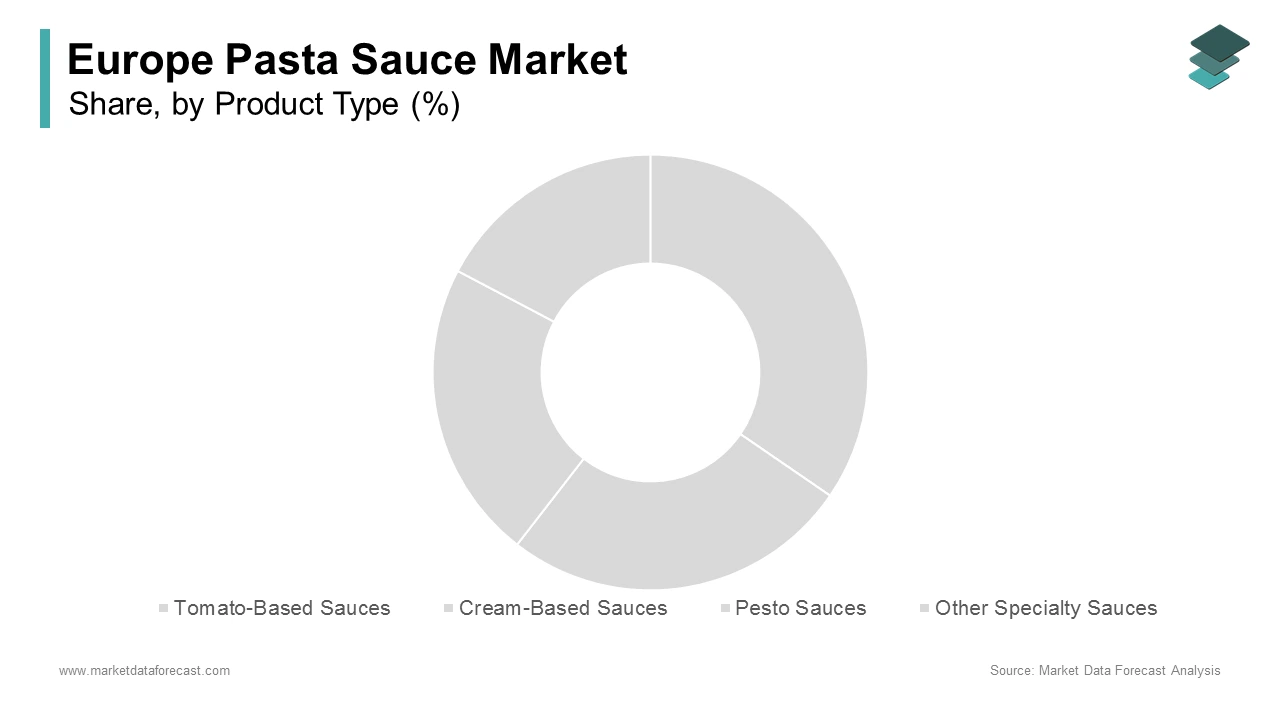
The tomato-based sauces segment dominated the market by commanding the highest share of 61.6% of the global market in 2025. The dominance of the tomato-based segment in the European market is rooted in the deep culinary traditions of Southern Europe, where tomato serves as the foundational ingredient for iconic dishes such as spaghetti bolognese and marinara. The widespread acceptance of these sauces across all demographic groups ensures consistent demand throughout the year. The integral role of tomato-based sauce in European dietary culture, particularly in Mediterranean countries, is further aiding the dominance of the tomato-based sauce segment in the regional market. Italy and Spain, which are among the largest consumers of pasta globally, rely heavily on tomato preparations for daily meals. For instance, consumption in major Southern European nations reflects the ingrained nature of this ingredient in local cuisine. This cultural affinity translates into steady retail sales, as households regularly replenish their stocks of basic tomato sauces. The versatility of tomato bases allows them to pair with various pasta shapes and additional ingredients, which is making them a staple in pantries across the continent. Furthermore, the perception of tomato-based sauces as a healthier option compared to cream-based alternatives reinforces their popularity among health-conscious consumers. According to the European Commission, the market volume for tomato sauces reached 1.5 million tons in 2024, highlighting their status as a routine grocery item. This habitual consumption pattern provides a stable revenue base for manufacturers, insulating the segment from short-term market fluctuations and ensuring its continued leadership in the overall market landscape.
[
However, the pesto sauces segment is estimated to record the highest CAGR of 7.5% over the forecast period in the European market, owing to the changing consumer preferences towards gourmet and authentic flavors, as well as the rising popularity of plant-based dining options. The growing consumer desire for gourmet and authentic ethnic flavors that elevate home-cooked meals is further boosting the growth of the pesto sauces segment in the European market. As European travelers become more exposed to international cuisines, there is a growing appreciation for traditional Italian specialties such as Genovese pesto. According to Eurostat, the total number of nights spent at EU tourist accommodation establishments exceeded 3 billion in 2024, reflecting a 2.2% increase compared with 2023. This exposure translates into higher demand for authentic ingredients at home, with pesto being a prime example. Consumers are willing to pay a premium for high-quality pesto made with fresh basil, pine nuts, and extra virgin olive oil, perceiving it as a luxurious yet convenient addition to their meals. The trend is particularly strong among urban millennials and Generation Z, who value experiential dining and culinary experimentation. According to industry reports, sales of premium pesto varieties grew by 9.2% in 2025, outpacing the overall sauce category. Manufacturers are responding by introducing artisanal blends and regional variations, such as sun-dried tomato pesto or kale pesto, to cater to diverse palates. This focus on authenticity and quality drives value growth and attracts discerning customers seeking sophisticated flavor profiles.
By Packaging Type Insights
The glass bottles segment led the market by occupying a share of 53.8% of the global market in 2025. This preference is driven by consumer perceptions of quality, safety, and sustainability, which favor glass over other materials for food preservation. The dominance of the glass bottles segment in the European market is largely attributed to the strong consumer perception that glass preserves the premium quality and freshness of pasta sauces better than alternative packaging materials. Glass is inert and does not interact with the acidic nature of tomato-based sauces, ensuring that the flavor and nutritional integrity of the product remain intact over time. As per data from a major glass container industry body, 68% of European consumers associate glass packaging with higher product quality and purity. This perception is particularly important for premium and organic sauce brands, which rely on packaging to convey value and authenticity. The transparency of glass also allows consumers to visually inspect the product before purchase, enhancing trust and confidence in the brand. Furthermore, glass bottles are often associated with traditional and artisanal production methods, appealing to consumers seeking authentic culinary experiences. According to retail pricing analysis, premium pasta sauces packaged in glass achieved a 10% higher price point compared to those in plastic jars in 2024. This ability to command a premium price supports the widespread adoption of glass by manufacturers aiming to differentiate their products in a competitive market. The aesthetic appeal of glass jars on retail shelves further reinforces their status as the preferred packaging choice for high-end sauce offerings.
On the other hand, the pouches segment is emerging as the fastest growing segment in the Europe pasta sauce market by packaging type and is expected to register a CAGR of 8.2% over the forecast period, owing to the convenience, lightweight nature, and cost efficiency of flexible packaging solutions. The convenience and ability of pouches to offer precise portion control that aligns with the needs of modern urban lifestyles is further contributing to the rapid growth of the pouches segment in the global market. Pouches are lightweight, easy to store, and simple to dispose of, making them ideal for small households and single-person dwellings. According to Eurostat, the EU had 75.0 million single adult households without children in 2024, with this group growing by 16.9% between 2015 and 2024. Pouches allow consumers to use the exact amount of sauce needed for a meal, reducing food waste and saving money. The flexible nature of pouches also enables efficient squeezing, ensuring minimal product residue and easier usage compared to rigid containers. This user-friendly design appeals to busy consumers who prioritize efficiency in meal preparation. For instance, the demand for flexible packaging in the food sector grew by 8.3% in 2025, with sauces being a significant contributor. Manufacturers are leveraging this trend by introducing resealable pouches that maintain freshness after opening, further enhancing convenience. The compact size of pouches also facilitates easier transportation and storage for consumers with limited kitchen space. These functional benefits drive the adoption of pouches as a practical and efficient packaging solution for pasta sauces.
REGIONAL ANALYSIS
Italy Pasta Sauce Market Analysis
Italy dominated the pasta sauce market in Europe in 2025 with 23.1% of the regional market share. As the birthplace of pasta and its accompanying sauces, Italy possesses a deeply entrenched culinary culture that drives consistent domestic consumption. The market status in Italy is characterized by a strong preference for traditional, high-quality ingredients and artisanal production methods. Consumers in Italy are highly knowledgeable about sauce varieties and prioritize authenticity, often preferring locally sourced tomatoes and herbs. As per the Italian National Institute of Statistics, per capita pasta consumption in Italy remains the highest in the world at 23 kilograms annually, directly supporting robust sauce sales. The presence of numerous small and medium-sized enterprises producing regional specialty sauces further enriches the market landscape. These producers cater to niche segments seeking unique flavors such as Arrabbiata or Puttanesca, fostering a diverse and competitive environment. The government’s support for protected designation of origin labels also enhances the value of traditional sauces, encouraging exports and domestic pride. According to ISTAT, the food and beverage sector generated significant revenue in 2024, with pasta sauces being a vital part of the agri-food industry. This strong cultural foundation, combined with a thriving tourism industry that exposes visitors to authentic Italian cuisine, sustains Italy’s dominance in the European market.
Germany Pasta Sauce Market Analysis
Germany was another promising regional segment in the European pasta sauce market and accounted for 19.2% of the European market share in 2025. The German market is defined by a high demand for convenience foods and a growing interest in healthy, organic options. German consumers increasingly view pasta sauces as a quick and easy solution for weekday dinners, driving sales of ready-to-use varieties. According to the Federal Ministry of Food and Agriculture, organic food sales in Germany reached 16.1 billion euros in 2024, with pasta sauces being a notable category within this segment. The strong retail infrastructure, dominated by supermarket chains, facilitates wide distribution and competitive pricing. Private label brands hold a significant share in Germany, offering affordable alternatives that meet strict quality standards. The rising number of dual-income households has further accelerated the adoption of convenience sauces, as time constraints limit home cooking. As per the German Retail Federation, sales of shelf-stable meals grew by 6.5% in 2025, reflecting this trend. Additionally, the influence of international cuisines has diversified consumer preferences, leading to increased demand for varied sauce flavors beyond traditional tomato bases. This blend of convenience, health consciousness, and retail efficiency drives the robust performance of the pasta sauce market in Germany.
United Kingdom Pasta Sauce Market Analysis
The United Kingdom is anticipated to record a promising CAGR in the European pasta sauce market over the forecast period due to a high penetration of private label products and a strong trend towards premiumization in certain segments. British consumers are increasingly seeking gourmet and exotic flavors, driven by exposure to global cuisines through travel and media. According to the Office for National Statistics, household spending on food and non-alcoholic beverages in the UK increased by 4.2% in real terms in 2024, indicating resilient demand despite economic pressures. The convenience sector remains vital, with ready meals and accompanying sauces seeing steady growth. However, there is a notable shift towards healthier options, with low salt and no added sugar variants gaining popularity. The rise of online grocery shopping has also transformed the market, allowing niche brands to reach wider audiences. As per tracking data for online retail, online grocery sales accounted for 12% of total food sales in 2025, providing new avenues for sauce manufacturers. The competitive landscape is intense, with major retailers leveraging their private label offerings to capture value-conscious shoppers. This dynamic environment, balanced between convenience and premium quality, defines the UK market trajectory.
COMPETITION OVERVIEW
The Europe Pasta Sauce Market features a highly competitive landscape characterized by the presence of established multinational corporations alongside numerous regional and artisanal producers. This fragmentation creates intense rivalry as companies vie for shelf space and consumer attention through differentiation and pricing strategies. Large players leverage economies of scale and extensive distribution networks to maintain dominance while smaller brands focus on niche segments such as organic or gourmet offerings. Private label products from major retailers exert significant pressure on branded manufacturers by offering comparable quality at lower prices. Innovation plays a crucial role in competition with firms continuously launching new flavors and healthier formulations to attract discerning customers. Brand loyalty is increasingly challenged by price sensitivity and the availability of diverse alternatives. Companies must therefore invest heavily in marketing and product development to sustain relevance. The threat of new entrants remains moderate due to high regulatory standards and established supply chains. Overall the market dynamics require constant adaptation and strategic agility to navigate the complex competitive environment successfully.
KEY MARKET PLAYERS
A few major players of the Europe pasta sauce market include
- Barilla S.p.A.
- Ebro Foods S.A
- Mizkan Holdings Co. Ltd
- The Kraft Heinz Company
- Mars Incorporated
- Premier Foods plc
- Conagra Brands Inc
- Del Monte Foods Inc
- Saclà
- Princes Group
Top Strategies Used by the Key Market Participants
Key players in the Europe Pasta Sauce Market employ several strategic initiatives to maintain competitiveness and drive growth. Product innovation remains a primary strategy with companies introducing new flavors and healthy variants to meet changing consumer demands. Expansion into organic and clean label segments allows brands to capture health-conscious demographics willing to pay premiums. Strategic partnerships with local suppliers ensure consistent quality of raw materials while supporting sustainability goals. Digital transformation is another critical approach as firms enhance their online presence and e-commerce capabilities to reach broader audiences. Companies also invest in sustainable packaging solutions to address environmental concerns and comply with regulatory standards. Marketing campaigns focusing on authenticity and culinary heritage help differentiate brands in a crowded marketplace. Additionally, mergers and acquisitions enable larger entities to consolidate market position and access new distribution channels. These multifaceted strategies collectively strengthen market presence and foster long-term customer loyalty across the region.
Leading Players in the Europe Pasta Sauce Market
- Barilla Group stands as a prominent entity in the global pasta and sauce industry with deep roots in Italian culinary tradition. The company maintains a robust presence across European markets by offering a diverse portfolio of tomato-based and specialty sauces. Recent strategic initiatives focus on sustainability and digital transformation to enhance consumer engagement. Barilla has invested heavily in sustainable agriculture practices to secure high-quality raw materials while reducing environmental impact. The company also expanded its e-commerce capabilities to reach direct consumers more effectively. By launching innovative product lines that cater to health-conscious individuals, such as whole grain and organic options, Barilla strengthens its brand loyalty. Their commitment to quality and tradition, combined with modern marketing strategies, ensures they remain a preferred choice for households seeking authentic Italian flavors. This dual approach of heritage preservation and innovation drives their continued relevance and growth in the competitive European landscape.
- Conagra Brands operates as a significant multinational food company with a strong footprint in the European pasta sauce sector through its renowned brands. The company leverages its extensive distribution network to ensure the wide availability of its products across various retail channels. Recent actions include reformulating existing products to meet evolving consumer preferences for cleaner labels and reduced sodium content. Conagra has also focused on enhancing its supply chain efficiency to mitigate disruptions and maintain consistent product quality. The introduction of convenient packaging formats such as resealable pouches addresses the growing demand for ease of use among busy consumers. Additionally, the company engages in targeted marketing campaigns to highlight the versatility and flavor profiles of its sauce offerings. By prioritizing operational excellence and consumer-centric innovation, Conagra reinforces its position as a key player. Their ability to adapt to market trends while maintaining strong brand recognition supports their sustained contribution to the global food market.
- Kraft Heinz Company is a major global food and beverage company with a substantial influence on the Europe Pasta Sauce Market. Known for iconic brands, the company focuses on delivering high-quality and flavorful sauce products to European consumers. Recent strategies involve investing in research and development to create new flavor combinations that appeal to diverse palates. Kraft Heinz has also emphasized sustainability by committing to reducing plastic usage in packaging and sourcing ingredients responsibly. The company actively engages with consumers through digital platforms to build stronger relationships and gather insights on preferences. By optimizing its manufacturing processes, Kraft Heinz ensures cost efficiency and product consistency. Their focus on innovation and sustainability aligns with contemporary consumer values, driving brand preference. The company continues to expand its portfolio with premium and organic options to capture higher value segments. These efforts demonstrate their dedication to maintaining leadership and meeting the dynamic needs of the European market.
DETAILED SEGMENTATION OF EUROPE PASTA SAUCE MARKET IS INCLUDED IN THIS REPORT
This research report on the Europe pasta sauce market has been segmented and sub-segmented based on Product type, packaging type & region.
By Product Type
- Tomato-Based Sauces
- Marinara
- Arrabbiata
- Bolognese
- Pomodoro
- Napoli
- Cream-Based Sauces
- Alfredo
- Carbonara
- Four Cheese
- Pesto Sauces
- Green Pesto (Basil-based)
- Red Pesto (Tomato & Pepper-based)
- White Pesto (Cheese & Nut-based)
- Other Specialty Sauces
- Wine-based sauces
- Truffle-infused sauces
- Vegan/Plant-based sauces
By Packaging Type
- Glass Bottles
- Plastic Jars
- Pouches
- Cans
By Region
- UK
- France
- Spain
- Germany
- Italy
- Russia
- Sweden
- Denmark
- Switzerland
- Netherlands
- Turkey
- Czech Republic
- Rest of Europe