- Product Description Description
- Table of Contents TOC
- List of Table & Figure LOT
- Get Free Sample PDF Sample PDF
Market Size, 2025
$6.47 BnMarket Estimate, 2026
$6.87 BnMarket Forecast, 2034
$10.67 BnCAGR, 2026–2034
5.72%Europe Patient Monitoring Devices Market Size
The europe patient monitoring devices market size was valued at USD 6.47 billion in 2025 and is anticipated to reach USD 6.87 billion in 2026 from USD 10.67 billion by 2034, growing at a CAGR of 5.72% during the forecast period from 2026 to 2034.
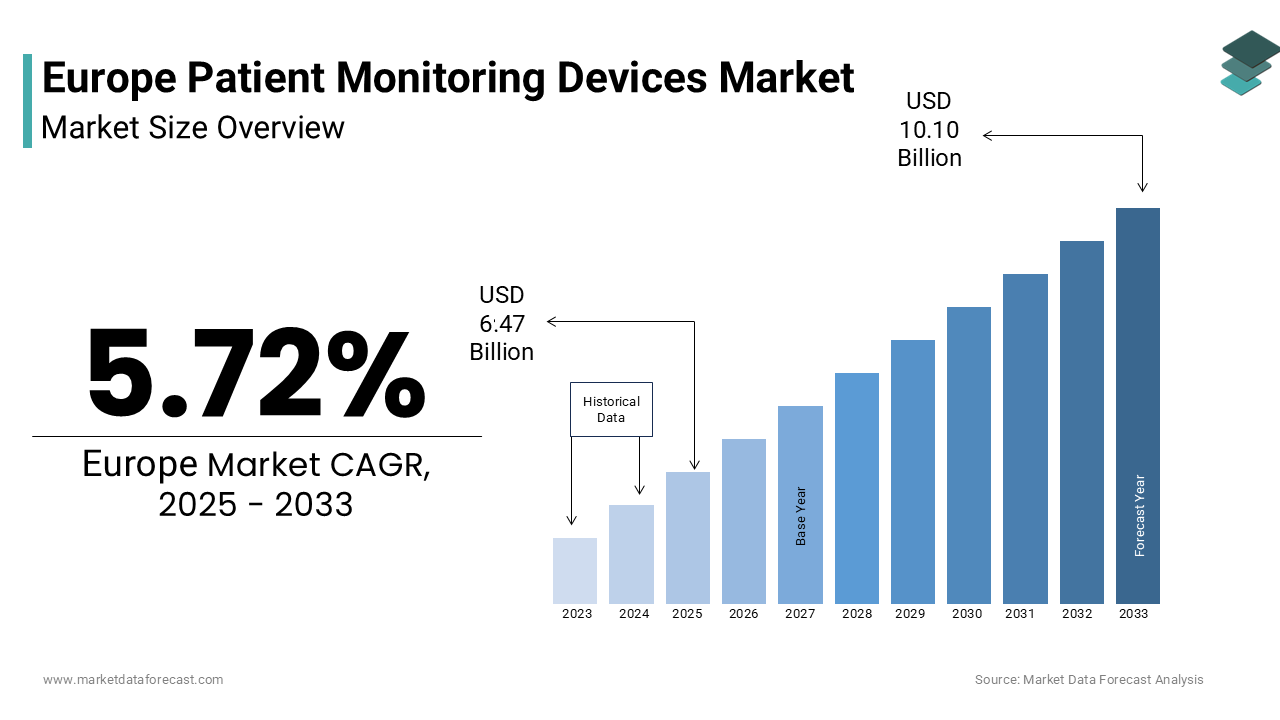
Patient monitoring devices are designed to continuously or intermittently track vital physiological parameters such as heart rate respiratory rate blood pressure oxygen saturation and electrocardiographic activity in clinical and non-clinical settings. These systems range from bedside monitors in intensive care units to wearable and remote monitoring platforms enabling ambulatory and home-based care. The European patient monitoring market is distinguished by stringent regulatory oversight interoperability mandates under the Medical Devices Regulation and a strong emphasis on data privacy compliant with the General Data Protection Regulation. According to Eurostat, the population aged 65 and over in the European Union reached 102 million in 2023 accounting for 23.2% of the total population thereby intensifying demand for chronic disease management solutions. Furthermore, according to the European Society of Cardiology, more than 51 million adults in Europe live with cardiovascular conditions requiring regular surveillance. This demographic and clinical reality underpins the strategic importance of advanced patient monitoring not merely as diagnostic tools but as integral components of preventive and personalized healthcare delivery across the continent.
MARKET DRIVERS
Rising Prevalence of Chronic Diseases and Age-Related Health Conditions
The growing burden of non-communicable diseases among Europe’s aging population is a primary catalyst for sustained demand in patient monitoring technologies and is driving the European patient monitoring devices market growth. According to the World Health Organization’s Regional Office for Europe, a large majority of adults aged 65 and above suffer from at least one chronic condition such as hypertension, diabetes, or heart failure necessitating continuous physiological surveillance. According to the International Diabetes Federation, 61 million people in Europe were living with diabetes in 2023. In Germany, hospital admissions for heart failure have shown a notable increase in recent years, directly correlating with expanded deployment of telemetry and remote ECG monitoring in cardiology wards. Similarly, many stroke survivors in France enrolled in post-acute care programs rely on home-based multi-parameter monitors to detect early deterioration. These devices reduce readmission rates, which cost European healthcare systems billions of euros annually. The clinical imperative to manage long-term conditions proactively ensures that patient monitoring remains central to Europe’s shift from episodic to continuous care models.
Accelerated Adoption of Telehealth and Remote Patient Monitoring Frameworks
The institutionalization of virtual care pathways across European health systems has fundamentally reshaped the utilization landscape for patient monitoring devices, which is further boosting the patient monitoring devices market growth in Europe. As per the European Commission’s 2023 Digital Transformation of Health and Care Report, many EU member states have now embedded remote patient monitoring into national reimbursement schemes, which is enabling coverage for home-based cardiac, respiratory and post-surgical surveillance. In Sweden, thousands of patients were enrolled in remote monitoring programs by early 2024 with a significant proportion using Bluetooth-enabled pulse oximeters and blood pressure cuffs integrated into the national health platform. Italy’s Ministry of Health allocated hundreds of millions of euros in 2023 under its National Recovery Plan to equip primary care centers with connected monitoring kits for elderly patients with chronic obstructive pulmonary disease. As per the United Kingdom’s National Health Service, virtual wards managed over 300,000 patients between April 2023 and March 2024 using wearable patches that transmit real-time vital signs to clinical teams, which is reducing hospital bed occupancy. This systemic integration reflects a policy-driven transformation where monitoring devices function not as isolated tools but as data conduits within wider digital health infrastructures, which is enhancing accessibility, scalability and clinical responsiveness across urban and rural geographies.
MARKET RESTRAINTS
Stringent Regulatory Compliance and Conformity Assessment Delays
Despite technological advances, the Europe patient monitoring devices market faces significant headwinds from the rigorous and time intensive conformity processes mandated under the European Union Medical Devices Regulation. According to the European Coordination Committee of the Radiological Electromedical and Healthcare IT Industry, the average time to achieve CE certification for a new Class IIb monitoring device has increased in recent years due to heightened scrutiny of software algorithms and cybersecurity protocols. According to the European Medicines Agency, a significant proportion of notified body audit requests for remote monitoring systems in 2023 required at least one major corrective action related to clinical evaluation or post-market surveillance plans. In countries like Belgium and Austria, national competent authorities have suspended market entry for several wearable ECG devices pending verification of algorithmic bias across diverse demographic groups. Moreover, the requirement for Unique Device Identification implementation by 2025 has forced manufacturers to overhaul labeling and traceability systems, which is incurring substantial compliance costs per product line. These regulatory complexities disproportionately affect small and medium enterprises and delay innovation cycles and limiting patient access to next-generation monitoring solutions.
Interoperability Gaps and Fragmented Health Information Systems
The lack of standardized data exchange protocols across Europe’s heterogeneous healthcare infrastructure continues to impede the seamless integration of patient monitoring devices into clinical workflows, which is further hindering the growth of the European patient monitoring devices market. According to the European Health Data Space initiative, many hospitals in the EU still operate legacy electronic health record systems that do not support Fast Healthcare Interoperability Resources or other modern API standards essential for real-time device data ingestion. As per a 2023 survey, clinicians in Spain and Poland reported manual data entry from monitoring devices due to system incompatibility, which is increasing error risks and workflow inefficiencies. In Germany, only a minority of remote monitoring programs achieved full interoperability with regional health information exchanges, which is limiting longitudinal data utility. Furthermore, the absence of a unified EU-wide certification for medical device cybersecurity leaves hospitals vulnerable. The European Union Agency for Cybersecurity documented several reported breaches involving connected monitoring equipment in 2023. Until interoperability becomes a regulatory prerequisite rather than an optional feature, patient monitoring devices will remain underutilized data silos rather than dynamic components of integrated care ecosystems.
MARKET OPPORTUNITIES
Integration with Artificial Intelligence for Predictive Clinical Analytics
The convergence of patient monitoring hardware with artificial intelligence driven analytics represents a transformative opportunity to the European patient monitoring devices market. As per the European Society of Medical Imaging Informatics, numerous AI-enabled monitoring platforms received CE marking in 2023 with algorithms designed to predict sepsis, acute kidney injury and respiratory decompensation before clinical manifestation. In the Netherlands, the University Medical Center Utrecht deployed an AI-integrated vital signs monitor across its intensive care units that reduced false alarm rates and improved nurse response time as validated in a 2024 multicenter trial. As per the France’s National Institute of Health and Medical Research, predictive monitoring reduced ICU transfers from general wards in a large patient cohort. The European Commission’s AI for Health partnership allocated significant funding in 2023 to validate machine learning models trained on diverse European patient data, ensuring equity and generalizability. These systems not only enhance clinical outcomes but also optimize resource allocation in overstretched health systems and position AI-augmented monitoring as a cornerstone of Europe’s precision medicine ambitions.
Expansion of Home Based and Community Care Models
The strategic pivot of Europe toward decentralized care delivery is creating substantial opportunities for portable and user-friendly patient monitoring devices in non-hospital environments. According to the Organisation for Economic Co-operation and Development, several European countries now reimburse home hospitalization programs where patients receive acute-level care at home supported by remote monitoring. In Denmark, the national Health Authority reported that its home monitoring initiative for heart failure patients covered thousands of individuals in 2023, which is reducing 30-day readmissions significantly. Portugal’s National Health Service launched a nationwide program in 2023 equipping tens of thousands of elderly citizens with multi-parameter wearables linked to regional telehealth centers, which is enabling early detection of clinical deterioration. According to the European Innovation Partnership on Active and Healthy Ageing, community-based monitoring reduced emergency department visits among adults with chronic respiratory diseases. Furthermore, the European Commission’s Horizon Europe program funded multiple projects in 2023 focused on ambient and contactless monitoring technologies suitable for independent living. This structural shift toward care at home is driven by cost containment, workforce shortages and patient preference and is redefining monitoring devices as enablers of autonomy and dignity rather than markers of institutionalization.
MARKET CHALLENGES
Cybersecurity Vulnerabilities in Connected Monitoring Ecosystems
The proliferation of wireless and internet connected patient monitoring devices has introduced significant cybersecurity risks that threaten data integrity patient privacy and clinical safety, which is one of the significant challenges to the growth of the European patient monitoring devices market. According to the European Union Agency for Cybersecurity, many medical device manufacturers in Europe acknowledged cybersecurity incidents involving monitoring equipment between 2021 and 2023 with some resulting in unauthorized access to protected health data. As per a joint advisory issued in 2023 by ENISA and the European Medicines Agency, a large proportion of legacy bedside monitors in use across Italian and Greek hospitals ran unsupported operating systems vulnerable to known exploits. In 2022, a ransomware attack on a major German hospital disrupted telemetry monitoring for over 36 hours, which is forcing manual checks and delaying critical interventions. The European Commission’s Cyber Resilience Act, which will apply to medical devices from 2027 mandates stringent security-by-design requirements but current devices often lack encrypted data transmission, secure boot mechanisms and regular firmware update capabilities. Until cybersecurity becomes a non-negotiable feature rather than an afterthought, the clinical benefits of connected monitoring will be counterbalanced by systemic exposure to digital threats, which is likely to challenge the growth rate of the regional market.
Workforce Shortages and Clinical Workflow Integration Barriers
Persistent gaps in healthcare staffing and inadequate training on digital tools are undermining the effective utilization of advanced patient monitoring systems across European institutions, which is further challenging the regional market expansion. According to the European Commission’s 2023 State of Health in the EU report, the continent faces a projected shortfall of millions of nurses by 2030 with intensive care and geriatric units experiencing the most acute shortages. As per the European Federation of Critical Care Nursing Associations, many ICU nurses in Eastern Europe reported alarm fatigue due to poorly calibrated or non-integrated monitoring devices leading to delayed responses. In the United Kingdom, the Royal College of Physicians documented that only a minority of junior doctors received formal training on interpreting data from multi-parameter remote monitors despite their widespread deployment in virtual wards. Furthermore, as per a 2024 study by the Karolinska Institute in Sweden, a significant proportion of monitoring alerts in general wards were ignored because they were not contextualized within patient history or integrated into electronic task lists. Without parallel investments in human capital, change management and human-centered design, these technologies risk becoming underused assets rather than catalysts for improved care quality and efficiency.
REPORT COVERAGE
| REPORT METRIC | DETAILS |
| Market Size Available | 2025 to 2034 |
| Base Year | 2025 |
| Forecast Period | 2026 to 2034 |
| Segments Covered | By Type of Device, Application and Region |
| Various Analyses Covered | Global, Regional & Country Level Analysis, Segment-Level Analysis, DROC, PESTLE Analysis, Porter’s Five Forces Analysis, Competitive Landscape, Analyst Overview on Investment Opportunities |
| Regions Covered | North America, Europe, APAC, Latin America, Middle East & Africa |
| Market Leaders Profiled | Abbott Laboratories, GE Healthcare, Nihon Kohden, Omron Healthcare, Philips Healthcare, Siemens Healthcare, Medtronic PLC, Honeywell International, Infinium Medical, and Roche Diagnostics Limited. |
SEGMENTAL ANALYSIS
By Type of Device Insights
The cardiac monitoring devices segment captured 37.5% of the regional market share in 2025. The high and escalating burden of cardiovascular diseases across the region is primarily driving the dominance of the cardiac monitoring devices segment in the European market. According to the European Society of Cardiology, over 51 million adults in Europe live with diagnosed cardiovascular conditions including coronary artery disease, arrhythmias and heart failure necessitating continuous or periodic cardiac surveillance. According to the European Commission’s State of Health in the EU, that cardiovascular diseases accounted for 1.8 million deaths in 2023, which represents 37% of all deaths in the region. This clinical urgency has driven widespread adoption of electrocardiography, telemetry, Holter monitors and implantable loop recorders in both hospital and ambulatory settings. Germany’s statutory health insurance system reimburses more than a million long-term ECG monitoring procedures annually. Additionally, the rollout of virtual wards in the United Kingdom National Health Service includes cardiac monitoring kits for post-discharge heart failure patients with thousands enrolled in 2023. The convergence of clinical need, policy support and reimbursement infrastructure are boosting the dominance of the cardiac monitoring segment in the European market.
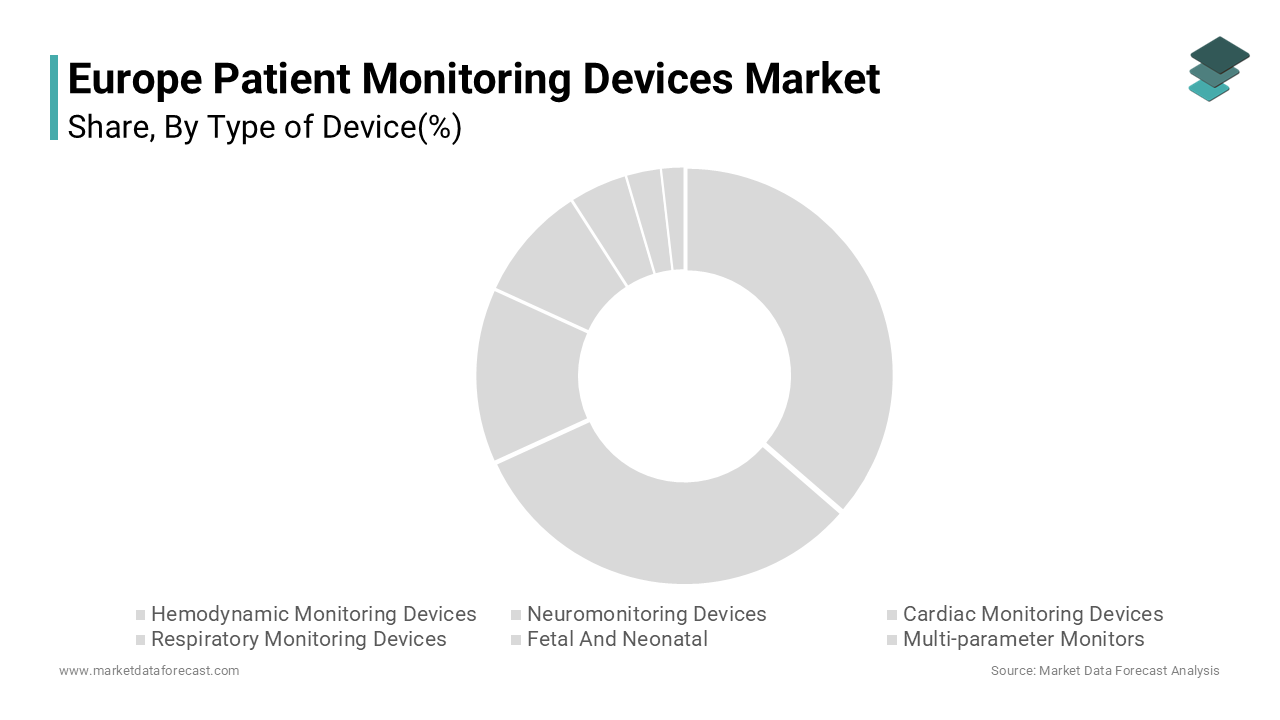
The neuromonitoring devices segment is estimated to register the fastest CAGR of 13.1% over the forecast period owing to the rising incidence of neurological disorders advanced neurocritical care protocols and the integration of neuromonitoring into perioperative and intensive care pathways. According to the European Brain Council, over 150 million people in Europe suffer from at least one brain disorder including stroke, epilepsy, traumatic brain injury and neurodegenerative diseases such as Alzheimer’s and Parkinson’s. According to the European Stroke Organisation, more than a million new stroke cases occurred in 2023, which is prompting hospitals in Sweden and the Netherlands to mandate continuous electroencephalography and intracranial pressure monitoring in dedicated neuro-intensive care units. France’s National Authority for Health issued updated guidelines in 2023 requiring intraoperative neuromonitoring for all major spinal and vascular surgeries to reduce iatrogenic nerve damage. Furthermore, the European Commission’s Horizon Europe program allocated tens of millions of euros in 2023 to develop non-invasive cerebral oximetry and brain activity tracking wearables for home-based neurodegenerative disease management. These clinical and policy drivers position neuromonitoring as a high-growth frontier in precision neurological care and propel the growth of the neuromonitoring devices segment in the European market.
By Application Insights
The cardiology segment dominated the patient monitoring devices market by holding 40.7% of the regional market share in 2025 owing to the pervasive impact of heart related conditions on public health systems and clinical practice. According to the World Health Organization Regional Office for Europe, ischemic heart disease remains the leading cause of death with hundreds of thousands of fatalities recorded in 2023. This has spurred systematic deployment of cardiac monitoring across the care continuum from emergency departments to home care. The European Society of Cardiology’s 2023 Atlas of Cardiology revealed that most tertiary hospitals in Germany, France and Italy operate dedicated cardiac telemetry units with significant bed counts per facility. In the United Kingdom, the National Institute for Health and Care Excellence updated its heart failure management guidelines in 2023 to recommend remote rhythm monitoring for patients with reduced ejection fraction. According to the Spain’s National Health System, hundreds of thousands of ambulatory cardiac monitoring procedures were reimbursed in 2023 under its chronic care coordination program. The integration of cardiac monitoring into national disease management frameworks and its proven impact on reducing sudden cardiac death and hospital readmissions underpin its dominance in the European patient monitoring devices market.
The neurology segment is the fastest growing application segment in the Europe patient monitoring devices market with a projected CAGR of 12.7% over the forecast period owing to the growing aging populations in Europe, rising stroke rates and the expansion of specialized neurocritical care infrastructure. According to Eurostat, the population aged 75 and above in the EU has grown steadily in recent years, which is significantly increasing the prevalence of neurodegenerative and cerebrovascular conditions. According to the European Academy of Neurology, millions of Europeans live with epilepsy and dementia both requiring longitudinal neural activity tracking. In Denmark, the national health authority launched a neuro-monitoring initiative in 2023 equipping all five university hospitals with continuous EEG and transcranial Doppler systems, which is resulting in a reduction in postoperative neurological complications. As per the Switzerland’s Federal Office of Public Health, reimbursement for intraoperative neuromonitoring increased in 2023 following evidence of improved outcomes in spinal surgery. Additionally, the European Medicines Agency approved several novel neuromonitoring wearables in 2023 for home-based seizure detection and cognitive decline tracking. These developments reflect a strategic shift toward proactive neurological surveillance, transforming monitoring from an acute care tool to a chronic disease management pillar.
By End User Insights
The hospitals and clinics segment occupied the largest share of the European market in 2025 due to their role as primary sites for critical care surgery and acute disease management. According to the European Hospital Association, thousands of acute care hospitals across the EU operate intensive care and high dependency units where multi-parameter monitoring is standard practice. As per the Organisation for Economic Co-operation and Development, Europe recorded hundreds of hospital beds per 100,000 population in 2023 with nearly every bed in critical care equipped with real-time monitoring capabilities. In Germany, statutory health insurance covers tens of millions of inpatient admissions annually, most involving at least one form of physiological surveillance during stay. France’s Ministry of Health mandated in 2023 that all public hospitals upgrade to interoperable monitoring systems compliant with the European Health Data Space framework. Italy’s National Institute of Health documented that the vast majority of surgical procedures in 2023 included intraoperative cardiac and respiratory monitoring as part of national safety protocols. The concentration of high-acuity patients, advanced infrastructure and reimbursement mechanisms ensures that hospitals remain the central hub for monitoring device utilization across Europe.
The home healthcare segment is predicted to be the fastest growing segment and register a CAGR of 14.4% over the forecast period in the regional market owing to the structural shift toward decentralized care models. According to the European Commission’s Digital Health and Care Strategy, many EU member states now reimburse remote patient monitoring for chronic conditions, which is enabling home-based surveillance for millions of citizens. In the Netherlands, the national health insurer CZ reported that over 110,000 patients were enrolled in home monitoring programs for heart failure and COPD in 2023. According to the Sweden’s eHealth Agency, the national platform integrated data from a large number of home monitoring devices by early 2024, which is linking patients directly to regional telehealth centers. The United Kingdom’s National Health Service virtual wards managed more than 300,000 patients between April 2023 and March 2024 using wearable patches that transmit vital signs in real time. Furthermore, the European Innovation Partnership on Active and Healthy Ageing documented that home monitoring reduced emergency department visits among elderly patients with multiple chronic conditions. The cost containment and patient preference that are driven by workforce shortages are majorly driving the growth of the home healthcare segment in the European patient monitoring devices market.
REGIONAL ANALYSIS
Germany Europe Patient Monitoring Devices Market Analysis
Germany led the patient monitoring devices market in Europe in 2025 by holding 26.2% of the regional market share. The dominance of Germany in the European market is driven by its universal healthcare system advanced hospital infrastructure and strong emphasis on medical technology innovation. Germany operates thousands of hospitals, including more than 30 university medical centers that serve as hubs for high-acuity monitoring and clinical trials. According to the Federal Statistical Office, Germany recorded over 17 million inpatient cases in 2023, nearly all involving some form of physiological surveillance during admission. The Federal Joint Committee mandates reimbursement for long-term ECG Holter monitoring and ambulatory blood pressure tracking under statutory health insurance, which covers the majority of residents. In 2023, the German Ministry of Health advanced the Hospital Future Fund, allocating several billion euros to digitize intensive care units with interoperable monitoring systems compliant with the European Health Data Space. Additionally, Germany hosts headquarters or major R&D centers for global medtech leaders such as Dräger and B. Braun, which is enabling rapid prototyping and clinical validation of next-generation devices. This confluence of policy, funding and industrial capability sustains Germany’s leadership in both adoption and innovation.
France Europe Patient Monitoring Devices Market Analysis
France captured the second largest share of the Europe patient monitoring devices market in 2025. The growth of the French market is driven by the centralized healthcare planning and aggressive digital transformation initiatives. The French National Authority for Health updated clinical guidelines in 2023 to require continuous cardiac and respiratory monitoring for all patients in intensive care and post anesthesia recovery units. According to France’s Ministry of Health, millions of hospital stays occurred in 2023 with the majority involving at least one monitored parameter. The country’s National Low Risk Hospital strategy allocated significant funding in 2023 to deploy AI enhanced monitoring systems that predict clinical deterioration in general wards. France also leads in home monitoring adoption. The National Health Insurance Fund reimbursed hundreds of thousands of remote monitoring sessions for chronic disease management in 2023, which is increasing markedly from 2021. The Paris Saclay innovation cluster supports startups developing wearable neuromonitoring and contactless vital signs trackers validated through public hospital partnerships. With strong state coordination and a focus on preventive surveillance France continues to shape Europe’s monitoring standards through policy driven scale.
United Kingdom Europe Patient Monitoring Devices Market
The United Kingdom is anticipated to account for a prominent share of the European patient monitoring devices market over the forecast period owing to its nationalized health service and pioneering virtual care models. The National Health Service manages a large network of acute hospitals and has deployed more than 300 virtual wards since 2022, which is enabling home-based monitoring for patients with heart failure, respiratory conditions and post-surgical recovery needs. According to NHS England, over 300,000 patients were supported by remote monitoring between April 2023 and March 2024 during peak demand periods. The National Institute for Health and Care Excellence issued updated guidance in 2023 on ambulatory ECG monitoring for patients with unexplained syncope. The United Kingdom also leads in real-world evidence generation. The Oxford University Hospitals NHS Foundation Trust partnered with the Medicines and Healthcare products Regulatory Agency in 2023 to evaluate AI-driven arrhythmia detection algorithms using large-scale monitored patient data. Despite post-Brexit regulatory adjustments, the NHS’s scale, integrated data infrastructure and focus on value-based care ensure its continued influence on monitoring adoption across Europe.
Italy Europe Patient Monitoring Devices Market Analysis
Italy held a considerable share of the Europe patient monitoring devices market in 2025 and is estimated to grow at a notable CAGR during the forecast period due to the growing aging population in France, high cardiovascular disease burden and regional healthcare modernization efforts. Italy’s population is aging rapidly with nearly a quarter aged 65+, which is driving demand for cardiac and home monitoring at national scale. The National Health Service reimbursed over a million cardiac monitoring procedures in 2023, while the National Recovery and Resilience Plan directed substantial funding to upgrade southern hospital infrastructure and expand home care for older adults. Lombardy’s 2023 pilot linked Bluetooth blood pressure and weight monitors to telemedicine centers for 15,000 heart failure patients, cutting 30-day readmissions by nearly a third. With major medtech manufacturing and R&D presence from GE Healthcare and Philips enabling swift deployment and support, Italy’s mix of demographics, policy investment and industrial capacity makes it a pivotal growth corridor for monitoring across Southern Europe.
Spain Europe Patient Monitoring Devices Market Analysis
Spain is predicted to register a healthy CAGR in the Europe patient monitoring devices market during the forecast period owing to its universal primary care network and progressive adoption of remote monitoring for chronic diseases. Spain's National Health System reports that a substantial share of adults live with chronic conditions. For example, 33% of adults aged 30–79 were hypertensive in 2019 and cardiovascular diseases are among the leading chronic conditions in the country. The National Health System has expanded reimbursement and support for ambulatory monitoring and remote follow‑up within its chronic care programs in recent years, including coverage for home blood pressure and ECG monitoring as part of broader chronic‑care coordination efforts. In Catalonia, regional authorities advanced a major digital health programme in 2023 to build an open, interoperable unified electronic health record for over 8 million residents and have piloted home monitoring and integration projects that connect patient‑generated data into the public EHR platform. Spain has also been expanding telestroke networks and telemedicine‑assisted stroke care across multiple hospitals with national and European reviews documenting growing use of real‑time neuromonitoring and video consultation to accelerate acute stroke treatment pathways. The Spanish regulatory authority has taken steps to facilitate digital health and device approvals to support market access and clinical adoption of remote monitoring technologies. With strong primary care integration and growing digital readiness, Spain exemplifies how monitoring devices can scale through decentralized public health systems.
COMPETITIVE LANDSCAPE
The Europe patient monitoring devices market features a competitive landscape shaped by a mix of global medtech giants European engineering specialists and agile digital health startups. Incumbents leverage decades of clinical trust hospital relationships and comprehensive device portfolios while newer entrants focus on niche domains such as contactless monitoring AI driven analytics or consumer grade wearables. Competition is increasingly centered on software intelligence data integration and workflow alignment rather than hardware specifications alone. Regulatory complexity under the Medical Devices Regulation creates both barriers and opportunities with only well resourced firms able to navigate conformity assessments efficiently. Differentiation arises through clinical validation partnerships national health system integration and post market support capabilities. As reimbursement shifts toward value based outcomes companies that demonstrate measurable impact on readmission rates clinical response times and patient safety gain strategic advantage. The market is thus evolving from product centric sales to solution oriented partnerships blending devices data and services.
KEY MARKET PLAYERS
Some of the companies that are playing a dominating role in the europe patient monitoring devices market include
- Abbott Laboratories
- GE Healthcare
- Nihon Kohden
- Omron Healthcare
- Philips Healthcare
- Siemens Healthcare
- Medtronic PLC
- Honeywell International
- Infinium Medical
- Roche Diagnostics Limited
Top Players in the Market
Philips Healthcare
Philips Healthcare is a leading force in the Europe patient monitoring devices market offering a comprehensive portfolio spanning bedside monitors wearable biosensors and cloud based analytics platforms. The company’s IntelliVue and Patient Watch systems are widely deployed across intensive care emergency and home care settings in Germany the United Kingdom and the Nordics. In 2024 Philips expanded its remote patient monitoring ecosystem by integrating AI powered early warning algorithms compliant with European Medical Devices Regulation. It also partnered with national health services in France and Spain to scale virtual ward programs for chronic disease management. These initiatives reinforce Philips’ global leadership in connected care and position it at the forefront of Europe’s shift toward predictive and preventive health monitoring.
GE Healthcare
GE Healthcare plays a pivotal role in Europe’s patient monitoring landscape through its CARESCAPE and ApexPro monitoring platforms which support high acuity clinical environments across Italy Spain and Eastern Europe. The company emphasizes interoperability embedding its devices into hospital electronic health records via standardized health data exchange protocols. In 2023 GE Healthcare launched a next generation wearable patch for continuous vital signs tracking validated in multicenter trials across Swedish and Dutch hospitals. It also collaborated with the European Society of Anaesthesiology to develop intraoperative monitoring guidelines incorporating real time hemodynamic analytics. These efforts underscore GE Healthcare’s commitment to clinical evidence and system integration strengthening its influence in both European and global critical care markets.
Drägerwerk AG
Drägerwerk AG is a key European innovator in patient monitoring specializing in high reliability devices for anesthesia intensive care and neonatal units. Headquartered in Germany the company supplies advanced monitoring solutions to over 1 500 hospitals across the continent with strong presence in Austria Switzerland and Benelux countries. In 2024 Dräger introduced its Infinity Acute Care System with enhanced cybersecurity features aligned with the EU Cyber Resilience Act and real time sepsis prediction modules. The company also expanded its training academies in Lyon and Milan to certify clinicians on advanced monitoring protocols. By combining engineering excellence with deep clinical engagement Dräger maintains a distinctive position in safety critical monitoring applications across Europe and beyond.
Top Strategies Used by the Key Market Participants
Key players in the Europe patient monitoring devices market focus on developing AI integrated monitoring platforms that predict clinical deterioration and reduce alarm fatigue. They prioritize regulatory compliance by aligning device software and cybersecurity with the European Union Medical Devices Regulation and the upcoming Cyber Resilience Act. Strategic collaborations with national health systems and universities enable real world validation of monitoring algorithms and accelerate reimbursement adoption. Companies are also investing in modular and wearable form factors to support the expansion of home based and virtual care models. Finally they emphasize interoperability by embedding Fast Healthcare Interoperability Resources standards to ensure seamless data flow into electronic health records and telehealth platforms across fragmented European healthcare infrastructures.
MARKET DRIVERS
This research report on the European Patient Monitoring Devices Market has been segmented and sub-segmented into the following categories:
By Type of Device
- Hemodynamic Monitoring Devices
- Neuromonitoring Devices
- Cardiac Monitoring Devices
- Respiratory Monitoring Devices
- Fetal And Neonatal
- Multi-parameter Monitors
- Other Types of Devices
By Application
- Cardiology
- Neurology
- Respiratory
- Fetal and Neonatal
- Weight Management and Fitness Monitoring
- Other Applications
By End-User
- Hospitals
- Home
By Country
- UK
- France
- Spain
- Germany
- Italy
- Russia
- Sweden
- Denmark
- Switzerland
- Netherlands
- Turkey
- Czech Republic
- Rest of Europe