Europe Peracetic Acid Market Size, Share, Trends & Growth Forecast Report, Segmented By Application, End-User, And By Country (UK, France, Spain, Germany, Italy, Russia, Sweden, Denmark, Switzerland, Netherlands, Turkey, Czech Republic & Rest of EU), Industry Analysis Forecast From (2026 to 2034)
Market Size, 2025
$0.41 BnMarket Estimate, 2026
$0.44 BnMarket Forecast, 2034
$0.76 BnCAGR, 2026–2034
6.75%Europe Peracetic Acid Market Report Summary
The Europe peracetic acid market was valued at USD 0.41 billion in 2025, is estimated to reach USD 0.44 billion in 2026, and is projected to grow to USD 0.76 billion by 2034, advancing at a CAGR of 6.75% during the forecast period from 2026 to 2034. This growth is primarily driven by rising demand for eco-efficient, non-toxic disinfectants across water treatment, food processing, and healthcare sectors. Stringent EU regulations on microbial safety, coupled with the phase-out of chlorine-based alternatives due to environmental concerns, are accelerating the adoption of peracetic acid—a biodegradable, residue-free biocide. Additionally, expanding municipal wastewater infrastructure, heightened hygiene standards post-pandemic, and the chemical’s effectiveness at low concentrations continue to bolster its market appeal across industrial and municipal applications.
Key Market Trends
- Strong shift toward sustainable disinfection: Peracetic acid’s rapid degradation into harmless byproducts (acetic acid, oxygen, and water) makes it a preferred alternative to halogen-based biocides under EU environmental policies.
- Water treatment remains the dominant end-use sector, fueled by EU directives mandating pathogen control in wastewater discharge and reuse.
- Growing use in food and beverage sterilization, especially for fresh produce, dairy, and meat processing, where residue-free sanitation is critical for export compliance.
- Rising adoption in healthcare and pharmaceutical cleaning protocols, driven by antimicrobial resistance concerns and the need for broad-spectrum efficacy.
- Investment in on-site generation technologies to improve safety, reduce transportation risks, and lower operational costs—particularly in Germany and the Netherlands.
Segmental Insights
- By application, the disinfectant segment held the largest share in 2025, reflecting peracetic acid’s widespread use in sanitizing surfaces, equipment, and process water across multiple industries.
- By end use, water treatment was the leading segment, accounting for 41.7% of the Europe peracetic acid market in 2025, driven by regulatory mandates for safe effluent discharge and increasing municipal investments in advanced wastewater treatment plants.
Regional Insights
- Germany dominated the market with a 22.5% share in 2025, supported by its advanced industrial base, strict environmental standards, and leadership in chemical manufacturing and water infrastructure.
- France ranked second with 17.6% market share, benefiting from robust food processing industries and nationwide upgrades to municipal sanitation systems.
- Italy remains a key market due to its large agri-food export sector, which requires rigorous hygiene compliance under EU and international standards, alongside ongoing modernization of urban wastewater networks.
- The United Kingdom demonstrates steady growth, driven by healthcare sanitation demands and evolving water quality regulations post-Brexit.
- The Netherlands is projected to expand notably from 2025 to 2033, owing to its hub status in agri-food logistics, circular water economy initiatives, and early adoption of green chemical technologies in port and processing facilities.
Competitive Landscape
The Europe peracetic acid market is characterized by a mix of specialty chemical producers, water treatment solution providers, and hygiene-focused industrial suppliers. Leading players are investing in high-purity formulations, stabilized blends, and integrated dosing systems to enhance performance and safety. Strategic focus areas include regulatory compliance support, sustainability certifications, and partnerships with municipal and food safety authorities.
Prominent companies in the Europe peracetic acid market include Evonik Industries AG (RAG-Stiftung), Solvay SA, Kemira Oyj, Ecolab, Inc., Diversey Holdings Ltd. (Solenis LLC), Airedale Chemical Holdings Limited, Jubilant Pharmova Limited, Acuro Organics Limited, Lenntech B.V., and California Soda Company.
Europe Peracetic Acid Market Size
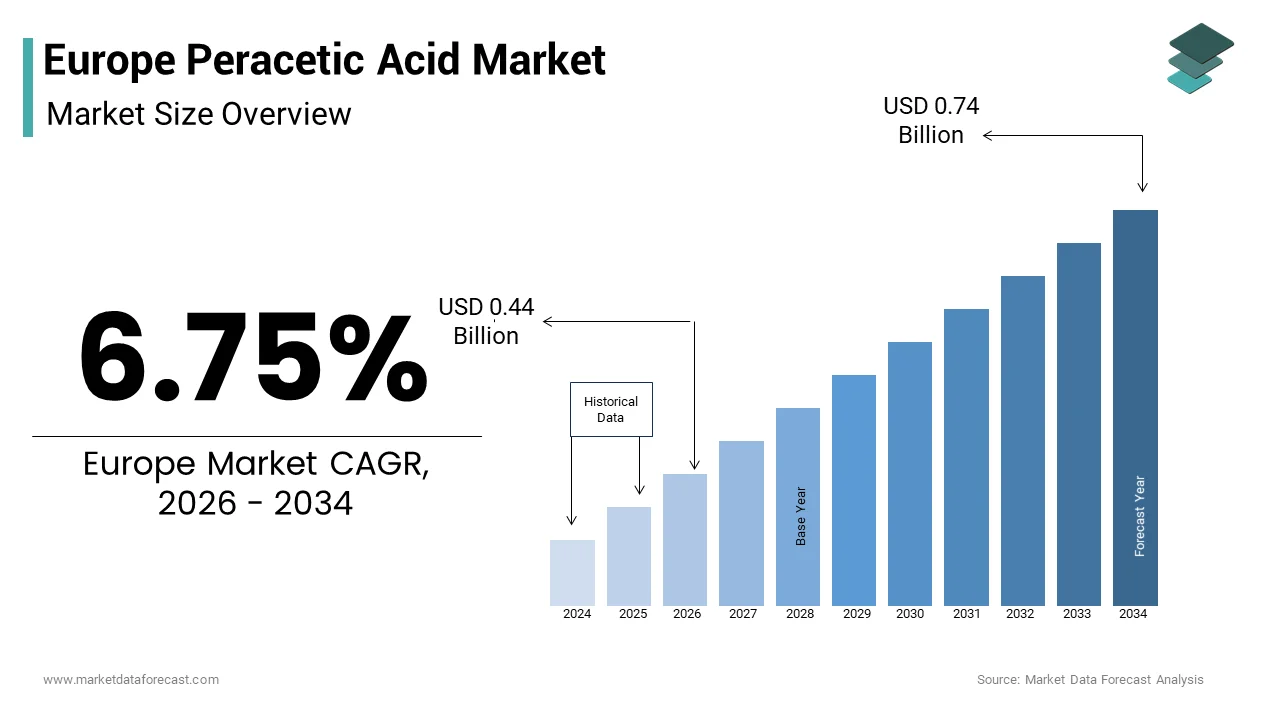
The Europe Peracetic acid market size was valued at USD 0.41 billion in 2025 and is anticipated to reach a valuation of USD 0.44 billion in 2026 and USD 0.74 billion by 2034, growing at a CAGR of 6.75% from 2026 to 2034.
Peracetic acid (PAA) is an organic peroxide widely used as a potent biocide and oxidizing agent in disinfection, sterilization,n and wastewater treatment applications. Chemically formulated as CH₃CO,₃H, it decomposes into acetic a,, acid, oxygen, and water, leaving no persistent toxic residues, which aligns with the European Union’s stringent environmental and public health standards. Unlike chlorine-based alternatives, vesicles of PAA are effective at low concentrations against a broad spectrum of microorganisms, including bacteria, viruses, and biofilms, without forming regulated disinfection byproducts such as trihalomethanes. The European Union is increasingly focused on enhancing wastewater treatment to eliminate micropollutants and protect aquatic ecosystems. Recent revisions to the Urban Waste Water Treatment Directive introduce requirements for a quaternary treatment stage in larger treatment plants, a significant policy shift aimed at broader environmental protection. The use of antimicrobial interventions like peracetic acid (PAA) in food processing, particularly for poultry, has been scientifically evaluated by the European Food Safety Authority (EFSA) for safety and efficacy. This regulatory endorsement, combined with rising antimicrobial resistance concerns zero-residue mandate, positions peracetic acid as a cornerstone of Europe’s sustainable disinfection infrastructure.
MARKET DRIVERS
Stringent EU Regulations on Water Disinfection Byproducts
European environmental policy is actively phasing out chlorine-based disinfectants in favor of alternatives, which drives the growth of the Europe peracetic acid market. This is due to the carcinogenic risks posed by halogenated disinfection byproducts. According to sources, the revised Urban Wastewater Treatment Directive, effective from January 2025, mandates advanced treatment for the removal of a broad range of micropollutants from urban wastewater to improve public and environmental health. This regulatory shift has accelerated PAA adoption in municipal wastewater treatment, particularly in Germany, the Netherlands, and Sweden. Research continues to evaluate the effectiveness of peracetic acid as a promising wastewater disinfectant, particularly for enabling water reuse. The substance’s rapid decomposition into vinegar and oxygen ensures compliance with the Water Framework Directive’s environmental quality standards for receiving waters. Peracetic acid (PAA), as a biocidal active substance, is marked by its established efficacy and continued regulatory refinement under the EU Biocidal Products Regulation (BPR). This legal and ecological alignment creates a structural demand driver far beyond cyclical sanitation needs, reinforcing PAA as the default disinfectant in Europe’s water infrastructure modernization.
Rising Demand from the Food and Beverage Processing Sector
The European food industry’s commitment to pathogen control without chemical residues has made peracetic acid indispensable in meat, poultry, dairy, and produce processing facilities, which propels the expansion of the Europe peracetic acid market. Hygiene protocols for food contact surfaces have become more stringent across Europe. Validated disinfection methods are now a requirement for food processing environments. Peracetic acid (PAA) is recognized as an effective and suitable disinfectant for meeting these new hygiene standards. PAA is approved for application within organic food processing procedures. Major food processors in the poultry industry widely employ PAA rinses as a standard part of their operations. The dairy sector is increasingly integrating PAA into Clean-In-Place (CIP) cleaning cycles to help prevent the formation of biofilms in pipelines. This sector-wide institutionalization, driven by food safety law and retailer audit requirements, ensures sustained and non-discretionary demand for high-purity peracetic acid formulations.
MARKET RESTRAINTS
Classification as a Hazardous Substance Under CLP Regulations
Peracetic acid’s regulatory status as a corrosive and oxidizing agent under the EU’s Classification, Labelling and Packaging Regulation imposes significant handling, ng sto, and transport constraints that impede market accessibility. This, in turn, rn restricts the growth of the Europe peracetic acid market. Concentrations above 5 percent may be considered corrosive to the skin and an oxidizing liquid according to certain classification guidelines. Reports of chemical incidents involving PAA have been noted. These risks necessitate certified safety training and facility modifications that small and medium enterprises often cannot afford. Furthermore, transport regulations for PAA shipments may involve specific quantity limits per vehicle, which can affect logistics. The safety benefits of these measures are clear, but their implementation creates practical difficulties, particularly in smaller facilities with fewer technical resources, thus slowing the uptake of environmentally friendly PAA.
Instability and Short Shelf Life of Commercial Formulations
Peracetic acid’s inherent chemical instability presents a major logistical and economic barrier across the European supply chain, which hinders the expansion of the European peracetic acid market. Commercial solutions tend to lose effectiveness over time, even in optimal storage environments. This necessitates just-in-time production and frequent reordering, which is impractical for remote or low-volume users. Municipal facilities in some regions have noted the disposal of treatment batches that are no longer effective. Stabilizers such as dipicolinic acid or phosphonic acids can extend shelf life but are subject to additional REACH registration and may interfere with biodegradability claims. Moreover, installing systems for on-site generation can involve a significant upfront investment for medium-sized operations. This combination of decomposition losses, handling complexity, ty and capital thresholds limits PAA’s penetration in incost-sensitivee and decentralized applications despite its technical superiority.
MARKET OPPORTUNITIES
Expansion of On-Site Generation Technology in Municipal Facilities
On-site peracetic acid generation is emerging as a transformative opportunity that circumvents transportation hazards and shelf life limitations while ensuring consistent purity, which accelerates the growth of the Europe peracetic acid market. These electrochemical or chemical synthesis units produce PAA from acetic acid and hydrogen peroxide at the point of use, eliminating bulk storage and degradation risks. According to research, green infrastructure loans are increasingly being allocated to support on-site peracetic acid (PAA) systems in wastewater plants across several European countries. The technology is particularly attractive in regions with strict chemical transport restrictions, such as the Alpine Corridor, where tunnel transit bans apply to oxidizing liquids. The installation of on-site PAA generators at certain wastewater plants has been associated with significant reductions in chemical handling incidents. Lower costs for modular units are leading more cities and towns to see on-site manufacturing as a durable resilience tactic that aligns with the circular economy.
Adoption in Sustainable Healthcare Disinfection Protocols
Hospitals and clinics across the region are transitioning to peracetic acid-based disinfection to replace quaternary ammonium compounds and glutaraldehyde, which contribute to antimicrobial resistance and indoor air pollution, thereby creating new opportunities for the expansion of the Europe peracetic acid market. According to sources, Hospitals across the European Union are updating their infection control guidelines to place greater emphasis on non-persistent biocides for critical high-risk areas. PAA’s rapid kill time against C difficile spores and SARS-CoV-2 without toxic off-gassing makes it ideal for endoscope reprocessing and surface disinfection. Healthcare systems in the UK have implemented policies that favor the use of peracetic acid (PAA) in specialized units, such as endoscopy departments, as per research. Similarly, leading health organizations recommend peracetic acid (PAA) as a preferred disinfectant for use in settings requiring strict hygiene protocols, like isolation wards. The EU's financial support for antimicrobial stewardship is driving a healthcare transition that creates a significant growth opportunity for medical-grade peracetic acid formulations.
MARKET CHALLENGES
Supply Chain Vulnerability Due to Acetic Acid Feedstock Dependence
Supply chain vulnerability hampers the growth of the Europe peracetic acid market. Peracetic acid production in Europe relies heavily on acetic acid as a primary raw material significant share of which is derived from methanol carbonylation processes tied to natural gas pricing. According to studies, A significant increase in energy costs put upward pressure on the price of an important chemical intermediate, which in turn challenged the profit margins for manufacturers of a related downstream product (PAA). The European supply chain for this intermediate is susceptible to shifts in global trade dynamics because a notable portion of the required volume is sourced from outside the region. Upcoming regulatory mechanisms related to carbon emissions might lead to increased costs for imported raw materials. A lack of recent expansion in local production capacity for the key intermediate means that downstream manufacturers have reduced flexibility in negotiating prices. This feedstock concentration creates systemic fragility that cannot be easily mitigated through recycling or substitution due to PAA’s specific reaction stoichiometry.
Lack of Harmonized Dosage Standards Across Member States
The absence of EU-wide consensus on permissible peracetic acid concentrations in wastewater discharge and food processing creates compliance uncertainty and market fragmentation that constrains the expansion of the Peracetic acid market. Regulations concerning residual PAA levels in treated effluent differ significantly between countries. The allowed concentrations for PAA rinses used in poultry processing vary widely across different national guidelines. This inconsistency in regulation presents a challenge for multinational businesses, which must manage different operational protocols depending on their location. The European Commission’s attempt to harmonize limits under the upcoming Biocidal Products Regulation review has stalled due to divergent national risk assessments. The absence of a unified standard forces manufacturers to endure redundant validation testing and slow product approvals, ultimately hindering innovation and global market expansion.
REPORT COVERAGE
| REPORT METRIC | DETAILS |
| Market Size Available | 2025 to 2034 |
| Base Year | 2025 |
| Forecast Period | 2026 to 2034 |
| CAGR | 6.75% |
| Segments Covered | By Application, End-User, and Country |
| Various Analyses Covered | Global, Regional & Country Level Analysis; Segment-Level Analysis, DROC, PESTLE Analysis, Porter’s Five Forces Analysis, Competitive Landscape, Analyst Overview of Investment Opportunities |
| Regions Covered | UK, France, Spain, Germany, Italy, Russia, Sweden, Denmark, Switzerland, Netherlands, Turkey, Czech Republic & Rest of Europe |
| Market Leaders Profiled | Airedale Chemical Holdings Limited, Evonik Industries AG (RAG-Stiftung), Jubilant Pharmova Limited, Ecolab, Inc., Kemira Oyj, Diversey Holdings Ltd. (Solenis LLC), Acuro Organics Limited, Solvay SA, Lenntech B.V., California Soda Company |
SEGMENTAL ANALYSIS
By Application Insights
The disinfectant segment was the largest in the Europe peracetic acid market and captured a substantial share in 2025. This dominance is driven by regulatory mandates and public health imperatives requiring high efficacy microbial kill without persistent residues. Peracetic acid’s ability to inactivate bacterial spores, viruses, and biofilms at low contact times makes it the preferred choice for critical disinfection in healthcare, municipal wastewater, and food processing environments. Health authorities and organizations are increasingly evaluating the use of certain disinfectants, such as QACs, due to emerging concerns about potential health risks and their contribution to bacterial tolerance. This leads to a growing interest in alternative chemical control methods like PAA in specific applications. The wastewater treatment sector in Germany, guided by organizations like the German Water Association, demonstrates a general trend toward high efficiency and adherence to strict environmental standards, involving various advanced treatment and disinfection methods to ensure environmental protection and public health. The substance’s rapid decomposition into acetic acid, oxygen, and water ensures compliance with the EU Water Framework Directive’s environmental quality standards for receiving waters. This regulatory and ecological alignment cements disinfectant use as the structural core of PAA demand across Europe.
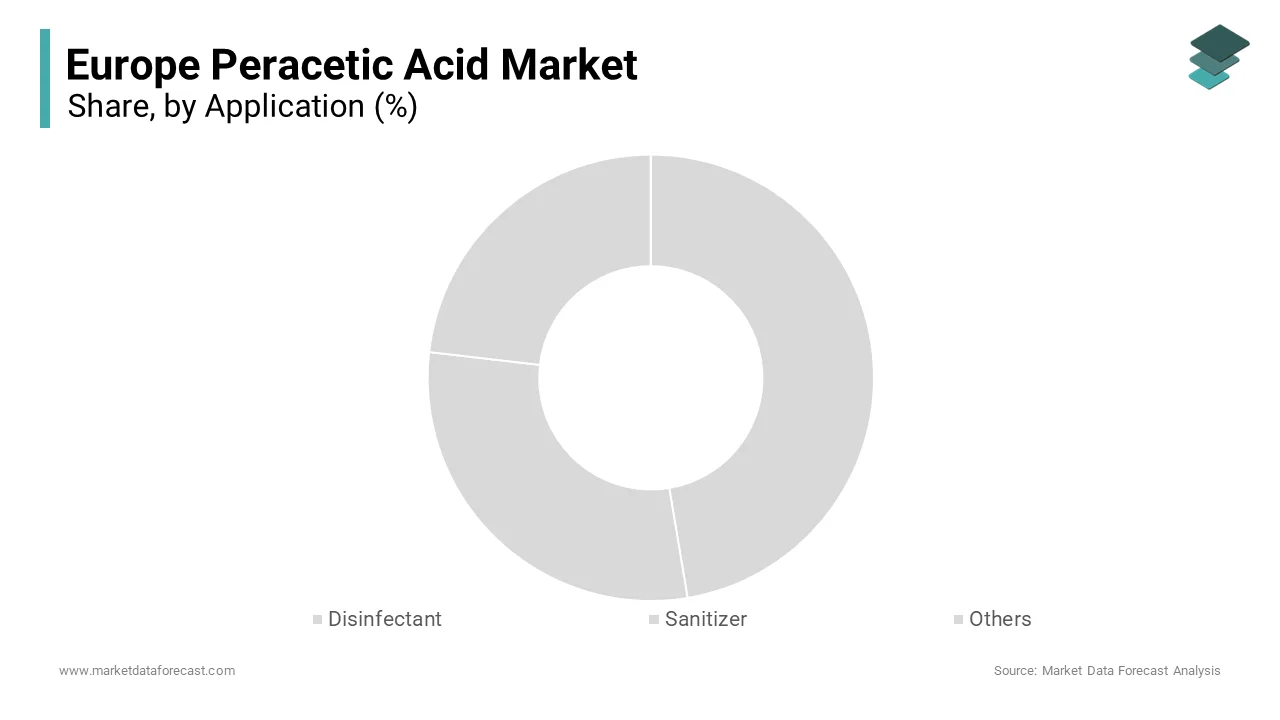
The sanitizer segment is expanding at a CAGR of 9.4 percent between 2026 and 2034. The rapid acceleration of the sanitizer segment is due to the food and beverage industry’s shift to residue-free surface hygiene in response to retailer audit requirements and organic certification standards. Unlike chlorine-based sanitizers, PAA leaves no toxic film and is approved under EU Regulation 2018/848 for use in organic food production. Poultry processing facilities in the region utilize PAA (peracetic acid) rinse solutions. PAA rinse solutions are used at concentrations within a specific range in these facilities. Liquid milk and soft cheese producers in the region incorporate PAA into clean-in-place systems. PAA is integrated into these systems as part of an effort to manage common bacterial concerns in pipelines. Retail chains have mandated PAA-based sanitation in supplier facilities as part of their sustainable sourcing charters, further institutionalizing its use. This convergence of food safety science, regulatory approval, and supply chain policy drives sustained growth in sanitizing applications.
By End Use Insights
The water treatment segment led the Europe peracetic acid market and occupied a 41.7% share in 2025. The leading position of the water treatment segment is attributed to the EU’s regulatory pivot away from chlorine disinfection to prevent the formation of carcinogenic trihalomethanes and haloacetic acids in treated effluent. Revised wastewater treatment guidelines encourage the reduction of certain byproducts, prompting the consideration of various treatment alternatives. Peracetic acid meets this need effectively as it decomposes into harmless byproducts without forming regulated disinfection residuals. In one specific region, the use of Peracetic acid (PAA) as a standard practice in large wastewater plants is prevalent. Sweden enforces strict limits on residual chlorine in Baltic Sea discharges, further accelerating PAA adoption. Additionally, the substance’s compatibility with aquatic life aligns with the Water Framework Directive’s good ecological status targets. A substantial number of urban wastewater treatment facilities operate across a wide geographical area, indicating that water treatment is a major activity that drives PAA consumption.
The healthcare and use segment is predicted to witness the highest CAGR of 10.2% over the forecast period, owing to hospital-acquired infection rates and the EU’s antimicrobial resistance action plan,n which discourages persistent biocides like glutaraldehyde. Peracetic acid is now the gold standard for high-level disinfection of endoscopes and surgical instruments due to its rapid sporicidal activity and absence of toxic fumes. A healthcare system introduced a requirement for a specific processing protocol in relevant units, following evidence from pilot programs indicating a reduction in certain types of infections. Germany’s Robert Koch Institute lists PAA as a Tier 1 disinfectant for use in isolation and intensive care wards. Furthermore, funding was allocated within a regional framework to support the development of infection prevention technologies, which include automated reprocessing systems. The expanding role of PAA in patient safety is a direct result of modern healthcare advancements and increased investment in infection control measures.
COUNTRY ANALYSIS
Germany Peracetic Acid Market Analysis
Germany dominated the Europe peracetic acid market and accounted for a 22.5% share in 2025. The country’s dominance is driven by its advanced wastewater infrastructure, stringent food safety enforcement, and robust chemical manufacturing base. Many municipal wastewater plants use peracetic acid for final disinfection. Peracetic acid is used in poultry processing facilities. Germany also hosts major PAA producers such as Evonik and Solva, which supply high-purity grades compliant with DIN EN 12678 standards. Policies emphasizing chemical safety and circularity have accelerated investment in on-site peracetic acid generation units. This combination of regulatory rigor, industrial capacity, and environmental policy ensures Germany remains the cornerstone of European peracetic acid demand.
France Peracetic Acid Market Analysis
France was the second-largest region in the Europe peracetic acid market by capturing a share of 17.6% in 2025. The nation’s agri-food sector drives consistent demand for substantial processing activities, including poultry and milk production. The French Agency for Food Environment, ental and Occupational Health and Safety requires validated disinfection protocols for all food contact surfaces, with PAA being the most widely accepted active substance. Besides, municipal wastewater treatment facilities are undergoing updates to remove certain byproducts, which is encouraging the use of PAA (peracetic acid). The government’s Ecophyto III plan also promotes persistent biocides in agricultural sanitation. France's market dynamics are primarily influenced by robust domestic supply from Arkema and expanding applications in organic dairy and produce washing, adhering to both regulatory requirements and large-scale agricultural practices.
Italy Peracetic Acid Market Analysis
Italy is another major player in the Europe peracetic acid market because of its large food export industry, stringent EU hygiene audits, and modernizing municipal infrastructure. Italy maintains significant dairy production, processing large volumes of poultry that benefit from efficient sanitation systems, with PAA being a common preference due to its clean profile. The Ministry of Health updated its food facility hygiene decree in 2023 to prioritize oxidizing biocides with rapid kill kinetics like PAA. Simultaneously, many urban wastewater plants across Italy are adding or upgrading disinfection stages as part of ongoing infrastructure improvements. Southern regions have experienced an increase in PAA use, particularly in facilities producing cheese and meat for export markets. This dual impetus from food safety and public works sustains Italy’s upward trajectory.
United Kingdom Peracetic Acid Market Analysis
The United Kingdom is growing steadily in the Europe peracetic acid market. Post Brexit regulatory alignment with EU biocidal standards has maintained PAA’s approval status, while the National Health Service’s infection control mandates have intensified its use. Endoscopy centers in the NHS must adopt specific types of reprocessing systems. The transition to these systems is linked to improved patient outcomes. The UK maintains a large number of municipal wastewater treatment facilities. Regulations surrounding the acceptable levels of certain chemical residuals in wastewater are becoming more stringent. Companies have expanded PAA blending facilities in Yorkshire and Scotland to serve both the healthcare and food sectors. The UK's commitment to antimicrobial innovation, bolstered by strong research ties with institutions like the University of Manchester, solidifies its position as a high-value and adaptive market.
Netherlands Peracetic Acid Market Analysis
The Netherlands is predicted to expand notably in the Europe peracetic acid market from 2026 to 2034, owing to its global leadership in water technology and dense population, necessitating advanced effluent disinfection with minimal ecological impact. Dutch water authorities mandate peracetic acid use in all wastewater plants discharging into the North Sea or Rhine River basin to protect sensitive aquatic ecosystems as per the Delta Programme 2024. Additionally, the Netherlands is Europe’s largest exporter of fresh produce, requiring stringent surface sanitation for vegetables and fruits destined for EU supermarkets. The Dutch Food and Consumer Product Safety Authority enforces PAA-based shipping protocols for leafy greens and berries. With world-class institutes like KWR Water Research pioneering PAA dosing optimization, the Netherlands serves as both a model and testing ground for next-generation applications.
COMPETITIVE LANDSCAPE
The Europe peracetic acid market is characterized by a concentrated yet dynamic competitive environment dominated by integrated chemical manufacturers with strong regulatory and technical capabilities. Competition is not primarily price-based but centered on productivity,y puri, regulatory compliance, and application support. Incumbents like Evonik Solvay and Kemira leverage-house production of key feedstocks such as hydrogen peroxide and acetic acid to ensure supply chain control and cost resilience. New entrants face significant barriers, including biocidal product authorization timelines that can exceed 18 months and stringent safety handling requirements under CLP and ADR regulations. Differentiation arises through formulation science-on-site generation systems and digital integration rather than volume discounts. The market is further shaped by public procurement policies in water and healthcare sectors that prioritize validated efficacy and environmental safety over c,oalsoalo leading to a highly trusted, highly compliant, and competitive paradigm.
KEY MARKET PLAYERS
A few of the notable market players in the Europe peracetic acid market include
- Airedale Chemical Holdings Limited
- Evonik Industries AG (RAG-Stifung)
- Jubilant Pharmova Limited
- Ecolab, Inc.
- Kemira Oyj
- Diversey Holdings Ltd. (Solenis LLC)
- Acuro Organics Limited
- Solvay SA
- Lenntech B.V.
- California Soda Company
Top Players In The Market
- Evonik Industries is a leading European producer of high-purity eracetic acid with a strong footprint in Germany and the Benelux region. The company supplies specialty grades tailored for food safe,tyyt water treatment, nd healthcare, emphasizing stability and low residual acetic acid content. It also launched a stabilized PAA formulation with extended shelf life certified under the European Biocidal Products Regulation. Through partnerships with wattechnology firms, ms Evonik integrates its product into automated dosing sysystemsnhancing precision and safety. Its global distribution network ensures consistent supply to food processors and hospitals across North America, andandreinforcingg its role as a technical benchmark in the international market.
- Solvay SA is a major European chemical manufacturer offering peracetic acid under its Oxonia brand with a focus on sustainable disinfection solutions. The company serves key sectors including dairy, poultry processing, and municipal water treatment across FrFrancee Ita, and Spain. It also collaborated with the European Dairy Association to validate PAA protocols for biofilm control in milk processing lines. Solvay’s global reach extends to Latin America and Southeast AAsiawhere it supplies PAA formulations compliant with both EU and local biocidal standards. Its commitment to green chemistry and regulatory compliance positions it as a trusted partner for multinational food and utility companies.
- Kemira Oyj, Finland-based global leader in water-intensive industry chemicals with a strategic emphasis on peracetic acid for municipal and industrial wastewater disinfection. The company operates production facilities in Sweden,,n thNetherlandssnds andGermann, supplying stabilized PAA solutions optimized for cold climate efficacy and low aquatic toxicity. It also partnered with Stockholm Vatten pto ilot a carbon-neutral PAA production process using bio-based acetic acid. Kemira’s expertise in water chemistry and strong relationships with European water utilities enable rapid deployment of tailored disinfection programs across the continent and into North American markets facing similar regulatory shifts.
Top Strategies Used By The Key Market Participants
Key players in the Europe peracetic acid market are investing in on-site generation technology to mitigate transportation hazards and ensure consistent product stability. They are developing stabilized formulations with extended shelf life to address degradation concerns in decentralized applications. Companies are aligning product certifications with evolving EU biocidal and water treatment regulations to maintain market access. Strategic collaborations with water utilities, software processors,s S, Sand healthcare institution, and eenaco-developmentof application-specific solutions.A dditionally, firms are integrating digital dosing and monitoring systems to optimize usage efficiency and demonstrate compliance with environmental discharge limits. These strategies collectively enhance safety, sustainability, and regulatory alignment across high-scrutiny-use sectors.
MARKET SEGMENTATION
This research report on the Europe peracetic acid market is segmented and sub-segmented into the following categories.
By Application
- Disinfectant
- Sanitizer
- Others
By End Use
- Food & Beverage
- Healthcare
- Water Treatment
- Pulp & Paper
- Others
By Country
- UK
- France
- Spain
- Germany
- Italy
- Russia
- Sweden
- Denmark
- Switzerland
- Netherlands
- Turkey
- Czech Republic
- Rest of Europe
Frequently Asked Questions
What is peracetic acid used for in Europe?
Peracetic acid is widely used as a disinfectant, sanitizer, and bleaching agent in industries such as food processing, healthcare, water treatment, and pulp & paper.
Why is demand for peracetic acid rising in Europe?
Because regulators and industries are prioritizing hygiene, safe food handling, and clean water systems, and peracetic acid offers high antimicrobial effectiveness without leaving harmful residues.
Which sectors use peracetic acid the most?
Food and beverage plants, hospitals, dairy facilities, breweries, municipal water treatment plants, and pulp & paper mills.
What makes peracetic acid attractive compared to other disinfectants?
It breaks down into harmless components (water, oxygen, and vinegar), works quickly, and remains effective even in the presence of organic matter.
What trends are shaping demand in Europe?
Growing focus on food safety, expansion of wastewater treatment, stricter sanitation laws, and interest in eco-friendly disinfection solutions.
Which countries lead the peracetic acid market in Europe?
Germany, the UK, France, and Nordic countries show strong usage due to advanced food industries, industrial hygiene standards, and wastewater infrastructure.
What challenges does the market face?
High handling safety requirements, storage considerations, competition from alternative chemicals, and varying awareness among smaller industrial users.
Is sustainability influencing the use of peracetic acid?
Yes it is increasingly preferred because it is biodegradable, leaves no toxic residue, and aligns with Europe’s environmental and safety regulations.
Who benefits the most from advancements in peracetic acid formulations?
Food manufacturers, hospitals, water treatment operators, and hygiene service providers benefit from safer, more stable, ready-to-use products.
What is the future outlook for the Europe peracetic acid market?
Positive — as sanitation, water reuse, and food quality expectations rise, peracetic acid is likely to see wider adoption as a reliable and eco-aligned disinfectant.
Access the study in MULTIPLE FORMATS
Purchase options starting from
$ 2000
Didn’t find what you’re looking for?
TALK TO OUR ANALYST TEAM
Need something within your budget?
NO WORRIES! WE GOT YOU COVERED!
Call us on: +1 888 702 9696 (U.S Toll Free)
Write to us: sales@marketdataforecast.com