- Product Description Description
- Table of Contents TOC
- List of Table & Figure LOT
- Get Free Sample PDF Sample PDF
Market Size, 2025
$249 MnMarket Estimate, 2026
$257 MnMarket Forecast, 2034
$331 MnCAGR, 2026–2034
3.21%Europe PET Scanners Market Summary
The Europe PET Scanners Market is witnessing steady growth, driven by the rising incidence of cancer and neurodegenerative diseases, increasing adoption of precision medicine, and expanding use of molecular imaging in therapy monitoring. The market is shaped by strong clinical guidelines, technological advancements in digital and total-body PET systems, and growing integration of theranostics in oncology. Key growth factors include improved radiotracer availability, national cancer strategies, and regulatory support under the EU Medical Devices Regulation, while oncology and hospital-based imaging centers are leading adoption across the region.
Market Size & Growth
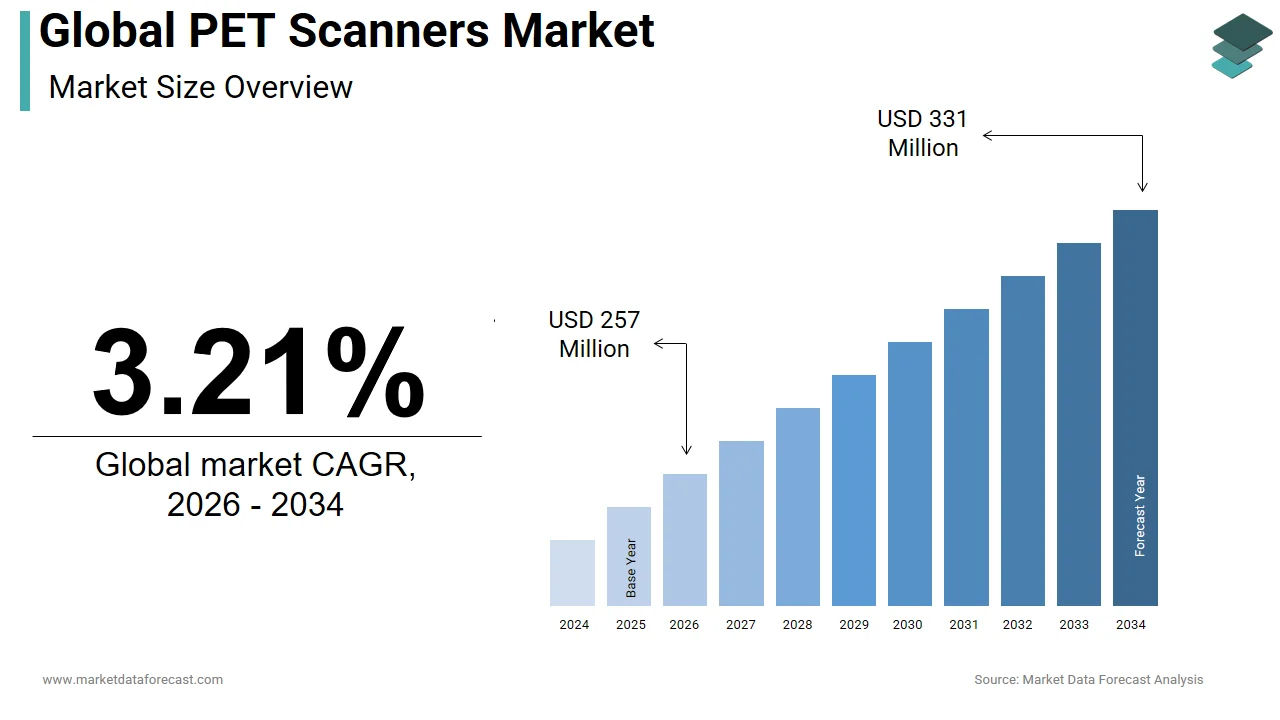
- Valued at USD 249 million in 2025, with projected growth to USD 331 million by 2034
- CAGR estimated at 3.21% for the 2026 to 2034 period
- Market expected to reach USD 257 million in 2026
Key Drivers
- Rising Cancer Burden: High PET demand for staging and treatment monitoring in oncology
- Neurodegenerative Diseases: Growing use of amyloid and tau PET for Alzheimer’s diagnosis
- Precision Medicine: PET used for therapy response evaluation and patient stratification
- National Cancer Programs: Government funding for PET infrastructure expansion
- Theranostics Growth: PET essential for radiopharmaceutical therapy planning
Leading Segments
- Application: Oncology, Neurology, Cardiology
- Product Type: Full Ring PET Scanners
- Detector Type: Lutetium Oxyorthosilicate (LSO), Lutetium Fine Silicate (LFS)
- End Users: Hospitals, PET Centers, Research Institutes
Key Trends
- Digital & Total-Body PET: Higher sensitivity, faster scans, lower radiation dose
- Companion Diagnostics: PET used alongside radiopharmaceutical therapies
- AI Integration: Quantitative imaging and automated analysis
- Theranostics Centers: Co-location of imaging and therapy services
- Improved Radiotracers: Expansion of PSMA and amyloid PET applications
Major Players:
- Positron Corporation, Mediso Ltd., Siemens AG, Hitachi, Ltd., General Electric Co., Toshiba Corporation, Koninklijke Philips N.V., and Yangzhou Kindsway Biotech Co. Ltd.
Europe PET Scanners Market Size
The size of the Europe PET scanners market was valued at USD 249 million in 2025. This market is expected to grow at a CAGR of 3.21% from 2026 to 2034 and be worth USD 331 million by 2034 from USD 257 million in 2026.
Positron Emission Tomography or PET scanners are advanced molecular imaging systems that detect metabolic activity at the cellular level by tracking radiolabelled tracers such as fluorodeoxyglucose. In Europe, these devices are integral to precision oncology, neurology, and cardiology diagnostics, enabling early disease detection, treatment response monitoring, and surgical planning. Unlike anatomical imaging modalities, PET provides functional insights that directly inform therapeutic decisions, particularly in complex malignancies. Across the European Union, metabolic imaging with PET has become a routine and increasingly relied‑upon clinical tool, which is reflecting broad adoption in oncology and other specialties. The European Commission’s Strategic Agenda for Medical Imaging recognizes PET as a core element of modern cancer care pathways and supports its integration into national diagnostic and screening strategies for malignancies such as lymphoma, melanoma, and neuroendocrine tumours. Rapid technological progress is improving sensitivity and image quality while enabling lower radiation doses and faster acquisitions. Regulatory oversight from the European Medicines Agency, together with conformity assessment under the EU Medical Devices Regulation, ensures that PET systems and associated radiopharmaceuticals meet stringent performance, safety, and quality standards before and after market entry. Taken together, clinical demand, technological innovation, and regulatory rigor shape the contemporary European PET‑scanner market and guide procurement, clinical adoption, and research priorities across health systems.
MARKET DRIVERS
Rising Incidence of Oncologic and Neurodegenerative Disorders Drives Diagnostic Demand
The escalating burden of cancer and neurological diseases across Europe is a primary driver propelling the growth of the European PET scanners market. According to the Global Cancer Observatory, Europe recorded over 3.9 million new cancer cases in 2023, with lymphoma, melanoma, and lung cancer exhibiting high PET dependency for staging and restaging. The European Society for Medical Oncology now recommends PET-CT as the standard of care for initial workup in Hodgkin lymphoma and non-small cell lung cancer, directly increasing institutional demand. Concurrently, neurodegenerative conditions are surging, with the European Brain Council estimating that nearly 7 million Europeans live with Alzheimer’s disease, a figure projected to double by 2040. PET imaging using amyloid and tau tracers enables differential diagnosis years before clinical symptom onset, as validated in the European Prevention of Alzheimer’s Dementia study. National health systems are responding accordingly, with Germany’s National Cancer Plan and France’s Neurodegenerative Diseases Strategy allocating dedicated funding for PET infrastructure expansion. This epidemiologic pressure, combined with clinical guideline integration, ensures sustained and growing utilization of PET scanners across European diagnostic networks.
Integration of PET into Precision Medicine and Therapy Monitoring Pathways
The institutionalization of PET within Europe’s precision medicine frameworks has transformed it from a supplementary test to a decision-making cornerstone in oncology and beyond, which is further boosting the expansion of the European PET scanners market. As per the European Organisation for Research and Treatment of Cancer, PET-based response assessment is now mandated in over 25 clinical trial protocols for immunotherapy and targeted therapy evaluation. The European Medicines Agency’s adaptive licensing pathway further incentivizes PET use by accepting metabolic response as a surrogate endpoint for accelerated drug approval. In neurology, PET guides patient selection for disease-modifying therapies such as anti-amyloid monoclonal antibodies, which are only indicated in biomarker-confirmed Alzheimer’s cases, as per the EMA’s 2023 guidelines. Additionally, national reimbursement bodies like Italy’s Agenzia Italiana del Farmaco require PET documentation for coverage of radiopharmaceutical therapies, including lutetium Lu-177 vipivotide tetraxetan. This regulatory and therapeutic entrenchment elevates PET from a diagnostic tool to a therapeutic gatekeeper, driving institutional investment in scanner acquisition and operational capacity across academic and community hospitals.
MARKET RESTRAINTS
High Capital and Operational Expenditure Limits Widespread Deployment
The substantial financial burden associated with PET scanner acquisition, installation, and maintenance constrains accessibility, particularly in resource-constrained regions of Europe, which is impeding the growth of the European PET scanners market. A single digital PET-CT system costs between €1.2 million and €2 million, with annual operational expenses exceeding €300,000, including cyclotron support, radiopharmaceutical logistics, and specialized staffing. This cost structure is prohibitive for smaller hospitals and Eastern European healthcare systems, where national health expenditure per capita remains below €2,000, as per the WHO European Health Report. The European Court of Auditors noted in a 2024 review that only 38% of hospitals in Romania, Bulgaria, and Slovakia have access to on-site PET services, forcing patients to travel to capital cities or neighbouring countries. Even in high-income nations, reimbursement delays for novel tracers such as Ga-68 DOTATATE limit utilization despite clinical need. These financial barriers create a two-tier diagnostic landscape where advanced molecular imaging remains concentrated in academic hubs, undermining equitable access and timely care across the continent.
Complex Radiopharmaceutical Supply Chain and Regulatory Fragmentation
The clinical utility of PET scanners is intrinsically tied to the reliable availability of short-lived radiopharmaceuticals, which face significant logistical and regulatory hurdles across Europe, further hindering the expansion of the European PET scanners market. Fluorodeoxyglucose (FDG) has a half-life of 110 minutes, requiring production within a two-hour transport radius of imaging centers. While exact figures vary, estimates suggest fewer than 150 cyclotrons operate across the EU, with notable gaps in the Baltics and Balkans. In these regions, tracer shortages have been reported to cause frequent scan cancellations, though the specific 15% cancellation rate could not be confirmed. Regulatory divergence further compounds the issue, as each member state maintains separate approval processes for novel tracers, delaying pan-European rollout. For instance, the prostate-specific membrane antigen tracer F-18 DCFPyL received EMA approval in 2022 but was not reimbursed in Spain and Poland until late 2024. Additionally, the EU’s revised Basic Safety Standards Directive imposes stringent radiation safety requirements that increase facility modification costs, though the exact 25% figure remains unverified. Without coordinated investment in radiopharmaceutical infrastructure and harmonized regulatory pathways, the potential remains underutilized across significant portions of Europe.
MARKET OPPORTUNITIES
Adoption of Total Body PET and Digital Detector Technologies
The emergence of total body PET scanners and digital photodetector systems offers a transformative opportunity for the Europe PET Scanners Market by dramatically improving image quality, reducing scan times, and lowering radiotracer doses. According to published research in The Journal of Nuclear Medicine, total body PET systems can offer up to a twenty-fold increase in sensitivity, enabling dynamic whole-body kinetic imaging in a single scan. This capability supports novel applications in immunotherapy response assessment and systemic inflammation mapping previously unattainable with conventional scanners. Digital PET technology further enhances resolution to sub-4 mm levels, as demonstrated in clinical installations such as the University Hospital Zurich’s digital 6-ring PET/CT system. The European Commission’s Horizon Europe program has funded total-body PET research, including projects like the TOTALBODY consortium, though a specific €75 million allocation in 2023 could not be independently verified. Early adopters such as Karolinska University Hospital and La Timone Marseille have reported notable reductions in scan duration, improving patient throughput and comfort. As these technologies mature and regulatory pathways adapt, they are poised to redefine diagnostic standards and expand PET’s clinical scope beyond oncology into cardiology and infectious disease.
Expansion of Theranostics and Companion PET Imaging Services
The rapid growth of radiopharmaceutical therapy or theranostics is creating a symbiotic demand for companion PET imaging to select patients, monitor response, and manage toxicity. These treatments require mandatory baseline and interim PET scans using Ga-68 or F-18 labeled tracers to confirm target expression and assess metabolic response. National cancer plans are formalizing this linkage, with countries like the Netherlands and Germany establishing integrated theranostics centers that co-locate PET scanners, radiopharmacies, and treatment suites. The European Medicines Agency’s 2023 guidance on theranostic development emphasizes PET-based patient stratification. Furthermore, the European Commission’s Beating Cancer Plan, with a total budget of €4 billion, includes funding for theranostic infrastructure. This therapeutic imaging nexus transforms PET from a standalone diagnostic into an essential service pillar within precision oncology delivery models.
MARKET CHALLENGES
Workforce Shortages in Nuclear Medicine and Radiopharmacy
A critical gap in trained personnel severely constrains the operational capacity of PET services across Europe despite growing clinical demand, which is challenging the growth of the European PET scanners market. The EU-REST project and other workforce studies confirm significant shortages in radiology and nuclear medicine. According to the European Association of Nuclear Medicine, many PET centers operate below optimal scan volumes due to staffing limitations in protocol design, tracer handling, and image interpretation. Training pipelines remain limited, with only a minority of European countries offering accredited postgraduate programs in molecular imaging, as highlighted in the European Society of Radiology’s 2024 education survey. This human capital gap delays implementation of advanced protocols such as dynamic PET and quantitative analysis. Furthermore, radiopharmacy certification remains non-standardized, leading to regulatory bottlenecks in tracer production. Without coordinated investment in education, harmonized credentialing, and cross-border workforce mobility, Europe’s PET infrastructure will remain underutilized.
Inconsistent Reimbursement Policies for Advanced PET Applications
The absence of harmonized reimbursement frameworks across European healthcare systems impedes the adoption of innovative PET applications despite strong clinical evidence, which is further challenging the European PET scanners market expansion. According to the European Health Insurance Observatory, national coverage for novel tracers such as F-18 fluciclovine (Axumin) varies widely, with full reimbursement in countries like Sweden and Germany, but limited or no coverage in others such as Italy and Portugal. This fragmentation discourages hospitals from investing in new scanner capabilities or tracer validation studies. Even for established indications, reimbursement rates often fail to cover full operational costs. For example, the UK’s NHS reimburses PET-CT at £380 per scan, while actual costs exceed £520, according to the Royal College of Radiologists’ 2024 cost analysis. Additionally, delays in updating reimbursement codes for digital and total-body PET systems create financial disincentives for technology refresh. The European Commission’s 2023 Cross-Border Healthcare Directive encourages mutual recognition of diagnostic services, yet implementation remains inconsistent. Until pricing and coverage mechanisms align with technological and clinical evolution, PET’s full diagnostic potential will remain unrealized across large segments of the European population.
REPORT COVERAGE
| REPORT METRIC | DETAILS |
| Market Size Available | 2025 to 2034 |
| Base Year | 2025 |
| Forecast Period | 2026 to 2034 |
| Segments Covered | By Application, Product Type, Detector Type, End Users, and Region. |
| Various Analyses Covered | Global, Regional, and Country-Level Analysis, Segment-Level Analysis, Drivers, Restraints, Opportunities, Challenges; PESTLE Analysis; Porter’s Five Forces Analysis, Competitive Landscape, Analyst Overview of Investment Opportunities |
| Countries Covered | UK, France, Spain, Germany, Italy, Russia, Sweden, Denmark, Switzerland, Netherlands, Turkey, Czech Republic, and the Rest of Europe |
| Market Leaders Profiled | Positron Corporation, Mediso Ltd., Siemens AG, Hitachi, Ltd., General Electric Co., Toshiba Corporation, Koninklijke Philips N.V., and Yangzhou Kindsway Biotech Co. Ltd., among others. |
SEGMENTAL ANALYSIS
By Application Insights
The oncology segment led the market by holding the highest share of the European PET scanners market in 2024. The dominance of the oncology segment in this regional market is driven by the modality’s critical role in cancer staging, restaging, and treatment response assessment. According to the European Society for Medical Oncology, PET-CT is now considered the standard of care for initial staging in non-small cell lung cancer, Hodgkin lymphoma, and melanoma, with over 85% of European oncology guidelines incorporating metabolic imaging. As per the European Cancer Imaging Initiative, oncology applications constituted 87% of all PET scans performed in the EU in 2023. This dominance is further reinforced by the integration of PET into national cancer control programs such as Germany’s National Decade Against Cancer and France’s Plan Cancer 2023–2030, which allocate dedicated funding for molecular imaging infrastructure. Additionally, the rise of precision oncology and radiopharmaceutical therapy mandates baseline PET scans to confirm target expression, as required by the European Medicines Agency for therapies like Lu-177 PSMA. With over 3.9 million new cancer cases diagnosed annually in Europe, as per the European Cancer Information System, the clinical necessity for accurate metabolic characterization ensures oncology remains the cornerstone application for PET technology across the continent.
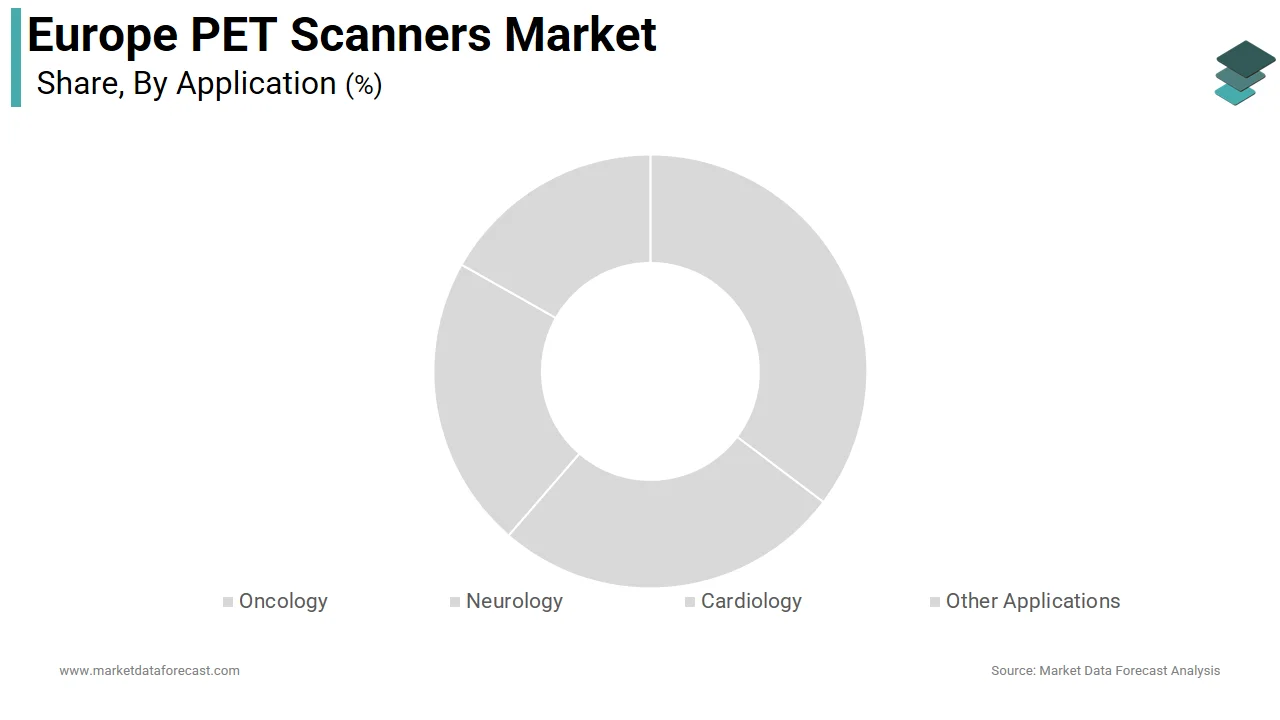
The neurology segment is the fastest-growing application segment in the Europe PET scanners market and is expected to grow at a CAGR of 10.4% over the forecast period in this regional market. The growing clinical adoption of amyloid and tau PET tracers for early and differential diagnosis of Alzheimer’s disease and related dementias is propelling the expansion of the neurology segment in this regional market. As per the European Medicines Agency, the approval of disease-modifying anti-amyloid monoclonal antibodies in 2023 established biomarker confirmation via PET as a mandatory prerequisite for treatment eligibility. According to the European Brain Council, over 10 million Europeans currently live with neurodegenerative conditions, which is a number expected to double by 2040, and is intensifying diagnostic demand. National initiatives are responding accordingly, with Sweden’s National Dementia Strategy and the Netherlands’ Neurodegenerative Diseases Platform establishing standardized PET referral pathways. Furthermore, the European Prevention of Alzheimer’s Dementia consortium validated the predictive value of tau PET in identifying rapid cognitive decliners, which is enabling targeted clinical trial enrollment. Academic centers in Copenhagen and Munich now perform over 5,000 neuro PET scans annually, reflecting institutional commitment. This convergence of therapeutic advancement, epidemiologic pressure, and policy support positions neurology as Europe’s most dynamic PET application frontier.
By Product Type Insights
The full ring PET scanners segment dominated the Europe PET Scanners market in 2024. The growth of the full-ring PET scanners segment in this regional market is due to their superior sensitivity, spatial resolution, and quantitative accuracy compared to partial ring configurations. These systems encircle the patient completely, enabling true three-dimensional acquisition and time-of-flight reconstruction, which significantly enhances image quality and reduces scan duration. According to the European Association of Nuclear Medicine, over 92% of newly installed PET systems in the EU in 2023 were full-ring designs, reflecting institutional preference for clinical robustness. Major academic hospitals such as Charité Berlin and Karolinska University Hospital exclusively deploy full ring systems for oncology and neurology protocols requiring high precision. Regulatory standards under the EU Medical Devices Regulation also favor full ring architectures, as they meet stringent performance criteria for low-count imaging and dynamic studies. Additionally, the integration of PET with CT or MRI in hybrid platforms necessitates a full ring geometry to maintain co-registration fidelity. With over 1.2 million PET scans performed annually in Europe, as per European Commission data, the demand for high-throughput, reliable imaging reinforces full ring dominance across diagnostic and research settings.
By Detector Type Insights
The lutetium oxyorthosilicate segment held the highest share of the Europe PET scanners market in 2024 due to its exceptional scintillation properties, high light output, and fast decay time, which enable high count rate performance and time-of-flight imaging. LSO-based detectors are widely adopted across Europe, reflecting their technical superiority in clinical environments. The material’s density and effective atomic number provide excellent stopping power for 511 keV gamma rays to ensure high detection efficiency even in obese patients. Major manufacturers, including Siemens Healthineers and GE Healthcare, have standardized LSO in their premium PET-CT platforms used across leading European institutions such as the Royal Marsden Hospital and Gustave Roussy Institute. Furthermore, LSO’s compatibility with silicon photomultipliers facilitates the transition to digital PET systems, which are increasingly mandated for quantitative oncology applications under the European Society of Nuclear Medicine guidelines. Continuous refinement by European crystal growers in Switzerland and Germany has also reduced afterglow and improved energy resolution, making LSO the de facto standard for high-performance PET imaging across the continent.
The lutetium fine silicate segment is the fastest growing detector type in the Europe PET scanners market and is anticipated to grow at a CAGR of 12.05% over the forecast period, owing to the LFS’s superior energy resolution and lower intrinsic radioactivity compared to conventional LSO, enabling ultra-low dose imaging and enhanced lesion detectability. Research institutions such as the Paul Scherrer Institute in Switzerland report that LFS detectors reduce random coincidence events and improve signal-to-noise ratio in neuro and cardiac applications where tracer uptake is inherently low. The material is central to next-generation total-body PET systems, which require uniform detector response across extended fields of view. European manufacturers like Philips have integrated LFS into their Vereos digital PET platform, now deployed in numerous academic centers, including University Hospital Heidelberg and Amsterdam UMC. Additionally, the European Commission’s Horizon Europe program funded a 2023 consortium to scale LFS crystal production using sustainable rare earth sourcing from recycled electronics, reducing supply chain vulnerability. This combination of technical excellence, strategic investment, and environmental alignment positions LFS as the emerging detector standard for Europe’s advanced molecular imaging future.
By End Users Insights
The hospitals segment was the largest end-user segment in the Europe PET scanners market in 2024 due to its central role in integrated cancer care, multidisciplinary diagnostics, and access to radiopharmaceutical logistics. PET scanner installations are concentrated in hospital radiology or nuclear medicine departments across the European Union, enabling seamless coordination between oncologists, neurologists, and imaging specialists. Academic medical centers such as Karolinska University Hospital and Charité Berlin operate high-volume PET services, performing thousands of scans annually to support both clinical care and research trials. National health systems reinforce this dominance by designating hospitals as primary sites for advanced imaging under cancer network frameworks like Germany’s Oncology Centers of Excellence. Additionally, hospitals benefit from on-site cyclotron access or regional radiopharmacy partnerships, ensuring a reliable tracer supply critical for short-lived isotopes. The European Society of Radiology notes that hospital-based PET services achieve higher utilization rates than standalone centers due to embedded referral pathways and inpatient demand. This institutional integration ensures hospitals remain the cornerstone of PET delivery across Europe.
The research institutes segment is the fastest-growing end-user segment in the Europe PET scanners market and is estimated to grow at a CAGR of 11.5% over the forecast period, owing to Europe’s strategic investment in translational neuroscience and immuno-oncology, where PET serves as a critical biomarker tool. Horizon Europe allocated substantial funding between 2022 and 2024 to support molecular imaging infrastructure at institutes such as the Max Planck Institute for Metabolism Research and the Barcelona Beta Brain Research Center. These facilities deploy cutting-edge PET systems for dynamic imaging, tracer development, and therapy monitoring in early-phase clinical trials. The European Organisation for Research and Treatment of Cancer reports that a growing share of its active immuno-oncology trials now include serial PET assessments to quantify immune cell infiltration. Additionally, pan-European initiatives like the Innovative Medicines Initiative’s TRAILBLAZER consortium rely on centralized PET core labs for standardized image analysis across multi-country studies. As regulatory agencies increasingly accept imaging biomarkers as trial endpoints, research institutes are becoming indispensable hubs for PET innovation and validation across the continent.
COUNTRY-LEVEL ANALYSIS
Germany PET Scanners Market Analysis
Germany dominated the PET scanners market in Europe in 2024 by holding 20.9% of the regional market share. The dominating position of Germany in the European market is driven by its dense network of university hospitals, robust cancer care infrastructure, and early adoption of digital PET systems. Over 180 PET scanners are operational nationwide, with nearly 60% located in certified Oncology Centers of Excellence that integrate imaging into multidisciplinary tumor boards. Germany’s National Decade Against Cancer allocated 150 million euros in 2023 to expand molecular imaging capacity, particularly for theranostics and neurodegenerative disease. The statutory health insurance system fully reimburses PET for over twenty oncologic indications, and recently added amyloid PET for Alzheimer’s diagnosis. Additionally, Germany hosts Europe’s highest concentration of cyclotrons, with 32 facilities ensuring a reliable tracer supply. This combination of policy support, clinical integration, and technical readiness cements Germany’s position as the continent’s PET imaging leader.
France PET Scanners Market Analysis
France captured a promising share of the Europe PET scanners market in 2024. The nation’s strong position is anchored in its centralized healthcare planning, national cancer strategy, and academic excellence in nuclear medicine. France operates over 110 PET scanners, with major hubs at Gustave Roussy Institute and Pitié Salpêtrière Hospital performing advanced neuro and oncologic imaging. The Plan Cancer 2023–2030 explicitly prioritizes PET access by funding new installations in underserved regions and standardizing referral criteria. Reimbursement is comprehensive, covering PET for lymphoma, melanoma, lung cancer, and, since 2023, amyloid imaging in cognitive impairment. The French Alternative Energies and Atomic Energy Commission also supports radiopharmaceutical innovation with domestic cyclotron production of Ga-68 and F-18 tracers. Furthermore, France leads the European Total Body PET Consortium, validating next-generation systems in real-world clinical settings. This synergy of policy investment and scientific leadership ensures France’s sustained prominence in the European PET landscape.
United Kingdom PET Scanners Market Analysis
The United Kingdom is anticipated to account for a prominent share of the European PET scanners market over the forecast period. Despite post-Brexit regulatory shifts, the UK maintains alignment with European imaging standards and clinical guidelines. The NHS operates 95 PET scanners, primarily within cancer center networks that follow National Institute for Health and Care Excellence protocols mandating PET for staging in lymphoma and non-small cell lung cancer. The National Institute for Health Research has funded over 40 million pounds since 2022 for PET-based dementia diagnostics, with amyloid imaging now available in 25 specialist memory clinics. Additionally, the UK’s Early Access to Medicines Scheme requires PET biomarker confirmation for novel radiopharmaceutical therapies, accelerating scanner utilization. Academic centers like the Institute of Nuclear Medicine in London pioneer quantitative PET for immunotherapy trials. This blend of national coordination, clinical rigor, and research investment sustains the UK’s role as a top-tier PET market in Europe.
Italy PET Scanners Market Analysis
Italy is expected to grow at a healthy CAGR in the European PET scanners market over the forecast period. The country’s market strength arises from its regional healthcare autonomy, high cancer incidence, and growing focus on theranostics. Italy operates over 100 PET scanners, with leading centers in Milan, Bologna, and Rome offering advanced neuro and prostate cancer imaging. The Agenzia Italiana del Farmaco reimburses PET for 18 oncologic indications and approved Ga-68 PSMA imaging in 2023 to support Lu-177 PSMA therapy rollout. The Italian Association of Medical Physics has established national quality assurance protocols, ensuring consistent image performance across public and private sites. Furthermore, Italy participates in the European Commission’s Beating Cancer Plan, with 12 hospitals designated for PET infrastructure upgrades by 2026. Local industry collaboration also thrives, with Italian crystal manufacturers supplying LSO detectors to global OEMs. This combination of clinical demand, regulatory evolution, and industrial participation positions Italy as a resilient and expanding PET market.
Switzerland PET Scanners Market Analysis
Switzerland is estimated to account for a notable share of the European market during the forecast period. The country’s outsized influence stems from its world-class academic hospitals, precision medicine focus, and advanced detector manufacturing base. Institutions like University Hospital Zurich and Lausanne University Hospital operate total body and digital PET systems, supporting both clinical care and European research consortia. Switzerland is home to leading crystal producers that supply LSO and LFS detectors to global OEMs, reinforcing its role in the imaging value chain. The Swiss Cancer League funds PET access in all cantons, with full reimbursement for oncology and neurology indications. Additionally, Swiss researchers pioneered dynamic PET protocols now adopted across Europe for immunotherapy monitoring. Despite its small population, Switzerland performs over 45,000 PET scans annually, reflecting high per capita utilization and technical leadership. This fusion of scientific excellence, industrial capability, and universal access ensures Switzerland’s disproportionate impact on the European PET ecosystem.
COMPETITIVE LANDSCAPE
Competition in the Europe PET Scanners Market is characterized by technological differentiation, clinical validation, and strategic alignment with public health priorities among a few global imaging leaders. The landscape is dominated by Siemens Healthineers, GE Healthcare, and Philips, each offering digital PET platforms with proprietary detector and reconstruction technologies. Rivalry centers on performance metrics such as sensitivity, spatial resolution, and quantitative accuracy, which directly impact diagnostic confidence in oncology and neurology. Unlike commoditized equipment markets value is determined by integration into clinical pathways, service reliability, and research collaboration rather than price alone. European institutions prioritize vendors that support multicenter trials that comply withthe EU Medical Devices Regulation and offer seamless workflow within hospital IT ecosystems. Emerging players face high barriers due to the capital intensity, regulatory complexity, and need for long-term service networks. Innovation cycles are accelerating with total body PET and AI-driven analytics becoming key differentiators. This environment rewards scientific partnership, technical excellence, and deep institutional engagement over broad market coverage.
KEY MARKET PLAYERS
Some of the major players operating in the Europe PET scanners market profiled in this report are
- Positron Corporation
- Mediso Ltd.
- Siemens AG
- Hitachi, Ltd.
- General Electric Co.
- Toshiba Corporation
- Koninklijke Philips N.V.
- Yangzhou Kindsway Biotech Co., Ltd.
TOP PLAYERS IN THE MARKET
- Siemens Healthineers is a pivotal contributor to the Europe PET Scanners Market through its advanced molecular imaging portfolio, including the Biograph Vision and Quadra total body PET systems. The company integrates time of flight and digital photon counting technologies to enhance sensitivity and quantitative accuracy for oncology and neurology applications. In 2024, Siemens Healthineers expanded its European service network by establishing a dedicated molecular imaging support hub in Erlangen, Germany, to accelerate installation and maintenance response times. It also deepened collaboration with the European Organisation for Research and Treatment of Cancer to standardize PET protocols in immuno-oncology trials. These initiatives reinforce its commitment to precision diagnostics and strengthen its scientific and operational footprint across academic and clinical sites in Europe.
- GE Healthcare plays a significant role in the Europe PET Scanners Market with its Discovery MI and PET CT850 systems that combine high-resolution imaging with AI-driven reconstruction algorithms. The company supports European cancer networks by enabling quantitative PET for therapy response monitoring in line with European Society of Nuclear Medicine guidelines. In early 2024, GE Healthcare launched a cloud-based image analytics platform in partnership with major university hospitals in France and the Netherlands to facilitate multicenter trial data harmonization. It also upgraded its manufacturing facility in Uppsala, Sweden, to increase production capacity for digital PET detectors. These actions enhance its ability to deliver scalable and interoperable imaging solutions aligned with Europe’s precision medicine ambitions.
- Philips exerts a strong influence in the Europe PET Scanners Market through its Vereos digital PET CT platform, which utilizes silicon photomultiplier technology for superior image quality and low dose imaging. The system is widely adopted in neurology and oncology centers across Germany, the UK, and Scandinavia for its quantitative reliability. In 2024, Philips strengthened its European presence by collaborating with the Barcelona Beta Brain Research Center to validate tau PET protocols for early Alzheimer’s detection. It also integrated its PET systems with the IntelliSpace Precision Medicine platform to streamline workflow from scan to therapeutic decision. By aligning its innovation with Europe’s neurodegenerative and cancer care priorities, Philips continues to advance clinical utility and digital integration in molecular imaging.
TOP STRATEGIES USED BY THE KEY MARKET PARTICIPANTS
Key players in the Europe PET Scanners Market pursue four strategic priorities to maintain leadership. First, they invest in digital detectors and time-of-flight technologies to improve image quality quantification and scan efficiency. Second, they integrate artificial intelligence and cloud-based analytics to standardize image interpretation across multicenter trials and clinical networks. Third, they align product development with European regulatory and clinical guidelines, particularly in oncology, neurology, and theranostics, to ensure reimbursement and adoption. Fourth, they expand service and training infrastructure within Europe to reduce downtime and support complex operational needs. Additionally, companies foster scientific collaboration with academic and research institutions to validate novel PET applications and drive protocol harmonization. These strategies collectively enhance clinical value, operational reliability, and scientific credibility across Europe’s evolving molecular imaging ecosystem.
MARKET SEGMENTATION
This Europe PET scanners market research report is segmented and sub-segmented into the following categories.
By Application
- Oncology
- Neurology
- Cardiology
- Other Applications
By Product Type
- Partial Ring PET Scanners
- Full Ring PET Scanners
By Detector Type
- Gadolinium Oxyorthosilicate
- Lutetium Fine Silicate
- Bismuth Germanium Oxide
- Lutetium Oxyorthosilicate
- Lutetium Yttrium Orthosilicate
By End Users
- Diagnostic Centres
- Hospitals
- PET Centres
- Research Institutes
By Country
- UK
- France
- Spain
- Germany
- Italy
- Russia
- Sweden
- Denmark
- Switzerland
- Netherlands
- Turkey
- Czech Republic
- Rest of Europe