- Product Description Description
- Table of Contents TOC
- List of Table & Figure LOT
- Get Free Sample PDF Sample PDF
Europe Pharmaceutical Contract Manufacturing Market Size
The europe pharmaceutical contract manufacturing market size was valued at USD 14.24 billion in 2024 and is anticipated to reach USD 14.99 billion in 2025 from USD 22.58 billion by 2033, growing at a CAGR of 5.25% during the forecast period from 2025 to 2033.
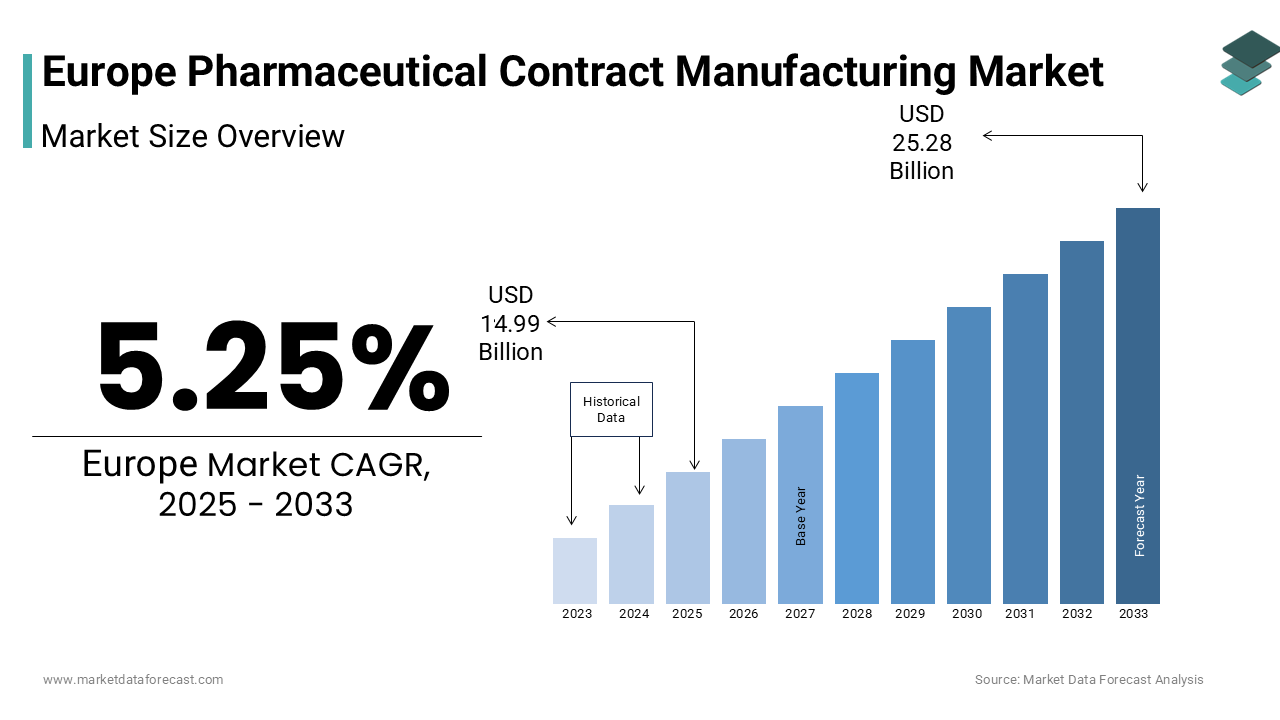
Pharmaceutical contract manufacturing comprises third party providers who produce active pharmaceutical ingredients finished dosage forms and sterile injectables on behalf of innovator and generic drug companies under strict regulatory oversight. This ecosystem enables pharmaceutical firms to outsource complex manufacturing processes while focusing on research commercialization and market access. As of 2025, Europe hosts one of the world’s densest networks of Good Manufacturing Practice certified facilities. According to the European Medicines Agency (EMA), manufacturers of medicines intended for the EU market must comply with EU GMP and are registered via national competent authorities. The region’s significance is further driven by its role in public health security; during the 2020 to 2023 pandemic response period the European Commission coordinated production of vaccines. According to a special report by the European Court of Auditors, by November 2021 the Commission had signed contracts to purchase up to 4.6 billion vaccine doses. Additionally, European pharmaceutical manufacturers consumed large quantities of high-purity water in 2023 for injection-grade processes, which is reflecting the infrastructure intensity of compliant production. With aging populations increasing therapeutic demand and regulatory frameworks emphasising supply-chain resilience, the contract-manufacturing model has evolved from a cost lever into a strategic pillar of Europe’s pharmaceutical sovereignty.
MARKET DRIVERS
Accelerated Growth of Biologics and Complex Modalities Drives Outsourcing Demand
The surge in biologic therapies including monoclonal antibodies cell and gene therapies and mRNA-based products has fundamentally reshaped manufacturing requirements across Europe compelling innovator companies to rely on specialized contract development and manufacturing organizations, which is one of the key factors propelling the growth of the European market. Unlike traditional small molecule drugs biologics demand highly controlled aseptic environments single use bioreactors and ultra-low particulate filtration systems that few originator firms possess in house. According to the European Medicines Agency (EMA), more than 65% of new marketing-authorization applications in 2024 involved biologic or advanced-therapy medicinal products. This transition necessitates outsourced manufacturing as only 28% of European pharmaceutical companies own dedicated biologics suites according to a survey by the European Federation of Pharmaceutical Industries and Associations (EFPIA). Furthermore, the European Commission’s Innovative Health Initiative has allocated €2.1 billion between 2021 and 2025 to support scalable advanced-therapy production, which is creating demand for contract manufacturers with viral-vector and plasmid-DNA capabilities. Companies like Novartis and Roche have increasingly outsourced up to 70% of their cell-therapy production to CDMOs with validated clean-room infrastructure, which is demonstrating that technical complexity now governs outsourcing decisions in Europe’s biopharmaceutical landscape.
Regulatory Harmonization and Quality Assurance Reinforce Trust in Contract Partners
Europe’s robust and unified pharmaceutical regulatory framework has cultivated a high trust environment that encourages innovator companies to delegate critical manufacturing activities to qualified contract manufacturers, which is further boosting the expansion of the European market. The centralized authorization procedure managed by the European Medicines Agency ensures that all contract sites undergo rigorous inspection against identical Good Manufacturing Practice standards regardless of whether they are located in Germany Sweden or Poland. According to the Heads of Medicines Agencies (HMA) network, national competent authorities conducted over 2 100 GMP inspections of contract-manufacturing facilities in 2023 alone, which is maintaining consistent oversight across the region. Meanwhile, the European Directorate for the Quality of Medicines & HealthCare (EDQM) operates the Certification of Suitability (CEP) programme which evaluates manufacturing sites of active substances for compliance with pharmacopoeial standards, as documented in its 2024 procedural review. Such systemic quality assurance allows pharmaceutical companies to confidently outsource even high-risk sterile injectables knowing that regulatory expectations are uniformly enforced, which is transforming the contract-manufacturing relationship from a vendor arrangement into a regulated extension of the sponsor’s own quality system.
MARKET RESTRAINTS
Stringent Regulatory Compliance Burdens Increase Operational Complexity
While Europe’s regulatory framework fosters trust it also imposes significant compliance obligations that raise the operational threshold for both sponsors and contract manufacturers, which is primarily impeding the growth of the European market. Every batch produced under contract must adhere to the European Pharmacopoeia monographs with documentation reviewed by both the marketing authorization holder and the national competent authority. According to the European Medicines Agency (EMA), more than 12 000 variation applications related to manufacturing sites or processes were submitted in 2023, which reflects the administrative intensity of maintaining compliance during technology transfers or facility upgrades. Deviations must be reported within 72 hours and investigated under strict root-cause-analysis protocols as mandated by EU GMP Annex 1.As per the European Federation of Pharmaceutical Industries and Associations (EFPIA), a single sterile injectable product may require over 300 quality-control tests before release, which is significantly extending lead times. For contract manufacturers this requires maintaining redundant quality-assurance teams, multilingual documentation systems and real-time audit readiness that costs ultimately passed to clients. These procedural demands, while essential for patient safety create friction in scaling production or adapting to urgent public-health needs, thus acting as a structural restraint on market fluidity.
Geopolitical and Supply Chain Fragility Undermines Raw Material Security
The European pharmaceutical contract manufacturing market remains vulnerable to disruptions in the supply of critical starting materials and single use components due to overreliance on non-EU sources, which is further hindering the regional market growth. According to the European Commission’s 2024 Pharmaceutical Strategy Progress Report, 72% of active pharmaceutical ingredients used in European drug production are imported primarily from China and India. Similarly, over 80% of single-use bioreactor bags and chromatography resins are sourced from North America, as per the European Biopharmaceutical Enterprises data. This external dependency became starkly evident during the 2022 Red Sea shipping crisis which delayed raw material deliveries by up to 45 days for 37% of European CDMOs as recorded by the European Association for Bioindustries. Even within Europe logistical bottlenecks persist; the European Environment Agency reports that 19% of pharmaceutical transport routes failed cold-chain integrity audits in 2023 due to customs delays at internal borders. These vulnerabilities force contract manufacturers to hold excessive safety stock, which is inflating working capital requirements and limiting agility. Until Europe achieves strategic autonomy in critical input materials the contract manufacturing model will remain exposed to external shocks that compromise reliability and cost predictability.
MARKET OPPORTUNITIES
Strategic Reshoring of Pharmaceutical Production Creates New Outsourcing Avenues
The concerted effort of Europe to rebuild domestic pharmaceutical manufacturing capacity is generating unprecedented opportunities for contract manufacturers with compliant infrastructure and scalability. According to the European Commission, a large majority of active pharmaceutical ingredients used in European drug manufacturing are imported from non-EU countries, which exposes the supply chain to external risks. Similarly, a significant proportion of single-use bioprocessing consumables such as bioreactor bags and chromatography resins are sourced outside Europe, which affects supply resilience. The external dependency became starkly evident during the 2022 Red Sea shipping crisis when delivery times for many European manufacturers lengthened, which is putting pressure on production schedules. Even within Europe logistical bottlenecks persist. For example, cold-chain integrity in pharmaceutical transport has been cited as a growing concern due to customs delays at internal borders. These vulnerabilities force contract manufacturers to hold excessive safety stock, which is inflating working capital requirements and limiting agility. Until Europe achieves strategic autonomy in critical input materials the contract manufacturing model will remain exposed to external shocks that compromise reliability and cost predictability.
Rising Demand for Personalized and On Demand Therapies Fuels Niche Manufacturing Models
The emergence of patient specific therapies particularly in oncology and rare diseases is catalyzing demand for flexible small batch contract manufacturing capable of handling bespoke formulations, which is another promising opportunity in the European market. Unlike traditional mass production these therapies require modular cleanrooms adaptive logistics and real time quality release systems. According to the European Medicines Agency, a number of advanced therapy medicinal products (ATMPs) received conditional approval in 2024, many of which relied on contract manufacturers for commercial supply due to their specialised logistics and validation capabilities. According to the estimates of the European Federation of Pharmaceutical Industries and Associations, more than 120 academic medical centres across Europe now collaborate with CDMOs to produce autologous cell therapies requiring turnaround times under 72 hours. This trend is further accelerated by the EU’s Horizon Europe programme which funded 18 decentralised manufacturing pilot projects in 2023 to test point-of-care production models. Contract manufacturers with adaptable facilities such as isolator-based aseptic lines and closed-system bioreactors are uniquely positioned to serve this high-value and low-volume segment. As personalised medicine moves from clinical trials to routine care the market for agile, responsive contract manufacturing is expected to expand significantly beyond conventional scale paradigms.
MARKET CHALLENGES
Workforce Shortages in Specialized Pharmaceutical Manufacturing Impair Capacity Utilization
Despite abundant capital investment Europe faces a critical shortage of personnel trained in aseptic processing advanced biologics manufacturing and regulatory documentation that directly constrains contract manufacturing output, which is one of the major factors challenging the growth of the European market. The pharmaceutical manufacturing sector is expected to face a significant shortage of skilled technicians and engineers by 2027, especially in sterile fill-finish and quality control roles. A substantial share of contract development and manufacturing organisations (CDMOs) in Central and Eastern Europe are operating below full capacity not because of a lack of orders but because they lack sufficient qualified staff to run multiple shifts. The bottleneck is further aggravated by stringent certification requirements for aseptic operators which take many months of hands-on training before handling commercial batches. Meanwhile, competition from higher-paying biotech and medical-device sectors continues to draw away talent. As a result, even newly constructed facilities remain under-utilised, which delays client timelines and inflates per-unit costs. Without coordinated up-skilling initiatives through vocational academies and industry consortia Europe’s contract manufacturing potential will remain capped by human-capital limitations.
Environmental Compliance Pressures Increase Waste Management and Energy Costs
Pharmaceutical contract manufacturing in Europe is increasingly burdened by stringent environmental regulations governing solvent emissions water discharge and energy consumption which elevate operational costs and complicate facility design, which is further challenging the regional market expansion. Under the Industrial Emissions Directive more than 1 800 pharmaceutical-production sites are required to implement Best Available Techniques (BAT) for waste minimisation, which includes installing technologies such as thermal oxidisers for volatile organic compound abatement and zero-liquid-discharge systems for wastewater management. The directive, which specifies that each installation must adopt BAT or equivalent measures, which is the primary EU instrument controlling industrial emissions. These environmental mandates impose extra capital expenditure and these estimates show that installing advanced abatement and waste-treatment systems can add significant cost burdens, particularly for mid-sized contract manufacturing organisations. Moreover, the Carbon Border Adjustment Mechanism indirectly affects contract development and manufacturing organisations (CDMOs) by increasing energy input costs; for example, industrial electricity in Germany averaged about €0.233 per kWh (≈€233 / MWh) in 2024, as part of broader European industrial electricity pricing data. In addition, industry benchmarking shows that solvent-recovery alone can account for approximately 18% of total operating expenses in small-molecule CDMOs. These environmental and energy-cost pressures, while essential for sustainability, impose financial and technical constraints that disproportionately impact mid-sized contract manufacturers lacking economies of scale, thereby distorting competitive dynamics and limiting market entry.
REPORT COVERAGE
| REPORT METRIC | DETAILS |
| Market Size Available | 2024 to 2033 |
| Base Year | 2024 |
| Forecast Period | 2025 to 2033 |
| Segments Covered | By Service Type, Molecule Type, End Client Type, and Region. |
| Various Analyses Covered | Global, Regional & Country Level Analysis, Segment-Level Analysis; DROC, PESTLE Analysis, Porter's Five Forces Analysis, Competitive Landscape, Analyst Overview of Investment Opportunities |
| Regions Covered | UK, France, Spain, Germany, Italy, Russia, Sweden, Denmark, Switzerland, the Netherlands, Turkey, the Czech Republic, and the Rest of Europe |
| Market Leader Profiled | Lonza Group, Recipharm AB, Catalent Inc., Fareva Holding SAS, Aenova Group GmbH, Boehringer Ingelheim Pharma GmbH & Co. KG, Siegfried Holding AG, Almac Group Ltd, Cenexi SAS, and Eurofins CDMO S.A. |
SEGMENTAL ANALYSIS
By Service Type Insights
The finished dosage form development and manufacturing segment accounted for 53.5% of the regional market share in 2024. The domination of the segment in the European market is primarily attributed to its central role in commercializing drug candidates and meeting stringent delivery requirements. Unlike active pharmaceutical ingredient production which is often consolidated in low-cost regions FDF manufacturing requires proximity to European regulatory and commercial ecosystems given the complexity of solid oral dose sterile injectable and inhalation formulations. The surge in late-stage clinical pipelines is further contributing to the domination of the FDF development and manufacturing segment in the regional market. According to the European Medicines Agency, a substantial number of new molecular entities entered Phase III trials in 2024, which is requiring GMP-compliant fill-finish and tablet-coating capabilities within the region. As per a report by the European Commission’s Medicines Shortages Taskforce in 2023, packaging and final formulation as critical bottlenecks in supply resilience, which is prompting originator companies to secure local final-dosage-form capacity. The European Directorate for the Quality of Medicines & Healthcare further tightened sterility-assurance standards in 2024 and this requires real-time environmental monitoring in all aseptic lines, which favours established European CDMOs with validated cleanrooms. With over 1 100 fill-and-finish facilities holding EU GMP certification according to national agency data, this segment remains the operational nexus of Europe’s pharmaceutical outsourcing landscape.
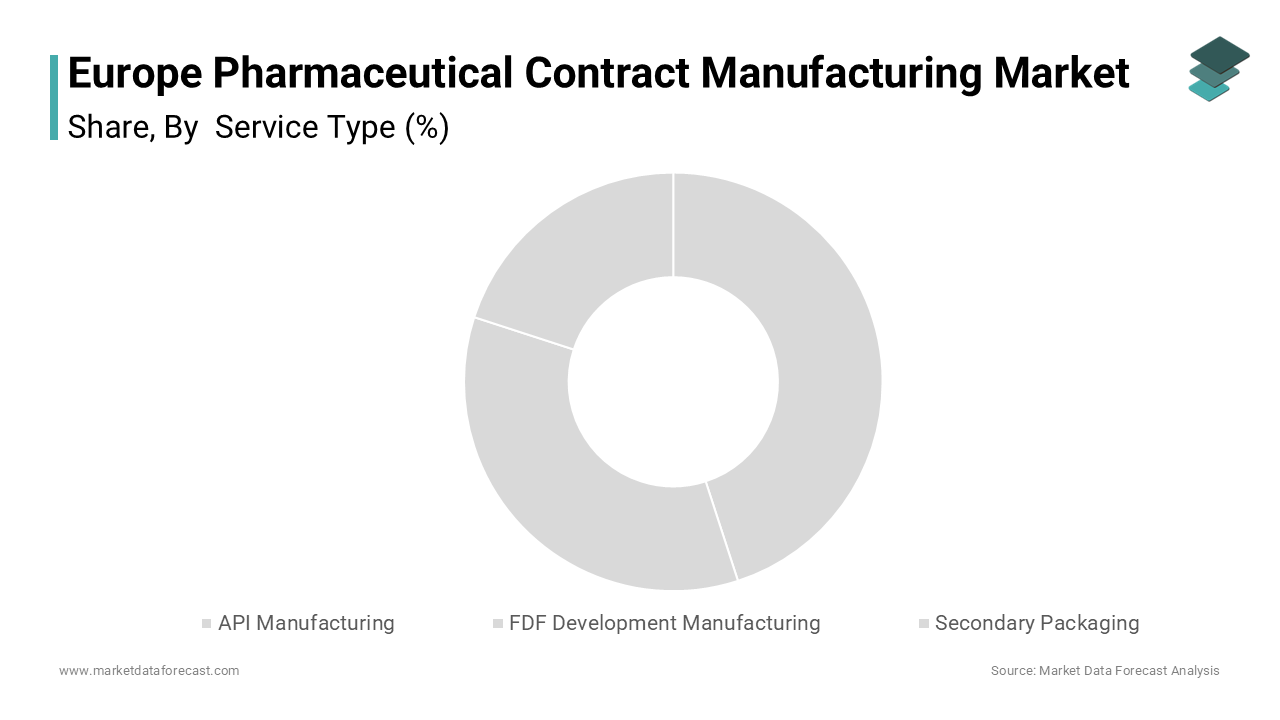
The API contract manufacturing segment is predicted to witness the fastest CAGR of 9.08% over the forecast period in the European market owing to the strategic reshoring initiatives and regulatory mandates to reduce third country dependency. The European Commission’s pharmaceutical strategy for Europe explicitly targets a meaningful increase in domestic API production capacity by 2030 to mitigate supply-chain vulnerabilities exposed during the pandemic. According to the European Medicines Agency, a large majority of active substances used in EU-authorised medicines originated outside the European Economic Area in 2024, which is prompting accelerated investment in local synthesis and fermentation infrastructure. Germany’s federal health authorities allocated substantial funding in 2023 to support API-manufacturing modernisation and commissioned multiple new multipurpose synthesis plants by mid-2024. Additionally, the European Pharmacopoeia Commission updated its monographs in January 2024 to require stricter impurity profiling for imported APIs, which is increasing compliance costs for non-EU suppliers and making local CDMOs more attractive. These policy and quality-driven shifts are transforming API manufacturing from a commoditised offshore function into a high-value strategic asset within Europe’s pharmaceutical sovereignty framework.
By Molecule Type Insights
The small molecule segment held the leading share of the European market in 2024. The leading position of small molecule segment in the European market is primarily due to their extensive use in chronic disease management and well-established generic pathways. Despite the rise of biologics, small molecules still represented a substantial majority of all medicinal products authorised in the EU in 2024, which reflects their enduring therapeutic relevance. The patent cliff affecting major drug classes that will lose exclusivity in the coming years is further boosting the expansion of the small molecule segment in the European market. This wave fuels demand for generic and biosimilar manufacturers to partner with CDMOs for cost-efficient high-volume production. Furthermore, small-molecule APIs are chemically stable and amenable to continuous manufacturing, which reduces facility footprint and accelerates batch release. Contract manufacturers with adaptable facilities such as isolator-based aseptic lines and closed-system bioreactors are uniquely positioned to serve this high-value, low-volume segment. As personalised medicine moves from clinical trials to routine care, the market for agile and responsive contract manufacturing is expected to expand significantly beyond conventional scale paradigms.
The large molecule segment is anticipated to register a CAGR of 13.5% over the forecast period in the regional market due to the clinical innovation and public health investment. The European Medicines Agency (EMA) approved a notable number of advanced therapy medicinal products (ATMPs) in 2024, which reflects an accelerated translation of academic research into commercial therapies. Unlike small molecules, these modalities require specialised infrastructure such as single-use bioreactors, cryogenic storage and closed-system fill-finish lines, which only a limited number of contract development and manufacturing organisations (CDMOs) possess. The European Commission’s Innovation Fund committed significant funding in 2023 to expand viral-vector manufacturing capacity, with large-scale CDMO facilities inaugurated in Europe by early 2024. Additionally, the 1+ Million Genomes Project is generating demand for personalised cancer vaccines requiring patient-specific fill-finish runs, which is a service offered by only a few European CDMOs. This convergence of scientific advancement, targeted funding and infrastructure scarcity is propelling large-molecule contract manufacturing into the market’s highest-growth trajectory.
By End Client Type Insights
The big pharma segment occupied the major share of the European market in 2024. The dominating position of big pharma segment is primarily attributed to their extensive portfolios complex global supply chains and strategic reliance on external manufacturing for portfolio flexibility. These multinational firms operate under intense pressure to optimize capital allocation preferring to outsource non-core manufacturing while retaining discovery and commercial functions. The research-based pharmaceutical industry in Europe increasingly outsources sterile injectable production to maintain agility amid patent expirations and pipeline volatility. The regulatory harmonization is also contributing to the expansion of the big pharma segment in the European market. Big Pharma leverages the EU’s centralized authorization system to deploy standardized manufacturing protocols across multiple CDMOs, which ensures batch consistency while meeting local demand. Additionally, the European Medicines Agency’s PRIME scheme that fast-tracks innovative therapies has led large companies to partner with specialised CDMOs for rapid scale-up. For example, one major company engaged multiple European contract manufacturers within months of receiving breakthrough designation in 2023. This institutional reliance on external partners for speed, risk diversification and compliance cements Big Pharma as the market’s anchor client segment.
The mid-sized biopharmaceutical companies segment is the fastest growing end client segment in the Europe pharmaceutical contract manufacturing market and is likely to showcase a CAGR of 12.04% over the forecast period owing to their venture capital inflows academic spin outs and supportive EU innovation frameworks. Unlike Big Pharma these firms lack internal GMP infrastructure and depend entirely on CDMOs for clinical and commercial supply. Venture funding for European biotech start-ups reached an elevated level in recent years, which underlines strong investor interest in novel biologics and cell therapies. The EU’s Horizon Europe programme further de-risks early commercialisation by co-financing GMP manufacturing via the European Innovation Council, which supported multiple biotech-CDMO partnerships in 2023. Additionally, national initiatives such as Germany’s BioPharma Initiative and France’s Genomic Medicine Plan provide grants covering up to half of contract-manufacturing costs for SMEs. The European Biopharmaceutical Enterprises reports that the number of European biotechs with marketed products rose substantially between 2020 and 2024, which is increasing demand for end-to-end CDMO services from process development to labelling. This ecosystem of funding, policy and scientific entrepreneurship positions mid-sized biopharma as the market’s most dynamic growth engine.
REGIONAL ANALYSIS
Germany Pharmaceutical Contract Manufacturing Market Analysis
Germany dominated the pharmaceutical contract manufacturing market in Europe and captured 25.5% of the regional market share in 2024. The domination of Germany in the European market is primarily attributed to its dense cluster of chemical engineering expertise regulatory rigor and public investment in health sovereignty. Germany is home to a large number of GMP-certified manufacturing sites, which supports its role as a preferred partner for both European and global innovators requiring complex sterile and solid-dose production. The country’s dominance stems from its dual strength in small-molecule synthesis and biologics manufacturing that is supported by institutions such as the Fraunhofer‑Gesellschaft, which operates pilot-scale GMP facilities dedicated to contract production. In recent years the German government disbursed significant funding under its pharmaceutical production resilience programmes to modernise CDMO infrastructure, with emphasis on continuous manufacturing and API localisation. Additionally, Germany hosts a concentration of raw-material suppliers, creating integrated supply chains that reduce lead times. This confluence of engineering heritage, state support and industrial integration ensures Germany remains a core hub of Europe’s contract manufacturing capability.
France Pharmaceutical Contract Manufacturing Market Analysis
France occupies the second position in the Europe pharmaceutical contract manufacturing market. The growth of the French market is driven by its national strategy to reclaim pharmaceutical autonomy and its leadership in vaccine and biologics production. The French national medicines regulator oversees a substantial number of contract-manufacturing sites with particular strength in aseptic fill-finish and lyophilisation. France’s market role is defined by a public-private manufacturing model. For example, the Pasteur Network initiative launched in 2022 coordinates multiple CDMOs to maintain surge capacity for pandemic response, which is part of the country’s broader preparedness infrastructure. Additionally, France benefits from a robust academic-translational ecosystem: French research institutions’ spin-outs initiated numerous contract-manufacturing agreements in recent years, which is boosting demand for CDMO services. The France 2030 strategic plan allocates funding to expand biologics and cell-therapy CDMO capacity and develops new manufacturing hubs, which is part of the country’s push to reinforce its biomanufacturing base. This fusion of state stewardship, scientific excellence and industrial readiness sustains France’s strategic prominence in contract manufacturing.
Switzerland Pharmaceutical Contract Manufacturing Market Analysis
Switzerland is a promising market for pharmaceutical contract manufacturing in Europe despite its small size due to its unparalleled concentration of global pharmaceutical headquarters and world class regulatory alignment. Though not an EU member Swiss CDMOs operate under mutual recognition agreements with the European Medicines Agency allowing seamless batch certification across the bloc. Switzerland hosts many GMP-certified contract manufacturing facilities and is recognised as a preferred location for manufacturers requiring high-potency or oncology production for major global innovators. Switzerland’s appeal lies in its tradition of precision engineering and regulatory equivalence, which attract sensitive manufacturing such as controlled-substance APIs and personalised therapies. In 2024 the Swiss regulatory authorities approved several new modular clean-room suites dedicated to cell-therapy production, reflecting growing demand from European biotechs seeking Swiss quality without EU-regulatory delay. Switzerland’s universities and research institutions collaborate actively with CDMOs on continuous manufacturing and AI-driven process analytics, creating a pipeline of innovation. This unique blend of regulatory equivalence, technical excellence and confidentiality cements Switzerland’s outsized influence in high-value contract manufacturing.
UK Pharmaceutical Contract Manufacturing Market Analysis
The UK commanded a considerable share of the Europe pharmaceutical contract manufacturing market in 2024. The strong life sciences base of the UK and post Brexit regulatory autonomy are propelling the UK market growth. Despite exit from the EU the UK’s Medicines and Healthcare products Regulatory Agency maintains equivalence with EMA standards enabling many CDMOs to serve dual markets. The Office for Life Sciences indicates that the UK hosts a substantial number of contract-manufacturing facilities, with leading capabilities in sterile injectables and advanced therapies. The UK’s Life Sciences Vision 2030 strategy has directed significant funding toward manufacturing resilience, including a manufacturing innovation centre at Glasgow that became fully operational in late 2024. This facility partners with contract development and manufacturing organisations (CDMOs) to pilot continuous manufacturing and AI-based quality control, which is helping reduce batch-failure rates. Additionally, the UK’s strong venture-capital scene funded many biotech start-ups in 2024, all of which rely entirely on contract manufacturers for GMP production. While regulatory divergence poses long-term challenges, the UK’s scientific infrastructure and agile CDMO network sustain its competitive relevance.
Italy Pharmaceutical Contract Manufacturing Market Analysis
Italy is predicted to exhibit a healthy CAGR in the Europe pharmaceutical contract manufacturing market during the forecast period due to its specialization in generic solid oral dose production and growing investment in biologics. According to the Italian Medicines Agency AIFA over 210 CDMOs operate in the country with 65 percent focused on small molecule generics serving both domestic and Southern European markets. Italy’s strength derives from cost efficient labour highly skilled chemical engineers and proximity to North African and Balkan markets. In recent years the government has incentivized technological upgrades; the National Recovery and Resilience Plan allocated 780 million euros in 2023 to modernize pharmaceutical facilities with 41 CDMOs receiving grants for continuous manufacturing and real time release testing as confirmed by the Ministry of Economic Development. Additionally, Italy is emerging as a hub for biosimilars with three major CDMOs in Lombardy and Lazio investing in mammalian cell culture suites capable of 2,000-liter batches. The Italian Pharmaceutical Manufacturers Association reports that export of contract manufactured medicines rose by 18 percent in 2024 driven by demand from Eastern Europe and the Middle East. This blend of traditional strength and strategic modernization secures Italy’s role in Europe’s diversified manufacturing landscape.
COMPETITIVE LANDSCAPE
Competition in the Europe pharmaceutical contract manufacturing market is characterized by a tiered landscape where global leaders coexist with specialized regional players offering niche capabilities in sterile fill finish high potency drugs or continuous manufacturing. Differentiation is driven less by price and more by technical expertise regulatory track record speed to market and digital readiness. Large multinational CDMOs leverage scale and integrated services from development to packaging while mid sized European firms compete through agility localized support and deep familiarity with national competent authority expectations. The market faces intensifying pressure to adopt advanced technologies such as AI driven process control and modular cleanrooms to meet evolving standards for advanced therapies. Regulatory harmonization under the European Medicines Agency reduces barriers but also raises the quality bar uniformly. With pharmaceutical companies increasingly viewing manufacturing partners as extensions of their own innovation pipeline trust reliability and compliance consistency have become the decisive competitive factors in a market where failure carries significant patient and reputational risk.
KEY MARKET PLAYERS
Some of the companies that are playing a dominating role in the Europe Pharmaceutical Contract Manufacturing Market include
- Lonza Group
- Recipharm AB
- Catalent Inc.
- Fareva Holding SAS
- Aenova Group GmbH
- Boehringer Ingelheim Pharma GmbH & Co. KG
- Siegfried Holding AG
- Almac Group Ltd
- Cenexi SAS
- Eurofins CDMO S.A.
Top Players in the Market
Lonza Group
Lonza Group is a Swiss headquartered global leader in pharmaceutical contract manufacturing with deep integration across Europe’s biologics and small molecule sectors. The company operates multiple large scale GMP facilities in Switzerland Germany and the UK specializing in monoclonal antibodies cell and gene therapies and complex sterile injectables. Lonza has significantly expanded its European footprint by investing in high throughput viral vector suites and continuous manufacturing platforms to meet rising demand for advanced therapies. In 2024 the company launched its Ibex Digital ecosystem across its European sites enabling real time batch analytics and remote client oversight. Through strategic partnerships with European biotechs and public health initiatives Lonza continues to reinforce its role as a cornerstone of the continent’s pharmaceutical supply resilience and innovation infrastructure.
Catalent
Catalent maintains a prominent position in the Europe pharmaceutical contract manufacturing market through its extensive network of sterile fill finish oral dose and biologics facilities in Belgium Italy and the UK. The company serves a diverse client base ranging from global innovators to emerging biotechs with end-to-end development and commercial manufacturing capabilities. Recently Catalent has enhanced its European capacity by retrofitting isolator based aseptic lines for high potency oncology drugs and expanding lyophilization capacity in response to rising demand for complex injectables. It has also integrated AI driven process monitoring across its European sites to reduce batch deviations and accelerate release timelines. These investments reflect Catalent’s commitment to supporting Europe’s transition toward agile responsive and technologically advanced pharmaceutical manufacturing.
Recipharm
Recipharm is a European native contract development and manufacturing organization headquartered in Sweden with a strong presence across Germany France Italy and the UK. The company specializes in solid oral dose sterile injectables and respiratory products serving both generic and innovator clients. Recipharm has recently strengthened its market position by modernizing legacy facilities with continuous manufacturing technology and expanding its regulatory affairs support to facilitate faster market access across EU member states. In 2024 it launched a sustainability program targeting 40 percent reduction in water and energy use per batch aligning with EU Green Deal objectives. Through localized expertise regulatory agility and a client centric operating model Recipharm has become a preferred partner for mid-sized biopharma companies seeking reliable European manufacturing capacity.
Top Strategies Used by the Key Market Participants
Key players in the Europe pharmaceutical contract manufacturing market prioritize strategic capacity expansion through facility modernization and geographic footprint enhancement to meet rising demand for biologics and complex injectables. They invest heavily in digital transformation by deploying AI enabled process analytics and real time quality monitoring to improve batch consistency and reduce release timelines. Partnerships with academic institutions and public health agencies enable access to early-stage pipeline assets and public funding for infrastructure upgrades. Sustainability integration through energy efficient manufacturing and waste reduction aligns with EU environmental regulations and strengthens client relationships. Additionally, companies focus on regulatory agility by harmonizing quality systems across sites to facilitate seamless technology transfer and multi country batch certification within the European Medicines Agency framework.
MARKET SEGMENTATION
The research report on the Europe pharmaceutical contract manufacturing market has been segmented and sub-segmented based on categories.
By Service Type
- API Manufacturing
- FDF Development Manufacturing
- Secondary Packaging
By Molecule Type
- Small Molecule
- Large Molecule (Biologics and Advanced Therapies)
By End Client Type
- Big Pharma
- Mid-Sized Biopharma
- Generic Manufacturers
- Others
By Country
- UK
- France
- Spain
- Germany
- Italy
- Russia
- Sweden
- Denmark
- Switzerland
- Netherlands
- Turkey
- Czech Republic
- Rest of Europe