- Product Description Description
- Table of Contents TOC
- List of Table & Figure LOT
- Get Free Sample PDF Sample PDF
Market Size, 2025
$13.41 BnMarket Estimate, 2026
$13.84 BnMarket Forecast, 2034
$17.76 BnCAGR, 2026–2034
3.17%Europe Phosphatic Fertilizers Market Size, Growth, Trends & Forecast (2026–2034)
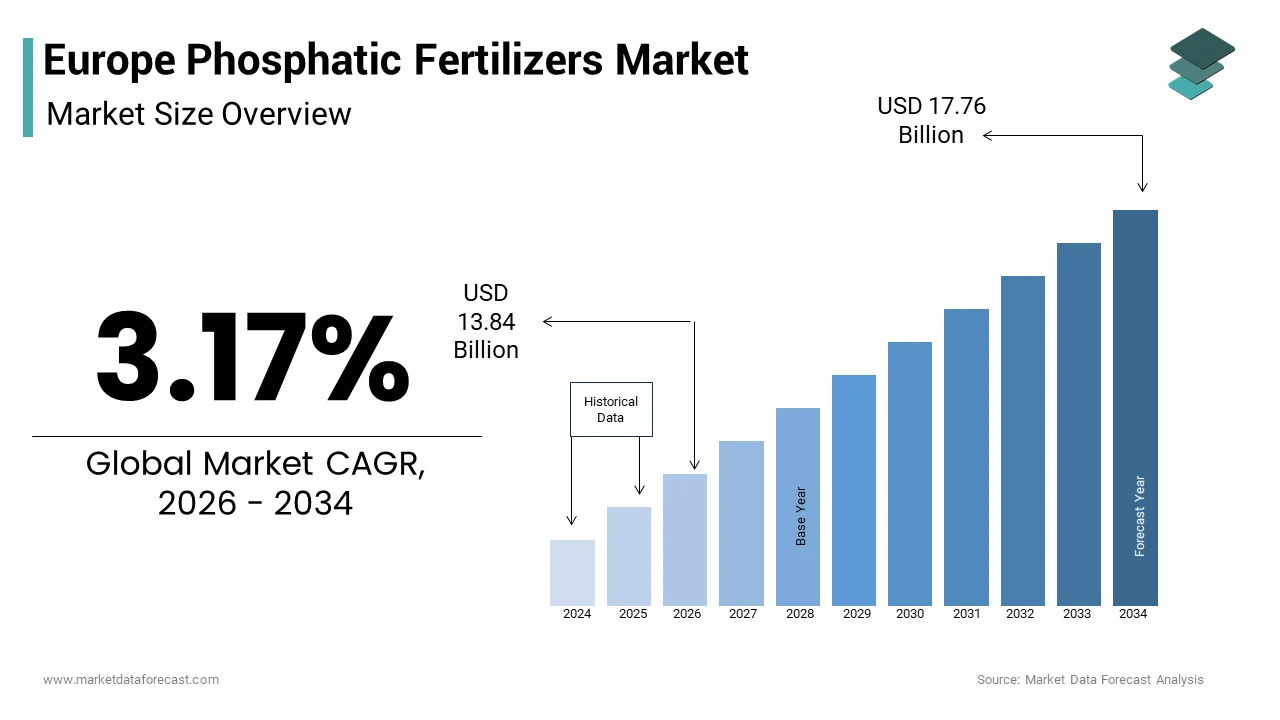
The size of the Europe phosphatic fertilizers market was valued at USD 13.41 billion in 2025, is anticipated to reach USD 13.84 billion in 2026, and is projected to scale up to USD 17.76 billion by 2034, registering a compound annual growth rate (CAGR) of 3.17% during the forecast period from 2026 to 2034. Driven by environmental policy frameworks, precision nutrient management mandates, and high-value crop production, the market continues to evolve toward a precision input system balancing agronomic necessity with ecological accountability.
Key Executive Metrics (At-a-Glance)
- 2025 Base Valuation: USD 13.41 Billion
- 2026 Current Valuation: USD 13.84 Billion
- 2034 Forecast Valuation: USD 17.76 Billion
- Compound Annual Growth Rate (CAGR): 3.17% (2026–2034)
- Dominant Type & Application: Diammonium Phosphate (DAP) / Grains & Oilseeds
- Fastest-Growing Segment & Country: Monoammonium Phosphate (MAP) & Fruits & Vegetables / Germany (leading market share) & Spain/Netherlands (high-growth horticultural adoption)
- Dominant Country: Germany (held 21.7% market share backed by extensive arable land and stringent nutrient governance)
Core Market Drivers
- Intensification of High-Value Crops: Expansion of protected horticulture, greenhouse farming, and nutrient-responsive specialty crops driving targeted phosphate demand.
- Policy Mandates for Soil Fertility: Common Agricultural Policy (CAP) rules requiring baseline nutrient planning and soil organic matter maintenance.
Primary Market Restraints & Challenges
- Environmental Regulations: Strict limits on phosphorus application in Nitrate and Phosphorus Vulnerable Zones, alongside carbon and chemical intensity constraints.
- Import Reliance & Volatility: Near-total reliance on imported phosphate rock exposing the region to supply chain disruptions and price spikes.
Europe Phosphatic Fertilizers Market Segmentation Breakdown
| Segment Category | Leading Sub-Segment (2025 Base) | Fastest-Growing Sub-Segment (2026–2034) |
|---|---|---|
| By Type | Diammonium Phosphate / DAP (held 42.6% share due to high nutrient density and neutral pH) | Monoammonium Phosphate / MAP (forecasted at 6.4% CAGR driven by precision agriculture compatibility) |
| By Application | Grains & Oilseeds (held 64.3% share backed by extensive cultivation of wheat, barley, and maize) | Fruits & Vegetables (estimated at 7.9% CAGR driven by protected horticulture and fresh produce demand) |
| By Country | Germany (held 21.7% market share backed by extensive arable base and strict digital nutrient tracking) | Spain & The Netherlands (rapid adoption of fertigation, advanced greenhouse tech, and phosphorus recovery) |
Major Industry Players Profiled
Key enterprises shaping the competitive Europe phosphatic fertilizers market include Yara International ASA (Norway), EuroChem Group AG (Switzerland), Nutrien Ltd. (Canada), OCP Group (Morocco), The Mosaic Company (U.S.), ICL (Israel), CF Industries Holdings Inc. (U.S.), and PhosAgro (Russia).
Europe Phosphatic Fertilizers Market Size
The Europe phosphatic fertilizers market size was valued at USD 13.41 billion in 2025 and is anticipated to reach USD 13.84 billion in 2026 to reach USD 17.76 billion by 2034, growing at a CAGR of 3.17% during the forecast period from 2026 to 2034.
Phosphatic fertilizers are compounds that provide plants with phosphorus, a crucial nutrient for root development, flowering, and energy transfer. As of 2025, the market operates within a tightly regulated environmental and agricultural policy framework emphasizing nutrient use efficiency, circularity, and soil health preservation. According to research, current trends show varied phosphorus availability across European arable land, with some regions having high or optimal levels due to historical application, while others in Southern and Eastern Europe have naturally lower concentrations, requiring careful management to maintain fertility. European phosphorus use efficiency is highly variable by region and agricultural system, with ongoing efforts to improve management and reduce significant environmental losses through runoff and fixation. The European Union is implementing new policies under the Common Agricultural Policy to encourage and provide tools for improved nutrient management and balanced fertilization practices across farms. The EU classifies phosphate rock as a critical raw material, a designation that encourages investment and development in domestic recovery and recycling technologies to reduce import dependency and manage supply risks. These dynamics position the phosphatic fertilizers sector not as a commodity market but as a precision input system balancing agronomic necessity with ecological accountability.
MARKET DRIVERS
Intensification of High-Value Crop Production Drives Targeted Phosphorus Demand
The expansion of high-value horticultural and specialty crop systems across the region is fuelling the growth of the Europe phosphatic fertilizers market. This is due to the nutrient’s critical role in early root establishment and fruit quality. According to a study, the total area utilized for protected cultivation, which includes greenhouses and polytunnels, has expanded. This expansion reflects a notable increase in the physical footprint of these farming methods. The primary crops contributing to this growth trend are tomatoes, various berries, and leafy greens. These crops exhibit high phosphorus responsiveness. Optimized application methods in agricultural settings may enhance various desirable outcomes in strawberry cultivation, such as a potentially higher rate of fruit set and an increase in the natural sweetness of the fruit. Furthermore, the EU’s Protein Plan incentivizes legume cultivation, which, despite nitrogen fixation, still requires starter phosphorus doses for nodulation efficiency. National nutrient management guidelines in Italy and Spain now prescribe crop-specific rates based on soil testing, which reinforces demand for soluble, readily available phosphates like MAP and ammonium polyphosphate in fertigation systems. This shift toward intensive, quality-driven agriculture ensures sustained and growing reliance on tailored phosphatic inputs.
Policy Mandates for Soil Fertility Maintenance Sustain Baseline Phosphorus Applications
European Union regulations explicitly require maintenance of soil organic matter and nutrient balance as conditions for Common Agricultural Policy subsidies, which propels the expansion of the Europe phosphatic fertilizers market. This creates a structural floor for phosphatic fertilizer use. Agricultural practices are increasingly incorporating nutrient planning frameworks that require farmers to balance nutrient inputs with crop removal rates. Regulations are linking phosphorus application amounts to specific soil test results. Regional policies are influencing application strategies through limits or balancing systems, and the goal of fertilization is shifting towards maintaining baseline fertility rather than solely increasing yields. This regulatory compulsion ensures that even under reduction targets, a minimum level of phosphatic input remains essential to prevent long-term soil degradation and preserve agricultural productivity, anchoring consistent market demand irrespective of short-term price fluctuations.
MARKET RESTRAINTS
Stringent Limits on Phosphorus Application in Nutrient Vulnerable Zones Suppress Demand
There is significant contraction in regions designated as Nitrate or Phosphorus Vulnerable Zones under EU water protection directives, which holds back the growth of the Europe phosphatic fertilizers market. A growing portion of agricultural land in the region is now subject to specific environmental designations that influence farming practices. Regulatory frameworks are increasingly implementing mandatory reductions in nutrient use to meet environmental targets. These regulatory changes are leading to significant shifts in land use and farming input management strategies. New ordinances establish clear concentration limits for nutrient application based on soil quality classifications. These revised rules impact a substantial amount of arable land, changing how soil fertility is managed across various farms. In Flanders, phosphorus budgets are calculated per farm, with excess application triggering fines. These measures directly suppress phosphatic fertilizer consumption, particularly in intensive livestock regions where manure already contributes high phosphorus loads. Future regulations relating to urban wastewater treatment may require resource recovery. This potential requirement could lead to a decreased need for conventional inputs in certain agricultural practices. The overall effect might limit future market expansion for some inputs within specific farming regions.
Geopolitical Disruption of Phosphate Rock Imports Elevates Input Costs
Region’s near total reliance on imported phosphate rock, sourced primarily from Morocco, Western Sahara,ra Ru, and the Middle East, is a major restraint to the Europe phosphatic fertilizers market. This exposes the market for phosphatic fertilizers to supply chain volatility and price spikes. The European Union has a high dependence on external sources for its phosphate rock supply. A single nation provides a significant majority of this imported material. Trade disruptions related to a key global supplier led to substantial price volatility for essential phosphate-based materials. Market prices for phosphate fertilizers experienced considerable fluctuation, with an initial sharp increase followed by some subsequent stabilization. Logistics associated with the transport of bulk shipments to major receiving hubs continue to face challenges, including delays and capacity issues in general port operations and vessel availability. Domestic production capacity is minimal. Dependence on imports will continue to destabilize prices, threaten supply, and hinder long-term infrastructure investment until scalable circular economy solutions or new sources are developed.
MARKET OPPORTUNITIES
Advancement of Phosphorus Recovery from Organic Waste Streams
The EU’s push toward a circular phosphorus economy offers a transformative opportunity to create secondary supply channels while reducing environmental impact, which is expected to drive the growth of the Europe phosphatic fertilizers market. Regulatory changes are encouraging large urban areas to implement technologies for resource recovery from sewage. The potential yield of recovered phosphorus from wastewater is significant, potentially meeting a notable percentage of agricultural fertilizer requirements. Pilot programs are successfully demonstrating recovery methods, such as producing struvite-based fertilizers for use by local farms. The application of phosphorus recovery is expanding across various waste treatment facilities, producing materials that adhere to quality standards for agricultural use. Funding initiatives are supporting efforts to expand phosphorus recovery technologies beyond sewage to include agricultural waste streams like manure and food waste. These initiatives not only diversify supply but also align with Farm to Fork sustainability targets, creating a new market segment for certified recycled phosphatic products that command premium pricineco-consciouscious agricultural sectors.
Integration of Precision Nutrient Management Platforms
Digital agronomy is opening new opportunities for optimizing phosphorus use through variable rate application based on real-time soil and crop data. This ultimately creates fresh prospects for the expansion of the Europe phosphatic fertilizers market. Platforms combining satellite imagery, soil sensors, and crop growth models now allow farmers to apply phosphatic fertilizers only where and when needed, reducing waste while maintaining yields. The adoption of satellite-enabled precision farming tools has shown significant growth across Europe. Phosphorus recommendation algorithms are being integrated into a substantial number of cooperative advisory services in France. The use of precision phosphorus management practices can lead to a reduction in fertilizer use while maintaining crop yields. Funding has been allocated to expand data infrastructure in the EU, aimed at improving the compatibility of nutrient management tools. Maturing systems are enabling the precise management of phosphorus as a targeted agronomic variable, moving away from conventional blanket applications. This transition necessitates the use of soluble liquid phosphatic formulations and aids compliance with essential nutrient management regulations.
MARKET CHALLENGES
High Energy and Chemical Intensity of Phosphate Production Undermines Decarbonization Goals
The conventional production of phosphatic fertilizers remains environmentally burdensome due to its reliance on sulfuric acid digestion of phosphate rock, which challenges the growth of the Europe phosphatic fertilizers market. This process generates significant carbon emissions and radioactive phosphogypsum waste. The conventional process for producing phosphoric acid generates significant carbon emissions and a substantial amount of phosphogypsum byproduct, which is largely stored indefinitely. Future regulatory frameworks within the EU are poised to implement tariffs on imported phosphate fertilizers based on their environmental footprint. This will likely increase operational costs for producers outside the EU and for those within the region still reliant on traditional energy sources. Exploring alternative production methods, such as those using green hydrogen, presents a notable financial challenge. The current assessment indicates that this transition would substantially increase production costs, suggesting that such environmentally friendly approaches may not be commercially feasible without external support. The long-term viability of the phosphatic fertilizers sector is threatened by its inability to meet the European Green Deal’s net-zero targets without scaling up, ed cleaner production pathways, which could result in regulatory penalties, consumer backlash, and loss of public funding.
Farmer Reluctance to Adopt Alternative Phosphorus Sources Slows Market Evolution
Widespread adoption of recycled and bio-based phosphorus products faces hurdles from farmer skepticism, variable quality, and insufficient agronomic validation, despite existing policy support, which inhibits the expansion of the Europe phosphatic fertilizers market. Farmers in the EU exhibit relatively low confidence in the yield reliability of recovered phosphorus fertilizers. Concerns about potential heavy metal contamination in these products are notable among farmers. Regulations currently permit a specific level of cadmium in phosphate fertilizers, including recovered types. There appears to be a general trend that recovered products may lack standardized certification, contributing to market uncertainty. Apart from these, struvite and ash-based fertilizers exhibit slower solubility, requiring different application timing than conventional MAP or DAP, which many farmers are unwilling to adjust. The shift towards circular phosphorus will stay fragmented, hindering environmental progress and the creation of a strong secondary market, unless there are coordinated demonstration networks, effective risk-sharing mechanisms, and transparent quality assurance labels.
REPORT COVERAGE
| REPORT METRIC | DETAILS |
| Market Size Available | 2025 to 2034 |
| Base Year | 2025 |
| Forecast Period | 2026 to 2034 |
| CAGR | 3.17% |
| Segments Covered | By Type, Application, & Region |
| Various Analyses Covered | Global, Regional & Country Level Analysis, Segment-Level Analysis, DROC, PESTLE Analysis, Porter’s Five Forces Analysis, Competitive Landscape, Analyst Overview on Investment Opportunities |
| Regions Covered | UK, France, Spain, Germany, Italy, Russia, Sweden, Denmark, Switzerland, Netherlands, Turkey, Czech Republic & Rest of Europe |
| Market Leaders Profiled | CF Industries Holdings Inc. (U.S.), OCP (Morocco), Agrium Inc. (Canada), Potash Corp. of Saskatchewan (Canada), Mosaic (U.S.), Eurochem (Russia), ICL (Israel), Yara International ASA (Norway), Coromandel International Ltd. (India), Phosagro (Russia). |
SEGMENTAL ANALYSIS
By Type Insights
In 2024, the diammonium phosphate (DAP) segment held the largest share of 42.6% of the Europe Phosphatic Fertilizers Market. The dominance of the DAP segment is driven by high nutrient density and broad crop suitability. DAP’s command originates from its dual provision of nitrogen and phosphorus pentoxide, making it one of the most concentrated solid NPK sources available for European agriculture. Its neutral pH upon dissolution also minimizes soil acidification risks compared to MAP, a critical advantage in regions like Northern Germany and Poland, where soil buffering capacity is low. Besides, DAP’s granular stability enables easy blending with potash and urea for custom NPK formulations. National nutrient guidelines in Spain and Italy explicitly recommend DAP for maize and sunflower, crops covering millions of hectares combined. This combination of nutritional efficiency, soil compatibility, and formulation flexibility ensures DAP remains the cornerstone of phosphatic fertilization across Europe’s major arable belts.
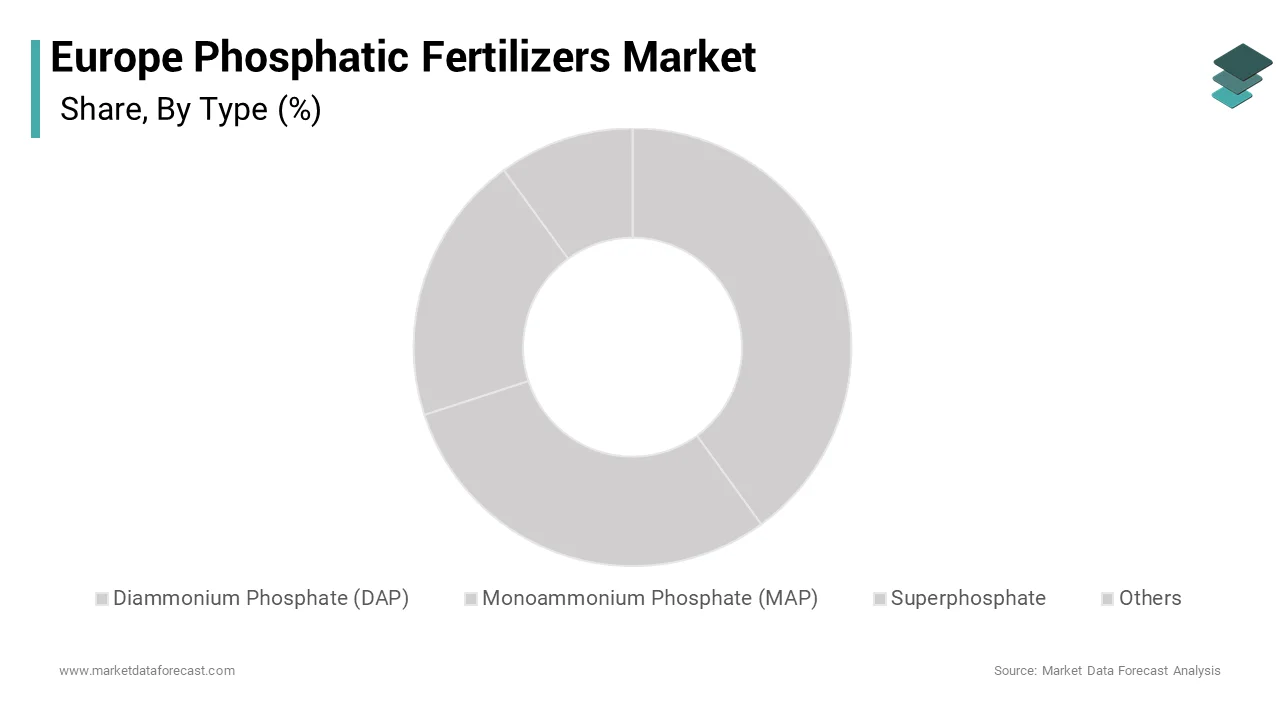
The monoammonium phosphate (MAP) segment is predicted to witness the highest CAGR of 6.4% from 2025 to 2033. The rapid growth of the MAP segment is propelled by its compatibility with precision agriculture and high-value horticulture. Unlike DAP, MAP has a mildly acidic reaction in soil, which enhances phosphorus availability in calcareous soils prevalent in Southern Europe. According to sources, MAP use in protected horticulture rose, driven by its solubility in fertigation systems for tomatoes and peppers. Furthermore, MAP’s lower ammonia volatility makes it ideal for surface application in no-till systems, which now cover significant hectares in the EU. The growing popularity of variable-rate application through digital platforms and water-soluble formulations places MAP at the forefront of targeted nutrient management, a position it holds due to its agronomic precision and adaptability.
By Application Insights
The grains & oilseeds segment dominated the Europe Phosphatic Fertilizers Market by capturing a 64.3% share in 2024. Extensive cultivation and policy incentives have mainly contributed to the prominence of the grains & oilseeds segment. Cereals and oilseeds occupy millions of hectares of EU arable land, forming the backbone of European food and feed security. According to research, wheat, barley, and maize alone covered millions of hectares in 2024, all requiring phosphorus for root development and early vigor. The EU’s Protein Plan further boosted demand by incentivizing legume cultivation. Faba beans and peas expanded, with national agencies mandating starter phosphorus doses for nodulation success. Besides, geopolitical pressures have elevated strategic grain production. DAP and MAP are standard in these systems due to cost efficiency and blending compatibility. National nutrient management regulations, even in phosphorus vulnerable zones, permit replenishment on low testing soils, which constitute a share of cereal land in Germany. This vast, policy-supported, and agronomically necessary base ensures grains and oilseeds remain the primary consumption channel for phosphatic fertilizers.
The fruits & vegetables application segment is estimated to register the fastest CAGR of 7.9% from 2025 to 2033. The swift expansion of the fruits & vegetables application segment is fuelled by the expansion of high-value protected and open field horticulture, driven by consumer demand for fresh produce and EU dietary guidelines. These crops exhibit high phosphorus responsiveness. The EU’s Farm to Fork Strategy promotes integrated nutrient management in horticulture, encouraging water-soluble phosphates like ammonium polyphosphate. Countries now mandate soil testing before phosphorus application in fruit orchards, driving demand for precise, high-purity products. The premium segment of agriculture is set to grow faster than traditional broadacre farming in phosphatic fertilizer consumption, driven by increasing incomes and urban farming.
COUNTRY ANALYSIS
Germany Phosphatic Fertilizers Market Analysis
Germany led the Europe phosphatic fertilizers market and occupied a 21.7% share in 2024. The leading position of the German market is propelled by its vast arable base and stringent nutrient governance. The country produces millions of tons of wheat and potatoes annually, both of which are phosphorus-intensive. Most farms are now submitting their phosphorus information digitally. Fertilizer use is managed by regulations that establish application limits. Replenishment of phosphorus is permissible for soils that have been identified as low in the nutrient. A significant amount of agricultural land is subject to these particular rules. Despite restrictions, demand remains robust due to cereal and sugar beet cultivation. Some companies operate major blending facilities, supplying DAP and MAP tailored to regional soil types. Germany’s command lies not in volume growth but in setting the regulatory and technological benchmark for precision phosphorus use, influencing standards across the EU.
France Phosphatic Fertilizers Market Analysis
France followed closely in the Europe phosphatic fertilizers market and captured an 18.9% share in 2024 because of Europe’s largest arable area and its role as the top cereal and oilseed producer. French farmers are using a significant amount of phosphatic fertilizers, with the majority applied to key crops like wheat, barley, and rapeseed. There is a focus on advancing agricultural technology, with investment aimed at promoting the use of precision agriculture techniques. These efforts are expanding the capacity for variable-rate phosphorus application across a large area of farmland. The national Protein Plan further boosted demand, with pea and faba bean areas expanding, requiring starter phosphorus doses. Yara and Nutrien operate blending facilities, supplying both conventional and stabilized products. France’s unique position combines large-scale commodity farming with aggressive digital agronomy adoption, making it a critical barometer for phosphorus demand under policy pressure.
Russia Phosphatic Fertilizers Market Analysis
Russia remains a major player in the Europe Phosphatic Fertilizers Market, with its role having shifted from major supplier to constrained participant. Historically, Russia exported substantial tons of DAP annually to the EU, but sanctions and logistics barriers have reduced. Domestically, producers have pivoted to Asia, yet retain infrastructure influence in Eastern Europe. Within the EU, certain products continue to be utilized in specific member nations under limited exemptions. The EU’s Carbon Border Adjustment Mechanism is approaching its effective date. This mechanism will potentially impact the future status of some imported materials due to considerations around emissions data verification. Russia’s market share is thus declining structurally, but its legacy capacity continues to shape regional price expectations and supply alternatives in the European periphery.
The Netherlands Phosphatic Fertilizers Market Analysis
The Netherlands expanded steadily in the Europe phosphatic fertilizers market, disproportionate to its land area due to extreme agricultural intensity. The country supports significant hectares of greenhouse horticulture and a large number of dairy cows, both of which are phosphorus-demanding. The application of phosphatic fertilizer in protected cultivation is observed to be around substantial kilograms per hectare. Regulatory changes have prompted efforts to reduce phosphorus deposition nationally, leading to adjustments in farming operations and the availability of agricultural inputs. This paradox, high use amid regulatory contraction, has accelerated the adoption of precision tools. Companies supply water-soluble MAP for fertigation. The Netherlands also leads in phosphorus recovery, with wastewater plants producing struvite fertilizer. This dual focus on efficiency and circularity defines its advanced market status.
Spain Phosphatic Fertilizers Market Analysis
Spain is anticipated to grow in the Europe phosphatic fertilizers market from 2025 to 2033, owing to Mediterranean climate challenges and expanding irrigated horticulture. Drought conditions have increased reliance on fertigation, with water-soluble MAP and ammonium polyphosphate growing in popularity due to solubility and immediate uptake. However, the Guadalquivir River Basin remains a phosphorus vulnerable zone, restricting autumn applications. Spanish growers increasingly blend organic and synthetic phosphorus, with co-application rising. Spain’s market reflects the tension between climate-driven input needs and water quality mandates, creating demand for adaptive, soluble formulations.
COMPETITIVE LANDSCAPE
Competition in the Europe Phosphatic Fertilizers Market is shaped by the intersection of regulatory compliance, supply security, and agronomic innovation. Large global players like Yara, EuroChem, and Nand Utrien compete not only on volume and logistics but increasingly on sustainability credentials and digital integration capabilities. The market features a dual dynamic where integrated producers leverage scale and R and D while trading and distribution firms focus on sourcing flexibility and regional partnerships. Regulatory pressure under the EU Fertilising Products Regulation has intensified rivalry in the low cadmium segment as companies race to certify compliant products. At the same time, import dependency creates vulnerability, favoring firms with diversified supply chains or access to circular phosphorus streams. Competition is further nuanced by varying national policies, with countries like the Netherlands imposing strict phosphorus budgets, while others like Romania prioritize food security-driven input access. This fragmented yet policy-driven landscape demands both compliance excellence and adaptive go-to-market strategies.
KEY MARKET PLAYERS
These are the market players that are dominating the Europe phosphatic fertilizers market, including:
- CF Industries Holdings Inc. (U.S.)
- OCP (Morocco)
- Nutrien Ltd
- Agrium Inc. (Canada)
- Potash Corp. of Saskatchewan (Canada)
- Mosaic (U.S.)
- Eurochem (Russia)
- ICL (Israel)
- Yara International ASA (Norway)
- Coromandel International Ltd. (India)
- Phosagro (Russia).
Top Players In The Market
- Yara International ASA, headquartered in Norway, is a global leader in mineral fertilizers with a strong footprint in the Europe Phosphatic Fertilizers Market through its production and distribution of N and NPK blends. The company supplies tailored phosphatic solutions to cereal horticulture and protein crop systems across Western and Southern Europe. It also upgraded its terminals in Rotterdam and Barcelona to handle certified low cadmium phosphate imports. These initiatives reinforce Yara’s integration of agronomic science and logistics to support sustainable intensification while maintaining its position as a key global supplier of balanced nutrient solutions.
- EuroChem Group,p AG, based in Switzerland, is a major European producer of phosphate and complex fertilizers with significant operations in Russia and Western Europe. The company supplies DAP and MAP to key agricultural regions, including Germany, Italy, and Spain, through its port facilities in Lithuania and the Netherlands. It also enhanced its product line with low-cadmium DAP compliant with EU regulatory thresholds. These moves demonstrate EuroChem’s dual strategy of securing conventional supply while advancing circular phosphorus solutions to meet evolving European sustainability standards and global market expectations.
- Nutrien Ld, through its European distribution network, plays a pivotal role in the phosphatic fertilizers landscape by supplying imported DAP and MAP to cooperatives and agro input retailers across the EU. The company leverages its global sourcing capabilities to ensure continuity despite geopolitical disruptions. It also introduced a certified low heavy metal phosphate portfolio compliant with EU Regulation 2022 1372 on fertilizer contaminants. These actions underscore Nutrien’s commitment to regulatory alignment and agronomic support, strengthening its role as a reliable global supplier in Europe’s increasingly compliance-driven nutrient market.
Top Strategies Used By The Key Market Participants
Key participants in the Europe Phosphatic Fertilizers Market prioritize compliance with EU regulations on cadmium and other contaminants by sourcing or producing low heavy metal phosphate products. They invest in digital agronomy platforms to offer precision phosphorus recommendations aligned with national nutrient budgeting requirements. Companies are expanding ports and blending infrastructure to ensure supply chain resilience amid geopolitical volatility. Strategic development of recycled phosphorus products from wastewater and manure supports alignment with circular economy mandates. AAdditionallyfirms collaborate with agricultural cooperatives and advisory services to embed their products into certified nutrient management plans,snhancenhancingtion and trust.
MARKET SEGMENTATION
The Europe Phosphatic Fertilizers Maet is segmented and sub-segmented into the following categories:
By Type
- Diammonium Phosphate (DAP)
- Monoammonium Phosphate (MAP)
- Superphosphate
- Others
By Application
- Grains & Oilseeds
- Fruits & Vegetables
- Others
By Country
- United Kingdom
- France
- Spain
- Germany
- Italy
- Russia
- Sweden
- Denmark
- Switzerland
- Netherlands
- Rest of Europe