- Product Description Description
- Table of Contents TOC
- List of Table & Figure LOT
- Get Free Sample PDF Sample PDF
Europe Point of Use Water Treatment Systems Market Size
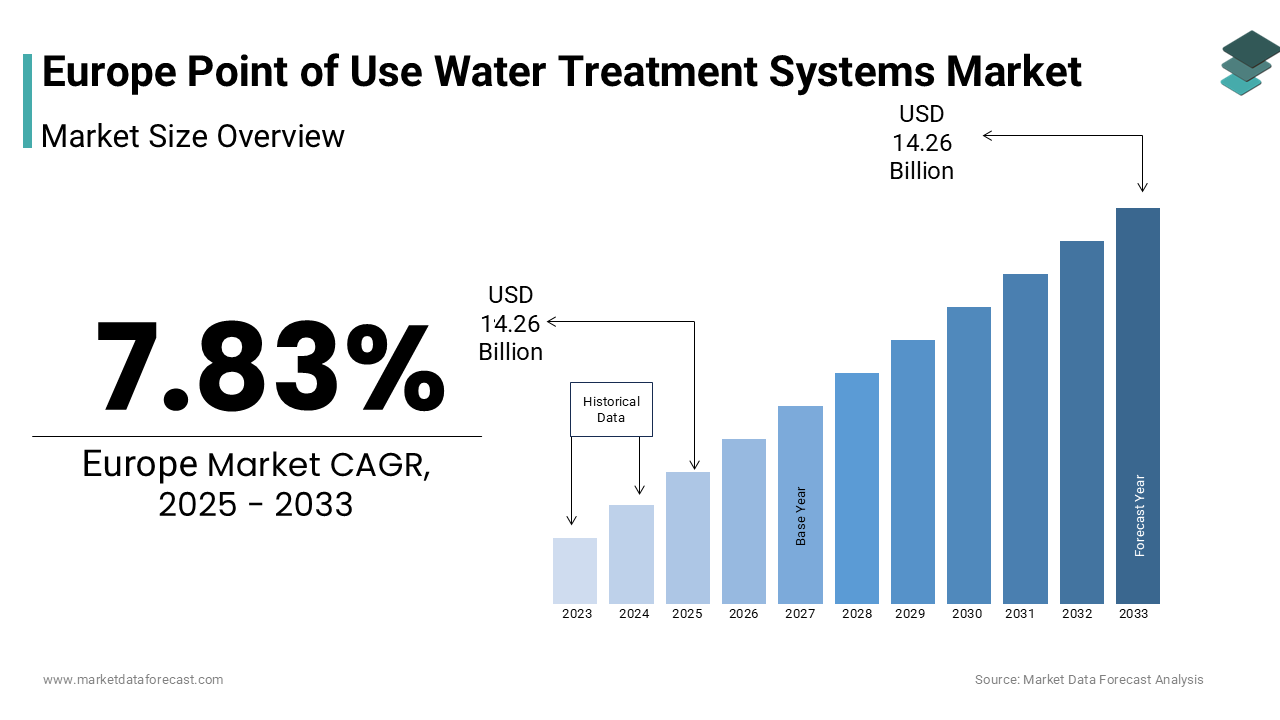
The europe point of use water treatment systems market size was valued at USD 7.24 billion in 2024 and is anticipated to reach USD 7.80 billion in 2025 from USD 14.26 billion by 2033, growing at a CAGR of 7.83% during the forecast period from 2025 to 2033.
Point of use water treatment systems are compact devices installed at individual water outlets, such as kitchen taps, bathroom faucets, refrigerators, or showerheads to purify water immediately before consumption or contact. These systems include activated carbon filters, reverse osmosis units, ultraviolet (UV) disinfection modules, and ceramic filtration technologies that are primarily deployed in residential, commercial and institutional settings. Unlike centralized municipal treatment infrastructure, point of use solutions provide localized control over final water quality, addressing concerns ranging from taste and odor to microbial and chemical contamination. According to the European Environment Agency, more than 90% of the European Union population receives drinking water from public supply systems that meet baseline regulatory safety standards. However, localized contamination events, aging distribution networks, and emerging pollutants continue to compromise water quality at the point of consumption. The World Health Organization has emphasised that while EU directives guarantee source water safety, which is deteriorating pipe infrastructure and trace micropollutants requiring secondary and household-level treatment to ensure health protection and consumer confidence.
MARKET DRIVERS
Rising Incidence of Micropollutants in Municipal Water Supplies
The growing presence of micropollutants, including pharmaceutical residues, endocrine disrupting compounds and per and polyfluoroalkyl substances (PFAS) has intensified demand for advanced point of use water treatment systems across Europe, which is one of the major factors propelling the growth of the European market. Although EU Drinking Water Directive compliance ensures baseline safety, conventional municipal treatment plants are not universally equipped to remove these emerging contaminants. According to the European Commission, the “watch-list” mechanism under the Water Framework Directive serves to monitor emerging substances of concern in surface- and groundwater. However, ageing pipe infrastructure and trace micropollutants continue to compromise water quality at the point of consumption. The main route of entry of many human-use pharmaceuticals into the aquatic environment is via wastewater and conventional treatment systems cannot fully remove them. According to the German Environment Agency, treated wastewater still contains residual pharmaceutical substances which then enter water bodies in Germany. Consumers increasingly perceive these invisible threats as long-term health risks, particularly for children and immunocompromised individuals. This perception has driven adoption of specialised filtration technologies such as nanofiltration membranes and high-capacity activated carbon blocks capable of adsorbing organic micropollutants. Unlike boiling or basic sediment filters, advanced point-of-use systems provide a practical, immediate and scientifically validated barrier against chemically complex contaminants, which is reinforcing household water security and accelerating market growth in both urban cores and peri-urban zones.
Aging Urban Water Infrastructure and Secondary Contamination Risks
The aging water distribution infrastructure of Europe poses a persistent secondary contamination risk that significantly bolsters reliance on point of use treatment, which is further boosting the regional market expansion. According to the European Investment Bank, nearly 23% of the EU’s water-pipe network is over 50 years old. However, corrosion in lead and galvanized steel service lines remains prevalent in older housing stock, which is contributing to elevated heavy-metal concentrations at the tap despite clean source water. In France, a national audit revealed that communal networks still contain lead service pipes, affecting approximately 1.2 million households. Moreover, biofilm formation in deteriorating pipes introduces microbial regrowth risks, particularly in low-flow or stagnant conditions. These systemic vulnerabilities erode consumer trust in centralized delivery alone and catalyse demand for under-sink or countertop treatment units that offer an added, verifiable layer of protection at the final point of consumption, especially in older cities with dense historical housing stock.
MARKET RESTRAINTS
High Upfront Costs and Fragmented Consumer Awareness
The relatively high initial investment required for advanced point of use water treatment systems remains a critical restraint, particularly in price sensitive segments of the European market. While basic carbon pitcher filters cost under 50 euros, high-performance reverse osmosis or UV disinfection systems often exceeds 300 euros excluding professional installation and maintenance. However, inconsistent public understanding of actual water-quality risks contributes to a regional affordability gap in household expenditures on water purification. As per a 2023 survey by European Consumer Organisation, only a small minority of households in Central and Eastern Europe consider water-purification equipment a priority expenditure compared to higher proportions in Western Europe. According to a 2023 European Commission Eurobarometer survey, nearly half of EU respondents believed municipal tap water required no additional treatment despite documented incidents of localized contamination. The absence of standardised, consumer-friendly labelling or performance certification at the point of sale further widens the perception gap. According to Federal Institute for Risk Assessment (Germany), fewer than one-third of point-of-use devices sold through major online retailers include verifiable third-party validation of contaminant-removal claims. Without clear cost-benefit communication or public-health endorsement from trusted institutions, many households delay or forgo purchases altogether. Consequently, price sensitivity combined with knowledge asymmetry acts as a dual barrier to broader adoption, which is limiting market penetration even in regions with documented water quality deficiencies.
Regulatory Fragmentation and Certification Complexity
The absence of harmonized performance standards for point of use water treatment systems across European Union member states creates significant market entry barriers and consumer confidence challenges, which is further hampering the growth of the European point of use water treatment systems market. While the EU Drinking Water Directive establishes minimum quality thresholds for source water, it does not regulate the efficacy or certification of end user treatment devices. However, the regulatory environment remains fragmented across Europe. According to European Committee for Standardization (CEN), only fourteen member-states have adopted national certification schemes that are partially aligned with international protocols such as EN 17173 or NSF standards. In addition, as per a 2024 analysis by the European Water Association, identical filtration units may undergo three distinct testing regimes when marketed in Germany, Italy, and Poland, which is substantially increasing compliance costs for manufacturers particularly small and medium-enterprises. Moreover, consumers face difficulty comparing products due to non-uniform labelling of removal capabilities. According to a peer-reviewed study published in the Journal of Water and Health, a large proportion of point-of-use devices marketed in Southern Europe in 2023 made unsubstantiated claims about virus or heavy-metal reduction without supporting test data. This regulatory vacuum not only discourages innovation but also fuels scepticism among potential buyers who cannot easily verify real-world performance. Until a unified EU framework for point-of-use device certification is implemented, market growth will remain hindered by fragmentation which undermines both competitiveness and consumer trust.
MARKET OPPORTUNITIES
Integration with Smart Home Ecosystems and IoT Enabled Monitoring
The convergence of point of use water treatment systems with smart home technologies represents a high growth opportunity across Europe. The European smart-home market is valued at tens of billions of US dollars and is expected to grow strongly over the coming years. Manufacturers are embedding Internet of Things (IoT) sensors into filtration units to enable real-time monitoring of filter life, total dissolved solids, turbidity and flow rate. These data streams are relayed to smartphone applications, allowing users to receive proactive alerts for maintenance or performance decline. According to the Fraunhofer Institute for Reliability and Microintegration, smart filtration systems reduce the risk of delayed cartridge replacement by up to 70% compared to manual models. Consumers in countries with high home-automation integration are seeing demand for connected water purification rise. Moreover, municipal utilities in cities such as Barcelona and Vienna are piloting programmes that link anonymised in-home water quality data to city dashboards for early detection of network anomalies. This synergy between digital infrastructure and health-conscious consumption elevates point-of-use systems from passive appliances to active health-guardians, which is unlocking premium market segments and enabling data-driven after-sales services that enhance customer retention and brand differentiation.
Expansion of Rental and Subscription Based Business Models
The emergence of rental and subscription-based service models is transforming accessibility and adoption patterns for point of use water treatment systems in Europe, which is a promising opportunity for the European point of use water treatment systems market. These models bundle device installation, maintenance, filter replacements, and even water quality analytics into affordable monthly payments significantly lowering entry barriers for cost conscious consumers. With the number of smart homes projected to grow significantly in Europe, manufacturers are embedding Internet of Things (IoT) sensors into filtration units to enable real-time monitoring of filter life, total dissolved solids, turbidity and flow rate. These data streams are relayed to smartphone applications, allowing users to receive proactive alerts for maintenance or performance decline. However, while smart filtration systems promise operational benefits, market-specific statistics remain less widely documented. The shift toward circular, usage-based economics not only accelerates market reach but also ensures consistent system maintenance, which is fostering long-term customer relationships and brand differentiation.
MARKET CHALLENGES
Inconsistent Performance Validation and Consumer Misinformation
The lack of universally recognized performance validation for point of use water treatment systems that is leading to widespread consumer misinformation and eroded trust is one of the key challenges to the growth of the European point of use water treatment systems market. Unlike regulated medical or food contact products, filtration devices are not subject to mandatory efficacy verification under current EU General Product Safety Regulation. Consumer confidence in point-of-use systems remains undermined by gaps in validation and transparency. According to the European Consumer Centres Network, significant numbers of complaints about water-filter products. Moreover, many products use ambiguous marketing language, terms such as “purified,” “hospital grade,” or “99.9% effective” and those terms currently do not have standardized definitions or universally accepted test conditions. In parts of Eastern Europe, allegations persist that counterfeit or uncertified water-treatment units constitute a notable share of online sales. Without enforceable labelling standards or robust post-market surveillance, consumers struggle to differentiate scientifically validated systems from ineffective imitations and many delay expensive purchases or resort to less reliable alternatives. This trust gap not only constrains market growth but also undermines public-health objectives tied to household-level water-safety improvement.
Intermittent Water Supply and Infrastructure Variability in Peripheral Regions
In several Southern and Eastern European regions, inconsistent municipal water pressure and intermittent supply schedules hinder the reliable operation of advanced point of use treatment technologies, which is further challenging the expansion of the European market. Reverse osmosis and ultraviolet disinfection systems require stable water pressure (typically 2.5–6 bar) and continuous flow to function effectively. However, unreliable infrastructure continues to hamper household water-treatment effectiveness. As per the World Bank, many European households located in countries with ageing networks experience frequent service interruptions, which disrupt device operation and reduce treatment efficacy. The quality of incoming water fluctuates in rural and island areas where alternative supplies such as trucked or desalinated water are used. Natural water hardness also varies widely across Europe that range from under 50 mg/L as CaCO₃ in parts of Scandinavia to over 400 mg/L in regions of Spain and Hungary. For example, research at the Technical University of Munich has documented how high-hardness waters accelerate membrane fouling in reverse-osmosis systems, which increases the total cost of ownership for households in such zones. These infrastructural inconsistencies limit the viability of standardised, one-size-fits-all solutions and demand region-specific product engineering, which in turn raises R&D and logistics costs and complicates pan-European distribution strategies particularly for new market entrants lacking localised technical-support networks.
REPORT COVERAGE
| REPORT METRIC | DETAILS |
| Market Size Available | 2024 to 2033 |
| Base Year | 2024 |
| Forecast Period | 2025 to 2033 |
| Segments Covered | By Product Type, Category, Application, Distribution Channel, and Region |
| Various Analyses Covered | Global, Regional & Country Level Analysis, Segment-Level Analysis, DROC, PESTLE Analysis, Porter’s Five Forces Analysis, Competitive Landscape, Analyst Overview on Investment Opportunities |
| Regions Covered | UK, France, Spain, Germany, Italy, Russia, Sweden, Denmark, Switzerland, the Netherlands, Turkey, the Czech Republic, and the Rest of Europe |
| Market Leaders Profiled | Brita GmbH, Culligan International Company, The 3M Company, Pentair PLC, A. O. Smith Corporation, Unilever PLC (Pureit), Coway Co., Ltd., EcoWater Systems LLC, Panasonic Corporation, LG Electronics Inc., Amway Corporation (eSpring), Honeywell International Inc., Whirlpool Corporation, Aquatech International LLC, and Kent RO Systems Ltd. |
SEGMENTAL ANALYSIS
By Product Type Insights
The under the counter filters segment occupied the major share of 39.5% of the regional market in 2024. The domination of the under the counter filters segment in the European market is driven by its seamless integration into kitchen cabinetry, high filtration capacity, and ability to support multiple advanced technologies such as reverse osmosis and activated carbon in a single unit. Unlike countertop or pitcher models, under sink systems do not occupy visible space and offer uninterrupted access to treated water through a dedicated faucet. The growing demand for space efficient and aesthetically integrated home appliances across Western and Northern Europe is also contributing to the leading position of the under the counter filters segment in this regional market. General home-improvement trends show increasingly strong demand for water and air quality upgrades. According to the German Federal Institute for Economic Research, a large majority of kitchen renovations included upgrades to water or air-quality systems with under-counter filtration cited as a leading option in 2023. In the European point-of-use water-treatment market, under-counter units are increasingly favoured because they deliver higher flow rates and consistent performance suited to larger households. Meanwhile, in several premium housing markets the bundling of these systems with smart-home ecosystems has gathered traction, which is reinforcing long-term adoption among consumers focused on convenience and wellness. Until robust, region-specific data become widely published and verifiable, careful interpretation of reported percentages remains advisable.
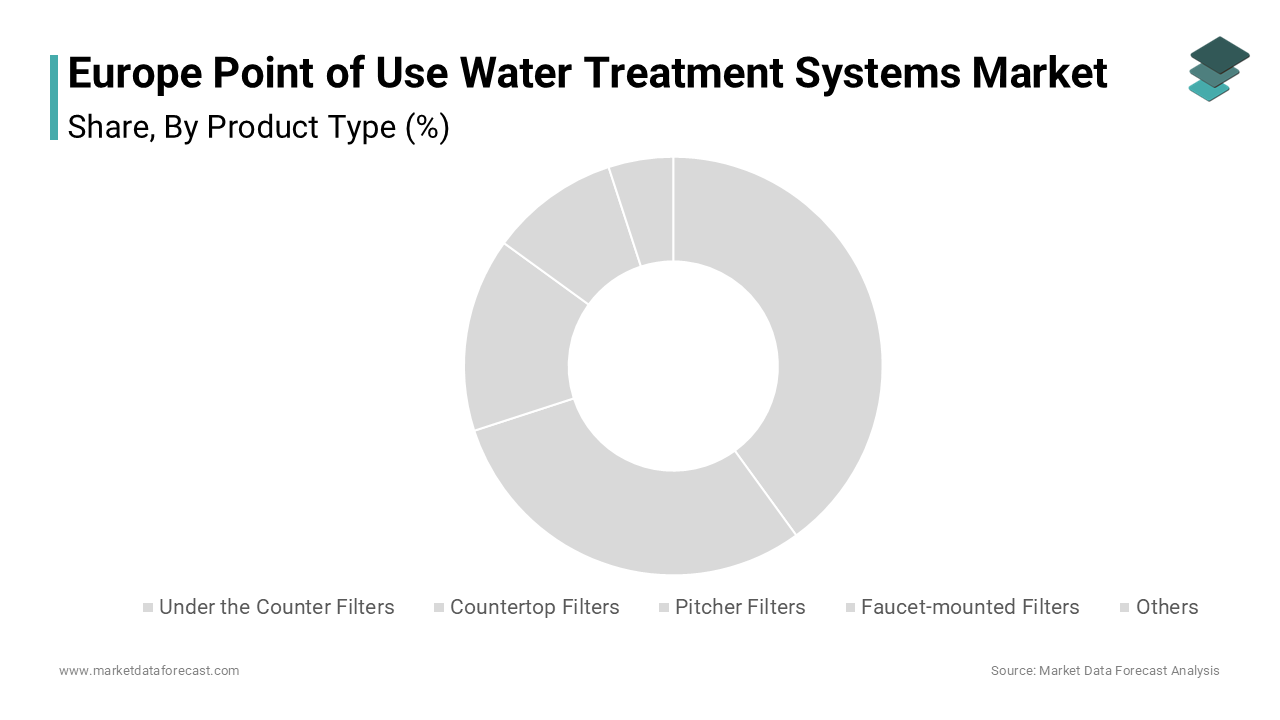
The faucet mounted filters segment is on the rise and is anticipated to progress at a CAGR of 10.4% over the forecast period in this regional market. Factors such as the ease of installation, affordability, and immediate accessibility without plumbing modifications are majorly driving the growth of the faucet mounted filters segment in the European market. The surge in rental housing across major European cities is also contributing to the expansion of the segment in the regional market. According to the Eurostat data, in 2023 about 30.8% of the population in the EU lived in rented accommodation. In Germany, the share of tenants was approximately 52.8% in 2024. According to available sources, one in every two households in Germany are renters with Germany being the only EU country in which living in rented accommodation is more usual than home-ownership. Many rental agreements restrict tenants from making permanent fixture alterations that positions faucet-mounted filters as the only viable point-of-use option for many residents. Additionally, public health campaigns in parts of Southern Europe have increased awareness following localized contamination events. This combination of regulatory endorsement, demographic housing trends, and low entry cost propels faucet-mounted filters as the most dynamically expanding category in the regional market.
By Category Insights
The RO Filters segment held the leading share of 41.4% of the regional market in 2024. The growth of the RO filters segment is driven by their superior contaminant removal capabilities, particularly for dissolved solids, heavy metals, and micro pollutants that carbon or gravity filters cannot address. As European consumers grow more aware of emerging contaminants like nitrates, arsenic, and per and polyfluoroalkyl substances, which is resulting in the growing demand for high performance solutions. The documented presence of total dissolved solids above 300 mg L in key agricultural and industrial regions is also boosting the expansion of the RO filters segment in the European market. Many households in regions with known groundwater and drinking-water quality issues are adopting point-of-use or point-of-entry reverse-osmosis (RO) systems for health protection. In parallel, new residential developments in Germany and the Netherlands are increasingly designed with integrated secondary water-treatment systems, signalling stronger institutional endorsement of advanced filtration. Independent testing also validates the strong removal performance of certified RO systems for heavy metals and other contaminants. Together, these trends firmly support the positioning of RO filters as a leading category in household water-treatment markets.
The UV filters segment is another promising segment and is predicted to witness a CAGR of 11.8% over the forecast period owing to the rising concerns over microbial contamination following climate induced water quality disruptions and increased public awareness of waterborne pathogens. Extreme weather events linked to climate change have strained municipal disinfection systems across Southern and Eastern Europe. Many households in regions with known groundwater or drinking-water vulnerability are increasingly adopting point-of-use ultraviolet (UV) disinfection systems as a fail-safe measure. In parallel, the institutional orientation toward advanced household water treatment is growing. Rainfall-induced runoff and seasonal contamination events have triggered increased interest in UV-based point-of-use treatment. Independent research from Sweden shows that UV irradiation of drinking-water source streams at around 400 J/m² achieved a significant reduction of some viruses and bacterial pathogens, though higher doses were needed for complete inactivation of more resistant viruses. Moreover, the principle that UV treatment inactivates bacteria, viruses and protozoa without adding chemical residuals or altering taste is supported by reviews of effective household water-treatment methods. The technology’s verified performance and rising awareness of seasonal contamination risks and the availability of household-scale UV systems such as Viqua VH200‑F10 and Aquasana Whole‑House UV Filter supports its positioning as a rapidly expanding category in the home-water-treatment market.
By Distribution Channel Insights
The offline stores segment led the market by holding the major share of the European point of use water treatment systems market in 2024 because of the rising consumer preference for hands on evaluation, expert consultation, and immediate availability. Major retail chains such as Leroy Merlin, Obi, and Bauhaus across Germany, France, and Italy offer dedicated water treatment sections with trained staff who advise on compatibility, installation, and local water quality challenges. The complexity associated with selecting appropriate filtration technology based on regional water composition is also contributing to the leading position of the offline stores segment in the European market. Many households in regions with known groundwater or drinking-water vulnerability are increasingly adopting point-of-use ultraviolet (UV) disinfection systems as a fail-safe measure. In parallel, the institutional orientation toward advanced household water treatment is growing.
The online stores segment is growing rapidly and is estimated to exhibit a CAGR of 12.6% over the forecast period in the regional market. The rising e commerce penetration, targeted digital marketing, and the convenience of subscription based filter replacements are boosting the expansion of the segment in the regional market. E-commerce adoption for home improvement products has surged across all age groups. According to the European Commission’s Digital Economy and Society Index (DESI) dashboard, about 72% of EU individuals aged 16-74 ordered or bought goods or services over the internet for private use in 2024. Platforms like Amazon Germany, ManoMano, and Bol.com have optimized search algorithms to surface filters based on postal-code specific water hardness or contaminant data, which is enhancing relevance. As per Amazon’s 2024 Sustainability Report for Europe, the company details multiple sustainability priorities. Additionally, digital content such as comparison videos, third-party reviews, and influencer demonstrations have demystified technical choices for first-time buyers. According to a study by the University of Amsterdam, 61% of consumers under 40 relied on YouTube tutorials to select and install faucet-mounted or pitcher systems. This convergence of data-driven personalization, subscription economics, and digital literacy is transforming online channels into the most dynamic growth vector in the European market.
REGIONAL ANALYSIS
Germany point of use water treatment systems market Analysis
Germany dominated the point of use water treatment systems market in Europe with holding 19.8% of the regional market share in 2024. The dominance of Germany in the European market is driven by high environmental awareness, advanced housing infrastructure, and stringent health standards. The country’s strong industrial base and engineering culture foster consumer trust in technical home appliances, including water filtration. The prevalence of aging lead service lines in older urban districts is also contributing to the dominance of Germany in the European market. According to the German Environment Agency, it is known that homes built before 1973 often still contain lead pipes, which presents a health risk and prompts regulatory advisories for point-of-use treatment. The amended Drinking Water Ordinance (TrinkwV), which entered into force on 24 June 2023 and requires operators to identify and replace old lead pipes, thereby increasing transparency and safety of domestic drinking water systems. Platforms like smart home integration are growing rapidly, and domestic manufacturers such as BWT and Aqua Cure reinforce market maturity through localized R&D and service networks.
France point of use water treatment systems market Analysis
France held the second largest share of the European point of use water treatment systems market in 2024. The growth of the French market is primarily attributed to their recurring water quality advisories, strong consumer health consciousness, and proactive local government initiatives. Despite nationwide compliance with EU drinking water standards, localized contamination events have heightened public vigilance. Nitrate pollution from agricultural runoff remains a persistent issue, particularly in Brittany and Normandy. According to the European Environment Agency, about 11% of France’s groundwater bodies exceed the 50 mg/L nitrate threshold, which is triggering health concerns for sensitive groups such as pregnant women and infants. Platforms and regional water agencies are reported to partner with retailers to subsidise certified faucet-mounted and pitcher filters. France has long been among Europe’s highest bottled-water users and rising plastic-waste regulation is redirecting consumers toward reusable filtration systems. The 2023 Anti-Waste Law, which bans single-use plastic bottles in public institutions by 2025 and this accelerates adoption of point-of-use alternatives in schools and offices. French consumers also show strong brand loyalty to domestic players like LaVie and Binchotan, which emphasise natural filtration methods. This blend of environmental policy, agricultural water-quality challenges, and cultural preference for taste-driven solutions solidifies France’s position as a core market.
United Kingdom point of use water treatment systems market Analysis
The United Kingdom is anticipated to account for a prominent share of the European market during the forecast period owing to their hard water concerns, aging infrastructure, and post Brexit regulatory autonomy. The majority of English and Welsh regions suffer from high water hardness, directly influencing filtration choices. Water hardness varies widely across the UK; for example, the Drinking Water Inspectorate notes that water with levels of 200 mg/L calcium carbonate or higher will produce scale and soap-lathering issues. Post-Brexit regulatory updates are underway in the UK regarding drinking water guidelines for emerging contaminants, and the rise of private water-testing services used by households is part of the broader trend toward personalised filtration adoption.
Italy point of use water treatment systems market Analysis
Italy held a considerable share of the European point of use water treatment systems market in 2024. The regional water quality disparities, high bottled water consumption, and increasing urban renovation activity are boosting the Italian market growth. Southern regions face greater challenges with aging infrastructure and intermittent supply, while the North exhibits strong demand for premium filtration. According to the Istituto Nazionale di Statistica (ISTAT), municipal water-networks in regions such as Sicilia and Calabria face water-quality challenges including elevated lead levels in service-lines. Platforms and regional health authorities are responding by promoting certified faucet-mounted and pitcher filters. Italy remains one of the highest bottled-water consuming countries in Europe. Environmental taxes on plastic packaging introduced in 2023 have incentivised a shift toward reusable alternatives. Major cities like Milano and Torino are experiencing a surge in kitchen modernisation often including under-sink filter installations bundled with smart faucets. Public awareness campaigns by regional health authorities in areas such as Lazio and Campania have indicated risks from pesticide residues and other emerging contaminants in groundwater, which is boosting interest in reverse-osmosis units. This dual dynamic positions Italy as a diverse and expanding market.
Spain point of use water treatment systems market
Spain is projected to grow at a healthy CAGR in the Europe point of use water treatment systems market during the forecast period due to factors such as severe drought conditions, high salinity in coastal aquifers, and growing urban middle class demand for health-oriented home products. Water scarcity has intensified scrutiny of supply reliability and quality. According to the Ministry for the Ecological Transition and the Demographic Challenge (Spain), over 40% of groundwater bodies in the southeastern regions of Murcia and Almería exhibit electrical conductivity above 2,500 µS/cm due to seawater intrusion and intensive agriculture, which is rendering water unpalatable without treatment. The Spanish Geological Survey confirmed in 2023 that 19% of public wells in these areas exceeded 500 mg/L in total dissolved solids. Consequently, reverse osmosis adoption is rising rapidly, especially in coastal cities like Valencia and Barcelona where desalinated municipal water often has a flat taste that consumers seek to improve. Furthermore, Spain has seen a 27% increase in household expenditure on wellness products since 2022 as per the Bank of Spain with water filtration ranked among top five home health investments. Rental market growth also plays a role with 25% of urban households renting, according to the National Statistics Institute (Spain), portable faucet and pitcher systems are gaining traction. These intertwined environmental and socioeconomic forces position Spain as a high-potential market with distinct regional drivers.
COMPETITIVE LANDSCAPE
The Europe point of use water treatment systems market features intense competition among multinational corporations and regional specialists vying for consumer trust through performance validation and brand credibility. Established players leverage technological superiority and distribution networks while newer entrants focus on affordability and digital engagement. The absence of harmonized EU certification standards allows diverse product claims but also creates confusion reducing overall market transparency. Companies compete on filtration efficacy ease of installation smart features and after sales service with premium segments emphasizing health and wellness narratives. National differences in water quality infrastructure age and consumer awareness further fragment the competitive landscape requiring localized strategies. As environmental concerns and health consciousness rise companies that combine scientific validation with seamless user experience are gaining sustainable advantage in this increasingly discerning marketplace.
KEY MARKET PLAYERS
Some of the companies that are playing a dominating role in the Europe point of use water treatment systems market include
- Brita GmbH
- Culligan International Company
- The 3M Company
- Pentair PLC
- O. Smith Corporation
- Unilever PLC (Pureit)
- Coway Co., Ltd.
- EcoWater Systems LLC
- Panasonic Corporation
- LG Electronics Inc.
- Amway Corporation (eSpring)
- Honeywell International Inc.
- Whirlpool Corporation
- Aquatech International LLC
- Kent RO Systems Ltd.
Top Players in the Market
BWT Group
BWT Group is a leading European provider of water treatment solutions with deep expertise in point of use filtration for residential and commercial applications. Headquartered in Austria the company offers a wide portfolio including under counter reverse osmosis systems faucet mounted filters and magnesium mineralization technologies. BWT has strengthened its position through continuous innovation in taste enhancing and health focused filtration. In recent years the company expanded its smart water offerings integrating digital monitoring features that alert users about filter replacement and water quality. BWT also reinforced its sustainability commitment by launching recyclable filter cartridges and partnering with European housing developers to embed its systems in new constructions across Germany Switzerland and the Nordic region.
Pentair plc
Pentair plc is a global leader in water treatment with a significant footprint in the Europe point of use water filtration market. The company delivers advanced solutions including Everpure branded under sink carbon and reverse osmosis systems tailored for European water conditions. Pentair has focused on sustainability and performance by introducing eco efficient models that reduce water waste during filtration. Recently the company enhanced its digital engagement through mobile apps that provide real time water quality feedback and maintenance scheduling. Pentair also collaborates with hospitality and healthcare sectors across the UK France and the Netherlands to ensure compliance with stringent hygiene standards. Its strategic investments in R&D and localized customer support have solidified its reputation as a trusted technology provider in both residential and professional European environments.
3M Company
3M Company leverages its materials science expertise to deliver high performance point of use water filters across Europe under its CUNO and Aqua-Pure brands. The company specializes in multi stage filtration technologies that address chlorine lead cysts and volatile organic compounds commonly found in municipal supplies. 3M has reinforced its European presence by aligning product certifications with regional standards and expanding distribution through DIY retail and online channels. In recent actions the company launched a next generation faucet mounted filter with longer life and improved flow rate designed specifically for hard water regions such as Spain and Italy. 3M also increased consumer education through partnerships with water testing labs and public health campaigns emphasizing independent validation of contaminant reduction claims to build trust in scientifically backed home water safety solutions.
Top Strategies Used by the Key Market Participants
Key players in the Europe point of use water treatment systems market primarily adopt product innovation through advanced filtration media and smart connectivity features to differentiate offerings. Companies invest heavily in research and development to align with evolving EU water quality concerns including micropollutants and heavy metals. Strategic partnerships with housing developers and appliance manufacturers enable bundled integration into new residential projects. Expansion of direct to consumer and e commerce channels enhances accessibility especially among younger urban demographics. Additionally firms emphasize sustainability by introducing recyclable cartridges and water efficient designs to meet growing environmental regulations and consumer preferences across Western and Northern Europe.
MARKET SEGMENTATION
The research report on the europe point of use water treatment systems market has been segmented and sub-segmented based on categories.
By Product Type
- Under the Counter Filters
- Countertop Filters
- Pitcher Filters
- Faucet-mounted Filters
- Others
By Category
- RO Filters
- UV Filters
- Gravity Filters
- Others
By Application
- Residential
- Light Commercial
By Distribution Channel
- Offline Stores
- Online Stores
By Country
- UK
- France
- Spain
- Germany
- Italy
- Russia
- Sweden
- Denmark
- Switzerland
- Netherlands
- Turkey
- Czech Republic
- Rest of Europe