- Product Description Description
- Table of Contents TOC
- List of Table & Figure LOT
- Get Free Sample PDF Sample PDF
Market Size, 2025
$55 BnMarket Estimate, 2026
$68 BnMarket Forecast, 2034
$353 BnCAGR, 2026–2034
22.71%Europe Polymer Foam Market Size
The Europe polymer foam market size was valued at USD 55.96 billion in 2025 and is projected to reach USD 353.03 billion by 2034 from USD 68.67 billion in 2026, growing at a CAGR of 22.71%.
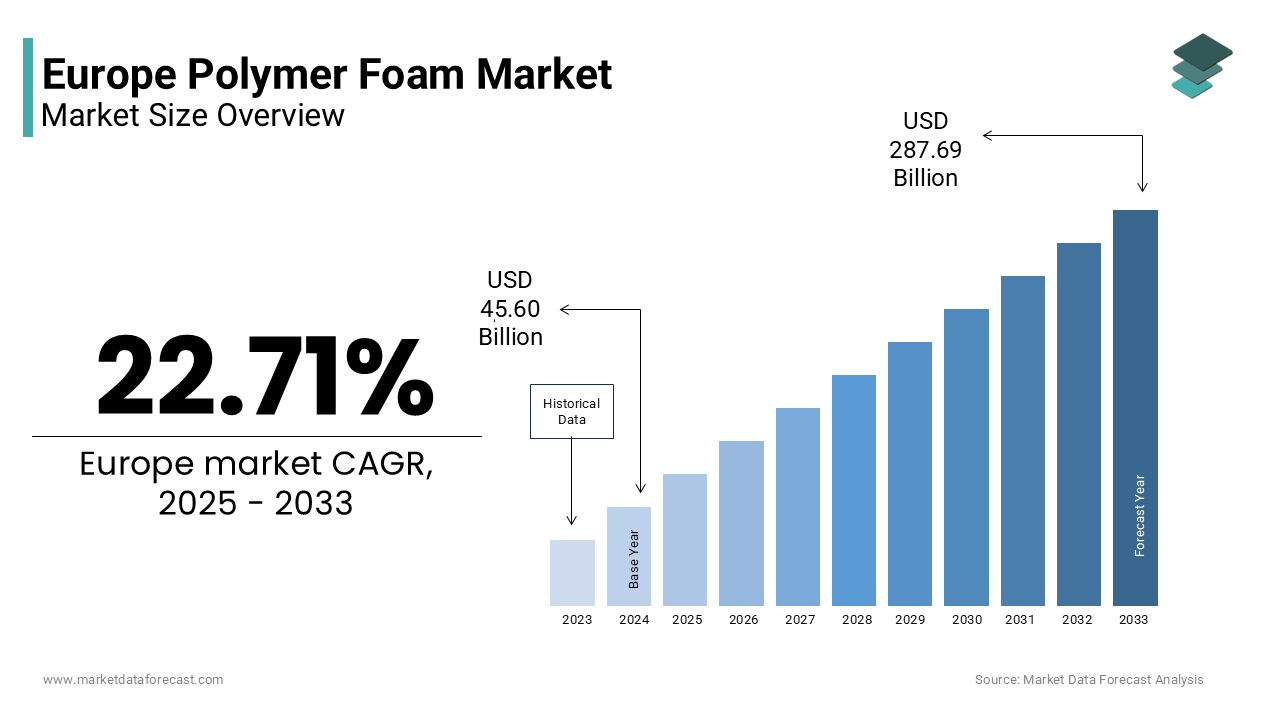
Polymer foam refers to the cellular polymeric materials, including polyurethane polystyrene polyethylene and phenolic foams, engineered for thermal insulation acoustic damping lightweight structural support and packaging across construction automotive and consumer goods sectors. These foams are characterized by their closed or open cell architectures which determine performance attributes such as compressive strength thermal conductivity and moisture resistance. In Europe polymer foams have become indispensable enablers of energy efficiency and lightweighting strategies aligned with the European Green Deal and Circular Economy Action Plan. The European Union is heavily focused on improving the energy performance of its building stock through the revised Energy Performance of Buildings Directive, accelerating the use of various insulation materials and technologies to meet ambitious climate goals for both new and existing structures. Similarly, the International Council on Clean Transportation emphasizes lightweighting as a crucial and cost-effective strategy in the automotive industry, which involves advanced materials including polymers and composites, to significantly enhance the energy efficiency and driving range of electric vehicles. Rigid polyurethane foam is widely recognized within the construction industry as a highly efficient thermal insulation material, possessing excellent thermal conductivity properties that help minimize energy loss in building envelopes and meet stringent energy efficiency requirements. These technical and policy driven imperatives position polymer foams as critical materials in Europe’s decarbonization and resource efficiency transition.
MARKET DRIVERS
Stringent Building Energy Efficiency Regulations Under the Energy Performance of Buildings Directive
Legal obligations for energy efficiency under the Energy Performance of Buildings Directive drives the growth of the Europe polymer foam market. The European Union has a building performance directive encouraging a move toward highly efficient, nearly zero energy construction and significant renovations of existing structures. A large number of buildings across the European Union will need energy efficiency upgrades to meet established energy class requirements. Certain polymer insulation foams are a preferred material choice for insulation in building retrofits because they offer effective thermal performance and have a thin profile. Insulation systems incorporating polymer foams are widely used in residential renovation projects, favored for their high thermal resistance per unit of thickness. Buildings insulated with polymer foams can achieve significant energy savings when compared to buildings using alternative insulation materials over their operational life. This regulatory and performance alignment ensures sustained demand across Europe’s vast building renovation pipeline.
Lightweighting Imperatives in Electric and Hybrid Vehicle Manufacturing
The rapid electrification of the region’s automotive sector has intensified the use of cellular polymeric materials to reduce vehicle mass improve battery range and enhance acoustic comfort without compromising safety, which further fuels the expansion of the Europe polymer foam market. A significant portion of new passenger vehicles in the region now consists of battery electric or plug-in hybrid models. The substantial mass of battery packs in these vehicles necessitates comprehensive weight optimization strategies. Polyurethane and polypropylene foams are integrated into interior components and underbody systems to lower overall vehicle weight. The application of these polymer foams offers notable weight savings when compared to conventional materials. Reducing vehicle mass serves as a method to extend the driving range of electric models. Automakers are increasingly adopting foams containing recycled content for seating applications. Bio-based materials derived from natural oils are being integrated into interior trim components. Lightweighting through the use of polymer foams supports efforts to meet regional fleet emission standards. These materials have become a strategic element in the evolving design of modern transportation.
MARKET RESTRAINTS
Regulatory Restrictions on High Global Warming Potential Blowing Agents
The European Union’s F gases Regulation severely restricts the use of hydrofluorocarbon blowing agents, which have historically enabled low thermal conductivity in rigid foams, and thereby restricts the growth of the Europe polymer foam market. The regulation requires a gradual reduction in the usage of certain substances, leading to a notable increase in production complexity and expenses for manufacturers. Across the industry, many producers of polyurethane foam have had to modify their manufacturing processes to use alternative blowing agents, such as hydrocarbons, cyclopentane, or hydrofluoroolefins. These alternatives present different operational challenges, including increased flammability risks or reduced thermal efficiency. The shift to one of these common alternatives, cyclopentane, has been associated with higher costs related to meeting fire safety standards for companies manufacturing insulation products. Besides, some alternatives require thicker insulation layers to achieve equivalent performance partially offsetting space and material savings. These regulatory constraints create technical trade-offs and capital expenditure burdens that particularly affect small and medium enterprises lacking resources for rapid line conversion.
Limited Recyclability and End of Life Management Challenges
Most conventional polymer foams, especially cross-linked polyurethane and expanded polystyrene, are not readily recyclable through mechanical means, despite their performance benefits, which hinders the expansion of the Europe polymer foam market. This is due to their cellular structure, low density, and contamination with adhesives or facers. Post-consumer polymer foam waste is predominantly sent to landfills or incinerators rather than being recycled. The prohibition of certain expanded polystyrene food packaging under regional directives has increased waste management challenges. Although chemical recycling technologies like glycolysis for polyurethane are emerging they remain limited in scale. Commercial depolymerization facilities capable of processing foam waste remain limited across the region. A barrier in end-of-life processing creates a discrepancy with broader objectives for universal packaging recyclability. Current waste management limitations influence the selection of materials by public procurement bodies for sustainable projects. The sustainability gap thus constrains market expansion despite strong functional demand.
MARKET OPPORTUNITIES
Adoption of Bio Based and Circular Foam Solutions Under the Green Deal
The European Green Deal is accelerating the development and commercialization of polymer foams derived from renewable feedstocks and recycled content creating potential opportunities for sustainable material innovation, which is expected to drive the growth of the Europe polymer foam market. Bio-based polyurethane formulations are available in Europe, providing insulation performance comparable to their fossil-based counterparts. Companies have introduced polyols with a significant renewable carbon content for rigid foam production. There is an industry initiative that aims to incorporate recycled content into insulation foams within the next decade through advanced sorting and chemical recycling methods. Furthermore, buildings that use certified circular foams may be eligible for enhanced energy performance certificates and public subsidies in certain regions. This policy driven shift toward bio circular materials opens new revenue streams while aligning with corporate net zero commitments across construction and automotive sectors.
Growth in Cold Chain and Temperature Sensitive Logistics
The expansion of e-commerce pharmaceutical distribution and perishable food delivery is driving demand for high-performance polymer foam packaging, which is anticipated to propel the expansion of the Europe polymer foam market. This packaging maintains thermal integrity over extended periods. Cross-border e-commerce involving temperature-sensitive products within the region has shown a significant growth trend. Rigid polyurethane and polyethylene foams are the preferred materials for insulated shipping containers vaccine shippers and refrigerated pallet covers due to their low thermal conductivity and moisture resistance. A vast majority of vaccine shipments utilize specific insulated packaging materials to consistently maintain required cool conditions. Furthermore, Regulatory changes now mandate the use of insulated packaging for certain high-risk perishable food items sold through online retail channels. Start ups are commercializing reusable foam containers with embedded temperature sensors further enhancing value. This logistics boom positions polymer foams as critical enablers of Europe’s digital and health supply chains.
MARKET CHALLENGES
Flammability Concerns and Evolving Fire Safety Standards
Polymer foams, particularly those based on polyurethane and polystyrene, are inherently combustible requiring flame retardant additives to meet European construction and transportation fire safety norms, which challenges the growth of the Europe polymer foam market. However, many traditional halogenated flame retardants are now restricted under the REACH Regulation due to toxicity and persistence concerns. Flame retardant substances commonly used in foams have been subject to increased regulatory scrutiny and authorization requirements, which has complicated formulation stability and increased costs. Fire classification criteria for foam insulation have been updated, making it more challenging to achieve a certain fire rating without incorporating a significant amount of additives. This situation has resulted in project delays as manufacturers work to develop and source compliant foam formulations. Moreover, public perception remains skeptical. This regulatory and reputational pressure forces continuous reformulation without guaranteed performance parity.
Volatile Feedstock Prices and Supply Chain Vulnerability
High exposure to fluctuations in crude oil and natural gas prices directly impacts the cost of key raw materials like propylene oxide toluene diisocyanate and styrene, which further constrains the expansion of the Europe polymer foam market. According to sources, Average polyol prices rose significantly as a result of energy market instability linked to geopolitical events. This volatility compresses margins for foam fabricators who often operate on fixed price contracts with construction or automotive clients. Besides, the implementation of the Carbon Border Adjustment Mechanism has introduced additional costs for imported precursors, affecting input economics. As per research, A substantial portion of small foam converters experienced a decrease in production capacity due to the high cost of raw materials. This supply chain fragility undermines long term planning and discourages investment in capacity expansion just as demand from green building and electric mobility peaks, which makes price stability a critical unresolved challenge for the sector.
REPORT COVERAGE
| REPORT METRIC | DETAILS |
| Market Size Available | 2025 to 2034 |
| Base Year | 2025 |
| Forecast Period | 2026 to 2034 |
| CAGR | 22.71% |
| Segments Covered | By Resin Type, Foam, End Use Industry, and Region |
| Various Analyses Covered | Global, Regional, & Country Level Analysis; Segment-Level Analysis; DROC, PESTLE Analysis; Porter’s Five Forces Analysis; Competitive Landscape; Analyst Overview of Investment Opportunities |
| Regions Covered | UK, France, Spain, Germany, Italy, Russia, Sweden, Denmark, Switzerland, Netherlands, Turkey, and the Czech Republic |
| Market Leaders Profiled | Arkema S.A., BASF SE, Borealis AG (OMV), Synthos S.A. (FTF Galleon S.A.), DuPont de Nemours, Inc., Trelleborg AB, Zotefoams plc, Sealed Air Corporation, Woodbridge Foam Corporation, and Polymer Technologies, Inc. |
SEGMENTAL ANALYSIS
By Resin Type Insights
The polyurethane (PU) segment held the leading share of the Europe polymer foam market in 2025. The leading position of the PU segment is attributed to its unmatched versatility in both rigid and flexible forms and its superior thermal and mechanical performance. Rigid polyurethane (PU) foam is a widely used insulation material for building envelopes and refrigeration systems because it effectively minimizes heat transfer. Within the European Union, this type of insulation is the preferred choice for new residential and commercial buildings, which helps them meet relevant energy performance guidelines. The material is also prevalent in the automotive sector, where flexible PU foam is the leading component for seating and interior comfort systems across European vehicles. Furthermore, PU’s adaptability to bio-based polyols aligns with the European Green Deal. This dual strength in construction and mobility ensures PU’s continued dominance across high volume industrial sectors.
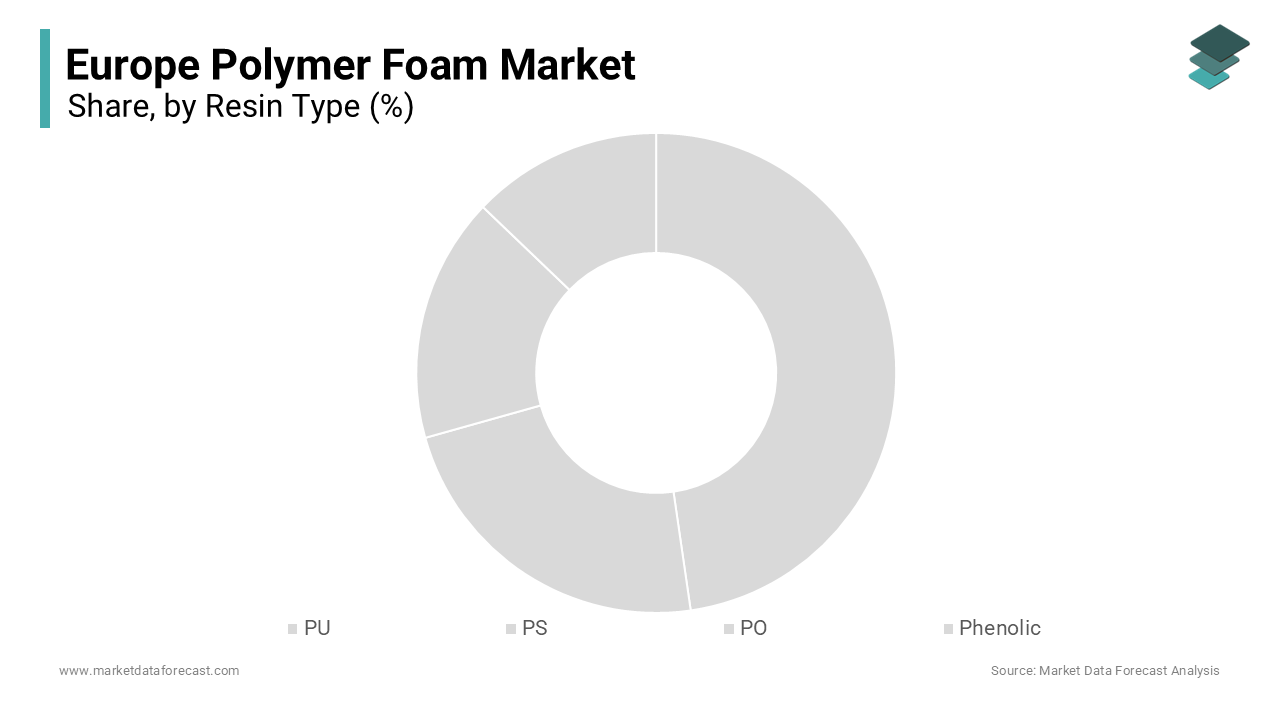
The polyolefin foam (PO) segment is anticipated to witness the fastest CAGR of 7.9% from 2026 to 2034 due to its excellent chemical resistance moisture barrier properties and increasing use in sustainable packaging and lightweight automotive components. Unlike polystyrene PO foams such as cross-linked polyethylene are fully recyclable in existing polyethylene streams and do not contain blowing agents with high global warming potential. Several new packaging solutions in the cold chain sector for sensitive goods like pharmaceuticals and perishable e-commerce items frequently incorporate polyolefin (PO) foam, valued for its durability and effective thermal stability over multiple use cycles. In the automotive industry, some manufacturers are now using recyclable polypropylene foams in components such as door panels and trunk liners, moving away from other types of materials to align with vehicle recoverability goals. Furthermore, the European Commission’s Packaging and Packaging Waste Regulation draft explicitly favors mono material solutions like PO over multi-layer composites. This regulatory and recyclability advantage positions polyolefin as the material of choice for Europe’s circular economy transition.
By Foam Type Insights
The rigid foam segment led the Europe polymer foam market in 2025. The supremacy of the rigid foam segment is credited to its critical role in building insulation and refrigeration, sectors under intense regulatory pressure to improve energy efficiency. Rigid foams based on polyurethane polyisocyanurate and phenolic resins offer the highest thermal resistance per unit thickness enabling compliance with stringent building codes without sacrificing usable space. Many home improvement projects across the European residential sector have aimed for improved energy performance ratings. These projects have frequently used a specific type of rigid foam insulation. This material has been commonly chosen to help buildings reach certain efficiency standards. Using rigid polyurethane (PU) foam can significantly decrease the amount of energy needed for heating in a home. Additionally rigid foams are essential in cold chain logistics. This convergence of decarbonization mandates, building modernization, and health logistics cements rigid foam as the backbone of Europe’s thermal management infrastructure.
The flexible foam segment is likely to experience the fastest CAGR of 6.8% from 2026 to 2034 owing to rising demand for comfort products in seating bedding and automotive interiors coupled with innovations in sustainable formulations. A notable portion of new mattress production in Western Europe now utilizes bio-based flexible polyurethane foams, which are created using materials such as castor oil or recycled polyols. In automotive the shift to electric vehicles has increased demand for acoustic comfort as motor noise replaces engine roar. Certain automotive manufacturers are incorporating multilayer flexible foams with improved sound absorption properties into vehicle components like headliners and dashboards. Furthermore, the European Union’s Ecolabel for furniture requires low volatile organic compound emissions, a standard that modern water blown flexible foams consistently meet. Household spending on home furnishings has shown an increase, suggesting ongoing investment in living comfort following a recent health crisis. This blend of regulatory compliance performance enhancement and consumer preference fuels steady growth in the flexible segment across lifestyle and mobility applications.
By End Use Industry Insights
The building and construction segment was the largest segment in the Europe polymer foam market in 2025. The prominence of the building and construction segment is credited to mandatory energy efficiency upgrades and new construction standards under the European Green Deal. The Energy Performance of Buildings Directive sets goals for new buildings to be nearly zero energy and encourages substantial renovations for existing structures across the European Union. A significant number of buildings may need to be renovated within the current decade to align with these objectives. In addressing the need for insulation solutions in building retrofits, specific materials like rigid polymer foams are often considered for their performance capabilities. Certain foam systems can achieve notable U values in roof retrofits, performing well compared to some other common insulation materials. In addition, fire safety standards drive demand for phenolic foams in high rise applications. This policy enforced transformation of Europe’s building stock creates a structural and long-term demand base unmatched by other sectors.
The packaging segment is on the rise and is expected to be the fastest growing segment in the market by witnessing a CAGR of 8.3% during the forecast period. The swift expansion of the packaging segment is fuelled by the exponential rise in e commerce cold chain logistics and regulatory shifts toward mono material recyclable systems. Cross border online sales of temperature sensitive goods grew, driving demand for specific types of insulated shipping containers. Many sensitive drug shipments use specialized insulated packaging to maintain required temperature conditions. Furthermore, future regulations may require packaging to be reusable or recyclable, which could favor certain materials over others. Companies offer reusable foam liners with embedded IoT sensors enhancing value beyond insulation. This convergence of digital commerce health logistics and circular policy makes packaging the highest growth frontier.
REGIONAL ANALYSIS
Germany Polymer Foam Market Analysis
Germany dominated the Europe polymer foam market by accounting for a 26.1% share in 2025. The dominance of the German market is driven by its massive building renovation program and strong automotive manufacturing base. National climate mandates require significant reductions in building emissions, necessitating extensive energy retrofits. These renovation efforts frequently utilize rigid polyurethane and phenolic foams for insulation. Consequently, a substantial number of buildings are being updated with polymer foam materials to meet environmental standards. Germany is also home to leading chemical producers which supply advanced foam systems across Europe. This integration of policy driven construction demand and industrial output solidifies Germany’s position as the market’s core engine.
France Polymer Foam Market Analysis
France was the second largest player in the Europe polymer market and captured a 16.9% share in 2025. The growth of the French market is propelled by ambitious energy renovation targets and leadership in circular foam solutions. The MaPrimeRénov scheme has facilitated numerous residential insulation projects, with rigid PU foam frequently selected for these installations. Moreover, the implementation of the Anti-Waste for a Circular Economy Law mandates that packaging materials meet recyclability standards. These regulatory requirements are encouraging the transition toward polyolefin foams within the cold chain sector. Companies supply bio based polyurethane foams derived from European castor crops for both construction and automotive use. Additionally, the French Building Certification NF Habitat HQE explicitly rewards the use of low global warming potential foams. This blend of financial incentives regulatory foresight and green chemistry positions France as a high compliance high innovation market.
United Kingdom Polymer Foam Market Analysis
The United Kingdom is also a key player in the Europe polymer foam market because of its advanced automotive sector and booming pharmaceutical logistics. Despite Brexit the UK aligns closely with European thermal and emissions standards driving demand for lightweight PU foams in electric vehicles from manufacturers like Jaguar Land Rover and Nissan Sunderland. The manufacturing of vehicles in the UK includes a significant proportion of battery electric models, which integrate foam-based solutions for acoustic and thermal management. At the same time, a large number of temperature-controlled medical shipments utilize polymer foam packaging each year. The volume of e-commerce for perishable goods has also increased, influenced by changes in customs protocols that necessitate prolonged thermal integrity during shipping. This dual engine of mobility and health logistics ensures sustained foam demand in a high value export-oriented economy.
Italy Polymer Foam Market Analysis
Italy grew steadily in the Europe polymer foam market due to its world-renowned furniture industry and extensive residential retrofitting needs. The Superbonus tax credit subsidized hundreds of thousands of building energy upgrades, with rigid foam insulation frequently used in these projects. Simultaneously, Italy’s furniture sector produces a significant portion of European luxury seating, all of which relies on high resilience flexible PU foams. Modern water-blown foams used in these applications now meet indoor air quality standards for common pollutants like formaldehyde and volatile organic compounds. This unique synergy between heritage craftsmanship and policy driven construction modernization creates a balanced and resilient market.
Netherlands Polymer Foam Market Analysis
The Netherlands is predicted to expand in the Europe polymer foam market from 2026 to 2034 owing to its leadership in circular packaging and sustainable logistics infrastructure. The Netherlands promotes sustainable practices through the National Circular Economy Program, which encourages that all packaging be designed for reusability or recyclability. This initiative has helped accelerate the adoption of mono-material polyolefin foams in cold chain solutions. A significant majority of temperature-controlled pharmaceutical exports from a major Dutch airport utilize these recyclable foam containers. Companies operate circular foam collection and reuse schemes serving major e commerce and healthcare clients. Additionally, the Netherlands’ strict building energy standards, requiring energy label A for all new homes, drive demand for high performance rigid foams in modular housing. This integration of logistics innovation circular policy and green construction positions the Netherlands as a scalable testbed for next generation foam systems.
COMPETITIVE LANDSCAPE
The Europe polymer foam market features intense competition among global chemical giants regional converters and emerging circular economy specialists each navigating a complex landscape of regulation sustainability and performance. Multinationals like Covestro BASF and Dow dominate through integrated raw material access advanced formulation capabilities and compliance expertise enabling them to serve large scale construction and automotive clients. Meanwhile specialized converters focus on niche applications such as medical packaging or acoustic foams where customization and rapid prototyping are valued over volume. The market is increasingly bifurcated between conventional fossil based foams under regulatory pressure and next generation bio circular alternatives gaining policy and consumer favor. Competition is no longer solely based on cost or thermal performance but on environmental credentials recyclability and alignment with the European Union’s net zero trajectory. This shift rewards innovation in green chemistry and end of life management while pressuring players without sustainable roadmaps. Success demands not only material science excellence but also strategic foresight in regulatory and circular economy trends.
KEY MARKET PLAYERS
Some of the notable key players in the European polymer foam market are
- Arkema S.A.
- BASF SE
- Borealis AG (OMV)
- Synthos S.A. (FTF Galleon S.A.)
- DuPont de Nemours, Inc.
- Trelleborg AB
- Zotefoams plc
- Sealed Air Corporation
- Woodbridge Foam Corporation
- Polymer Technologies, Inc.
Top Players in the Market
- Covestro AG is a global leader in polymer materials with a strong footprint in the Europe polymer foam market through its high performance polyurethane systems for insulation automotive and furniture applications. The company supplies rigid and flexible foams to major construction and automotive clients across Germany France and the Netherlands enabling compliance with energy efficiency and lightweighting mandates. The company also expanded its Desmopan thermoplastic polyurethane foam portfolio for recyclable automotive interiors aligned with the End of Life Vehicle Directive. These innovations reinforce Covestro’s role as a sustainability pioneer while supporting global export of European engineered foam solutions.
- BASF SE plays a pivotal role in the Europe polymer foam market through its extensive portfolio of polyurethane and polyolefin foam systems used in building insulation packaging and automotive sectors. The company’s Elastoflex and Neopor technologies are widely specified in energy renovation projects across Southern and Central Europe due to their low thermal conductivity and flame retardancy. Additionally BASF enhanced its chemical recycling capabilities for post consumer polyurethane foam through its ChemCycling project enabling circular feedstock for new insulation products. These actions strengthen BASF’s position as a technology integrator bridging performance sustainability and circularity in Europe’s foam value chain.
- Dow Inc contributes significantly to the Europe polymer foam market with its polyethylene and polyurethane foam solutions for cold chain packaging construction and footwear. The company’s VORAFORCE composite systems enable lightweight automotive parts while its STYROFOAM brand remains a benchmark for below grade insulation in infrastructure projects. The company also partnered with European logistics firms to pilot reusable foam containers with embedded temperature monitoring for pharmaceutical shipments. These strategic moves align Dow with Europe’s circular economy and digital logistics transformation while maintaining global leadership in performance foam technologies.
Top Strategies Used by the Key Market Participants
Key players in the Europe polymer foam market prioritize the development of bio based and circular foam formulations to comply with the European Green Deal and Packaging and Packaging Waste Regulation. They invest in chemical recycling infrastructure to process post consumer foam waste into virgin quality feedstock supporting closed loop systems. Companies align product portfolios with stringent building and automotive regulations including the Energy Performance of Buildings Directive and End of Life Vehicle Directive through enhanced thermal performance flame retardancy and lightweighting. Strategic partnerships with logistics and construction firms enable co development of application specific foam solutions for cold chain and deep energy retrofits. Additionally vendors focus on replacing high global warming potential blowing agents with hydrocarbons or water based systems to meet F gases Regulation phase down targets while maintaining insulation efficiency.
MARKET SEGMENTATION
This research report on the Europe polymer foam market has been segmented and sub-segmented based on categories.
By Resin Type
- PU
- PS
- PO
- Phenolic
By Foam Type
- Rigid
- Flexible
By End Use Industry
- Building and Construction
- Packaging
- Automotive
- Furniture and Bedding
- Footwear
- Sports and Recreational
By Country
- UK
- France
- Spain
- Germany
- Italy
- Russia
- Sweden
- Denmark
- Switzerland
- Netherlands
- Turkey
- Czech Republic
- Rest of Europe