- Product Description Description
- Table of Contents TOC
- List of Table & Figure LOT
- Get Free Sample PDF Sample PDF
Europe Precision Medicine Market Size
The European precision medicine market size was valued at USD 16.72 billion in 2024. The European precision medicine market size is estimated to be worth USD 42.24 billion by 2033 from USD 18.54 billion in 2025, growing at a CAGR of 10.9% from 2025 to 2033.
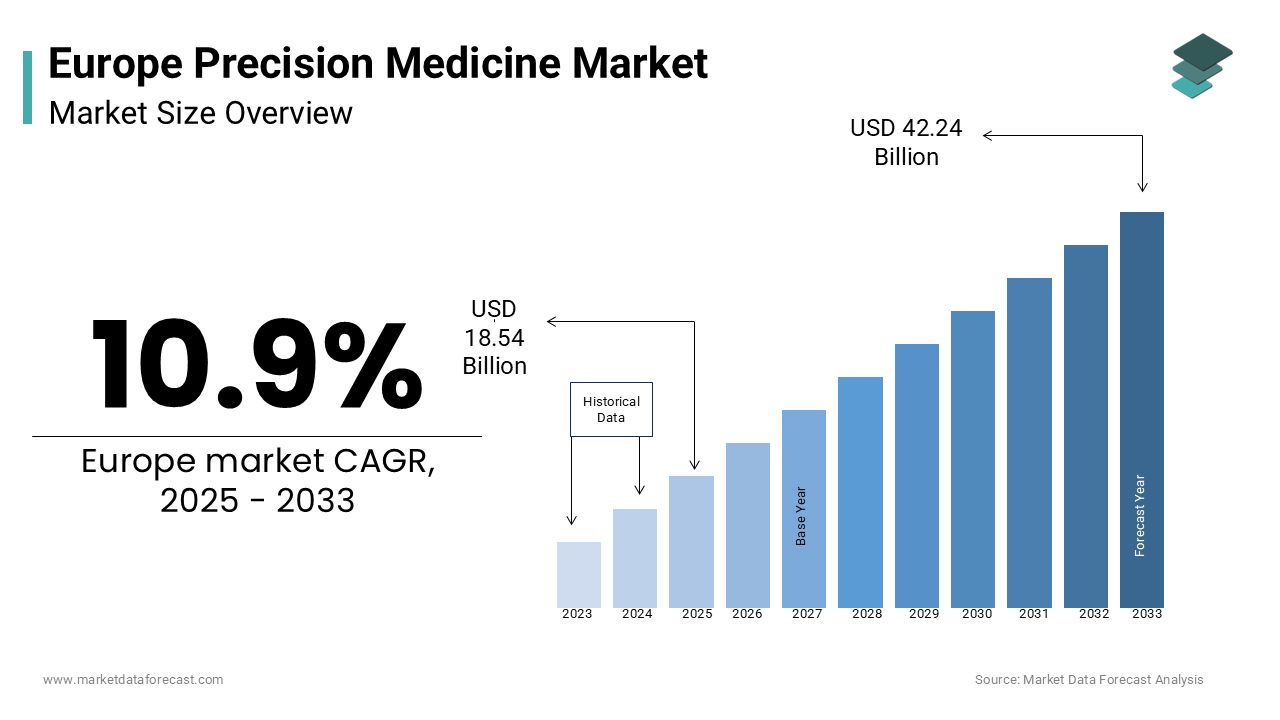
The Europe precision medicine market is a rapidly evolving segment within healthcare, driven by advancements in genomics, data analytics, and personalized treatment approaches. This growth is fueled by an increasing prevalence of chronic diseases, with cancer alone accounting for over 4 million new cases annually in Europe, as per the European Cancer Organisation.
Countries like Germany, the UK, and France are at the forefront of adopting precision medicine due to their robust R&D infrastructure and high healthcare spending. For instance, Germany’s Federal Ministry of Health allocated over €5 billion in 2022 for genomic research and personalized therapies. Additionally, the implementation of the General Data Protection Regulation (GDPR) ensures ethical use of patient data.
MARKET DRIVERS
Rising Prevalence of Chronic Diseases
The chronic diseases such as cancer, cardiovascular disorders, and autoimmune conditions are key drivers of the precision medicine market expansion in Europe. According to the World Health Organization, chronic diseases account for 77% of all deaths in Europe, creating a pressing demand for personalized treatments. For example, breast cancer patients treated with personalized therapies experience a 30% higher survival rate compared to traditional methods, according to the NHS England. This efficacy drives widespread adoption, particularly in countries with advanced healthcare systems. Additionally, government initiatives like the UK’s "100,000 Genomes Project" have accelerated the integration of precision medicine into clinical practice, which is further propelling market growth.
Advancements in Genomic Technologies
Technological advancements in genomic sequencing is another attribute propelling the growth of the Europe precision medicine market growth. According to Illumina, Inc., the cost of whole-genome sequencing has dropped from 10,000in2011tolessthan600 in 2023, which is making it more accessible for widespread use. These advancements enable researchers to identify genetic mutations linked to diseases, facilitating the development of tailored therapies. Furthermore, collaborations between biotech firms and academic institutions have led to breakthroughs in CRISPR gene-editing technologies by enhancing treatment precision
MARKET RESTRAINTS
High Costs and Limited Reimbursement Policies
The high cost of personalized treatments and limited reimbursement policies is declining the growth of Europe precision medicine market. According to the European Federation of Pharmaceutical Industries and Associations, the average cost of a single precision medicine therapy exceeds €100,000 annually, which is making it inaccessible for many patients. This financial burden is exacerbated by inconsistent reimbursement frameworks across European countries. Additionally, hospitals face challenges in acquiring advanced genomic tools due to their substantial upfront costs.
Ethical and Privacy Concerns
Ethical concerns surrounding patient data usage is another restraining factor for the growth of Europe precision medicine market. According to the European Data Protection Board, over 60% of Europeans express apprehension about how their genetic information is stored and utilized. The sensitive nature of genomic data raises questions about privacy breaches and unauthorized access, deterring both patients and healthcare providers from embracing precision medicine. Furthermore, debates over informed consent and the potential misuse of genetic information complicate regulatory approvals
MARKET OPPORTUNITIES
Growing Adoption of Big Data Analytics
The integration of big data analytics presents a significant opportunity for the Europe precision medicine market. According to Eurostat, healthcare data generation in Europe is projected to grow by 36% annually, creating vast datasets for analysis. Advanced analytics tools enable researchers to identify patterns and correlations in patient data, facilitating the development of personalized treatments. For instance, AI-driven platforms have reduced diagnostic errors by 20%, as stated by the European Alliance for Personalised Medicine. Moreover, partnerships between tech giants and healthcare providers are accelerating the adoption of big data solutions. For example, IBM Watson Health collaborates with European hospitals to analyze patient records and predict treatment outcomes.
Expansion into Emerging Markets
The growing prominence for untapped potential for precision medicine. According to the European Investment Bank, healthcare investments in these regions are expected to increase by 15% annually over the next five years. Countries like Poland and Romania are witnessing rapid urbanization and improved healthcare infrastructure, which is creating opportunities for precision medicine adoption.
Additionally, government-led initiatives, such as Turkey’s National Genome Project, aim to map genetic profiles of its population, fostering the development of localized therapies. As per the Turkish Ministry of Health, these efforts have already led to a 10% rise in precision medicine procedures since 2022.
MARKET CHALLENGES
Limited Awareness Among Healthcare Providers
The limited awareness and training among healthcare professionals regarding genomic technologies is a challenge for the growth of precision medicine market. According to the European Medical Students' Association, less than 40% of practicing physicians in rural areas are adequately trained to interpret genetic test results or recommend personalized therapies. This knowledge gap hinders effective utilization of precision medicine tools, leading to suboptimal patient care. Moreover, the lack of standardized educational programs exacerbates the issue. A survey by the European Hospital and Healthcare Federation revealed that only 25% of medical schools incorporate genomics into their curriculum.
Regulatory Hurdles
The regulatory hurdles, as stringent approval processes delay the commercialization of precision medicine technologies is quietly hampering the growth of precision medicine market. According to the European Medicines Agency, the average time required for regulatory approval of personalized therapies is three to five years, which is significantly impacting market entry timelines. Additionally, the implementation of the In Vitro Diagnostic Regulation (IVDR) in 2022 has introduced additional compliance requirements, increasing operational costs for manufacturers. A study by the European Policy Centre found that nearly 30% of small- and medium-sized enterprises struggle to meet IVDR standards, potentially stifling innovation. These regulatory complexities not only impede market growth but also discourage new entrants from investing in precision medicine
SEGMENTAL ANALYSIS
By Technology Insights
The big data analytics segment was the largest and held 35.4% of the Europe precision medicine market share in 2024 with its ability to process vast datasets by enabling precise disease prediction and treatment customization. For instance, AI-powered platforms analyze patient records to identify genetic predispositions, improving diagnostic accuracy. Collaborations between tech firms and healthcare providers further amplify adoption by ensuring sustained growth.
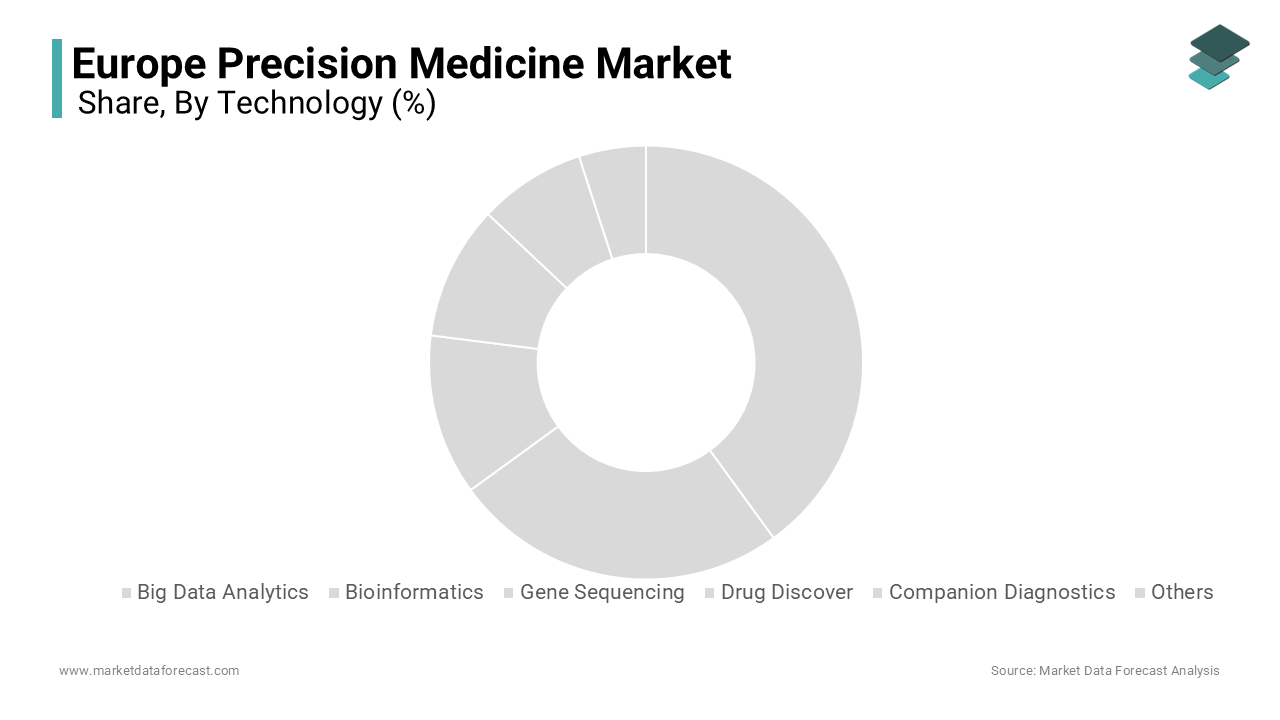
The gene sequencing segment is quietly growing with a CAGR of 15.8% during the forecast period with the declining sequencing costs and rising applications in oncology and rare disease diagnostics. Advancements in next-generation sequencing (NGS) technologies have reduced turnaround times, making it feasible for widespread clinical use. Government-led initiatives, such as the UK’s "100,000 Genomes Project," that further accelerate adoption, which is positioning gene sequencing as a transformative force in precision medicine.
By Application Insights
The oncology segment held 45.3% of the precision medicine market share in 2024 with the increasing incidence of cancer, with over 4 million new cases annually in Europe. Precision medicine enables targeted therapies, achieving success rates of up to 85% in certain cancers, according to NHS England. The segment's growth is bolstered by advancements in biomarker research and companion diagnostics. For example, HER2-targeted therapies have improved breast cancer survival rates by 30%.
The immunology segment is lucratively growing with a CAGR of 13.2% during the forecast period with the rising prevalence of autoimmune diseases and advancements in immunotherapy. According to the European Federation of Immunological Societies, over 80 autoimmune disorders have been identified, creating a robust demand for personalized treatments. Breakthroughs in immune profiling technologies have enhanced treatment precision, driving adoption. Additionally, collaborations between biotech firms and academic institutions have led to the development of novel therapies, which is positioning immunology as a key growth driver.
REGIONAL ANALYSIS
Germany Precision Medicine Market Analysis
Germany was the top performer of the Europe precision medicine market with 28.2% of share in 2024 with the country’s robust healthcare infrastructure, substantial R&D investments, and strong emphasis on personalized therapies. The prevalence of chronic diseases further amplifies demand. According to the Robert Koch Institute, cancer incidence in Germany exceeds 500,000 new cases annually, necessitating advanced diagnostic tools and tailored treatments. Additionally, government-led initiatives like the National Decade Against Cancer prioritize early detection and personalized therapies, driving the adoption of precision medicine technologies.
COMPETITIVE LANDSCAPE
The Europe precision medicine market is highly competitive, characterized by the presence of global leaders and regional players vying for market share. Major companies like Illumina, Thermo Fisher Scientific, and Roche dominates through continuous innovation and strategic collaborations. Intense competition drives technological advancements, with firms focusing on developing cost-effective and scalable genomic solutions. Regional players differentiate themselves by catering to niche segments, such as rare disease diagnostics or pediatric applications. Regulatory compliance and adherence to quality standards further intensify competition by ensuring that only the most reliable products gain traction.
KEY MARKET PLAYERS
A few of the major companies in the global precision medicine market include
- Pfizer
- Roche
- Covance
- Novartis
- Qiagen
- Biocrates Life Sciences
- Teva Pharmaceutical
- Nanostring Technologies
- Laboratory Corporation of America Holdings
- Tepnel Pharma Services
- Intomics
- Ferrer InCode
- Silicon Biosystems
- Eagle Genomics
- Medtronic
- Quest Diagnostics
Top Players in the Europe Precision Medicine Market
Illumina, Inc.
Illumina, Inc. is a leading player in the precision medicine market, which is contributing significantly to global innovations in genomic sequencing. The company’s Next-Generation Sequencing (NGS) platforms dominate the European market, enabling researchers to decode genetic information with unparalleled accuracy. Illumina holds an estimated 70% share in the global genomic sequencing segment, as per data from the European Bioinformatics Institute. Its focus on reducing sequencing costs while enhancing efficiency aligns with Europe’s growing demand for affordable and accessible precision medicine solutions by enabling it to maintain a competitive edge.
Thermo Fisher Scientific
Thermo Fisher Scientific is another key contributor, renowned for its comprehensive portfolio of precision medicine tools, including gene sequencing systems and companion diagnostics. The company commands approximately 20% of the global precision medicine market, according to the European Medical Technology Industry Association. Thermo Fisher’s strategic emphasis on R&D has led to breakthroughs in biomarker discovery and immunotherapy development. Its presence in Europe is strengthened by partnerships with academic institutions and healthcare providers, ensuring widespread adoption of its technologies.
F. Hoffmann-La Roche AG
F. Hoffmann-La Roche AG specializes in personalized oncology treatments and companion diagnostics, playing a pivotal role in advancing precision medicine. With a global market share of 15%, as stated by the European Healthcare Distribution Association, Roche’s innovations in targeted therapies have transformed cancer care. Its HER2-targeted therapies, for instance, have improved breast cancer survival rates by 30%. Roche’s commitment to innovation and collaboration positions it as a major player in the market in oncology applications.
Top Strategies Used by Key Players in Europe Precision Medicine Market
Key players in the Europe precision medicine market employ strategies such as product innovation, strategic collaborations, and geographic expansion to strengthen their positions. Product innovation is central, with companies investing heavily in R&D to develop cutting-edge genomic tools. For instance, Illumina introduced AI-integrated sequencing platforms, enhancing diagnostic accuracy and operational efficiency. Strategic partnerships with hospitals and research institutions also play a crucial role. Thermo Fisher collaborates with European healthcare providers to promote biomarker research, increasing adoption rates.
RECENT MARKET DEVELOPMENTS
- In April 2023, Illumina, Inc. launched the NovaSeq X Plus platform in Europe by offering higher throughput and reduced sequencing costs is enabling broader adoption of precision medicine technologies.
- In June 2023, Thermo Fisher Scientific partnered with the European Hospital and Healthcare Federation to advance biomarker research is focusing on oncology and autoimmune diseases.
- In September 2023, F. Hoffmann-La Roche AG acquired a UK-based biotech firm specializing in companion diagnostics is expanding its portfolio of personalized oncology solutions.
- In November 2023, Qiagen N.V. introduced a cloud-based bioinformatics platform in Switzerland is integrating genomic data analysis tools to streamline precision medicine workflows.
- In February 2024, Agilent Technologies collaborated with academic research institutes in Germany to develop next-generation sequencing tools for rare disease diagnostics is positioning itself as a leader in niche applications.
MARKET SEGMENTATION
This research report on the European precision medicine market has been segmented and sub-segmented into the following categories
By Technology
- Big Data Analytics
- Bioinformatics
- Gene Sequencing
- Drug Discover
- Companion Diagnostics
- Others
By Application
- Oncology
- CNS
- Immunology
- Respiratory
- Others
By Country
- UK
- France
- Spain
- Germany
- Italy
- Russia
- Sweden
- Denmark
- Switzerland
- Netherlands
- Turkey
- Czech Republic
- Rest of Europe