- Product Description Description
- Table of Contents TOC
- List of Table & Figure LOT
- Get Free Sample PDF Sample PDF
Market Size, 2025
$13.71 BnMarket Estimate, 2026
$14.63 BnMarket Forecast, 2034
$24.63 MnCAGR, 2026–2034
6.73%Executive Summary: Europe Premium Chocolate Market
- Market Scope: Comprehensive European premium chocolate market analysis covering product types, distribution channels, regional leadership frameworks, and consumer dietary trends across confectionery sectors.
- Market Valuation: Valued at USD 13.71 billion (2025), estimated at USD 14.63 billion (2026), and projected to reach USD 24.63 billion by 2034, expanding at a robust CAGR of 6.73% (2026–2034).
- Primary Growth Drivers: Rising disposable incomes, increasing urbanization, growing consumer preference for ethically sourced and organic chocolate, surge in demand for functional ingredients (high-cocoa dark chocolate), and direct-to-consumer e-commerce adoption.
Key Market Segment Metrics (2026–2034)
| Category | Leading Segment Position | Fastest-Growing Segment |
|---|---|---|
| By Product Type | White/milk premium chocolates segment (held the largest share at 58.3% in 2024) | Dark premium chocolate segment (expected to register the fastest CAGR of 7.4% from 2025 to 2033) |
| By Distribution Channel | Supermarkets/hypermarkets (accounted for the largest share at 42.3% in 2024) | Online retail stores (projected to grow at the fastest CAGR of 12.6%) |
| By Region / Country | Germany (led the market with an 18.5% share in 2024, followed by France with 13.2%) | Emerging European digital commerce and specialty retail hubs |
Major Market Players & Market Structure
Market Structure: Highly competitive European confectionery ecosystem characterized by product innovation in health-focused variants, brand differentiation through heritage storytelling, and rapid expansion into digital direct-to-consumer e-commerce channels.
Key Companies: Nestlé S.A., Neuhaus, Pierre Marcolini Group, Pladis Global, Mondelez International Inc., Mars Incorporated, Ferrero International S.A., Hershey Company, Chocoladefabriken Lindt & Sprüngli AG, and Cemoi Group.
Europe Premium Chocolate Market Size
The premium chocolate market size in Europe was valued at USD 13.71 billion in 2025. The European market is estimated to be worth USD 24.63 billion by 2034 from USD 14.63 billion in 2026, growing at a CAGR of 6.73% from 2026 to 2034.
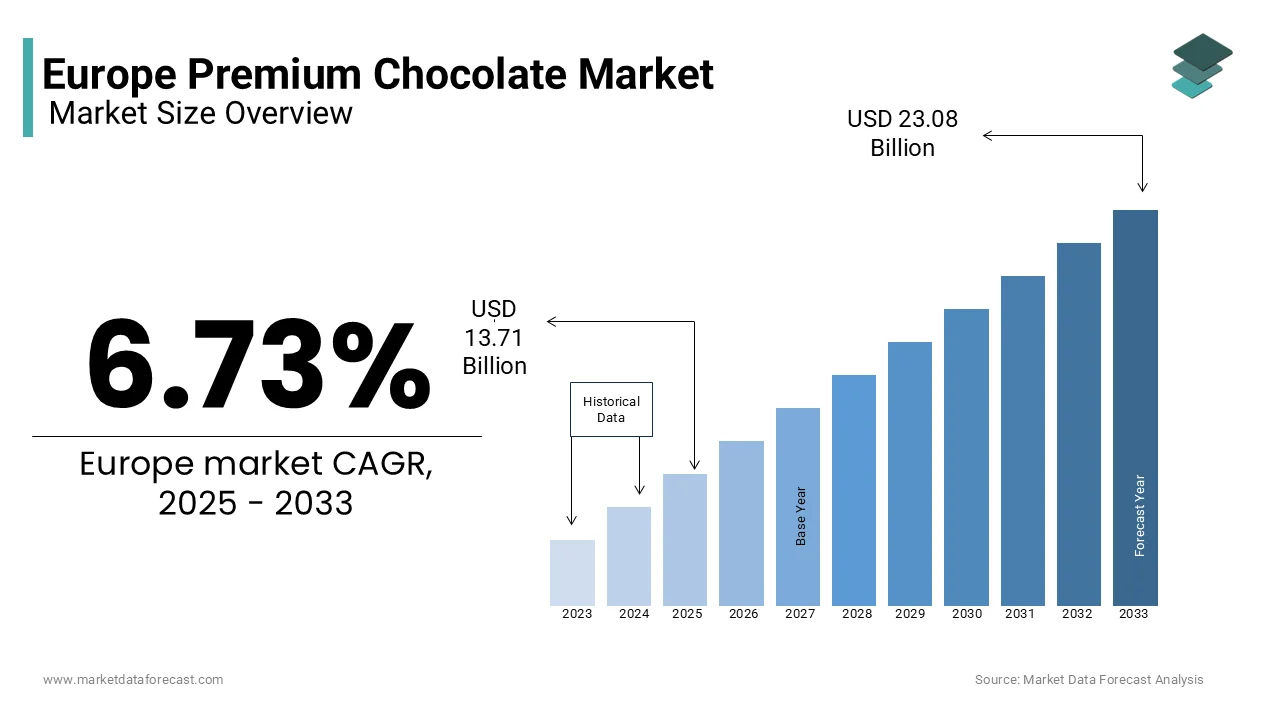
The premium chocolate is high-quality chocolate products that emphasize superior ingredients, craftsmanship, and brand heritage. These chocolates often originate from renowned European regions such as Switzerland, Belgium, and France, which are globally recognized for their expertise in chocolate-making. In recent years, consumer preferences have shifted towards indulgent, yet responsibly produced food items, boosting demand for premium chocolate variants. The United Kingdom, Germany, and France remain key markets, driven by rising disposable incomes and an increasing interest in gourmet experiences. Additionally, Euromonitor International notes that nearly 40% of European consumers are willing to pay a premium for ethically sourced or organic chocolate products. This trend has been reinforced by younger demographics, particularly millennials and Gen Z, who prioritize transparency and quality in their purchasing decisions.
MARKET DRIVERS
Rising Disposable Incomes and Urbanization
The rise in disposable incomes and urbanization is majorly accelerating the growth of Europe premium chocolate market. As per Eurostat, average household disposable income in the EU increased by approximately 2.8% in 2023 compared to the previous year, with countries like Germany, France, and the Netherlands witnessing the most significant gains. Higher income levels have enabled consumers to allocate more spending toward discretionary items, including premium chocolates, which are often perceived as luxury indulgences rather than basic commodities. According to the United Nations, over 75% of Europe’s population resides in urban areas, where exposure to global trends and upscale retail environments is higher. Urban dwellers tend to have greater access to specialty stores, gourmet shops, and online platforms offering premium chocolate selections. Moreover, premium chocolate is increasingly being associated with lifestyle branding and experiential gifting, especially during festive seasons and special occasions. As per Mintel, over 52% of European consumers prefer premium chocolate as a gift item due to its perceived value and aesthetic appeal. These economic and demographic shifts continue to bolster the expansion of the premium chocolate segment across Europe.
Growing Health Consciousness and Demand for Functional Ingredients
The rising health consciousness among consumers and the corresponding demand for functional ingredients in chocolate products is escalating the growth of Europe premium chocolate market. While traditional chocolate has long been associated with indulgence, modern consumers in Western Europe are seeking healthier alternatives without compromising taste. According to a report by the European Food Safety Authority (EFSA), dark chocolate containing at least 70% cocoa solids has gained popularity due to its potential cardiovascular benefits linked to flavonoids and antioxidants. Additionally, the demand for sugar-free and plant-based chocolates has surged, with sales increasing by 11% year-on-year in France alone. These figures reflect a broader shift toward wellness-oriented consumption habits, especially among millennials and health-conscious professionals. Premium chocolate brands have responded by reformulating their offerings to include clean-label ingredients, reduced sugar content, and superfood infusions such as matcha, turmeric, and adaptogens.
MARKET RESTRAINTS
Volatility in Cocoa Prices and Supply Chain Disruptions
The persistent volatility in global cocoa prices and ongoing supply chain disruptions is limiting the growth of Europe premium chocolate market. Cocoa is the primary raw material in chocolate production, is subject to fluctuations influenced by geopolitical instability, climate change, and labor issues in major producing regions such as Cote d'Ivoire and Ghana. These price increases directly impact the cost structure of premium chocolate manufacturers, many of whom rely on high-quality cocoa beans sourced through ethical and sustainable channels. Moreover, supply chain exacerbated by post-pandemic logistics challenges and energy crisis in Europe have further constrained production timelines. Delays in shipping and packaging materials have disrupted inventory management systems, especially for smaller artisanal producers. This combination of rising input costs and logistical complexities poses a substantial challenge to sustained market growth.
Regulatory Scrutiny and Labeling Requirements
The regulatory scrutiny and stringent labeling requirements is attributed in hampering the growth of Europe premium chocolate market. The European Union has implemented rigorous food safety and labeling laws aimed at ensuring transparency and protecting consumer interests. Under the EU Food Information to Consumers Regulation (FICR), all pre-packaged foods must provide detailed nutritional information, ingredient sourcing, and allergen disclosures. Compliance with these regulations requires additional investment in packaging redesign, quality control, and traceability systems. Larger companies, while better equipped to absorb these expenses, also encounter challenges related to frequent regulatory updates and cross-border trade harmonization. Furthermore, the EU’s Nutri-Score labeling system, adopted by several member states including France and Germany, has introduced color-coded front-of-pack nutrition ratings. While intended to guide healthier choices, this system may inadvertently stigmatize certain chocolate products, even those within the premium category.
MARKET OPPORTUNITIES
Expansion of E-commerce and Direct-to-Consumer Channels
The rapid expansion of e-commerce and direct-to-consumer (DTC) distribution channels, which is creating new opportunities for the growth of Europe premium chocolate market. With the digital transformation of retail accelerating post-pandemic, online sales have become a growth avenue for premium chocolate brands. According to Eurostat, e-commerce sales in the EU increased by 14% in 2023 compared to the previous year, with food and beverage categories experiencing gains. Platforms such as Amazon, Etsy, and niche gourmet websites have enabled artisanal and boutique chocolate makers to reach a broader audience beyond local markets. This shift reflects changing consumer behavior, with a growing preference for convenience, variety, and exclusive product offerings available only through digital channels. Moreover, DTC models allow premium chocolate brands to build stronger relationships with consumers through personalized marketing, subscription services, and limited-edition releases. As per Mintel, nearly 45% of European consumers expressed interest in subscribing to premium chocolate boxes delivered monthly. Additionally, social media-driven marketing strategies especially on platforms like Instagram and TikTok have amplified brand visibility and engagement.
Increasing Demand for Limited Edition and Customized Products
The rising demand for limited edition and customized chocolate products is additionally to leverage the growth of Europe premium chocolate market. Consumers, particularly younger demographics, are showing a strong inclination toward exclusivity, personalization, and storytelling in their purchasing decisions. According to a 2023 survey by Nielsen, 58% of European consumers are more likely to purchase premium chocolate if it features unique packaging or seasonal themes.
This trend has prompted major players and independent chocolatiers alike to introduce bespoke offerings tailored to specific events, holidays, and cultural celebrations. For instance, Swiss chocolatier Lindt launched a series of limited-run Easter and Christmas collections in 2023, each accompanied by intricate designs and collectible figurines. Customization extends beyond aesthetics to include flavor innovations and ingredient-specific options. Brands such as Charbonnel et Walker and Valrhona have expanded into personalized chocolate boxes by allowing customers to select flavors, fillings, and messages. Moreover, corporate gifting and event-based chocolate orders have seen a surge, with businesses opting for premium chocolate hampers as client gifts.
MARKET CHALLENGES
Intensifying Competition from Private Label and Local Artisan Brands
The intensifying competition from private label and local artisan brands is one of the major challenges for the growth of Europe premium chocolate market. Traditionally dominated by established names such as Lindt, Godiva, and Valrhona, the premium chocolate segment is now witnessing a surge in boutique and regional players offering comparable quality at competitive prices. Supermarkets such as Tesco, Carrefour, and Rewe have capitalized on this trend by launching their own premium chocolate lines, emphasizing locally sourced ingredients and attractive packaging. Simultaneously, local artisan chocolate makers have gained traction by positioning themselves as authentic and community-focused alternatives to multinational corporations. Platforms like Etsy and regional food fairs have provided these small-scale producers with visibility and accessibility to niche markets. This proliferation of competitors has compressed profit margins and necessitated increased marketing spend for established brands. Maintaining differentiation based on heritage and quality has become more challenging in a market flooded with high-caliber alternatives by making brand loyalty harder to sustain.
Changing Consumer Preferences Toward Minimalist and Sustainable Packaging
The shift in consumer preferences toward minimalist and sustainable packaging is another factor to degrade the growth of Europe premium chocolate market. As environmental awareness grows, European consumers are increasingly prioritizing eco-friendly packaging solutions, pressuring premium chocolate brands to rethink their traditional elaborate wrapping styles. Historically, premium chocolate has relied on ornate, multi-layered packaging to convey luxury and protect delicate formulations. However, this approach is now under scrutiny due to concerns about plastic waste and carbon footprint. Major retailers and governments are responding accordingly. As per Euromonitor International, these regulatory changes have forced chocolate manufacturers to invest heavily in biodegradable foils, paper-based wraps, and reusable containers. However, transitioning to sustainable packaging without compromising product integrity or perceived value remains a complex task. Balancing sustainability with brand image continues to pose a strategic dilemma for premium chocolate producers navigating this evolving landscape.
REPORT COVERAGE
| REPORT METRIC | DETAILS |
| Market Size Available | 2025 to 2034 |
| Base Year | 2025 |
| Forecast Period | 2026 to 2034 |
| CAGR | 6.73% |
| Segments Covered | By Product Type, Distribution Channel, and Region |
| Various Analyses Covered | Global, Regional, & Country Level Analysis; Segment-Level Analysis; DROC; PESTLE Analysis; Porter’s Five Forces Analysis; Competitive Landscape; Analyst Overview of Investment Opportunities |
| Regions Covered | UK, France, Spain, Germany, Italy, Russia, Sweden, Denmark, Switzerland, Netherlands, Turkey, Czech Republic, Rest of Europe |
| Market Leaders Profiled | Nestlé S.A., Neuhaus (United Belgian Chocolate Makers), Pierre Marcolini Group, Pladis Global (Yildiz Holding), Mondelez International Inc, Mars Incorporated, Ferrero International S.A, Hershey Company, Chocoladefabriken Lindt & Sprüngli AG, and Cemoi Group, and others. |
SEGMENTAL ANALYSIS
By Product Type Insights
The white/milk premium chocolates segment was the largest by holding 58.3% of the Europe premium chocolate market owing to the long-standing consumer preferences across Western and Central Europe for sweeter, creamier chocolate profiles that align with traditional confectionery tastes. The white/milk premium chocolates is their strong cultural appeal, especially in countries like Germany, France, and the UK. According to Euromonitor International, over 65% of premium chocolate consumers in these regions prefer milk-based variants due to their milder flavor and broader demographic acceptance. Additionally, leading brands such as Lindt, Ferrero, and Nestlé have heavily invested in product innovation within this category, introducing gourmet fillings, limited editions, and seasonal offerings. The high gifting propensity associated with milk premium chocolates , particularly during festive seasons. This behavioral trend sustains consistent demand, ensuring the segment's continued dominance in the regional market.

The white/milk premium chocolates segment is expected to register a fastest CAGR of 7.4% from 2025 to 2033 with the shifting consumer attitudes toward health-conscious indulgence and increasing awareness of the potential benefits associated with high-cocoa content. The rising health consciousness among European consumers is also driving the segment. As per the European Food Safety Authority (EFSA), dark chocolate containing more than 70% cocoa solids has been linked to improved cardiovascular function and antioxidant intake. Additionally, the clean-label movement and plant-based trends are fueling dark chocolate’s popularity. Brands such as Zotter and Valrhona have capitalized on this shift by launching dairy-free and ethically sourced dark chocolate bars, thereby attracting a wider customer base and accelerating segment growth.
By Distribution Channel Insights
The supermarkets/hypermarkets segment was the largest by holding 42.3% of Europe Premium Chocolate Market share in 2024 due its widespread accessibility, broad product range, and strategic shelf placements that influence impulse buying behavior. According to Nielsen, private label premium chocolate sales through large retail chains in France and Spain increased by 11% in 2023, indicating growing trust in store-brand quality. Furthermore, seasonal promotions and festive bundling strategies executed by supermarket chains significantly boost premium chocolate sales.
The online retail stores segment is projected to grow at a fastest CAGR of 12.6% from 2025 to 2033 owing to the evolving shopping habits of European consumers, who increasingly favor convenience, variety, and personalized experiences when purchasing premium food products.
The growth of the segment is also driven by the expansion of direct-to-consumer (DTC) models , allowing niche and artisanal chocolate producers to reach global audiences without relying solely on physical retail networks. According to Mintel, 45% of European consumers showed interest in subscribing to monthly premium chocolate boxes via online platforms in 2023, driven by the allure of curated selections and limited-edition releases. Moreover, social media integration and influencer-driven marketing campaigns have played a pivotal role in boosting online chocolate sales. Platforms like Instagram and TikTok have enabled premium chocolate brands to showcase their craftsmanship, ethical sourcing practices, and unique flavor profiles directly to target audiences.
REGIONAL ANALYSIS
Germany Premium Chocolate Market Analysis
Germany premium chocolate market was the top performer with 18.5% of share in 2024 with the robust economic foundation, high disposable incomes, and deeply rooted chocolate culture contribute to its dominant position in the regional market. The strong presence of both domestic and international premium chocolate brands is also propelling the growth of the market in this country. Companies such as Ritter Sport, Katjes, and Milka have maintained a loyal consumer base, while Swiss and Belgian imports continue to thrive in specialty stores and upscale retail outlets. Additionally, Germany’s advanced retail infrastructure and expanding e-commerce sector support easy access to premium chocolate products.
France Premium Chocolate Market Analysis
France premium chocolate market was positioned second by holding 13.2% of share in 2024 with the refined palate and culinary heritage, France has a strong affinity for artisanal and luxury chocolate products, making it a critical market for high-end brands. The deeply embedded culture of gourmet consumption, particularly in urban centers like Paris, Lyon, and Bordeaux. High-profile events such as the Salon du Chocolat further reinforce the country’s status as a chocolate epicenter. In addition, regulatory support for sustainable and organic food production has encouraged the proliferation of eco-conscious premium chocolate brands.
United Kingdom Premium Chocolate Market Analysis
The United Kingdom premium chocolate market growth is likely to grow among affluent consumers and younger generations seeking indulgent yet meaningful purchases. UK is the increasing preference for premium chocolate as a gifting option, especially during holidays and special occasions. This trend is further supported by innovative packaging and limited-edition releases from major players such as Thorntons and Hotel Chocolate. Additionally, the UK’s well-developed online retail ecosystem plays a significant role in sustaining premium chocolate sales. The convenience of doorstep delivery, coupled with targeted digital marketing, has enabled brands to capture a digitally savvy consumer base, ensuring steady expansion in this crucial market.
Switzerland Premium Chocolate Market Analysis
Switzerland Premium Chocolate Market growth is likely to be driven by the chocolate-making expertise, Switzerland not only exports a substantial portion of its premium chocolate but also enjoys robust domestic consumption. These companies uphold stringent quality standards, often sourcing fine-flavor cocoa beans and employing time-honored techniques that appeal to discerning consumers. Moreover, Switzerland serves as a hub for innovation in premium chocolate formulation, including developments in bean-to-bar processes, low-sugar options, and sustainability initiatives.
Italy Premium Chocolate Market Analysis
Italy Premium Chocolate Market growth is expected to grow with its coffee and confectionery culture, Italy has witnessed a surge in demand for premium chocolate, particularly among urban consumers and gourmet food enthusiasts. The growing appreciation for artisanal and small-batch chocolate production, mirroring the country’s broader food craft movement. Local chocolatiers emphasize unique flavor pairings, single-origin cocoa, and handcrafted techniques, appealing to both domestic and international buyers. Additionally, Italy’s expanding organic food market is influencing premium chocolate consumption patterns. As per FederBio, organic chocolate sales in Italy rose reflecting heightened consumer awareness about ingredient transparency and environmental impact. This shift toward conscious indulgence positions Italy as a rapidly evolving player in the European premium chocolate landscape.
COMPETITIVE LANDSCAPE
The competition in the Europe Premium Chocolate Market is characterized by a dynamic mix of established multinational corporations and emerging artisanal producers. Leading players, such as Lindt, Ferrero, and Nestlé dominate due to their brand equity, extensive distribution networks, and consistent product innovation. These companies leverage their heritage and marketing strength to maintain a loyal customer base while adapting to shifting consumer preferences toward health-conscious and ethically sourced products. At the same time, boutique chocolatiers and regional specialty brands are gaining traction by emphasizing craftsmanship, local sourcing, and unique flavor profiles. Their growing presence introduces a layer of niche competition, compelling larger firms to refine their strategies to retain market share. Additionally, private label premium chocolates offered by major supermarket chains are influencing purchasing behavior, especially among value-driven yet quality-seeking consumers. This evolving landscape fosters intense rivalry, pushing companies to differentiate not only through product attributes but also through experiential branding, digital engagement, and strategic partnerships.
KEY MARKET PLAYERS
Some of the notable key players in the Europe premium chocolate market are
- Nestlé S.A.
- Neuhaus United Belgian Chocolate Makers
- Pierre Marcolini Group
- Pladis Global Yildiz Holding
- Mondelez International Inc.
- Mars Incorporated
- Ferrero International S.A.
- Hershey Company
- Chocoladefabriken Lindt and Sprüngli AG
- Cemoi Group
- Others
Top Players in the Market
- Lindt & Sprüngli stands as a cornerstone of the European premium chocolate industry, renowned for its Swiss craftsmanship and global brand recognition. The company has consistently upheld high standards of quality and innovation, offering a diverse range of chocolates from classic truffles to limited-edition collections. With a strong presence across Europe and expanding reach globally, Lindt has played a pivotal role in shaping consumer expectations around premium chocolate. Its emphasis on sustainability, ethical sourcing, and product excellence has reinforced its leadership position and influenced industry benchmarks.
- Ferrero is a dominant force in the premium chocolate segment is known for luxury brands like Ferrero Rocher and Raffaello. Originating from Italy, the company has successfully positioned itself as a symbol of sophistication and indulgence. Ferrero’s success stems from its ability to blend tradition with modern marketing, appealing to both gifting and personal consumption markets. Its strategic acquisitions and continuous investment in product development have helped maintain its competitive edge and elevate the perception of premium chocolate worldwide.
- Nestle holds a significant presence in the premium chocolate space through its high-end brand portfolio, including Nescafe Gold and exclusive confectionery lines. While traditionally associated with mass-market products, Nestlé has made substantial efforts to elevate its offerings through innovation, sustainable sourcing, and strategic brand positioning. Its extensive distribution network and research capabilities enable it to influence market trends and expand premium chocolate accessibility across various consumer segments within Europe and beyond.
Top Strategies Used by Key Market Participants
One major strategy employed by key players in the Europe Premium Chocolate Market is product innovation, where companies continuously introduce new flavors, textures, and formulations to cater to evolving consumer tastes. This includes developing organic, plant-based, and health-focused variants that align with wellness trends. Another approach is brand differentiation through storytelling and heritage, wherein companies highlight their craftsmanship, origin, and ethical practices to build emotional connections with consumers. This enhances brand loyalty and justifies premium pricing. The expanding digital and direct-to-consumer channels allows companies to engage directly with customers, personalize experiences, and improve supply chain efficiency.
MARKET SEGMENTATION
This research report on the Europe premium chocolate market is segmented and sub-segmented into the following categories.
By Product Type
- Dark Premium Chocolate
- White/ Milk Premium Chocolates
By Distribution Channel
- Supermarkets/Hypermarkets
- Convenience Stores
- Online Retail Stores
- Other Distribution Channels
By Country
- UK
- France
- Spain
- Germany
- Italy
- Russia
- Sweden
- Denmark
- Switzerland
- Netherlands
- Turkey
- Czech Republic
- Rest of Europe